
Leadership and Management overview introduction The management session
- Slides: 54
Leadership and Management overview
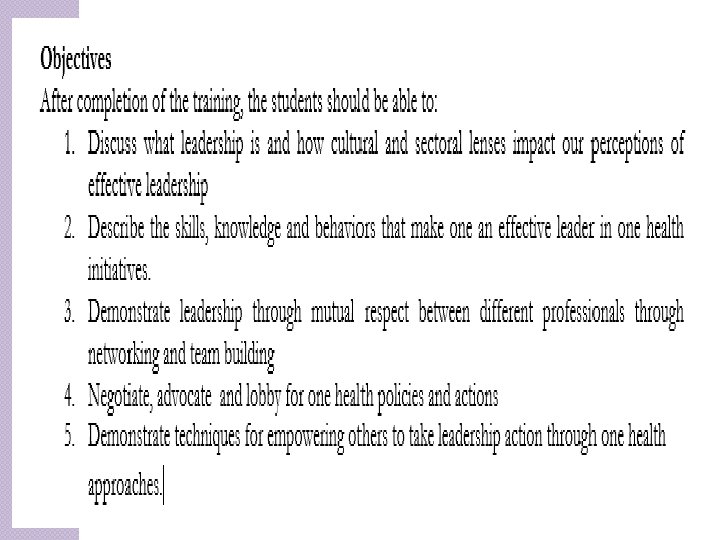
introduction �The management session will help participants to learn about necessary tools and skills that create effective One Health managers. � Leadership module will survey the range of leadership skills, knowledge and behaviors that One Health professionals must exhibit to be effective in their work.
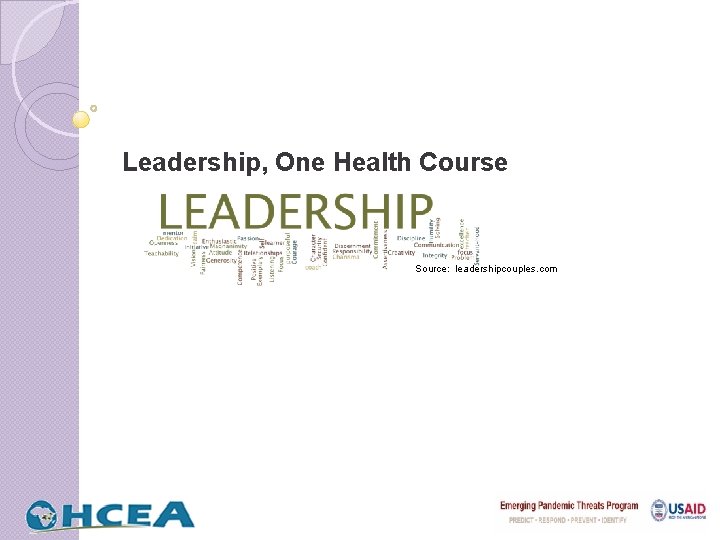
Leadership, One Health Course Source: leadershipcouples. com
Goal �Graduate multidisciplinary teams capable of initiating a shared vision, create inspire and motivate teams across sectors and execute roles through team work and professionalism �One Health Leadership is inclusive and participatory �Capitalizes on ideas and skills of multidisciplinary teams �Considers teamwork, professionalism and emotional intelligence
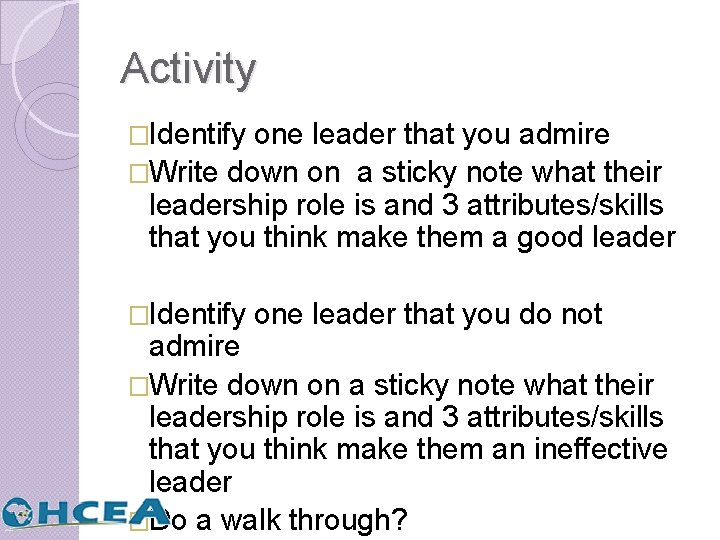
Activity �Identify one leader that you admire �Write down on a sticky note what their leadership role is and 3 attributes/skills that you think make them a good leader �Identify one leader that you do not admire �Write down on a sticky note what their leadership role is and 3 attributes/skills that you think make them an ineffective leader �Do a walk through?
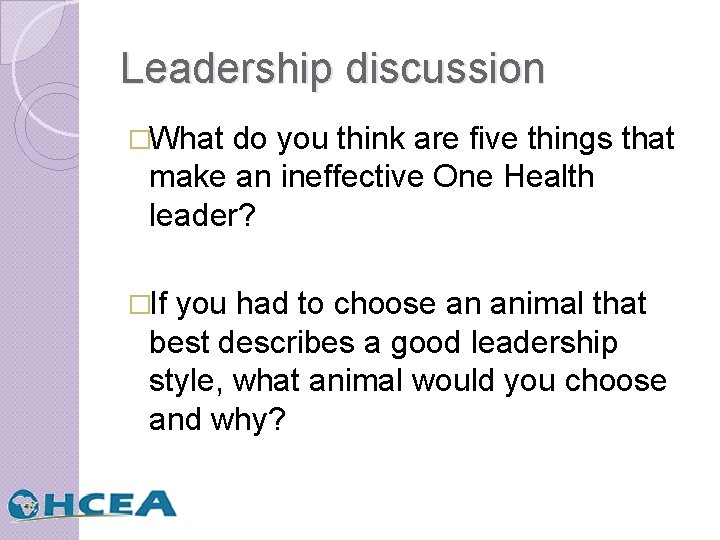
Leadership discussion �What do you think are five things that make an ineffective One Health leader? �If you had to choose an animal that best describes a good leadership style, what animal would you choose and why?
leadership, One Health Course Introduction
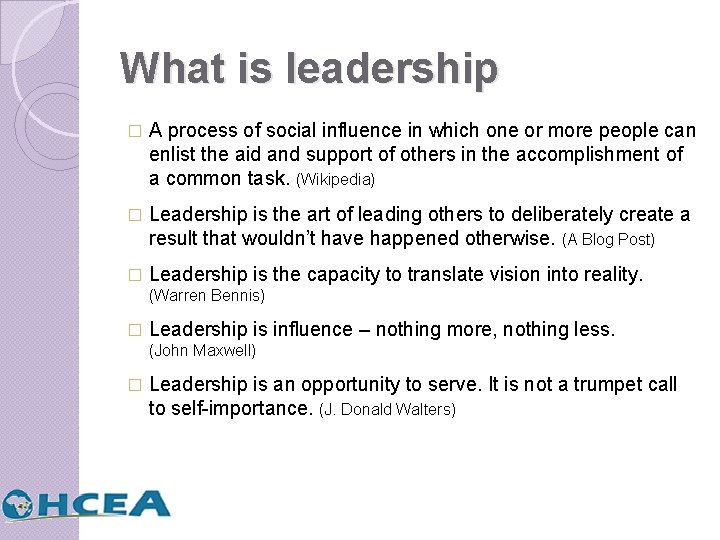
What is leadership � A process of social influence in which one or more people can enlist the aid and support of others in the accomplishment of a common task. (Wikipedia) � Leadership is the art of leading others to deliberately create a result that wouldn’t have happened otherwise. (A Blog Post) � Leadership is the capacity to translate vision into reality. (Warren Bennis) � Leadership is influence – nothing more, nothing less. (John Maxwell) � Leadership is an opportunity to serve. It is not a trumpet call to self-importance. (J. Donald Walters)
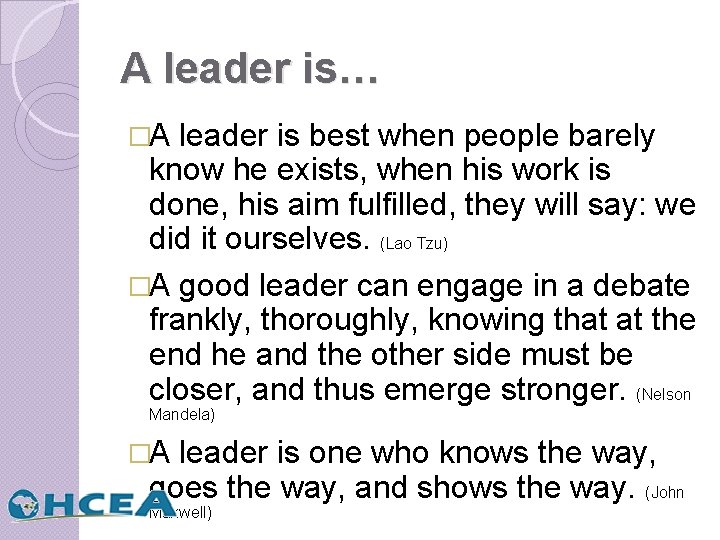
A leader is… �A leader is best when people barely know he exists, when his work is done, his aim fulfilled, they will say: we did it ourselves. (Lao Tzu) �A good leader can engage in a debate frankly, thoroughly, knowing that at the end he and the other side must be closer, and thus emerge stronger. (Nelson Mandela) �A leader is one who knows the way, goes the way, and shows the way. (John Maxwell)
What leadership is not… �Seniority/experience �One’s position or title �Management
leadership, One Health Course The Role of Leadership in One Health
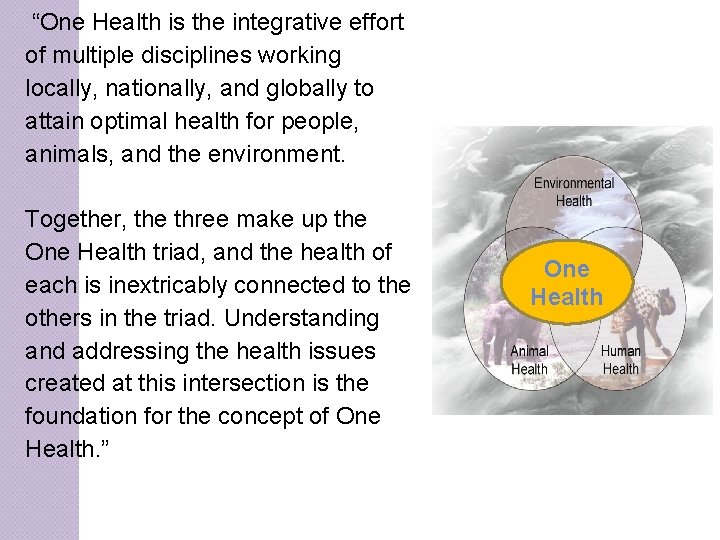
“One Health is the integrative effort of multiple disciplines working locally, nationally, and globally to attain optimal health for people, animals, and the environment. Together, the three make up the One Health triad, and the health of each is inextricably connected to the others in the triad. Understanding and addressing the health issues created at this intersection is the foundation for the concept of One Health. ” One Health
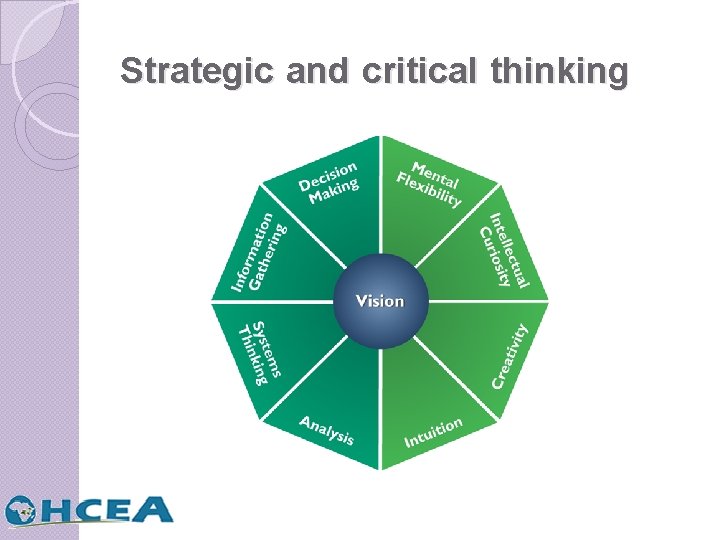
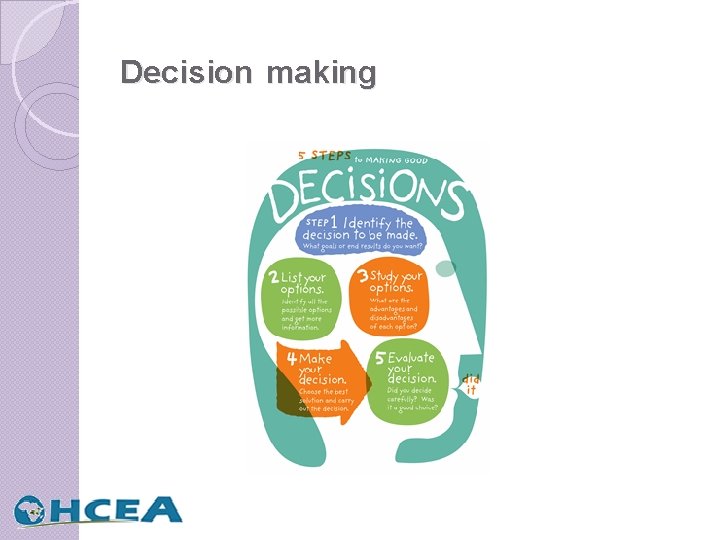
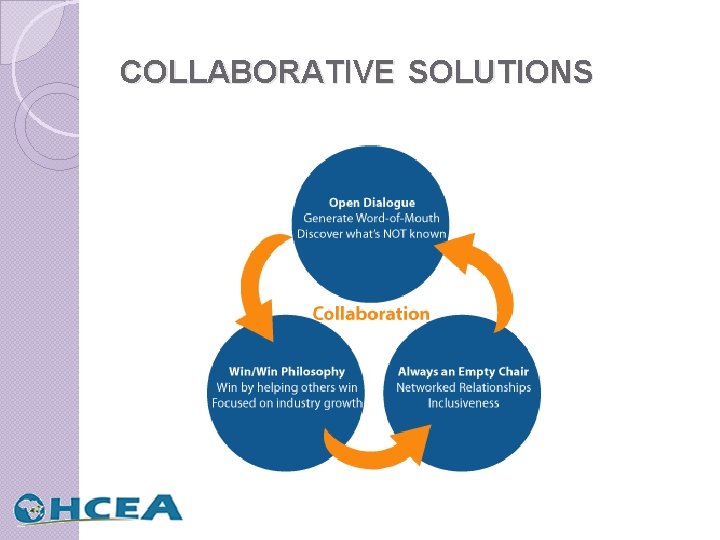
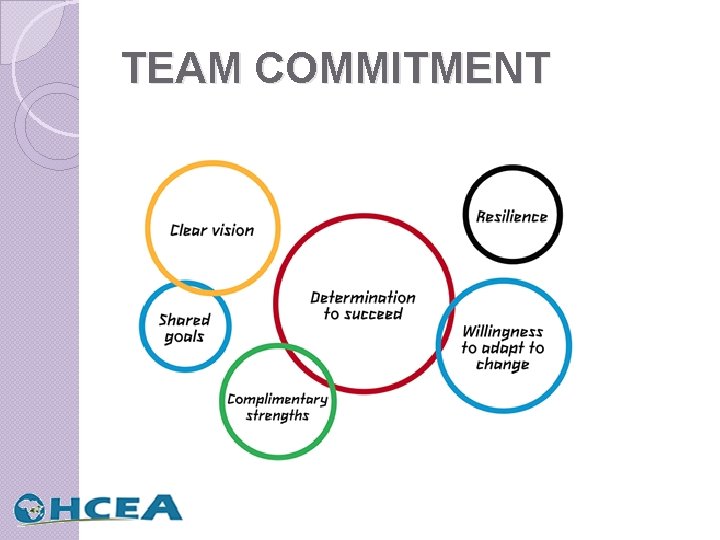
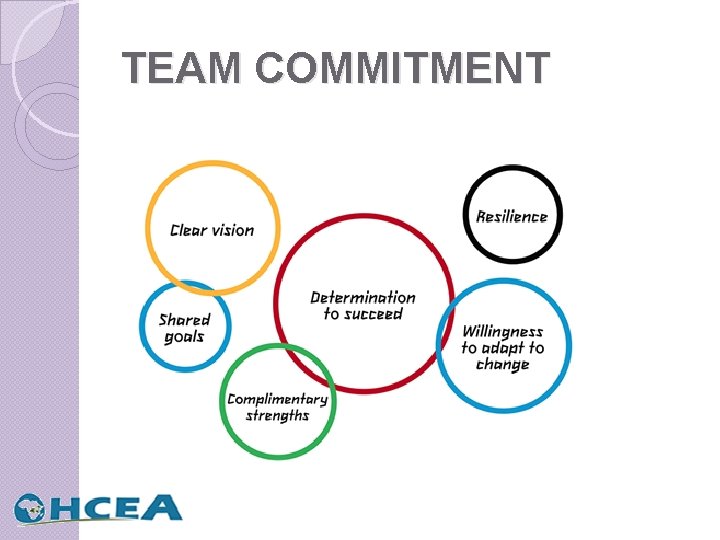
One health leadership domains �Shared Vision �Strategic and Critical Thinking �Decision Making �Collaborative Solutions �Team Commitment
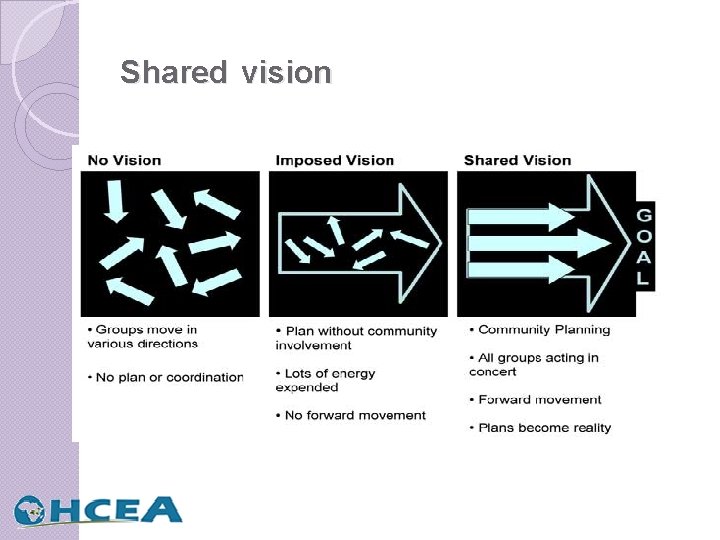
Shared vision
Strategic and critical thinking
Decision making
COLLABORATIVE SOLUTIONS
TEAM COMMITMENT
RWANDA PANIC CASE STUDY Group activity
Read through case study Discuss the questions assigned
Panic in rwanda �What leadership skills would be needed to handle this situation ? And by which parties? �examples �Demonstrate decisiveness �Effective teamwork �Ability to appropriately react to a situation �Ability to mobilize coach and mentor �Conflict resolution and management �Influence other stakeholders
teamwork
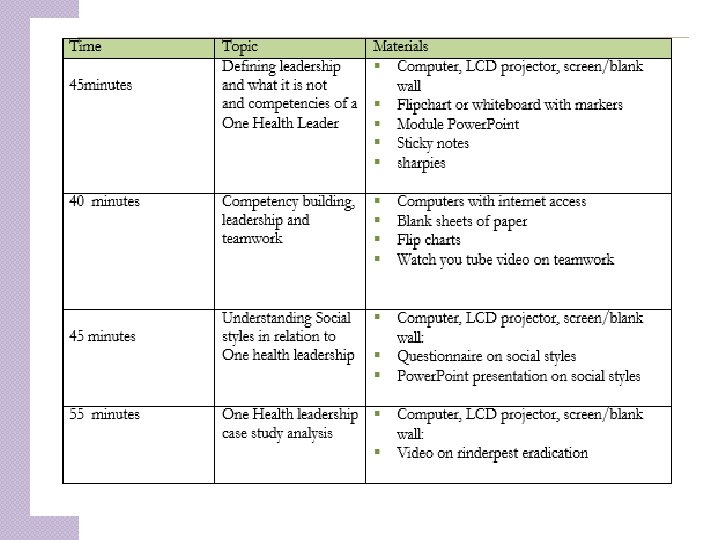
Competency building leadership and team work �https: //www. youtube. com/watch? v=n. D 6 t UEp 1 lws �What are some of the key skills you expect a good team to have? �examples �Good listeners �Working together �Planning together
teamwork �Break down into 4 groups �Each group has 10 minutes to prepare a role play/skit on team work �Present your role play which should not be more than 3 minutes long
discussion �What were the leadership and teamwork dynamics in your group? �Were there discussions about who would lead? �Did different people assume leadership at different times �Were members able to communicate their personal views and opinions �Did you feel you were competing with the other teams to be first? �What would you do differently next time—as a leader, as a follower?
TEAM COMMITMENT
Image from info. netcenter. net Management
goal �To graduate students capable of effectively managing ( planning, designing, implementing, organizing, monitoring, and evaluating infectious disease outbreaks through One Health approaches)
COURSE LEARNING OBJECTIVES This module provides the student with an understanding of the skills needed to manage a One Health initiative including: � Planning for staffing, budget and resources � Implementing policies, procedures and systems are in place to guide and support the day-to-day operation of the initiative � Managing and monitoring the initiative to maximize effectiveness of One Health actions and desired health outcomes � Problem-solving and taking corrective action during the initiative and evaluating and sharing learning post project � Ensuring the safety and well-being of the One Health team
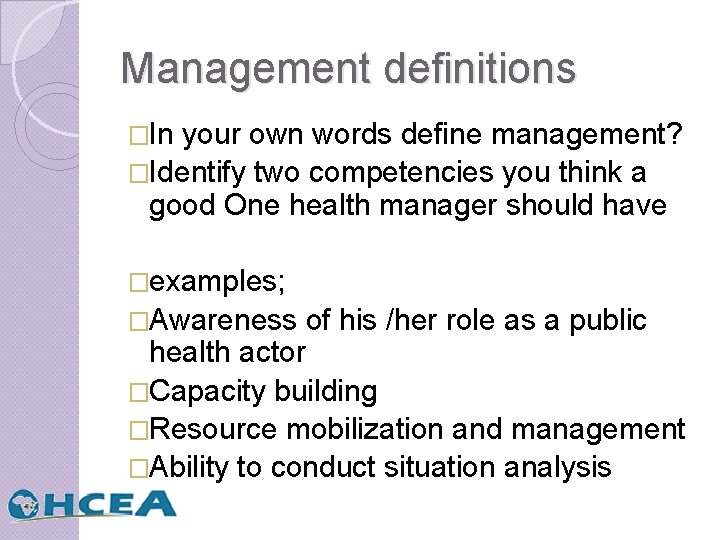
Management definitions �In your own words define management? �Identify two competencies you think a good One health manager should have �examples; �Awareness of his /her role as a public health actor �Capacity building �Resource mobilization and management �Ability to conduct situation analysis
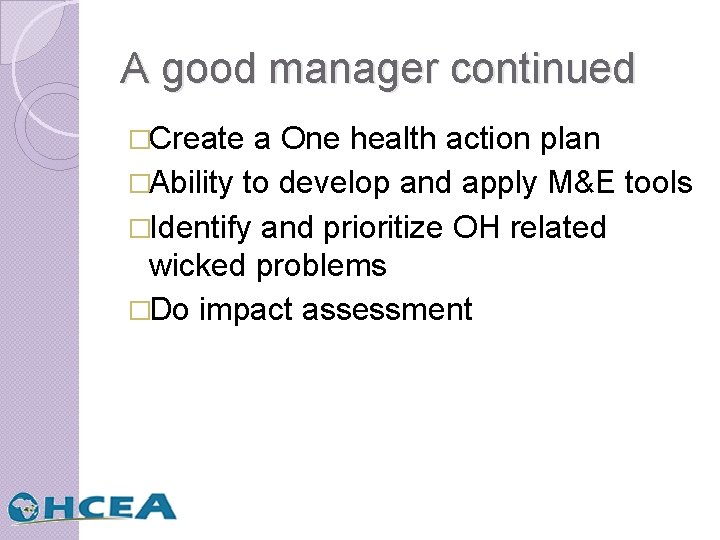
A good manager continued �Create a One health action plan �Ability to develop and apply M&E tools �Identify and prioritize OH related wicked problems �Do impact assessment
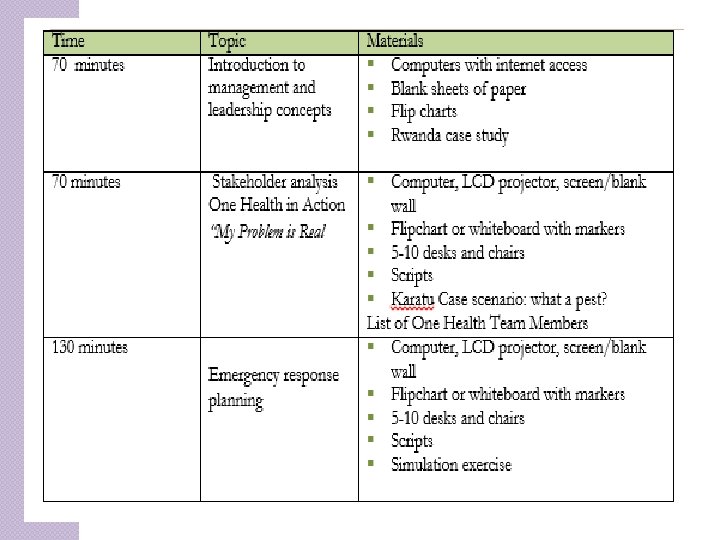
Group activity Karatu case study
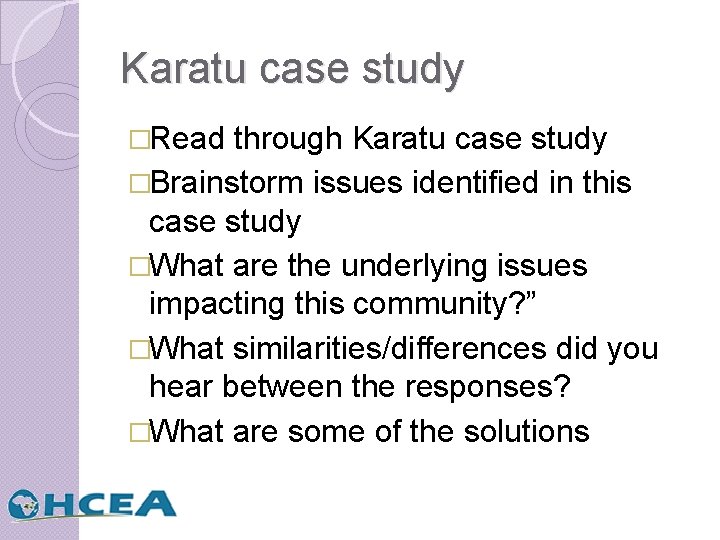
Karatu case study �Read through Karatu case study �Brainstorm issues identified in this case study �What are the underlying issues impacting this community? ” �What similarities/differences did you hear between the responses? �What are some of the solutions
Stakeholder analysis
Stakeholder analysis �With the above Scenario, you have been asked to select and coordinate a team to discuss response to the problem in Karatu, including developing an intervention plan. The first step of this process is a stakeholders’ meeting to be held at the Ministry of Health (Mo. H) national headquarters.
in two groups, Identify the individuals who will attend the meeting. ( work on a flip chart) �Justify why each member is critical to the response. (i. e. , role, expertise, responsibilities, etc. �Discuss who should chair the stakeholders meeting and why? �Relate the above case study to policy and governance. �Develop an intervention strategy and present to the class. � Present your group discussions �
Challenges facing the stakeholders � Briefly reflect on the One Health approach in the case study and why there is a need to involve different stakeholders. � What challenges do the stakeholders face in implementation considering that they are coming from different disciplines? � List some of these challenges: � Examples: inadequate distribution of resources across the ministries, different groups are used to working in silos, powerful political interests, economic dynamics of the communities and conflicts of interest (politicians & other government leaders with shares in pesticides industry) �
Planning for emergency response to an infectious disease Form 4 groups
Emergency response planning �In this section, participants will be able � plan for an emergency, identify, and to manage challenges that occur in any emergency situation. �explain the financial and logistical complications experienced in an emergency. � It challenges participants to proactively adjust work plans when faced with common management-related challenges such as budget reductions, loss of critical personnel or other resources, or reduced timelines, when managing a One Health initiative:
scenario �You have just been informed that there is a suspected Ebola outbreak in Luwero village, in western Uganda bordering, Rwanda. A total of 14 people have died and 26 others in the village are reportedly sick. There is only one health center in the area manned by one local doctor and two nurses. The Government is putting you in charge of the emergency response. You have been given a budget of 20, 000 dollars to mobilize a team to prepare and respond to this emergency
Step 1 �Create a budget for this emergency response �Identify and price the key resources that you will need �Identify key personnel and logistics required to respond to this emergency �Develop a timeline of your activities to respond to the emergency. ( 25 minutes) �Present your budget and timeline( 10 minutes) �Figure out a nice way to present your information
Step 2 �You receive information from the ministry of health informing you that you only have 8, 000 dollars because the 12, 000 dollars was a commitment from one of the international organizations and those funds have not come through. You still need to respond to the emergency �Re-budget and identify priority resources that you will need and what you will eliminate to work with the 8, 000 dollars that you now have. � 10 minutes
Step 3 �Just as you finish budgeting and are getting ready to leave for the field, you are informed that your contact health personnel on the ground, the local doctor and the two nurses at the local hospital have died of Ebola. �Present a plan on how you are going to go ahead and respond to this emergency without the local team. �(10 minutes)
Step 4 �Your logistics coordinator informs you that the personal protective equipment (PPE) you ordered will not arrive for the next 48 hours. �What will you do in this case so as to manage this situation and ensure that you are still responding to the emergency? �(5 minutes)
Step 5 � You believe that you have everything sorted out and in place and are on your way to the village. On the way you receive information that the villagers are attacking any medical or emergency response personnel because they believe that the disease was deliberately brought into their community. Two members of your team who had gone earlier have died, and the rest have fled the village � Develop a plan on who is/ how you are going to deal with this new scenario. Your ultimate goal is to ensure that the disease is contained and therefore you cannot turn away. �
Step 6 �When you are in the village, you hear the local politician telling the community members that they should burn down the houses of all the Ebola victims to ensure that there is no more spread. �What do you do in this situation? �Who can you reach out to help you solve the problem? � 5 minutes
Step 7 �You have worked tirelessly for the last two weeks and have now contained the outbreak. However because of the outbreak, the country has been hit with an economic crisis. �What are the key challenges facing this community and the country after the outbreak has been contained? �What key issues do you need to address post emergency �What do you do to monitor the situation �How do you evaluate to see if you handled everything in the right manner ( 20 minutes)
Debrief-key things to consider �Why? – Why are we doing this initiative? �What? – What is the work that needs to be performed to successfully complete the initiative? What are the major products/deliverables? �Who? – Who will be involved and what will be their responsibilities within the initiative? How will they be organized? �When? – What is the timeline and when will milestones be completed? �Where? – Where is the One Health initiative taking place (e. g. , the location)?
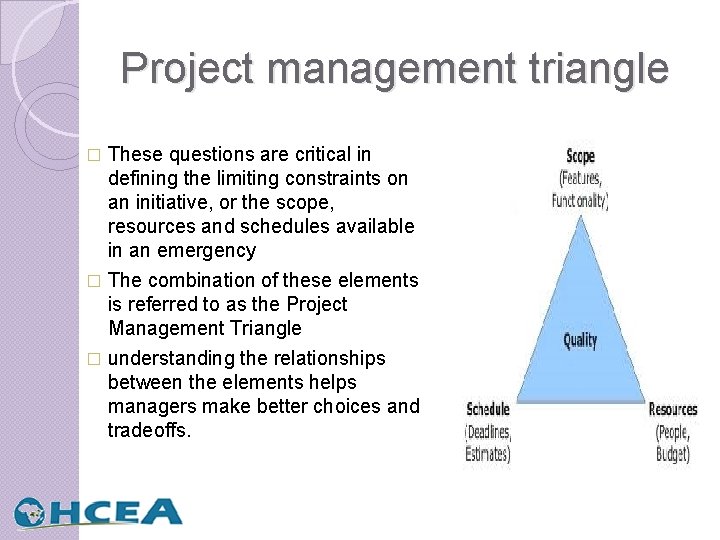
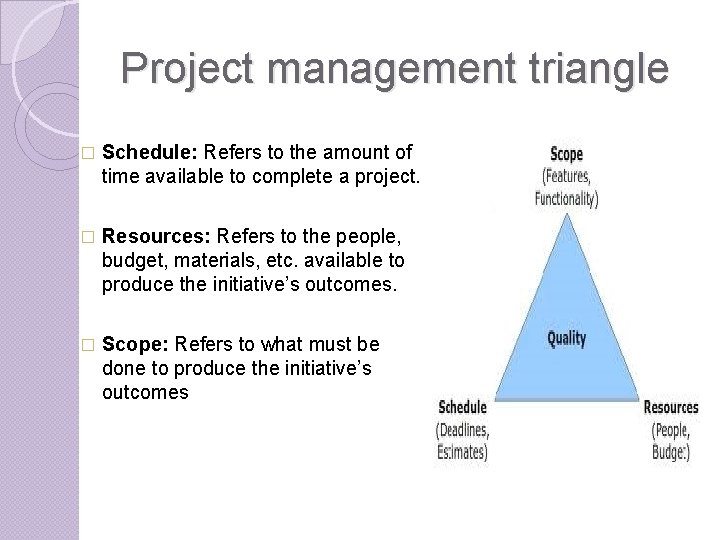
Project management triangle These questions are critical in defining the limiting constraints on an initiative, or the scope, resources and schedules available in an emergency � The combination of these elements is referred to as the Project Management Triangle � understanding the relationships between the elements helps managers make better choices and tradeoffs. �
Project management triangle � Schedule: Refers to the amount of time available to complete a project. � Resources: Refers to the people, budget, materials, etc. available to produce the initiative’s outcomes. � Scope: Refers to what must be done to produce the initiative’s outcomes
Project management cycle �These elements are often competing and termed the ‘triple constraints’ of a project. � Changes in any part of the triangle impact the other parts. �For example, increasing the scope typically means increased time and increased cost, or a tight schedule could mean increased costs and reduced scope, or a tight budget could mean increased time and reduced scope.