
Leaders for the future Module 1 Leading yourself




- Slides: 40
Leaders for the future Module 1: Leading yourself © SSAT
Session objectives • To consider the importance of emotional intelligence for self leadership and leadership of others • To reflect on your own personality and consider how this impacts on both your own leadership and those you lead • To understand recognise different personality traits • To explore a range of communication styles and consider the implications for leadership • To reflect on the impact your behaviours and actions have on others and how you are perceived. © SSAT
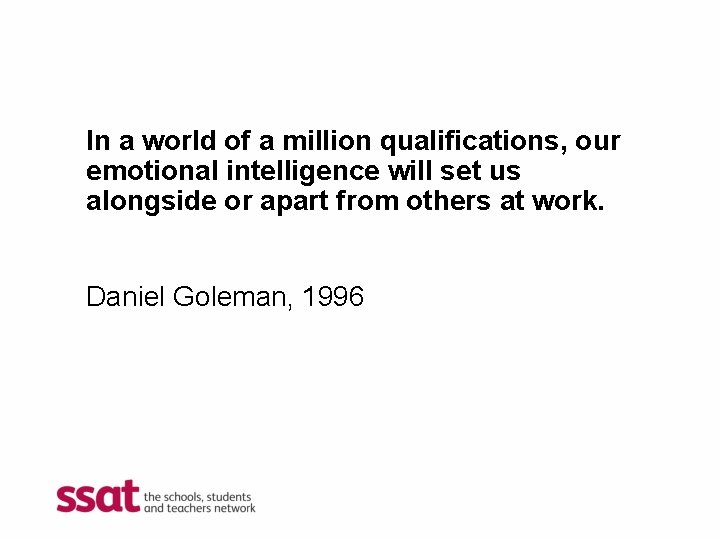
In a world of a million qualifications, our emotional intelligence will set us alongside or apart from others at work. Daniel Goleman, 1996
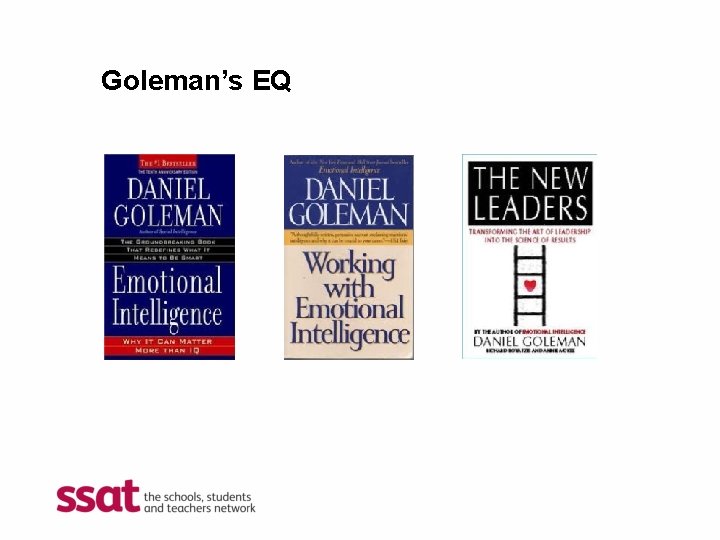
Goleman’s EQ
For leaders, the first task in management has nothing to do with leading others; step one poses the challenge of knowing and managing oneself. Daniel Goleman
We are judged by how well we handle ourselves and each other Out of control emotions can make smart people stupid
Slide 7
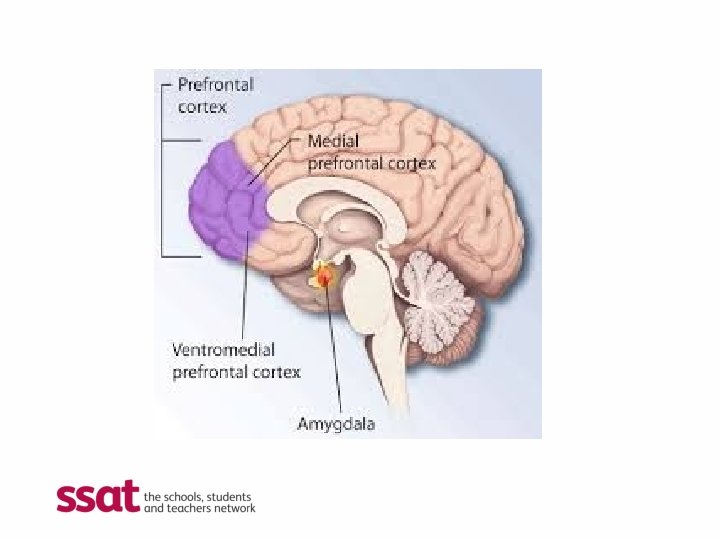
The brain • Anatomically the emotional system can act independently of the neo-cortex - some emotional reactions and emotional memories can be formed without any conscious, cognitive participation at all. • Emotional hijackings involve two dynamics: triggering of the amygdala and a failure to activate the neocortical processes that usually keep the emotional response in balance - or a recruitment of the neocortical zones to the emotional urgency. • Without knowing what we’re feeling, we’re at a loss to control those feelings, instead our emotions control us.
Write down a situation when your emotions took over, and if you feel comfortable, discuss with a partner • Consider the following: • What were you feeling? Why? • Were you able to sense any physical symptoms of an emotional hijacking (e. g. going red, rising temperature, feeling boxed in? ) • How did it impact on your behaviour? How did you feel about this? • Are you aware of what triggers your emotional responses (e. g. being backed into a corner, being presented with a fait accompli)?
Slide 11
What steps can you take to bring balance?
Self awareness means having a deep understanding of one’s emotions, as well as one’s strengths and limitations and one’s values and motives.
Self management – which resembles an inner conversation – is the component of EI which frees us from being a prisoner of our feelings.
Social competence Personal competence Recognition Regulation Self awareness Self management ü Self confidence ü Awareness of your emotional state ü Recognising how your behaviour impacts others ü Paying attention to how others influence your emotional state ü Self control ü Being adaptable and open to change ü Being honest and having integrity ü Taking the initiative ü Able to think before acting Social awareness Social management ü Picking up on the mood in the room ü Caring what others are going through ü Hearing what the other person is “really” saying ü ü ü Getting along well with others Handling conflict effectively Teamwork and collaboration Leading and influencing Using empathy to manage interactions successfully
Complete this short online EI test https: //www. mindtools. com/pages/arti cle/ei-quiz. htm
Seek to understand yourself and then others Habit 5 from Stephen Covey's 7 Habits of Highly Successful People
Knowing your personality • • Reflection: How would you describe your personality? Are you an introvert or an extrovert? Are you more aware of different aspects of your personality in certain situations or company? • What brings out the best in you? • What frustrates or irritates you? • If you had to sum yourself up in three words, which would you choose?
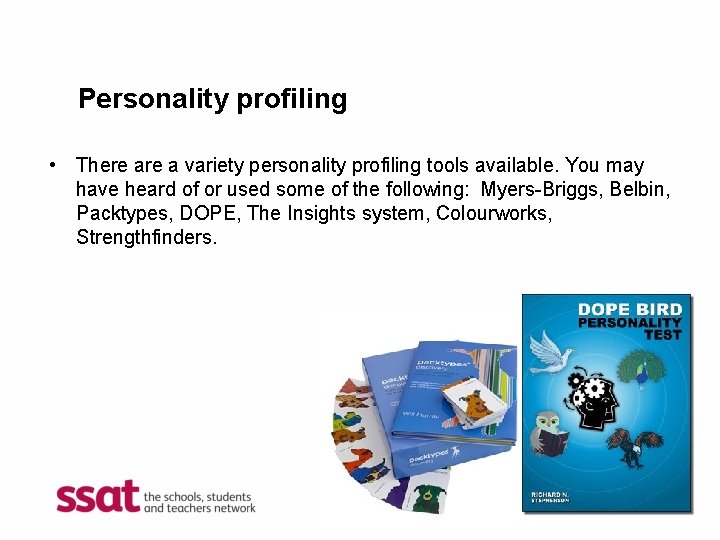
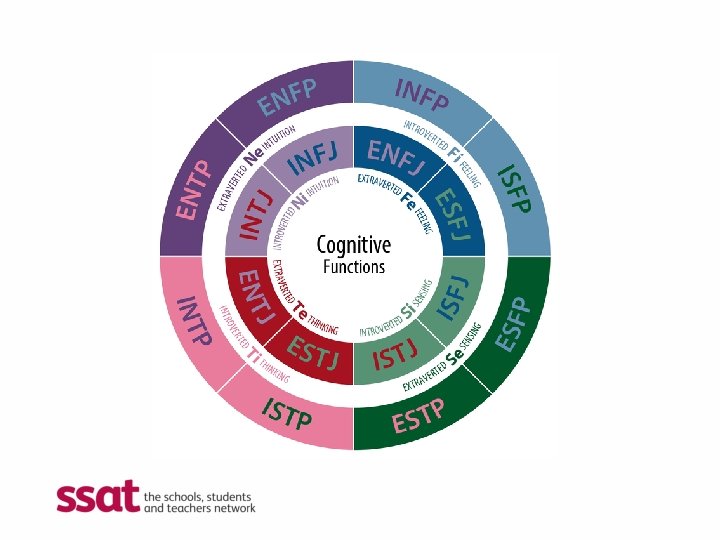
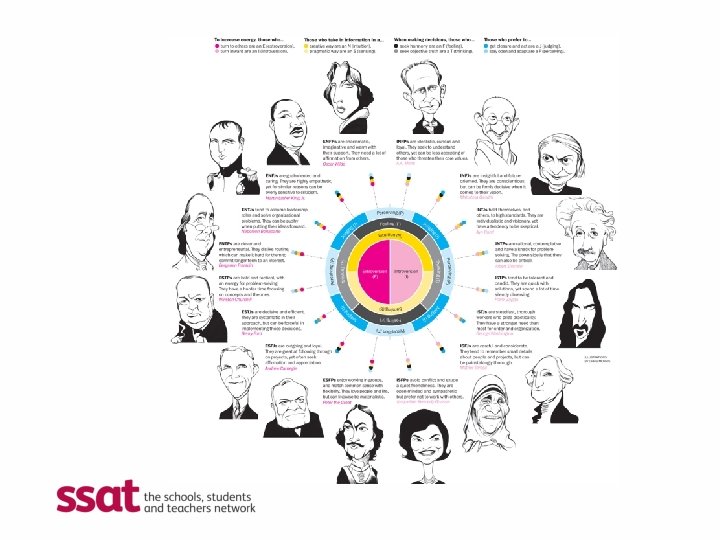
Personality profiling • There a variety personality profiling tools available. You may have heard of or used some of the following: Myers-Briggs, Belbin, Packtypes, DOPE, The Insights system, Colourworks, Strengthfinders.
Myers-Briggs • Background • Some words of caution…the results of these types of profiling should always be weighed and considered; we know as unique beings every fingerprint and every personality is different. However, tools such as this can be indicative of general personality traits and provide an interesting stimulus for reflection. Traits are not fixed and can change over time. It is important to remember that there is no good or bad, better or worse.
Activity Complete the online profiling tool questions: http: //www. 16 personalities. com/
Discussion • Did anything surprise you? • What did you find most interesting about completing the MBTI? • Was there anything you disagreed with? Reflection • Could you use the descriptors to guess your colleagues/teams profiles? • What implications would this have for your interactions / leadership?
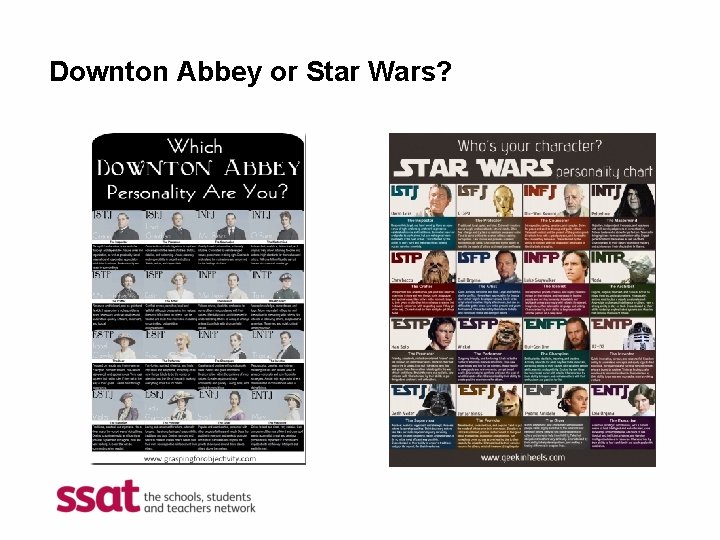
Downton Abbey or Star Wars?
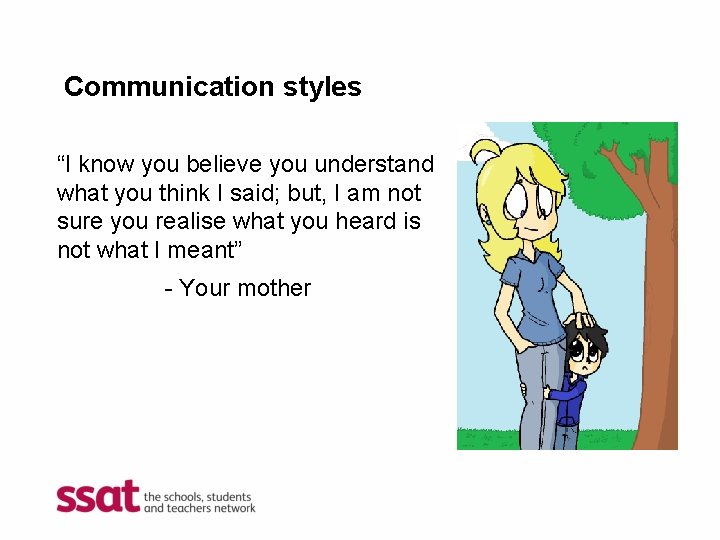
Communication styles “I know you believe you understand what you think I said; but, I am not sure you realise what you heard is not what I meant” - Your mother
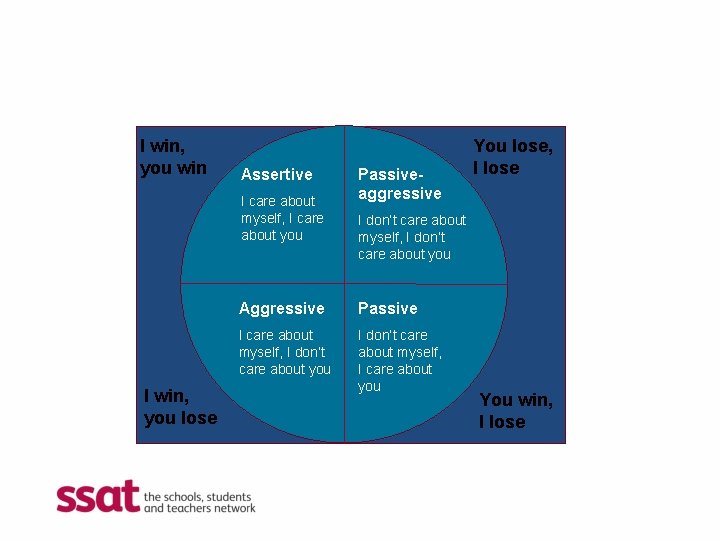
Four communication styles Passive Behaviour Non-verbal Beliefs Emotions Goals Aggressive Passiveaggressive Assertive
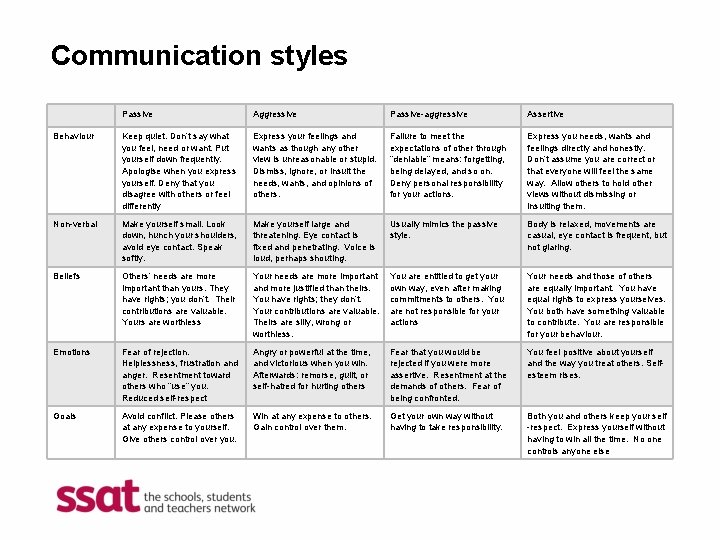
Communication styles Passive Aggressive Passive-aggressive Assertive Behaviour Keep quiet. Don’t say what you feel, need or want. Put yourself down frequently. Apologise when you express yourself. Deny that you disagree with others or feel differently Express your feelings and wants as though any other view is unreasonable or stupid. Dismiss, ignore, or insult the needs, wants, and opinions of others. Failure to meet the expectations of other through “deniable” means: forgetting, being delayed, and so on. Deny personal responsibility for your actions. Express you needs, wants and feelings directly and honestly. Don’t assume you are correct or that everyone will feel the same way. Allow others to hold other views without dismissing or insulting them. Non-verbal Make yourself small. Look down, hunch your shoulders, avoid eye contact. Speak softly. Make yourself large and threatening. Eye contact is fixed and penetrating. Voice is loud, perhaps shouting. Usually mimics the passive style. Body is relaxed, movements are casual, eye contact is frequent, but not glaring. Beliefs Others’ needs are more important than yours. They have rights; you don’t. Their contributions are valuable. Yours are worthless Your needs are more important and more justified than theirs. You have rights; they don’t. Your contributions are valuable. Theirs are silly, wrong or worthless. You are entitled to get your own way, even after making commitments to others. You are not responsible for your actions Your needs and those of others are equally important. You have equal rights to express yourselves. You both have something valuable to contribute. You are responsible for your behaviour. Emotions Fear of rejection. Helplessness, frustration and anger. Resentment toward others who “use” you. Reduced self-respect Angry or powerful at the time, and victorious when you win. Afterwards: remorse, guilt, or self-hatred for hurting others Fear that you would be rejected if you were more assertive. Resentment at the demands of others. Fear of being confronted. You feel positive about yourself and the way you treat others. Selfesteem rises. Goals Avoid conflict. Please others at any expense to yourself. Give others control over you. Win at any expense to others. Gain control over them. Get your own way without having to take responsibility. Both you and others keep your self -respect. Express yourself without having to win all the time. No one controls anyone else
I win, you win Assertive I care about myself, I care about you I win, you lose Passiveaggressive You lose, I lose I don’t care about myself, I don’t care about you Aggressive Passive I care about myself, I don’t care about you I don’t care about myself, I care about you You win, I lose
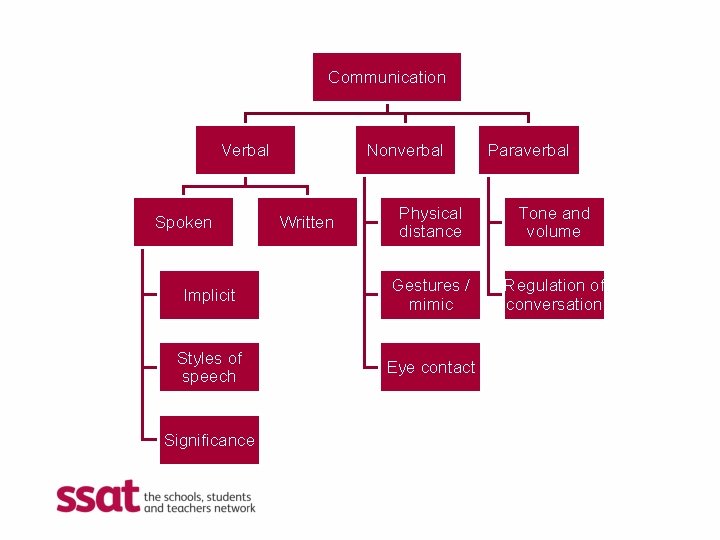
Communication Verbal Nonverbal Paraverbal Physical distance Tone and volume Implicit Gestures / mimic Regulation of conversation Styles of speech Eye contact Spoken Significance Written
Actions speak louder than words.
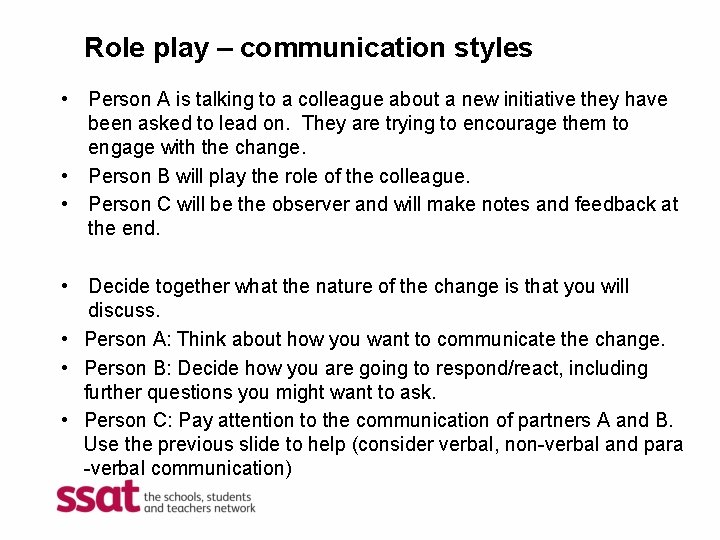
Role play – communication styles • Person A is talking to a colleague about a new initiative they have been asked to lead on. They are trying to encourage them to engage with the change. • Person B will play the role of the colleague. • Person C will be the observer and will make notes and feedback at the end. • Decide together what the nature of the change is that you will discuss. • Person A: Think about how you want to communicate the change. • Person B: Decide how you are going to respond/react, including further questions you might want to ask. • Person C: Pay attention to the communication of partners A and B. Use the previous slide to help (consider verbal, non-verbal and para -verbal communication)
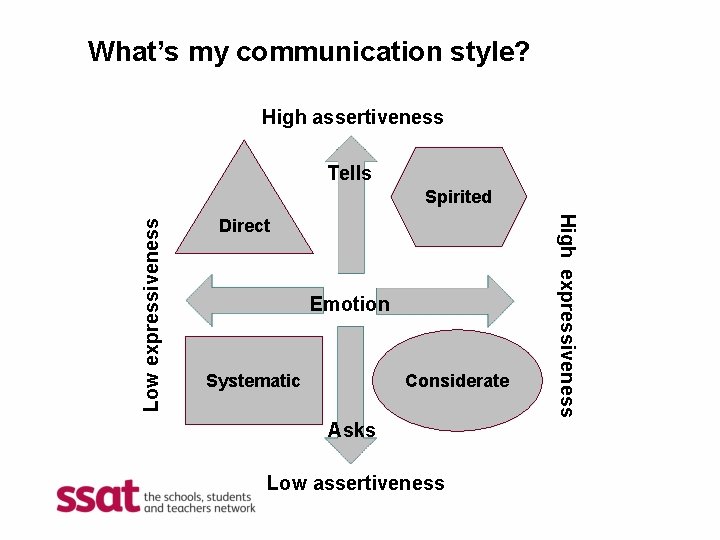
What’s my communication style? High assertiveness Tells Direct Emotion Considerate Systematic Asks Low assertiveness High expressiveness Low expressiveness Spirited
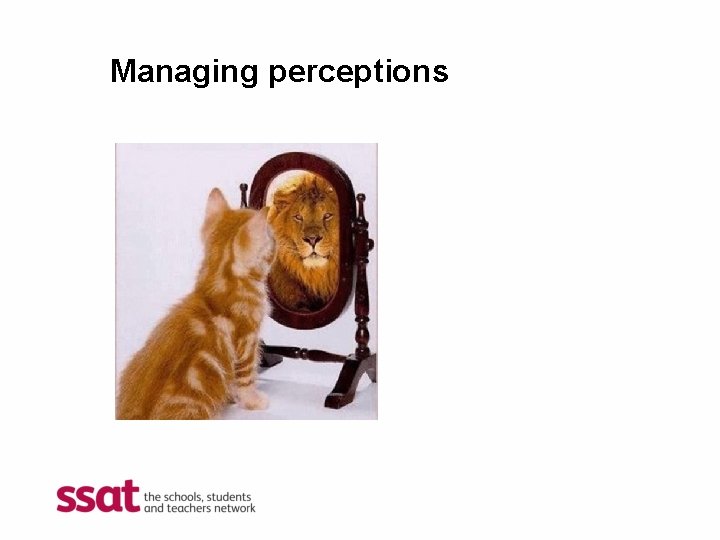
Managing perceptions
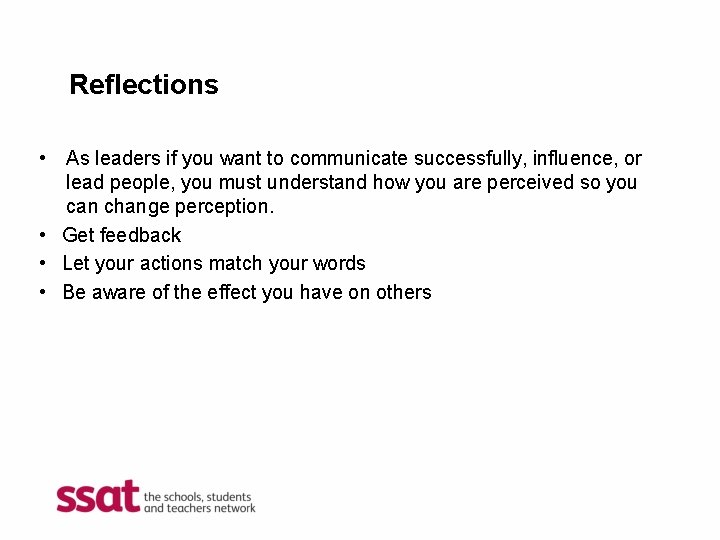
Reflections • As leaders if you want to communicate successfully, influence, or lead people, you must understand how you are perceived so you can change perception. • Get feedback • Let your actions match your words • Be aware of the effect you have on others
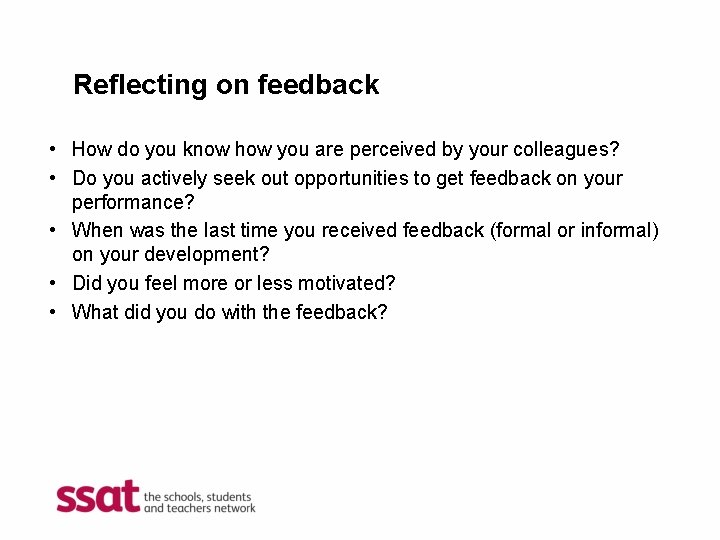
Reflecting on feedback • How do you know how you are perceived by your colleagues? • Do you actively seek out opportunities to get feedback on your performance? • When was the last time you received feedback (formal or informal) on your development? • Did you feel more or less motivated? • What did you do with the feedback?
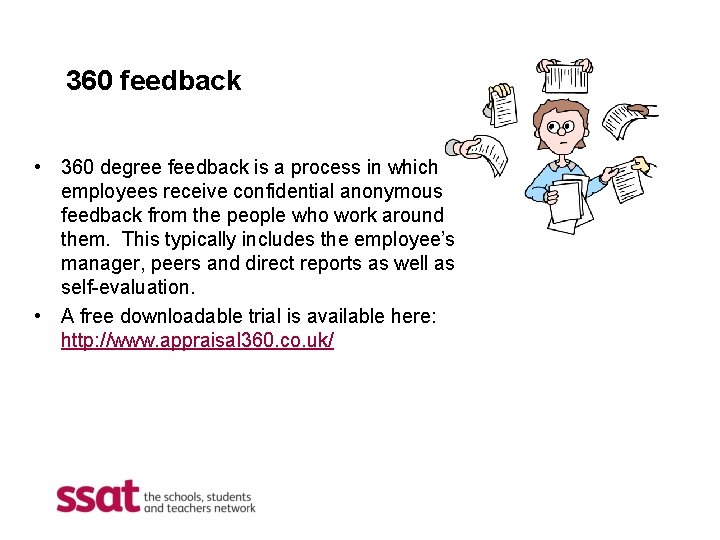
360 feedback • 360 degree feedback is a process in which employees receive confidential anonymous feedback from the people who work around them. This typically includes the employee’s manager, peers and direct reports as well as self-evaluation. • A free downloadable trial is available here: http: //www. appraisal 360. co. uk/
Recap of session objectives • To consider the importance of emotional intelligence for self leadership and leadership of others • To reflect on your own personality and consider how this impacts on both your own leadership and those you lead • To understand recognise different personality traits • To explore a range of communication styles and consider the implications for leadership • To reflect on the impact your behaviours and actions have on others and how you are perceived.
Plenary / between-session activities • Consider asking other colleagues, family and friends to complete a 360 tool to see how others perceive you and how this aligns with your understanding of yourself. • Ask your line manager for honest feedback on your progress and areas for development • If you are a line manager, ask for feedback on your line management • Be ‘intentional’ about interactions you have with colleagues. Think about the messages you are communicating (even subconsciously) • Are there opportunities for you to develop your whole school perspective?
Thank you. Please complete your evaluation forms