
LEADER AS AN INTEGRITY BUILDER Achala Dahal Who
LEADER AS AN INTEGRITY BUILDER Achala Dahal
Who are integrity leader? Who are integrity builder ? Ethical dilemma during decision making Compliance vs Integrity
3 Perception survey
Exercise : Perception survey 4 30– 32 High ethical 33– 45 Moderate ethical 46– 120 Low ethical

Integrity Leader Integrity is one of the top attributes of a great leader. Integrity Leader is the concept of consistency of actions, values, methods, measures, principles, expectations and outcomes. It connotes a deep commitment to do the right thing for the right reason, regardless of the circumstances. Leaders always know how to do the right thing. It may be difficult to define exactly what “right” is, but a leader who is ethical is not afraid to do what they truly believe to be right – even if it is unpopular, unprofitable, or inconvenient.
Integrity Leadership - Thornton Model ethical behavior Adopt transparency in decision-making and communications. Establish a formal ethics or values statement. Insist everyone meets ethical expectations Recognize and reward examples of ethical behavior. Talk about ethics as an ongoing learning journey, not a once-a-year training program.
Think of an ideal person who you find with high integrity. Why? Please share characteristics. Individual Work. some of his/her
Characteristics of Integrity Leader Is it enough ?
Integrity Builder Integrity leader is necessary condition for integrity building but we need something more. Integrity builder is someone who build on �Establishing culture beyond compliance in an organisation. �Building a culture of high ethical standards that are reflected in day-to-day practice. �Constructing behaviour. culture based on ethical
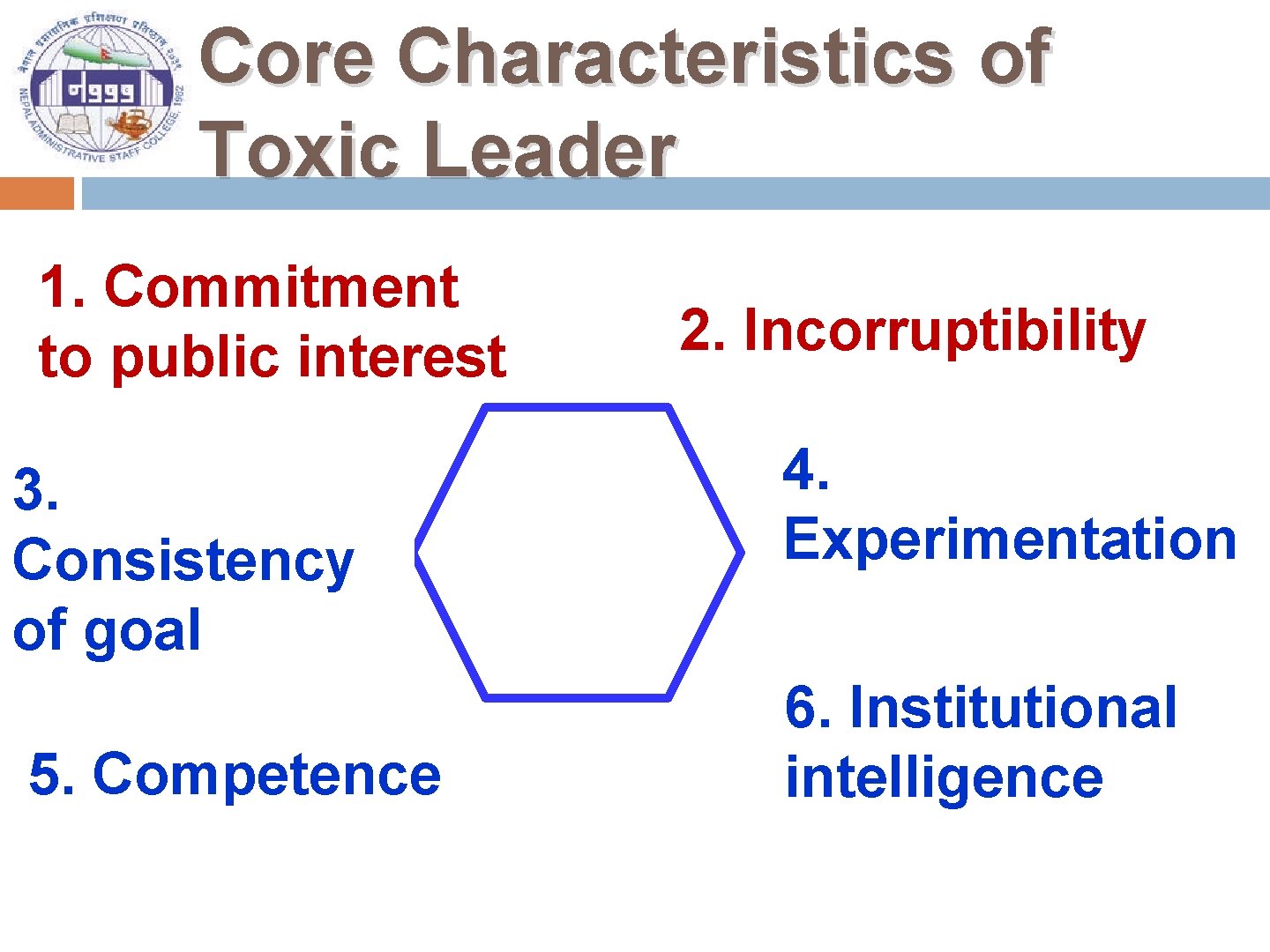
Core Characteristics of Toxic Leader 1. Commitment to public interest 3. Consistency of goal 5. Competence 2. Incorruptibility 4. Experimentation 6. Institutional intelligence
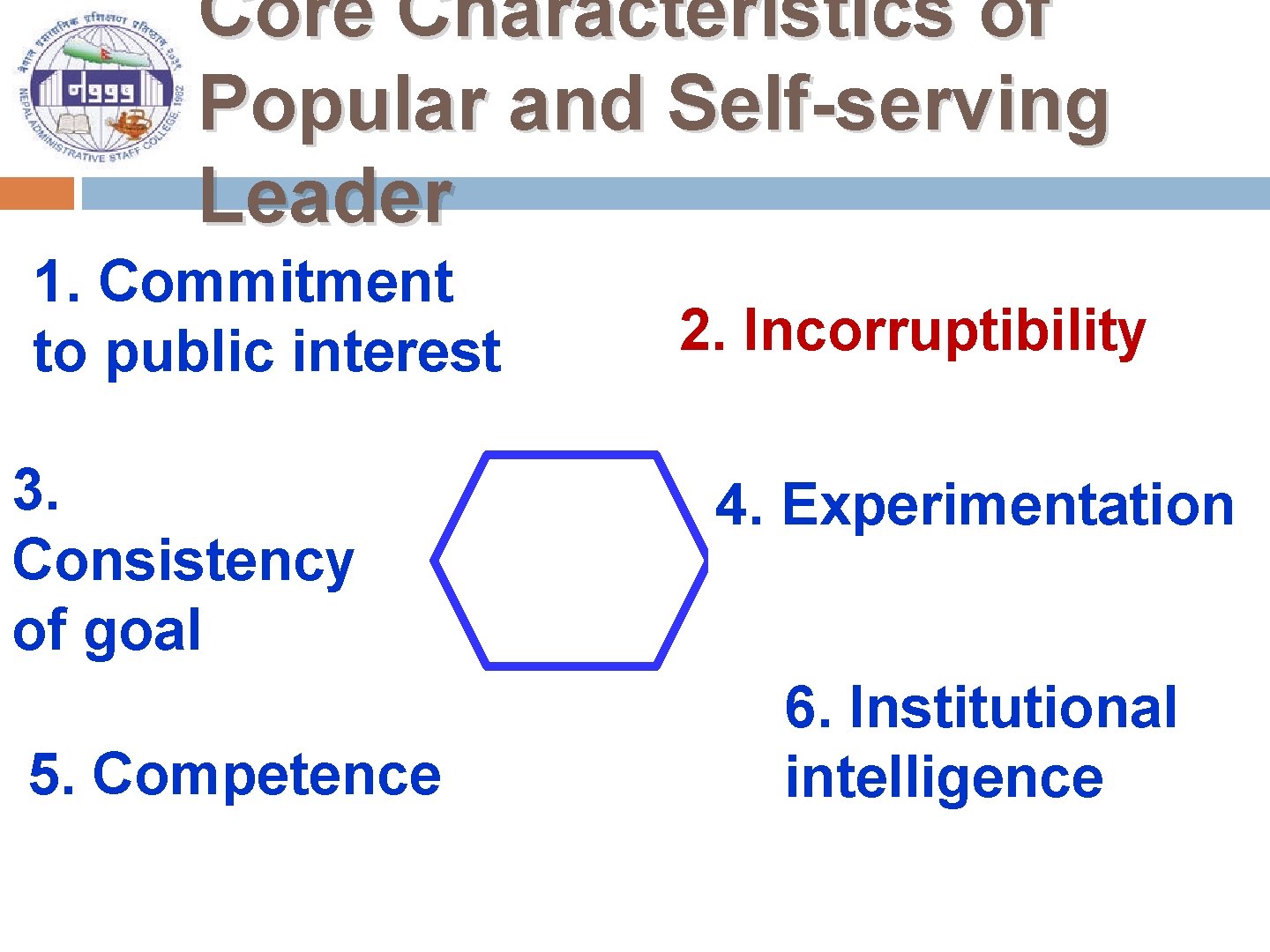
Core Characteristics of Popular and Self-serving Leader 1. Commitment to public interest 3. Consistency of goal 5. Competence 2. Incorruptibility 4. Experimentation 6. Institutional intelligence
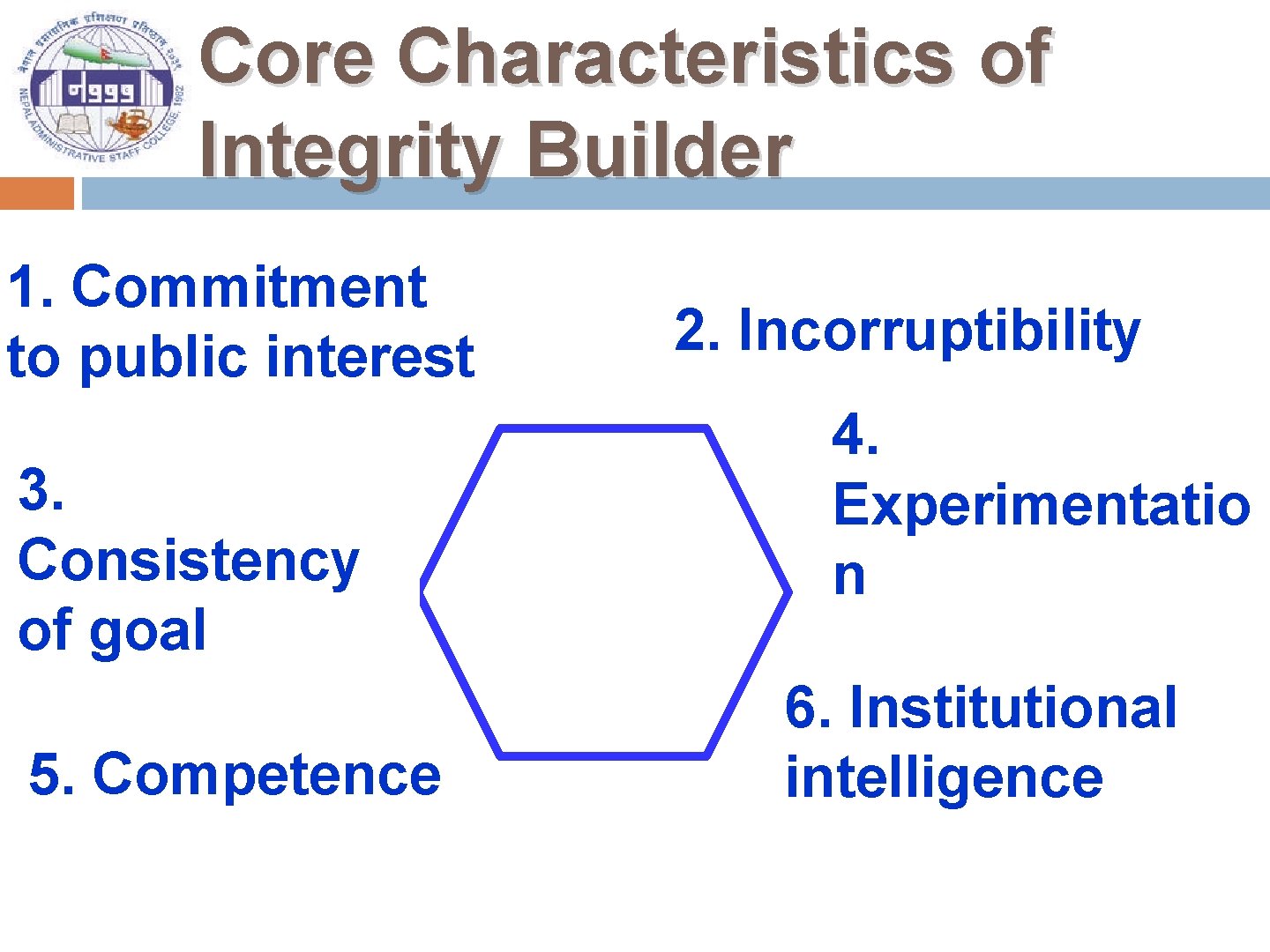
Core Characteristics of Integrity Builder 1. Commitment to public interest 3. Consistency of goal 5. Competence 2. Incorruptibility 4. Experimentatio n 6. Institutional intelligence
Integrity Building Approaches A lawyer’s approach �Toughening laws & legislations A businessman’s approach �Offering incentives to officials to disengage from corruption (buy out corruption). A market or an economist’s approach �Introduce or increase competition An institutional approach � Genuine political/leadership commitment
Ethical Dilemma Integrity builder is mostly demonstrated or required in the situation of ethical dilemma. Ethical dilemma – How do you describe it ? Any situation you have encountered in your professional life ?
An ethical dilemma is one in which a person has to choose between two options, both of which are morally correct but in conflict. Ethics and morals are inseparable. They both deal with questions of right and wrong. What constitutes ethical behavior is determined by societal or cultural norms. What constitutes moral behavior is up to the individual to decide based on his own sense of right and wrong.
Ethical Decision Making E: Presentation at NASCDecision MakingEthical Dilemma_(360 p). mp 4
Ethical Framework for Decision Making Five Sources of Ethical Standards for Decision Making The Utilitarian Approach The ethical action is the one that will produce the greatest balance of benefits over harms. The Rights Approach The ethical action is the one that most dutifully respects the rights of all affected. The Fairness or Justice Approach The ethical action is the one that treats people equally, or if unequally, that treats people proportionately and fairly. The Common Good Approach The ethical action is the one that contributes most to the achievement of a quality common life together. Virtue Approach The ethical action is the one that embodies the habits and values of humans at
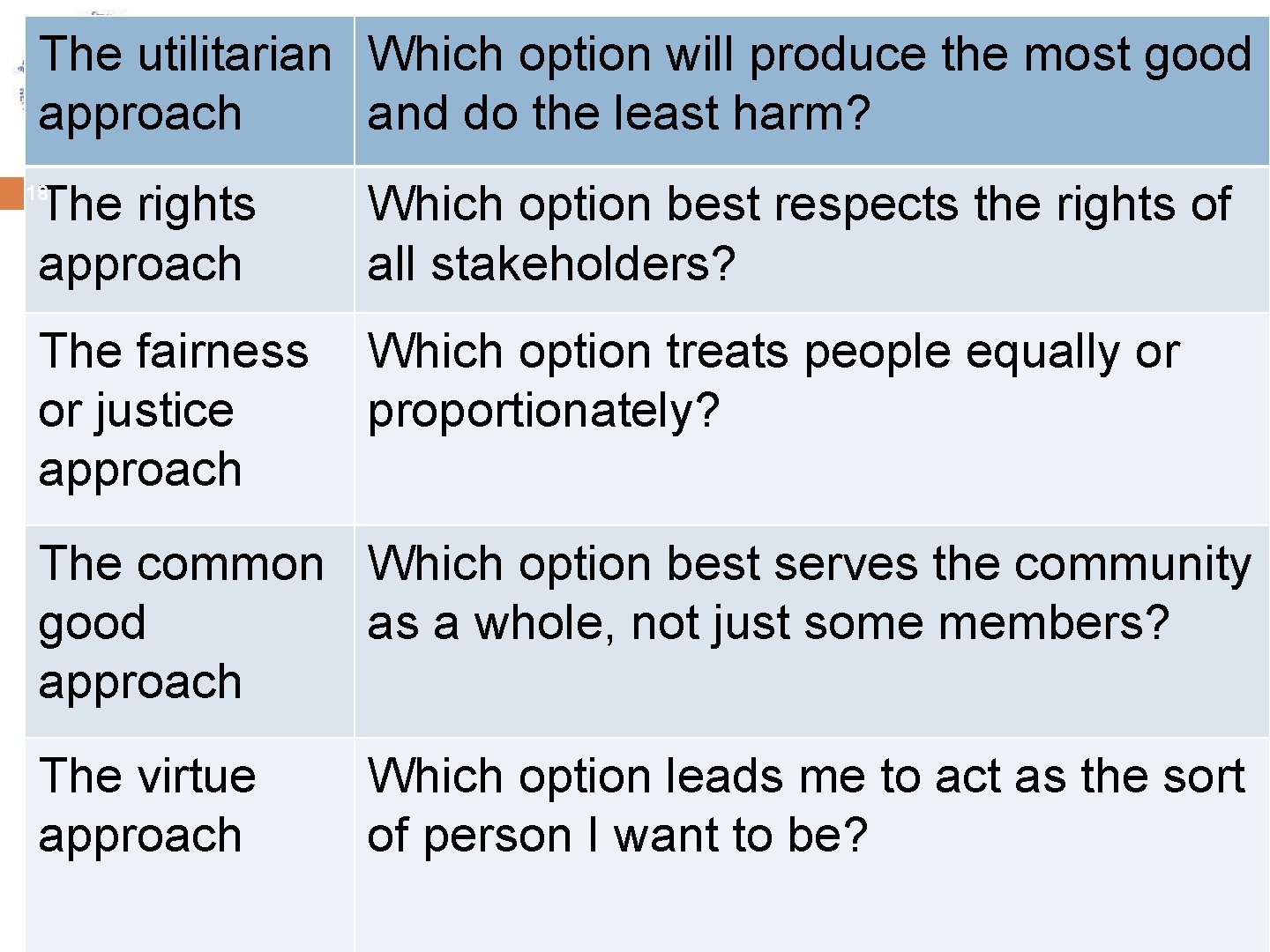
The utilitarian Which option will produce the most good approach and do the least harm? The rights approach Which option best respects the rights of all stakeholders? The fairness or justice approach Which option treats people equally or proportionately? 18 The common Which option best serves the community good as a whole, not just some members? approach The virtue approach Which option leads me to act as the sort of person I want to be?
Forethought…. We encountered lots of ethical dilemma in our everyday life, but when we make decision we need to follow/base on an appropriate approach.
Integrity building: compliance v/s integrity When going on the journey of integrity leader has to choose various approaches Based on compliance (reactive and proactive) Based on integrity building (reactive and proactive)
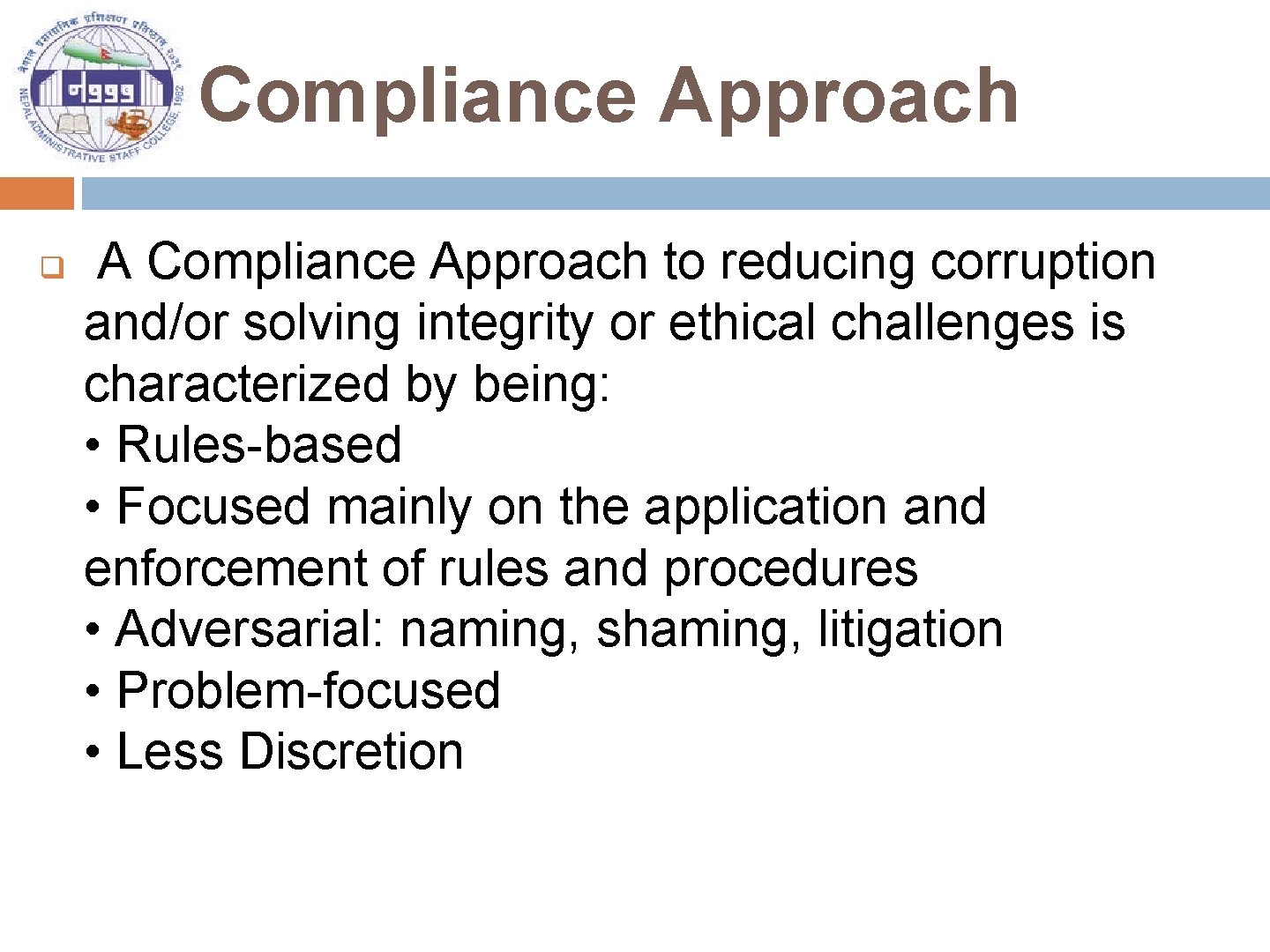
Compliance Approach q A Compliance Approach to reducing corruption and/or solving integrity or ethical challenges is characterized by being: • Rules-based • Focused mainly on the application and enforcement of rules and procedures • Adversarial: naming, shaming, litigation • Problem-focused • Less Discretion
Integrity Approach: The Integrity Approach to reducing corruption and/or solving integrity or ethical challenges is characterised by being: • Values-based • Aware of discrepancies between policies, rules and laws, and actual implementation of them • Collaboration-focused to get violators to fix the problems by working with integrity, using conflict resolution methods, especially alternative dispute resolution methods. • Solution-focused • More discretion.
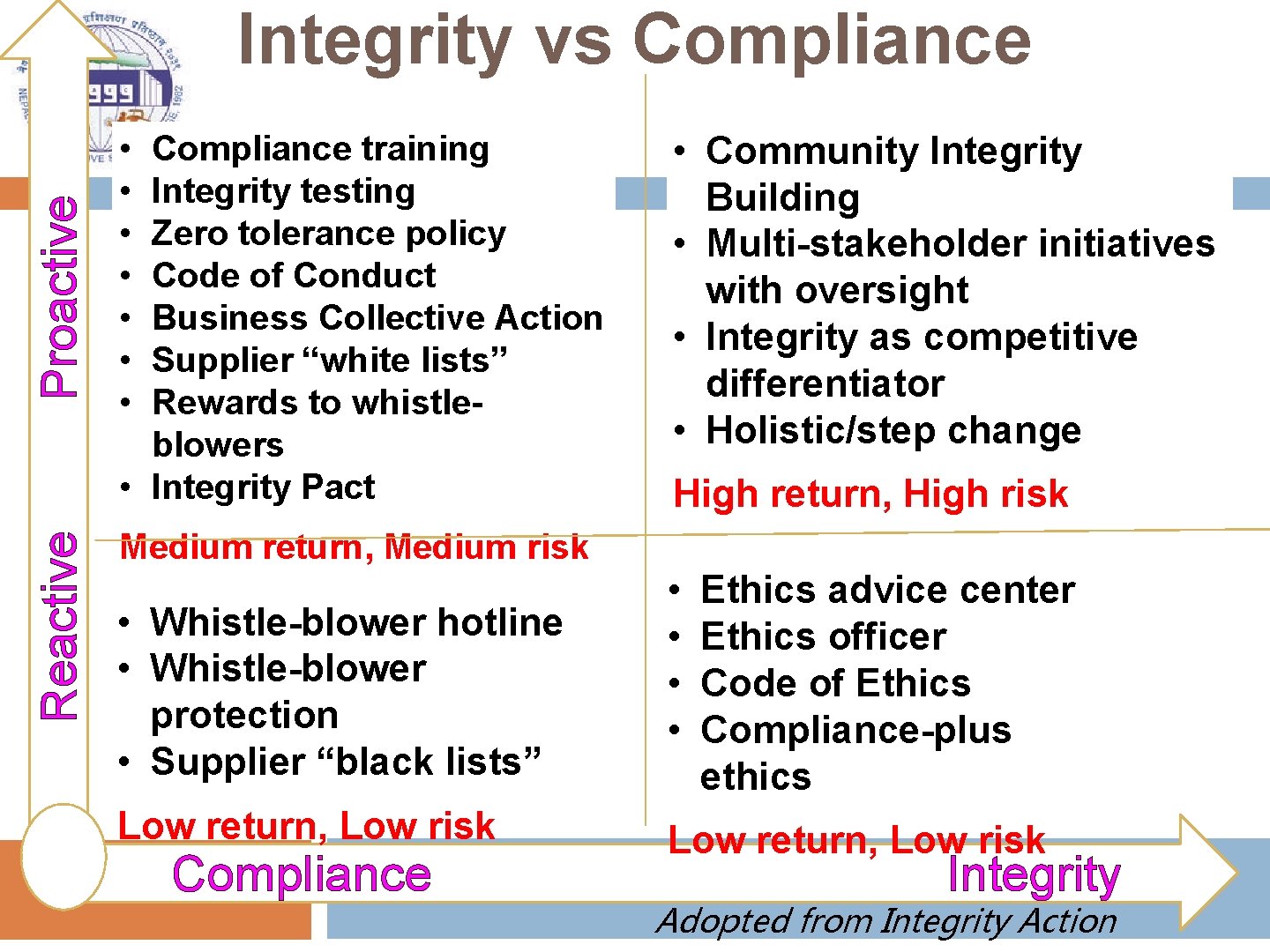
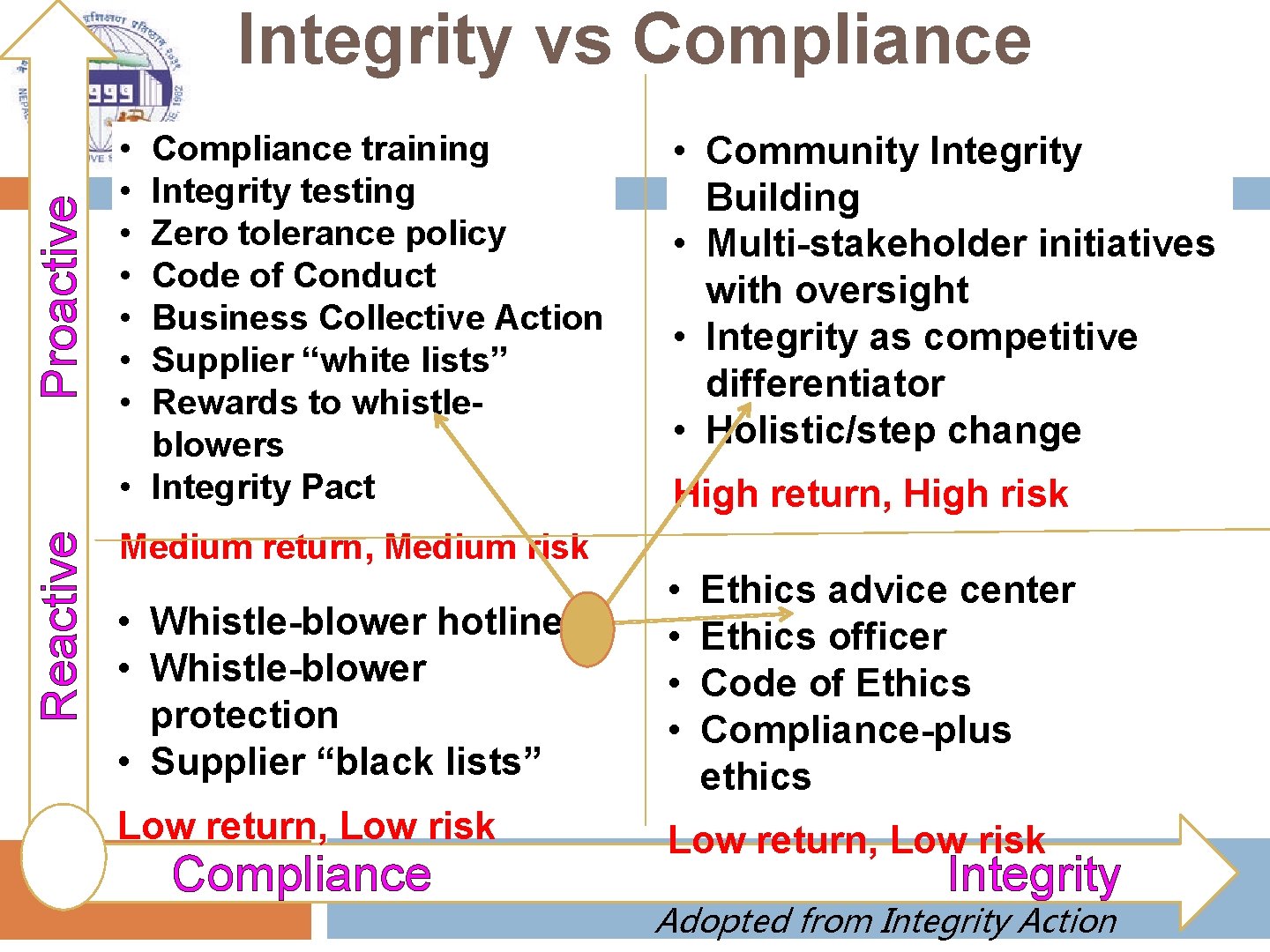
Reactive Proactive Integrity vs Compliance • • Compliance training Integrity testing Zero tolerance policy Code of Conduct Business Collective Action Supplier “white lists” Rewards to whistleblowers • Integrity Pact • Community Integrity Building • Multi-stakeholder initiatives with oversight • Integrity as competitive differentiator • Holistic/step change High return, High risk Medium return, Medium risk • Whistle-blower hotline • Whistle-blower protection • Supplier “black lists” Low return, Low risk Compliance • • Ethics advice center Ethics officer Code of Ethics Compliance-plus ethics Low return, Low risk Integrity Adopted from Integrity Action
Reactive Proactive Integrity vs Compliance • • Compliance training Integrity testing Zero tolerance policy Code of Conduct Business Collective Action Supplier “white lists” Rewards to whistleblowers • Integrity Pact • Community Integrity Building • Multi-stakeholder initiatives with oversight • Integrity as competitive differentiator • Holistic/step change High return, High risk Medium return, Medium risk • Whistle-blower hotline • Whistle-blower protection • Supplier “black lists” Low return, Low risk Compliance • • Ethics advice center Ethics officer Code of Ethics Compliance-plus ethics Low return, Low risk Integrity Adopted from Integrity Action
Reactive Proactive Integrity vs Compliance • • • • • • Compliance training Integrity testing Zero tolerancepolicy Code of Conduct Business Collective Action Supplier “white lists” Rewards to whistle-blowers Rewards to whistle. Integrity Pact blowers Medium return, Medium risk • Integrity Pact • Community Integrity Building Integrity • Building Multi-stakeholder initiatives with oversight • Multi-stakeholder initiatives • with Integrity as competitive oversight differentiator • Integrity as competitive • Holistic/step change differentiator return, Highchange risk • High Holistic/step High return, High risk Medium return, Medium risk • Whistle-blower hotline • Whistle-blower protection • Supplier “black lists” Low return, Low risk Compliance • • Ethics advice center Ethics officer Code of Ethics Compliance-plus ethics Low return, Low risk Integrity Adopted from Integrity Action
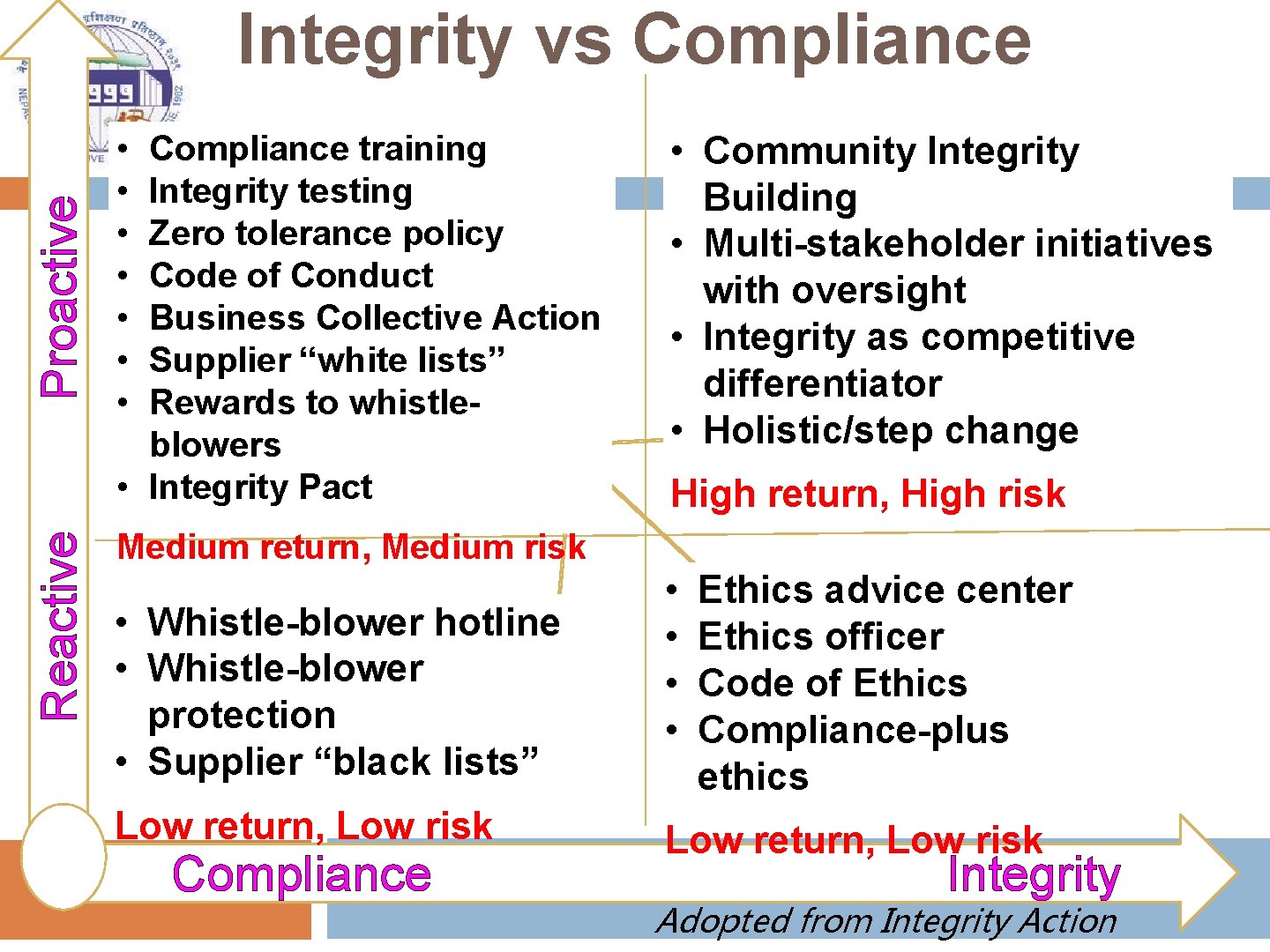
Reactive Proactive Integrity vs Compliance • • • • • Compliance training Integrity testing Zero tolerancepolicy Code of Conduct Business Collective Action Supplier “white lists” Rewards to whistle-blowers Rewards to whistle. Integrity Pact blowers Medium return, Medium risk • Integrity Pact • Community Integrity Building Integrity • Building Multi-stakeholder initiatives with oversight • Multi-stakeholder initiatives • with Integrity as competitive oversight differentiator • Integrity as competitive • Holistic/step change differentiator return, Highchange risk • High Holistic/step High return, High risk Medium return, Medium risk • • • Low return, Low risk Whistle-blower hotline Whistle-blower protection Whistle-blower • protection Supplier “black lists” • Low Supplier lists” return, “black Low risk Compliance Ethics advicecenter Ethics officer Code of. Ethics Compliance-plus ethics Compliance-plus Low return, Low risk ethics Integrity Adopted from Integrity Action
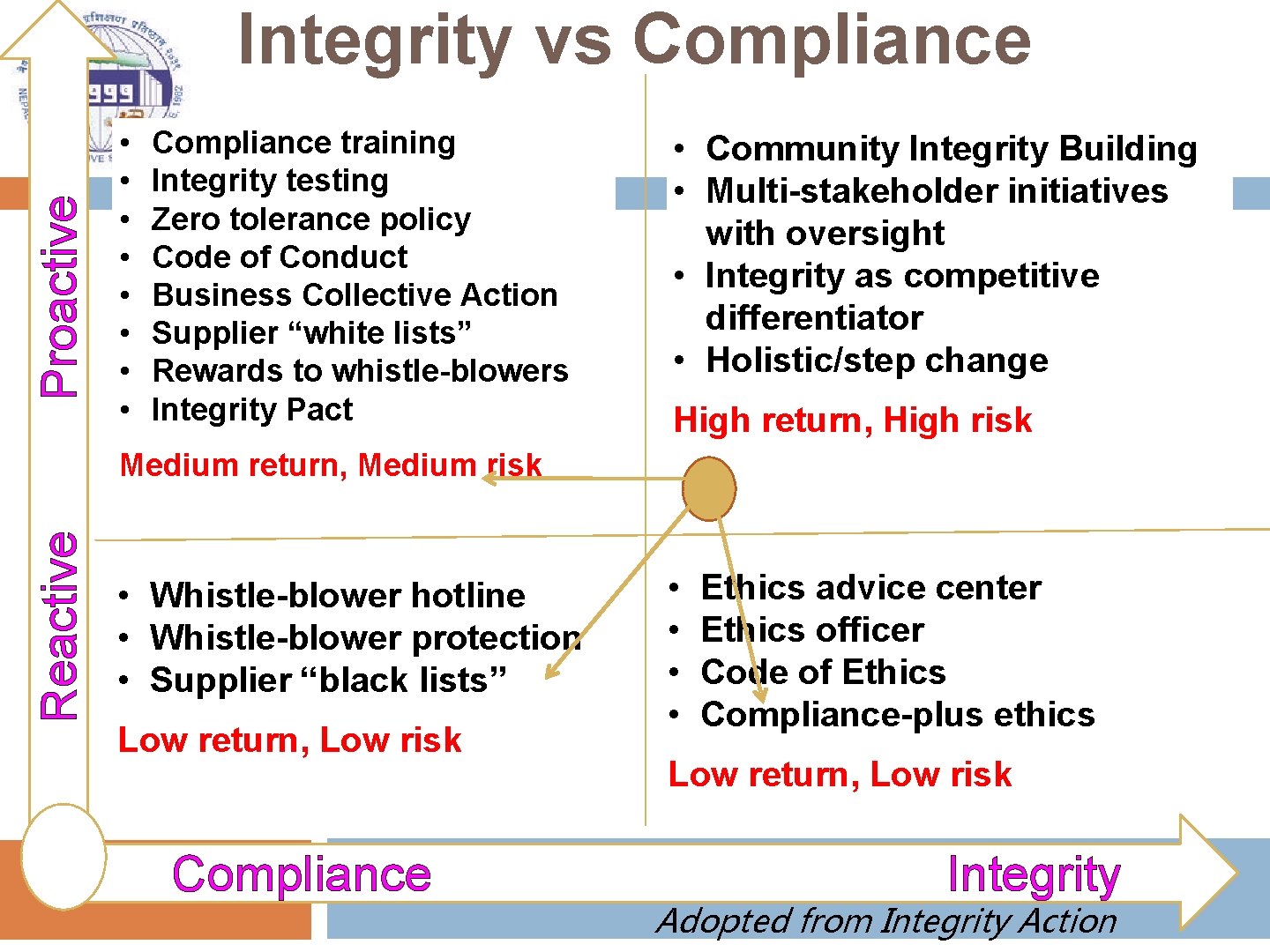
Proactive Integrity vs Compliance • • Compliance training Integrity testing Zero tolerance policy Code of Conduct Business Collective Action Supplier “white lists” Rewards to whistle-blowers Integrity Pact • Community Integrity Building • Multi-stakeholder initiatives with oversight • Integrity as competitive differentiator • Holistic/step change High return, High risk Reactive Medium return, Medium risk • Whistle-blower hotline • Whistle-blower protection • Supplier “black lists” Low return, Low risk Compliance • • Ethics advice center Ethics officer Code of Ethics Compliance-plus ethics Low return, Low risk Integrity Adopted from Integrity Action
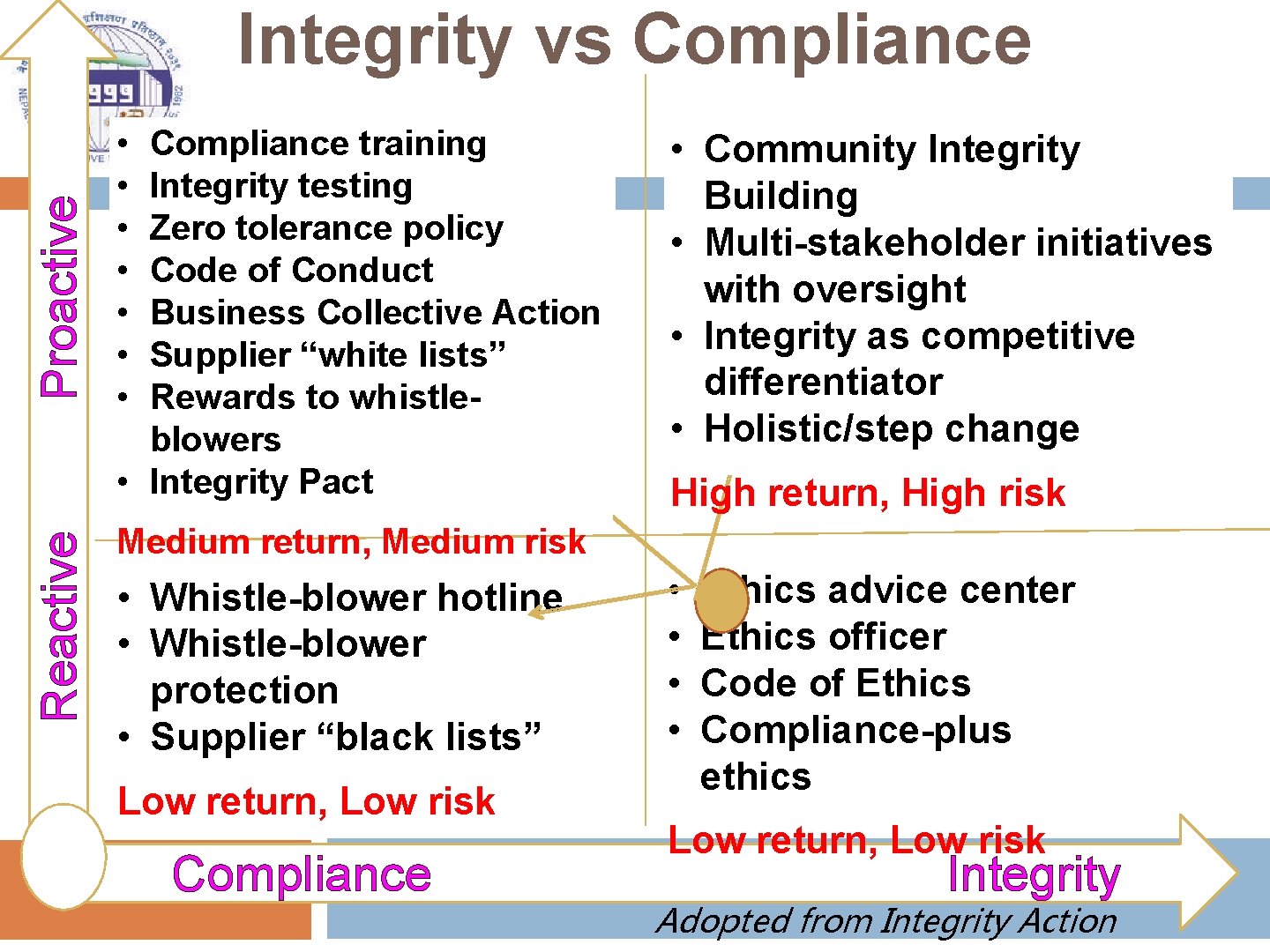
Conclusion No single way or quadrants is enough. But everyone base their action based on one way and move to and fro. Integrity leader based their efforts being on reactive compliance to proactive integrity and Integrity builder based their approach based on proactive integrity and use reactive compliance as on means when necessary.
Thank you
Feature of integrity leader 1. Justice An integrity leader is always fair and just. They have no favorites, and treat everyone equally. Under an integrity leader, no employee has any reason to fear biased treatment on the basis of gender, ethnicity, nationality, or any other factor. 2. Respect others One of the most important traits of integrity leadership is the respect that is given to followers. .
3. Honesty • It goes without saying that anyone who is ethical will also be honest and loyal. Honesty is particularly important to be an effective ethical leader, because followers trust honest and dependable leaders. 4. Humane • Being humane is one of the most revealing traits of a leader who is ethical and moral. Integrity leaders place importance in being kind, and act in a manner that is always beneficial to the team.
5. Focus on teambuilding Integrity leaders foster a sense of community and team spirit within the organization. When an integrity leader strives to achieve goals, it is not just personal goals that they’re concerned about. 6. Value driven decision-making In integrity leadership, all decisions are first checked to ensure that they are in accordance with the overall organizational values. 7. Encourages initiative Under an integrity leader, employees thrive and flourish. Employees are rewarded for coming up with innovative ideas, and are encouraged to do what it takes to improve
8. Leadership by example Ethical leadership is not just about talking the talk, this type of leader also walks the walk. 9. Values awareness An ethical leader will regularly discuss the high values and expectations that they place on themselves, other employees, and the organization. 10. No tolerance for ethical violations An ethical leader expects employees to do the right thing at all times, not just when it is convenient for them.
- Slides: 33