
Lead Exposure Breastfeeding Dr Mary Jean Brown Sc
Lead Exposure & Breastfeeding Dr. Mary Jean Brown, Sc. D, RN Harvard Chan School of Public Health 1 © 2018 National WIC Nutrition Education & Breastfeeding Conference – 1
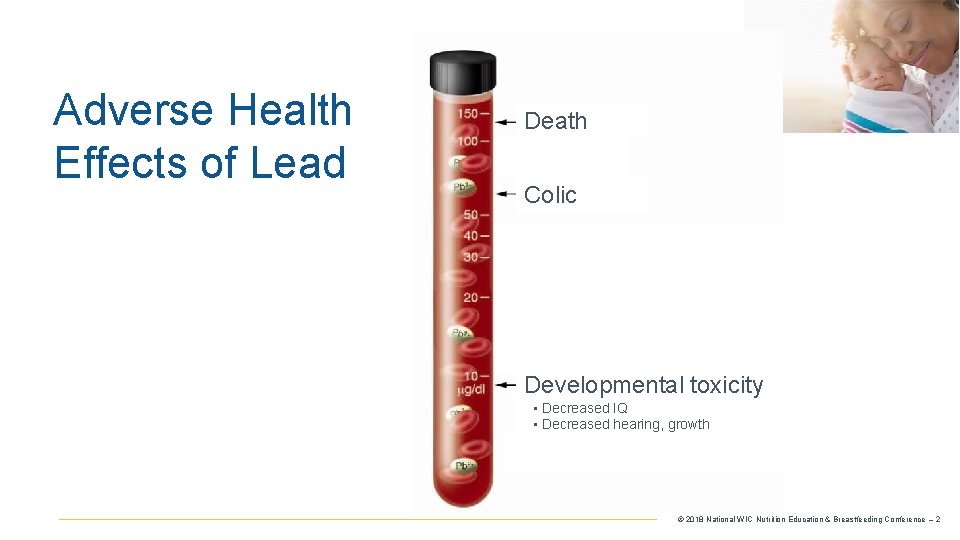
Adverse Health Effects of Lead Death Colic Decreased hemoglobin synthesis Developmental toxicity • Decreased IQ • Decreased hearing, growth © 2018 National WIC Nutrition Education & Breastfeeding Conference – 2
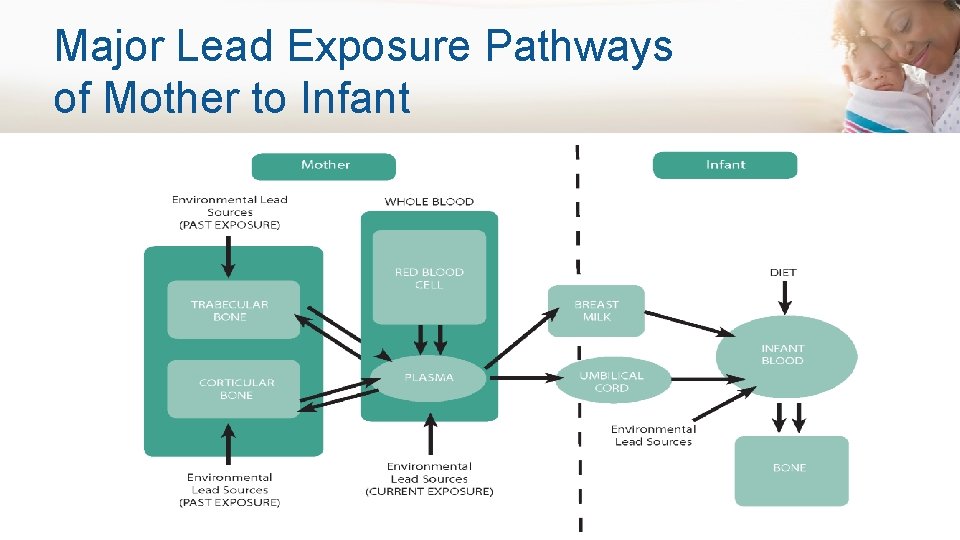
Major Lead Exposure Pathways of Mother to Infant © 2018 National WIC Nutrition Education & Breastfeeding Conference – 3
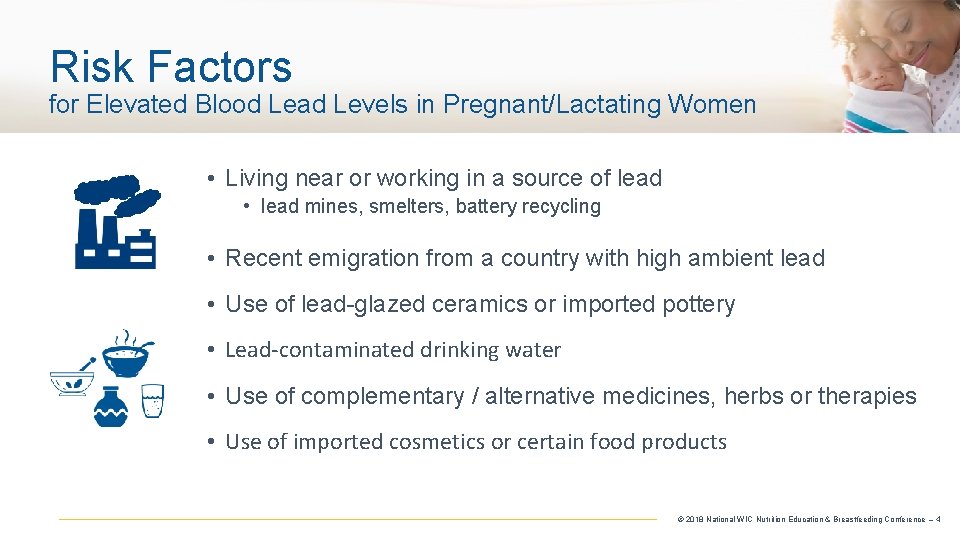
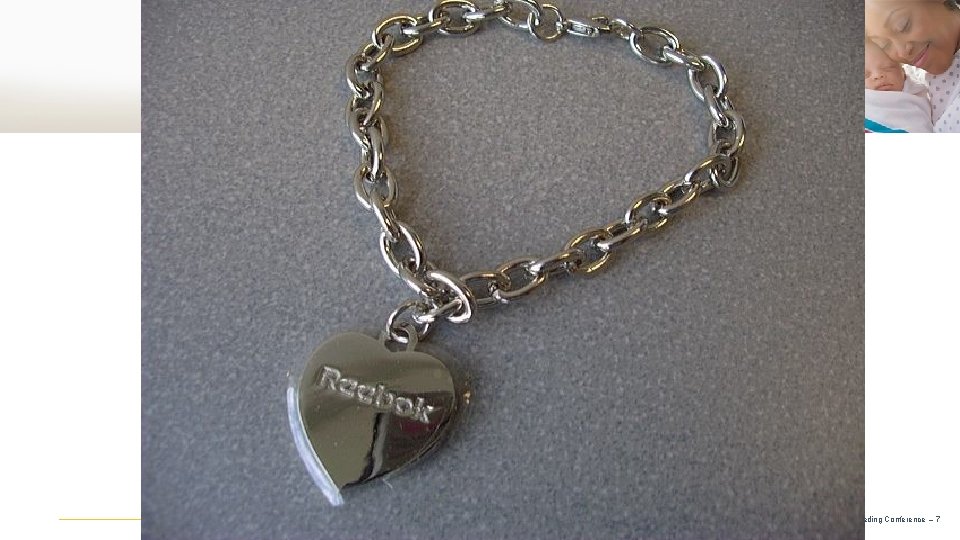
Risk Factors for Elevated Blood Lead Levels in Pregnant/Lactating Women • Living near or working in a source of lead • lead mines, smelters, battery recycling • Recent emigration from a country with high ambient lead • Use of lead-glazed ceramics or imported pottery • Lead-contaminated drinking water • Use of complementary / alternative medicines, herbs or therapies • Use of imported cosmetics or certain food products © 2018 National WIC Nutrition Education & Breastfeeding Conference – 4
Risk Factors…continued • Take home exposures • High-risk hobbies or recreational activities • Renovating or remodeling older homes • Pica behavior • History of previous lead exposure, evidence of elevated BLL • Living with in home or close environment with someone identified with a high lead level © 2018 National WIC Nutrition Education & Breastfeeding Conference – 5
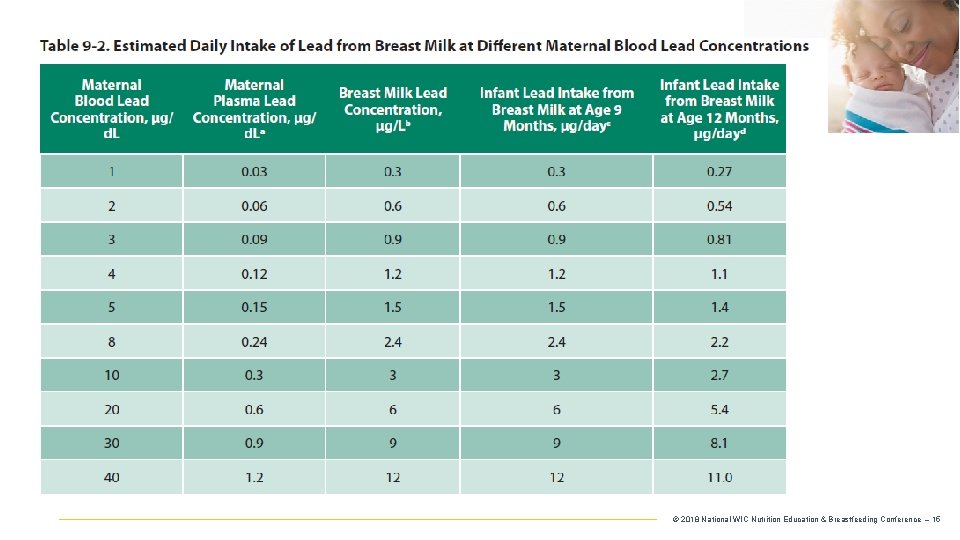
Lead in Breast Milk Calcium administered during pregnancy and early postpartum may constitute a practical intervention to prevent transient skeletal loss. Ettinger et al. Nutrition Journal 2014 Breast milk lead accounted for 12% of the variance of infant blood lead levels while maternal blood lead accounted for 30%. Even among a population of women with relatively high lifetime exposure to lead, levels of lead in breast milk are low, influenced both by current lead exposure and by redistribution of bone lead accumulated from past environmental exposures. Ettinger et al. EHP 2004 © 2018 National WIC Nutrition Education & Breastfeeding Conference – 6
© 2018 National WIC Nutrition Education & Breastfeeding Conference – 7
Key Considerations for Breastfeeding Human breast milk is specific to the needs of the infant and is the most complete and ideal source for infant nourishment in the first year of life. © 2018 National WIC Nutrition Education & Breastfeeding Conference – 8
Key Recommendations for Initiation of Breastfeeding • Measurement of levels of lead in breast milk is not recommended. • Mothers with BLLs <40 μg/d. L should breastfeed. • Mothers with confirmed BLLs ≥ 40 μg/d. L should begin breastfeeding when their blood lead levels drop below 40 μg/d. L. Until then, they should pump and discard their breast milk. These recommendations are not appropriate in countries where infant mortality from infectious diseases is high. World Health Organization Collaborative Study Team on the Role of Breastfeeding on the Prevention of Infant Mortality 2000 © 2018 National WIC Nutrition Education & Breastfeeding Conference – 9
Key Recommendations …continued • Breastfeeding should continue for all infants with BLLs below 5 μg/d. L. • Infants born to mothers with BLL ≥ 5 μg/d. L can continue to breastfeed unless there are indications that the breast milk is contributing to elevating BLLs. • For infants whose blood lead levels are rising or failing to decline by 5 μg/d. L or more, environmental and other sources of lead exposure should be evaluated. If no external source is identified, and maternal BLLs are >20 μg/d. L and infant BLL ≥ 5 μg/d. L, then breast milk should be suspected as the source, and temporary interruption of breastfeeding until maternal blood lead levels decline should be considered. © 2018 National WIC Nutrition Education & Breastfeeding Conference – 10
Key Recommendations for Continuation of Breastfeeding • Breastfeeding should continue for all infants with BLLs below 5 μg/d. L. • Infants born to mothers with BLL ≥ 5 μg/d. L can continue to breastfeed unless there are indications that the breast milk is contributing to elevating BLLs. • For infants whose blood lead levels are rising or failing to decline by 5 μg/d. L or more, environmental and other sources of lead exposure should be evaluated. If no external source is identified, and maternal BLLs are >20 μg/d. L and infant BLL ≥ 5 μg/d. L, then breast milk should be suspected as the source, and temporary interruption of breastfeeding until maternal blood lead levels decline should be considered. © 2018 National WIC Nutrition Education & Breastfeeding Conference – 11
Key Recommendations for Use of Reconstituted Infant Formula • Infant formula requiring reconstitution should be made only with water from the cold water tap. • Flush the tap for at least 3 minutes before use and then heat the water or use bottled or filtered tap water known to be free of lead. © 2018 National WIC Nutrition Education & Breastfeeding Conference – 12
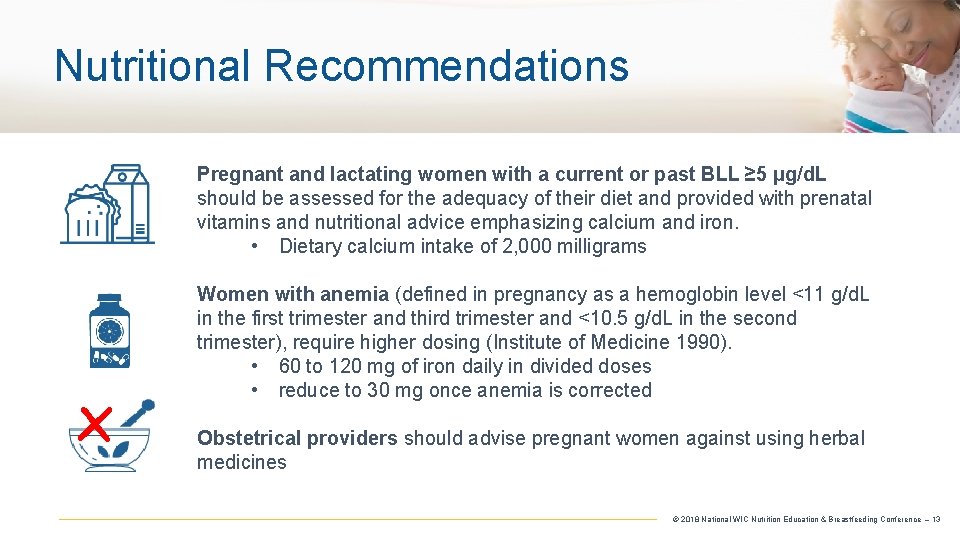
Nutritional Recommendations Pregnant and lactating women with a current or past BLL ≥ 5 μg/d. L should be assessed for the adequacy of their diet and provided with prenatal vitamins and nutritional advice emphasizing calcium and iron. • Dietary calcium intake of 2, 000 milligrams x Women with anemia (defined in pregnancy as a hemoglobin level <11 g/d. L in the first trimester and third trimester and <10. 5 g/d. L in the second trimester), require higher dosing (Institute of Medicine 1990). • 60 to 120 mg of iron daily in divided doses • reduce to 30 mg once anemia is corrected Obstetrical providers should advise pregnant women against using herbal medicines © 2018 National WIC Nutrition Education & Breastfeeding Conference – 13
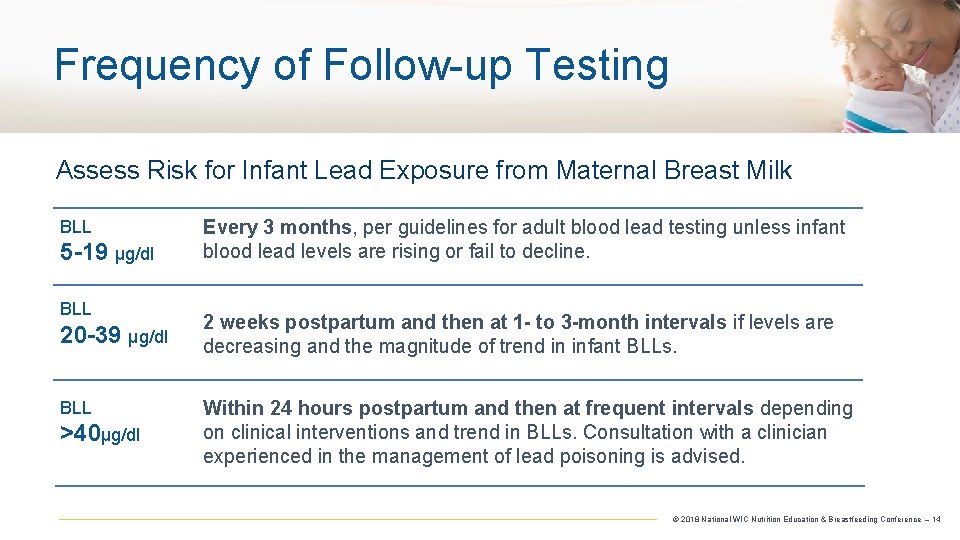
Frequency of Follow-up Testing Assess Risk for Infant Lead Exposure from Maternal Breast Milk BLL 5 -19 µg/dl BLL 20 -39 µg/dl BLL >40µg/dl Every 3 months, per guidelines for adult blood lead testing unless infant blood lead levels are rising or fail to decline. 2 weeks postpartum and then at 1 - to 3 -month intervals if levels are decreasing and the magnitude of trend in infant BLLs. Within 24 hours postpartum and then at frequent intervals depending on clinical interventions and trend in BLLs. Consultation with a clinician experienced in the management of lead poisoning is advised. © 2018 National WIC Nutrition Education & Breastfeeding Conference – 14
© 2018 National WIC Nutrition Education & Breastfeeding Conference – 15

Thank You © 2018 National WIC Nutrition Education & Breastfeeding Conference – 16
References © 2018 National WIC Nutrition Education & Breastfeeding Conference – 17
- Slides: 17