
Lead 208 Pb Radius Experiment PREX Elastic Scattering
Lead ( 208 Pb) Radius Experiment : PREX Elastic Scattering Parity Violating Asymmetry E = 1 Ge. V, electrons on lead Spokespersons Paul Souder, Krishna Kumar Guido Urciuoli, Robert Michaels Graduate Students Ahmed Zafar, Chun Min Jen, Abdurahim Rakham (Syracuse) 208 Pb Jon Wexler (UMass) Kiadtisak Saenboonruang (UVa) R. Michaels, Jlab UGM, June, 2011 Ran March – June 2010 in Hall A
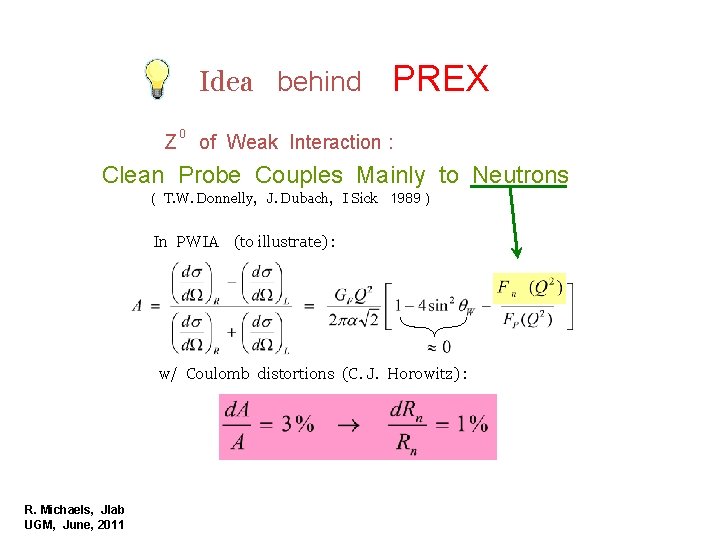
Idea behind Z 0 PREX of Weak Interaction : Clean Probe Couples Mainly to Neutrons ( T. W. Donnelly, J. Dubach, I Sick 1989 ) In PWIA (to illustrate) : w/ Coulomb distortions (C. J. Horowitz) : R. Michaels, Jlab UGM, June, 2011
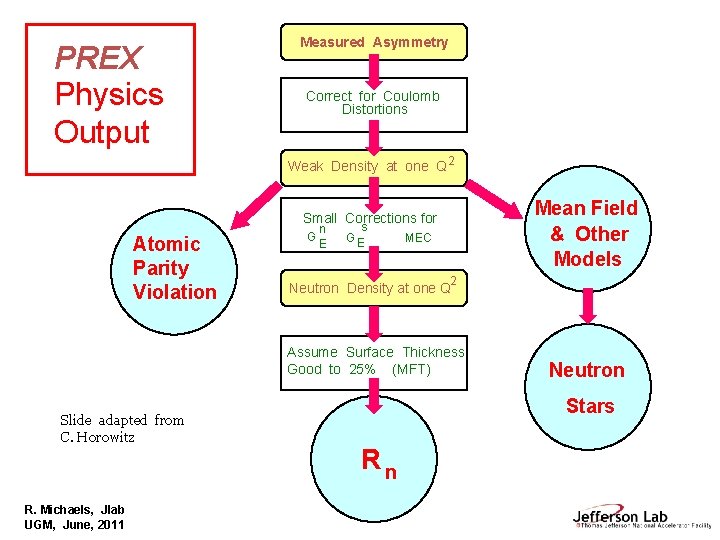
PREX Physics Output Measured Asymmetry Correct for Coulomb Distortions Weak Density at one Q 2 Mean Field & Other Models Small Corrections for Atomic Parity Violation G n E s GE MEC 2 Neutron Density at one Q Assume Surface Thickness Good to 25% (MFT) Slide adapted from C. Horowitz R. Michaels, Jlab UGM, June, 2011 Neutron Stars Rn
Fundamental Nuclear Physics : What is the size of a nucleus ? Neutrons are thought to determine the size of heavy nuclei like 208 Pb. Can theory predict it ? R. Michaels, Jlab UGM, June, 2011
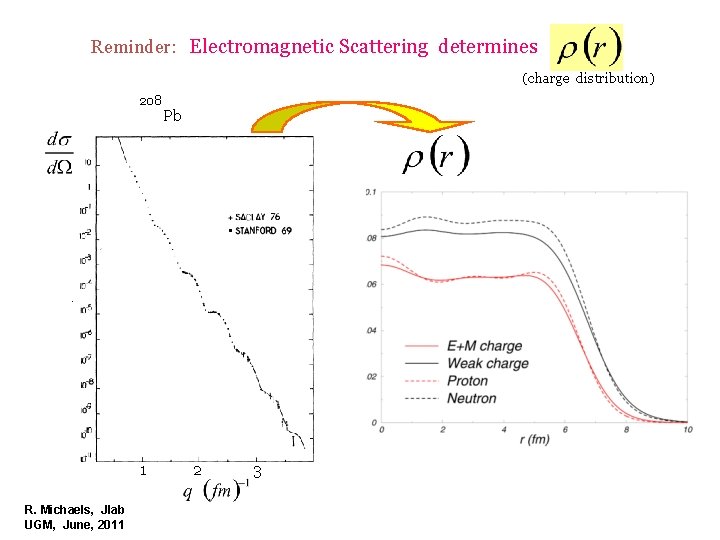
Reminder: Electromagnetic Scattering determines (charge distribution) 208 1 R. Michaels, Jlab UGM, June, 2011 Pb 2 3
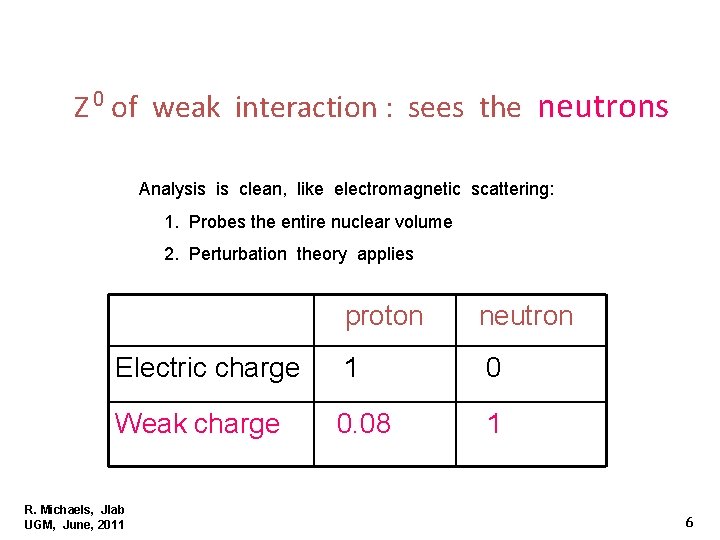
Z 0 of weak interaction : sees the neutrons Analysis is clean, like electromagnetic scattering: 1. Probes the entire nuclear volume 2. Perturbation theory applies proton neutron Electric charge 1 0 Weak charge 0. 08 1 R. Michaels, Jlab UGM, June, 2011 6
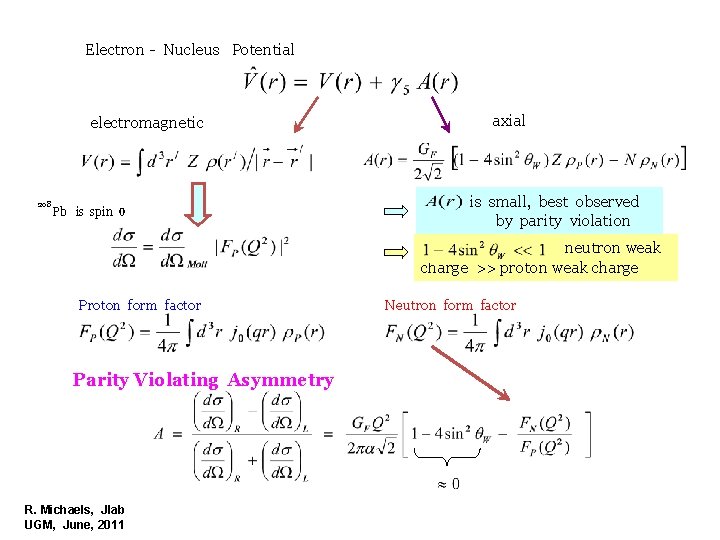
Electron - Nucleus Potential electromagnetic 208 Pb is spin 0 axial is small, best observed by parity violation neutron weak charge >> proton weak charge Proton form factor Parity Violating Asymmetry R. Michaels, Jlab UGM, June, 2011 Neutron form factor
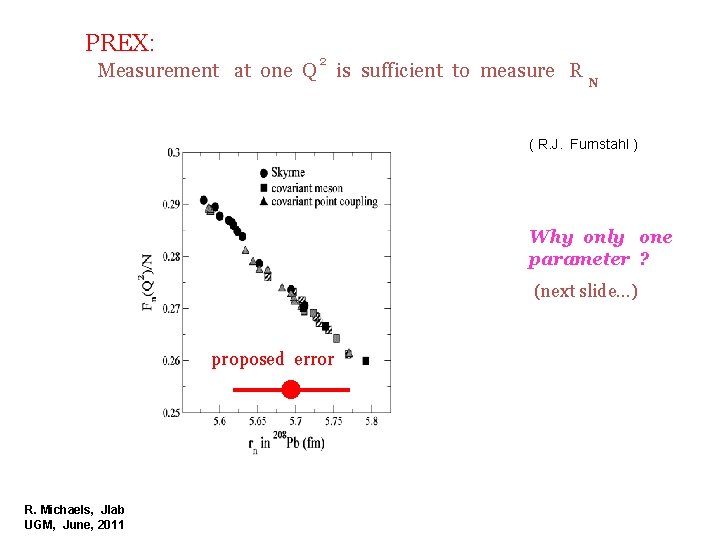
PREX: 2 Measurement at one Q is sufficient to measure R N ( R. J. Furnstahl ) Why only one parameter ? (next slide…) proposed error R. Michaels, Jlab UGM, June, 2011
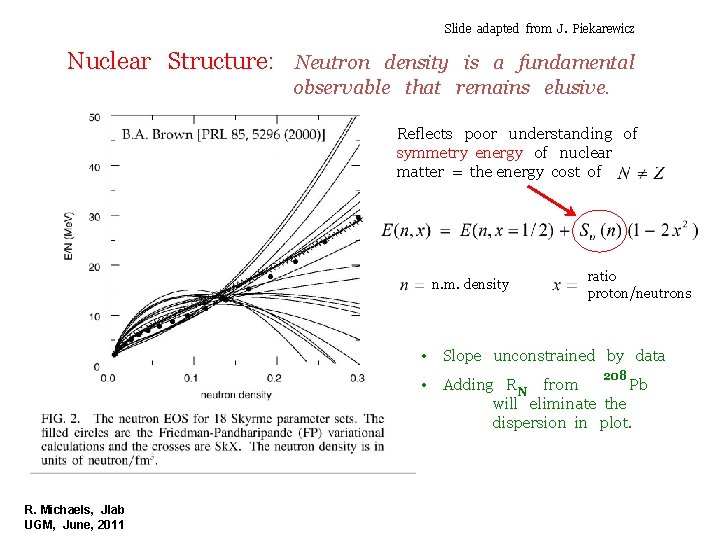
Slide adapted from J. Piekarewicz Nuclear Structure: Neutron density is a fundamental observable that remains elusive. Reflects poor understanding of symmetry energy of nuclear matter = the energy cost of n. m. density ratio proton/neutrons • Slope unconstrained by data 208 • Adding R N from Pb will eliminate the dispersion in plot. R. Michaels, Jlab UGM, June, 2011
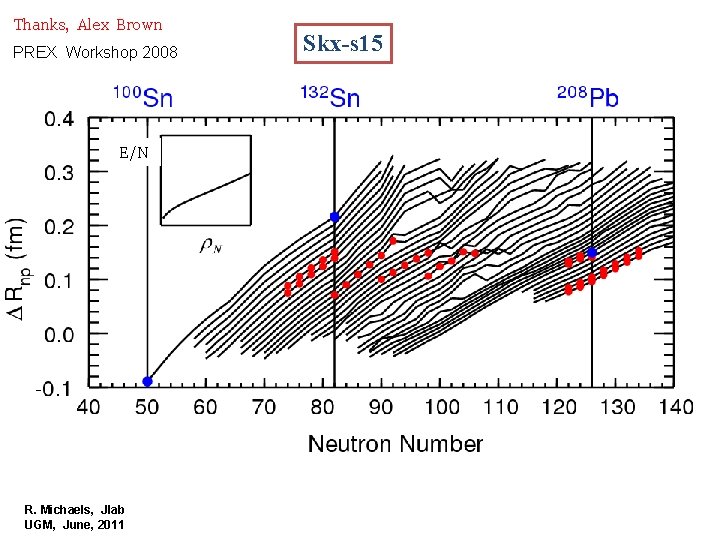
Thanks, Alex Brown PREX Workshop 2008 E/N R. Michaels, Jlab UGM, June, 2011 Skx-s 15
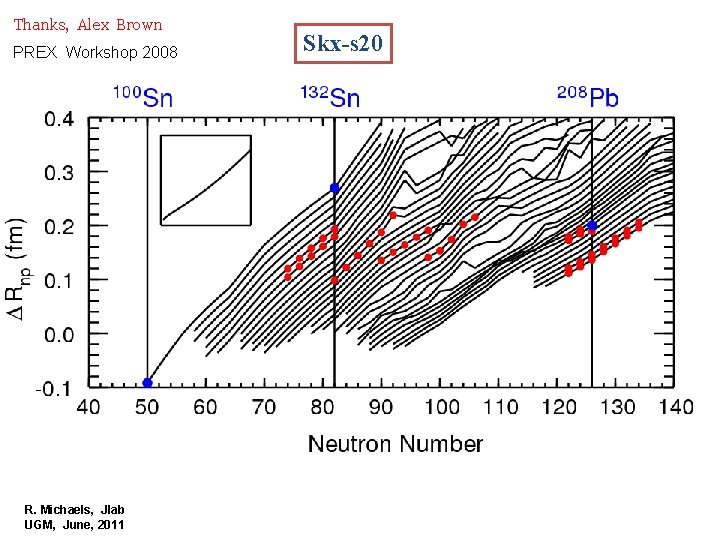
Thanks, Alex Brown PREX Workshop 2008 R. Michaels, Jlab UGM, June, 2011 Skx-s 20
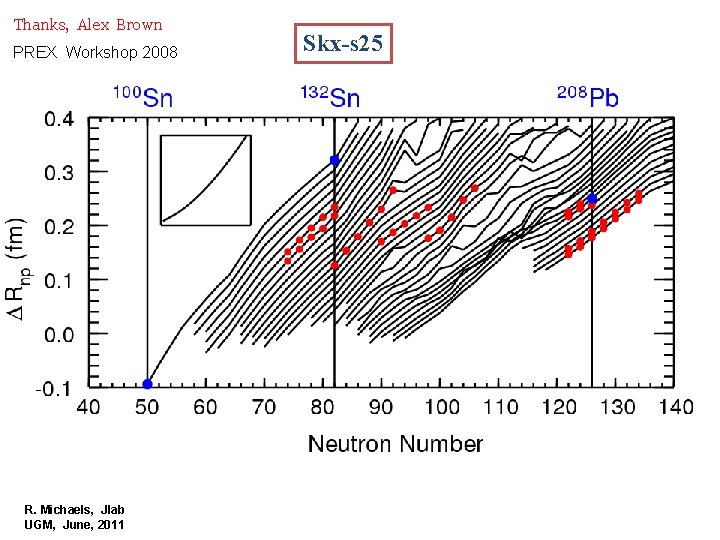
Thanks, Alex Brown PREX Workshop 2008 R. Michaels, Jlab UGM, June, 2011 Skx-s 25
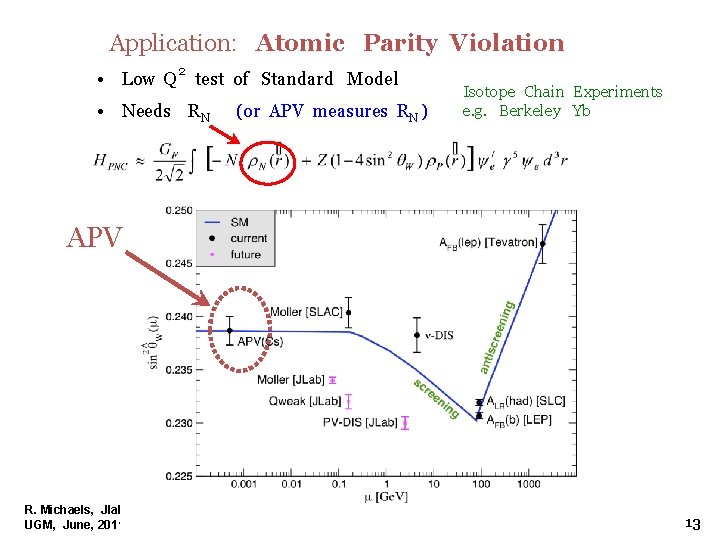
Application: Atomic Parity Violation • Low Q 2 test of Standard Model • Needs RN (or APV measures RN ) Isotope Chain Experiments e. g. Berkeley Yb APV R. Michaels, Jlab UGM, June, 2011 13
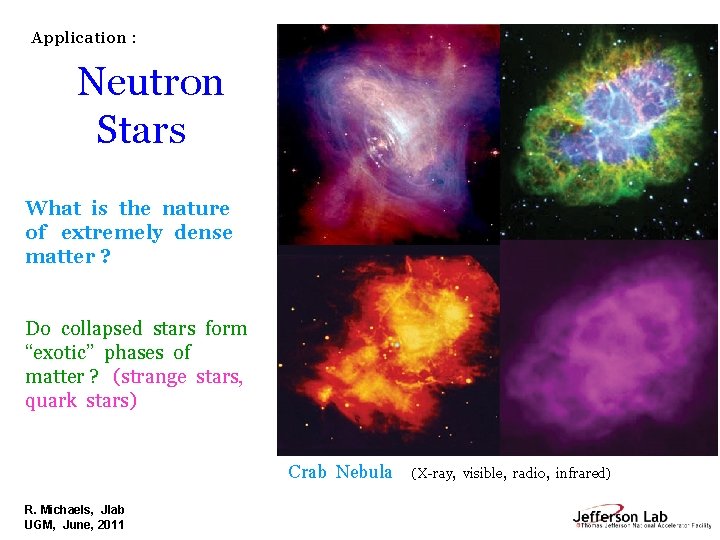
Application : Neutron Stars What is the nature of extremely dense matter ? Do collapsed stars form “exotic” phases of matter ? (strange stars, quark stars) Crab Nebula R. Michaels, Jlab UGM, June, 2011 (X-ray, visible, radio, infrared)
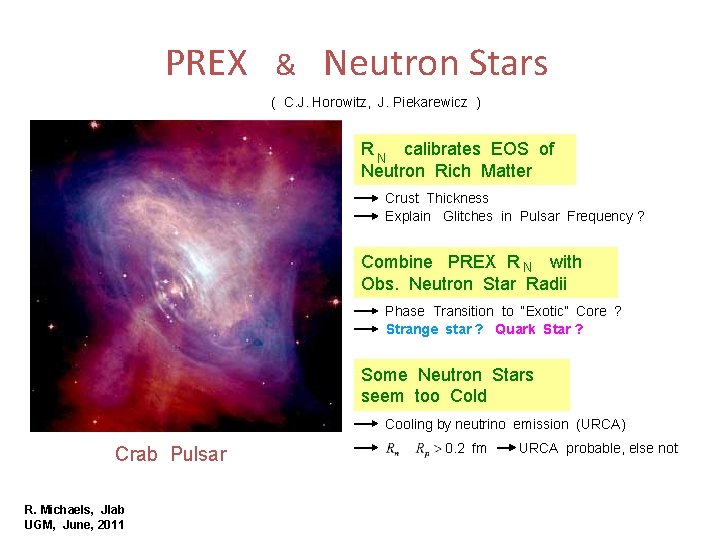
PREX & Neutron Stars ( C. J. Horowitz, J. Piekarewicz ) R N calibrates EOS of Neutron Rich Matter Crust Thickness Explain Glitches in Pulsar Frequency ? Combine PREX R N with Obs. Neutron Star Radii Phase Transition to “Exotic” Core ? Strange star ? Quark Star ? Some Neutron Stars seem too Cold Cooling by neutrino emission (URCA) Crab Pulsar R. Michaels, Jlab UGM, June, 2011 0. 2 fm URCA probable, else not
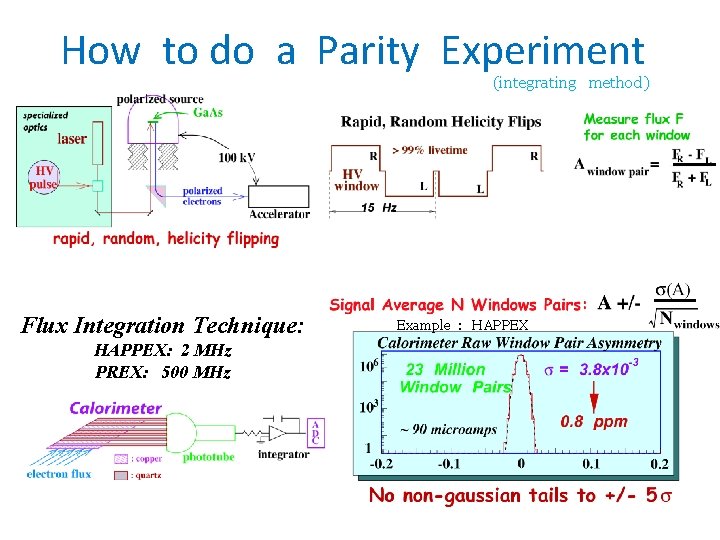
How to do a Parity Experiment (integrating method) Flux Integration Technique: HAPPEX: 2 MHz PREX: 500 MHz R. Michaels, Jlab UGM, June, 2011 Example : HAPPEX
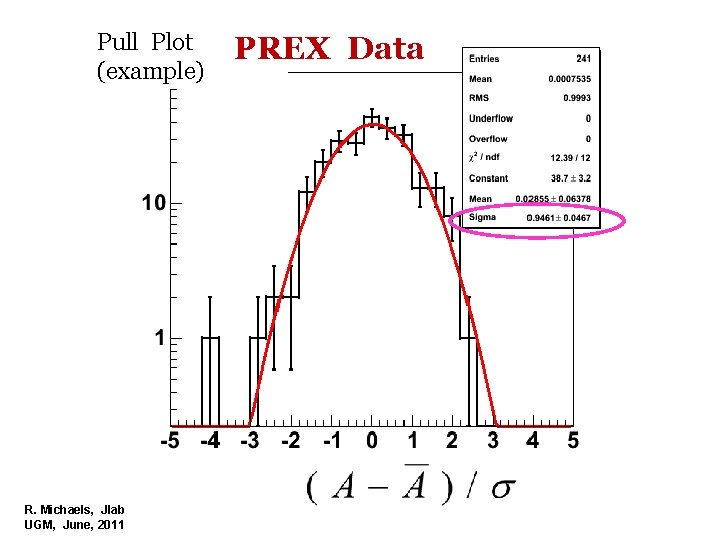
Pull Plot (example) R. Michaels, Jlab UGM, June, 2011 PREX Data
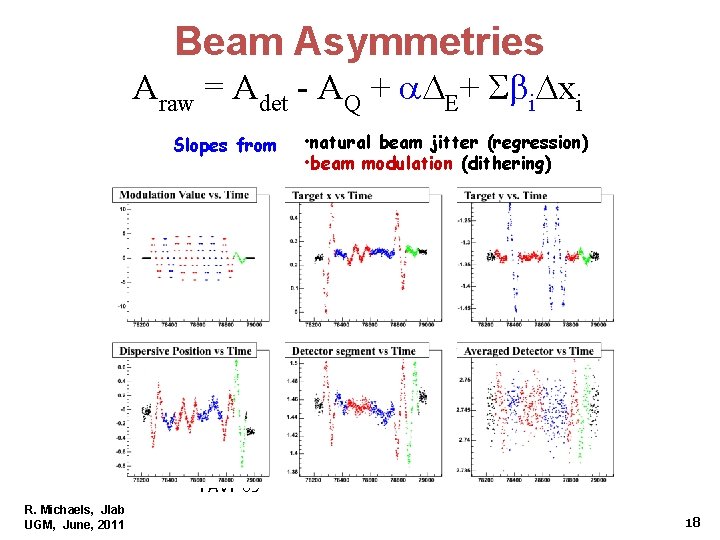
Beam Asymmetries Araw = Adet - AQ + E+ i xi Slopes from • natural beam jitter (regression) • beam modulation (dithering) PAVI 09 R. Michaels, Jlab UGM, June, 2011 18
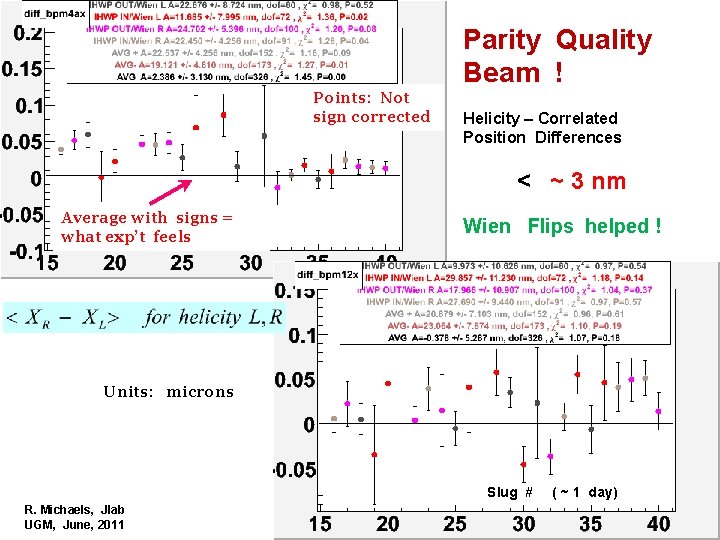
Parity Quality Beam ! Points: Not sign corrected Helicity – Correlated Position Differences < ~ 3 nm Average with signs = what exp’t feels Wien Flips helped ! Units: microns Slug # R. Michaels, Jlab UGM, June, 2011 ( ~ 1 day)
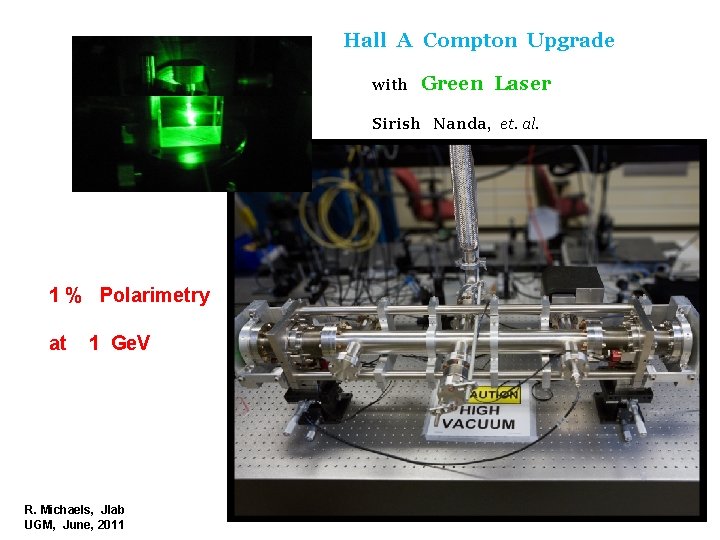
Hall A Compton Upgrade with Green Laser Sirish Nanda, et. al. 1 % Polarimetry at 1 Ge. V R. Michaels, Jlab UGM, June, 2011
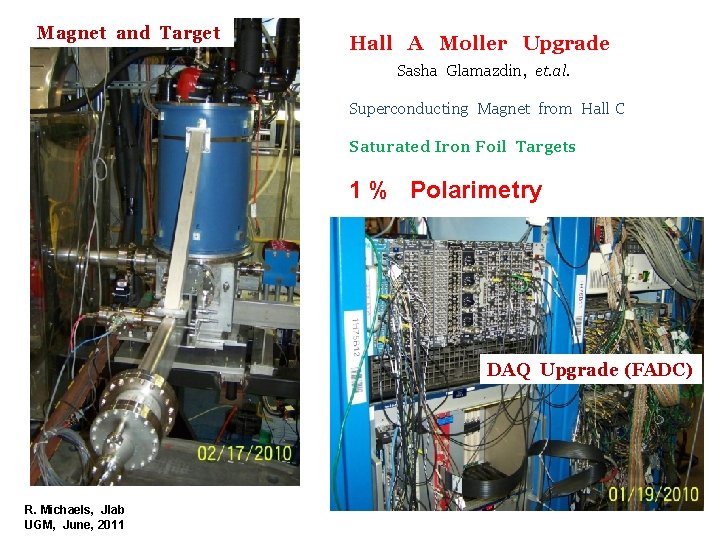
Magnet and Target Hall A Moller Upgrade Sasha Glamazdin, et. al. Superconducting Magnet from Hall C Saturated Iron Foil Targets 1 % Polarimetry DAQ Upgrade (FADC) R. Michaels, Jlab UGM, June, 2011
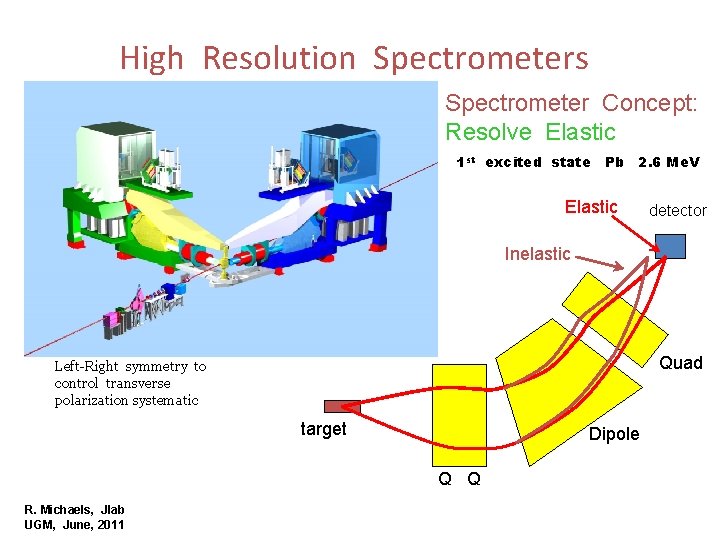
High Resolution Spectrometers Spectrometer Concept: Resolve Elastic 1 st excited state Pb 2. 6 Me. V Elastic detector Inelastic Quad Left-Right symmetry to control transverse polarization systematic target Dipole Q Q R. Michaels, Jlab UGM, June, 2011
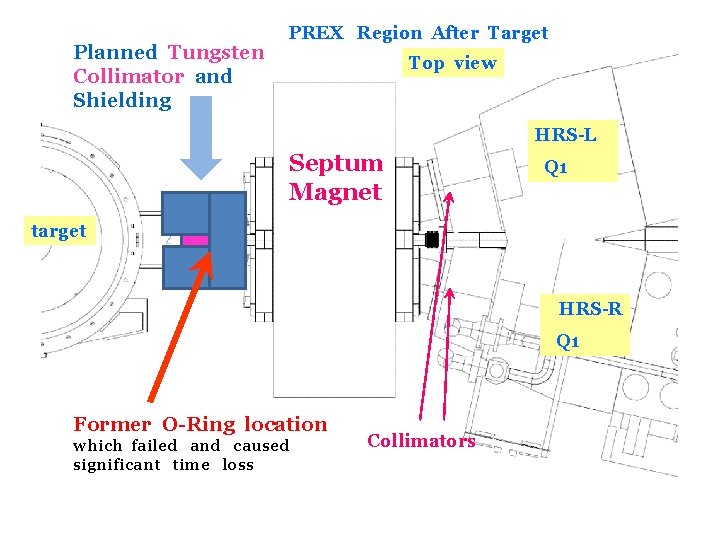
Planned Tungsten Collimator and Shielding PREX Region After Target Top view HRS-L Septum Magnet Q 1 target HRS-R Q 1 Former O-Ring location which failed and caused significant time loss R. Michaels, Jlab UGM, June, 2011 Collimators
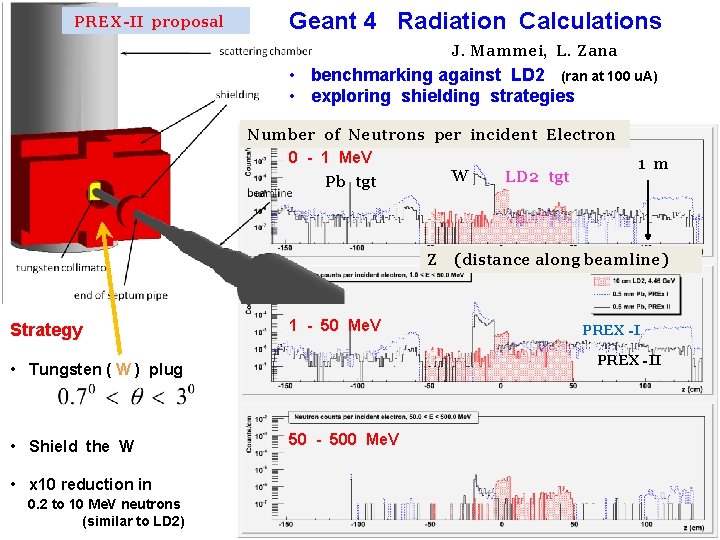
PREX-II proposal Geant 4 Radiation Calculations J. Mammei, L. Zana • benchmarking against LD 2 (ran at 100 u. A) • exploring shielding strategies Number of Neutrons per incident Electron 0 - 1 Me. V W LD 2 tgt Pb tgt 10 m 1 m Z (distance along beamline) Strategy 1 - 50 Me. V PREX -II • Tungsten ( W ) plug • Shield the W 50 - 500 Me. V • x 10 reduction in 0. 2 to 10 Me. V R. Michaels, Jlabneutrons (similar UGM, June, 2011 to LD 2) PREX -I -1 m
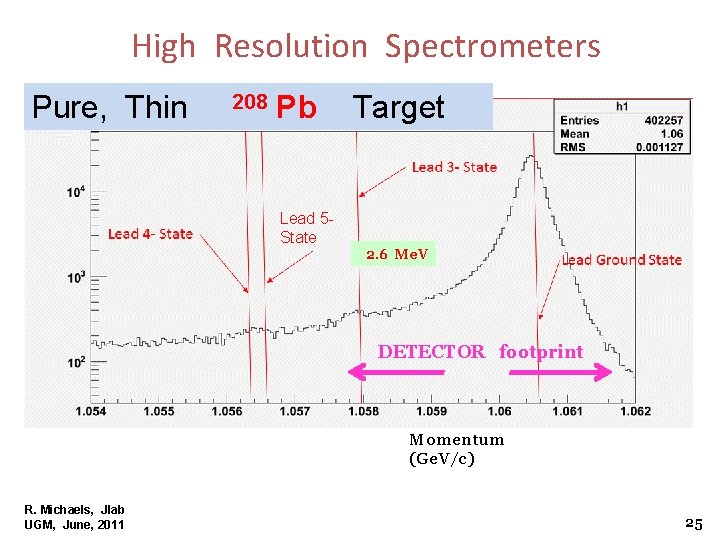
High Resolution Spectrometers Pure, Thin 208 Pb Lead 5 State Target 2. 6 Me. V DETECTOR footprint Momentum (Ge. V/c) R. Michaels, Jlab UGM, June, 2011 25
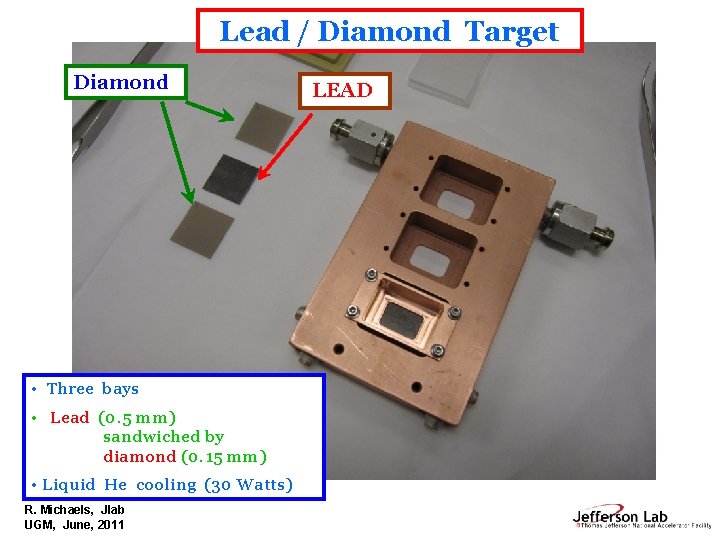
Lead / Diamond Target Diamond • Three bays • Lead (0. 5 mm) sandwiched by diamond (0. 15 mm) • Liquid He cooling (30 Watts) R. Michaels, Jlab UGM, June, 2011 LEAD
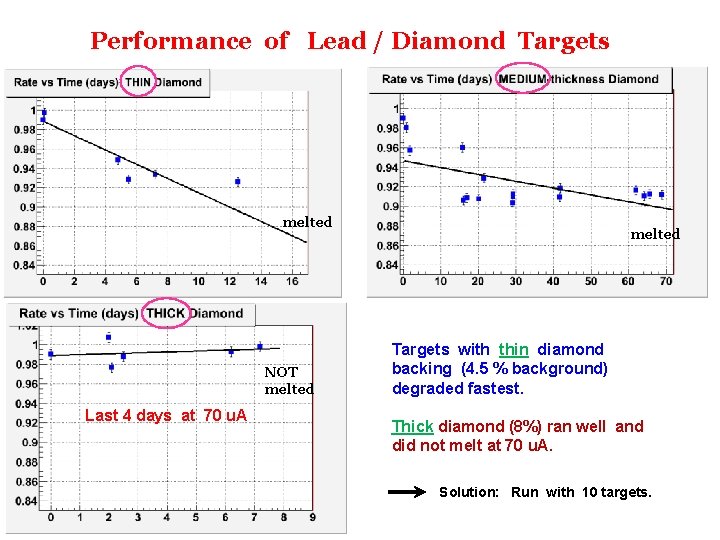
Performance of Lead / Diamond Targets melted NOT melted Last 4 days at 70 u. A melted Targets with thin diamond backing (4. 5 % background) degraded fastest. Thick diamond (8%) ran well and did not melt at 70 u. A. Solution: Run with 10 targets. R. Michaels, Jlab UGM, June, 2011
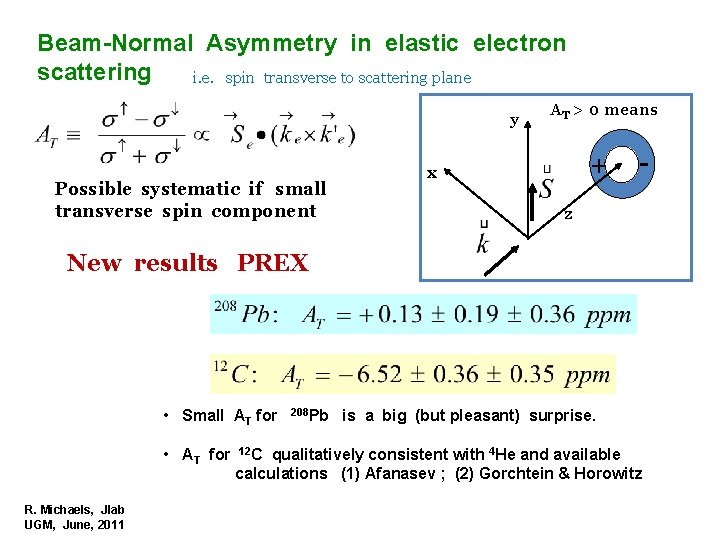
Beam-Normal Asymmetry in elastic electron scattering i. e. spin transverse to scattering plane y Possible systematic if small transverse spin component AT > 0 means + x - z New results PREX • Small AT for • AT for R. Michaels, Jlab UGM, June, 2011 12 C 208 Pb is a big (but pleasant) surprise. qualitatively consistent with 4 He and available calculations (1) Afanasev ; (2) Gorchtein & Horowitz
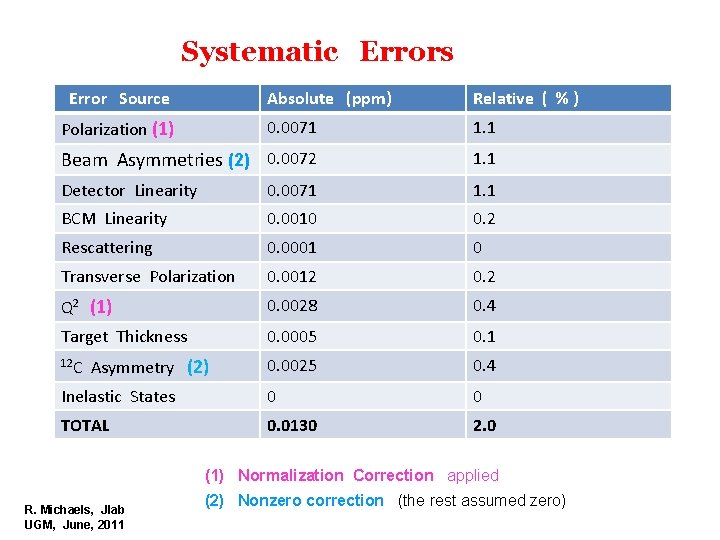
Systematic Errors Error Source Absolute (ppm) Relative ( % ) 0. 0071 1. 1 Beam Asymmetries (2) 0. 0072 1. 1 Detector Linearity 0. 0071 1. 1 BCM Linearity 0. 0010 0. 2 Rescattering 0. 0001 0 Transverse Polarization 0. 0012 0. 2 Q 2 (1) 0. 0028 0. 4 Target Thickness 0. 0005 0. 1 0. 0025 0. 4 Inelastic States 0 0 TOTAL 0. 0130 2. 0 Polarization (1) 12 C Asymmetry (2) (1) Normalization Correction applied R. Michaels, Jlab UGM, June, 2011 (2) Nonzero correction (the rest assumed zero)
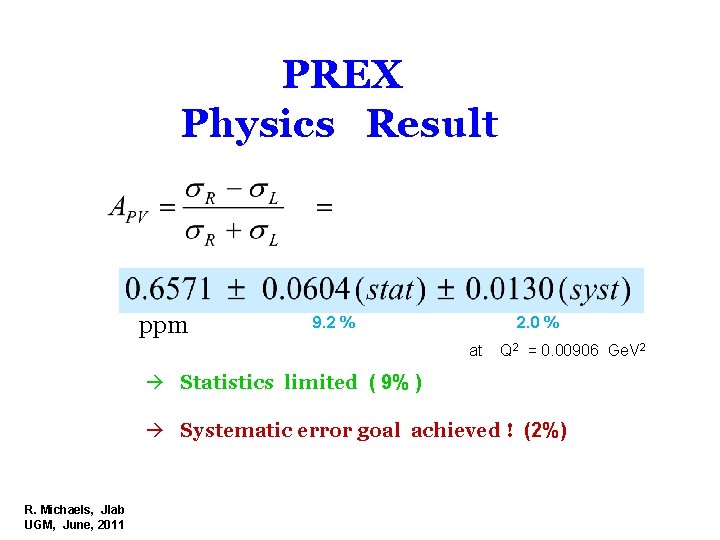
PREX Physics Result ppm 9. 2 % 2. 0 % at Q 2 = 0. 00906 Ge. V 2 Statistics limited ( 9% ) Systematic error goal achieved ! (2%) R. Michaels, Jlab UGM, June, 2011
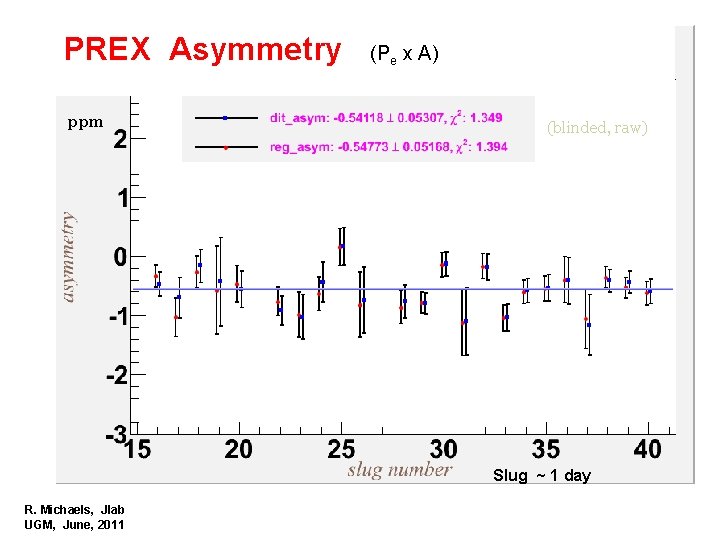
PREX Asymmetry ppm (Pe x A) (blinded, raw) Slug ~ 1 day R. Michaels, Jlab UGM, June, 2011
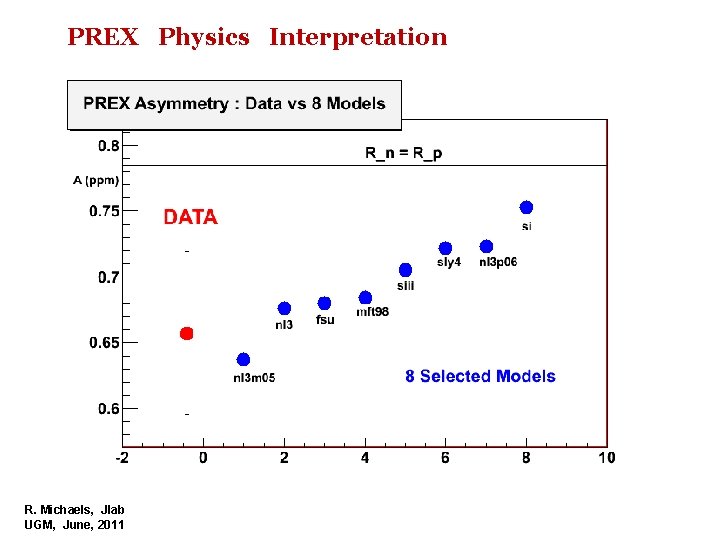
PREX Physics Interpretation R. Michaels, Jlab UGM, June, 2011
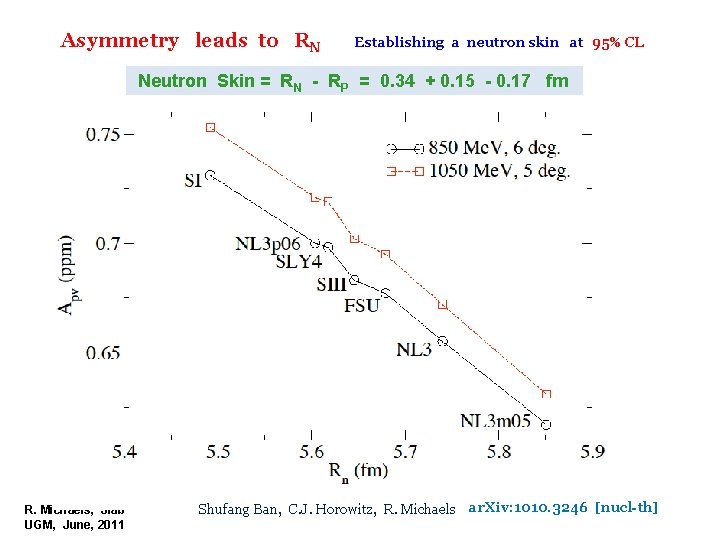
Asymmetry leads to RN Establishing a neutron skin at 95% CL Neutron Skin = RN - RP = 0. 34 + 0. 15 - 0. 17 fm R. Michaels, Jlab UGM, June, 2011 Shufang Ban, C. J. Horowitz, R. Michaels ar. Xiv: 1010. 3246 [nucl-th]
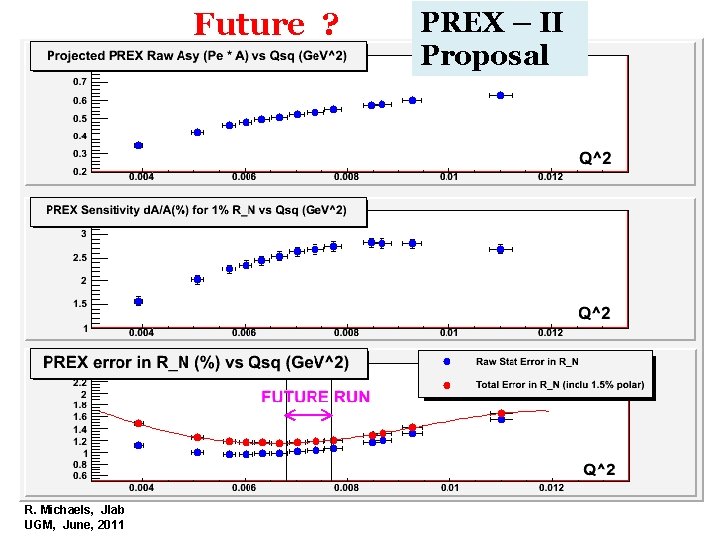
Future ? R. Michaels, Jlab UGM, June, 2011 PREX – II Proposal
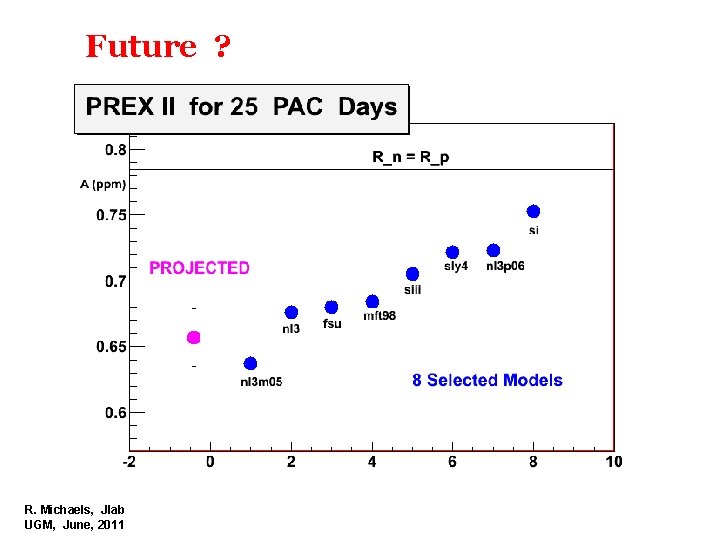
Future ? R. Michaels, Jlab UGM, June, 2011
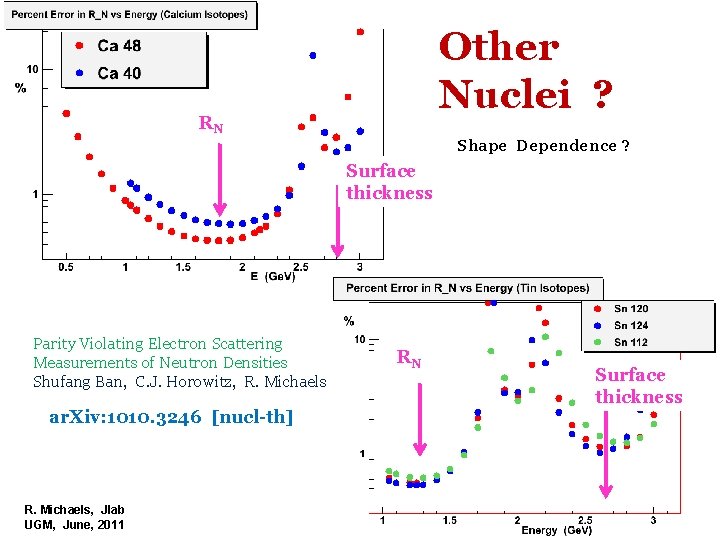
Other Nuclei ? RN Shape Dependence ? Surface thickness Parity Violating Electron Scattering Measurements of Neutron Densities Shufang Ban, C. J. Horowitz, R. Michaels ar. Xiv: 1010. 3246 [nucl-th] R. Michaels, Jlab UGM, June, 2011 RN Surface thickness
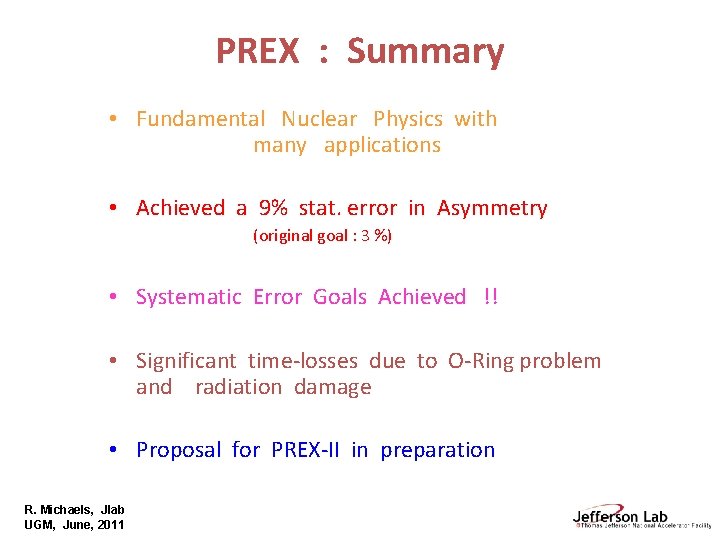
PREX : Summary • Fundamental Nuclear Physics with many applications • Achieved a 9% stat. error in Asymmetry (original goal : 3 %) • Systematic Error Goals Achieved !! • Significant time-losses due to O-Ring problem and radiation damage • Proposal for PREX-II in preparation R. Michaels, Jlab UGM, June, 2011
Extra Slides R. Michaels, Jlab UGM, June, 2011
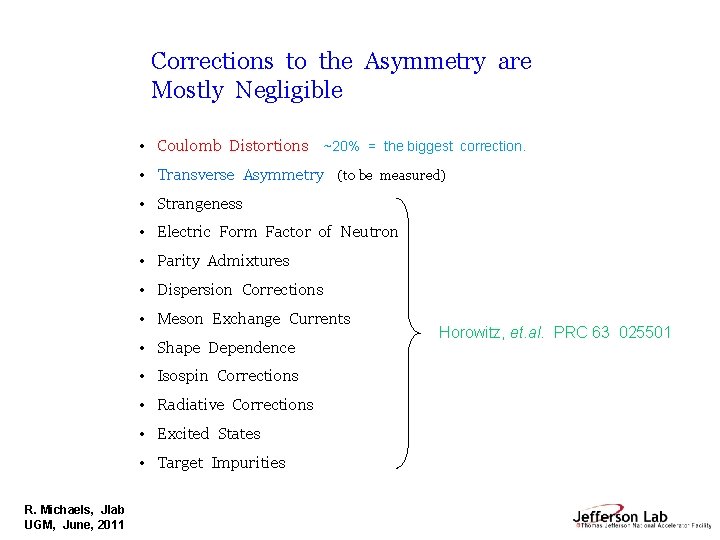
Corrections to the Asymmetry are Mostly Negligible • Coulomb Distortions ~20% = the biggest correction. • Transverse Asymmetry (to be measured) • Strangeness • Electric Form Factor of Neutron • Parity Admixtures • Dispersion Corrections • Meson Exchange Currents • Shape Dependence • Isospin Corrections • Radiative Corrections • Excited States • Target Impurities R. Michaels, Jlab UGM, June, 2011 Horowitz, et. al. PRC 63 025501
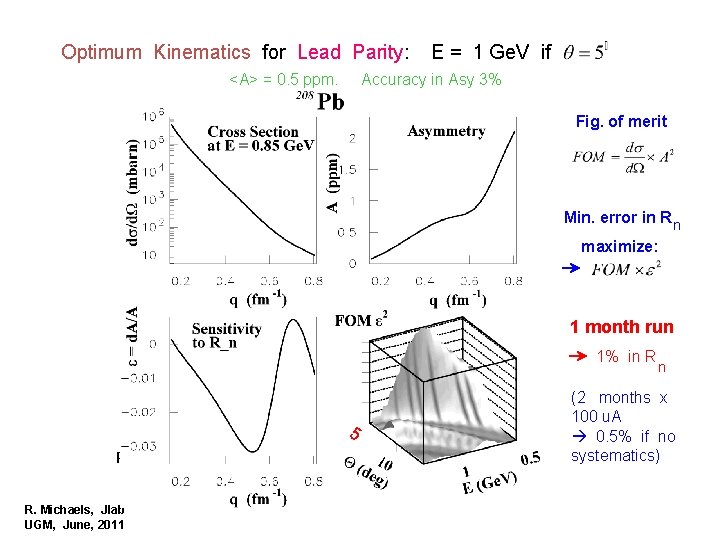
Optimum Kinematics for Lead Parity: <A> = 0. 5 ppm. E = 1 Ge. V if Accuracy in Asy 3% Fig. of merit Min. error in R n maximize: 1 month run 1% in R 5 PAVI 09 R. Michaels, Jlab UGM, June, 2011 n (2 months x 100 u. A 0. 5% if no systematics)
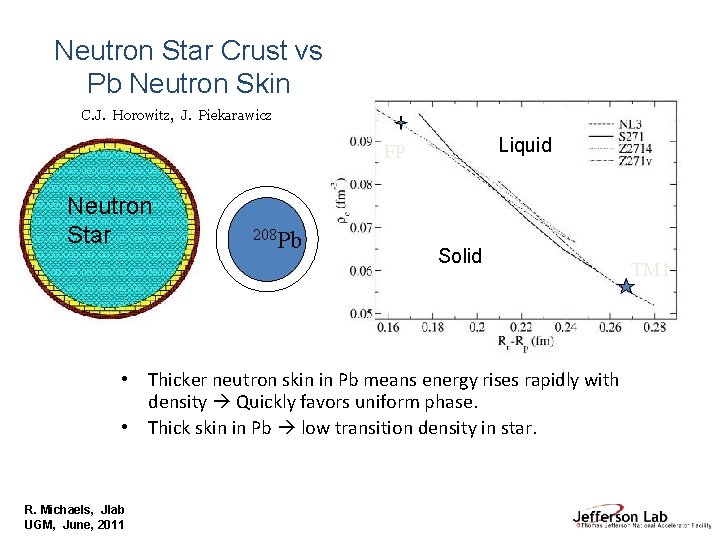
Neutron Star Crust vs Pb Neutron Skin Liquid/Solid Transition Density C. J. Horowitz, J. Piekarawicz Liquid FP Neutron Star 208 Pb Solid • Thicker neutron skin in Pb means energy rises rapidly with density Quickly favors uniform phase. • Thick skin in Pb low transition density in star. R. Michaels, Jlab UGM, June, 2011 TM 1
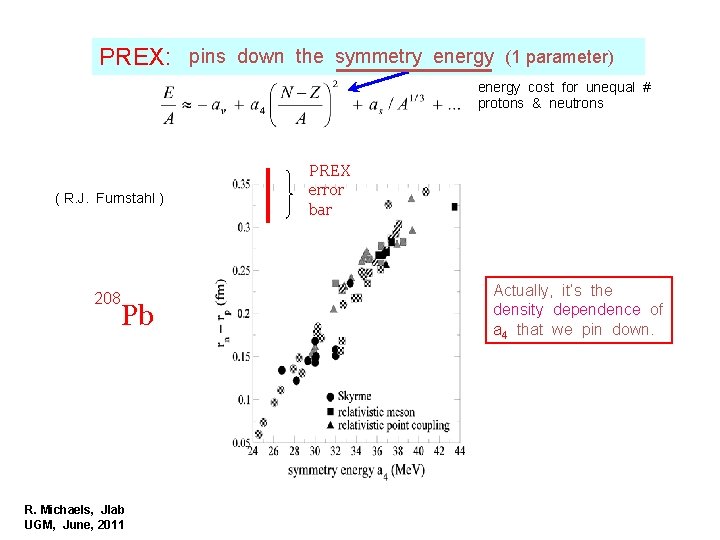
PREX: pins down the symmetry energy (1 parameter) energy cost for unequal # protons & neutrons ( R. J. Furnstahl ) 208 PREX error bar Actually, it’s the density dependence of a 4 that we pin down. Pb PREX R. Michaels, Jlab UGM, June, 2011
- Slides: 42