
Lead 101 Peer Education Program Who am I
- Slides: 38
Lead 101 Peer Education Program
Who am I?
Getting to know you! ● Verify contact information ● What do you want to know?
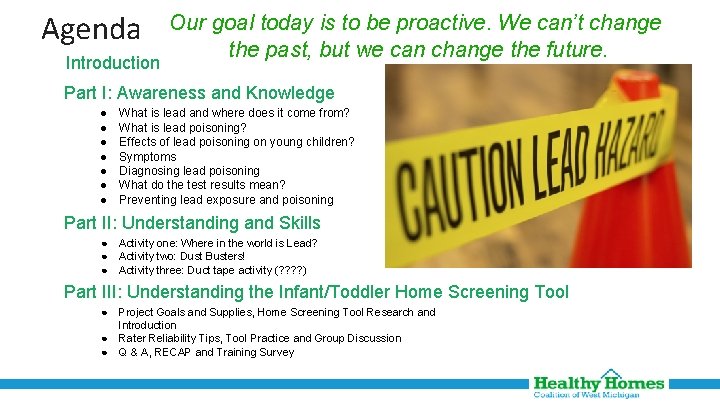
Agenda Introduction Our goal today is to be proactive. We can’t change the past, but we can change the future. Part I: Awareness and Knowledge ● ● ● ● What is lead and where does it come from? What is lead poisoning? Effects of lead poisoning on young children? Symptoms Diagnosing lead poisoning What do the test results mean? Preventing lead exposure and poisoning Part II: Understanding and Skills ● ● ● Activity one: Where in the world is Lead? Activity two: Dust Busters! Activity three: Duct tape activity (? ? ) Part III: Understanding the Infant/Toddler Home Screening Tool ● ● ● Project Goals and Supplies, Home Screening Tool Research and Introduction Rater Reliability Tips, Tool Practice and Group Discussion Q & A, RECAP and Training Survey
Part I : Health and Environment Knowledge and Awareness
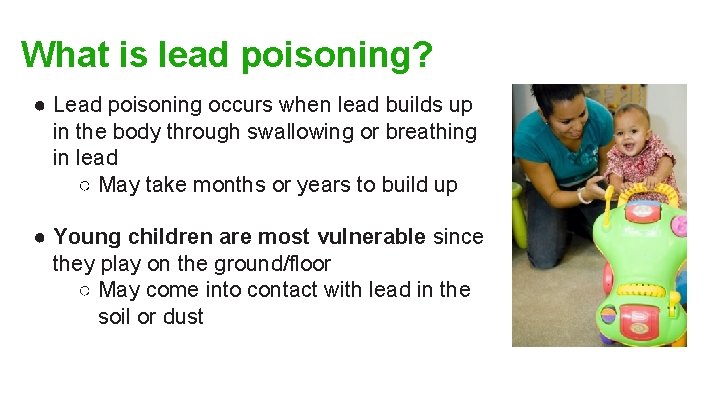
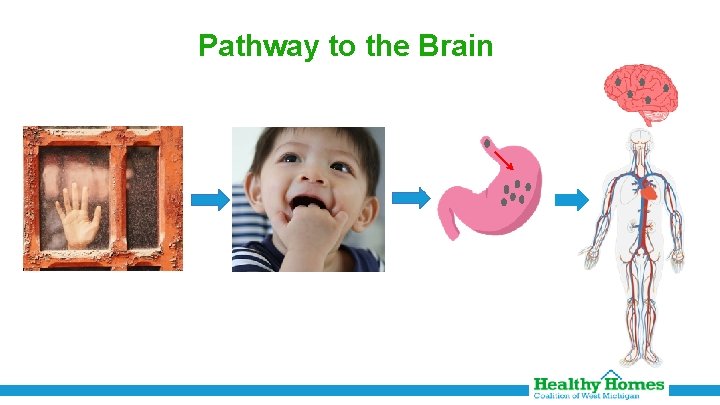
What is lead poisoning? ● Lead poisoning occurs when lead builds up in the body through swallowing or breathing in lead ○ May take months or years to build up ● Young children are most vulnerable since they play on the ground/floor ○ May come into contact with lead in the soil or dust
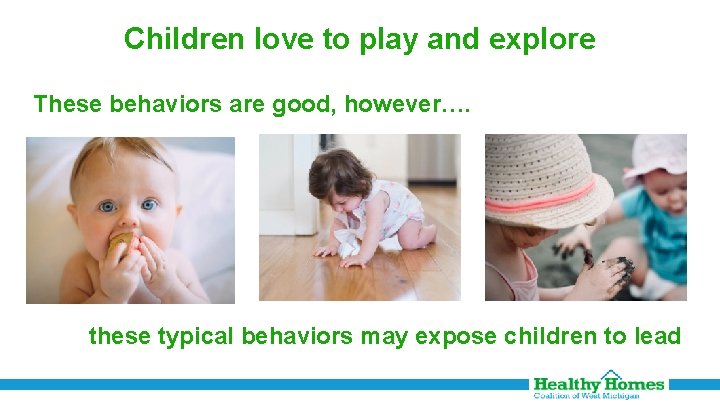
Children love to play and explore These behaviors are good, however…. these typical behaviors may expose children to lead
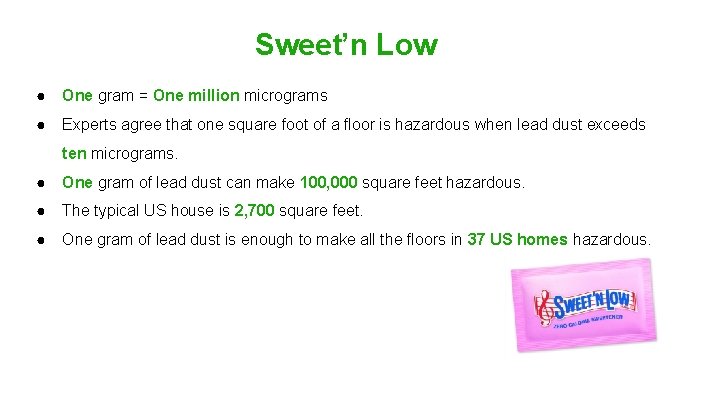
Sweet’n Low ● One gram = One million micrograms ● Experts agree that one square foot of a floor is hazardous when lead dust exceeds ten micrograms. ● One gram of lead dust can make 100, 000 square feet hazardous. ● The typical US house is 2, 700 square feet. ● One gram of lead dust is enough to make all the floors in 37 US homes hazardous.
Pathway to the Brain
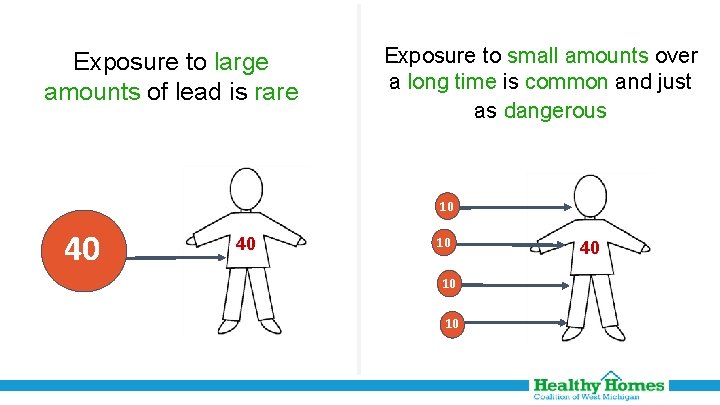
Exposure to large amounts of lead is rare Exposure to small amounts over a long time is common and just as dangerous 10 40 40 10 10 10 40
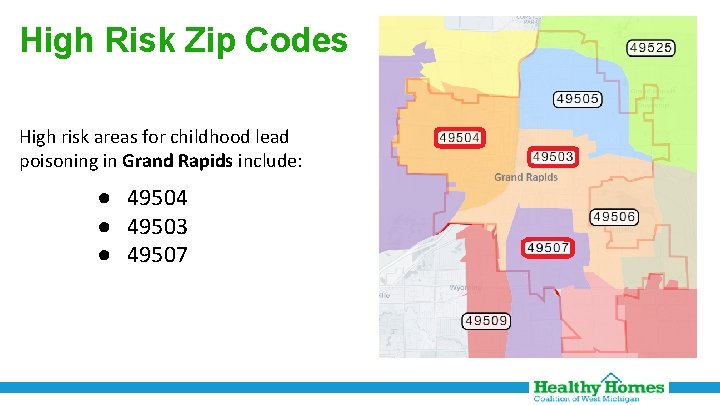
High Risk Zip Codes High risk areas for childhood lead poisoning in Grand Rapids include: ● 49504 ● 49503 ● 49507
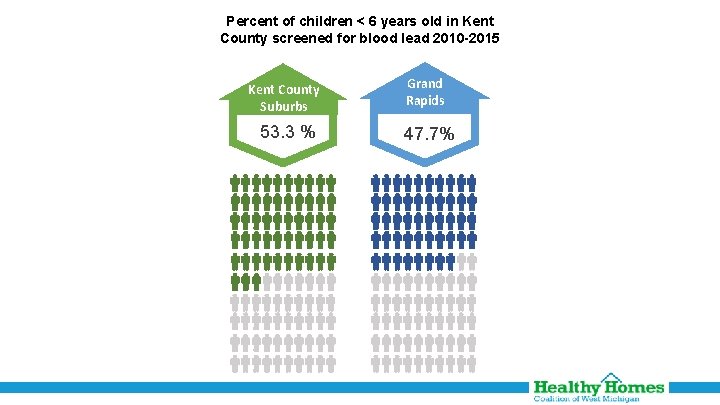
Percent of children < 6 years old in Kent County screened for blood lead 2010 -2015 Kent County Suburbs 53. 3 % Grand Rapids 47. 7%
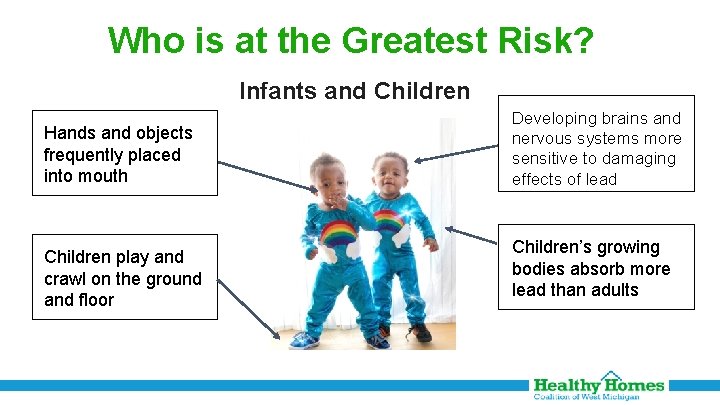
Who is at the Greatest Risk? Infants and Children Hands and objects frequently placed into mouth Children play and crawl on the ground and floor Developing brains and nervous systems more sensitive to damaging effects of lead Children’s growing bodies absorb more lead than adults
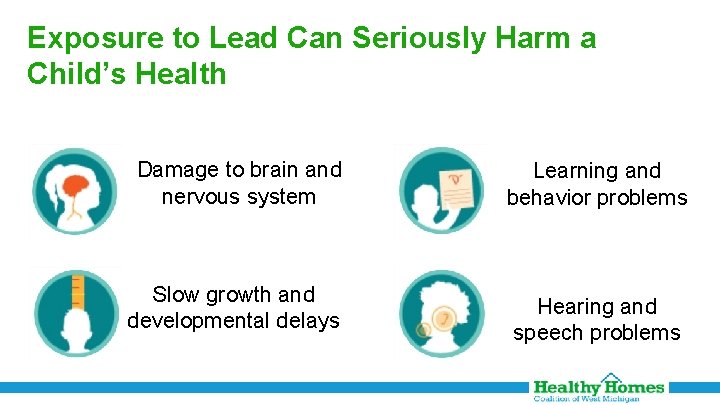
Exposure to Lead Can Seriously Harm a Child’s Health Damage to brain and nervous system Slow growth and developmental delays Learning and behavior problems Hearing and speech problems
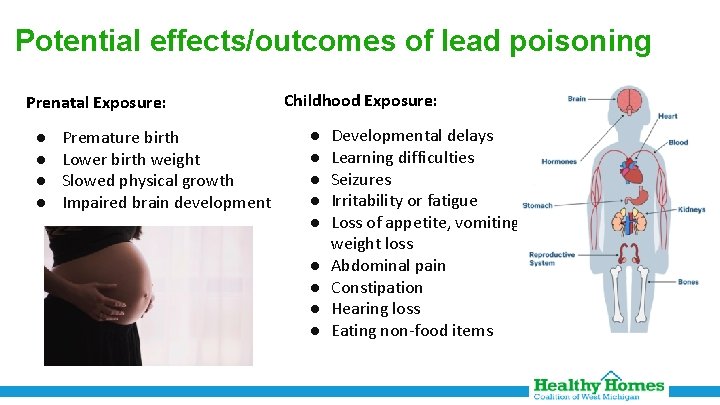
Potential effects/outcomes of lead poisoning Prenatal Exposure: ● ● Premature birth Lower birth weight Slowed physical growth Impaired brain development Childhood Exposure: ● ● ● ● ● Developmental delays Learning difficulties Seizures Irritability or fatigue Loss of appetite, vomiting, weight loss Abdominal pain Constipation Hearing loss Eating non-food items
What is lead?
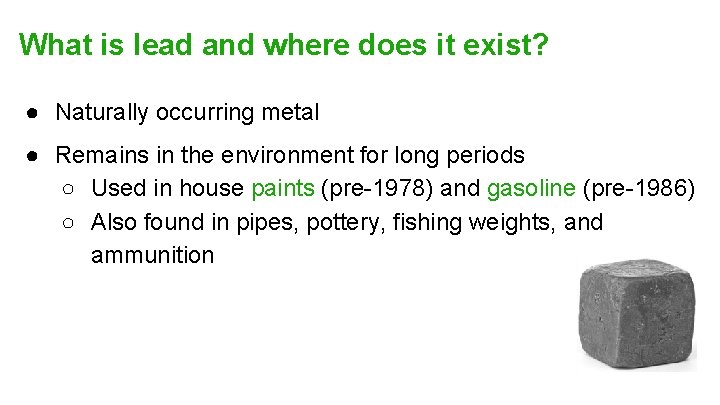
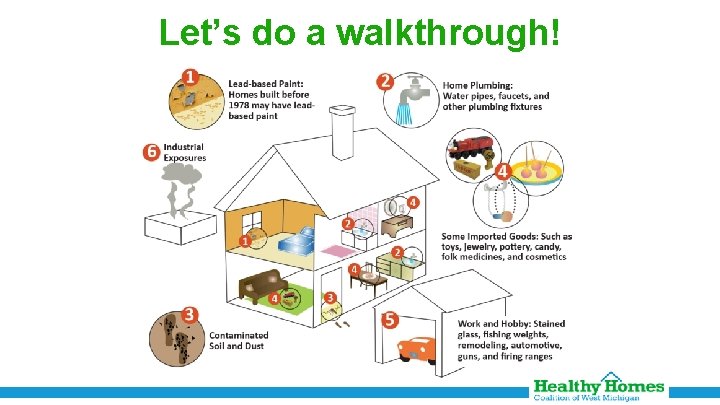
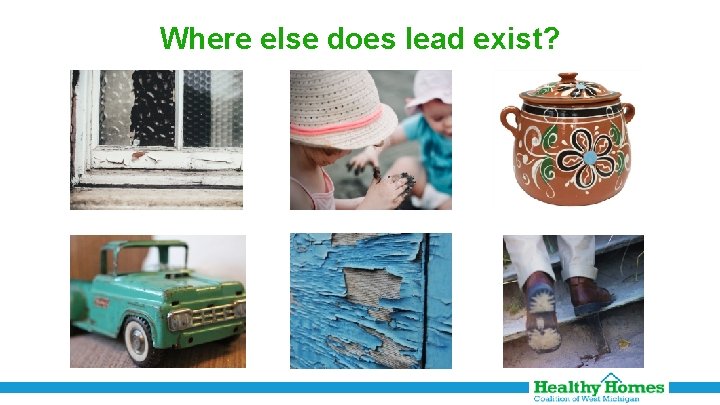
What is lead and where does it exist? ● Naturally occurring metal ● Remains in the environment for long periods ○ Used in house paints (pre-1978) and gasoline (pre-1986) ○ Also found in pipes, pottery, fishing weights, and ammunition
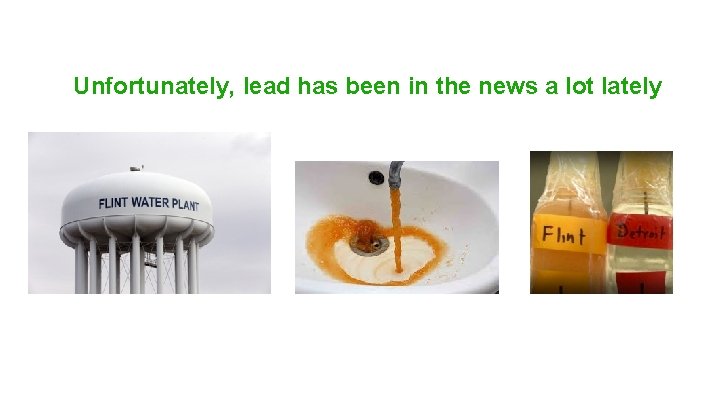
Unfortunately, lead has been in the news a lot lately
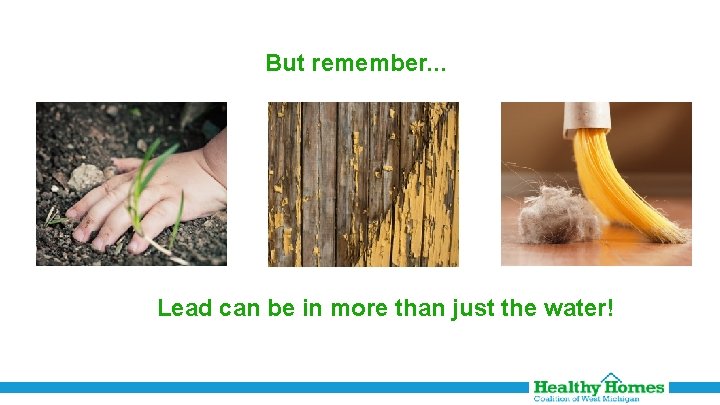
But remember. . . Lead can be in more than just the water!
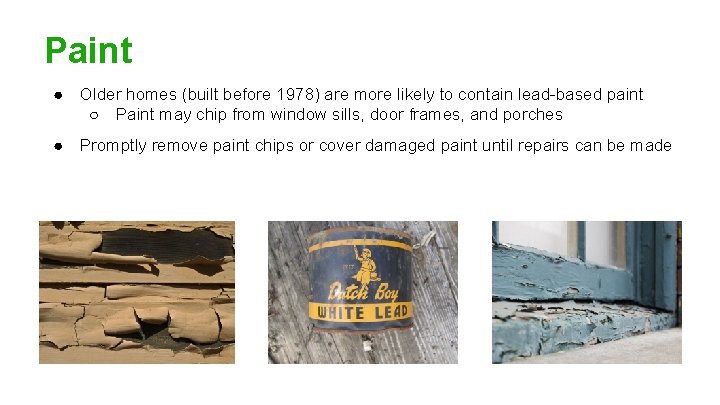
Paint ● Older homes (built before 1978) are more likely to contain lead-based paint ○ Paint may chip from window sills, door frames, and porches ● Promptly remove paint chips or cover damaged paint until repairs can be made
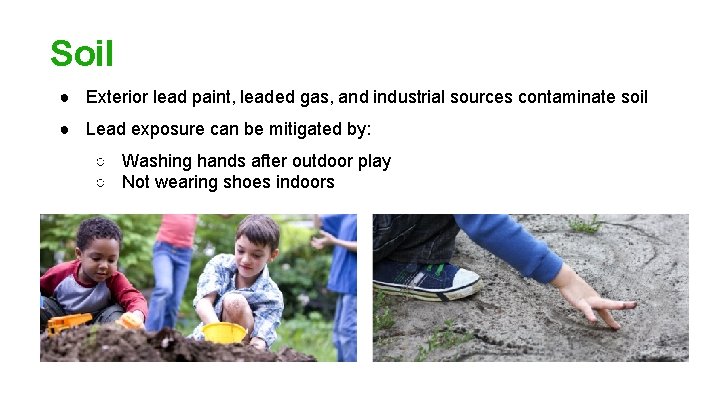
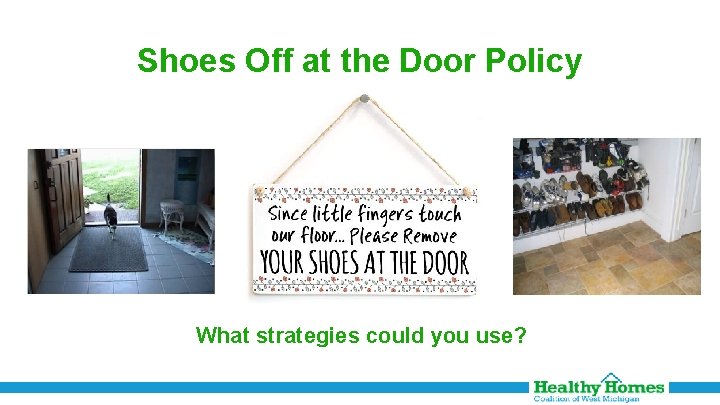
Soil ● Exterior lead paint, leaded gas, and industrial sources contaminate soil ● Lead exposure can be mitigated by: ○ Washing hands after outdoor play ○ Not wearing shoes indoors
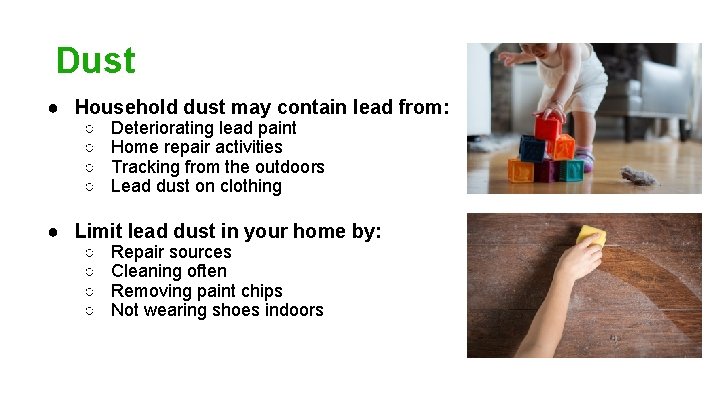
Dust ● Household dust may contain lead from: ○ ○ Deteriorating lead paint Home repair activities Tracking from the outdoors Lead dust on clothing ● Limit lead dust in your home by: ○ ○ Repair sources Cleaning often Removing paint chips Not wearing shoes indoors
Part II : What can YOU do? Skills to reduce risk
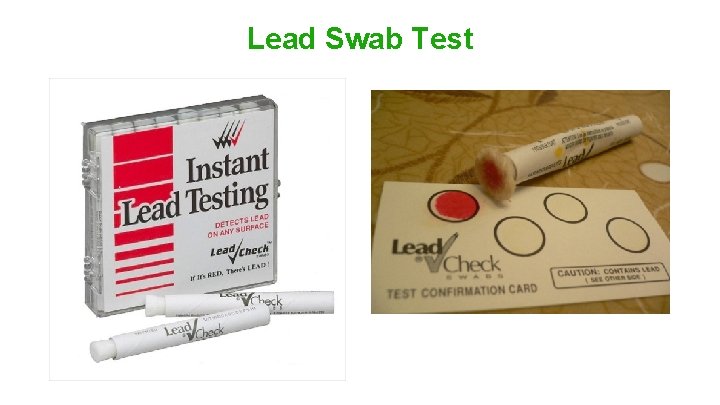
How can I assess hazards in the home? ● Types of assessments: ○ Visual assessment ○ Lead-check swabs ○ Dust and soil samples ○ LIRA Helpful resources: ● MDHHS Is Your Child Safe From Lead Poisoning? Handout ● List of state-certified inspectors/assessors ● MDHHS Testing Your Home Brochure
Let’s do a walkthrough!
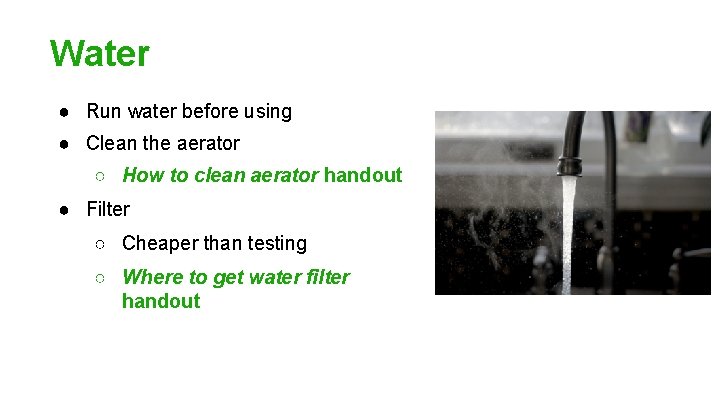
Water ● Run water before using ● Clean the aerator ○ How to clean aerator handout ● Filter ○ Cheaper than testing ○ Where to get water filter handout
Where else does lead exist?
Lead Swab Test
How can I address home hazards?
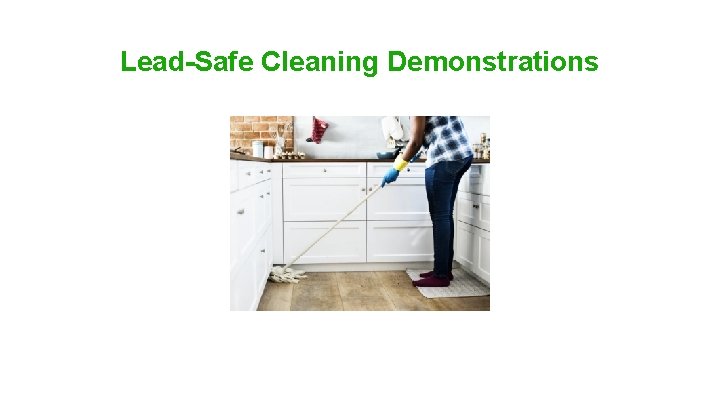
Lead-Safe Cleaning Demonstrations
Shoes Off at the Door Policy What strategies could you use?
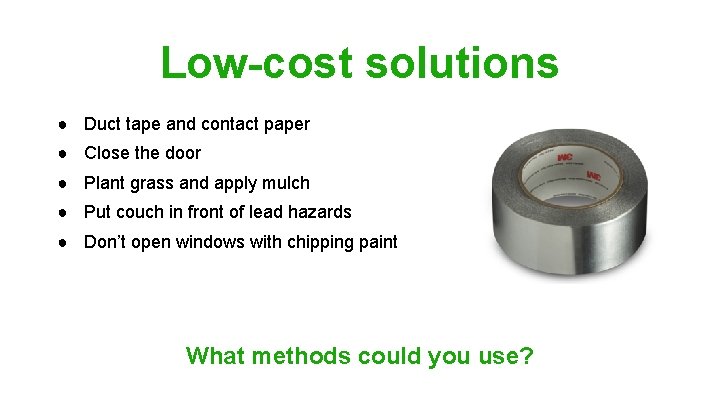
Low-cost solutions ● Duct tape and contact paper ● Close the door ● Plant grass and apply mulch ● Put couch in front of lead hazards ● Don’t open windows with chipping paint What methods could you use?
Repairing Lead Hazards ● Go over binder resources ○ Get the Lead Out! ○ RRP-certified contractors ○ DIY = LSWP ● Screen for GTLO eligibility ● Complete Home Screening Tool What will you most likely do?
How can I test my child for lead?
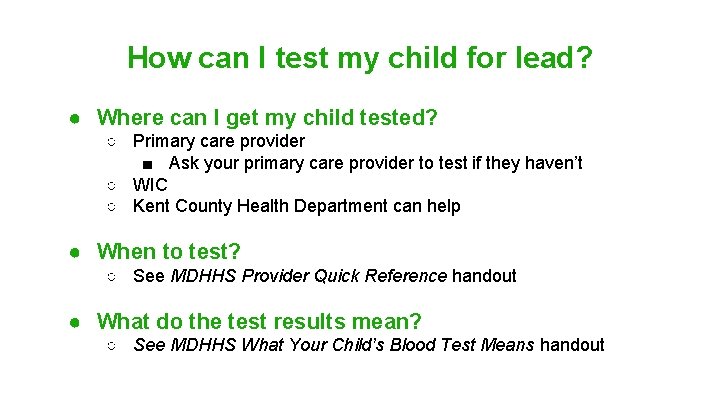
How can I test my child for lead? ● Where can I get my child tested? ○ Primary care provider ■ Ask your primary care provider to test if they haven’t ○ WIC ○ Kent County Health Department can help ● When to test? ○ See MDHHS Provider Quick Reference handout ● What do the test results mean? ○ See MDHHS What Your Child’s Blood Test Means handout
How else can I reduce lead poisoning risks?
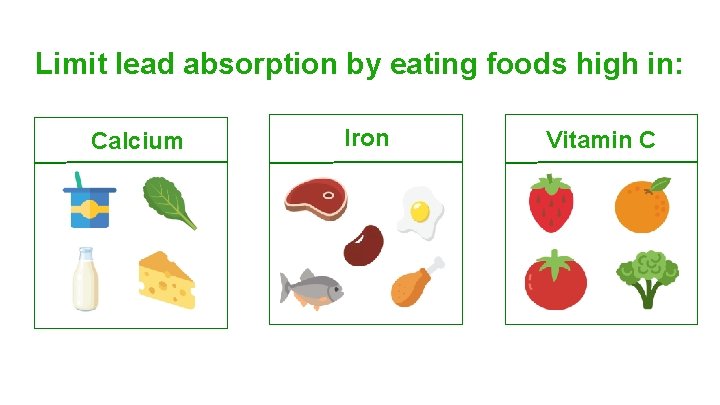
Limit lead absorption by eating foods high in: Calcium Iron Vitamin C
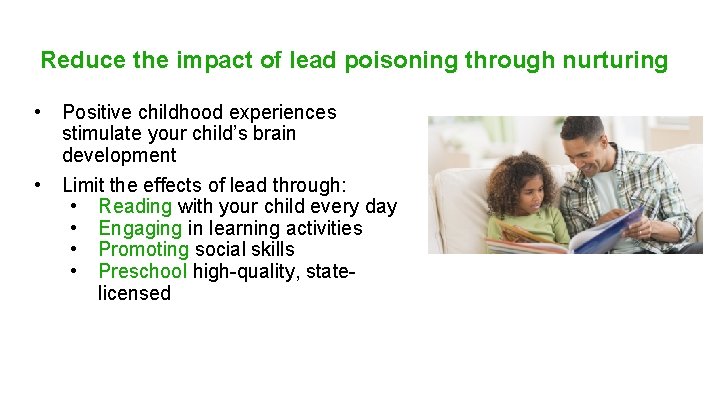
Reduce the impact of lead poisoning through nurturing • • Positive childhood experiences stimulate your child’s brain development Limit the effects of lead through: • Reading with your child every day • Engaging in learning activities • Promoting social skills • Preschool high-quality, statelicensed