
Le Pass Compos Format Subj Helping Verb Past
Le Passé Composé
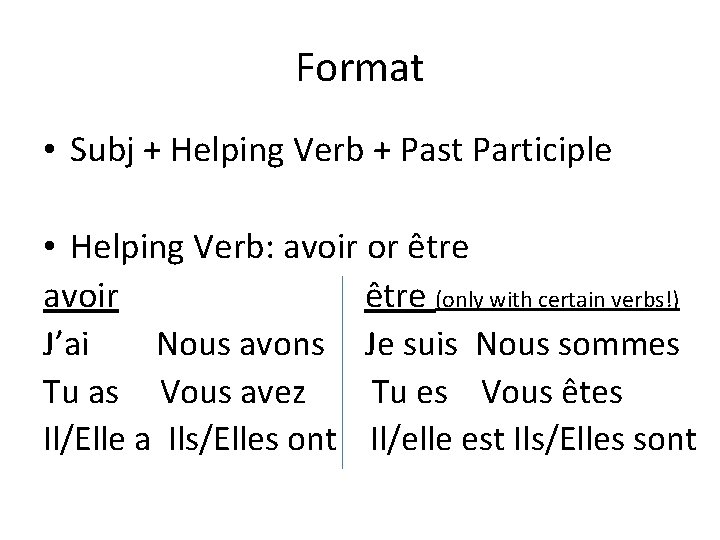
Format • Subj + Helping Verb + Past Participle • Helping Verb: avoir or être avoir être (only with certain verbs!) J’ai Nous avons Je suis Nous sommes Tu as Vous avez Tu es Vous êtes Il/Elle a Ils/Elles ont Il/elle est Ils/Elles sont
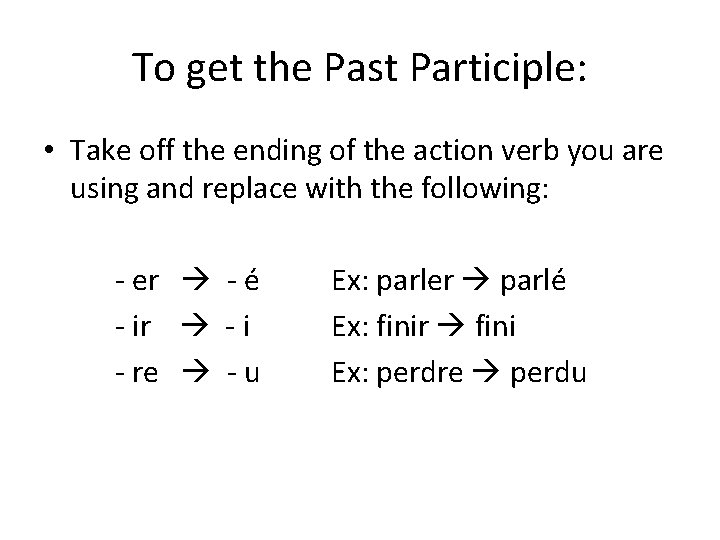
To get the Past Participle: • Take off the ending of the action verb you are using and replace with the following: - er - é - ir - i - re - u Ex: parler parlé Ex: finir fini Ex: perdre perdu
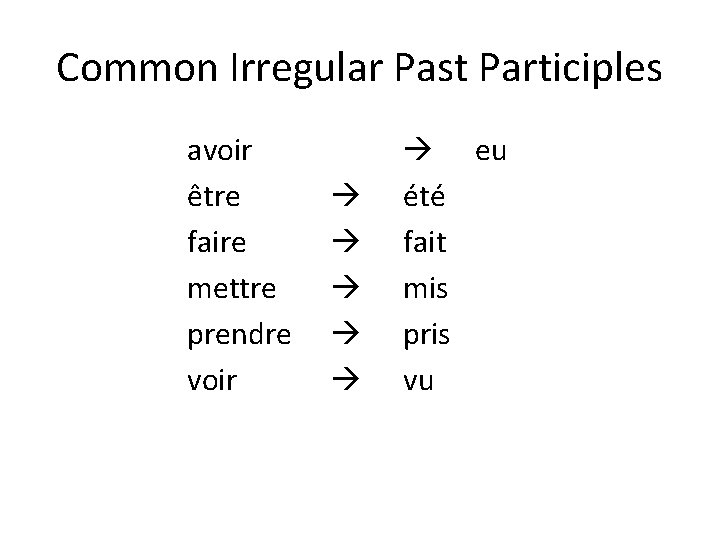
Common Irregular Past Participles avoir être faire mettre prendre voir eu été fait mis pris vu
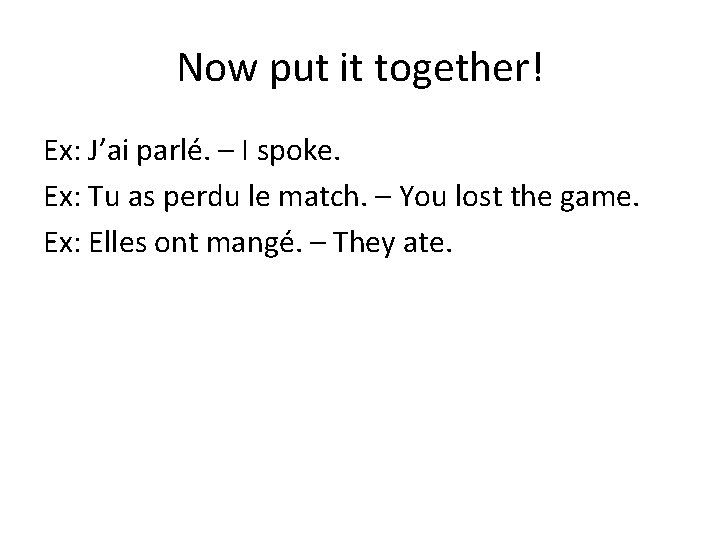
Now put it together! Ex: J’ai parlé. – I spoke. Ex: Tu as perdu le match. – You lost the game. Ex: Elles ont mangé. – They ate.
And the verbs that use être? • There are 17 verbs (for now, anyway) that use être as their helping verb. They are called “Dr Mrs Vandertrampp” verbs (it’s an acronym) There are 5 irregular past participles in the list. They are underlined.
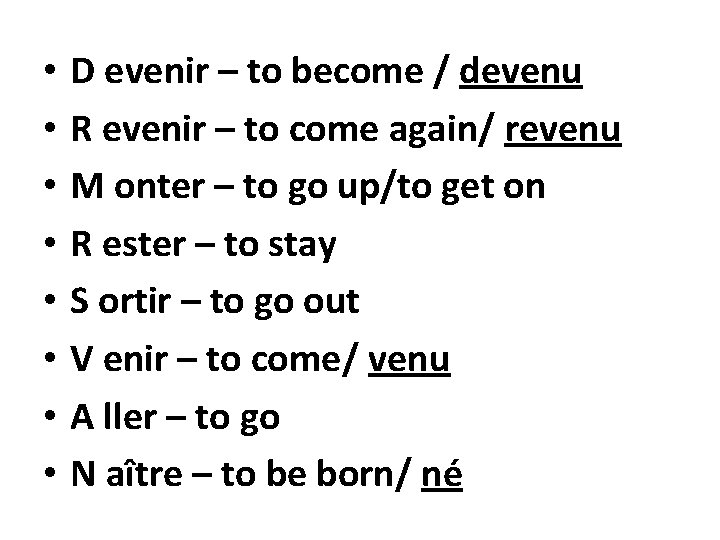
• • D evenir – to become / devenu R evenir – to come again/ revenu M onter – to go up/to get on R ester – to stay S ortir – to go out V enir – to come/ venu A ller – to go N aître – to be born/ né
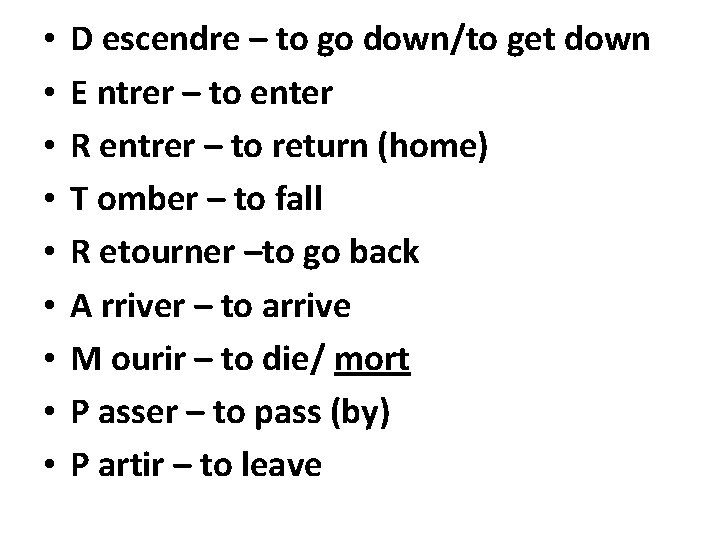
• • • D escendre – to go down/to get down E ntrer – to enter R entrer – to return (home) T omber – to fall R etourner –to go back A rriver – to arrive M ourir – to die/ mort P asser – to pass (by) P artir – to leave
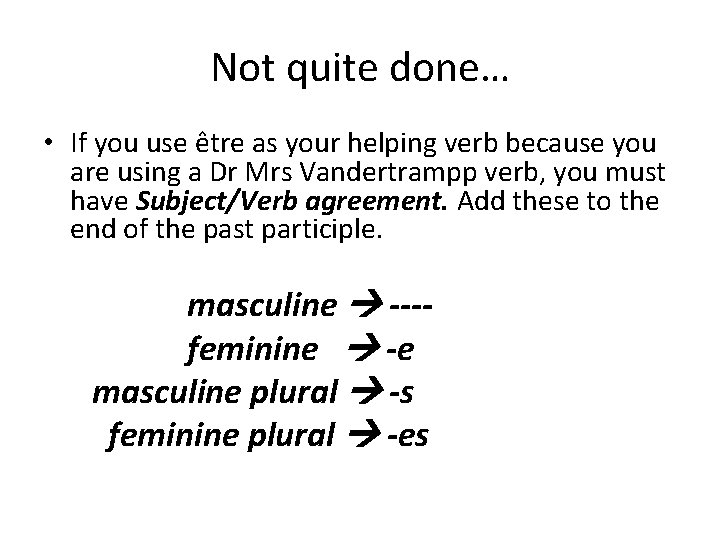
Not quite done… • If you use être as your helping verb because you are using a Dr Mrs Vandertrampp verb, you must have Subject/Verb agreement. Add these to the end of the past participle. masculine ---feminine -e masculine plural -s feminine plural -es
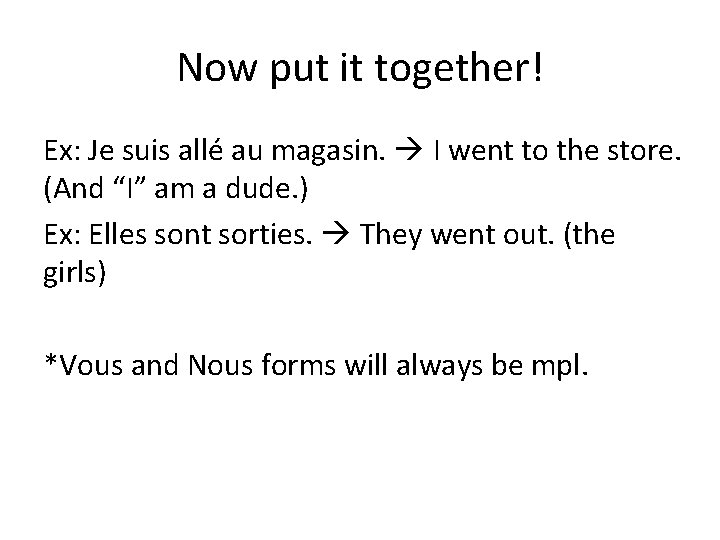
Now put it together! Ex: Je suis allé au magasin. I went to the store. (And “I” am a dude. ) Ex: Elles sont sorties. They went out. (the girls) *Vous and Nous forms will always be mpl.
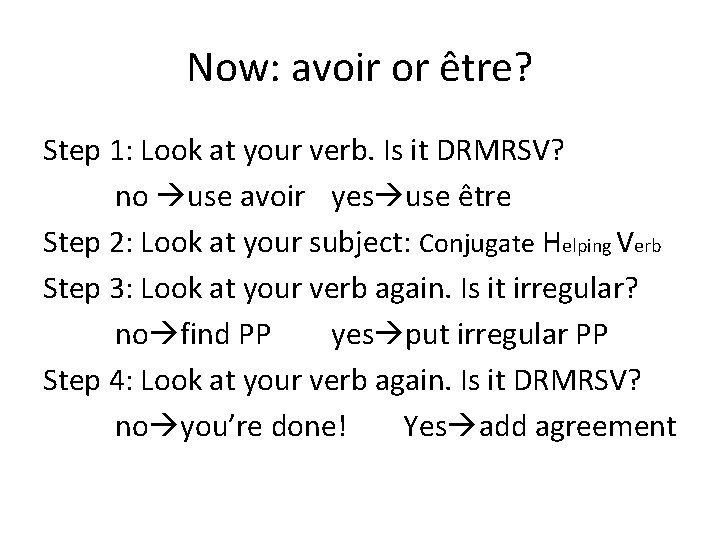
Now: avoir or être? Step 1: Look at your verb. Is it DRMRSV? no use avoir yes use être Step 2: Look at your subject: Conjugate Helping Verb Step 3: Look at your verb again. Is it irregular? no find PP yes put irregular PP Step 4: Look at your verb again. Is it DRMRSV? no you’re done! Yes add agreement
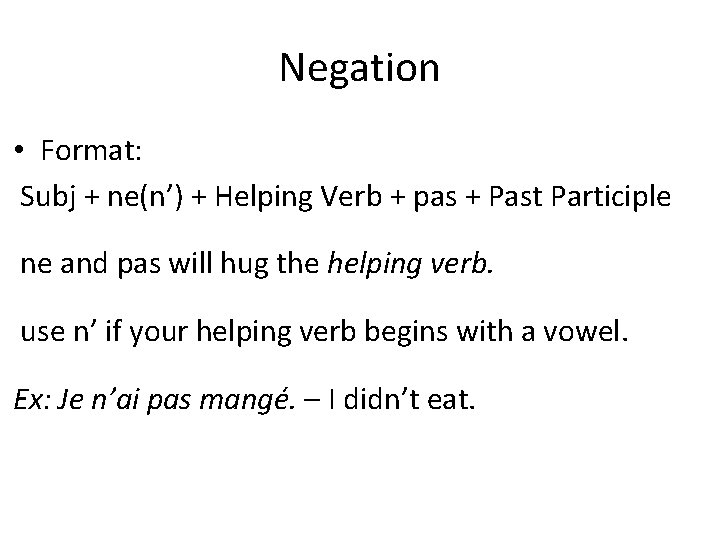
Negation • Format: Subj + ne(n’) + Helping Verb + pas + Past Participle ne and pas will hug the helping verb. use n’ if your helping verb begins with a vowel. Ex: Je n’ai pas mangé. – I didn’t eat.
Negation with ‘jamais’ déjà – ever, already ne…jamais – never Ex: Est-ce que tu as déjà mangé des escargots? - Have you ever eaten snails? Ex: Non, Je n’ai jamais mangé des escargots. - No, I have never eaten snails.
More negation quelque chose – something Ne…rien – nothing Ex: Tu as entendu quelque chose? – Did you hear something? Ex: Non, je n’ai rien entendu. – No, I heard nothing.
quelqu’un – someone/somebody ne…personne – no one/nobody DOES NOT FOLLOW THE SAME RULE! Ex: Je n’ai vu personne. – I saw no one. (I didn’t see anyone. ) Personne will come after the past participle.
- Slides: 15