
LE NOYAU Cytoplasme granuleux ribosomes Htrochromatine peu abondante
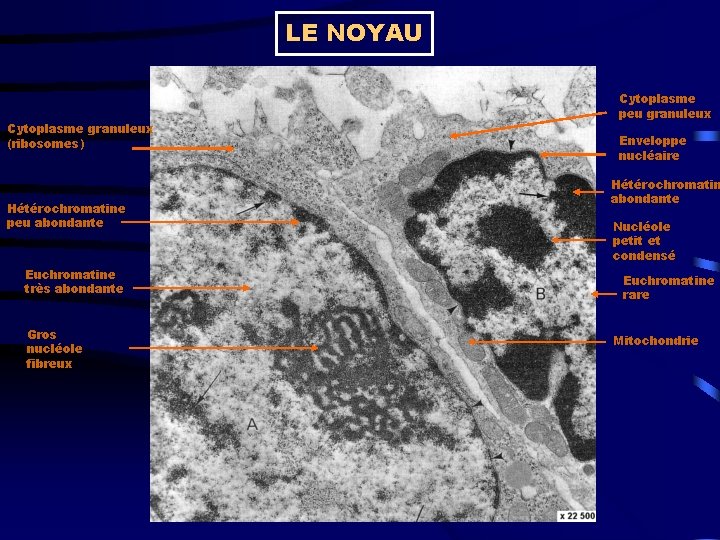
LE NOYAU Cytoplasme granuleux (ribosomes) Hétérochromatine peu abondante Euchromatine très abondante Gros nucléole fibreux Cytoplasme peu granuleux Enveloppe nucléaire Hétérochromatin abondante Nucléole petit et condensé Euchromatine rare Mitochondrie
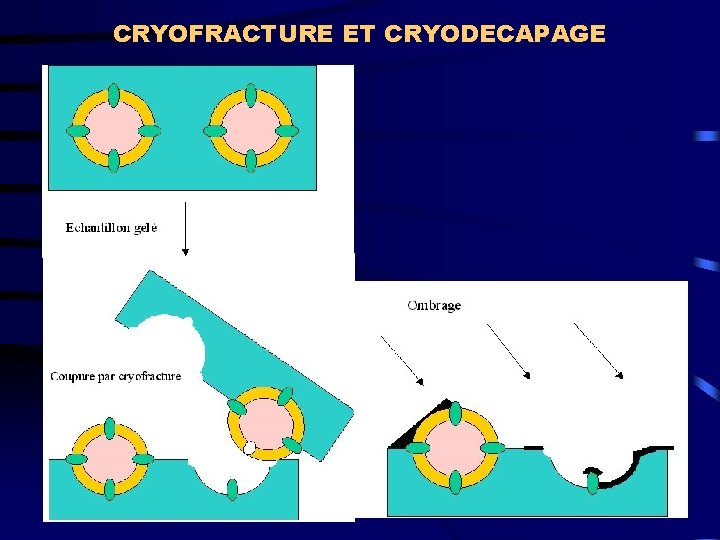
CRYOFRACTURE ET CRYODECAPAGE
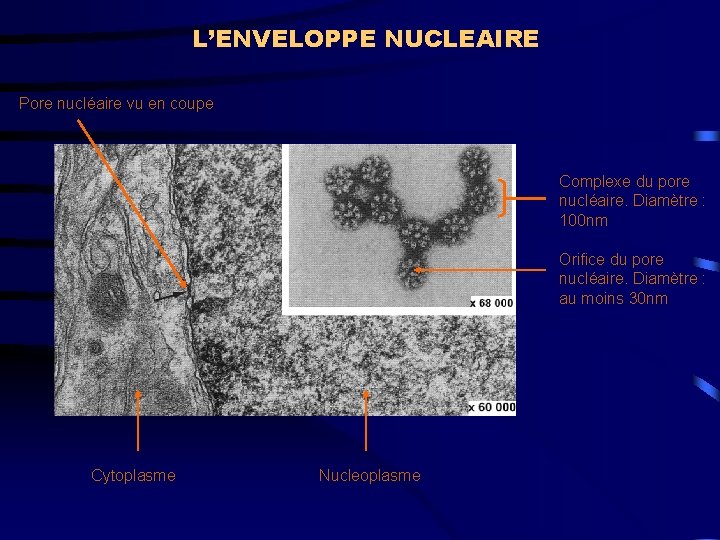
L’ENVELOPPE NUCLEAIRE Pore nucléaire vu en coupe Complexe du pore nucléaire. Diamètre : 100 nm Orifice du pore nucléaire. Diamètre : au moins 30 nm Cytoplasme Nucleoplasme
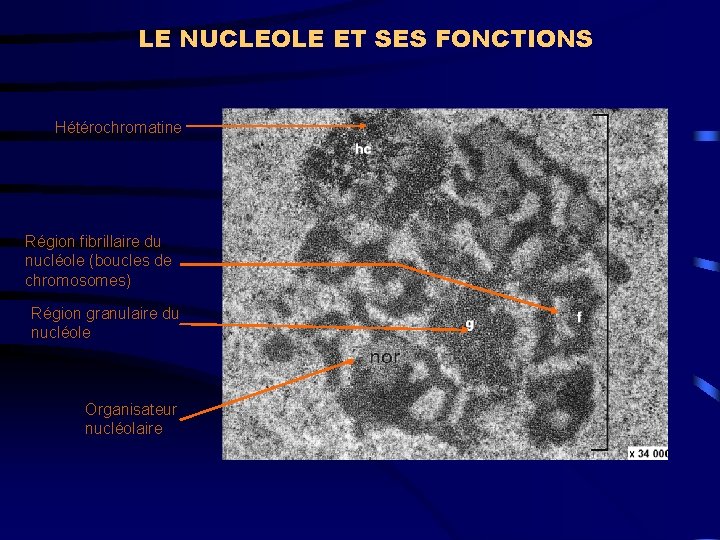
LE NUCLEOLE ET SES FONCTIONS Hétérochromatine Région fibrillaire du nucléole (boucles de chromosomes) Région granulaire du nucléole Organisateur nucléolaire
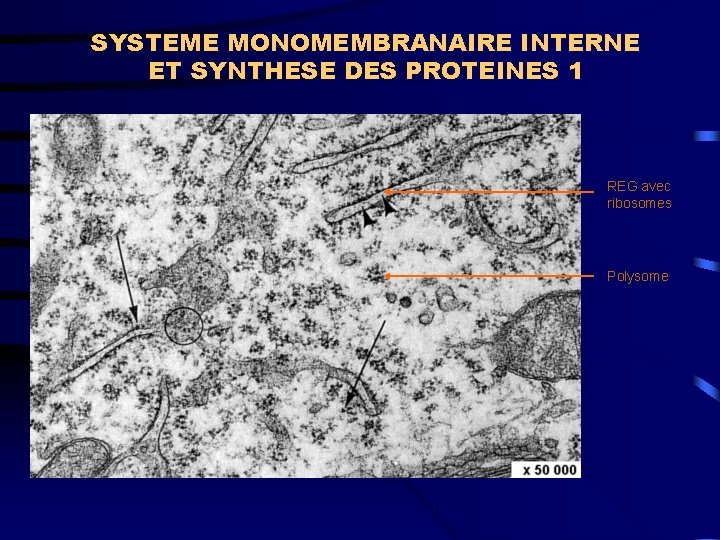
SYSTEME MONOMEMBRANAIRE INTERNE ET SYNTHESE DES PROTEINES 1 REG avec ribosomes Polysome
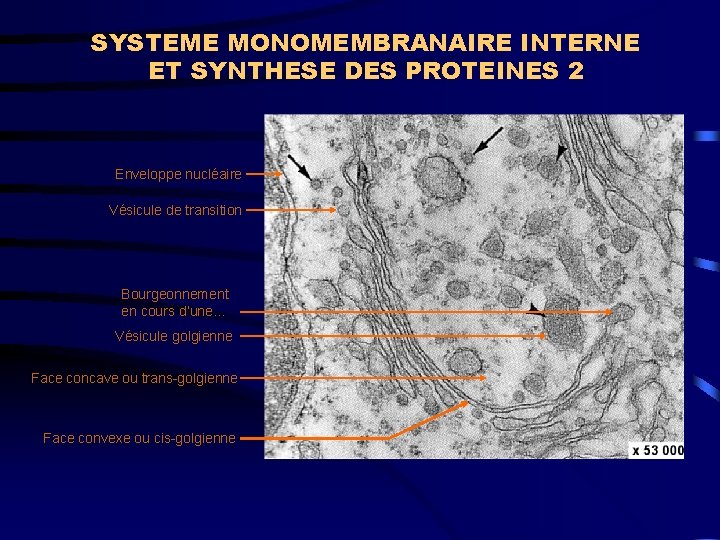
SYSTEME MONOMEMBRANAIRE INTERNE ET SYNTHESE DES PROTEINES 2 Enveloppe nucléaire Vésicule de transition Bourgeonnement en cours d’une. . . Vésicule golgienne Face concave ou trans-golgienne Face convexe ou cis-golgienne
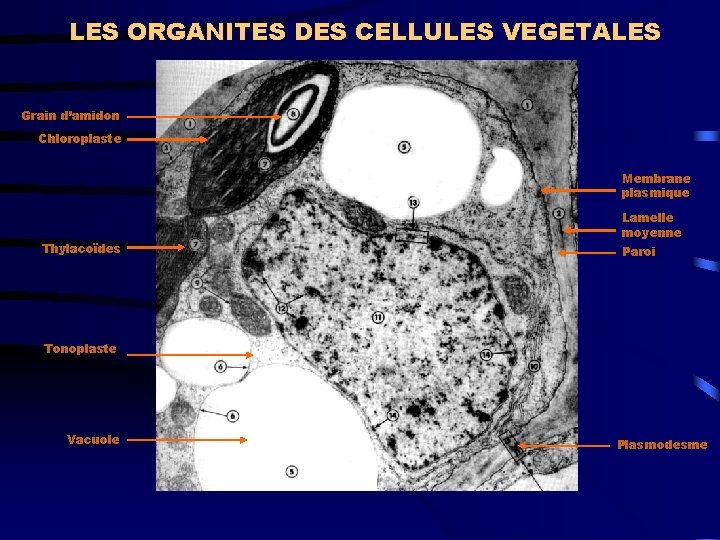
LES ORGANITES DES CELLULES VEGETALES Grain d’amidon Chloroplaste Membrane plasmique Thylacoïdes Lamelle moyenne Paroi Tonoplaste Vacuole Plasmodesme
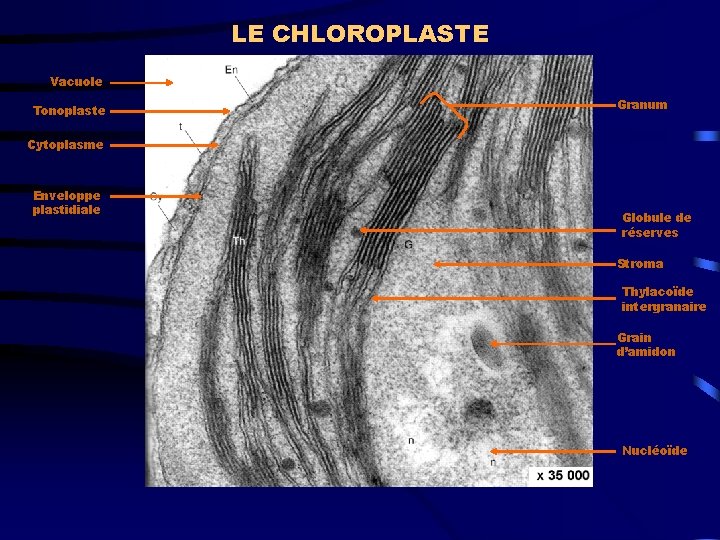
LE CHLOROPLASTE Vacuole Tonoplaste Granum Cytoplasme Enveloppe plastidiale Globule de réserves Stroma Thylacoïde intergranaire Grain d’amidon Nucléoïde
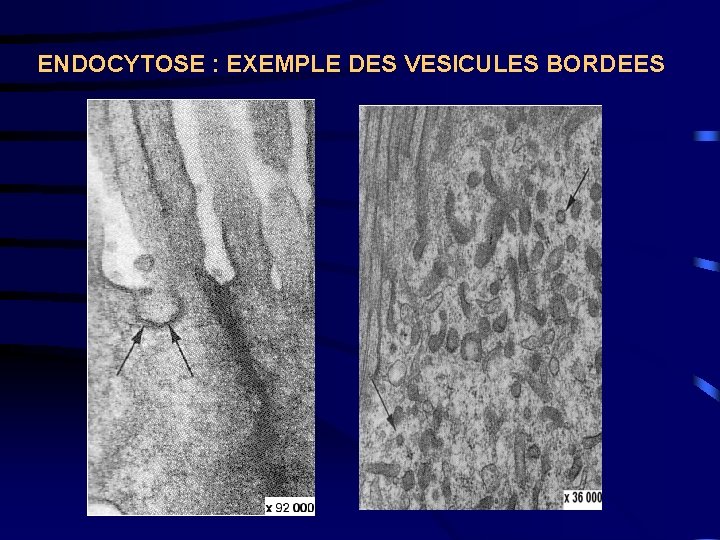
ENDOCYTOSE : EXEMPLE DES VESICULES BORDEES
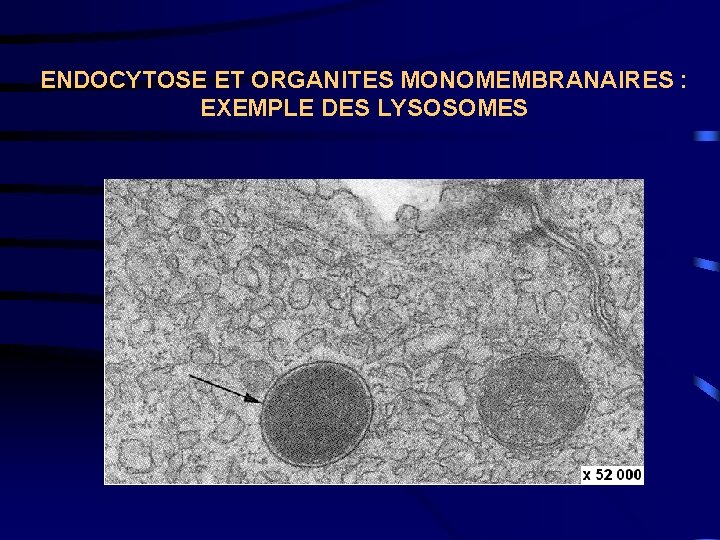
ENDOCYTOSE ET ORGANITES MONOMEMBRANAIRES : EXEMPLE DES LYSOSOMES
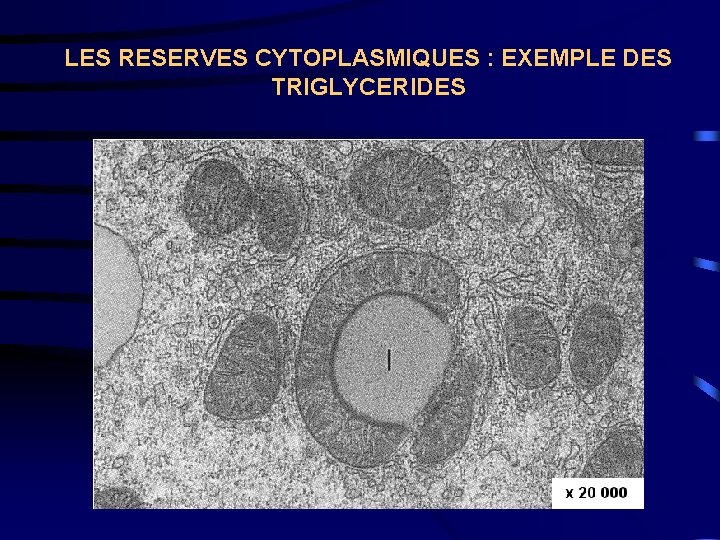
LES RESERVES CYTOPLASMIQUES : EXEMPLE DES TRIGLYCERIDES
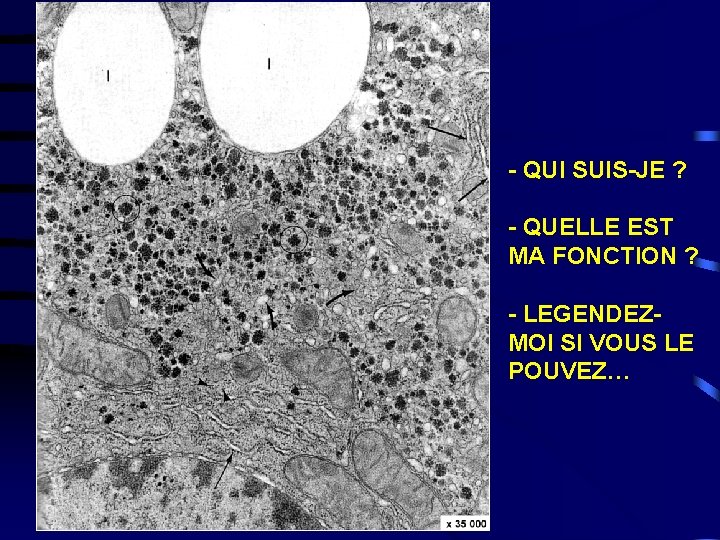
- QUI SUIS-JE ? - QUELLE EST MA FONCTION ? - LEGENDEZMOI SI VOUS LE POUVEZ…
- Slides: 12