
Le muse Gulbenkian Lisbonne Le muse CalousteGulbenkian Museu
Le musée Gulbenkian Lisbonne Le musée Calouste-Gulbenkian (Museu Calouste Gulbenkian en portugais) est un musée situé à Lisbonne. Le musée Gulbenkian est un musée exceptionnel présentant des œuvres d’art de 2000 avant JC jusqu’au début du XXe siècle. La collection (6 000 pièces dont 1 000 font partie de l'exposition permanente) a été donnée par Calouste Gulbenkian, un philanthrope et mécène d'origine arménienne. Né en 1869 à Scutari, Calouste Gulbenkian était un homme d'affaires important qui fit fortune dans le domaine des industries pétrolières. Collectionneur d'une sensibilité et d'une connaissance exceptionnelles, il vécut les treize dernières années de sa vie à Lisbonne où il décéda en 1955. Le musée a ouvert ses portes en Octobre 1969. Les pièces d’exposition permanente sont formées de deux circuits indépendants. La première est consacrée à l’art asiatique et des morceaux classiques de l’art égyptien, gréco-romaine, islamique, chinois et japonais. L’autre circuit est consacré à l’art européen, avec des sections présentant des livres manuscrits enluminés, des ivoires, des peintures, des sculptures, des médailles, des tapisseries et des tissus, ainsi que des pièces de mobilier, d'orfèvrerie et de verrerie. Ces objets illustrent les manifestations artistiques qui se sont affirmées dans différentes régions, du XIe siècle jusqu'à la moitié du XXe siècle. Ce circuit a un cœur dédié de livres anciens, de sculptures et de peintures, avec des maîtres de renommée mondiale comme Rogier van der Weyden, Rubens, Rembrandt, Domenico Ghirlandaio, Frans Hals et des exemples du Rococo (Boucher, Fragonard). Il y a également peintres du dix-neuvième siècle tels que Manet, Renoir, Degas. La visite du musée s'achève dans la salle 12 consacrée à l'Art nouveau où est présenté un ensemble de bijoux, parures, verreries, ivoires de René Lalique, considéré unique au monde. Lalique fut l'unique artiste moderne dont Calouste Gulbenkian devint le client et l'ami ; il acquit 169 de ses créations entre 1895 et 1937. Photos et texte du Net Créations Delia Florea
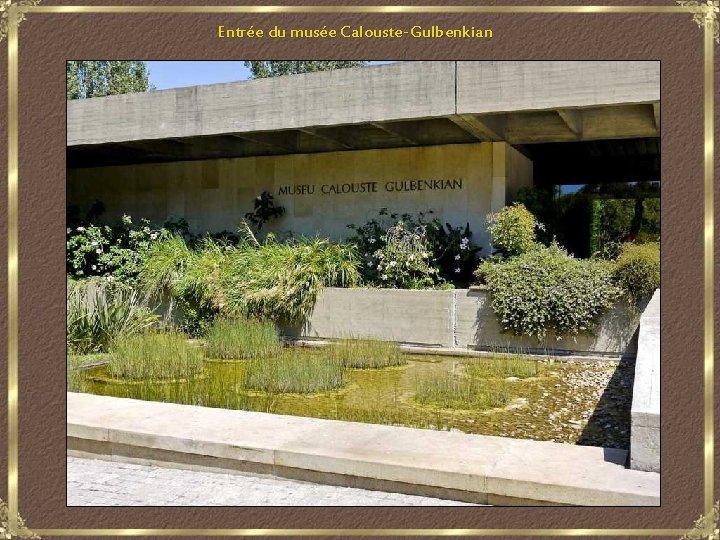
Entrée du musée Calouste-Gulbenkian
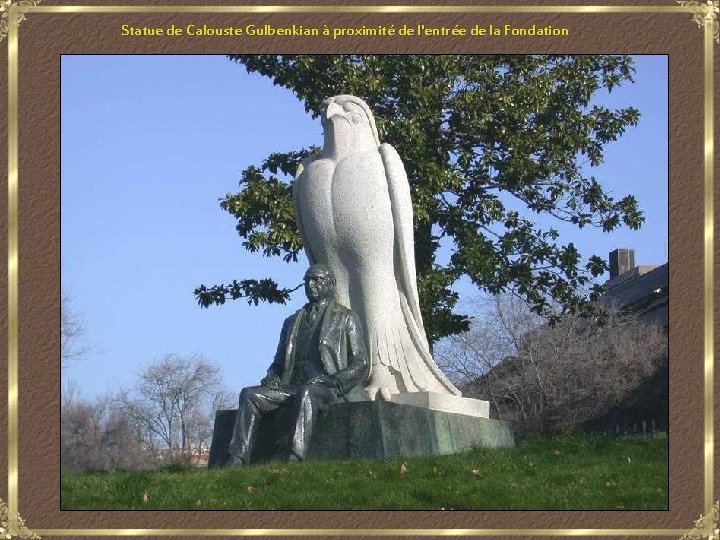
Statue de Calouste Gulbenkian à proximité de l'entrée de la Fondation
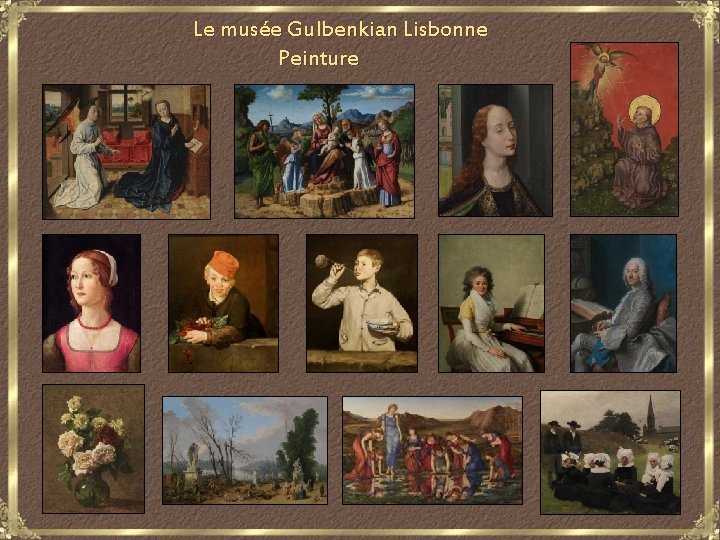
Le musée Gulbenkian Lisbonne Peinture
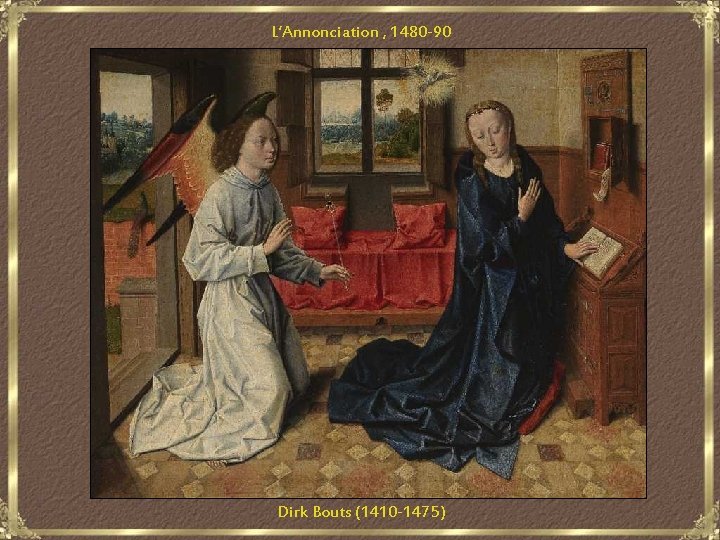
L’Annonciation , 1480 -90 Dirk Bouts (1410 -1475)
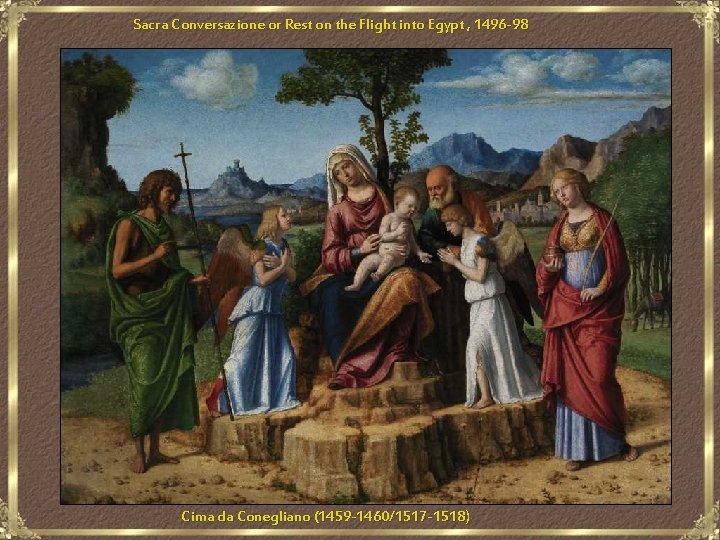
Sacra Conversazione or Rest on the Flight into Egypt , 1496 -98 Cima da Conegliano (1459 -1460/1517 -1518)
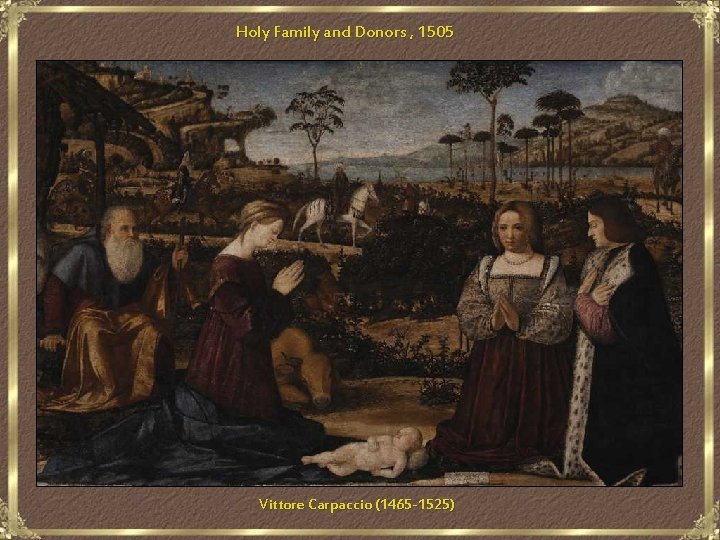
Holy Family and Donors , 1505 Vittore Carpaccio (1465 -1525)
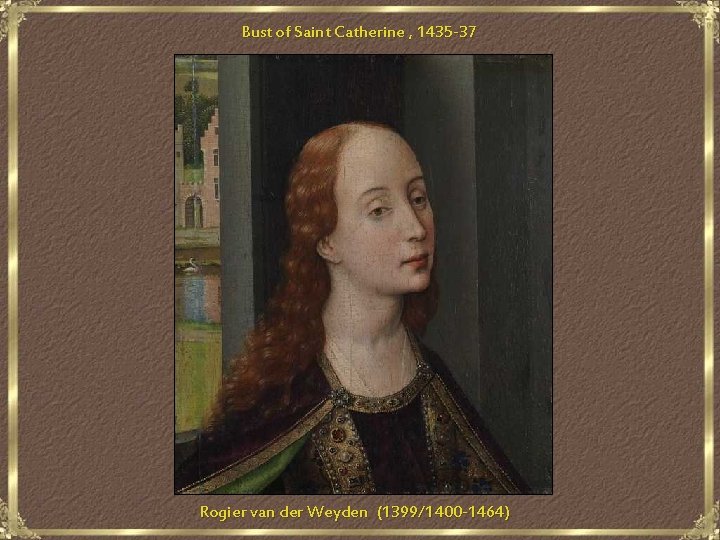
Bust of Saint Catherine , 1435 -37 Rogier van der Weyden (1399/1400 -1464)
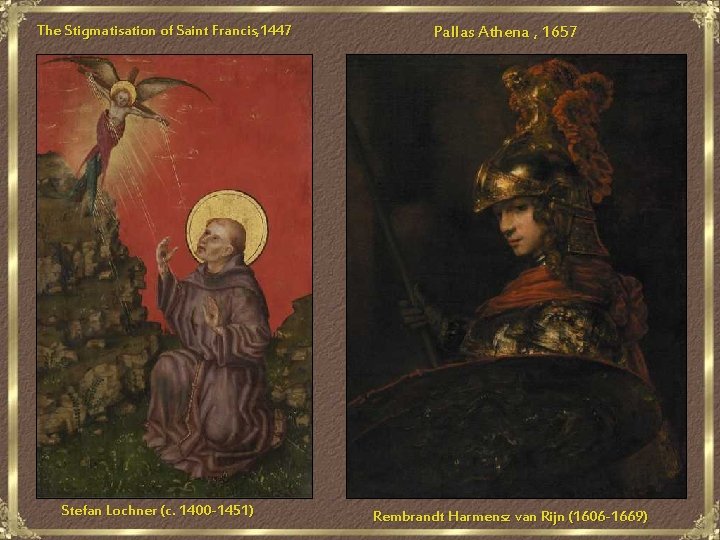
The Stigmatisation of Saint Francis, 1447 Stefan Lochner (c. 1400 -1451) Pallas Athena , 1657 Rembrandt Harmensz van Rijn (1606 -1669)
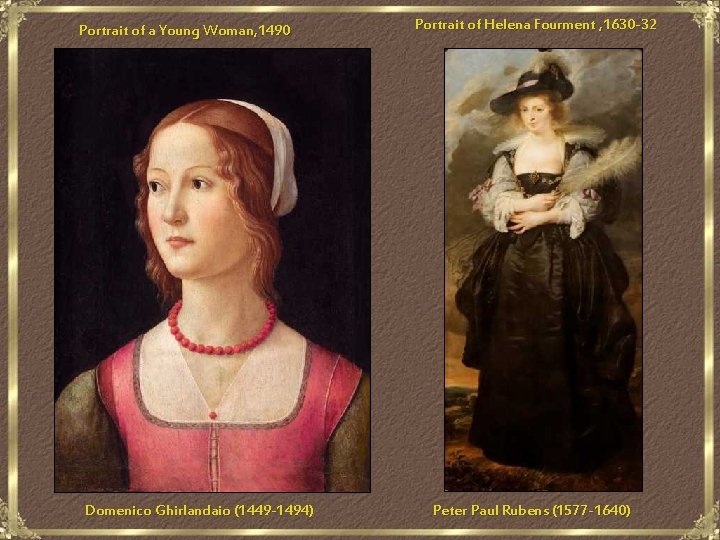
Portrait of a Young Woman, 1490 Portrait of Helena Fourment , 1630 -32 Domenico Ghirlandaio (1449 -1494) Peter Paul Rubens (1577 -1640)
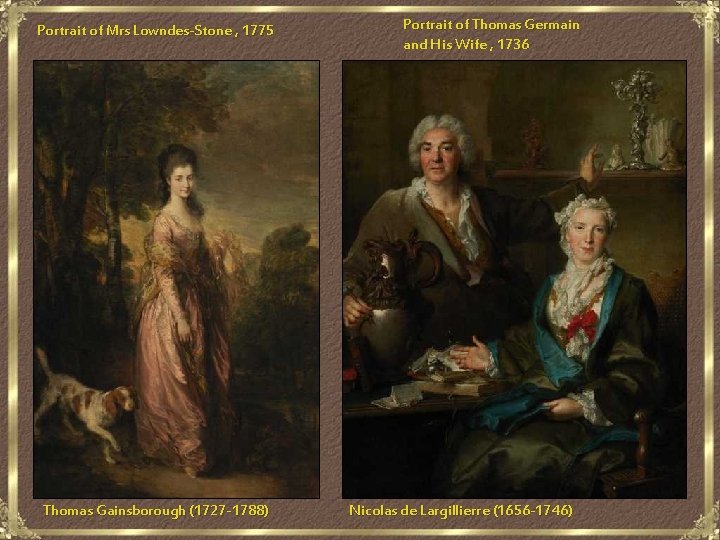
Portrait of Mrs Lowndes-Stone , 1775 Thomas Gainsborough (1727 -1788) Portrait of Thomas Germain and His Wife , 1736 Nicolas de Largillierre (1656 -1746)
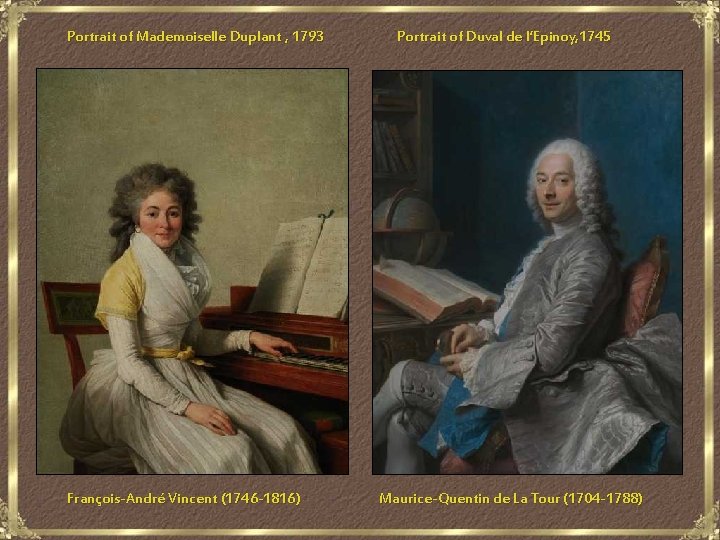
Portrait of Mademoiselle Duplant , 1793 François-André Vincent (1746 -1816) Portrait of Duval de l’Epinoy, 1745 Maurice-Quentin de La Tour (1704 -1788)
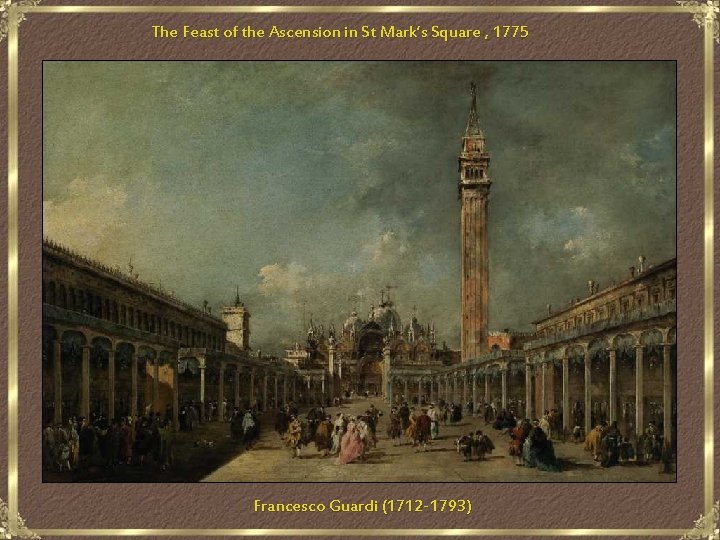
The Feast of the Ascension in St Mark’s Square , 1775 Francesco Guardi (1712 -1793)
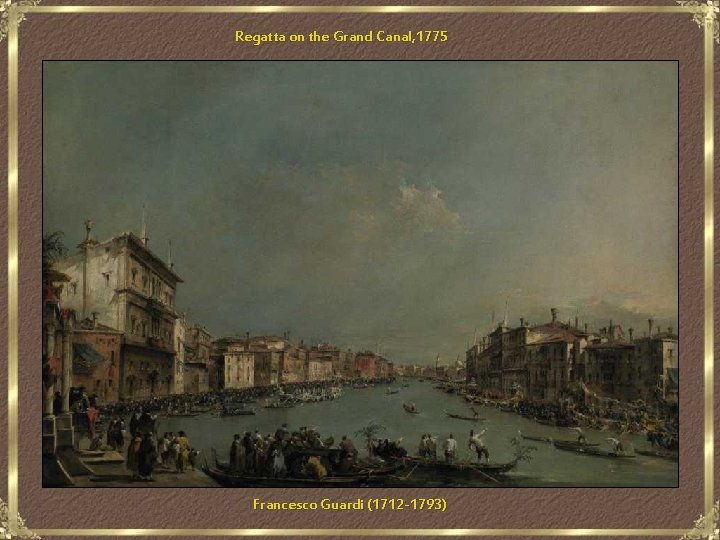
Regatta on the Grand Canal, 1775 Francesco Guardi (1712 -1793)
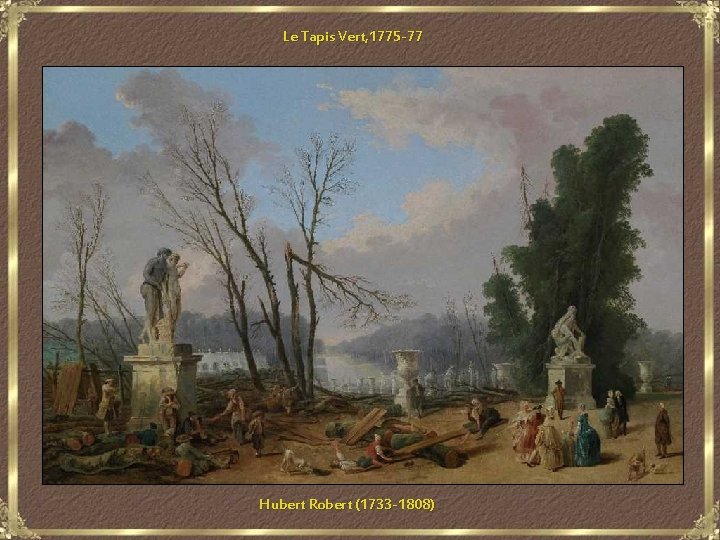
Le Tapis Vert, 1775 -77 Hubert Robert (1733 -1808)
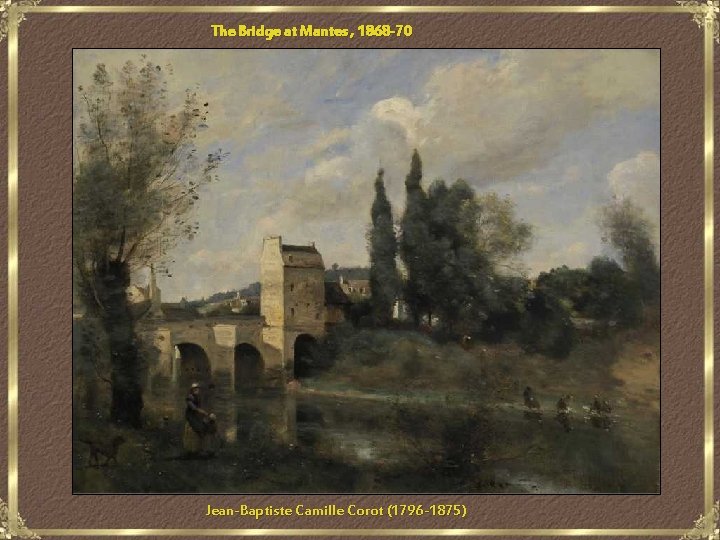
The Bridge at Mantes , 1868 -70 Jean-Baptiste Camille Corot (1796 -1875)
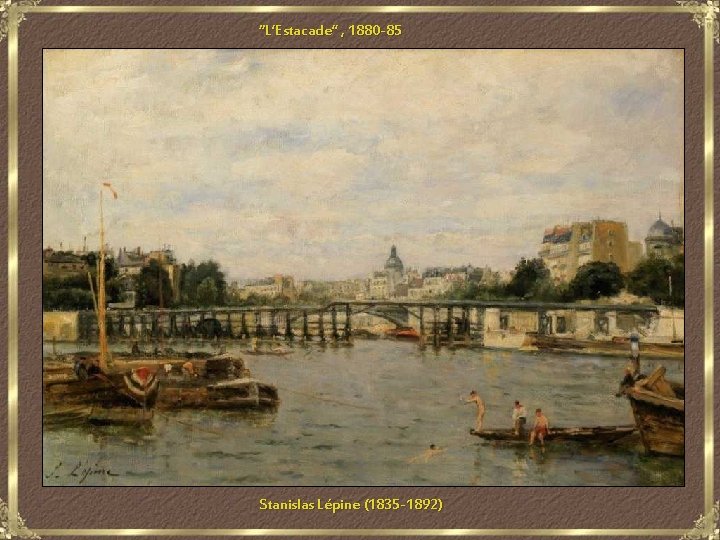
“L’Estacade” , 1880 -85 Stanislas Lépine (1835 -1892)
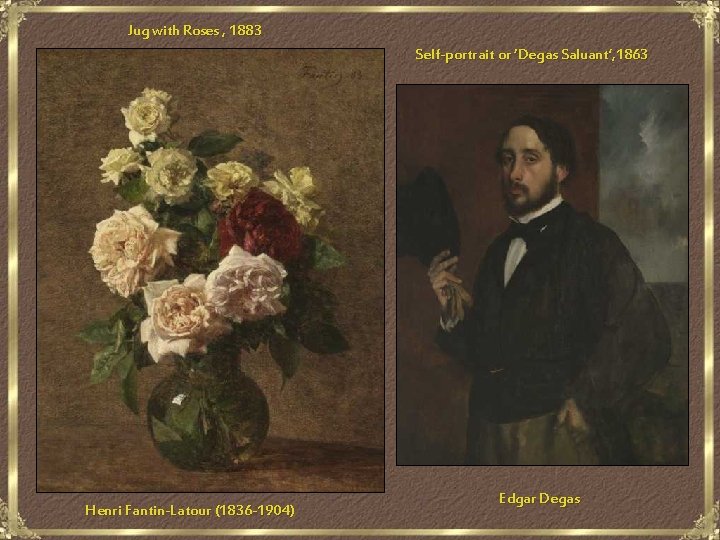
Jug with Roses , 1883 Self-portrait or ‘Degas Saluant’, 1863 Henri Fantin-Latour (1836 -1904) Edgar Degas
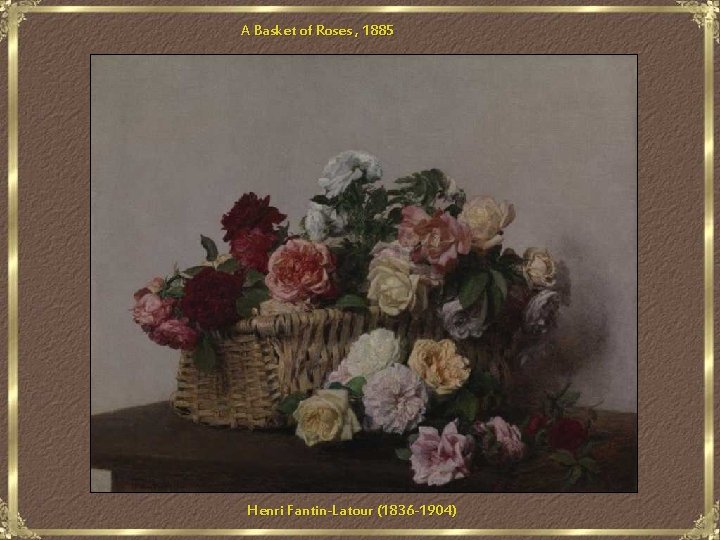
A Basket of Roses , 1885 Henri Fantin-Latour (1836 -1904)
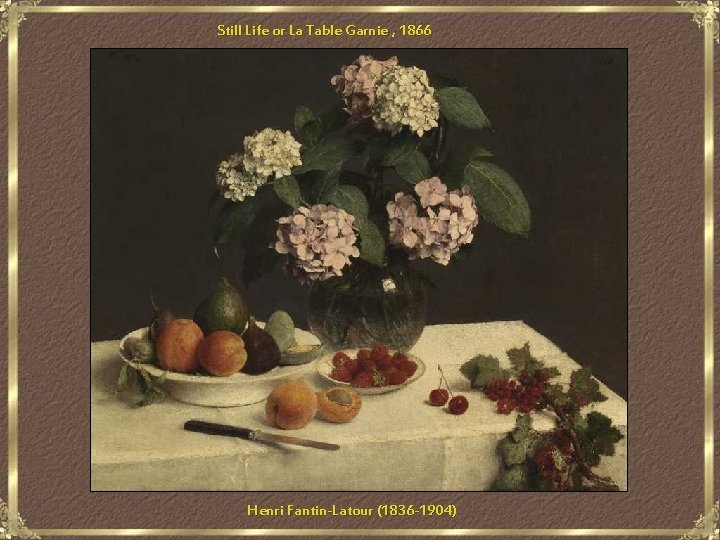
Still Life or La Table Garnie , 1866 Henri Fantin-Latour (1836 -1904)
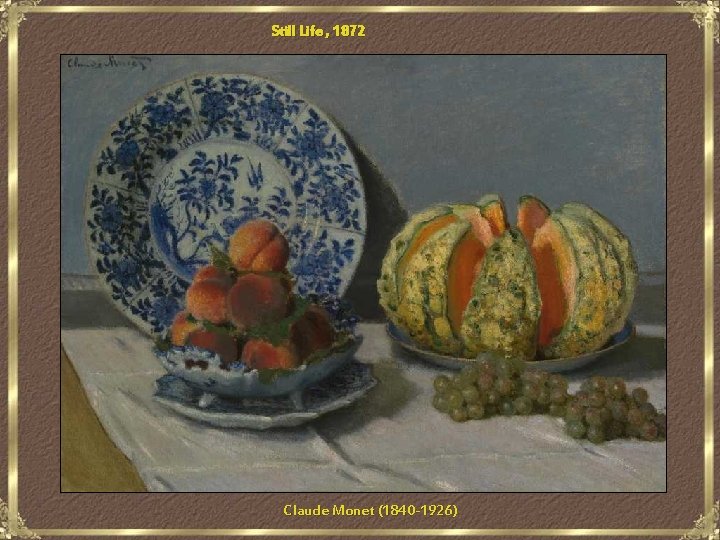
Still Life , 1872 Claude Monet (1840 -1926)
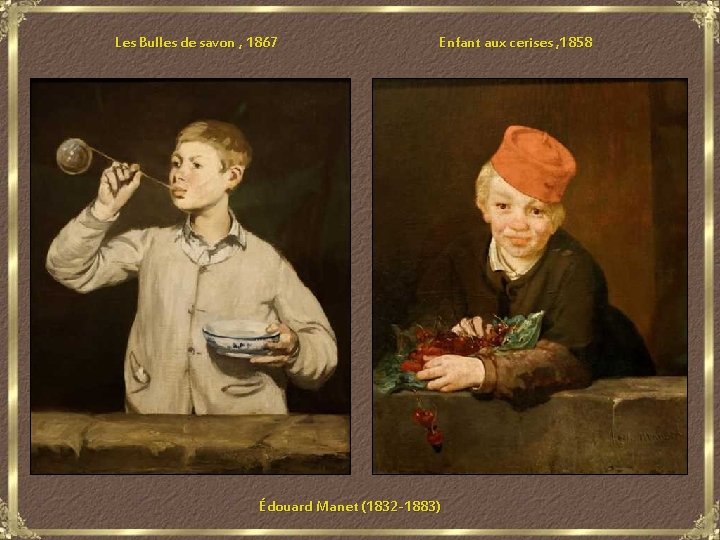
Les Bulles de savon , 1867 Enfant aux cerises , 1858 Édouard Manet (1832 -1883)
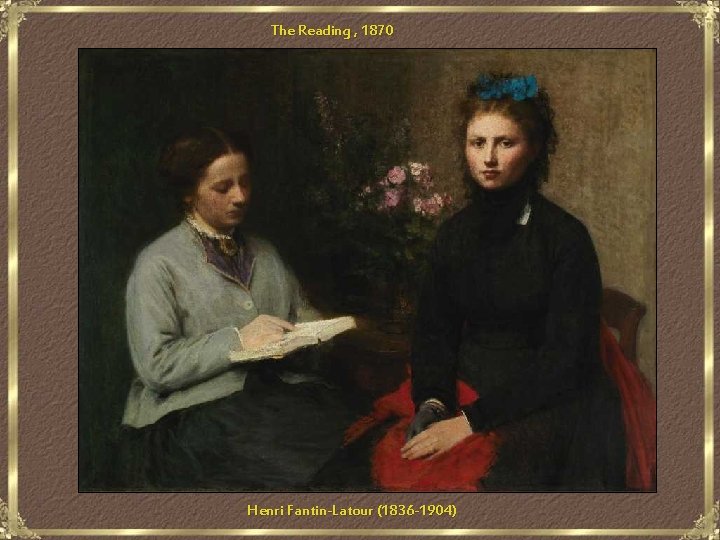
The Reading , 1870 Henri Fantin-Latour (1836 -1904)
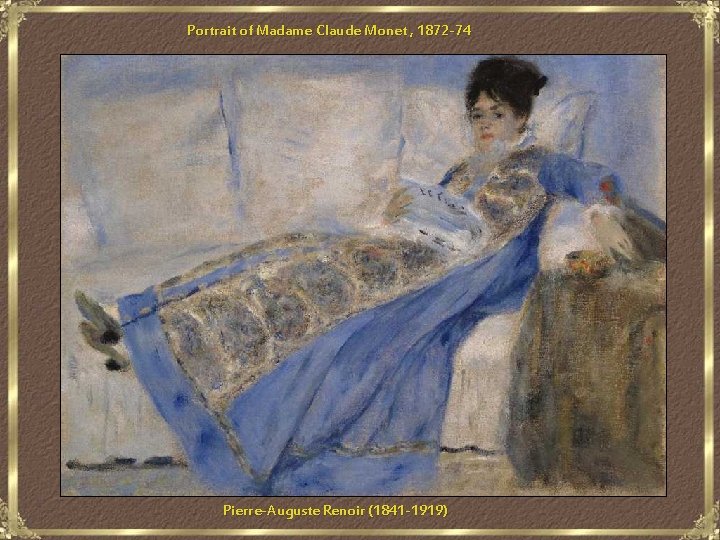
Portrait of Madame Claude Monet , 1872 -74 Pierre-Auguste Renoir (1841 -1919)
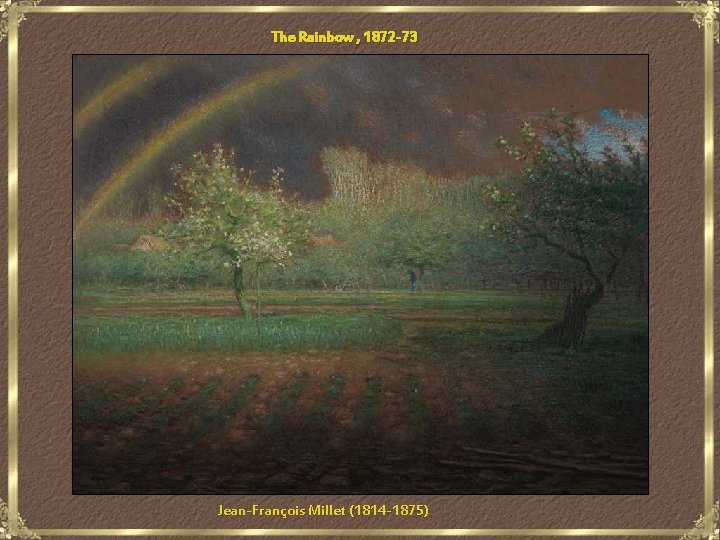
The Rainbow , 1872 -73 Jean-François Millet (1814 -1875)
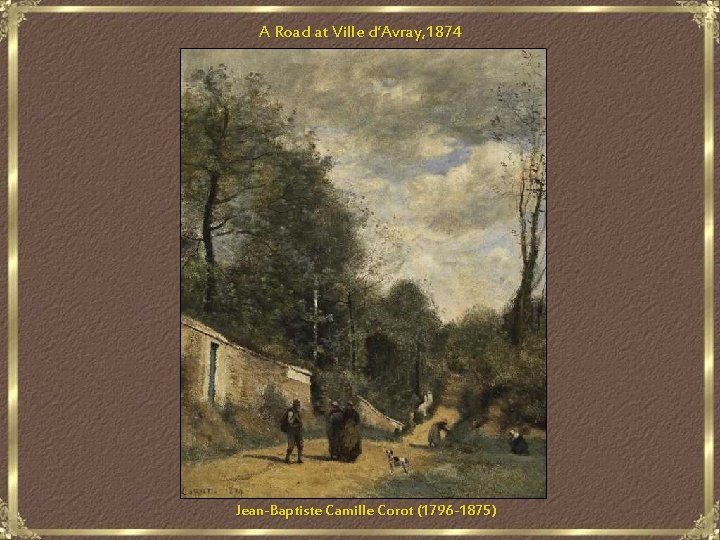
A Road at Ville d’Avray, 1874 Jean-Baptiste Camille Corot (1796 -1875)
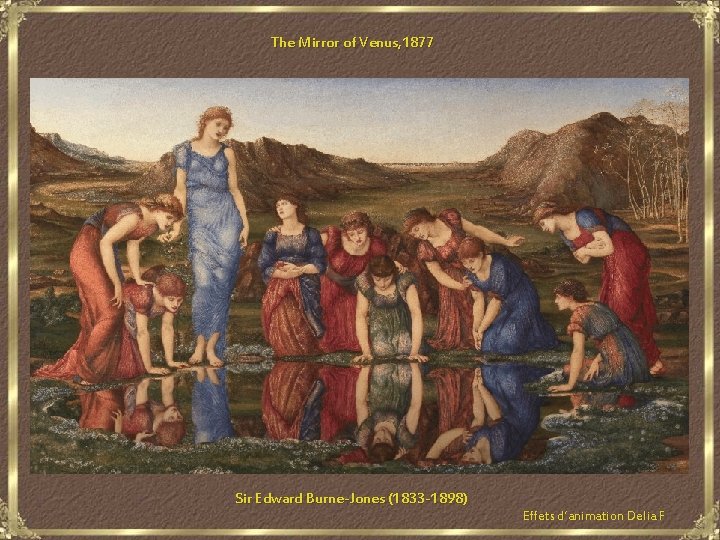
The Mirror of Venus, 1877 Sir Edward Burne-Jones (1833 -1898) Effets d’animation Delia F
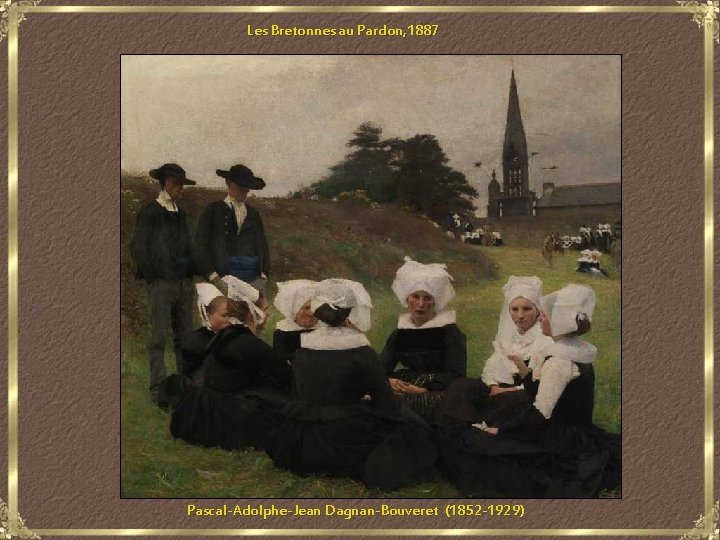
Les Bretonnes au Pardon, 1887 Pascal-Adolphe-Jean Dagnan-Bouveret (1852 -1929)
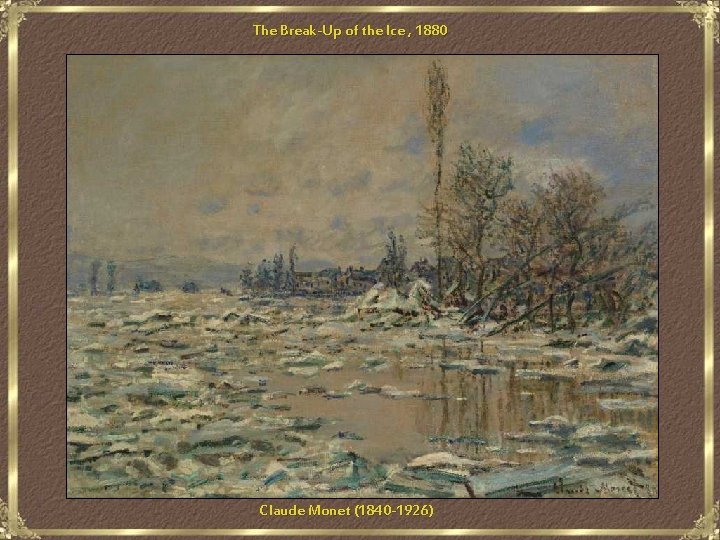
The Break-Up of the Ice , 1880 Claude Monet (1840 -1926)
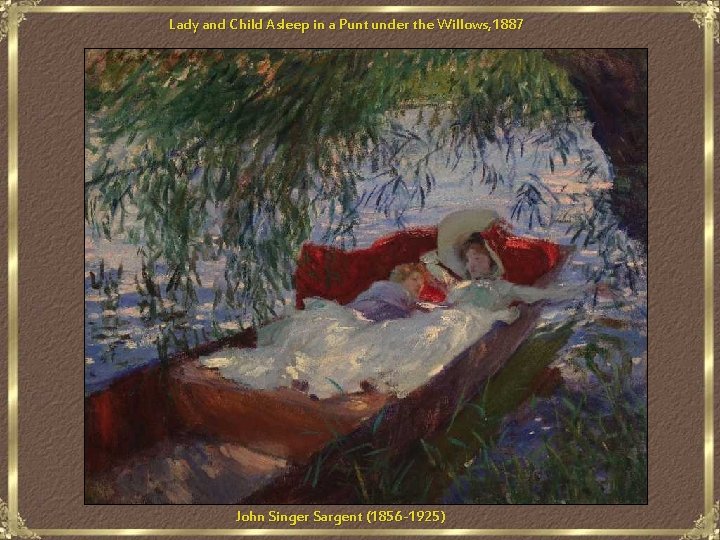
Lady and Child Asleep in a Punt under the Willows, 1887 John Singer Sargent (1856 -1925)
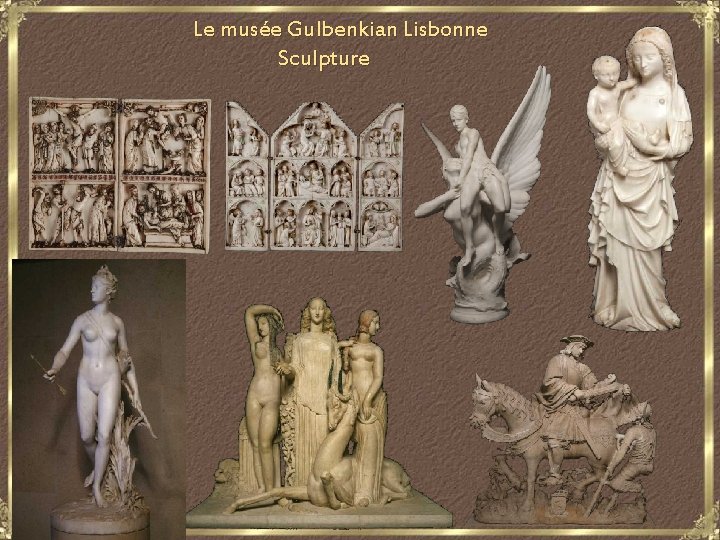
Le musée Gulbenkian Lisbonne Sculpture
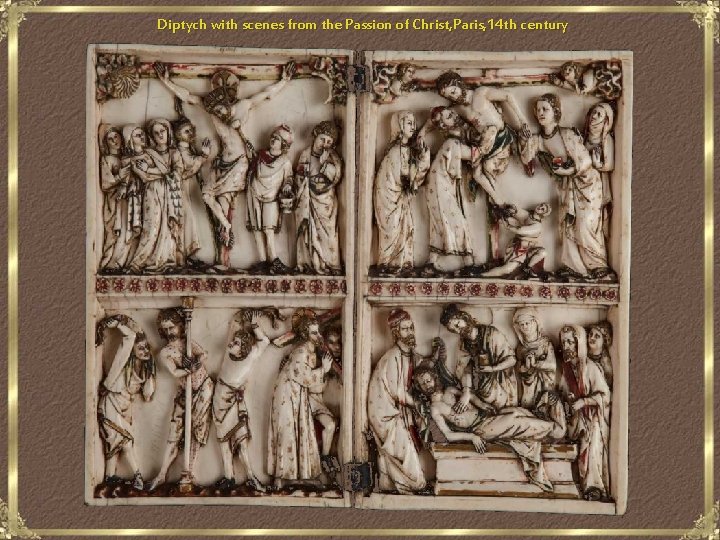
Diptych with scenes from the Passion of Christ, Paris, 14 th century
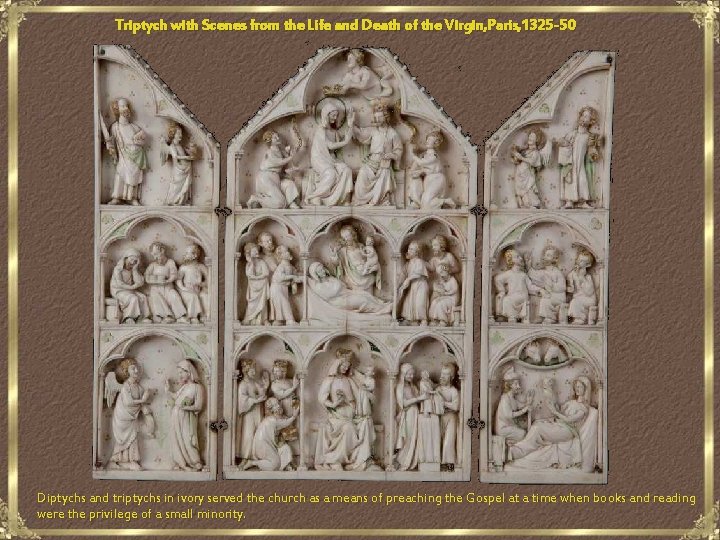
Triptych with Scenes from the Life and Death of the Virgin, Paris, 1325 -50 Diptychs and triptychs in ivory served the church as a means of preaching the Gospel at a time when books and reading were the privilege of a small minority.
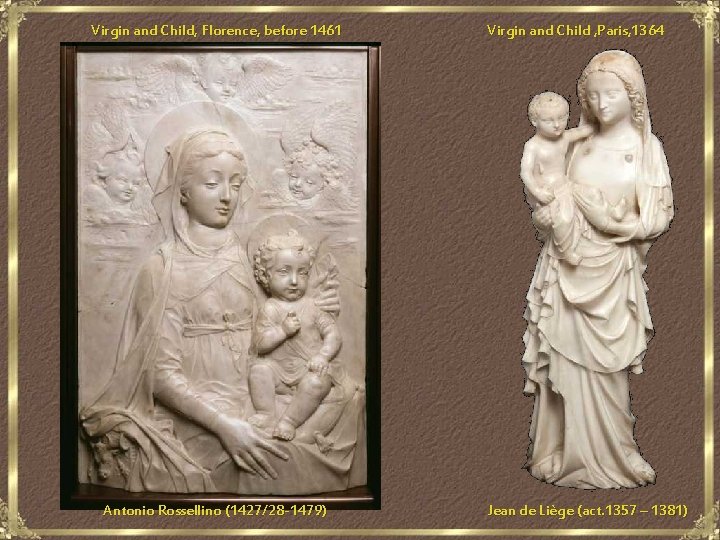
Virgin and Child, Florence, before 1461 Antonio Rossellino (1427/28 -1479) Virgin and Child , Paris, 1364 Jean de Liège (act. 1357 – 1381)
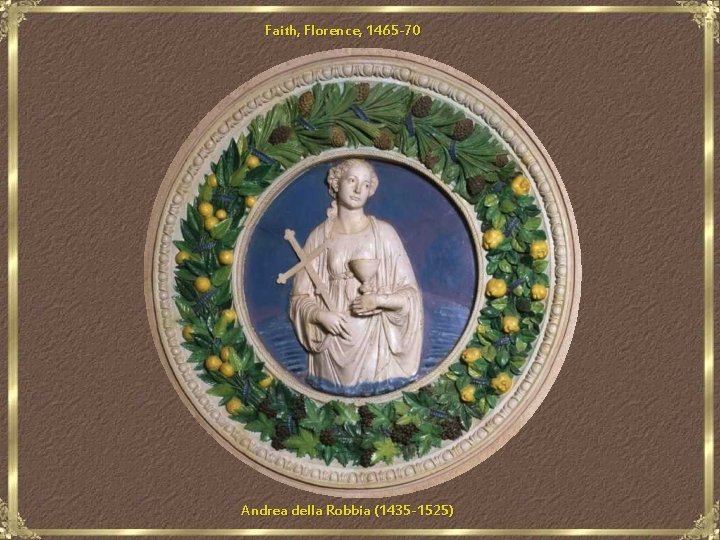
Faith, Florence, 1465 -70 Andrea della Robbia (1435 -1525)
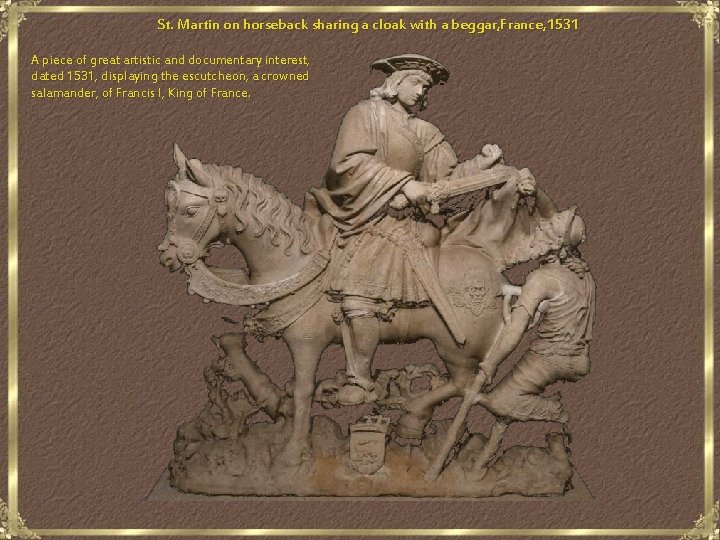
St. Martin on horseback sharing a cloak with a beggar, France, 1531 A piece of great artistic and documentary interest, dated 1531, displaying the escutcheon, a crowned salamander, of Francis I, King of France.
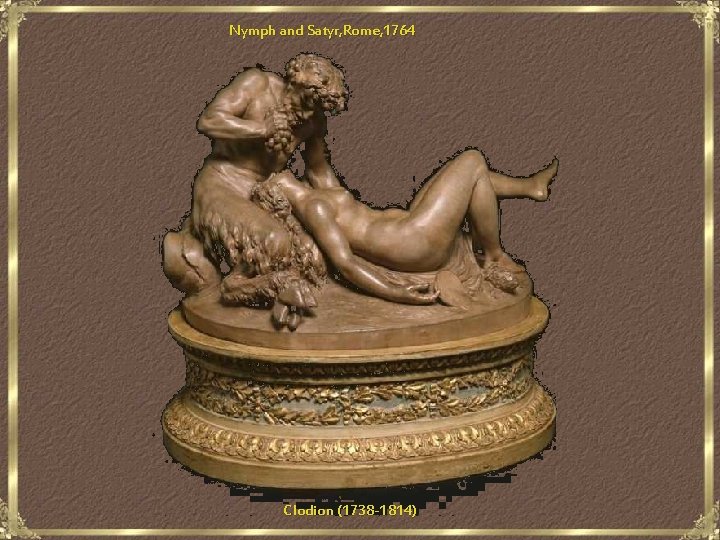
Nymph and Satyr, Rome, 1764 Clodion (1738 -1814)
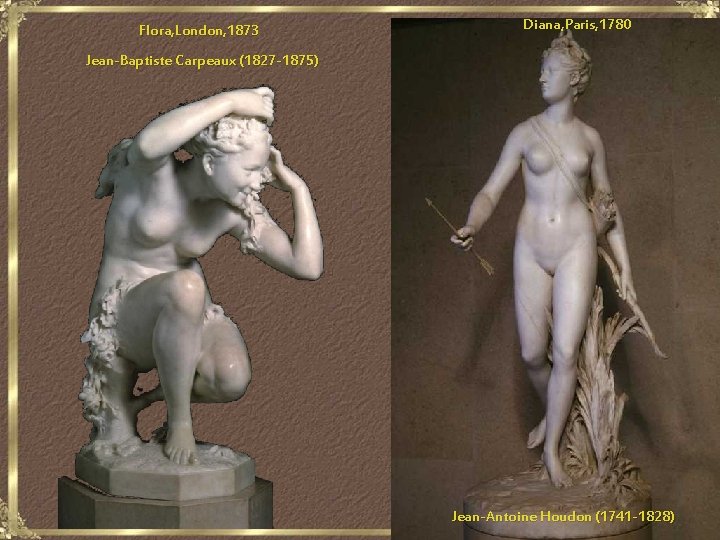
Flora, London, 1873 Diana, Paris, 1780 Jean-Baptiste Carpeaux (1827 -1875) Jean-Antoine Houdon (1741 -1828)
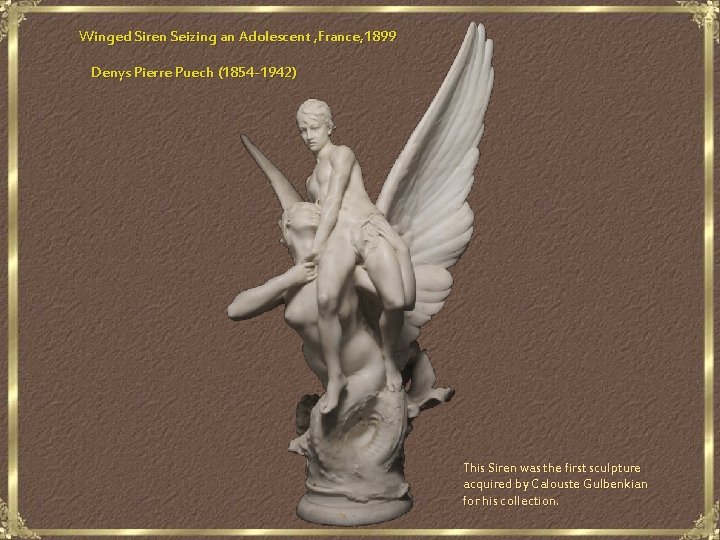
Winged Siren Seizing an Adolescent , France, 1899 Denys Pierre Puech (1854 -1942) This Siren was the first sculpture acquired by Calouste Gulbenkian for his collection.
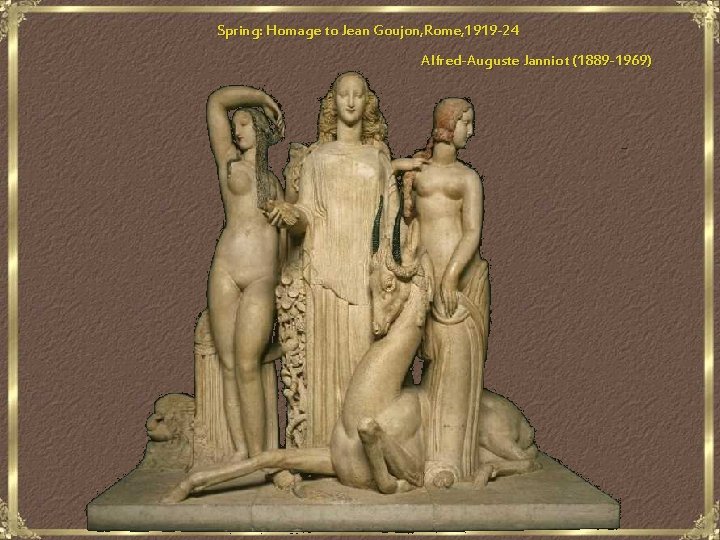
Spring: Homage to Jean Goujon, Rome, 1919 -24 Alfred-Auguste Janniot (1889 -1969)
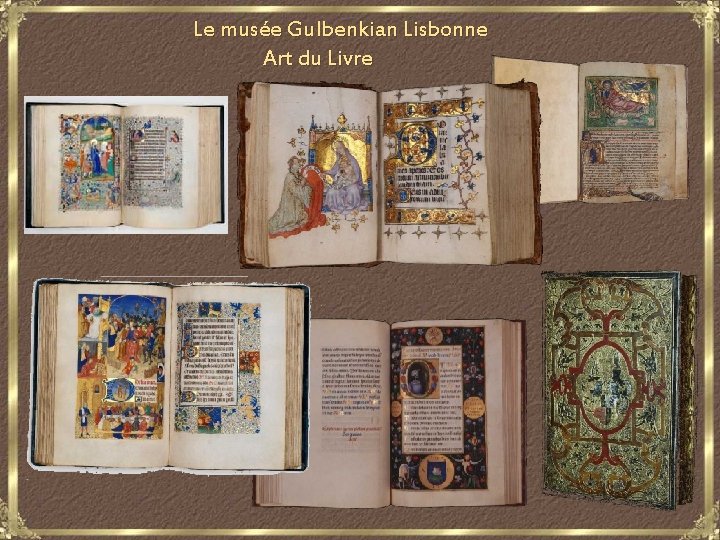
Le musée Gulbenkian Lisbonne Art du Livre
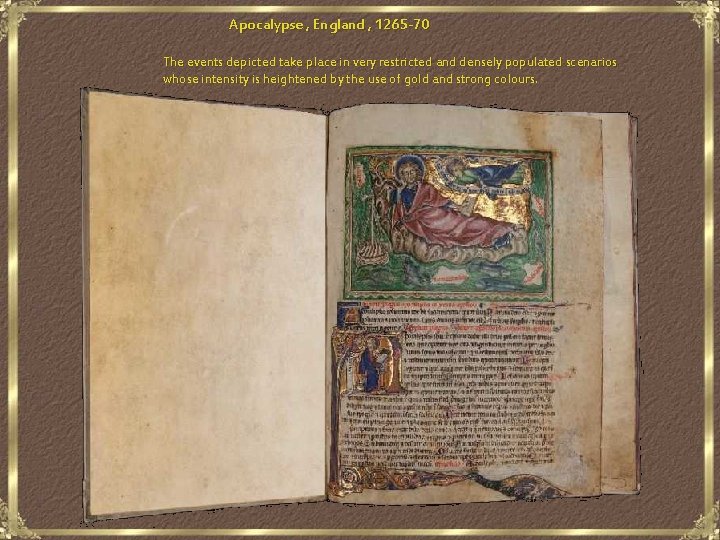
Apocalypse , England , 1265 -70 The events depicted take place in very restricted and densely populated scenarios whose intensity is heightened by the use of gold and strong colours.
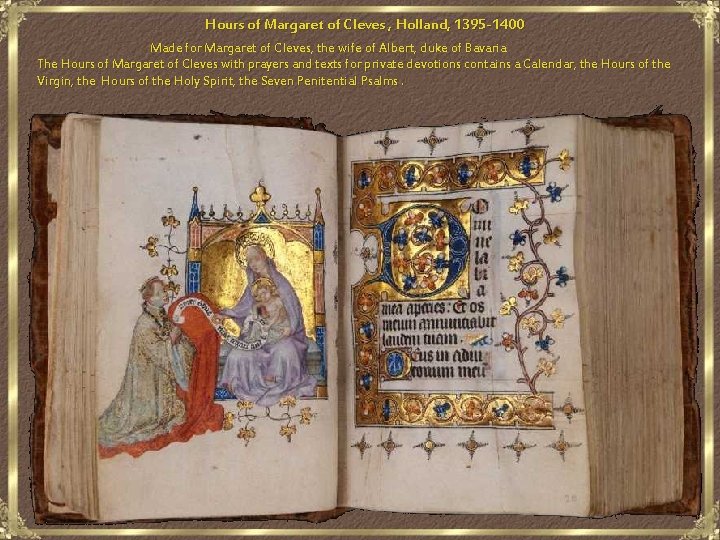
Hours of Margaret of Cleves , Holland, 1395 -1400 Made for Margaret of Cleves, the wife of Albert, duke of Bavaria The Hours of Margaret of Cleves with prayers and texts for private devotions contains a Calendar, the Hours of the Virgin, the Hours of the Holy Spirit, the Seven Penitential Psalms.
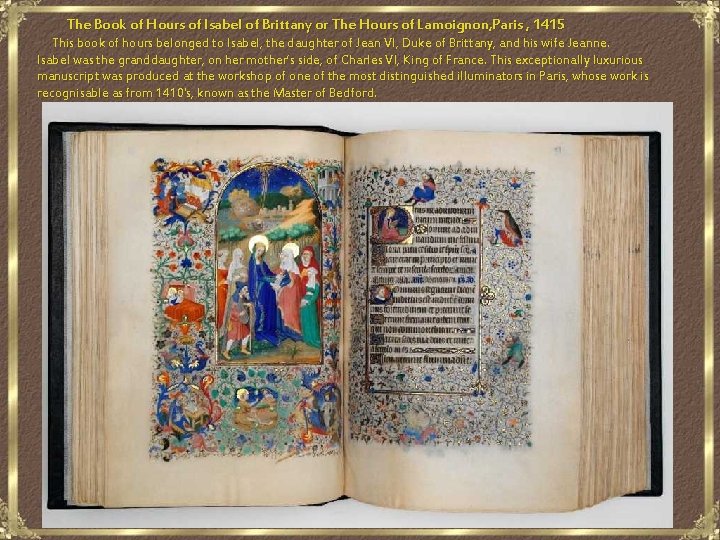
The Book of Hours of Isabel of Brittany or The Hours of Lamoignon, Paris , 1415 This book of hours belonged to Isabel, the daughter of Jean VI, Duke of Brittany, and his wife Jeanne. Isabel was the granddaughter, on her mother’s side, of Charles VI, King of France. This exceptionally luxurious manuscript was produced at the workshop of one of the most distinguished illuminators in Paris, whose work is recognisable as from 1410's, known as the Master of Bedford.
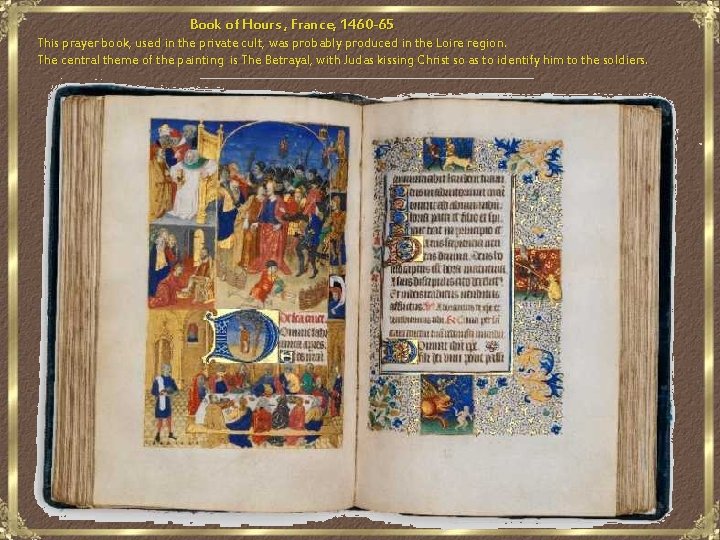
Book of Hours , France, 1460 -65 This prayer book, used in the private cult, was probably produced in the Loire region. The central theme of the painting is The Betrayal, with Judas kissing Christ so as to identify him to the soldiers.
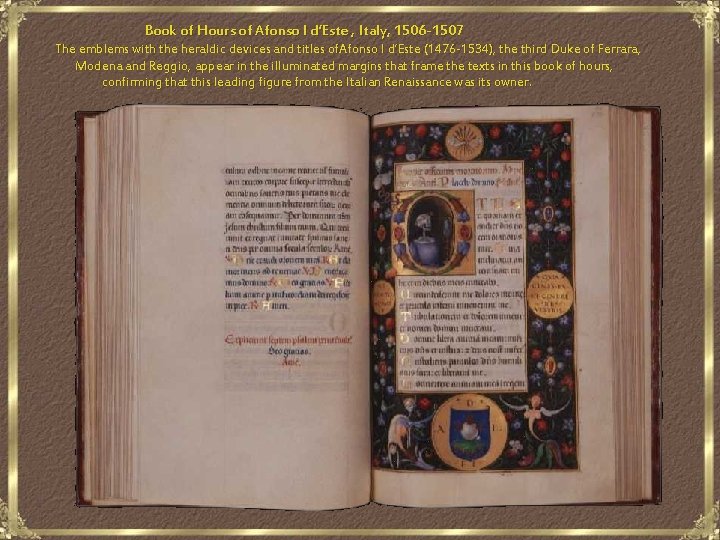
Book of Hours of Afonso I d’Este , Italy, 1506 -1507 The emblems with the heraldic devices and titles of. Afonso I d’Este (1476 -1534), the third Duke of Ferrara, Modena and Reggio, appear in the illuminated margins that frame the texts in this book of hours, confirming that this leading figure from the Italian Renaissance was its owner.
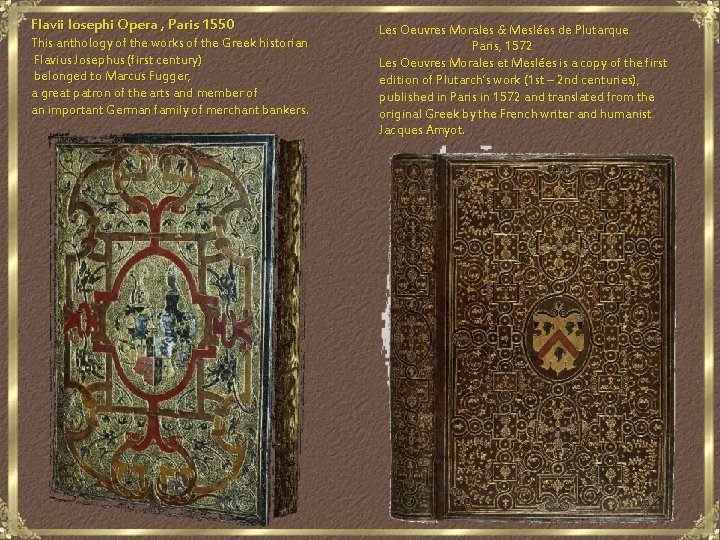
Flavii Iosephi Opera , Paris 1550 This anthology of the works of the Greek historian Flavius Josephus (first century) belonged to Marcus Fugger, a great patron of the arts and member of an important German family of merchant bankers. Les Oeuvres Morales & Meslées de Plutarque Paris, 1572 Les Oeuvres Morales et Meslées is a copy of the first edition of Plutarch’s work (1 st – 2 nd centuries), published in Paris in 1572 and translated from the original Greek by the French writer and humanist Jacques Amyot.
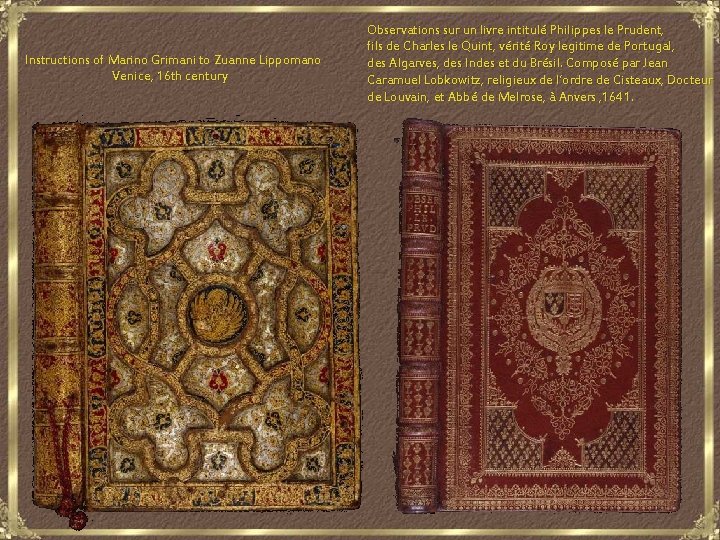
Instructions of Marino Grimani to Zuanne Lippomano Venice, 16 th century Observations sur un livre intitulé Philippes le Prudent, fils de Charles le Quint, vérité Roy legitime de Portugal, des Algarves, des Indes et du Brésil. Composé par Jean Caramuel Lobkowitz, religieux de l’ordre de Cisteaux, Docteur de Louvain, et Abbé de Melrose, à Anvers , 1641.
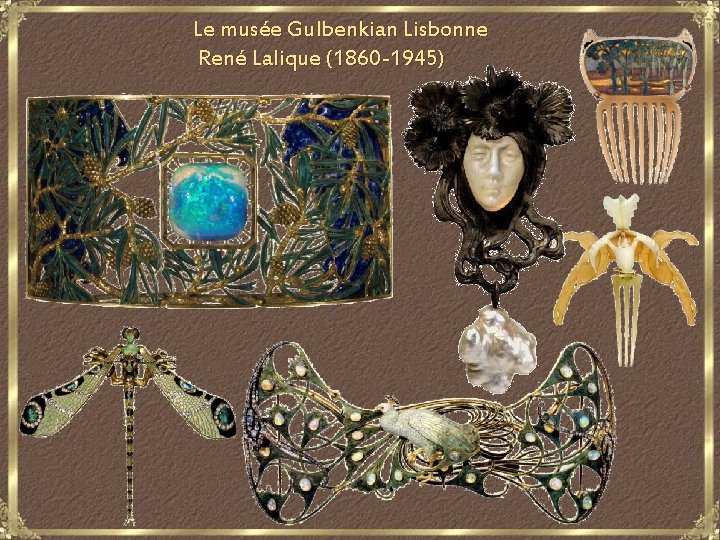
Le musée Gulbenkian Lisbonne René Lalique (1860 -1945)
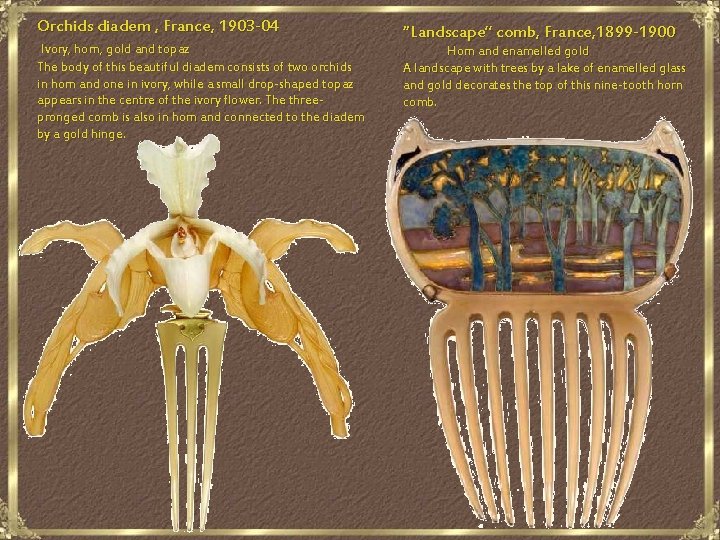
Orchids diadem , France, 1903 -04 Ivory, horn, gold and topaz The body of this beautiful diadem consists of two orchids in horn and one in ivory, while a small drop-shaped topaz appears in the centre of the ivory flower. The threepronged comb is also in horn and connected to the diadem by a gold hinge. “Landscape” comb, France, 1899 -1900 Horn and enamelled gold A landscape with trees by a lake of enamelled glass and gold decorates the top of this nine-tooth horn comb.
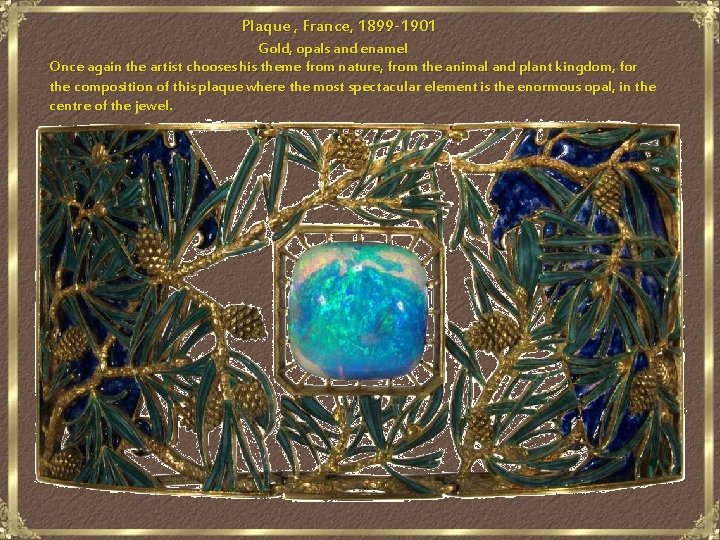
Plaque , France, 1899 -1901 Gold, opals and enamel Once again the artist chooses his theme from nature, from the animal and plant kingdom, for the composition of this plaque where the most spectacular element is the enormous opal, in the centre of the jewel.
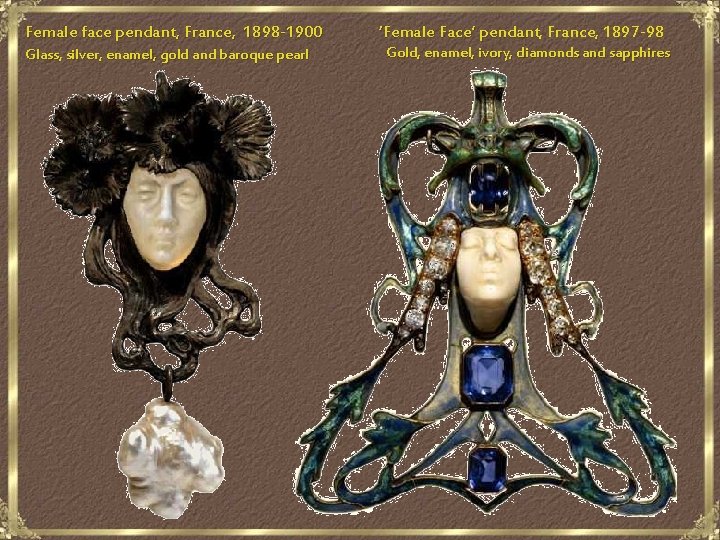
Female face pendant, France, 1898 -1900 Glass, silver, enamel, gold and baroque pearl ‘Female Face’ pendant, France, 1897 -98 endant Gold, enamel, ivory, diamonds and sapphires
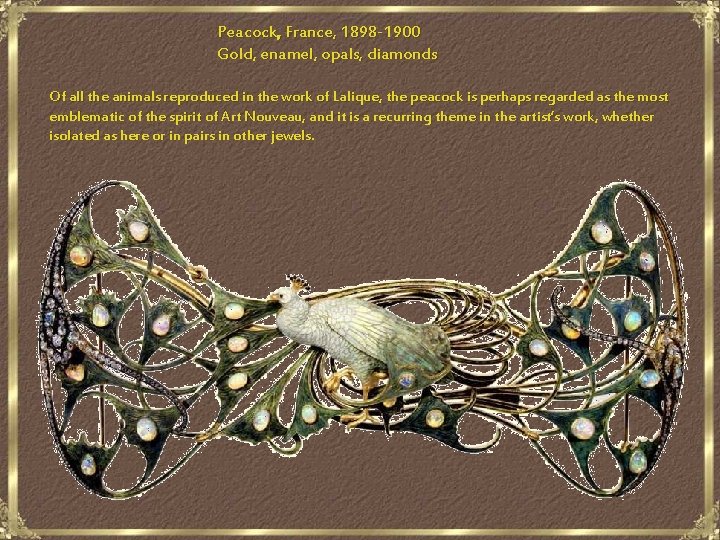
Peacock, France, 1898 -1900 Gold, enamel, opals, diamonds Of all the animals reproduced in the work of Lalique, the peacock is perhaps regarded as the most emblematic of the spirit of Art Nouveau, and it is a recurring theme in the artist’s work, whether isolated as here or in pairs in other jewels.
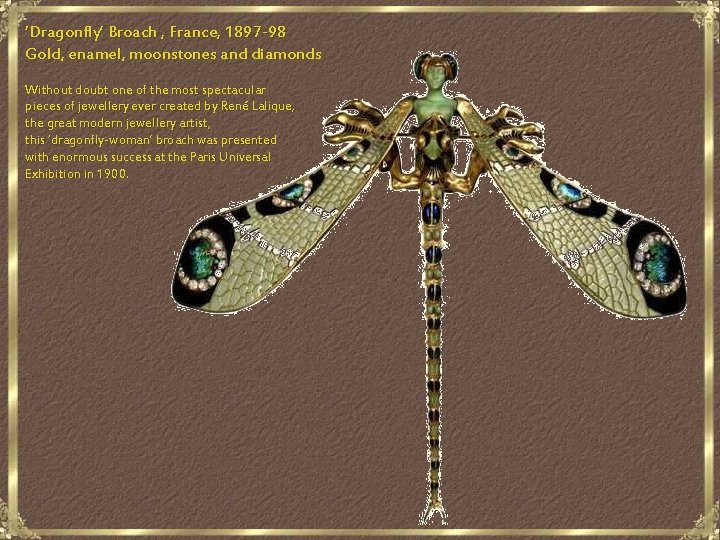
‘Dragonfly’ Broach , France, 1897 -98 Gold, enamel, moonstones and diamonds Without doubt one of the most spectacular pieces of jewellery ever created by René Lalique, the great modern jewellery artist, this ‘dragonfly-woman’ broach was presented with enormous success at the Paris Universal Exhibition in 1900.
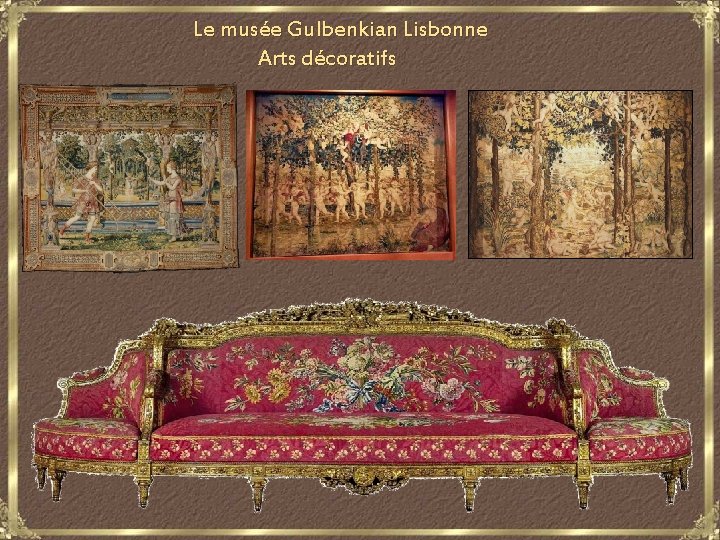
Le musée Gulbenkian Lisbonne Arts décoratifs
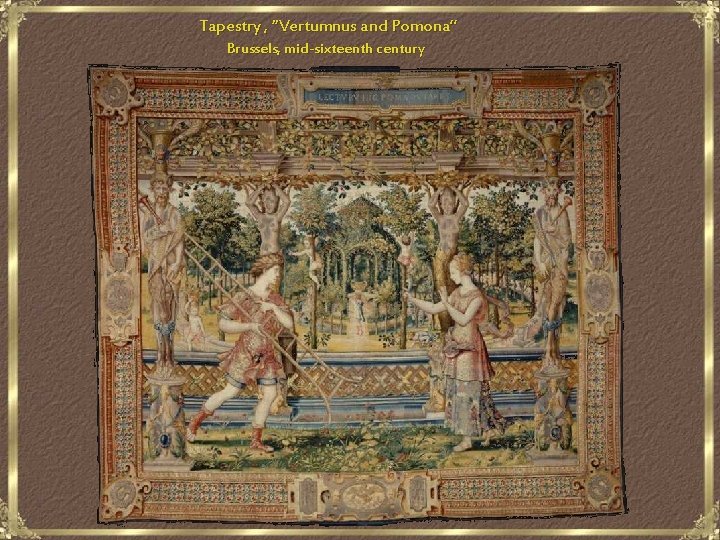
Tapestry , “Vertumnus and Pomona” Brussels, mid-sixteenth century
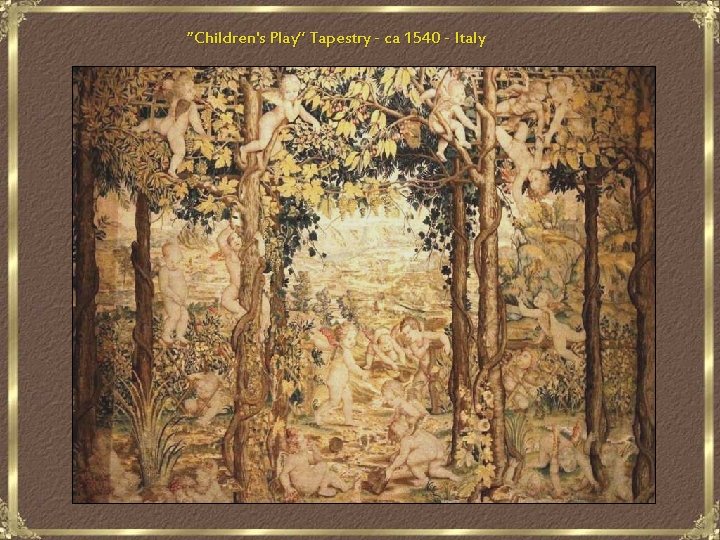
“Children's Play” Tapestry - ca 1540 - Italy
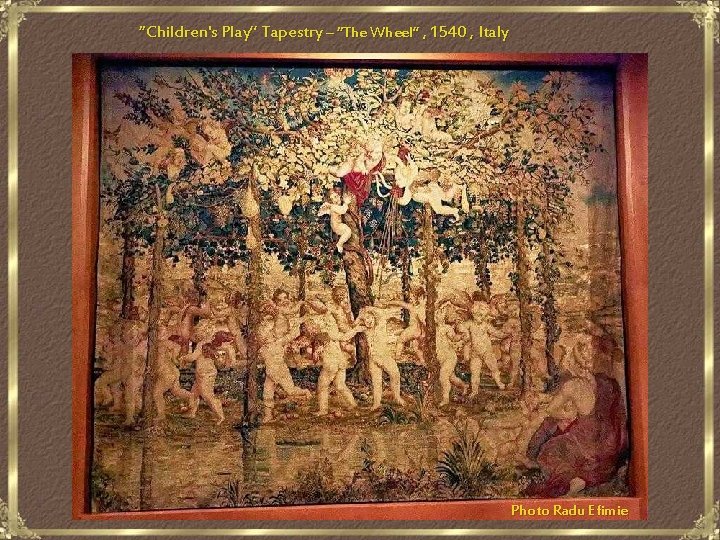
“Children's Play” Tapestry – “The Wheel” , 1540 , Italy Photo Radu Efimie
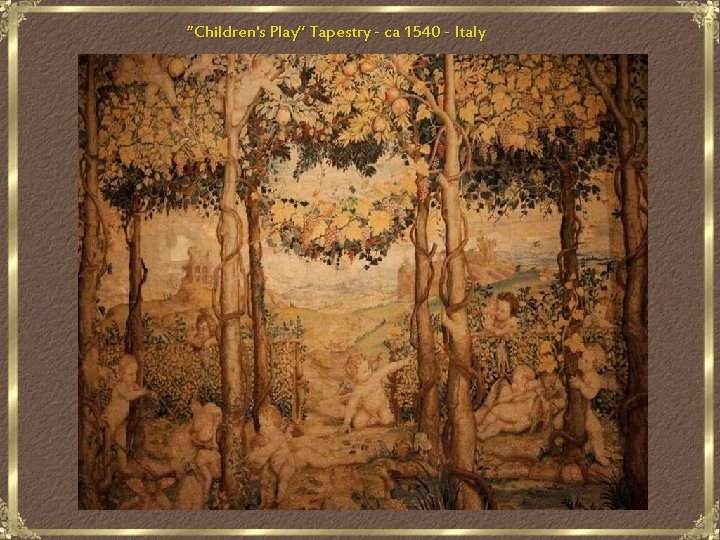
“Children's Play” Tapestry - ca 1540 - Italy
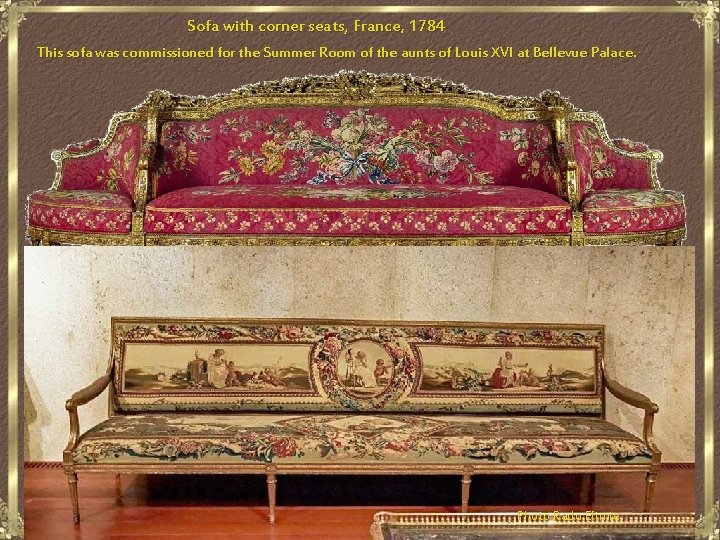
Sofa with corner seats, France, 1784 This sofa was commissioned for the Summer Room of the aunts of Louis XVI at Bellevue Palace Photo Radu Efimie
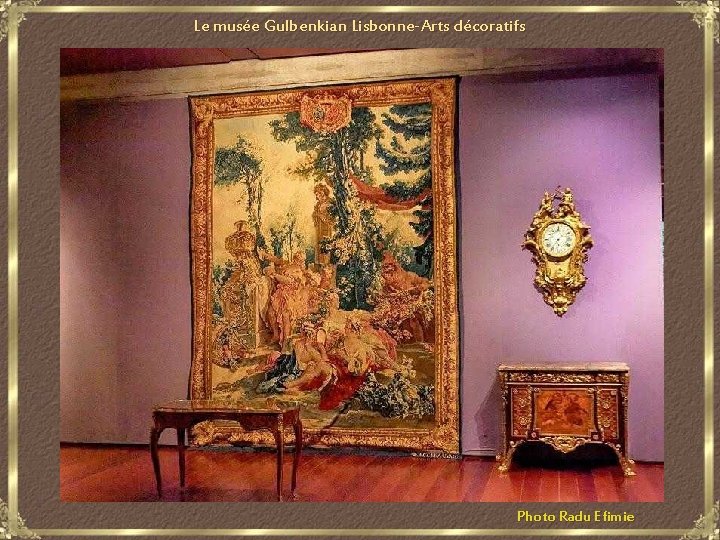
Le musée Gulbenkian Lisbonne-Arts décoratifs Photo Radu Efimie
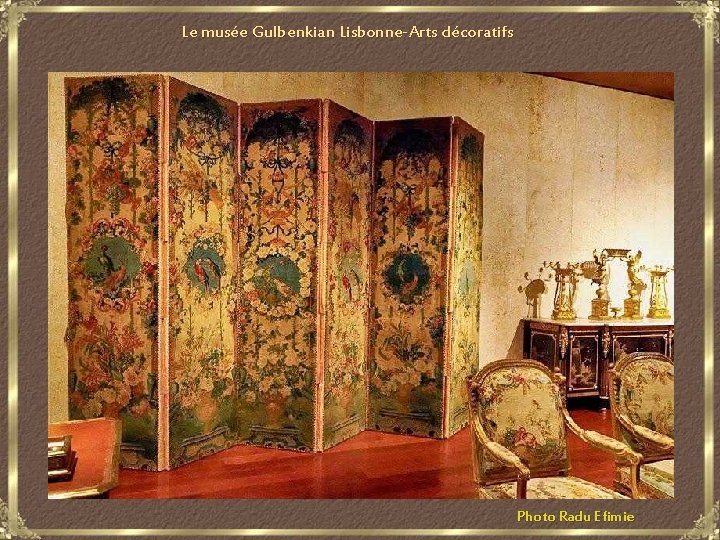
Le musée Gulbenkian Lisbonne-Arts décoratifs Photo Radu Efimie
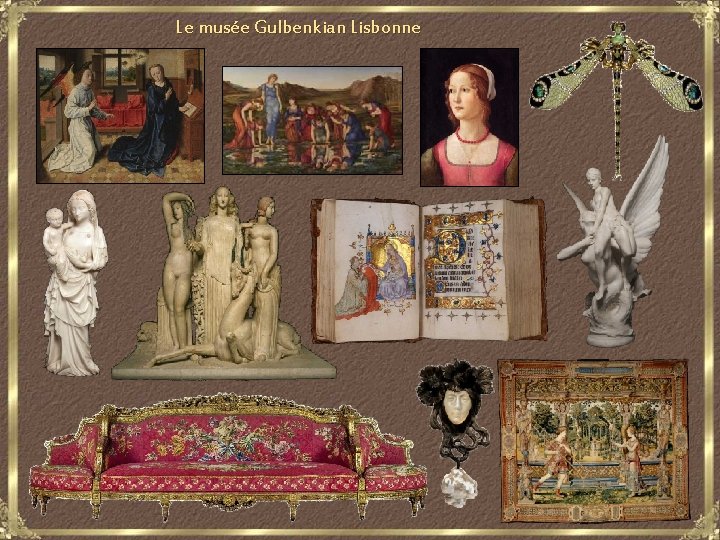
Le musée Gulbenkian Lisbonne
Je fais partie des 200 créateurs de PPSMANIA, tous bénévoles. http: //ppsmania. fr Clic gauche pour arrêter
- Slides: 64