
LCT 50 Formulation LCT 50 Course Overview 1
- Slides: 17
LCT 50 Formulation
LCT 50 Course Overview 1. 2. 3. 4. 5. 6. Purpose History Philosophy: CATO vs. NTOA Formula and Calculations Practical Applications Tactical Case Study
LCT 50 Purpose 1. Helps determine amount of chemical agent to use. 2. Estimates the time a suspect can remain in agent environment. 3. Provides a guideline for command staff and for potential criminal & civil litigation.
LCT 50 Defined “Concentration (LC 50) multiplied by the time (T) of exposure that is lethal to 50% of exposed personnel. ” (Usually expressed in minutes of exposure. )
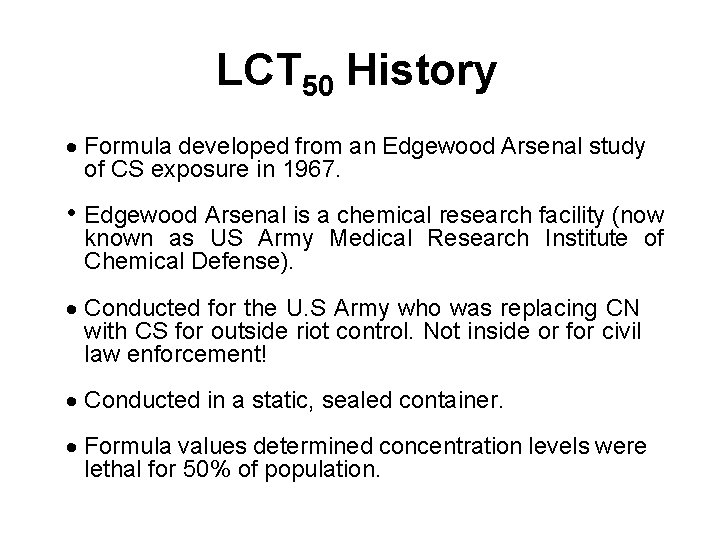
LCT 50 History · Formula developed from an Edgewood Arsenal study of CS exposure in 1967. • Edgewood Arsenal is a chemical research facility (now known as US Army Medical Research Institute of Chemical Defense). · Conducted for the U. S Army who was replacing CN with CS for outside riot control. Not inside or for civil law enforcement! · Conducted in a static, sealed container. · Formula values determined concentration levels were lethal for 50% of population.
LCT 50 Philosophy · National Tactical Officer’s Association · California Association of Tactical Officers
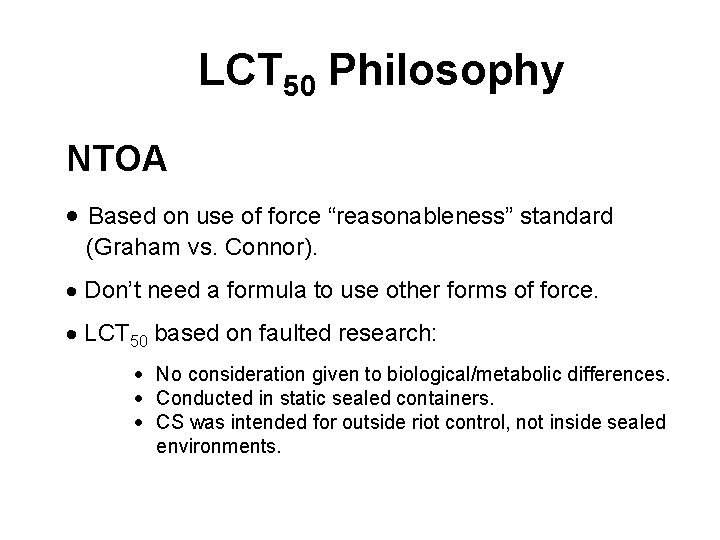
LCT 50 Philosophy NTOA · Based on use of force “reasonableness” standard (Graham vs. Connor). · Don’t need a formula to use other forms of force. · LCT 50 based on faulted research: · No consideration given to biological/metabolic differences. · Conducted in static sealed containers. · CS was intended for outside riot control, not inside sealed environments.
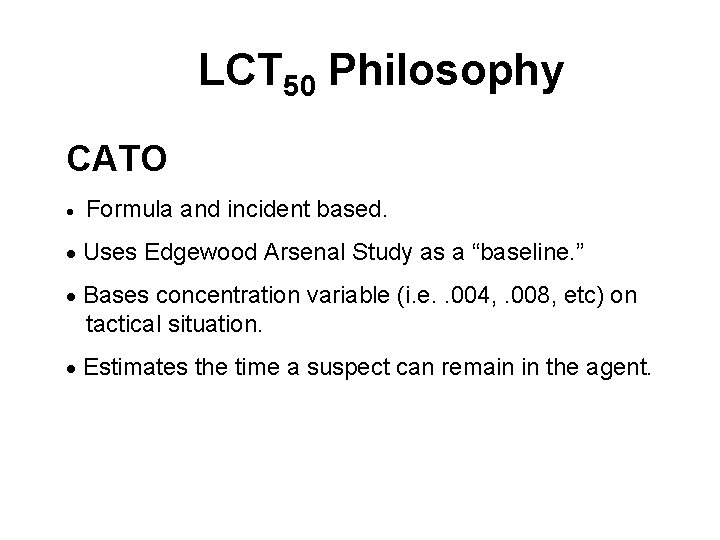
LCT 50 Philosophy CATO · Formula and incident based. · Uses Edgewood Arsenal Study as a “baseline. ” · Bases concentration variable (i. e. . 004, . 008, etc) on tactical situation. · Estimates the time a suspect can remain in the agent.
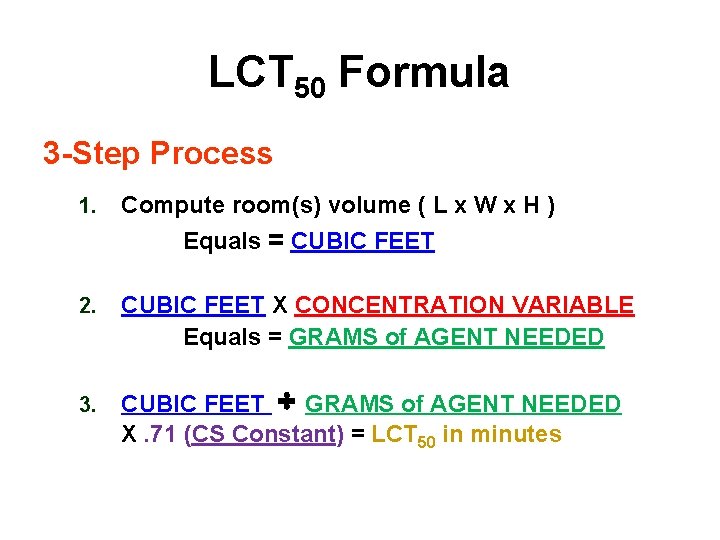
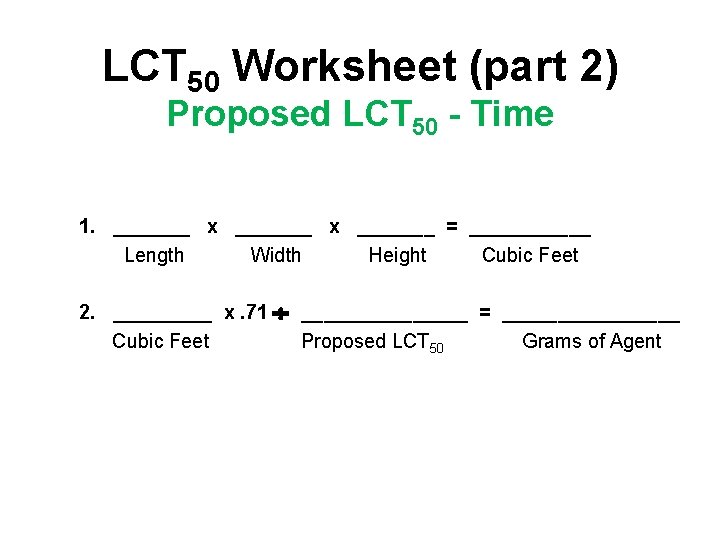
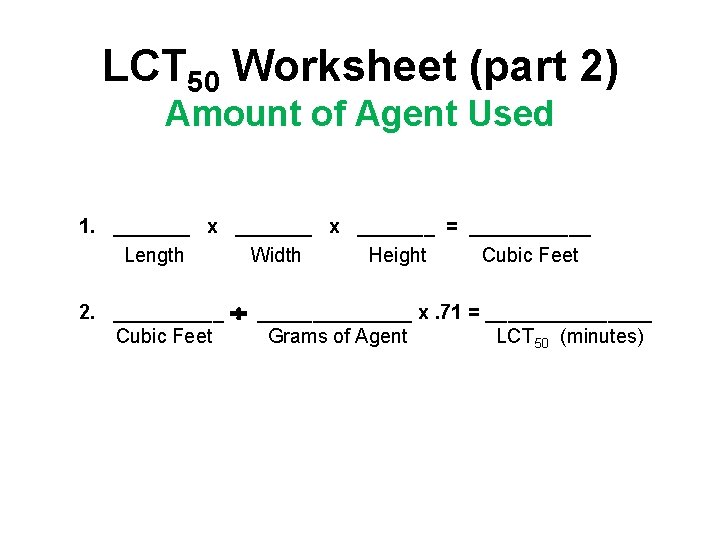
LCT 50 Formula 3 -Step Process 1. Compute room(s) volume ( L x W x H ) Equals = CUBIC FEET 2. CUBIC FEET X CONCENTRATION VARIABLE Equals = GRAMS of AGENT NEEDED 3. CUBIC FEET GRAMS of AGENT NEEDED X. 71 (CS Constant) = LCT 50 in minutes
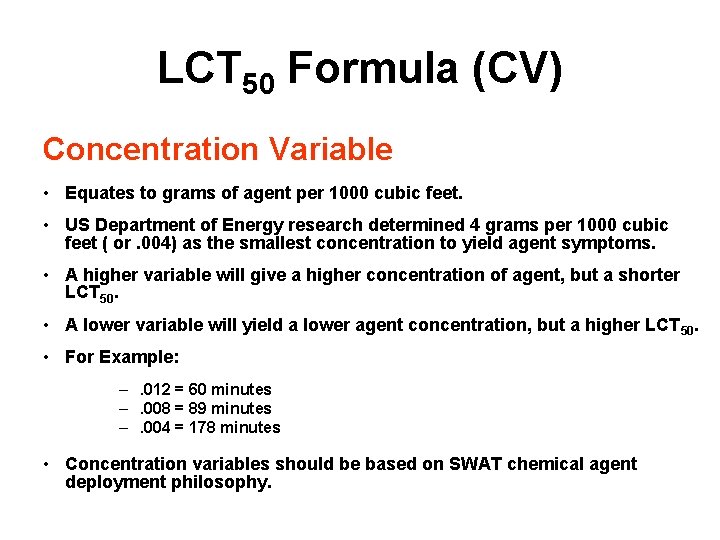
LCT 50 Formula (CV) Concentration Variable • Equates to grams of agent per 1000 cubic feet. • US Department of Energy research determined 4 grams per 1000 cubic feet ( or. 004) as the smallest concentration to yield agent symptoms. • A higher variable will give a higher concentration of agent, but a shorter LCT 50. • A lower variable will yield a lower agent concentration, but a higher LCT 50. • For Example: –. 012 = 60 minutes –. 008 = 89 minutes –. 004 = 178 minutes • Concentration variables should be based on SWAT chemical agent deployment philosophy.
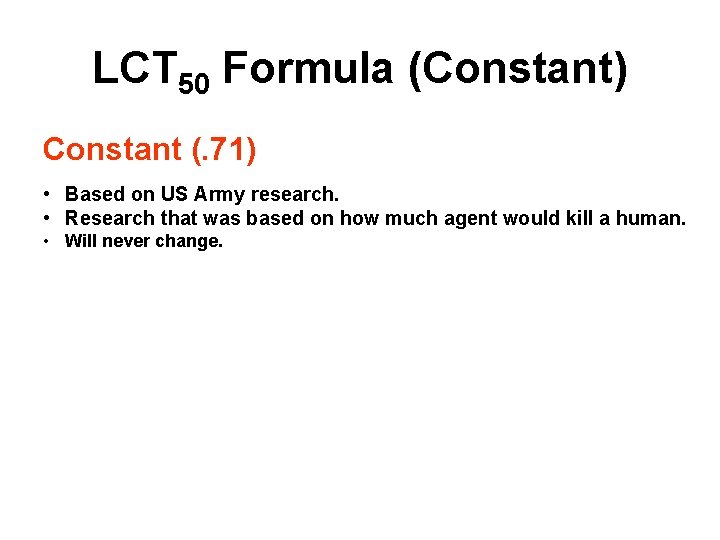
LCT 50 Formula (Constant) Constant (. 71) • Based on US Army research. • Research that was based on how much agent would kill a human. • Will never change.
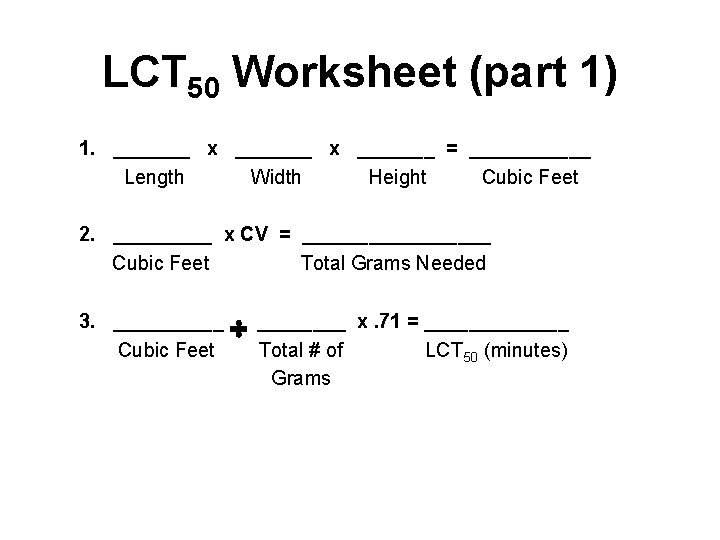
LCT 50 Worksheet (part 1) 1. _______ x _______ = ______ Length Width Height Cubic Feet 2. _____ x CV = _________ Cubic Feet Total Grams Needed 3. _____ Cubic Feet ____ x. 71 = _______ Total # of LCT 50 (minutes) Grams
LCT 50 Worksheet (part 2) Proposed LCT 50 - Time 1. _______ x _______ = ______ Length Width Height Cubic Feet 2. _____ x. 71 Cubic Feet ________ = ________ Proposed LCT 50 Grams of Agent
LCT 50 Worksheet (part 2) Amount of Agent Used 1. _______ x _______ = ______ Length Width Height Cubic Feet 2. _____ Cubic Feet _______ x. 71 = ________ Grams of Agent LCT 50 (minutes)
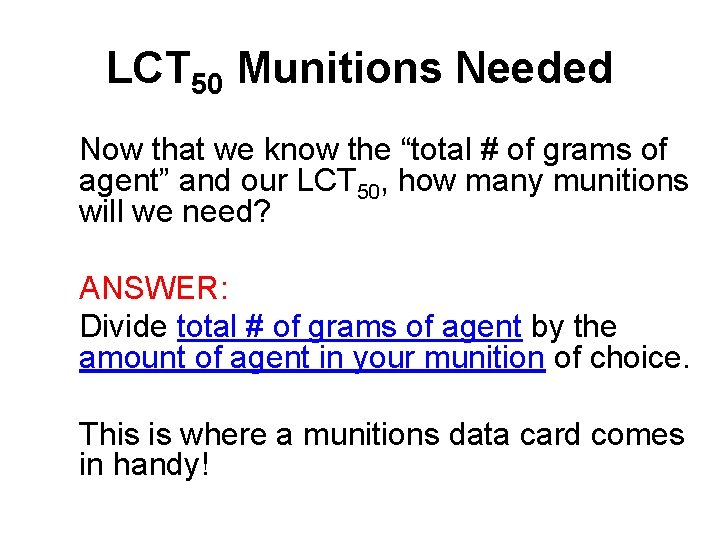
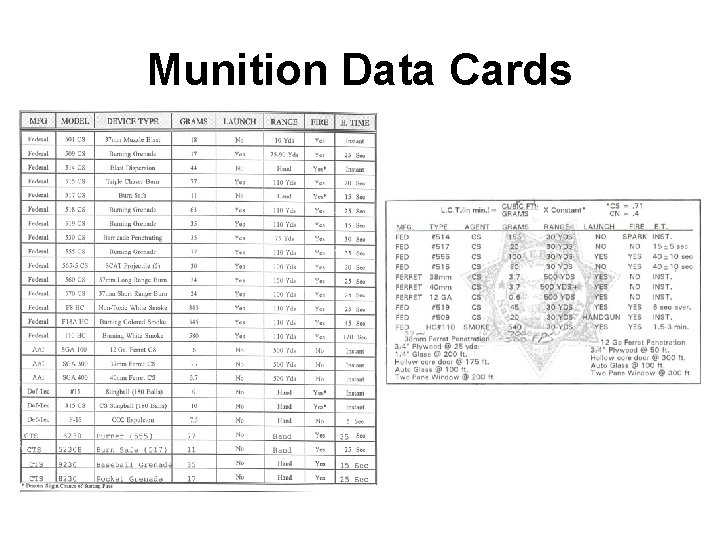
LCT 50 Munitions Needed Now that we know the “total # of grams of agent” and our LCT 50, how many munitions will we need? ANSWER: Divide total # of grams of agent by the amount of agent in your munition of choice. This is where a munitions data card comes in handy!
Munition Data Cards
Questions or Comments