
LCLSII Control System Update Matt Gibbs SLAC National
LCLS-II Control System Update Matt Gibbs, SLAC National Accelerator Laboratory
Outline • Introduction • LCLS-II Operating Parameters • Control System Plans - Mature Systems - New High Performance Systems 2
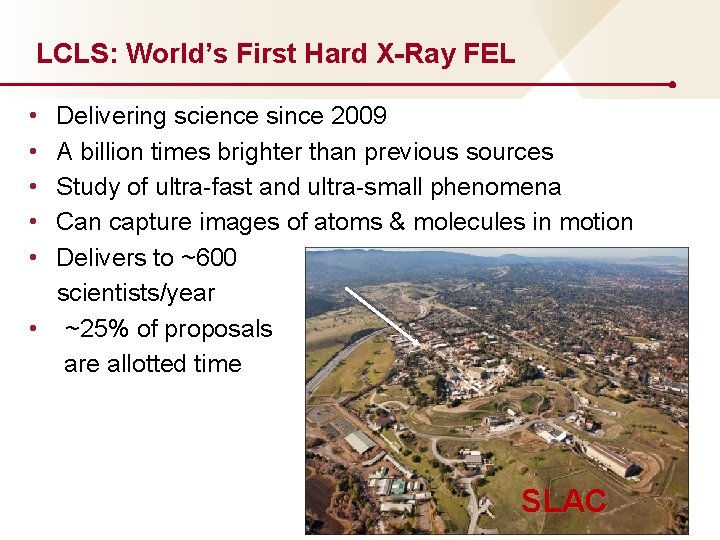
LCLS: World’s First Hard X-Ray FEL • • • Delivering science since 2009 A billion times brighter than previous sources Study of ultra-fast and ultra-small phenomena Can capture images of atoms & molecules in motion Delivers to ~600 scientists/year • ~25% of proposals are allotted time SLAC 3

LCLS-II Project LCLS-II Linac SCRF 4 Ge. V proposed FACET-II LCLS-I Linac 2. 5 -15 Ge. V Sec. 11 -20 Sec. 21 -30 0. 2 -1. 3 ke. V (1 MHz) SXU HXU 1 -25 ke. V (120 Hz) 1 -5 ke. V (1 MHz) • New 1 MHz Injector, SCRF linac, and extension installed in Sectors 0 - 10 • Re-use existing Bypass line from Sector 10 to beam switchyard (BSY) • Fast kicker to direct beams to dump, SXR or HXR • Install two variable gap undulators: HXR (replacing LCLS-I) and SXR • Re-use existing transfer line (LTU) to HXR; modify HXR dump • Construct new LTU to SXR and new dump line • Modify existing LCLS-I X-ray optics and build new SXR X-ray line 4
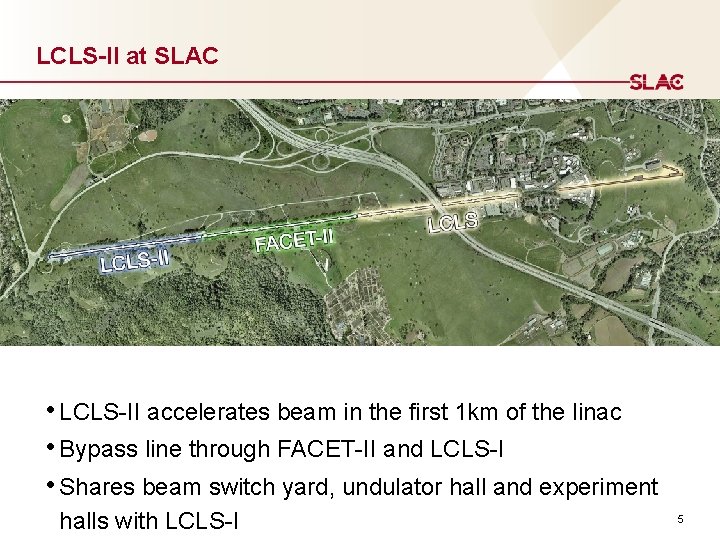
LCLS-II at SLAC • LCLS-II accelerates beam in the first 1 km of the linac • Bypass line through FACET-II and LCLS-I • Shares beam switch yard, undulator hall and experiment halls with LCLS-I 5
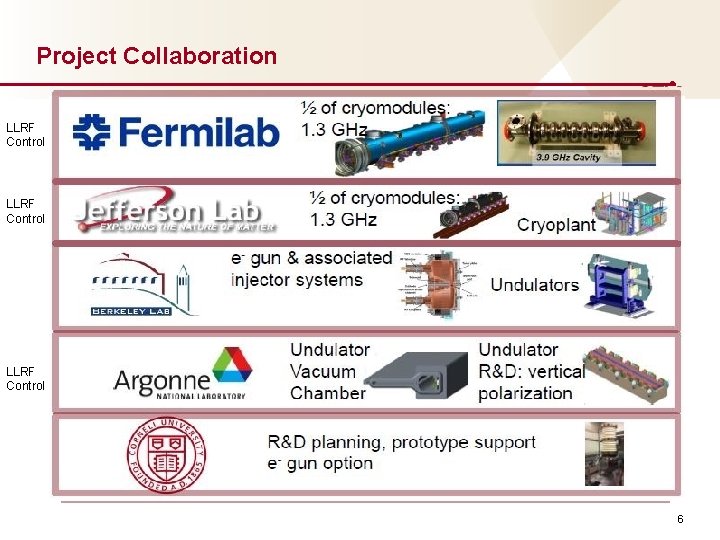
Project Collaboration LLRF Control • LLRF Controls • • • 50% of cryomodules: 1. 3 GHz • • Undulators • • • Undulator Vacuum Chamber • • • R&D planning, accelerator physics & prototype support Cryomodules: 3. 9 GHz Cryomodule engineering/design Helium distribution, including valve boxes Processing for high Q (FNAL-invented gas doping) Cryoplant selection/design/installation/commissioning Processing for high Q LLRF Controls e- gun & associated injector systems LLRF Controls Accelerator physics support Also supports FNAL w/ SCRF cleaning facility Undulator R&D: vertical polarization processing for high-Q e- gun option 6
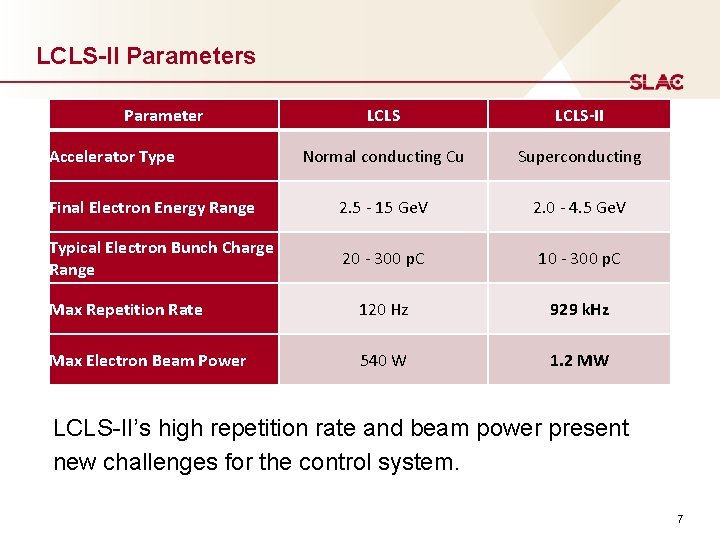
LCLS-II Parameters Parameter LCLS-II Normal conducting Cu Superconducting Final Electron Energy Range 2. 5 - 15 Ge. V 2. 0 - 4. 5 Ge. V Typical Electron Bunch Charge Range 20 - 300 p. C 10 - 300 p. C Max Repetition Rate 120 Hz 929 k. Hz Max Electron Beam Power 540 W 1. 2 MW Accelerator Type LCLS-II’s high repetition rate and beam power present new challenges for the control system. 7
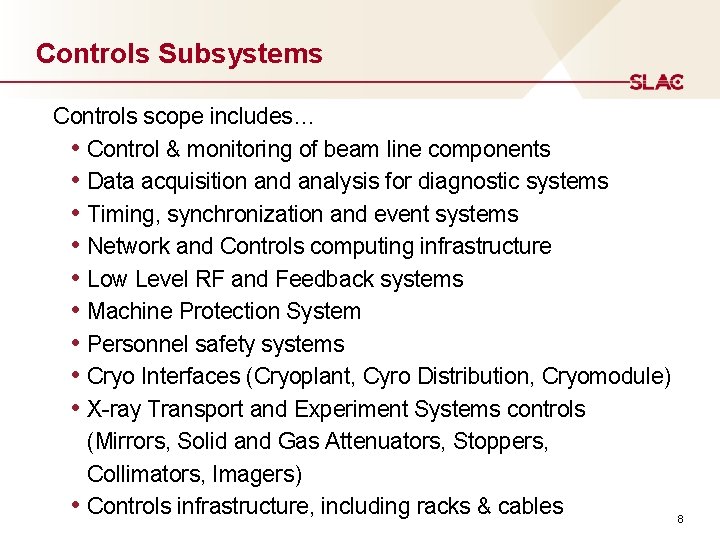
Controls Subsystems Controls scope includes… • Control & monitoring of beam line components • Data acquisition and analysis for diagnostic systems • Timing, synchronization and event systems • Network and Controls computing infrastructure • Low Level RF and Feedback systems • Machine Protection System • Personnel safety systems • Cryo Interfaces (Cryoplant, Cyro Distribution, Cryomodule) • X-ray Transport and Experiment Systems controls (Mirrors, Solid and Gas Attenuators, Stoppers, Collimators, Imagers) • Controls infrastructure, including racks & cables 8
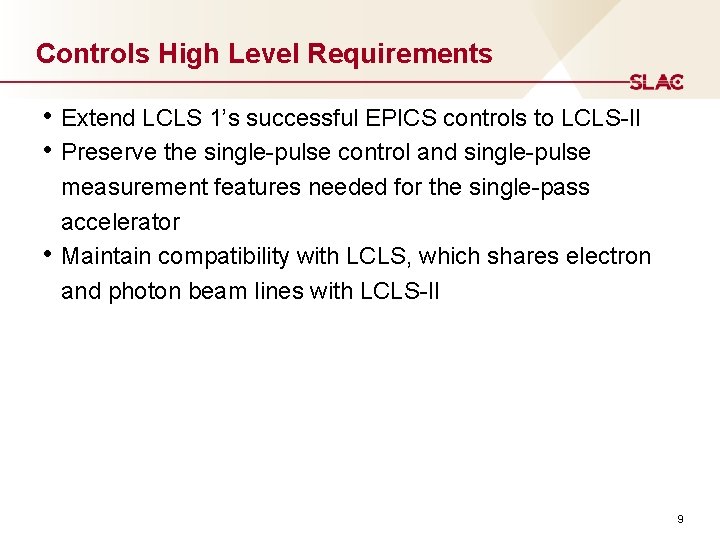
Controls High Level Requirements • Extend LCLS 1’s successful EPICS controls to LCLS-II • Preserve the single-pulse control and single-pulse • measurement features needed for the single-pass accelerator Maintain compatibility with LCLS, which shares electron and photon beam lines with LCLS-II 9
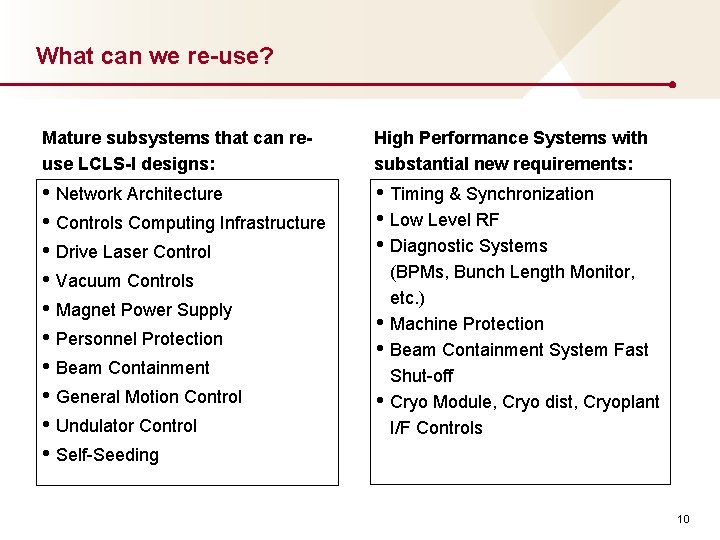
What can we re-use? Mature subsystems that can reuse LCLS-I designs: High Performance Systems with substantial new requirements: • Network Architecture • Controls Computing Infrastructure • Drive Laser Control • Vacuum Controls • Magnet Power Supply • Personnel Protection • Beam Containment • General Motion Control • Undulator Control • Self-Seeding • Timing & Synchronization • Low Level RF • Diagnostic Systems • • • (BPMs, Bunch Length Monitor, etc. ) Machine Protection Beam Containment System Fast Shut-off Cryo Module, Cryo dist, Cryoplant I/F Controls 10
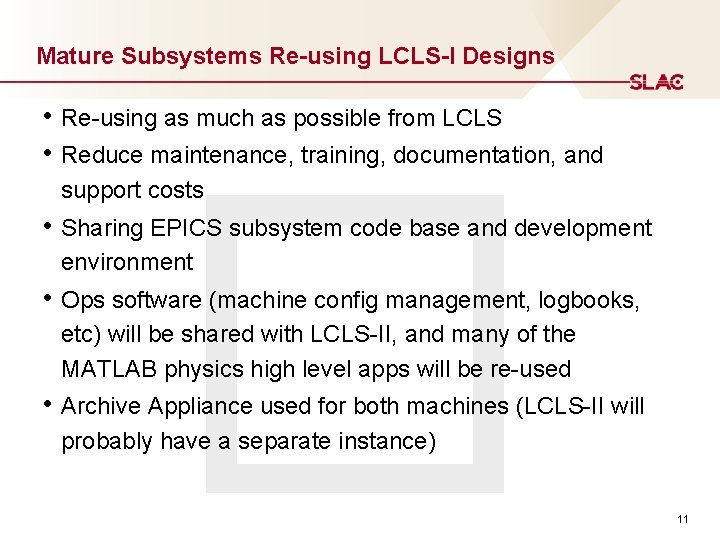
Mature Subsystems Re-using LCLS-I Designs • Re-using as much as possible from LCLS • Reduce maintenance, training, documentation, and � support costs • Sharing EPICS subsystem code base and development environment • Ops software (machine config management, logbooks, etc) will be shared with LCLS-II, and many of the MATLAB physics high level apps will be re-used • Archive Appliance used for both machines (LCLS-II will probably have a separate instance) 11
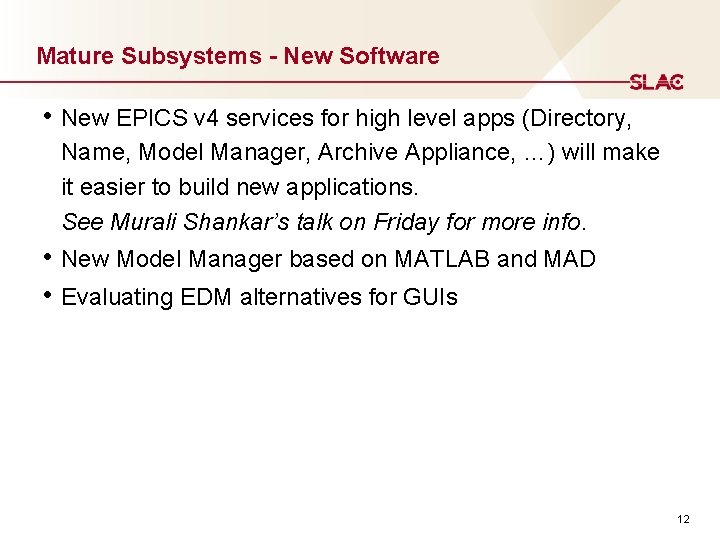
Mature Subsystems - New Software • New EPICS v 4 services for high level apps (Directory, Name, Model Manager, Archive Appliance, …) will make it easier to build new applications. See Murali Shankar’s talk on Friday for more info. • New Model Manager based on MATLAB and MAD • Evaluating EDM alternatives for GUIs 12
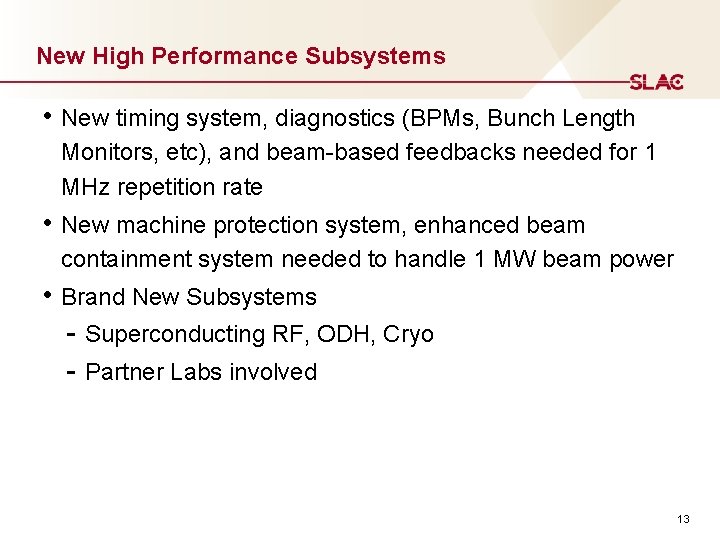
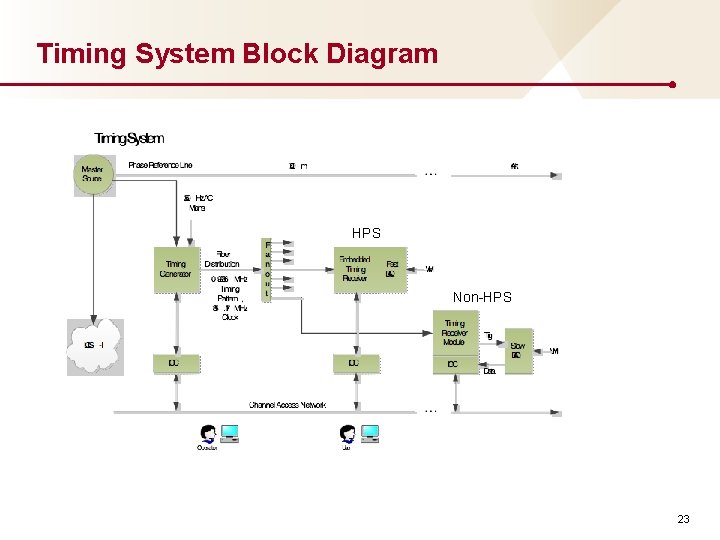
New High Performance Subsystems • New timing system, diagnostics (BPMs, Bunch Length Monitors, etc), and beam-based feedbacks needed for 1 MHz repetition rate • New machine protection system, enhanced beam containment system needed to handle 1 MW beam power • Brand New Subsystems - Superconducting RF, ODH, Cryo - Partner Labs involved 13
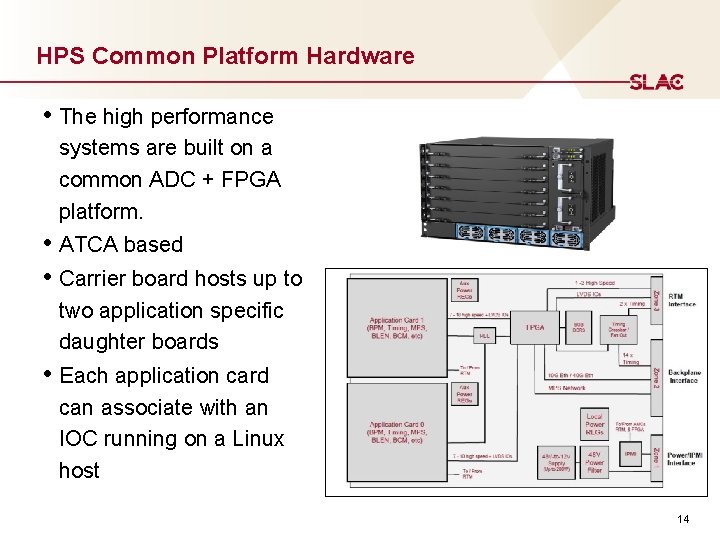
HPS Common Platform Hardware • The high performance systems are built on a common ADC + FPGA platform. • ATCA based • Carrier board hosts up to two application specific daughter boards • Each application card can associate with an IOC running on a Linux host 14
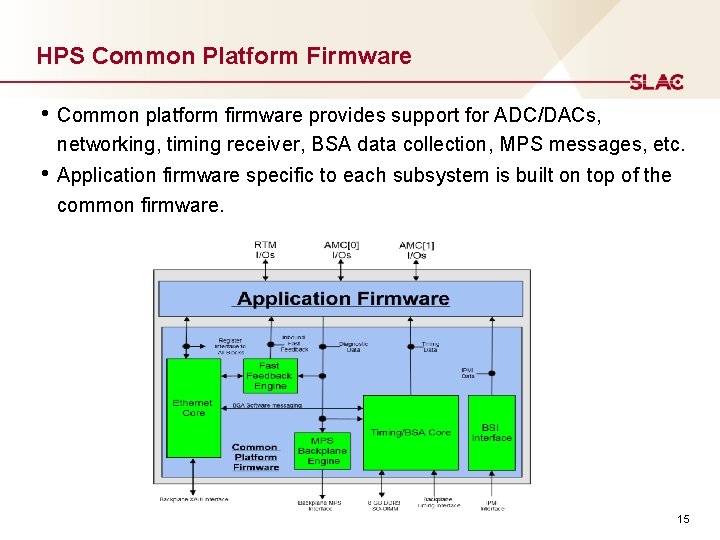
HPS Common Platform Firmware • Common platform firmware provides support for ADC/DACs, networking, timing receiver, BSA data collection, MPS messages, etc. • Application firmware specific to each subsystem is built on top of the common firmware. 15
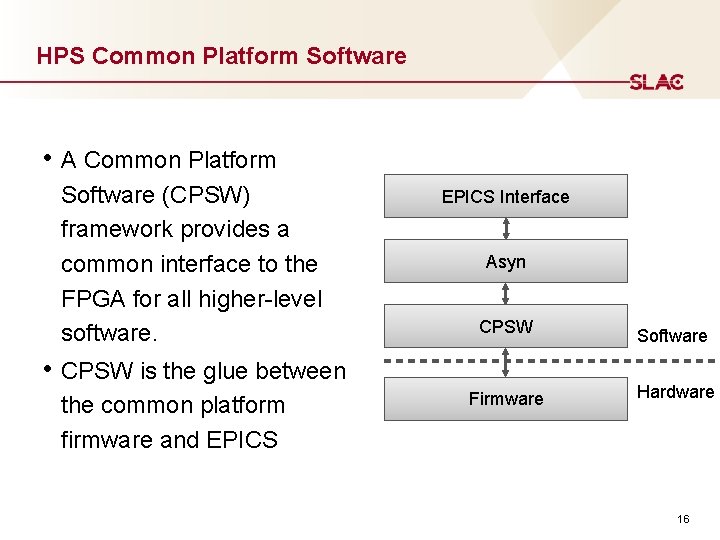
HPS Common Platform Software • A Common Platform Software (CPSW) framework provides a common interface to the FPGA for all higher-level software. EPICS Interface Asyn CPSW Software Firmware Hardware • CPSW is the glue between the common platform firmware and EPICS 16
Summary • LCLS-II is a significant advancement over LCLS • Where possible, we plan re-using our existing EPICS software from LCLS in LCLS-II • Some new systems are required due to LCLS-II’s high repetition rate and beam power • Adding new EPICS v 4 infrastructure • Development is progressing on the common platform for high performance systems • Final Design Reviews for all controls subsystems will be complete by the end of 2016 17
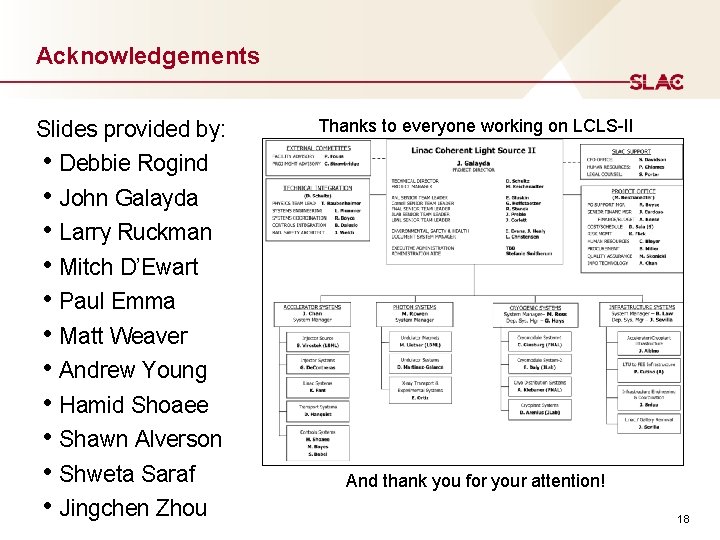
Acknowledgements Slides provided by: • Debbie Rogind • John Galayda • Larry Ruckman • Mitch D’Ewart • Paul Emma • Matt Weaver • Andrew Young • Hamid Shoaee • Shawn Alverson • Shweta Saraf • Jingchen Zhou Thanks to everyone working on LCLS-II And thank you for your attention! 18
Backup Slides - Subsystem Details 19
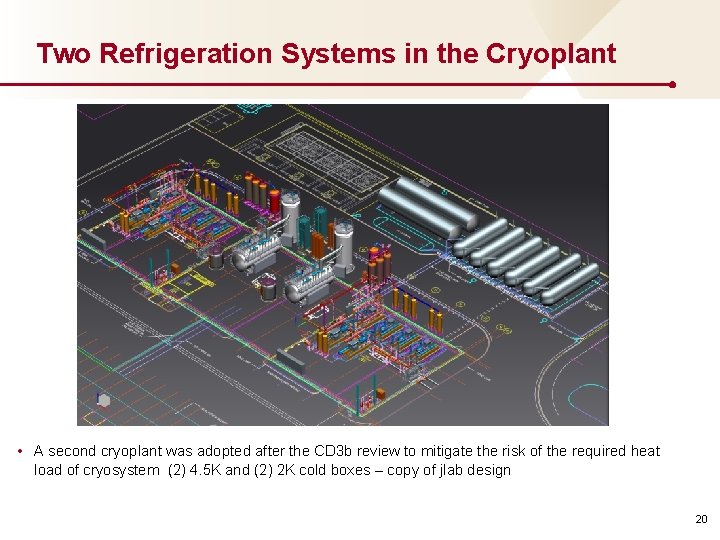
Two Refrigeration Systems in the Cryoplant • A second cryoplant was adopted after the CD 3 b review to mitigate the risk of the required heat load of cryosystem (2) 4. 5 K and (2) 2 K cold boxes – copy of jlab design 20
Machine Protection System • Protects machine components from beam based damage by shutting off beam or reducing beam rate • Must be capable of shutting off beam within 100 us to protect collimators from a direct beam strike • Must support simultaneous delivery to multiple users • FPGA-based system • “Link Nodes” collect signals from beam line devices • “Central Node” FPGA processes inputs, mitigates beam 21
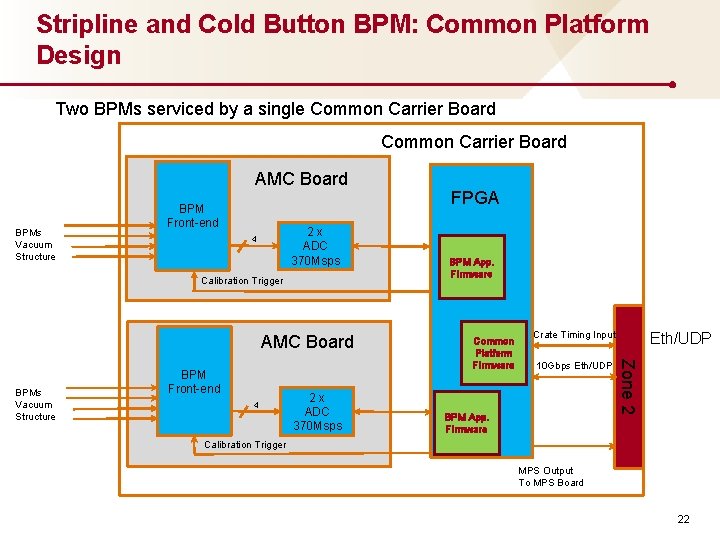
Stripline and Cold Button BPM: Common Platform Design Two BPMs serviced by a single Common Carrier Board AMC Board BPMs Vacuum Structure BPM Front-end 2 x ADC 370 Msps 4 Calibration Trigger AMC Board 4 2 x ADC 370 Msps BPM App. Firmware Common Platform Firmware Crate Timing Input 10 Gbps Eth/UDP BPM App. Firmware Eth/UDP Zone 2 BPMs Vacuum Structure BPM Front-end FPGA Calibration Trigger MPS Output To MPS Board 22
Timing System Block Diagram HPS Non-HPS 23
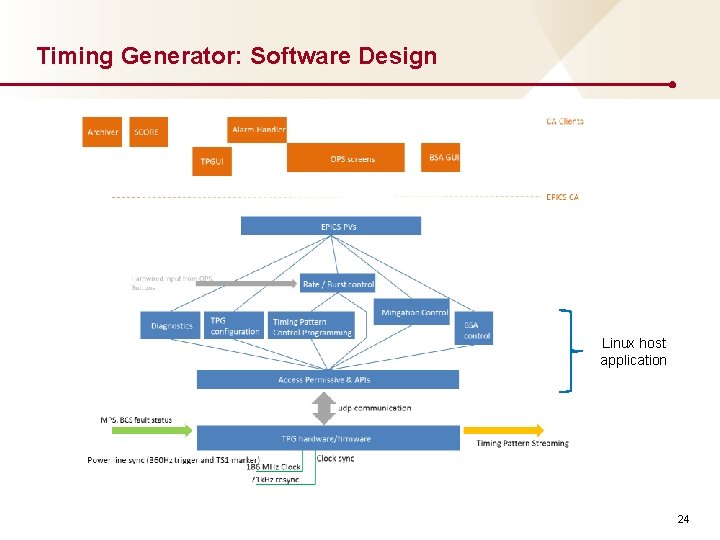
Timing Generator: Software Design Linux host application 24
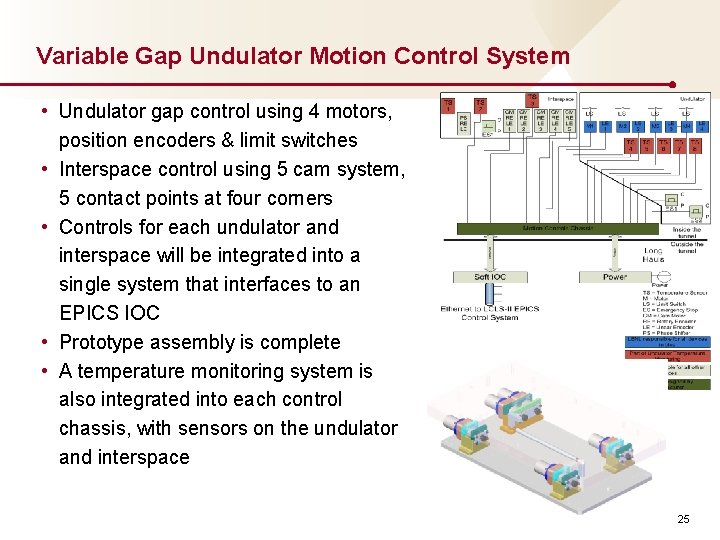
Variable Gap Undulator Motion Control System • Undulator gap control using 4 motors, position encoders & limit switches • Interspace control using 5 cam system, 5 contact points at four corners • Controls for each undulator and interspace will be integrated into a single system that interfaces to an EPICS IOC • Prototype assembly is complete • A temperature monitoring system is also integrated into each control chassis, with sensors on the undulator and interspace 25
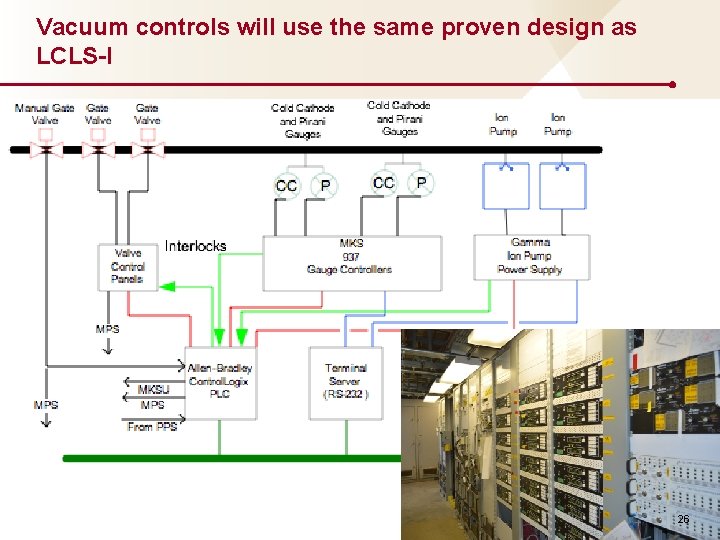
Vacuum controls will use the same proven design as LCLS-I 26
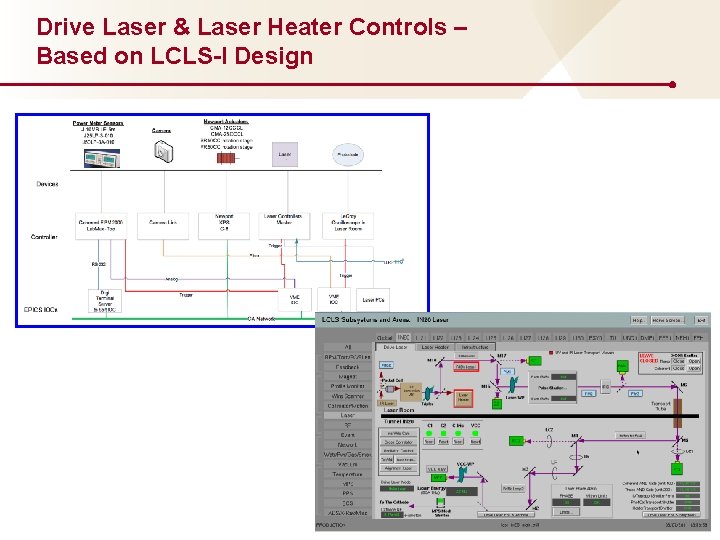
Drive Laser & Laser Heater Controls – Based on LCLS-I Design 27
Temperature Monitoring System Software Design - Ether. IP driver / device support module to communicate with EPICS IOCs for AB Compact. Logix PLC - IOC software structure to remain as close as possible to current LCLS-I - Standard EPICS Implementation • Operator displays • Archiving (history plots) • Alarms (inform operators of problems) 28
- Slides: 28