
LCHL Strand 5 FunctionsCalculus Stationary Points Turning Points

![Inflection Points Point where Slope of f’(x) =0 [f’’(x)=0] Author: Culan O'Meara](https://slidetodoc.com/presentation_image_h/2654dbed234ed677fdb610edd1552796/image-11.jpg "Inflection Points Point where Slope of f’(x) =0 [f’’(x)=0] Author: Culan O'Meara")

- Slides: 15
LCHL Strand 5 Functions/Calculus Stationary Points Turning Points, Points of Inflection, Horizontal Points of Inflection Culan O’Meara – Ballinrobe Community School
Stationary Points Three types: Turning points Inflection Points Horizontal Inflection Points Author: Culan O'Meara
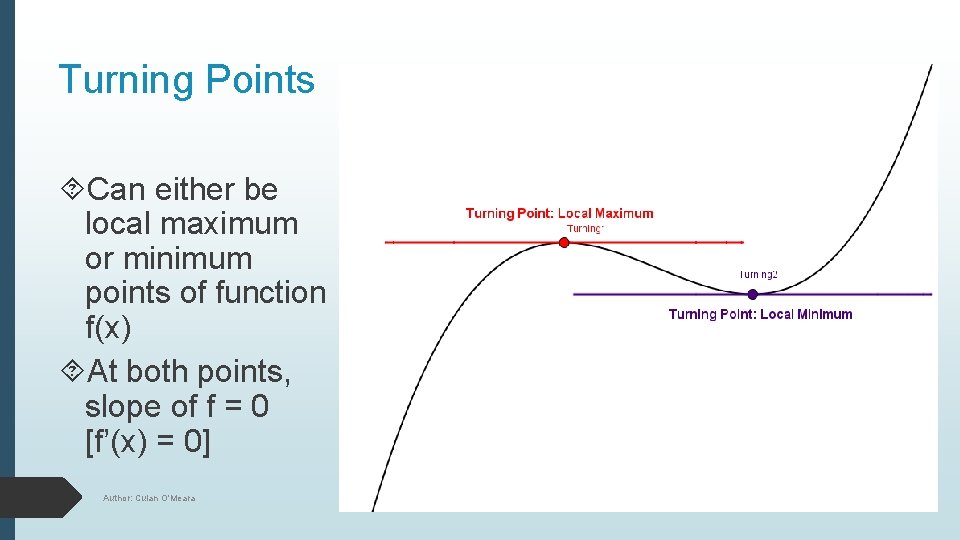
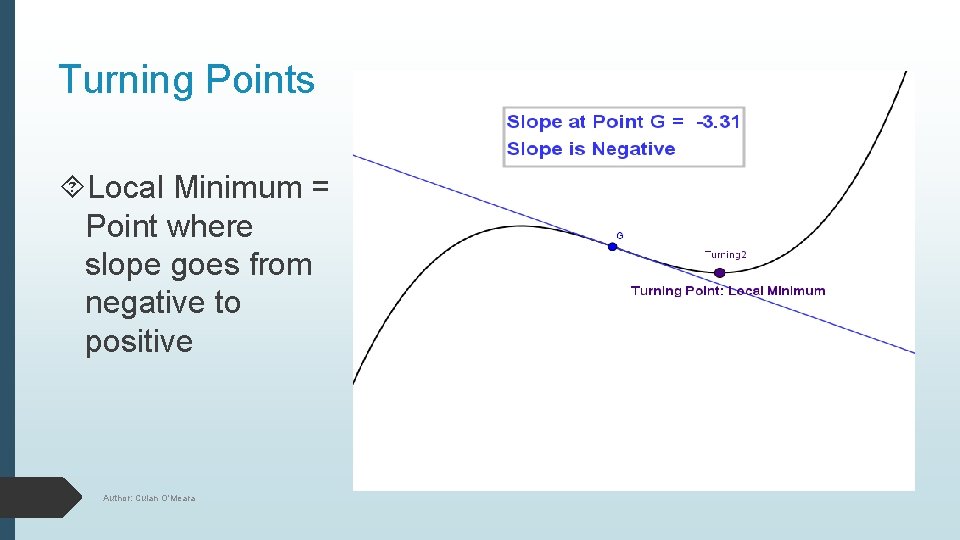
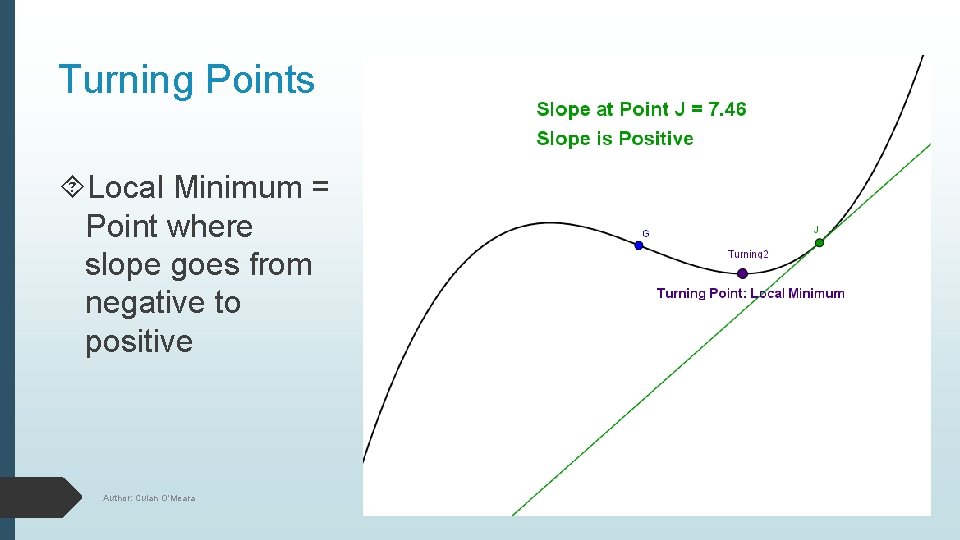
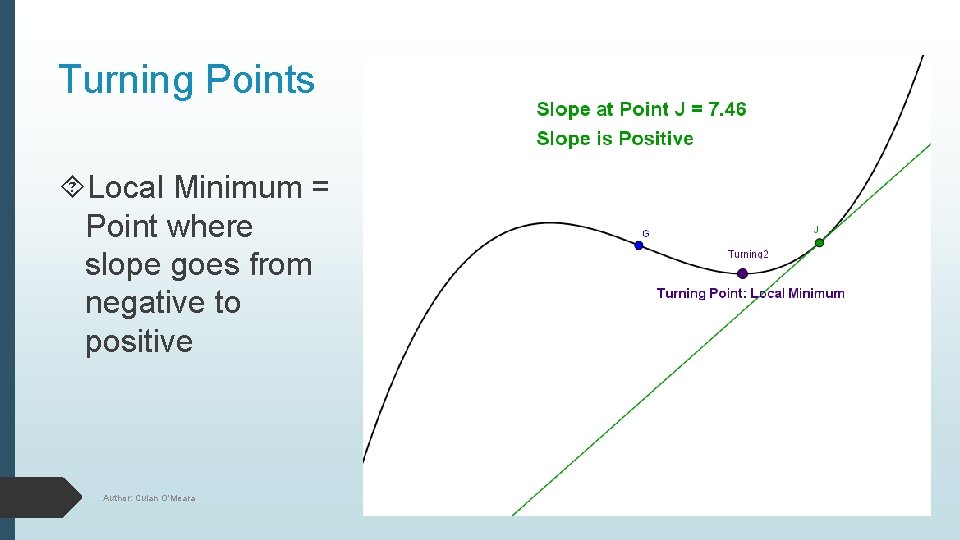
Turning Points Can either be local maximum or minimum points of function f(x) At both points, slope of f = 0 [f’(x) = 0] Author: Culan O'Meara
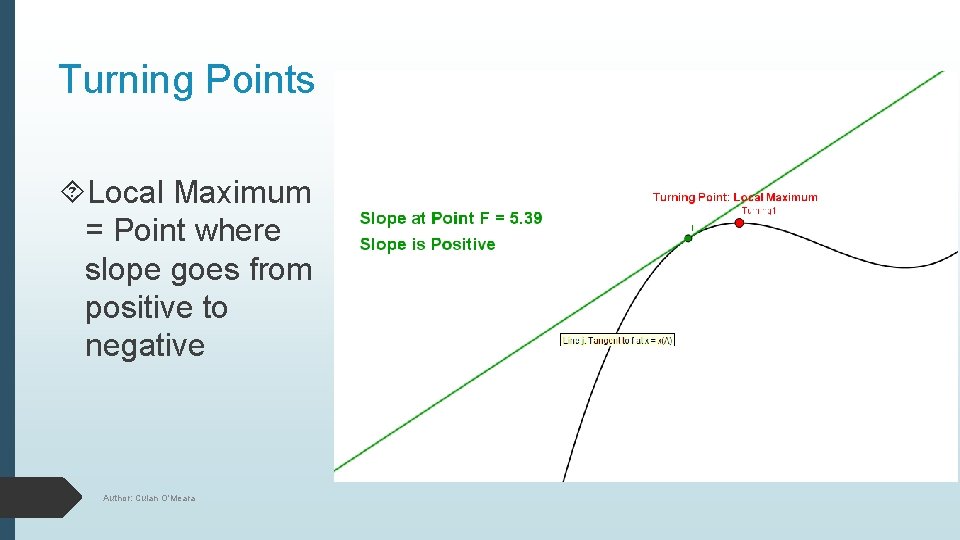
Turning Points Local Maximum = Point where slope goes from positive to negative Author: Culan O'Meara
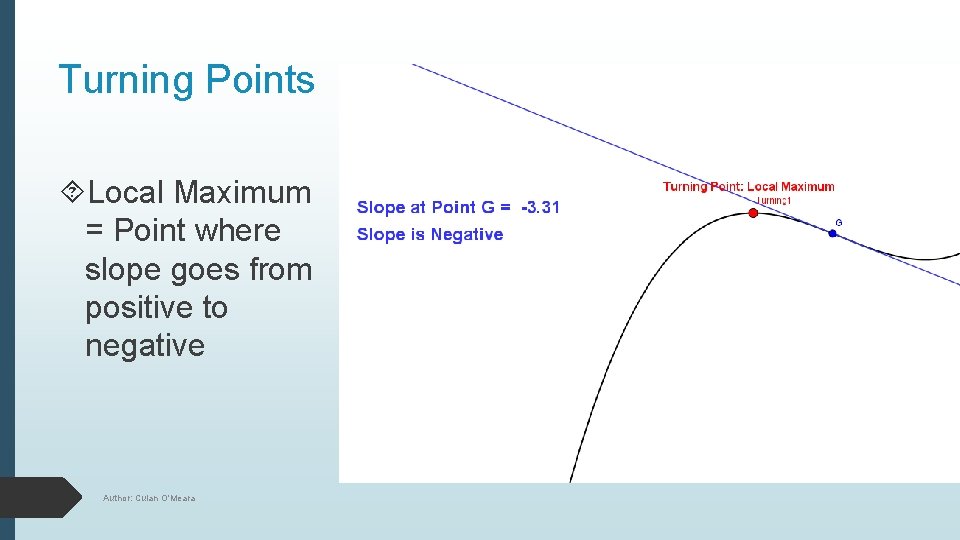
Turning Points Local Maximum = Point where slope goes from positive to negative Author: Culan O'Meara
Turning Points Local Minimum = Point where slope goes from negative to positive Author: Culan O'Meara
Turning Points Local Minimum = Point where slope goes from negative to positive Author: Culan O'Meara
Turning Points Local Minimum = Point where slope goes from negative to positive Author: Culan O'Meara
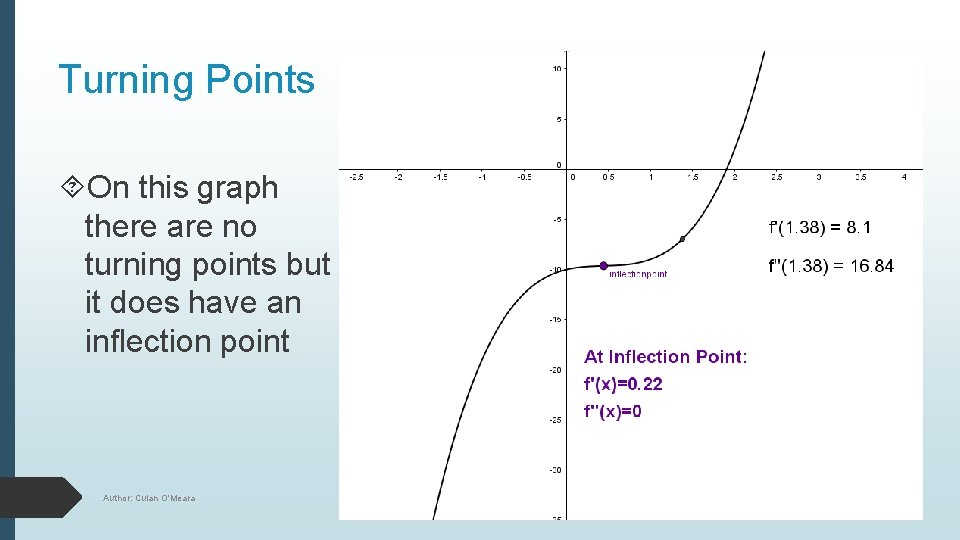
Turning Points On this graph there are no turning points but it does have an inflection point Author: Culan O'Meara
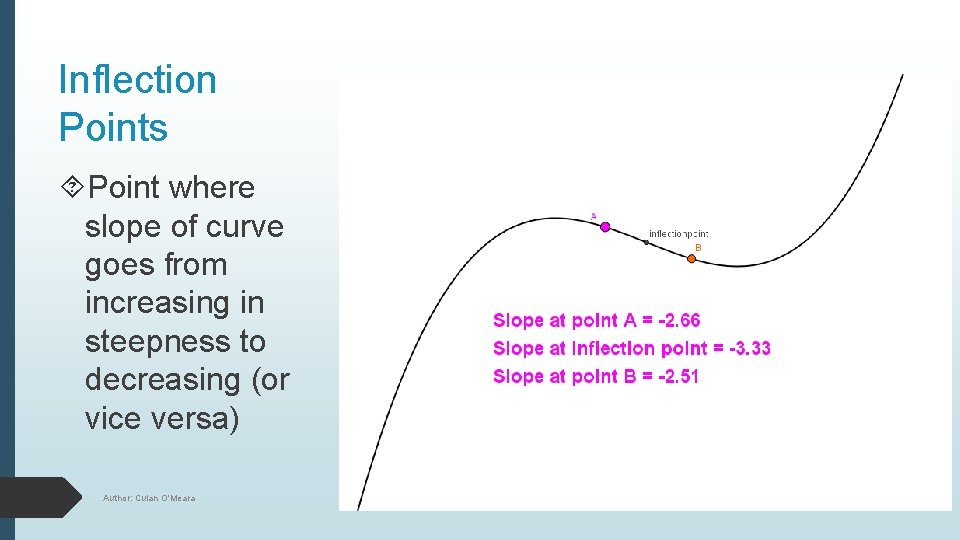
Inflection Points Point where slope of curve goes from increasing in steepness to decreasing (or vice versa) Author: Culan O'Meara
Inflection Points Point where Slope of f’(x) =0 [f’’(x)=0] Author: Culan O'Meara
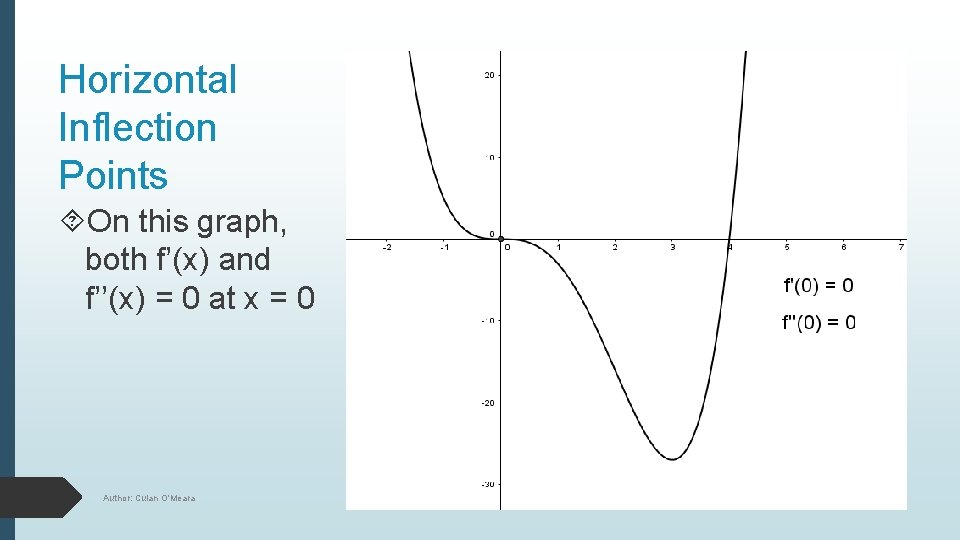
Horizontal Inflection Points Special case where the point is both a stationary point and an inflection point Two conditions must be met: f’(x)=0 f’’(x)=0 Author: Culan O'Meara
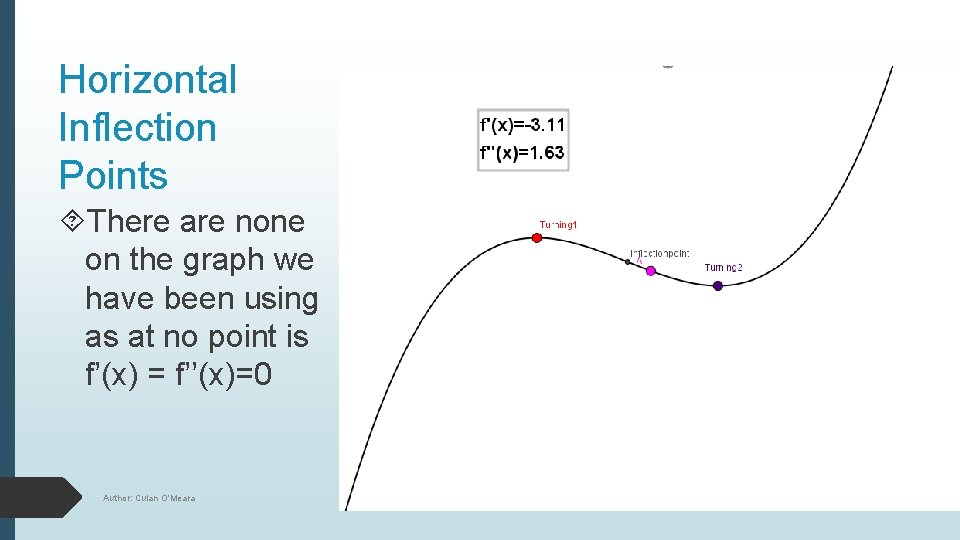
Horizontal Inflection Points There are none on the graph we have been using as at no point is f’(x) = f’’(x)=0 Author: Culan O'Meara
Horizontal Inflection Points On this graph, both f’(x) and f’’(x) = 0 at x = 0 Author: Culan O'Meara
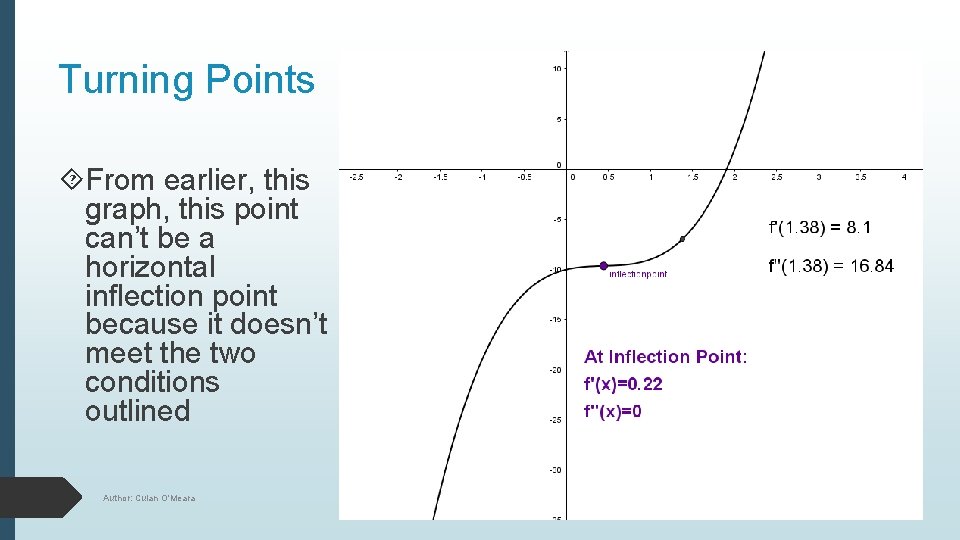
Turning Points From earlier, this graph, this point can’t be a horizontal inflection point because it doesn’t meet the two conditions outlined Author: Culan O'Meara