
LBSC 690 Session 3 Networking Evolution Computers initially
LBSC 690 Session 3 Networking
Evolution • Computers initially stand alone. • Need to communicate. – Transmit data at a distance. • Telecommunications: – Provides electrical communications at a distance. • Service provided by a number of companies internationally. – The “telecommunications industry. ”
Networking • Simplest form: – Directly connect two communicating devices. – Not practical solution. • Problem of topology: – How to deal with fully connected mesh. • Need network.

The Universal Seven Part Data Model DTE DCE DTE/DCE Interface DCE Transmission Channel DTE DCE/DTE Interface DTE: Data Terminal Equipment DCE: Data Communication Equipment
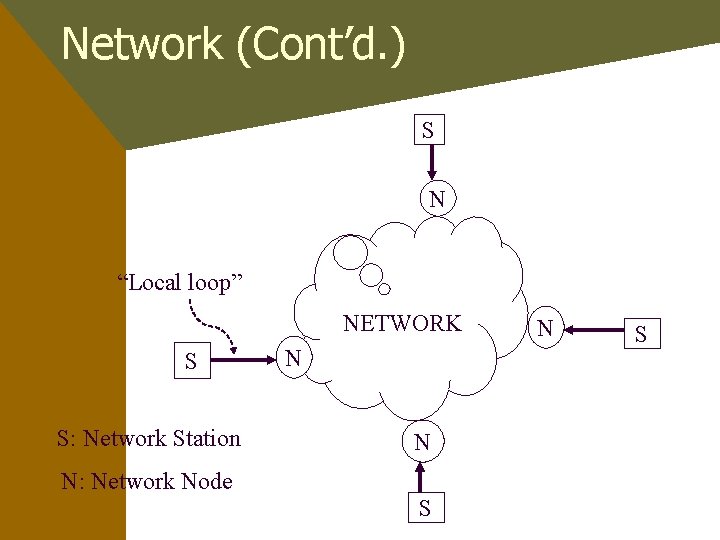
Network (Cont’d. ) S N “Local loop” NETWORK S S: Network Station N N N: Network Node S N S
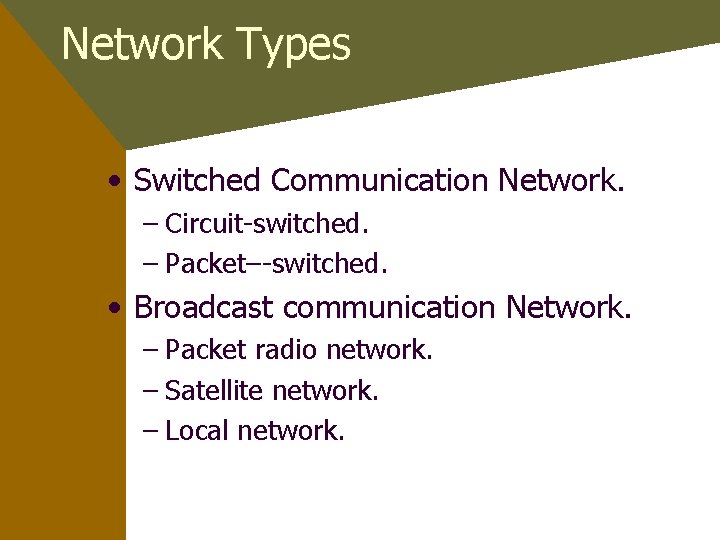
Network Types • Switched Communication Network. – Circuit-switched. – Packet–-switched. • Broadcast communication Network. – Packet radio network. – Satellite network. – Local network.
Generic Switching Network • Reference handout.
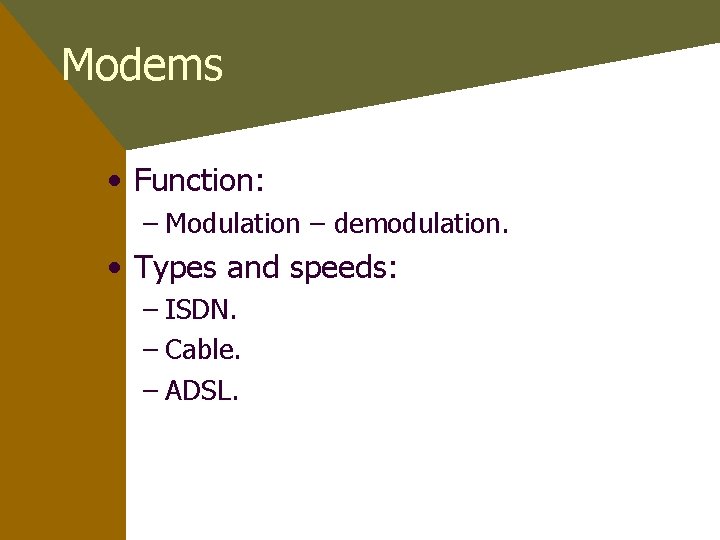
Modems • Function: – Modulation – demodulation. • Types and speeds: – ISDN. – Cable. – ADSL.
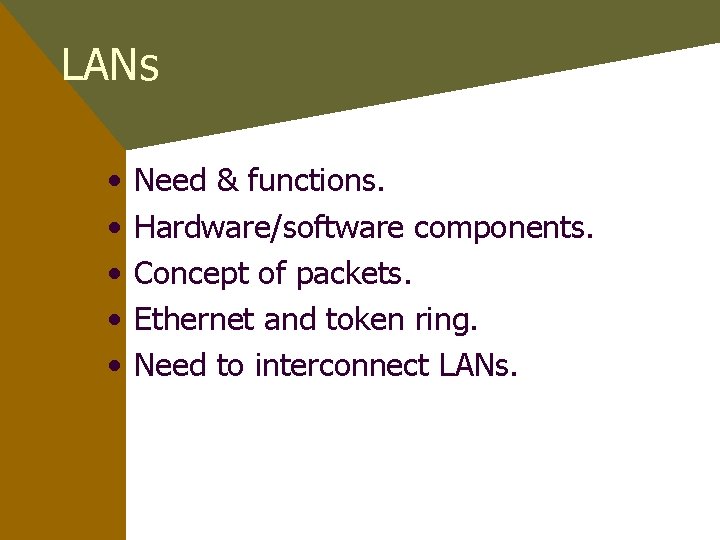
LANs • • • Need & functions. Hardware/software components. Concept of packets. Ethernet and token ring. Need to interconnect LANs.
The Internet • Historical development. • TCP/IP Protocol Suite. – Telnet. – FTP. – E-mail. • Packet switching. • Addressing: URLs.
World Wide Web (WWW) • • • Historical development. HTTP. HTML. XML. Multimedia.
Trends • • • Convergence. Voice over IP (VIP). Wireless. Remote access. Remote device control.
- Slides: 12