
LBNFDUNE beam target system Chris Densham Peter Loveridge
LBNF/DUNE beam & target system Chris Densham, Peter Loveridge, Tristan Davenne, Joe O’Dell, Mike Fitton, Phil Jeffery, Geoff Burton, Eric Harvey-Fishenden, Dan Wilcox, Michael Parkin (STFC Rutherford Appleton Laboratory) John Back (Warwick University)
LBNF/DUNE US/UK Agreement Hierarchy • Top layer – the US/UK Science and Technology Agreement, signed at Ministerial level, which is legally binding • 2 nd layer – Implementing Agreement, signed by DOE and UK Ambassador in April 2019 • 3 rd layer – Project Annexe, relates to LBNF/DUNE and is general and non-legally binding (to be signed fall 2019) – CJD expected to be UK Agency Technical Coordinator • 4 th layer – Project Planning Document (and Mo. Us) – Technical description of the in-kind-contribution: deliverables, project activities, schedule and key milestones – Sign-off in UK by Geddes (STFC Technology Director of National Laboratories)? 2
Outline UK In-Kind-Contributions for LBNF target • • At least one viable prototype and one 1. 2 MW capable helium cooled graphite neutrino target system that meets the requirements of the Beam Interface Working Group specification [ref] as far as is realistically achievable and is compatible with the LBNF magnetic Horn A. Short baffle collimator (so-called ‘bafflette’) integrated into the upstream of the target that permits beam-based alignment using low intensity horizontal and verical beam scans. Full Intensity Beam Position monitor (so-called ‘Hylen’ monitor) integrated into the upstream of the target excluding the anticipated beryllium components Target physical alignment, mounting and interface system with Horn A Target exchange system to permit failed targets to be replaced in a shielded Work Cell Design and the specification of the associated helium cooling system for the provided target system (above); Instrumented baffle/collimator; Master-slave manipulator system (one pair) that can be installed in the Work Cell to operate the target exchange system In addition to the above, as the STFC funding envelope permits, STFC may also contribute: • Target helium cooling system key components (e. g. heat exchanger(s)) • Ongoing Maintenance and Operations of UK contributions including replacements Chris Densham 3
LBNF-UK target Project Phases Structured to maximise what UK can deliver to project within fixed funding envelope (including contingency) and funding profile outlined in UK Business Case. • Phase 0 & Phase 1: April 2018 - March 2022 – Preliminary design and specification of UK deliverables for Phase 2 – Detailed cost estimates and schedule for supply of UK deliverables – Finalise Scope of Work (via Project Planning Document) for Phase 2 deliverables • Phase 2: April 2022 – March 2026 – Detailed design, manufacture, supply, installation and commissioning Chris Densham 4
LBNF-UK target governance & oversight • 1 st LBNF target Oversight Committee convened by STFC Programmes Directorate (PD) on 25 th June 2019 • Documents submitted by LBNF-UK target project team 1 month prior to meeting • “LBNF Targets Assurance Review and Quality Audit” (50 pages) provided after meeting • Os. C feedback report received 16 th July • UK government department BEIS ‘Gateway 2’ review anticipated fall 2019 • Next LBNF target Os. C to be scheduled before GW 2 review (Sept/Oct) Chris Densham 5
Summary of Feedback from 1 st Oversight Committee ‘OFFICIAL SENSITIVE’ • ACTION: The Collaboration is to provide sub-project high-level milestones and deliverables with clearly defined acceptance criteria for the next Os. C meeting • ACTION: The collaboration is to review all sub-project milestones and deliverables to establish clearly defined acceptance criteria for the next Os. C meeting • ACTION: The Collaboration is to lay out a process through which it is engaging with the US, indicating the degree of engagement and influence • The Os. C and PD informed the Collaboration that installation and commissioning costs associated with the sub-project would be funded from the existing BEIS allocation to the sub-project, and that there was no scope for further grant awards to this end. The Os. C noted that due to external factors, the proposed 2026 sub-project end date had slipped to 2029. The Os. C advised the Collaboration to plan accordingly in preparation for future grant proposals. Chris Densham 6
Summary of Feedback from 1 st Oversight Committee (contd) • The Os. C noted that LBNF DUNE sub-projects’ Memorandums of Understanding were yet to be completed but, were in draft and close to being agreed. Whilst financial commitments from PD were anticipated and understood in terms of the sub-project’s costs and a future period of Maintenance and Operations, clarification should be sought regarding the potential assumption that PD fund the annual/regular replacement of targets before formally agreeing to this commitment, as this is not currently budgeted. • ACTION: The Collaboration is to provide clarification regarding future annual/regular costs regarding target replacement/provision before formally agreeing to this commitment Chris Densham 7
Summary of Feedback from 1 st Oversight Committee (contd) • • ACTION: The Collaboration is to provide a timeline for the three target options’ design, optimisation, and prototyping period, with decision points, to the next Os. C meeting ACTION: The Os. C (via STFC PD) would like to be informed of the outcome of the ‘target selection meeting’ at least one month ahead of the next Os. C meeting, in order to understand if a deliverable design has been agreed ACTION: Following July’s ‘target selection meeting’, the Collaboration is to provide an assessment of resource requirements comparing, at a minimum, (i) the current scenario of design, optimisation, and prototyping of the three target options and, (ii) the pragmatic focussing scenario of design, optimisation, and prototyping of one target option (once known), to the next Os. C meeting ACTION: The collaboration is to elaborate on the rationale for, and extent of, prototyping the target option(s), primarily to comprehend if the timeline allows for it, what the success criteria of the exercise are, and whether or not it would ultimately be a working UK deliverable to the US Chris Densham 8
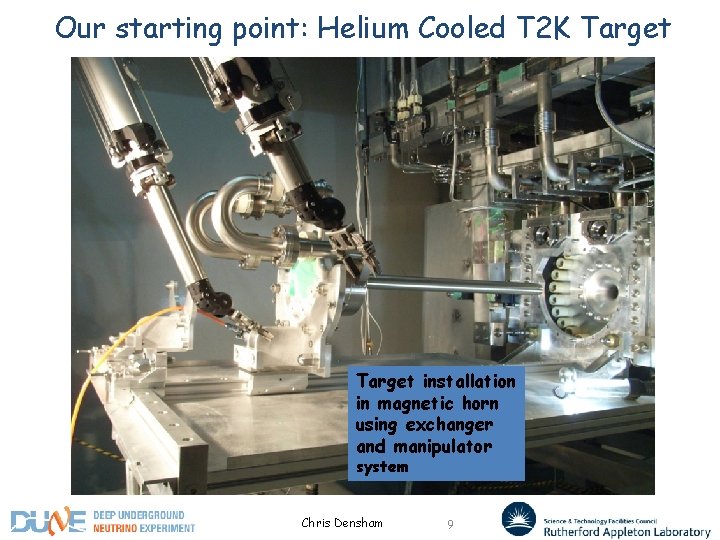
Our starting point: Helium Cooled T 2 K Target installation in magnetic horn using exchanger and manipulator system Chris Densham 9
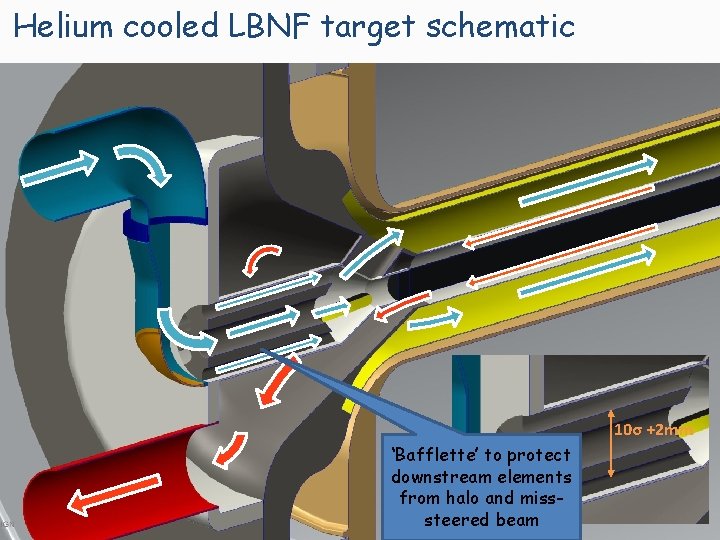
Helium cooled LBNF target schematic 10σ +2 mm ‘Bafflette’ to protect 6σ downstream elements from halo and misssteered beam
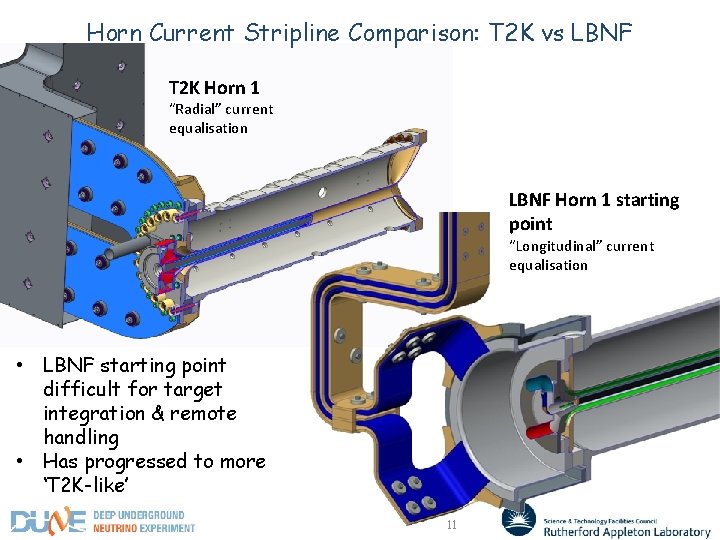
Horn Current Stripline Comparison: T 2 K vs LBNF T 2 K Horn 1 “Radial” current equalisation LBNF Horn 1 starting point “Longitudinal” current equalisation • LBNF starting point difficult for target integration & remote handling • Has progressed to more ‘T 2 K-like’ 11
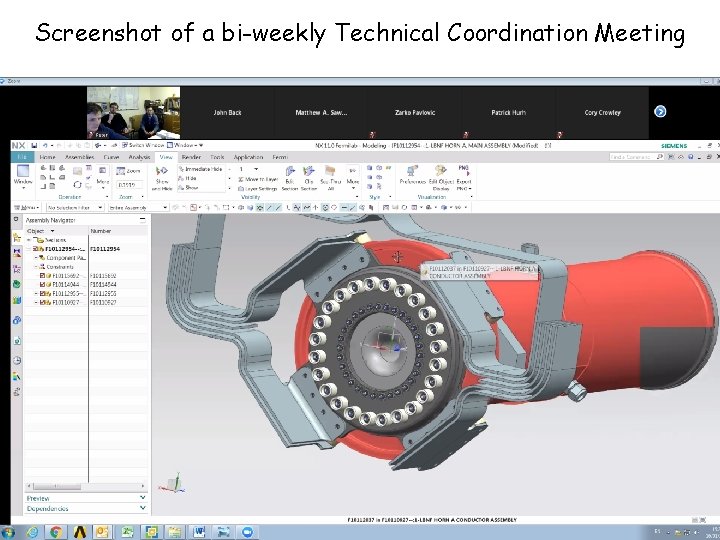
Screenshot of a bi-weekly Technical Coordination Meeting
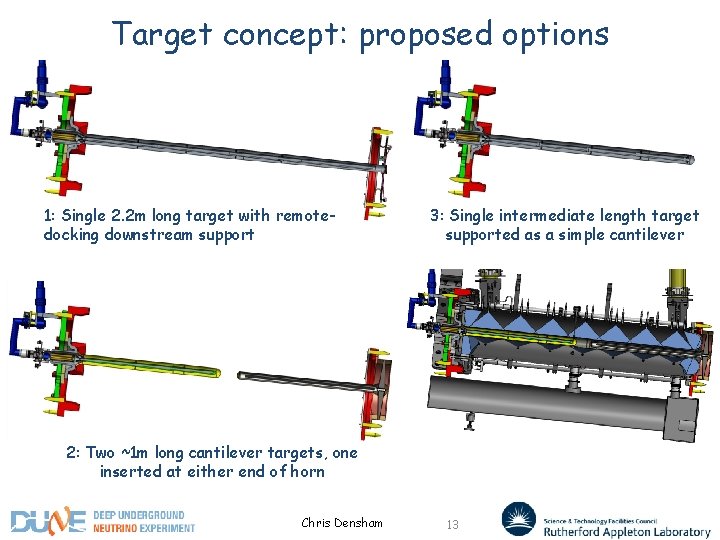
Target concept: proposed options 1: Single 2. 2 m long target with remotedocking downstream support 3: Single intermediate length target supported as a simple cantilever 2: Two ~1 m long cantilever targets, one inserted at either end of horn Chris Densham 13
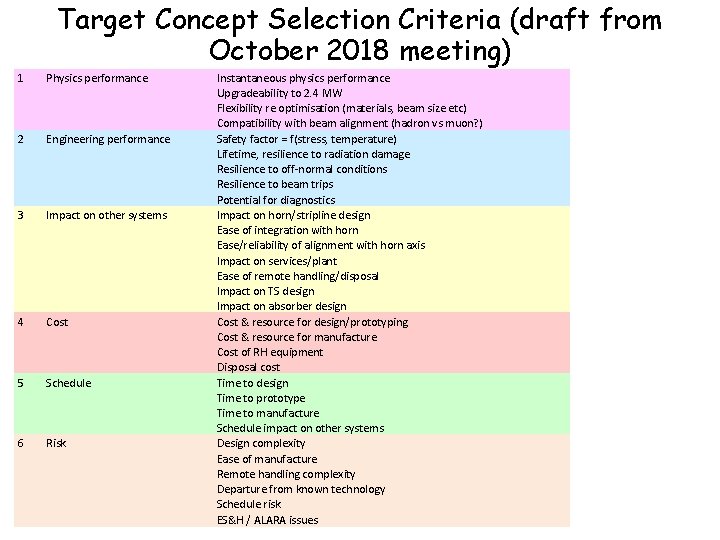
Target Concept Selection Criteria (draft from October 2018 meeting) 1 Physics performance 2 Engineering performance 3 Impact on other systems 4 Cost 5 Schedule 6 Risk Instantaneous physics performance Upgradeability to 2. 4 MW Flexibility re optimisation (materials, beam size etc) Compatibility with beam alignment (hadron vs muon? ) Safety factor = f(stress, temperature) Lifetime, resilience to radiation damage Resilience to off-normal conditions Resilience to beam trips Potential for diagnostics Impact on horn/stripline design Ease of integration with horn Ease/reliability of alignment with horn axis Impact on services/plant Ease of remote handling/disposal Impact on TS design Impact on absorber design Cost & resource for design/prototyping Cost & resource for manufacture Cost of RH equipment Disposal cost Time to design Time to prototype Time to manufacture Schedule impact on other systems Design complexity Ease of manufacture Remote handling complexity Departure from known technology Schedule risk ES&H / ALARA issues
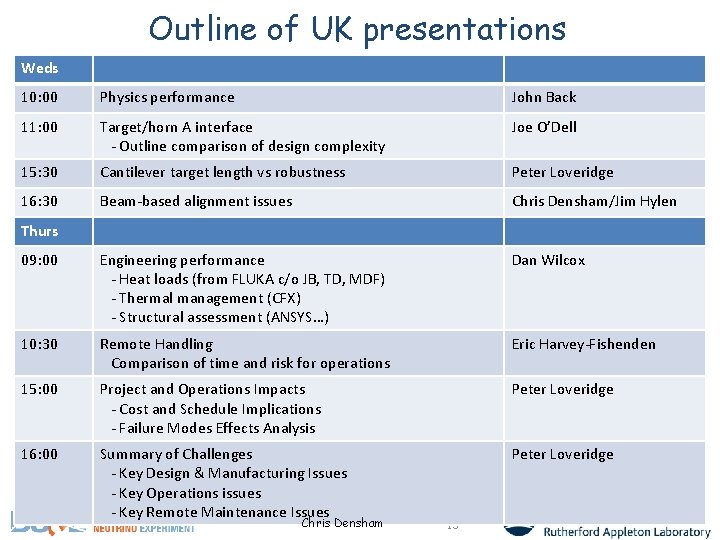
Outline of UK presentations Weds 10: 00 Physics performance John Back 11: 00 Target/horn A interface - Outline comparison of design complexity Joe O’Dell 15: 30 Cantilever target length vs robustness Peter Loveridge 16: 30 Beam-based alignment issues Chris Densham/Jim Hylen 09: 00 Engineering performance - Heat loads (from FLUKA c/o JB, TD, MDF) - Thermal management (CFX) - Structural assessment (ANSYS…) Dan Wilcox 10: 30 Remote Handling Comparison of time and risk for operations Eric Harvey-Fishenden 15: 00 Project and Operations Impacts - Cost and Schedule Implications - Failure Modes Effects Analysis Peter Loveridge 16: 00 Summary of Challenges - Key Design & Manufacturing Issues - Key Operations issues - Key Remote Maintenance Issues Peter Loveridge Thurs Chris Densham 15
Extra material Chris Densham 16
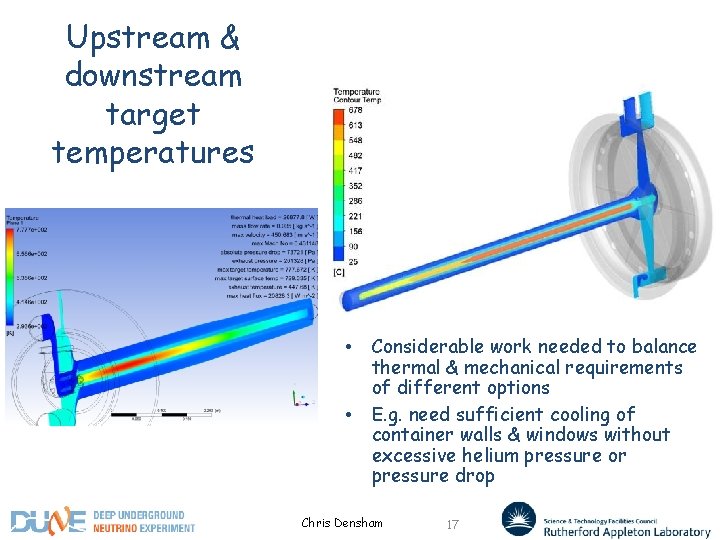
Upstream & downstream target temperatures • • Considerable work needed to balance thermal & mechanical requirements of different options E. g. need sufficient cooling of container walls & windows without excessive helium pressure or pressure drop Chris Densham 17
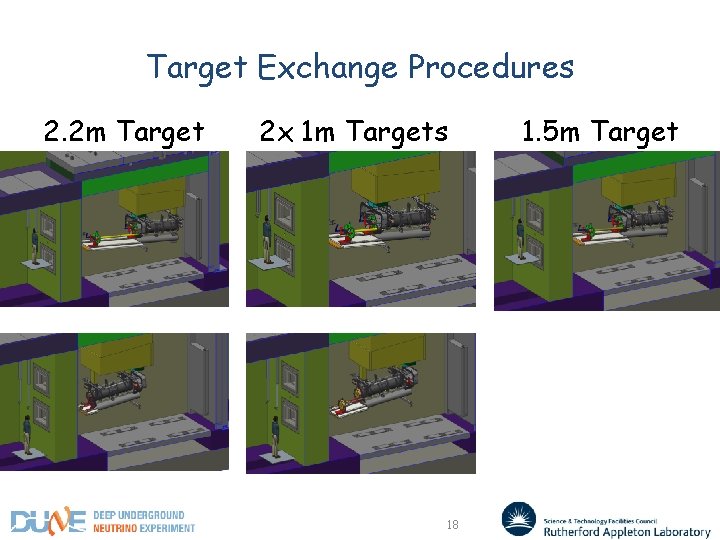
Target Exchange Procedures 2. 2 m Target 2 x 1 m Targets 18 1. 5 m Target
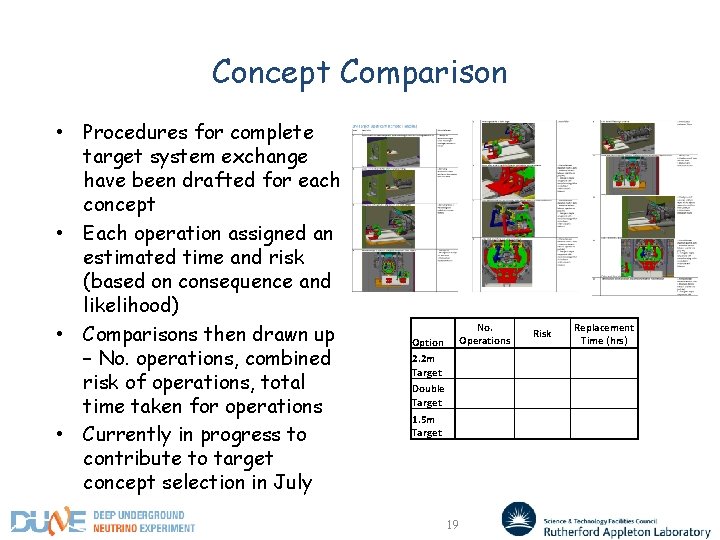
Concept Comparison • Procedures for complete target system exchange have been drafted for each concept • Each operation assigned an estimated time and risk (based on consequence and likelihood) • Comparisons then drawn up – No. operations, combined risk of operations, total time taken for operations • Currently in progress to contribute to target concept selection in July Option No. Operations 2. 2 m Target Double Target 1. 5 m Target 19 Risk Replacement Time (hrs)
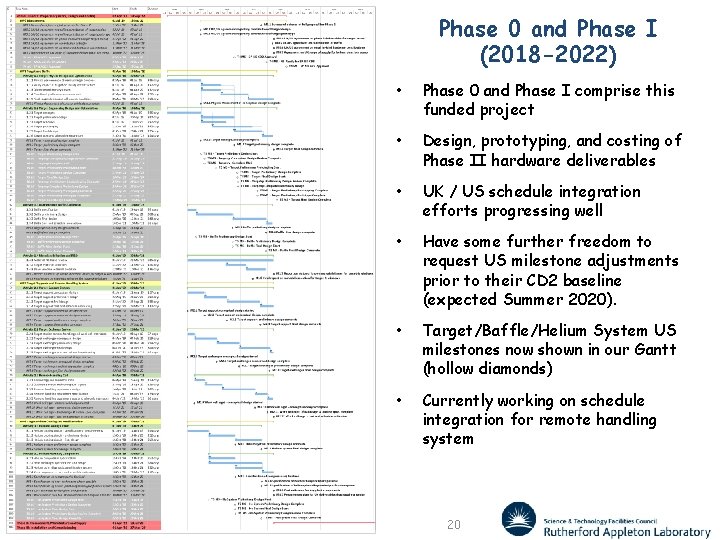
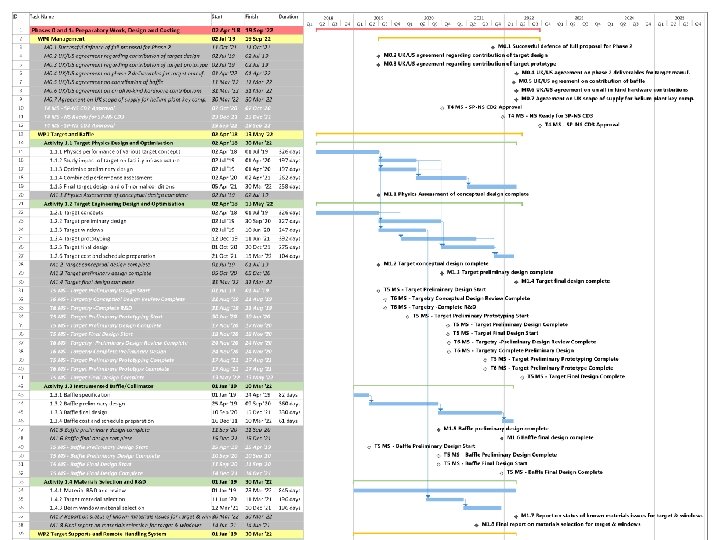
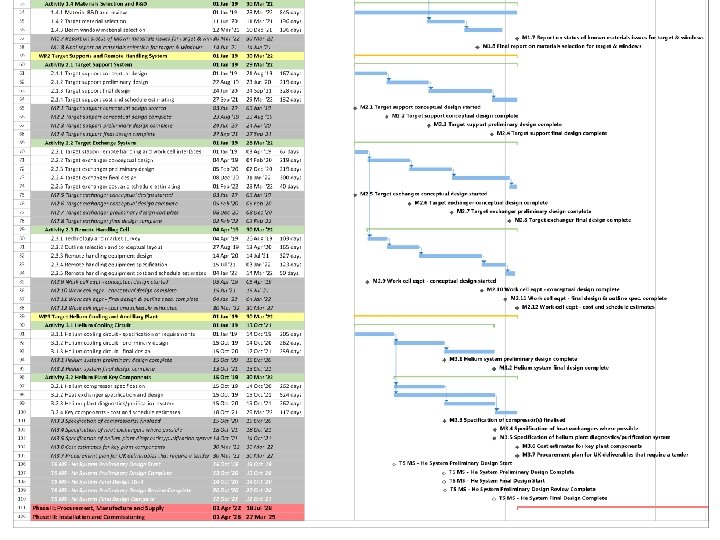
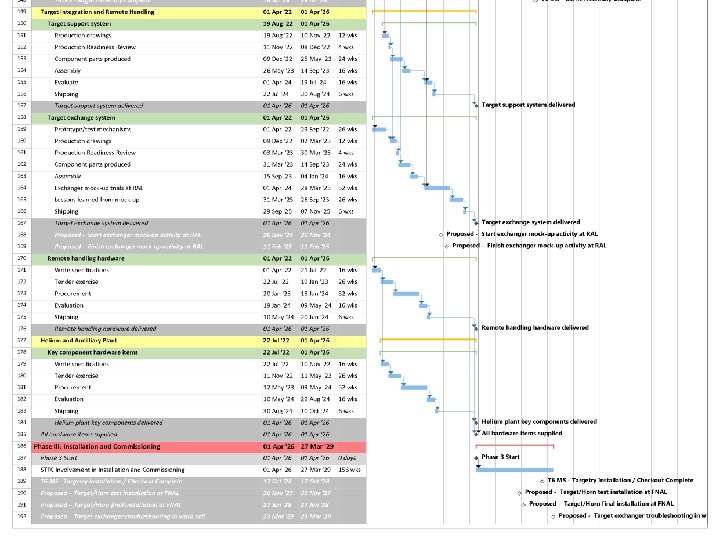
Phase 0 and Phase I (2018 -2022) • Phase 0 and Phase I comprise this funded project • Design, prototyping, and costing of Phase II hardware deliverables • UK / US schedule integration efforts progressing well • Have some further freedom to request US milestone adjustments prior to their CD 2 baseline (expected Summer 2020). • Target/Baffle/Helium System US milestones now shown in our Gantt (hollow diamonds) • Currently working on schedule integration for remote handling system 20
Chris Densham 21
Chris Densham 22
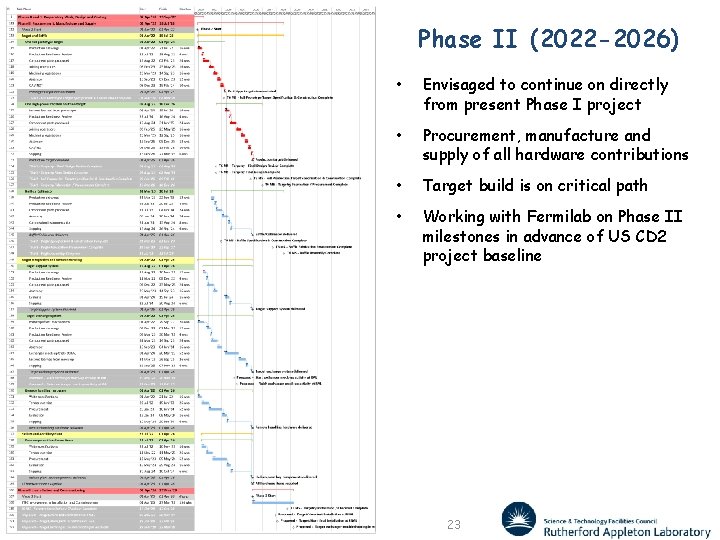
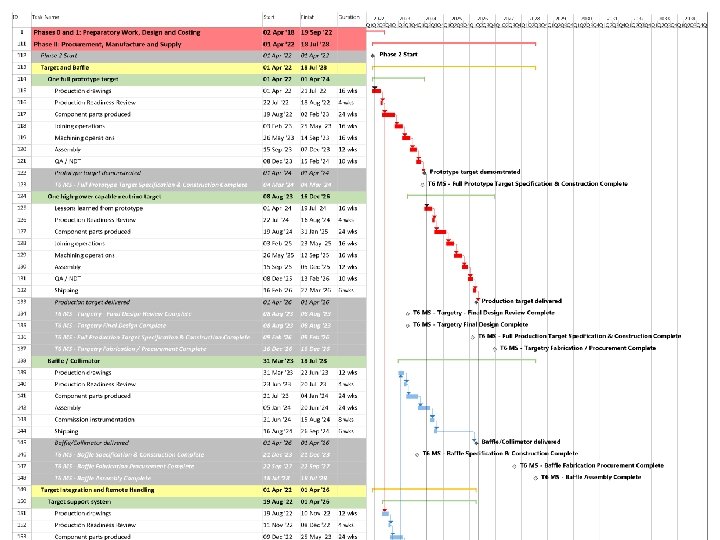
Phase II (2022 -2026) • Envisaged to continue on directly from present Phase I project • Procurement, manufacture and supply of all hardware contributions • Target build is on critical path • Working with Fermilab on Phase II milestones in advance of US CD 2 project baseline 23
Chris Densham 24
Chris Densham 25
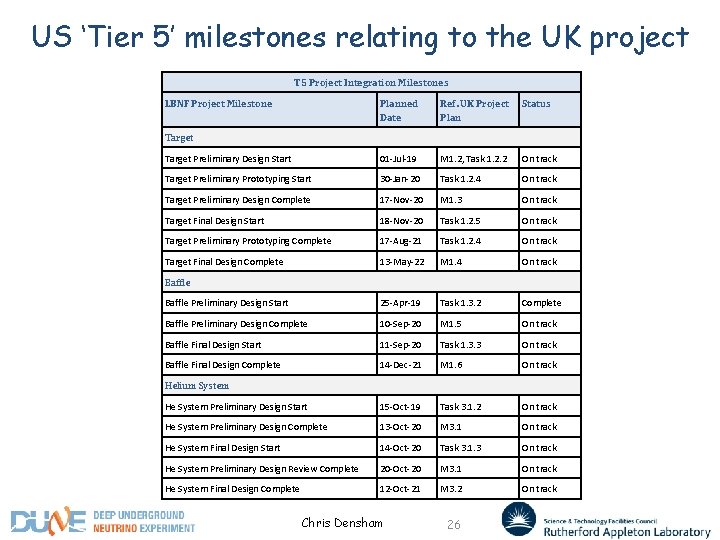
US ‘Tier 5’ milestones relating to the UK project T 5 Project Integration Milestones LBNF Project Milestone Planned Date Ref. UK Project Plan Status Target Preliminary Design Start 01 -Jul-19 M 1. 2, Task 1. 2. 2 On track Target Preliminary Prototyping Start 30 -Jan-20 Task 1. 2. 4 On track Target Preliminary Design Complete 17 -Nov-20 M 1. 3 On track Target Final Design Start 18 -Nov-20 Task 1. 2. 5 On track Target Preliminary Prototyping Complete 17 -Aug-21 Task 1. 2. 4 On track Target Final Design Complete 13 -May-22 M 1. 4 On track Baffle Preliminary Design Start 25 -Apr-19 Task 1. 3. 2 Complete Baffle Preliminary Design Complete 10 -Sep-20 M 1. 5 On track Baffle Final Design Start 11 -Sep-20 Task 1. 3. 3 On track Baffle Final Design Complete 14 -Dec-21 M 1. 6 On track He System Preliminary Design Start 15 -Oct-19 Task 3. 1. 2 On track He System Preliminary Design Complete 13 -Oct-20 M 3. 1 On track He System Final Design Start 14 -Oct-20 Task 3. 1. 3 On track He System Preliminary Design Review Complete 20 -Oct-20 M 3. 1 On track He System Final Design Complete 12 -Oct-21 M 3. 2 On track Target Baffle Helium System Chris Densham 26
- Slides: 26