
Laziness Inertia For centuries physics slept in Aristotles







- Slides: 62
Laziness ≈ Inertia
� For centuries physics slept in Aristotle’s (384 -322 BC) shadow.
� Aristotle believed that the “natural” motion of celestial objects was circular,
� while terrestrial objects tend “naturally” to fall.
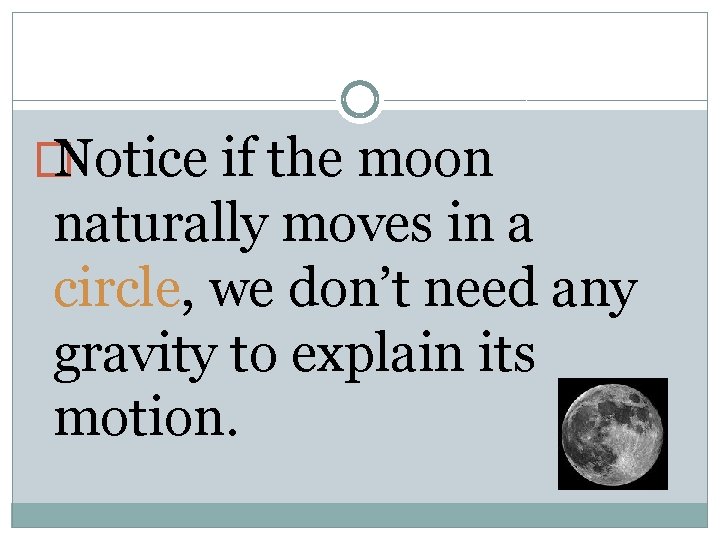
� Notice if the moon naturally moves in a circle, we don’t need any gravity to explain its motion.
� As for earthly objects, Aristotle believed that after falling, they come to rest, unless some force pushes them.
� It does seem that a force is needed to maintain motion.
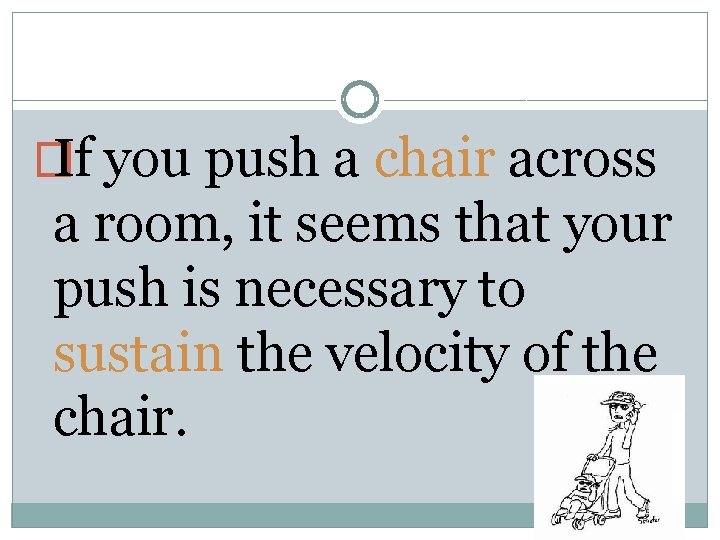
� If you push a chair across a room, it seems that your push is necessary to sustain the velocity of the chair.
� If you stop pushing, the chair stops moving.
�Galileo, though, believed that when the push on the chair is taken away, the chair should continue to move along without any assistance.
� And, as it turns out, it will if the chair is entirely left alone.
� But it is not left alone.
� Friction between the chair and the floor continues to apply a push to the chair after you take your hand away from it.
� It is this friction that prevents the chair from continuing its motion.
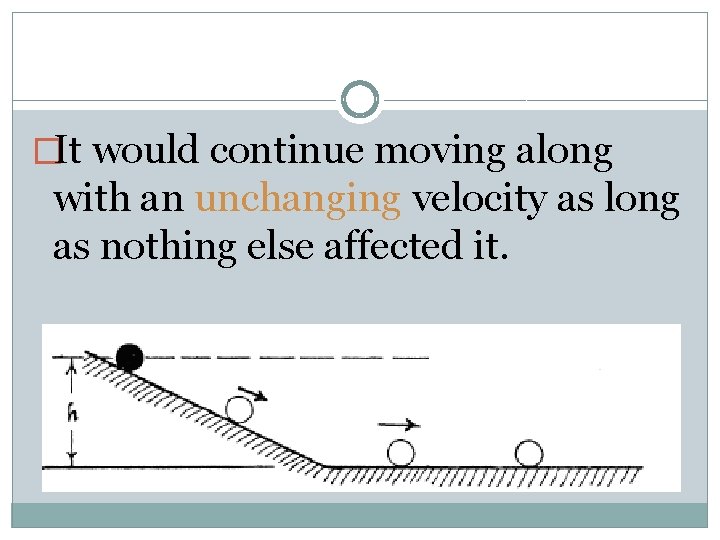
�Galileo figured this out by thinking of a ball rolling back and forth between two identical inclines.
� We must think of a very smooth ball and very smooth inclines.
� So smooth, in fact, that we do not have to worry about friction slowing down the ball.
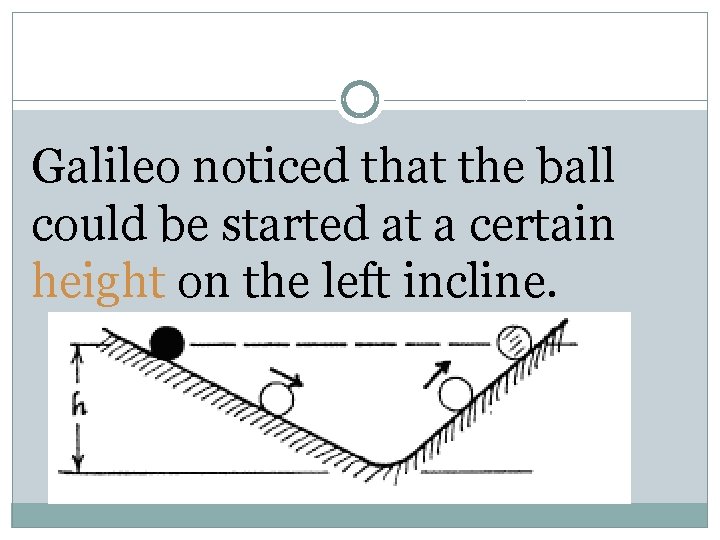
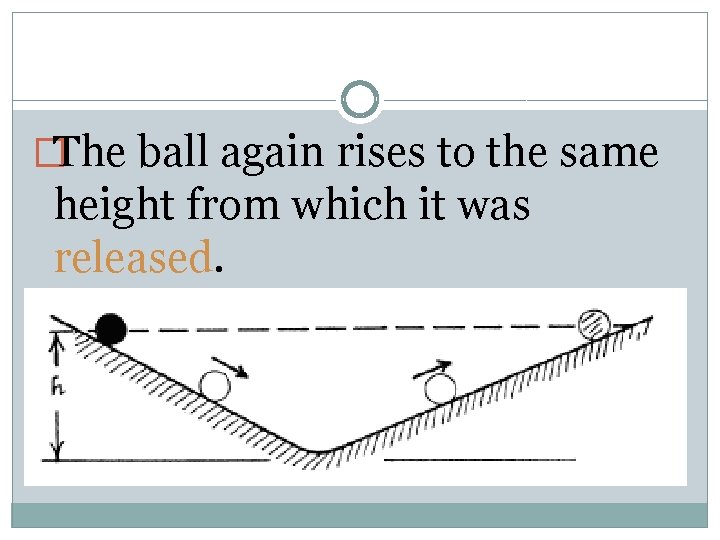
Galileo noticed that the ball could be started at a certain height on the left incline.
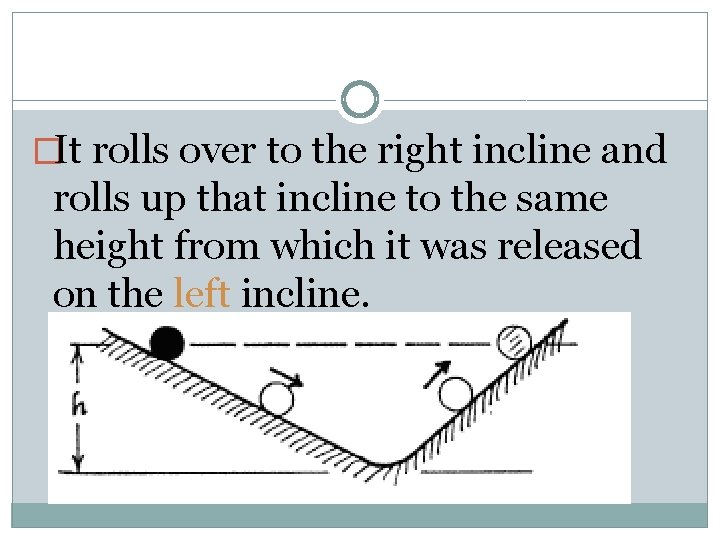
�It rolls over to the right incline and rolls up that incline to the same height from which it was released on the left incline.
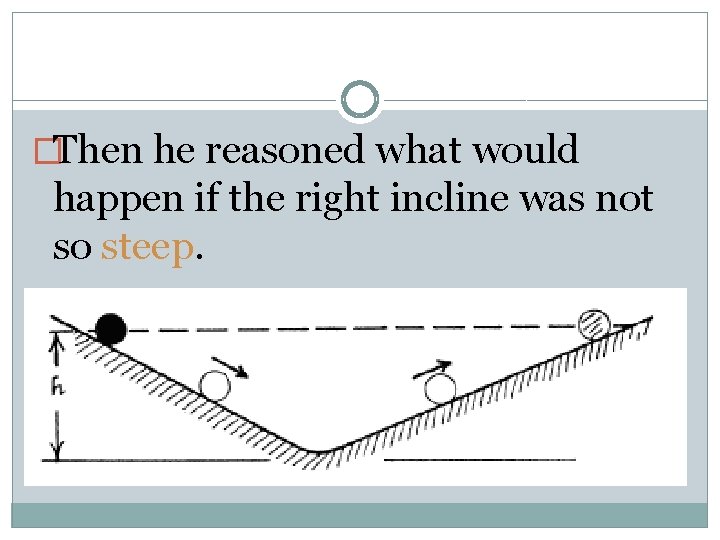
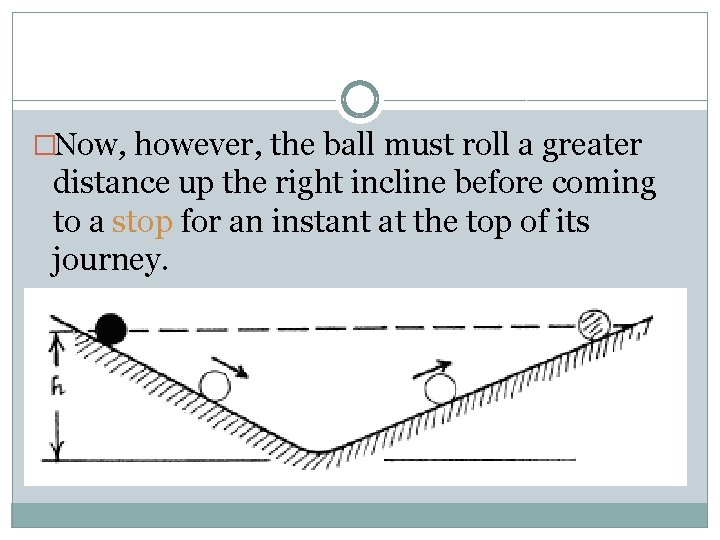
�Then he reasoned what would happen if the right incline was not so steep.
�The ball again rises to the same height from which it was released.
�Now, however, the ball must roll a greater distance up the right incline before coming to a stop for an instant at the top of its journey.
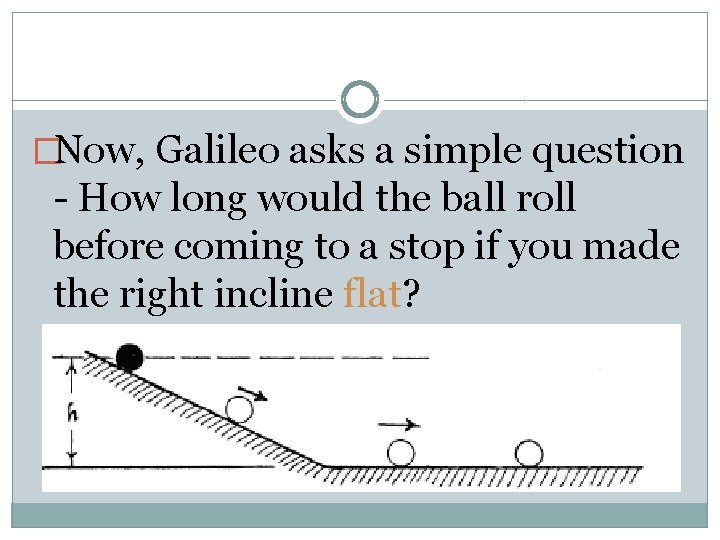
�Now, Galileo asks a simple question - How long would the ball roll before coming to a stop if you made the right incline flat?
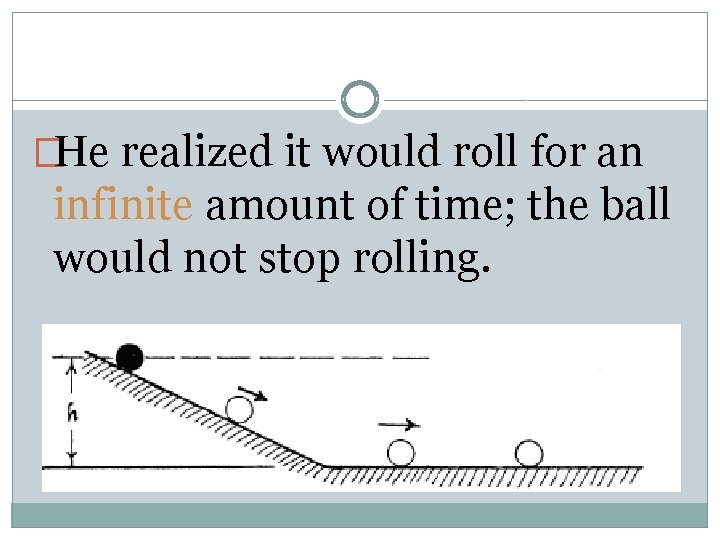
�He realized it would roll for an infinite amount of time; the ball would not stop rolling.
�It would continue moving along with an unchanging velocity as long as nothing else affected it.
�The ball will, all on its own, continue in its state of motion, moving at a constant speed in a straight line.
� This property of matter is called inertia.
The reluctance of an object to change its state of motion is INERTIA.
�The amount of inertia an object has depends on its mass.
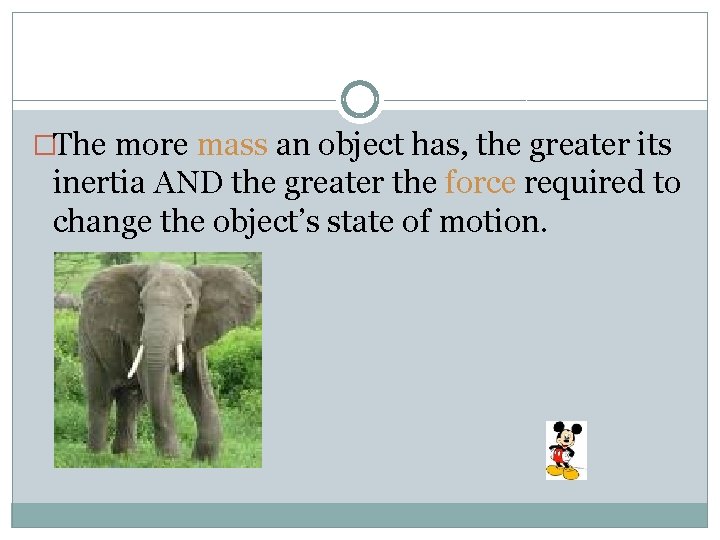
�The more mass an object has, the greater its inertia AND the greater the force required to change the object’s state of motion.
� Inertia is a property of matter.
� It is that property of matter which opposes changes in velocity.
� Simply stated, a common object will not change its velocity spontaneously.
�That is, if something is moving along at a constant speed in a straight line, it will continue to move along at the same constant speed in the same straight line.
�It will not, all on its own, speed up, slow down, or change direction.
� Something else must push on the object to speed it up, slow it down, or change its direction.
� Also, if something is standing still, it will, if left to itself, continue to stand still.
� Something else must push on an object to get it moving.
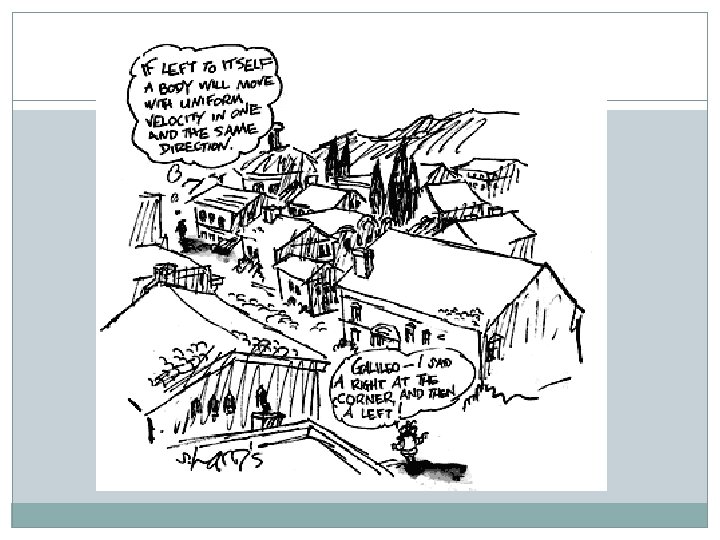
�Galileo is traditionally credited with being the first scientist to formalize this concept.
�Isaac Newton (1642 -1727) summarized Galileo’s idea as Newton’s First Law: Every object continues in a state of rest, or of motion in a straight line at a constant speed, unless it is compelled to change that state by unbalanced forces exerted upon it.
�A. Describe how the picture below demonstrates the law of inertia.
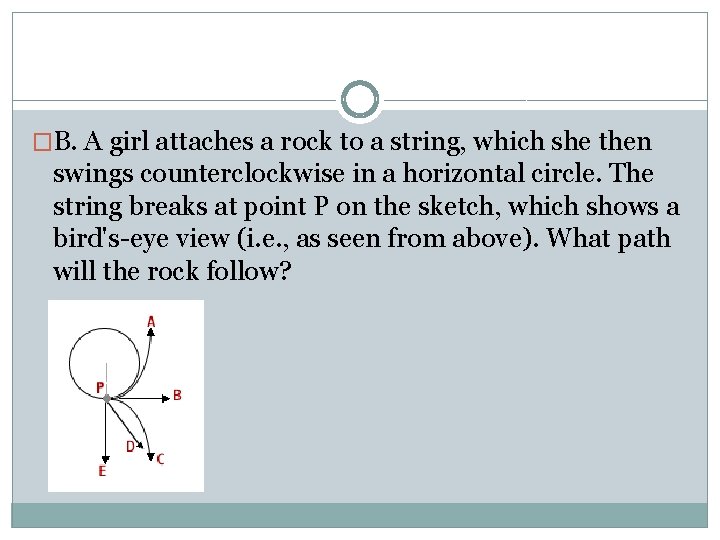
�B. A girl attaches a rock to a string, which she then swings counterclockwise in a horizontal circle. The string breaks at point P on the sketch, which shows a bird's-eye view (i. e. , as seen from above). What path will the rock follow?
C. A 4. 0 kg object is moving across a frictionless surface with a constant velocity of 2 m/s. Which one of the following horizontal forces is necessary to maintain this state of motion? �A. 0 N �B. 0. 5 N �C. 2. 0 N �D. depends on the speed
� But what exactly is meant by the phrase unbalanced force?
� What is an unbalanced force?
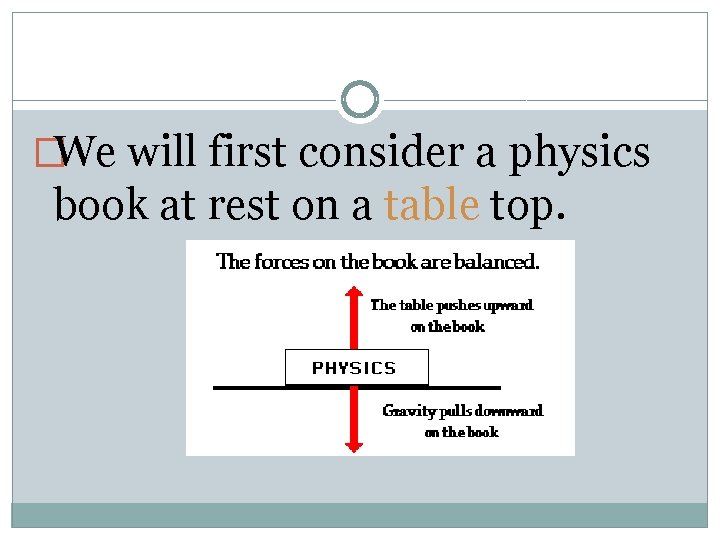
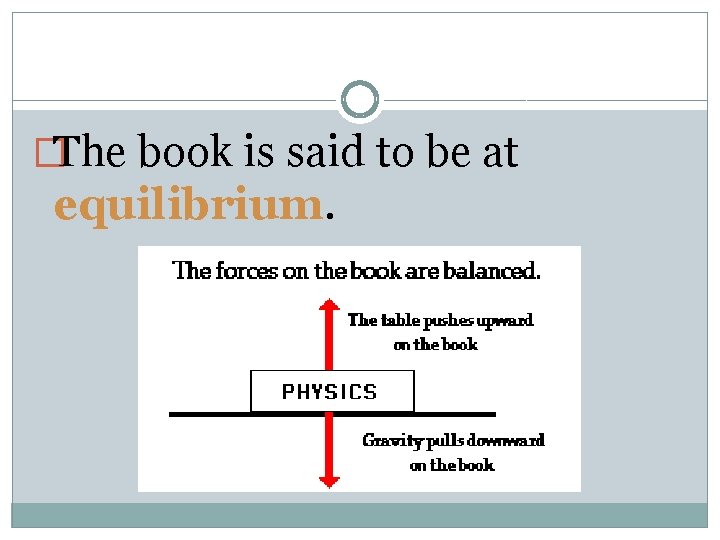
�We will first consider a physics book at rest on a table top.
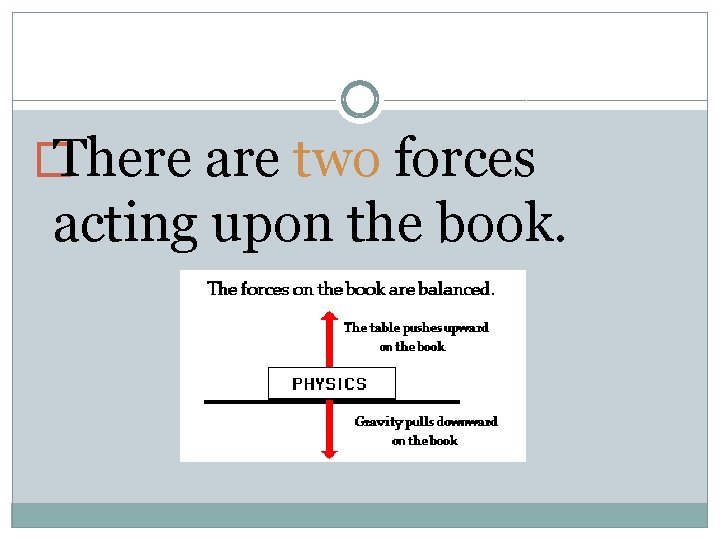
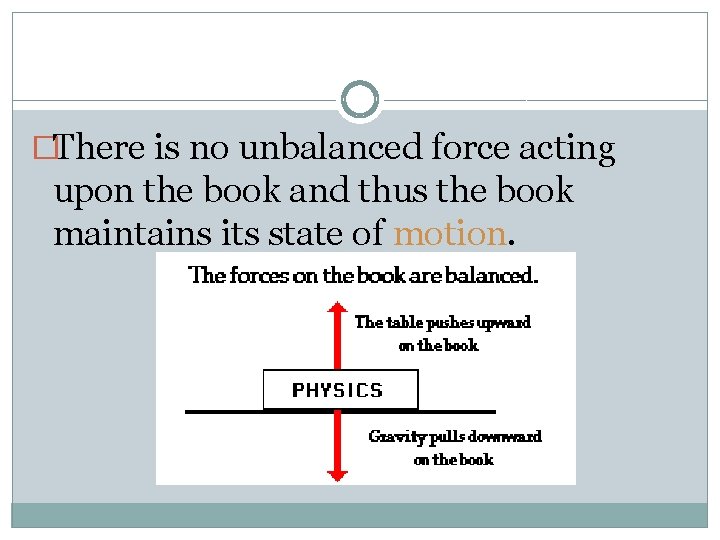
� There are two forces acting upon the book.
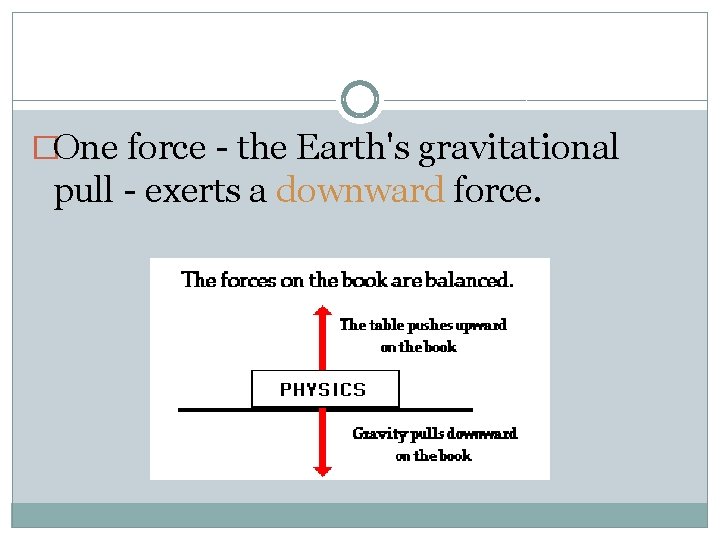
�One force - the Earth's gravitational pull - exerts a downward force.
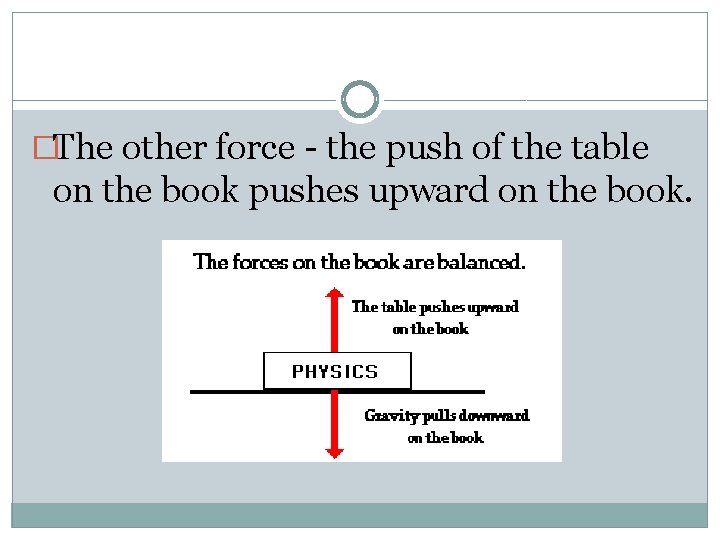
�The other force - the push of the table on the book pushes upward on the book.
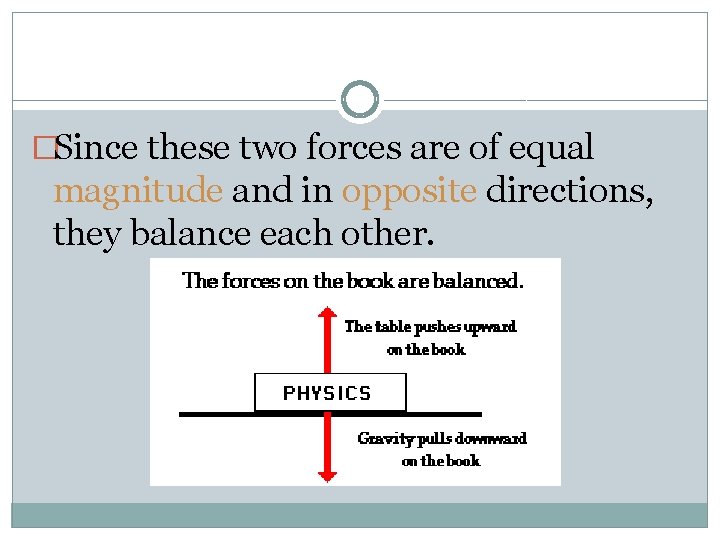
�Since these two forces are of equal magnitude and in opposite directions, they balance each other.
�The book is said to be at equilibrium.
�There is no unbalanced force acting upon the book and thus the book maintains its state of motion.
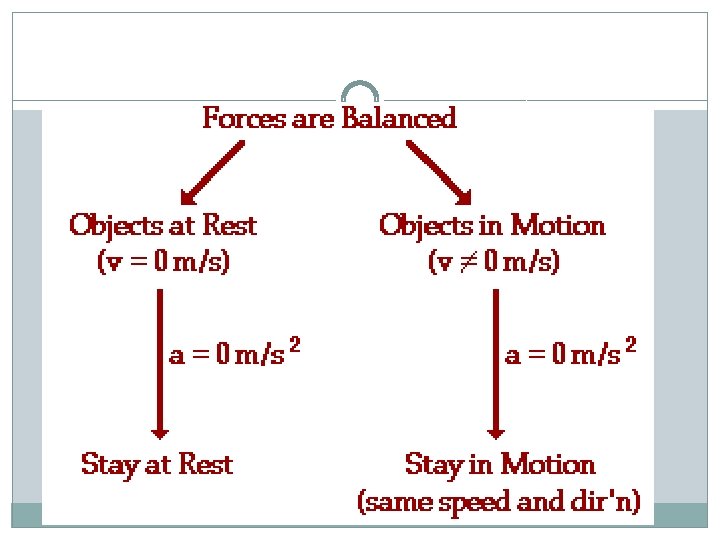
� When all the forces acting upon an object balance each other, the object will be at equilibrium; it will not accelerate.
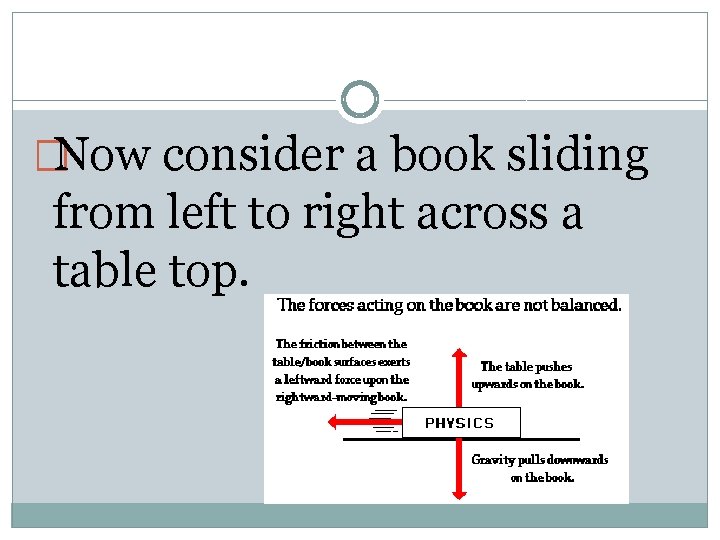
�Now consider a book sliding from left to right across a table top.
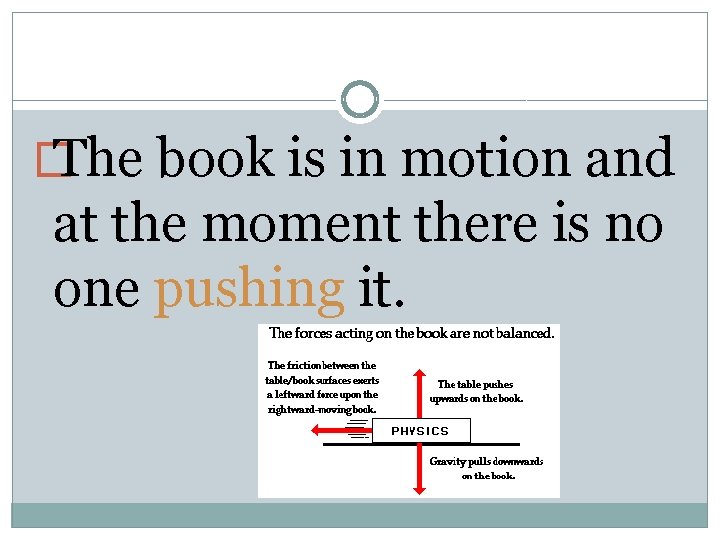
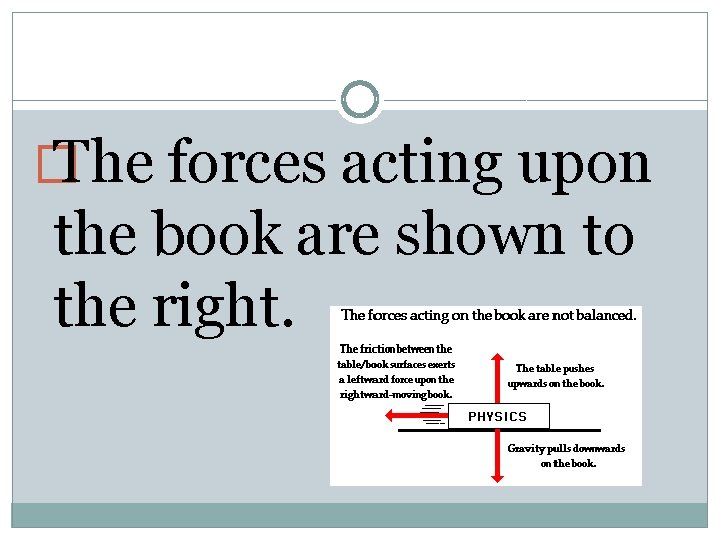
� The book is in motion and at the moment there is no one pushing it.
� The forces acting upon the book are shown to the right.
�Are the forces on the book balanced? Why or why not?
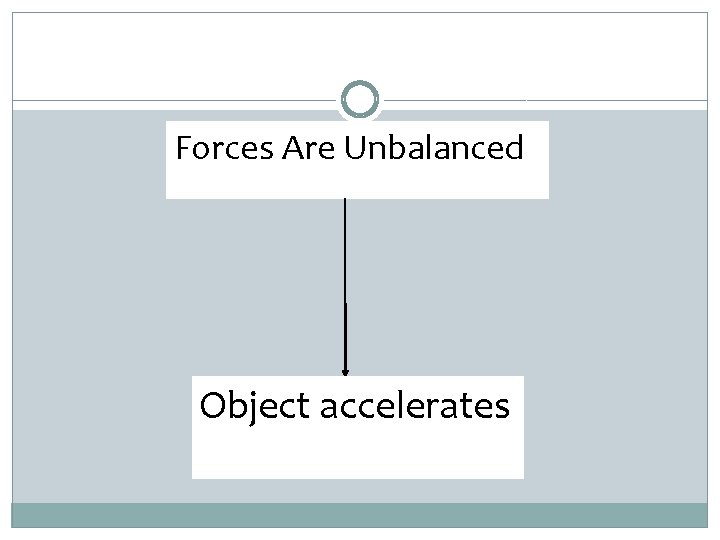
� Unbalanced forces cause acceleration.
�In this case, the unbalanced force is directed opposite the book's motion and will cause it to slow down.
Forces Are Unbalanced Object accelerates