
Layers of the Earth Bell Ringers 823 ON
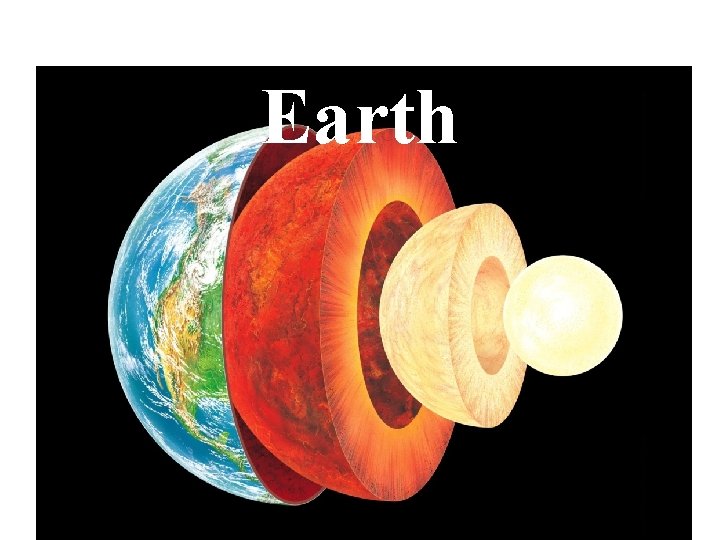
Layers of the Earth
Bell Ringers 8/23 – ON PAGE ONE ANSWER THE BELLRINGERS!! Name the layers of the Earth. What do you think is meant by Earth’s Process? 8/28 - Describe what makes up the lithosphere and the athenosphere.
Quiz • List vocabulary you think you need to know. • Know main 4 layers and lithosphere and athenosphere – state and location. • Explain why the plates move • Explain what happens to pressure and temperature as you go deeper. • Describe two types of crust. • Explain why we are studying the layers of the Earth.
STANDARD Construct a scientific explanation based on evidence for how the uneven distributions of the Earth’s mineral, energy, and groundwater resources are the result of past and current geoscience processes. UNEVEN DISTRIBUTION? ? GEOSCIENCE PROCESSES? ?
What is meant by density of the layers? What does it matter that the earth gets hotter the deeper the layer?
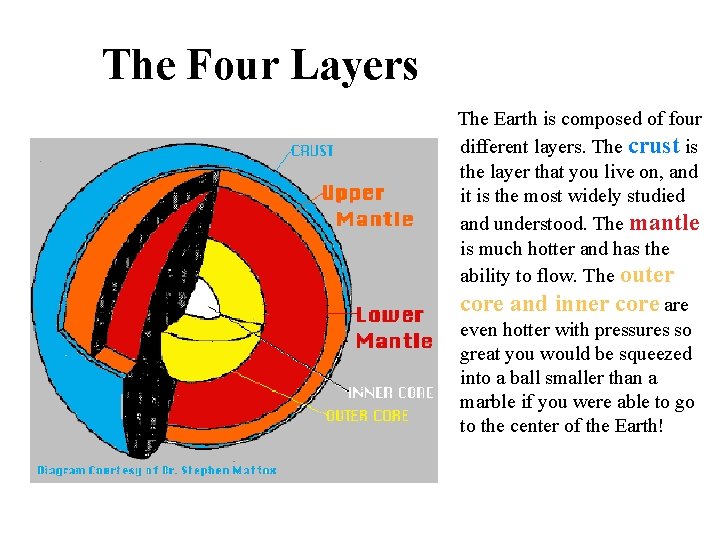
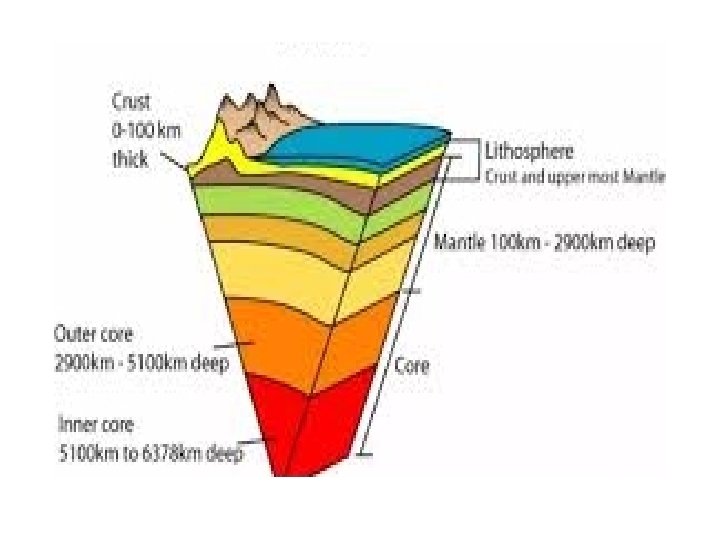
The Four Layers The Earth is composed of four different layers. The crust is the layer that you live on, and it is the most widely studied and understood. The mantle is much hotter and has the ability to flow. The outer core and inner core are even hotter with pressures so great you would be squeezed into a ball smaller than a marble if you were able to go to the center of the Earth!
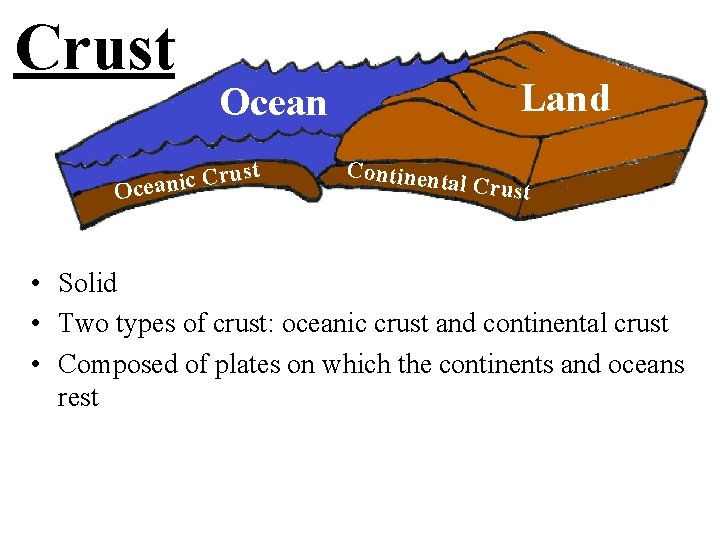
Crust Land Ocean st ru C c i n a e Oc Continent al Crust • Solid • Two types of crust: oceanic crust and continental crust • Composed of plates on which the continents and oceans rest
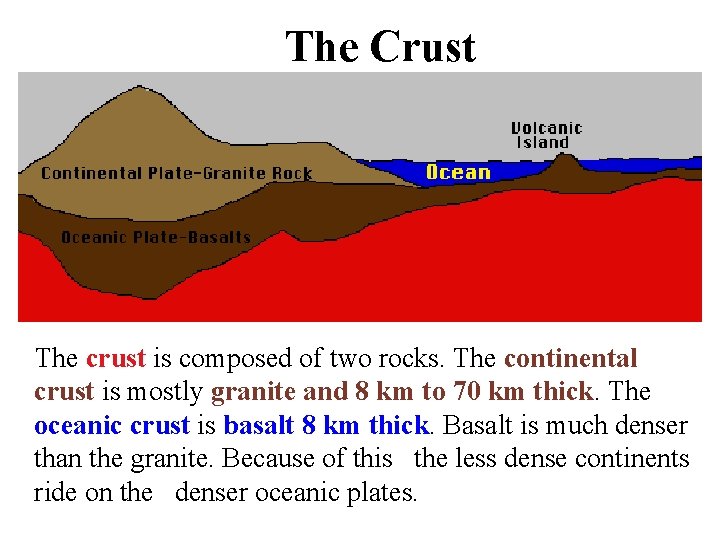
The Crust The crust is composed of two rocks. The continental crust is mostly granite and 8 km to 70 km thick. The oceanic crust is basalt 8 km thick. Basalt is much denser than the granite. Because of this the less dense continents ride on the denser oceanic plates.
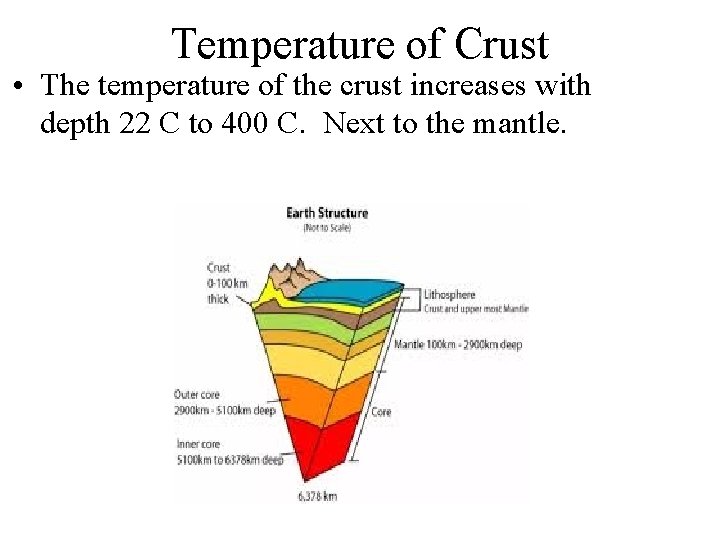
Temperature of Crust • The temperature of the crust increases with depth 22 C to 400 C. Next to the mantle.
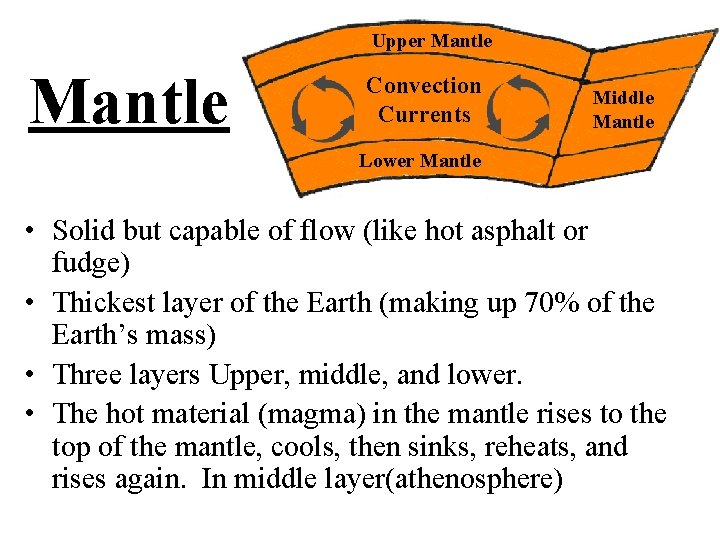
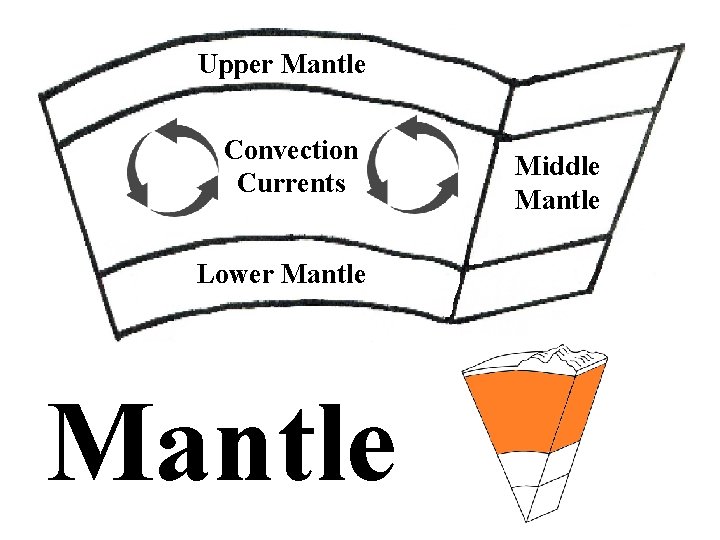
Upper Mantle Convection Currents Middle Mantle Lower Mantle • Solid but capable of flow (like hot asphalt or fudge) • Thickest layer of the Earth (making up 70% of the Earth’s mass) • Three layers Upper, middle, and lower. • The hot material (magma) in the mantle rises to the top of the mantle, cools, then sinks, reheats, and rises again. In middle layer(athenosphere)
3 Parts of the Mantle Lower mantle – Composed of iron, oxygen, silico, magnesium, and aluminum Solid 3000 C 670 to 2890 km Upper mantle – Same elements – Part of lithosphere solid 1400 – 3000 C 670 km below surface Middle – ATHENOSPHERE Convection currents liquid
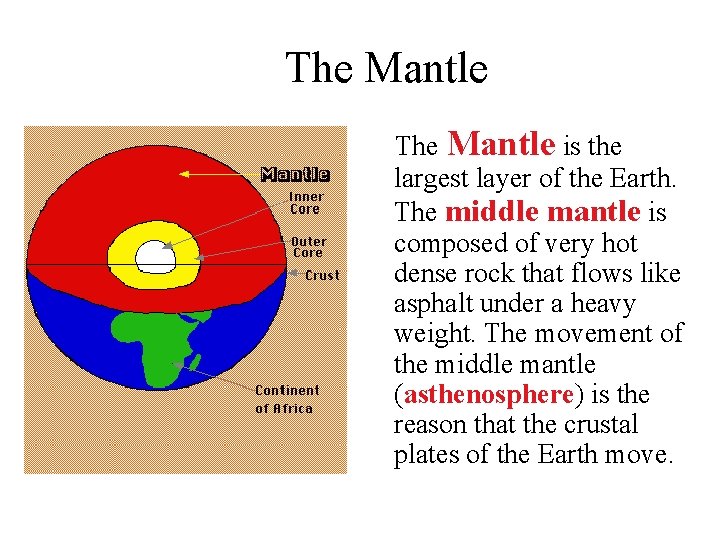
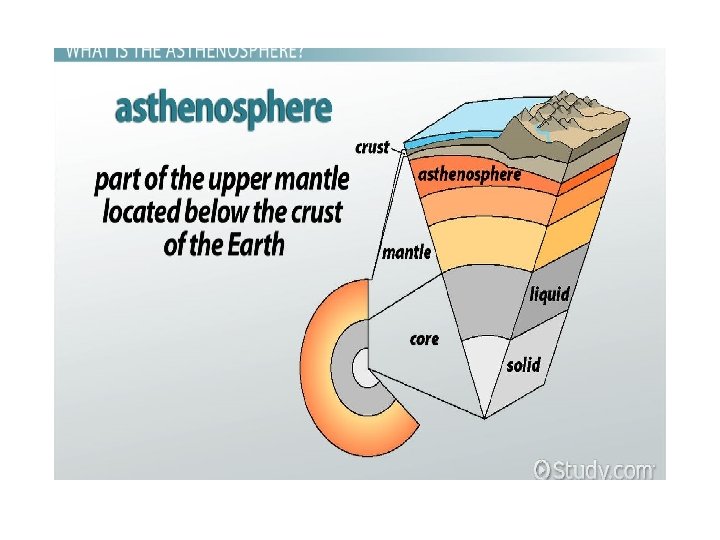
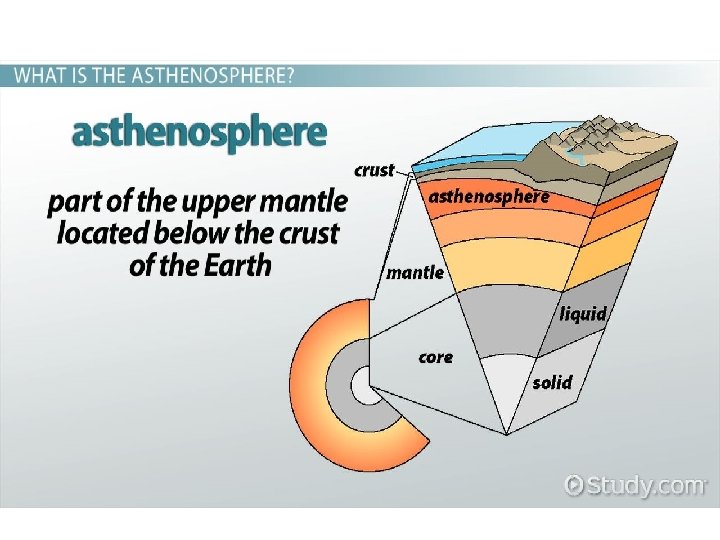
The Mantle is the largest layer of the Earth. The middle mantle is composed of very hot dense rock that flows like asphalt under a heavy weight. The movement of the middle mantle (asthenosphere) is the reason that the crustal plates of the Earth move.
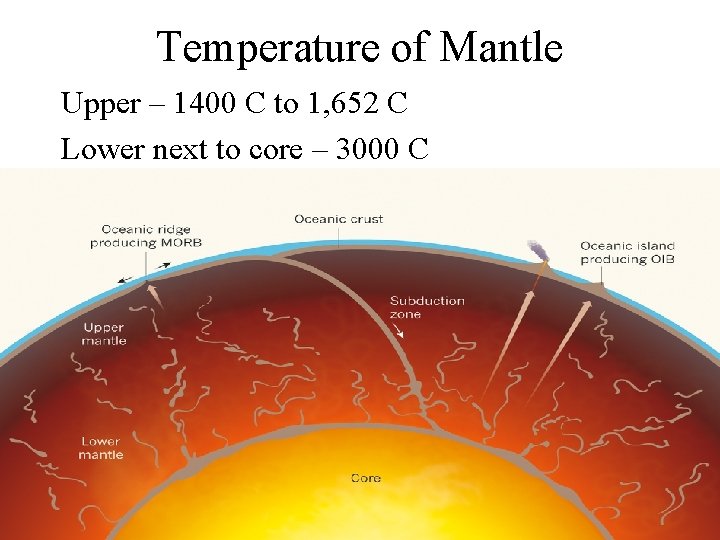
Temperature of Mantle Upper – 1400 C to 1, 652 C Lower next to core – 3000 C
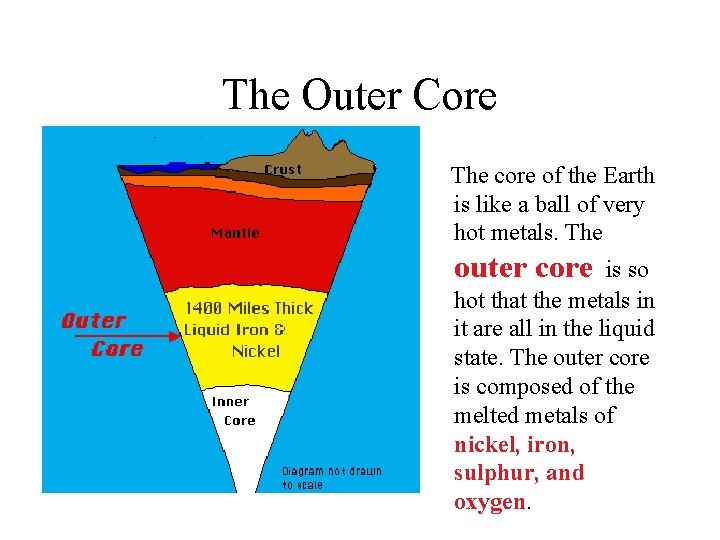
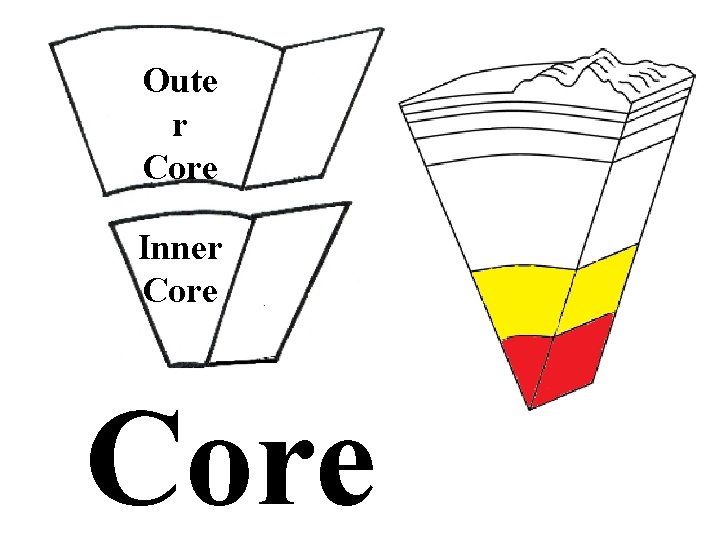
The Outer Core The core of the Earth is like a ball of very hot metals. The outer core is so hot that the metals in it are all in the liquid state. The outer core is composed of the melted metals of nickel, iron, sulphur, and oxygen.
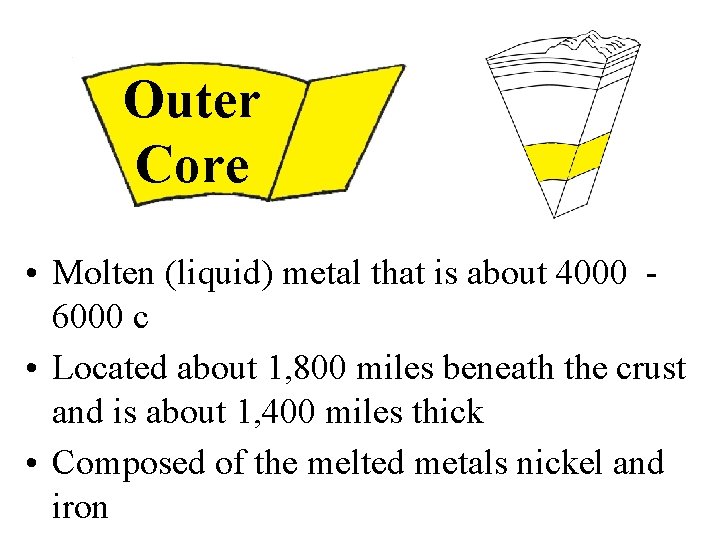
Outer Core • Molten (liquid) metal that is about 4000 6000 c • Located about 1, 800 miles beneath the crust and is about 1, 400 miles thick • Composed of the melted metals nickel and iron
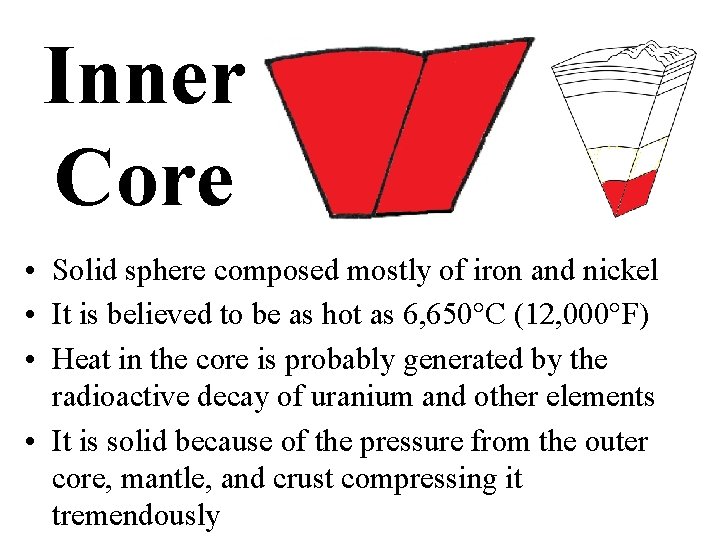
Inner Core • Solid sphere composed mostly of iron and nickel • It is believed to be as hot as 6, 650°C (12, 000°F) • Heat in the core is probably generated by the radioactive decay of uranium and other elements • It is solid because of the pressure from the outer core, mantle, and crust compressing it tremendously
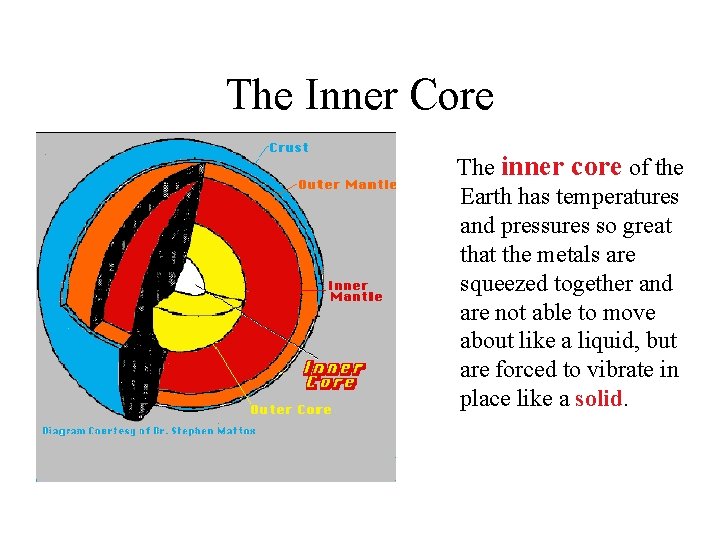
The Inner Core The inner core of the Earth has temperatures and pressures so great the metals are squeezed together and are not able to move about like a liquid, but are forced to vibrate in place like a solid.
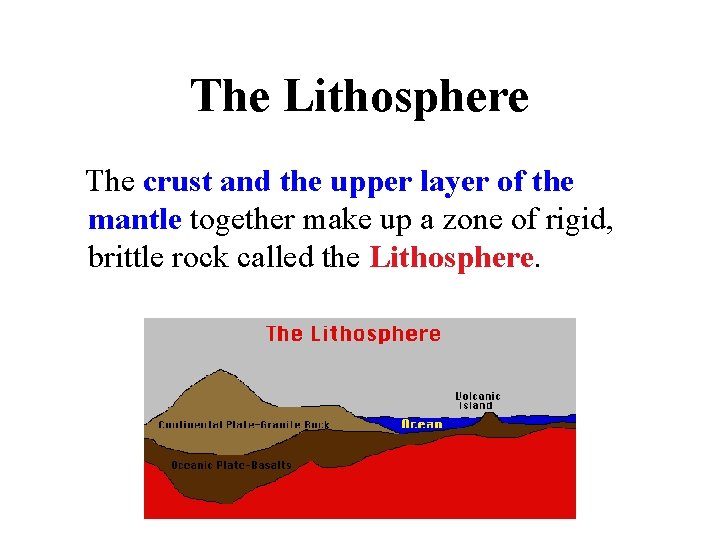
The Lithosphere The crust and the upper layer of the mantle together make up a zone of rigid, brittle rock called the Lithosphere.
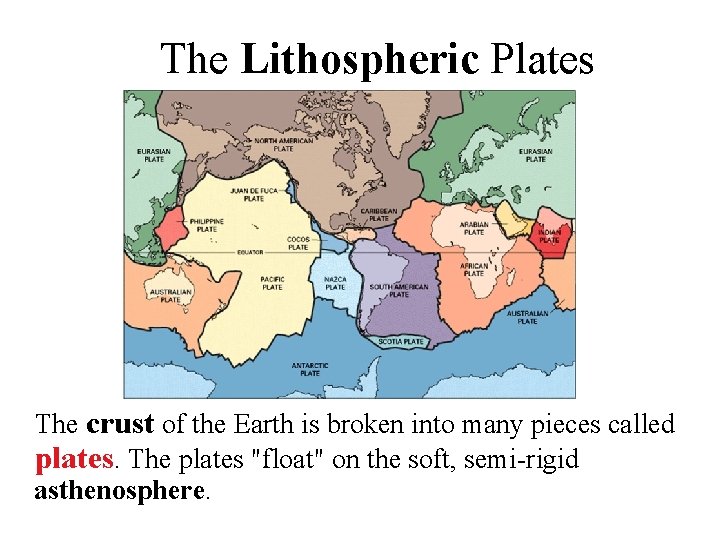
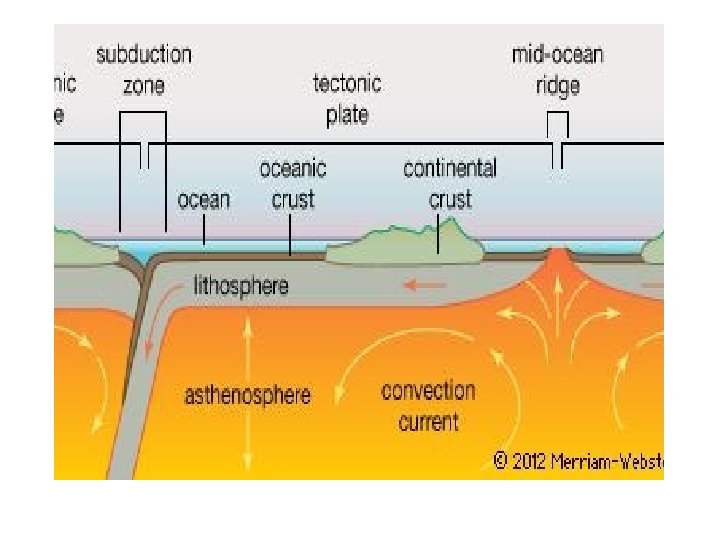
The Lithospheric Plates The crust of the Earth is broken into many pieces called plates. The plates "float" on the soft, semi-rigid asthenosphere.
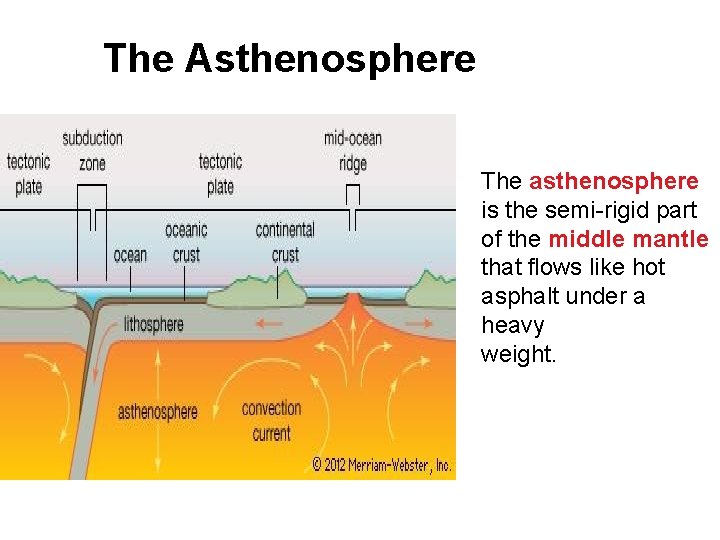
The Asthenosphere The asthenosphere is the semi-rigid part of the middle mantle that flows like hot asphalt under a heavy weight.
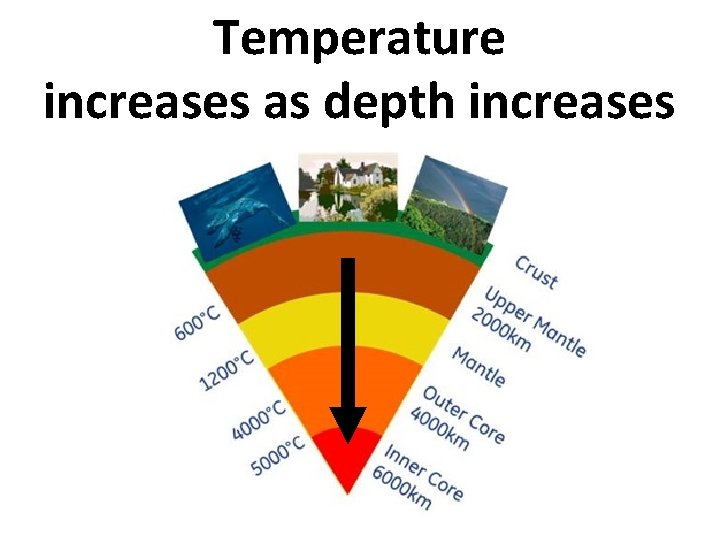
Temperature increases as depth increases
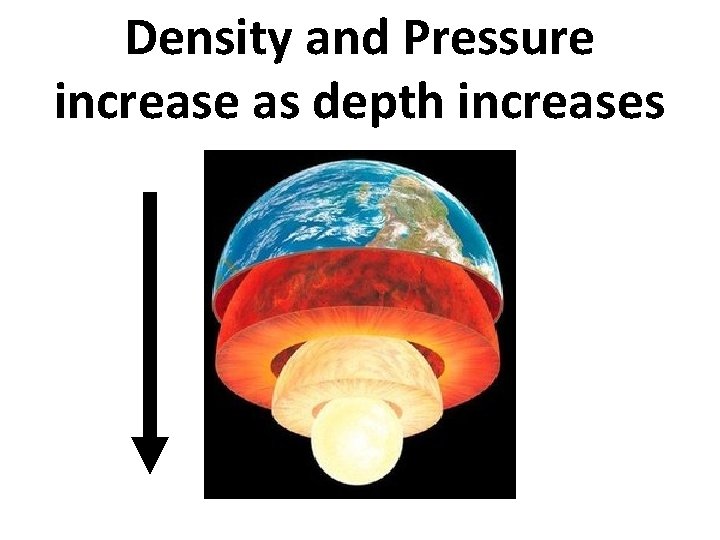
Density and Pressure increase as depth increases
Temperature, Density and Pressure increases as depth increases Add this statement to the arrow going down on your foldable.
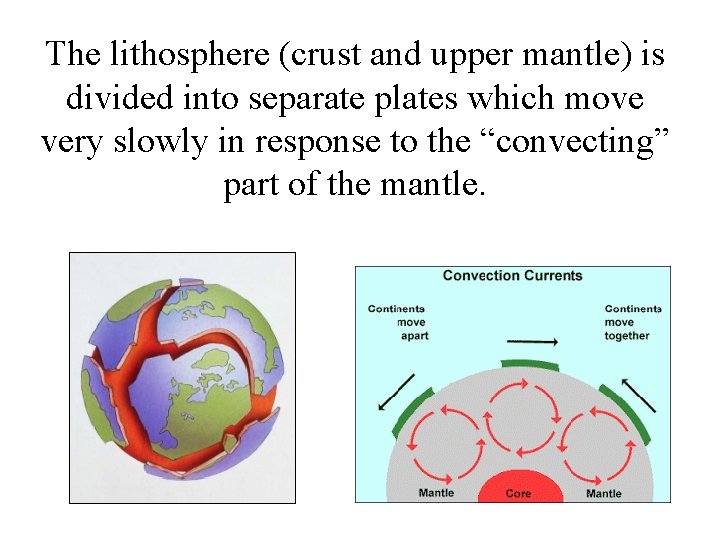
The lithosphere (crust and upper mantle) is divided into separate plates which move very slowly in response to the “convecting” part of the mantle.
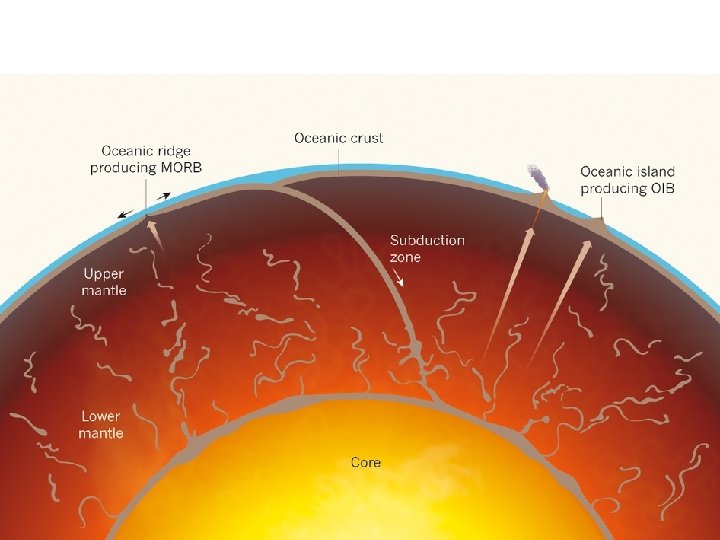
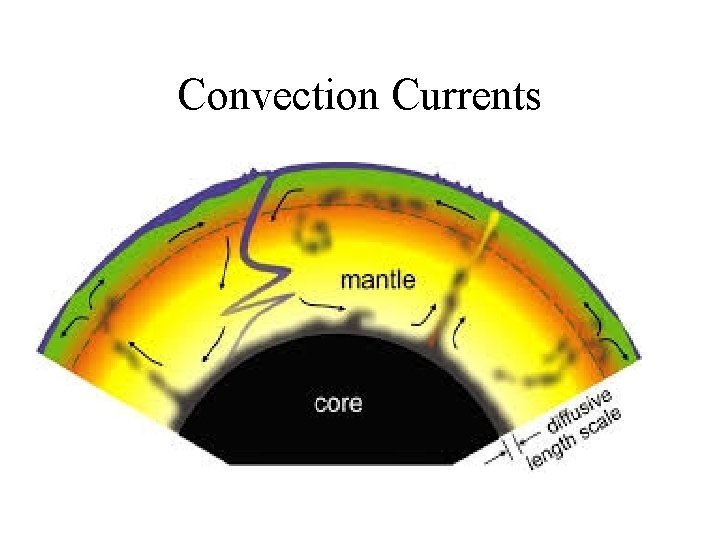
Convection Currents
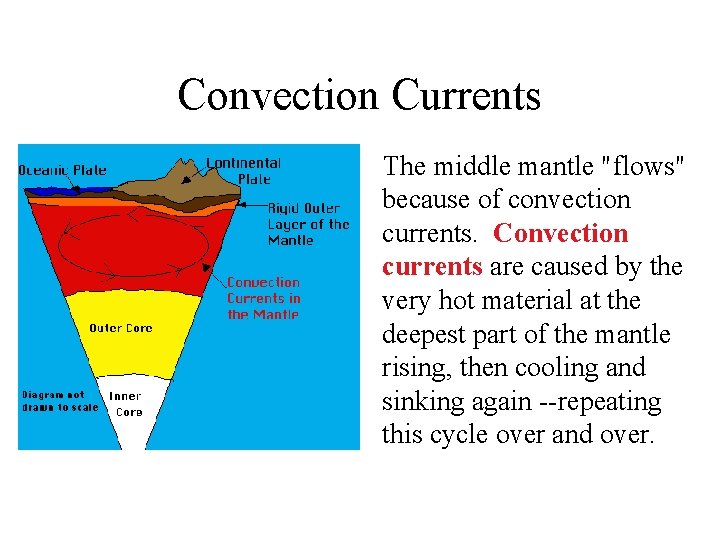
Convection Currents The middle mantle "flows" because of convection currents. Convection currents are caused by the very hot material at the deepest part of the mantle rising, then cooling and sinking again --repeating this cycle over and over.
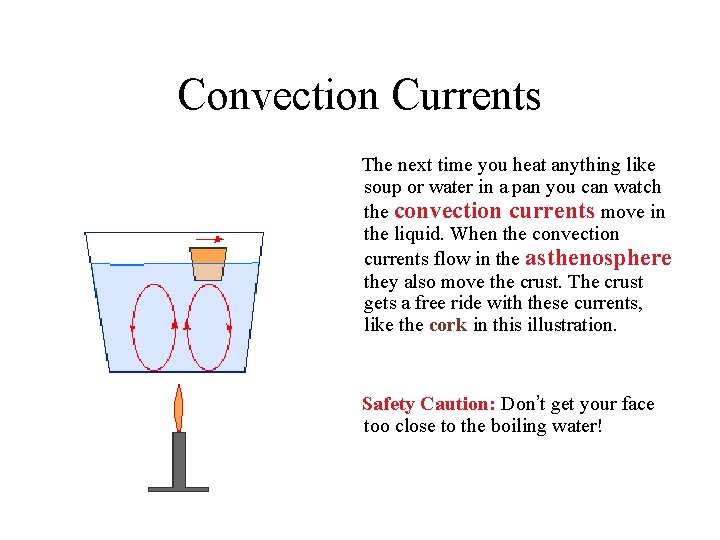
Convection Currents The next time you heat anything like soup or water in a pan you can watch the convection currents move in the liquid. When the convection currents flow in the asthenosphere they also move the crust. The crust gets a free ride with these currents, like the cork in this illustration. Safety Caution: Don’t get your face too close to the boiling water!
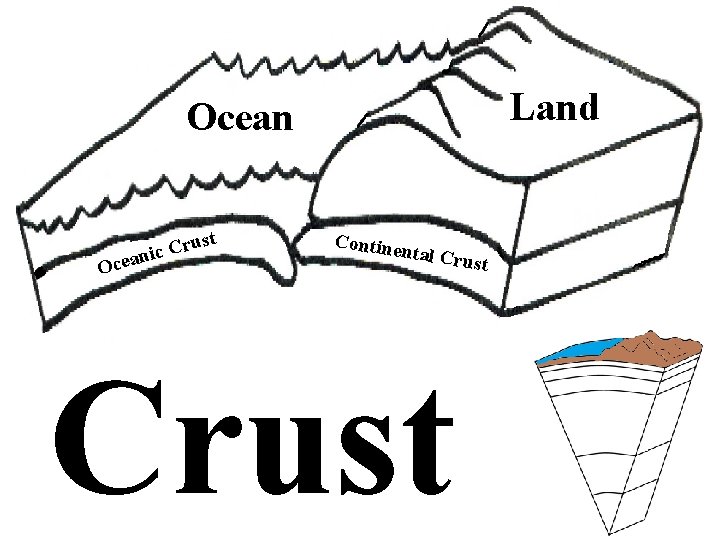
Land Ocean ust r C c eani Oc Contine ntal Crust st
Upper Mantle Convection Currents Lower Mantle Middle Mantle
Oute r Core Inner Core
- Slides: 35