
Layers of the Atmosphere What is the Atmosphere
- Slides: 13
Layers of the Atmosphere
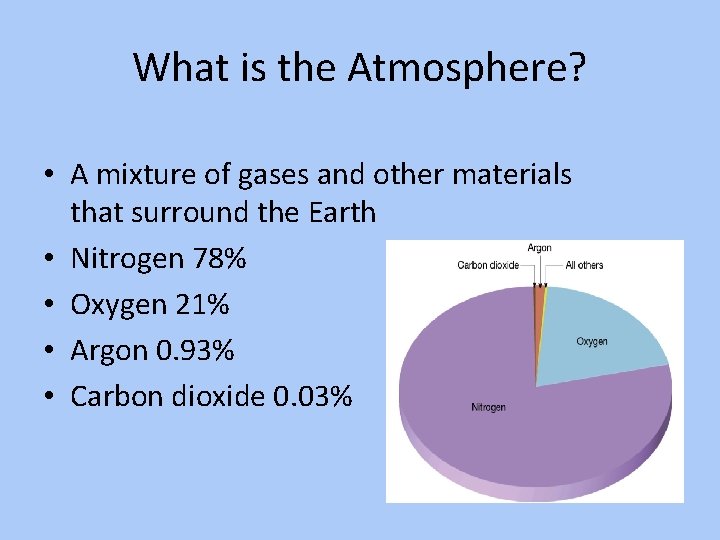
What is the Atmosphere? • A mixture of gases and other materials that surround the Earth • Nitrogen 78% • Oxygen 21% • Argon 0. 93% • Carbon dioxide 0. 03%
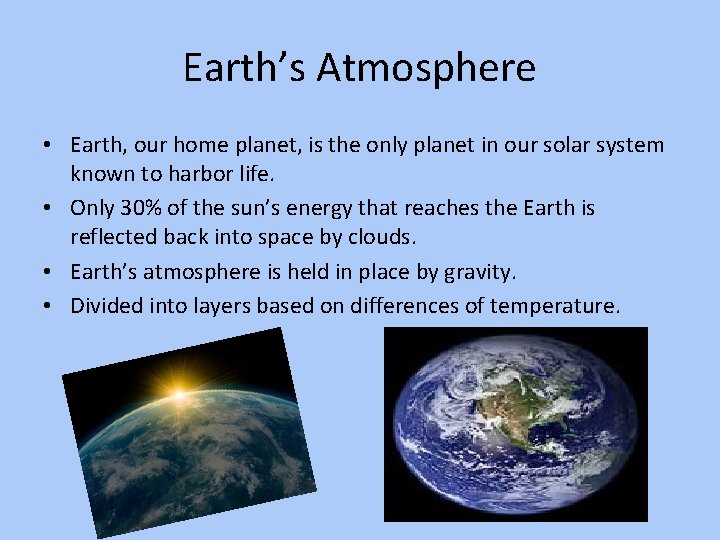
Earth’s Atmosphere • Earth, our home planet, is the only planet in our solar system known to harbor life. • Only 30% of the sun’s energy that reaches the Earth is reflected back into space by clouds. • Earth’s atmosphere is held in place by gravity. • Divided into layers based on differences of temperature.
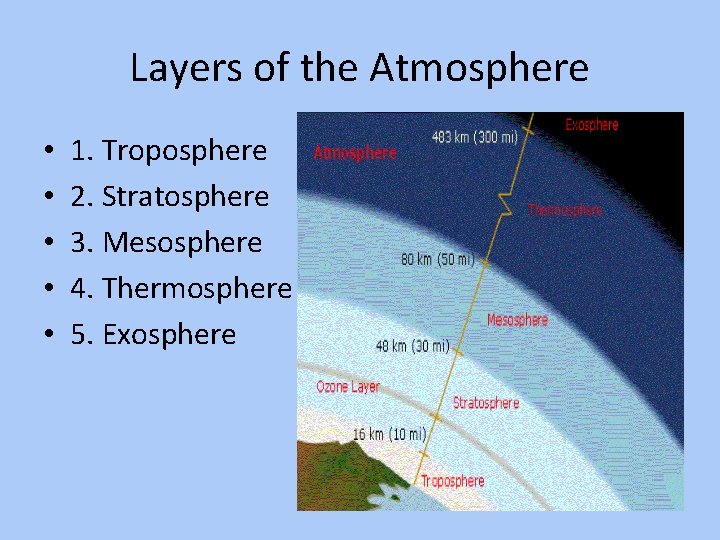
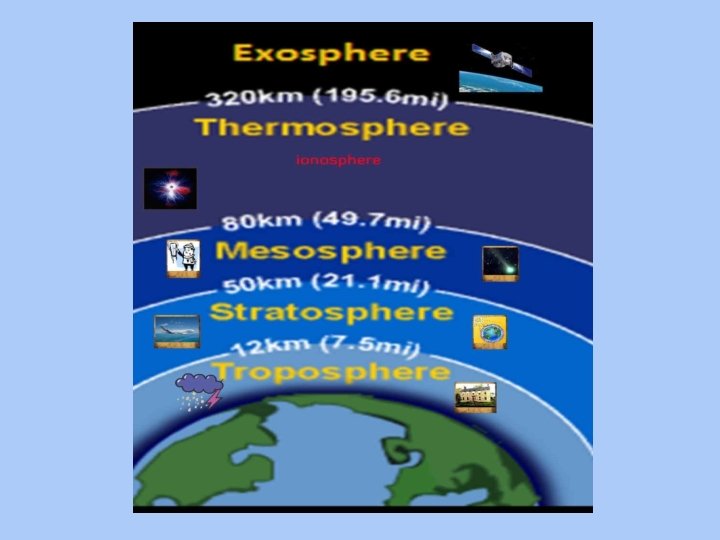
Layers of the Atmosphere • • • 1. Troposphere 2. Stratosphere 3. Mesosphere 4. Thermosphere 5. Exosphere
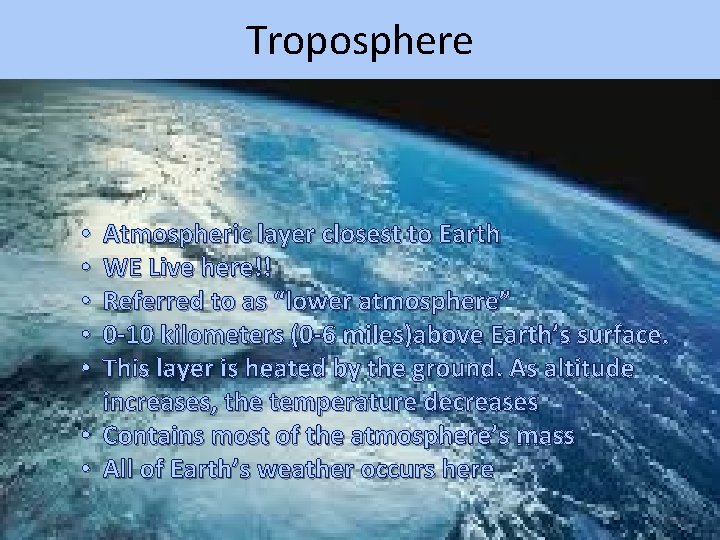
Troposphere Atmospheric layer closest to Earth WE Live here!! Referred to as “lower atmosphere” 0 -10 kilometers (0 -6 miles)above Earth’s surface. This layer is heated by the ground. As altitude increases, the temperature decreases • Contains most of the atmosphere’s mass • All of Earth’s weather occurs here • • •
Stratosphere • Extends from the top of the troposphere to about 10 - 50 kilometers (6 -31 miles) above the Earth's surface • Air is thin • Jet planes often fly in the lower stratosphere to avoid bad weather in the troposphere • Lower stratosphere is cold at about -51 C (-60 F) • Gets warmer toward the top due to absorption of UV radiation by the ozone -15 C (5 F) • Upper stratosphere contains a layer of ozone 15 -40 km (10 -25 miles) above the surface
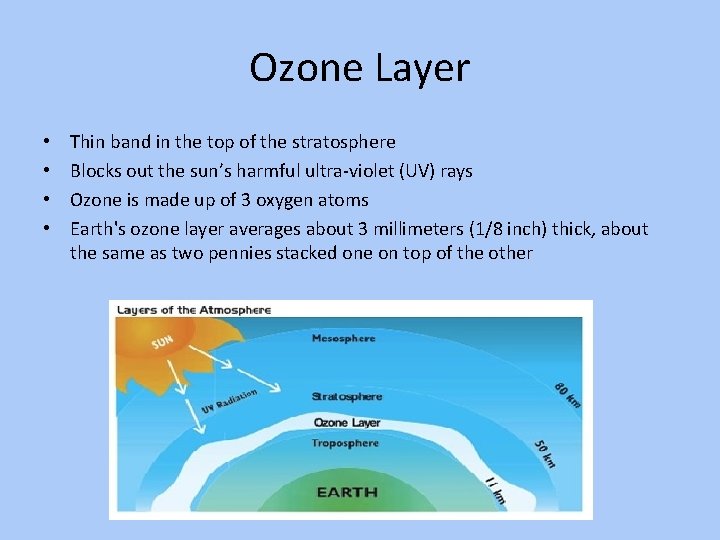
Ozone Layer • • Thin band in the top of the stratosphere Blocks out the sun’s harmful ultra-violet (UV) rays Ozone is made up of 3 oxygen atoms Earth's ozone layer averages about 3 millimeters (1/8 inch) thick, about the same as two pennies stacked one on top of the other
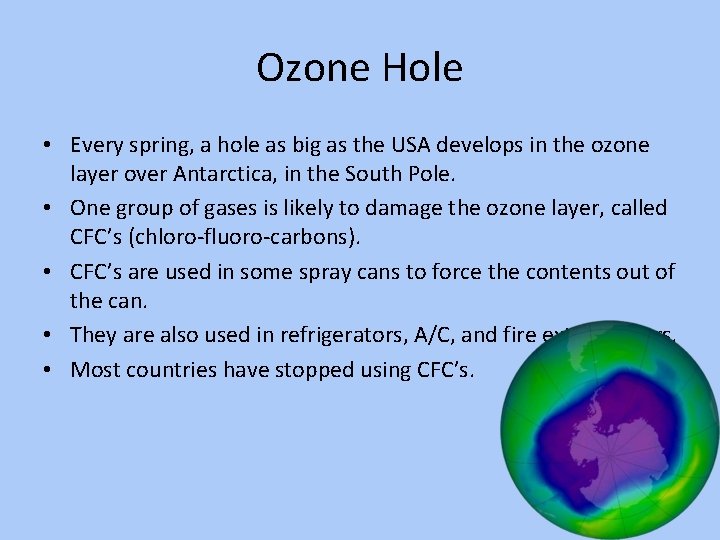
Ozone Hole • Every spring, a hole as big as the USA develops in the ozone layer over Antarctica, in the South Pole. • One group of gases is likely to damage the ozone layer, called CFC’s (chloro-fluoro-carbons). • CFC’s are used in some spray cans to force the contents out of the can. • They are also used in refrigerators, A/C, and fire extinguishers. • Most countries have stopped using CFC’s.
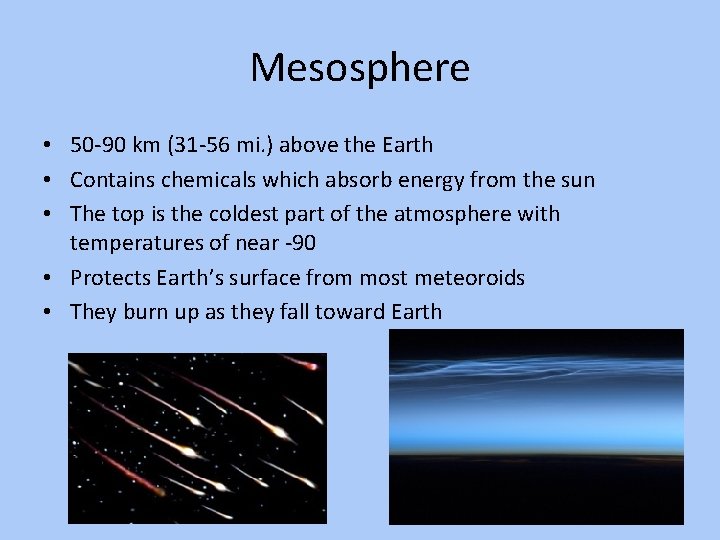
Mesosphere • 50 -90 km (31 -56 mi. ) above the Earth • Contains chemicals which absorb energy from the sun • The top is the coldest part of the atmosphere with temperatures of near -90 • Protects Earth’s surface from most meteoroids • They burn up as they fall toward Earth
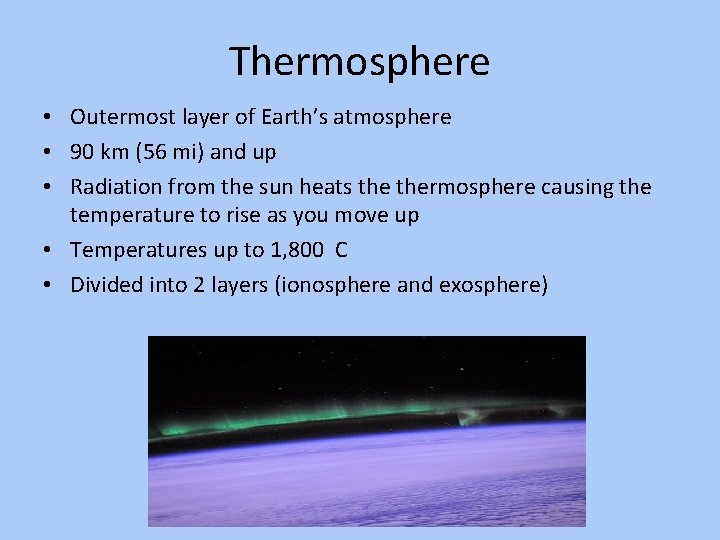
Thermosphere • Outermost layer of Earth’s atmosphere • 90 km (56 mi) and up • Radiation from the sun heats thermosphere causing the temperature to rise as you move up • Temperatures up to 1, 800 C • Divided into 2 layers (ionosphere and exosphere)
Ionosphere & Exosphere • Lower level – Ionosphere 1. gas molecules are electrically charged because of sun’s energy 2. Aurora borealis, or Northern Lights, occur in ionosphere • Outer layer –Exosphere 1. satellites and space shuttles orbit Earth in this layer 2. Air pressure is low because there are so few molecules floating around
How can I remember all these layers? • • • Troposphere Stratosphere Mesosphere Thermosphere Ionosphere Exosphere That Snake Must Think I’m Evil !!