
Layering Definition A form of rooting cuttings in
- Slides: 23
Layering
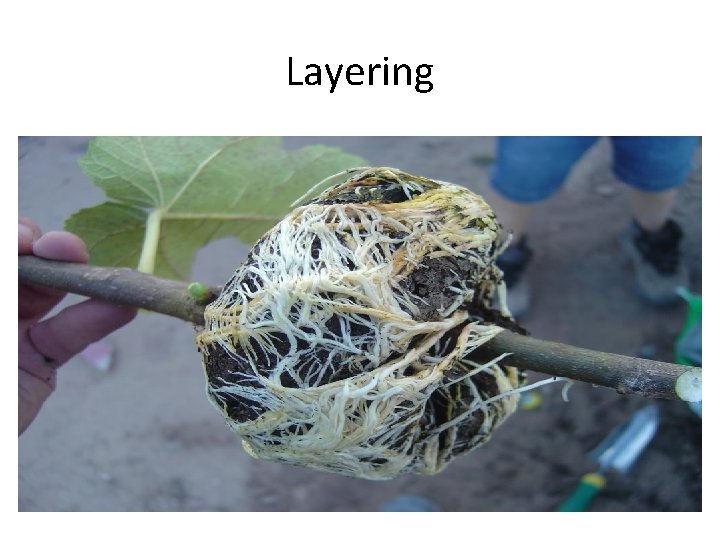
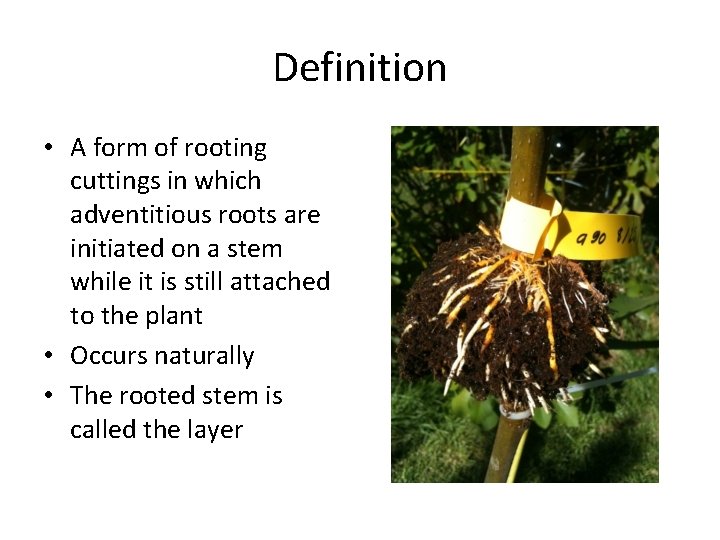
Definition • A form of rooting cuttings in which adventitious roots are initiated on a stem while it is still attached to the plant • Occurs naturally • The rooted stem is called the layer
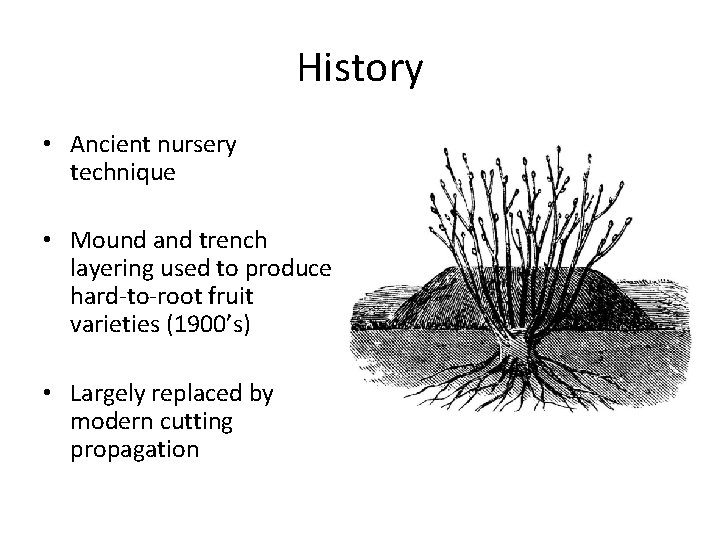
History • Ancient nursery technique • Mound and trench layering used to produce hard-to-root fruit varieties (1900’s) • Largely replaced by modern cutting propagation
Advantages • Good for difficult to root species • Don’t need fancy facilities • Avoid the stress that cuttings experience Disadvantages • Low number of plants • Labor intensive (expensive) • Takes some time
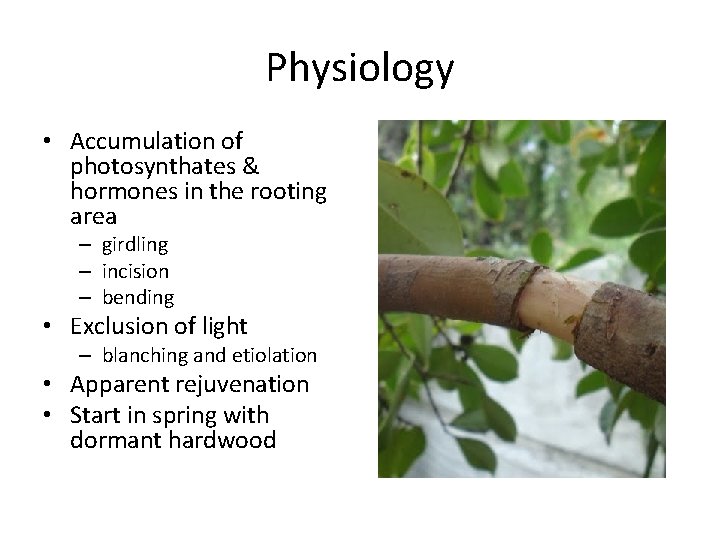
Physiology • Accumulation of photosynthates & hormones in the rooting area – girdling – incision – bending • Exclusion of light – blanching and etiolation • Apparent rejuvenation • Start in spring with dormant hardwood
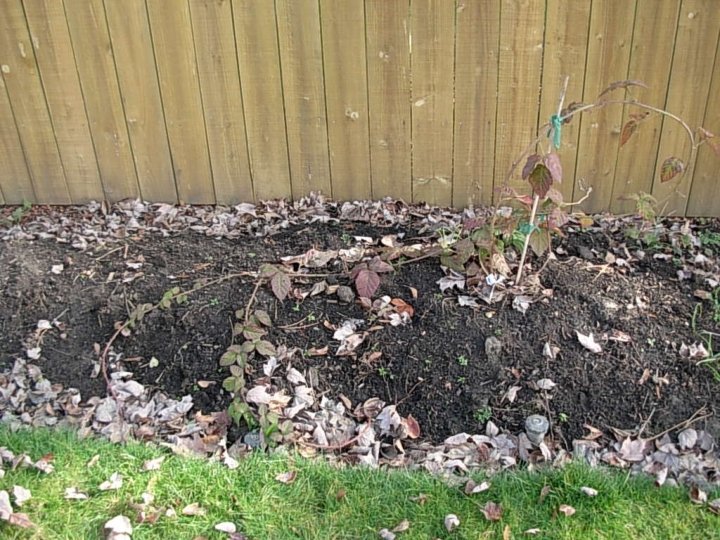
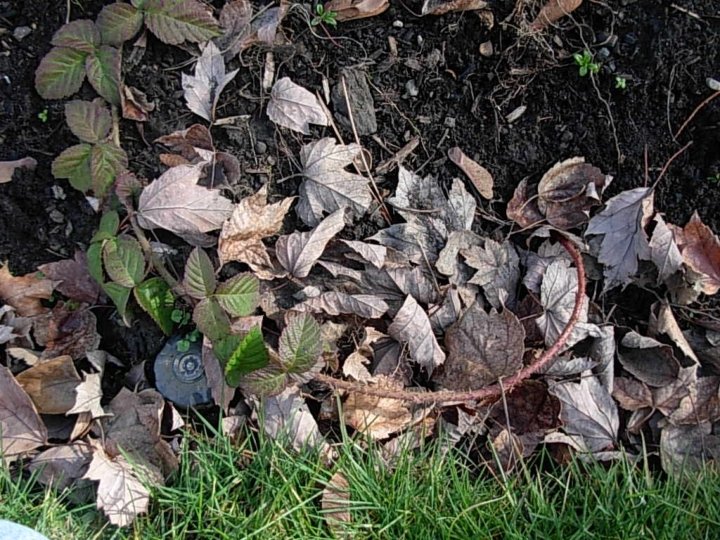
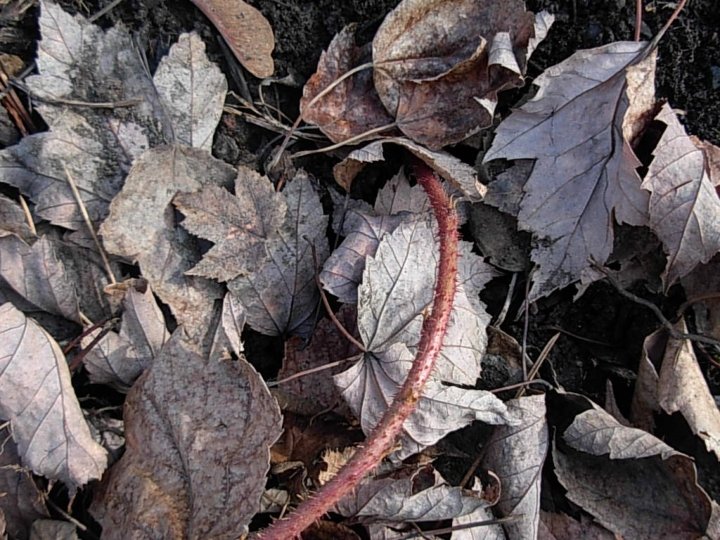
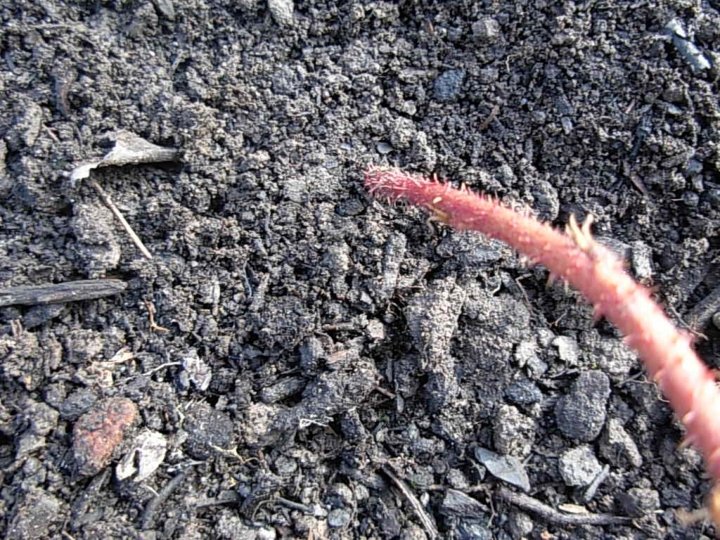
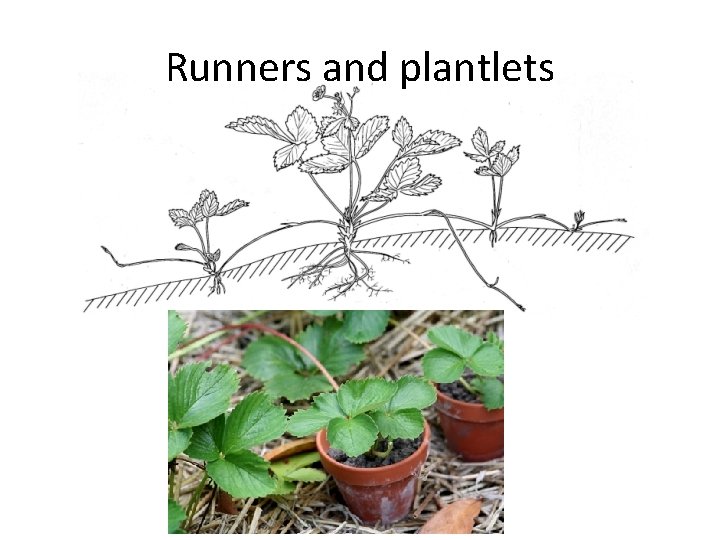
Techniques • • Simple layering Tip layering Serpentine (compound) Mound layering or stooling Trench layering Air layering Runners and plantlets
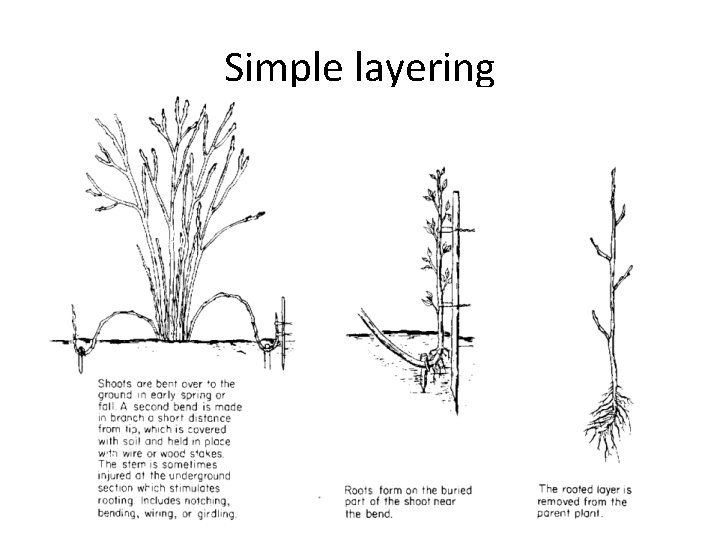
Simple layering
Tip layering • http: //www. hort. purdue. edu/plantprop/webv ersion/Layering/5_2. html
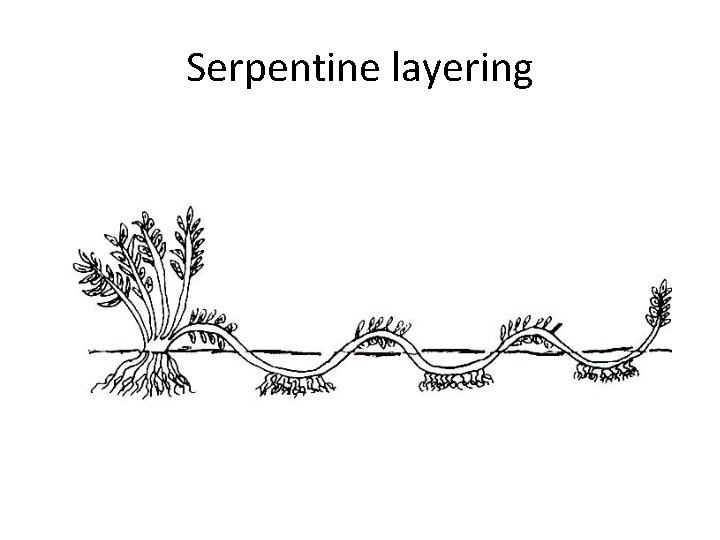
Serpentine layering
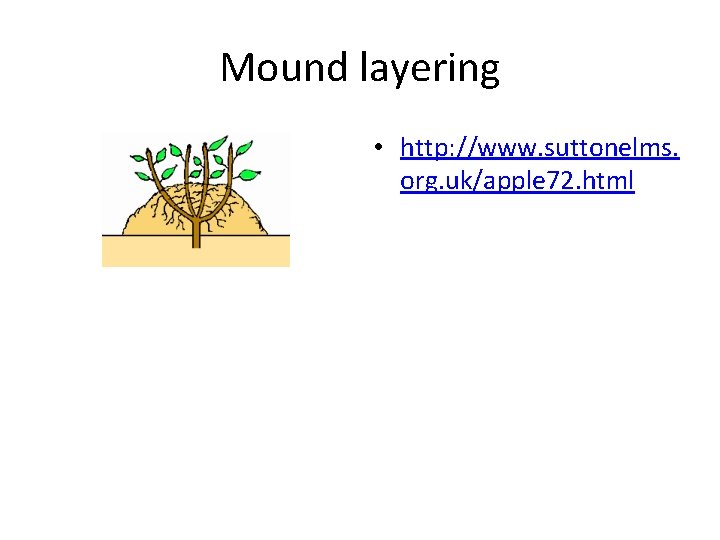
Mound layering • http: //www. suttonelms. org. uk/apple 72. html
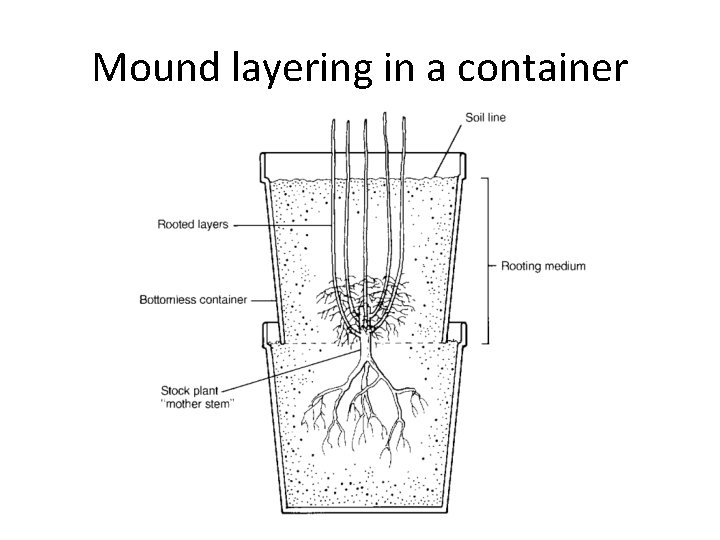
Mound layering in a container
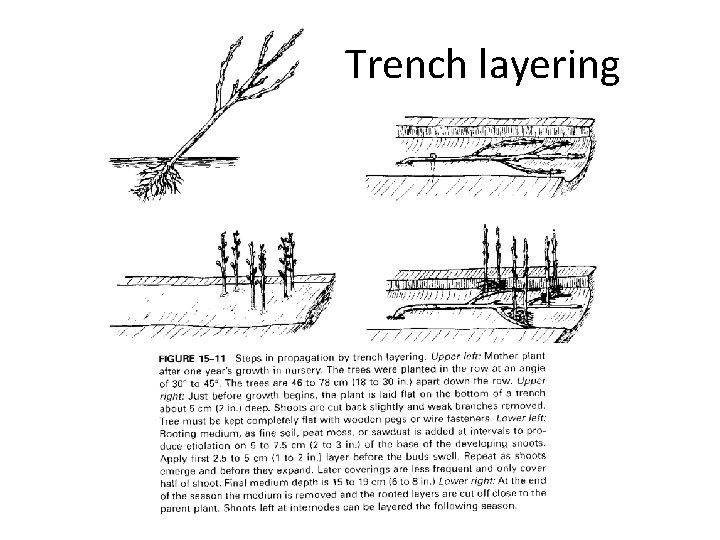
Trench layering
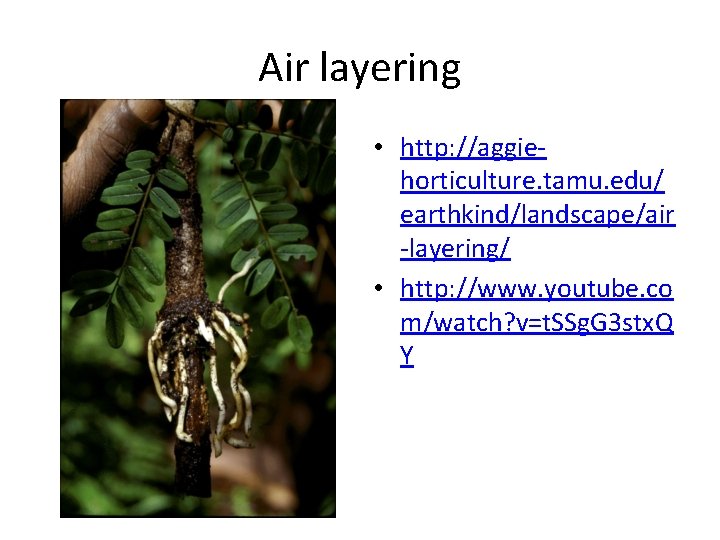
Air layering • http: //aggiehorticulture. tamu. edu/ earthkind/landscape/air -layering/ • http: //www. youtube. co m/watch? v=t. SSg. G 3 stx. Q Y
Runners and plantlets
Plant Patents! • Plant patents – http: //www. uspto. gov/web/offices/pac/plant/ • To search for plant patents – http: //patft. uspto. gov/
Lab today • Do layering methods (3) per the lab handout • If hardwood cuttings have foliage, move to the mist in the West greenhouse • Observe leaf cuttings (and everything else) – Toss dead stuff - can try more if you like – Note – Roots? Where? How many? How long? What color?