
Laws of Reflection and Plane Mirror Images Reflection

- Slides: 16
Laws of Reflection and Plane Mirror Images
Reflection • When light strikes a surface, some is absorbed, the rest bounces off the surface. This is called reflection.
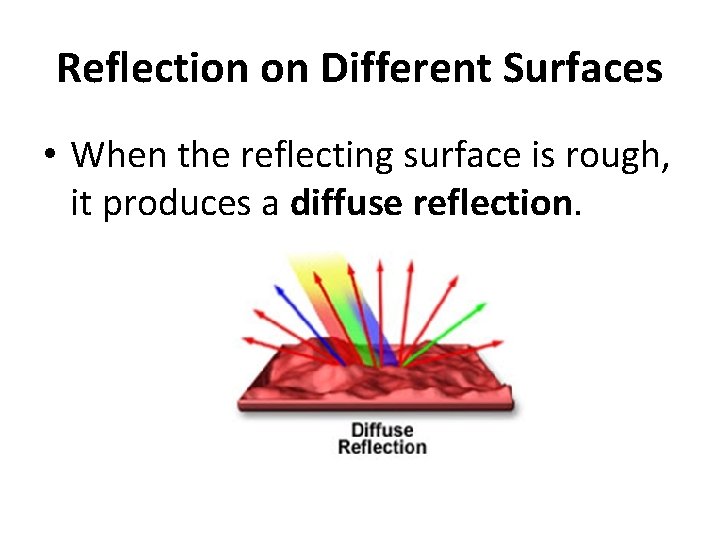
Reflection on Different Surfaces • When the reflecting surface is rough, it produces a diffuse reflection.
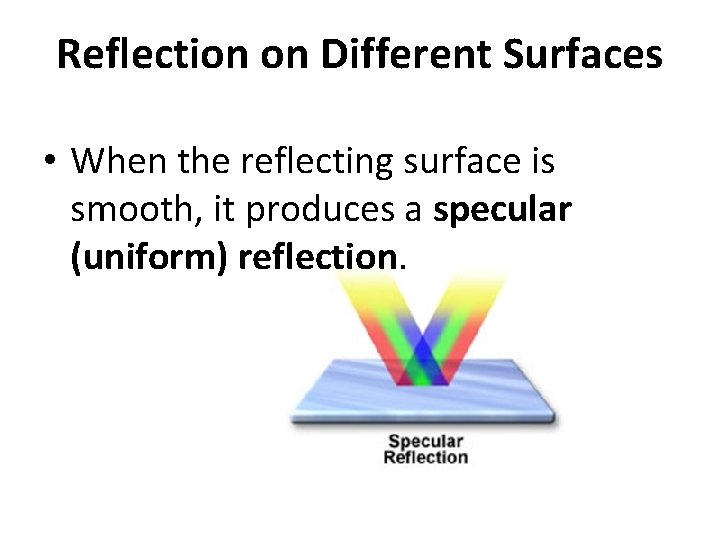
Reflection on Different Surfaces • When the reflecting surface is smooth, it produces a specular (uniform) reflection.
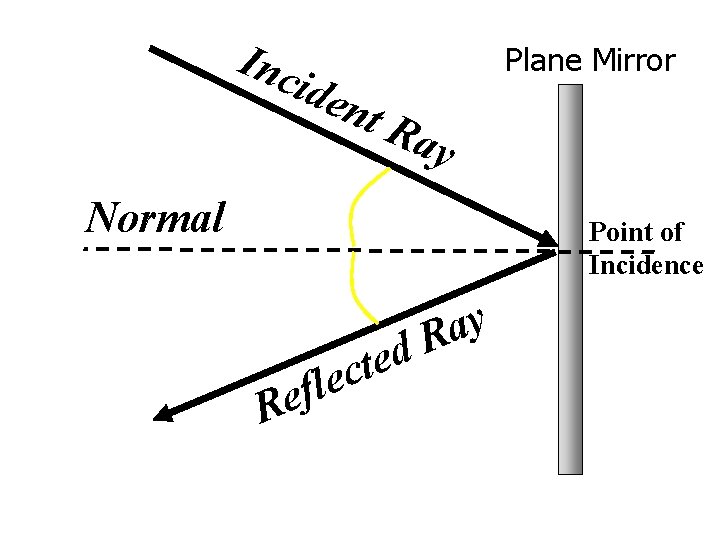
Reflecting Light Terms • Incident Ray: Approaching ray • Reflected Ray: Ray that the mirror reflects • Point of Incidence: Place where incident ray strikes a mirror. • Normal: Line at right angles to the surface of the mirror drawn at the point of incidence
Plane Mirror Inc ide nt R ay Normal Point of Incidence f e R d e t lec y a R
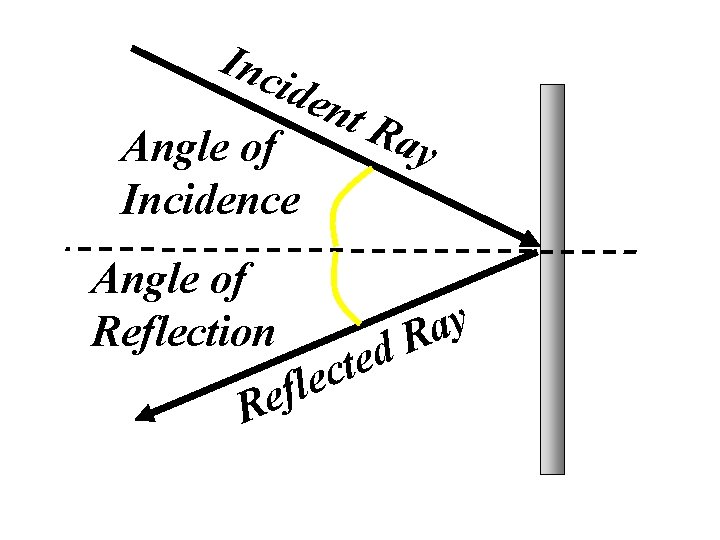
Reflecting Light Terms (cont. ) • Angle of Incidence (θi): Angle between the Incident Ray and the Normal • Angle of Reflection (θr): Angle between the Reflected Ray and the Normal
Plane Inc ide nt R ay Angle of Incidence Angle of Reflection f e R d e t lec y a R Mirror
Laws of Reflection 1) The Angle of Incidence is equal to the Angle of Reflection (θi = θr) 2) The Incident Ray, the Reflected Ray and the Normal all lie in the same plane.
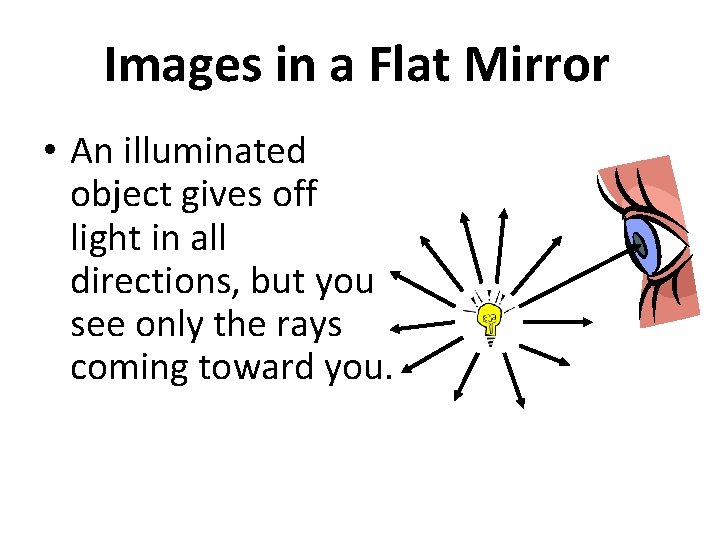
Images in a Flat Mirror • An illuminated object gives off light in all directions, but you see only the rays coming toward you.
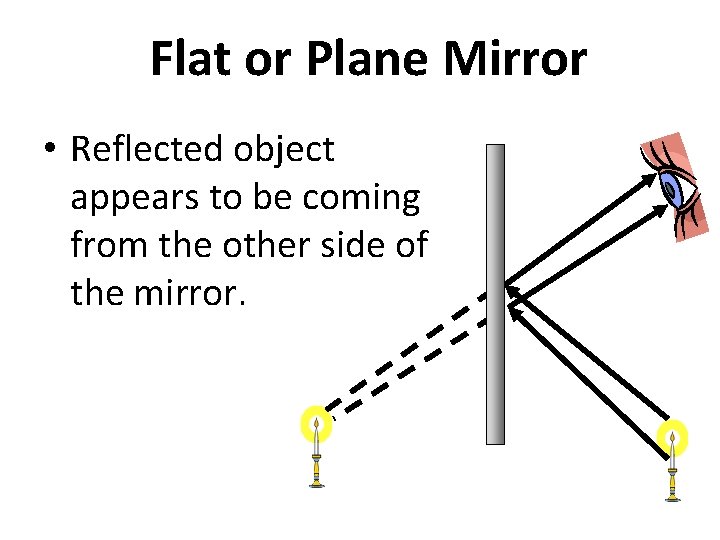
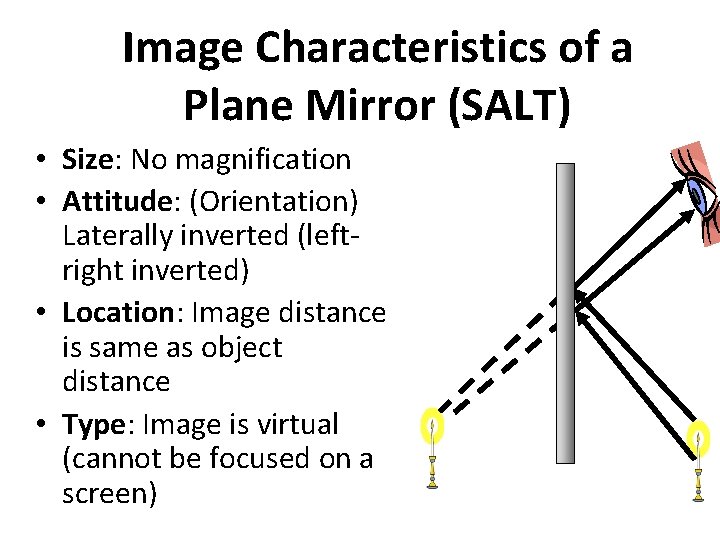
Flat or Plane Mirror • Reflected object appears to be coming from the other side of the mirror.
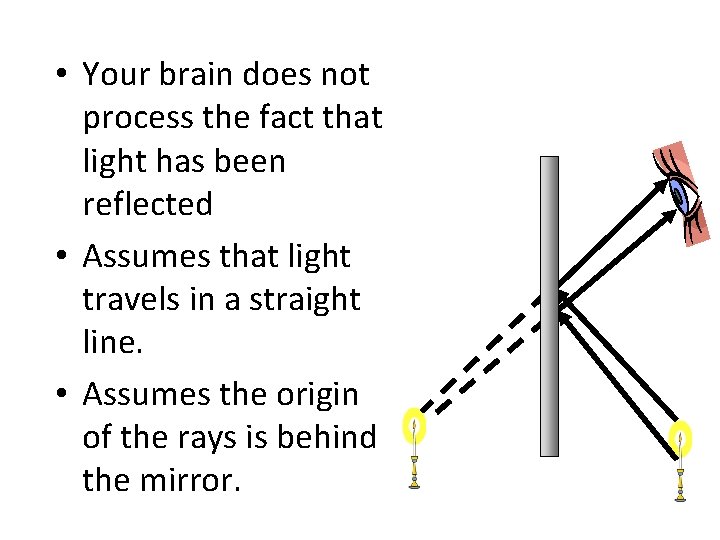
• Your brain does not process the fact that light has been reflected • Assumes that light travels in a straight line. • Assumes the origin of the rays is behind the mirror.
Image Characteristics of a Plane Mirror (SALT) • Size: No magnification • Attitude: (Orientation) Laterally inverted (leftright inverted) • Location: Image distance is same as object distance • Type: Image is virtual (cannot be focused on a screen)
Ray Diagrams • • A way to locate a virtual image do = object distance di = image distance For a plane mirror: do= di
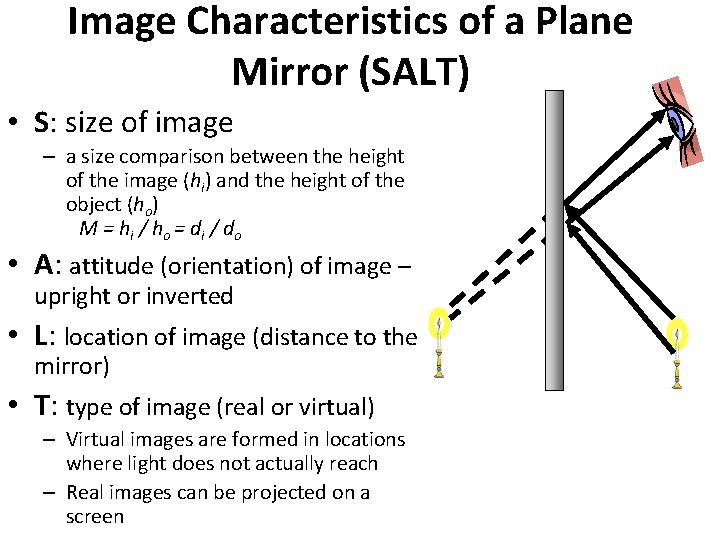
Image Characteristics of a Plane Mirror (SALT) • S: size of image – a size comparison between the height of the image (hi) and the height of the object (ho) M = h i / h o = di / d o • A: attitude (orientation) of image – upright or inverted • L: location of image (distance to the mirror) • T: type of image (real or virtual) – Virtual images are formed in locations where light does not actually reach – Real images can be projected on a screen
Mirror image is laterally inverted.