
Laws of Probability and Chi Square Probability Genetics
Laws of Probability and Chi Square Probability & Genetics AP Biology
Probability & Genetics § Calculating probability of making a specific gamete is just like calculating the probability in flipping a coin § probability of tossing heads? 50% § probability making a P gamete… § Outcome of 1 toss has no impact on the outcome of the next toss § probability of tossing heads each time? 50% § probability making a P gamete each time? AP Biology

Rule of Addition § Chance that an event can occur 2 or more different ways u SUM of the separate probabilities § Use for heterozygous possibilities Two ways to be heterozygous: Pp or p. P u Key word is “or”. u § Ex: Probability of getting 2 or a 6 on the roll of a § die. 1/6 + 1/6 = 2/6 = 1/3 Ex: Probability of having offspring with dominant phenotype? PP or Pp or p. P ¼+ ¼ = ¾ AP Biology

Rule of multiplication § Chance that 2 or more independent events will occur together probability that 2 coins tossed at the same time will land heads up u probability of pp or PP offspring u § Ex: Probability of getting a head and a tail with two different coins. ½ x ½ = 1/4 u Key word is “and” u AP Biology
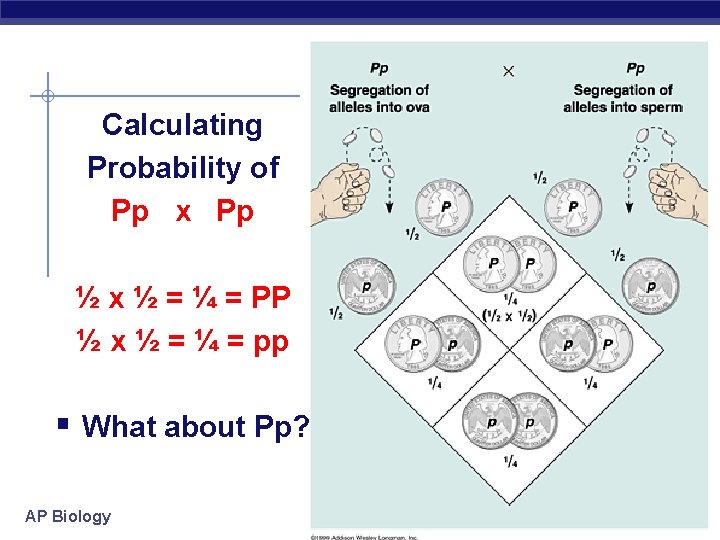
Calculating Probability of Pp x Pp ½ x ½ = ¼ = PP ½ x ½ = ¼ = pp § What about Pp? AP Biology
Calculating Dihybrid Probability § Rule of multiplication application with Dihybrid crosses: heterozygous parents — Yy. Rr u probability of producing yyrr? u probability of producing y gamete = 1/2 u probability of producing r gamete = 1/2 u probability of producing yr gamete u § = 1/2 x 1/2 = 1/4 u probability of producing a yyrr offspring § = 1/4 x 1/4 = 1/16 AP Biology
What is Chi-Squared? § In genetics, you can predict genotypes § § based on probability (expected results) Chi-squared is a form of statistical analysis used to compare the actual results (observed) with the expected results NOTE: 2 is the name of the whole variable – you will never take the square root of it or solve for AP Biology
Chi-squared § If the expected and observed (actual) § § values are the same then the 2 = 0 If the 2 value is 0 or is small then the data fits your hypothesis (the expected values) well. By calculating the 2 value you determine if there is a statistically significant difference between the expected and actual values. AP Biology
Step 1: Calculating 2 § First, determine what your expected and § § § observed values are. Observed (Actual) values: That should be something you get from data– usually no calculations Expected values: based on probability Suggestion: make a table with the expected and actual values AP Biology
Step 1: Example § Observed (actual) values: Suppose you § § have 90 tongue rollers and 10 nonrollers Expected: Suppose the parent genotypes were both Rr using a punnett square, you would expect 75% tongue rollers, 25% nonrollers This translates to 75 tongue rollers, 25 nonrollers (since the population you are dealing with is 100 individuals) AP Biology
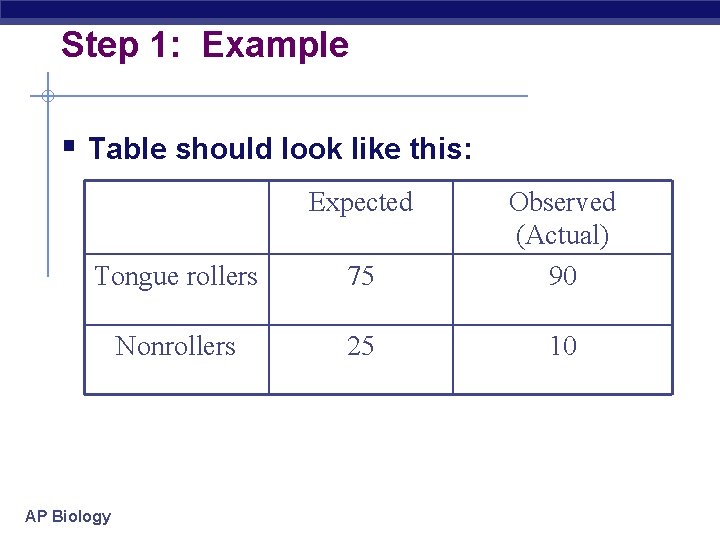
Step 1: Example § Table should look like this: Expected Tongue rollers 75 Observed (Actual) 90 Nonrollers 25 10 AP Biology
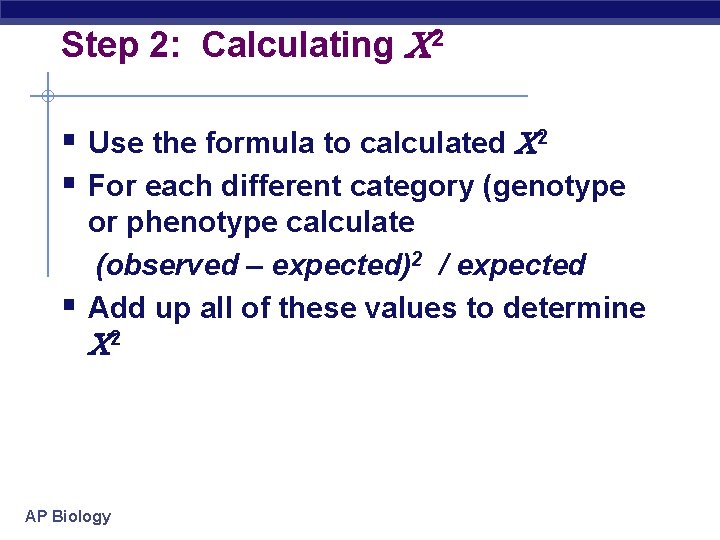
Step 2: Calculating 2 § Use the formula to calculated 2 § For each different category (genotype § or phenotype calculate (observed – expected)2 / expected Add up all of these values to determine 2 AP Biology
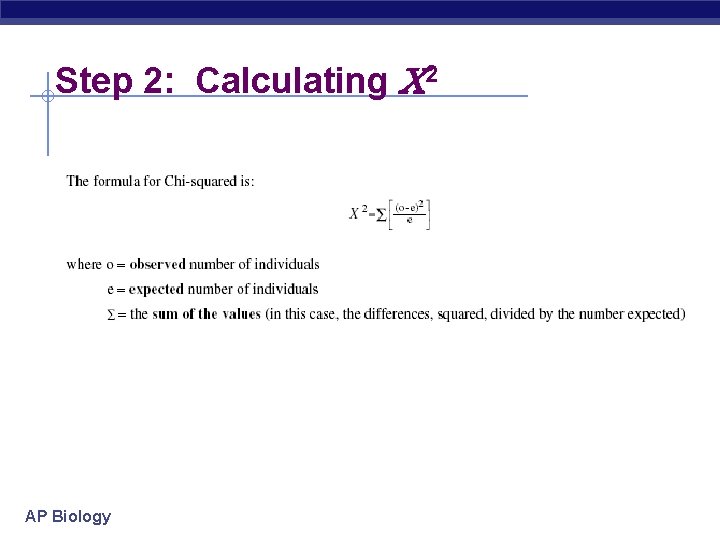
Step 2: Calculating 2 AP Biology
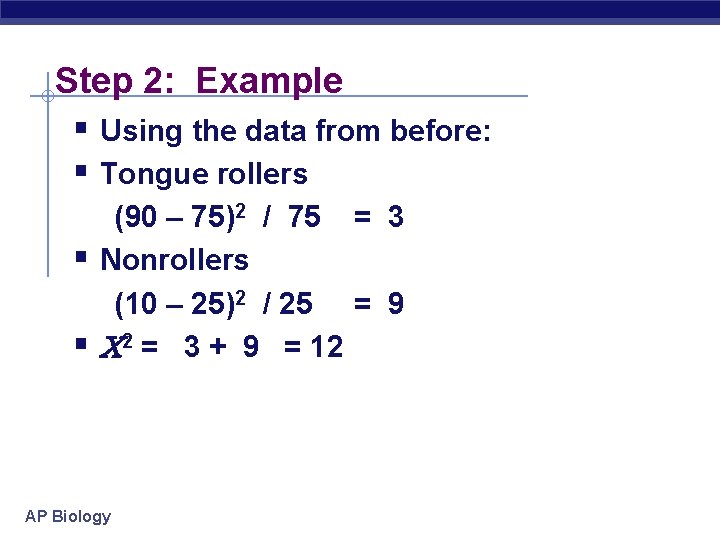
Step 2: Example § Using the data from before: § Tongue rollers § § (90 – 75)2 / 75 = 3 Nonrollers (10 – 25)2 / 25 = 9 2 = 3 + 9 = 12 AP Biology
Step 3: Determining Degrees of Freedom § Degrees of freedom = # of categories – § § 1 Ex. For the example problem, there were two categories (tongue rollers and nonrollers) degrees of freedom = 2 – 1 Degrees of freedom = 1 AP Biology
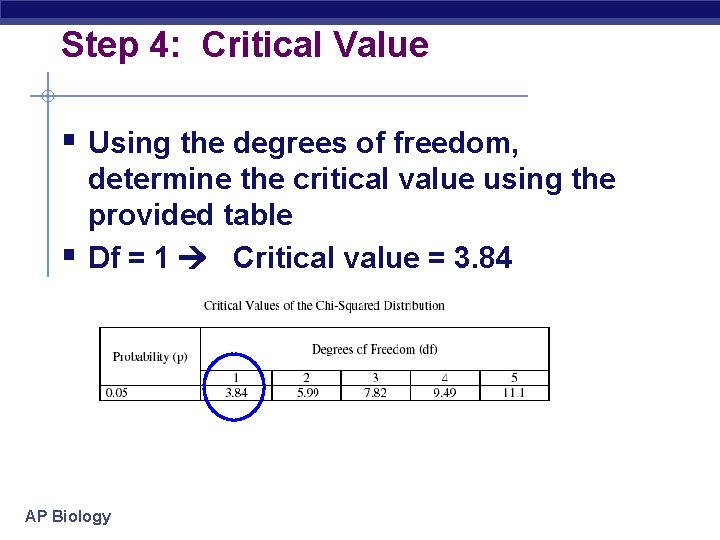
Step 4: Critical Value § Using the degrees of freedom, § determine the critical value using the provided table Df = 1 Critical value = 3. 84 AP Biology
Step 5: Conclusion § If 2 > critical value… there is a statistically significant difference between the actual and expected values. § If 2 < critical value… there is a NOT statistically significant difference between the actual and expected values. AP Biology
Step 5: Example § 2 = 12 > 3. 84 àThere is a statistically significant difference between the observed and expected population AP Biology

§ Bozeman Chi-squared test video § http: //www. youtube. com/watch? v=WXP Bo. FDq. NVk&edufilter=v. Br. BKi. VMla. Mn. Br d. X 3 o. XR-Q&safe=active § Fill in video questions AP Biology
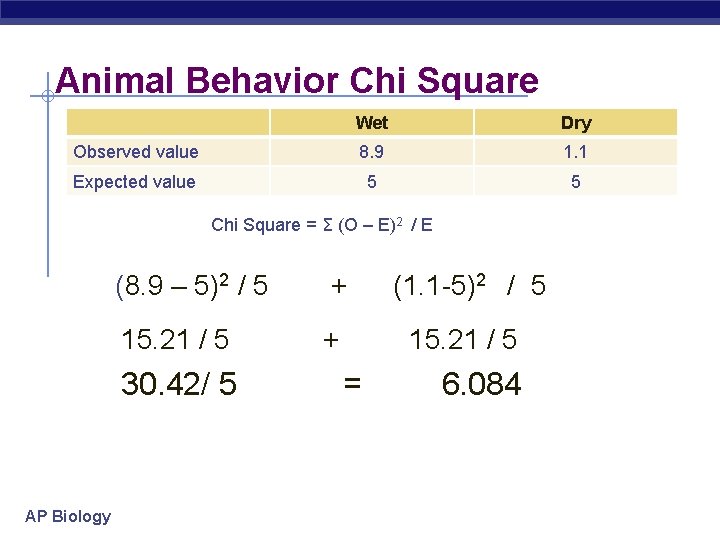
Animal Behavior Chi Square Wet Dry Observed value 8. 9 1. 1 Expected value 5 5 Chi Square = Σ (O – E)2 / E (8. 9 – 5)2 / 5 + (1. 1 -5)2 / 5 15. 21 / 5 + 15. 21 / 5 30. 42/ 5 AP Biology = 6. 084
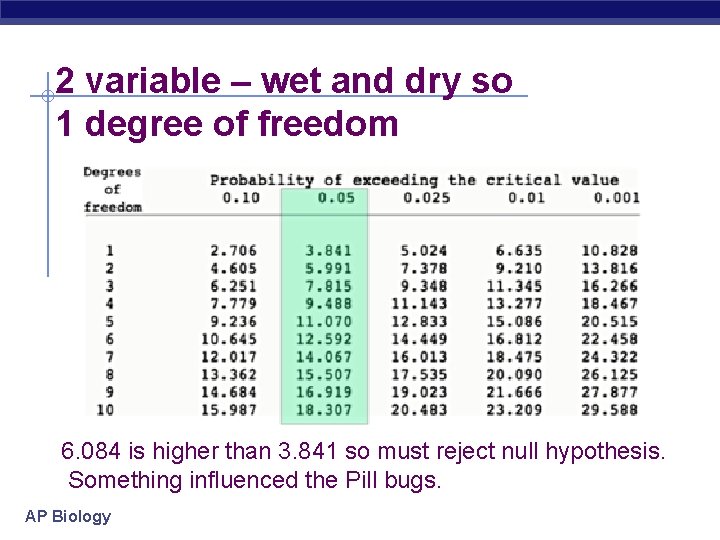
2 variable – wet and dry so 1 degree of freedom 6. 084 is higher than 3. 841 so must reject null hypothesis. Something influenced the Pill bugs. AP Biology
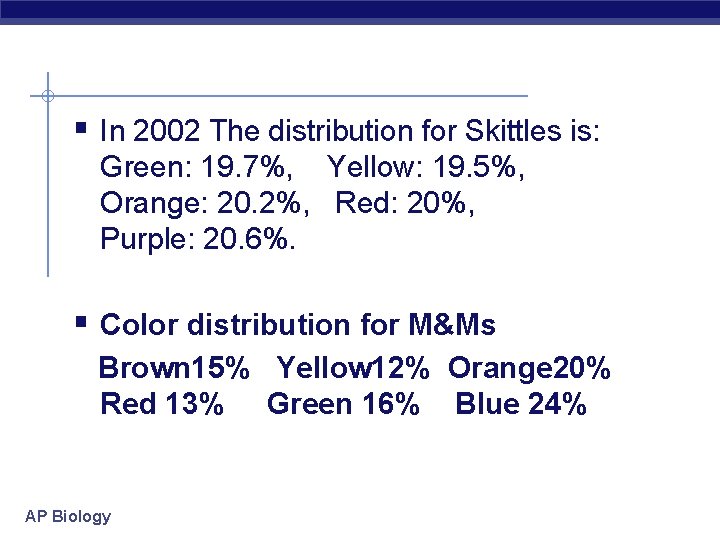
§ In 2002 The distribution for Skittles is: Green: 19. 7%, Yellow: 19. 5%, Orange: 20. 2%, Red: 20%, Purple: 20. 6%. § Color distribution for M&Ms Brown 15% Yellow 12% Orange 20% Red 13% Green 16% Blue 24% AP Biology
- Slides: 22