
Lawn Care Present by Dr Teri Hamlin Georgia
Lawn Care Present by Dr. Teri Hamlin Georgia Department of Education Modified by Georgia Agricultural Education Curriculum Office June, 2002
Turf Facts § There an estimated 800, 000 acres of home lawns in Georgia § The average homeowner spends $400. 00 / acre annually to maintain lawn § $312 million total turf maintenance expenditures
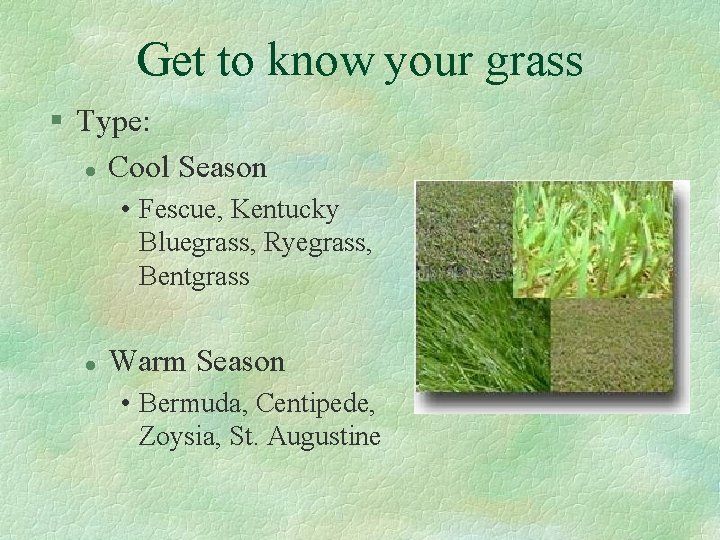
Get to know your grass § Type: l Cool Season • Fescue, Kentucky Bluegrass, Ryegrass, Bentgrass l Warm Season • Bermuda, Centipede, Zoysia, St. Augustine
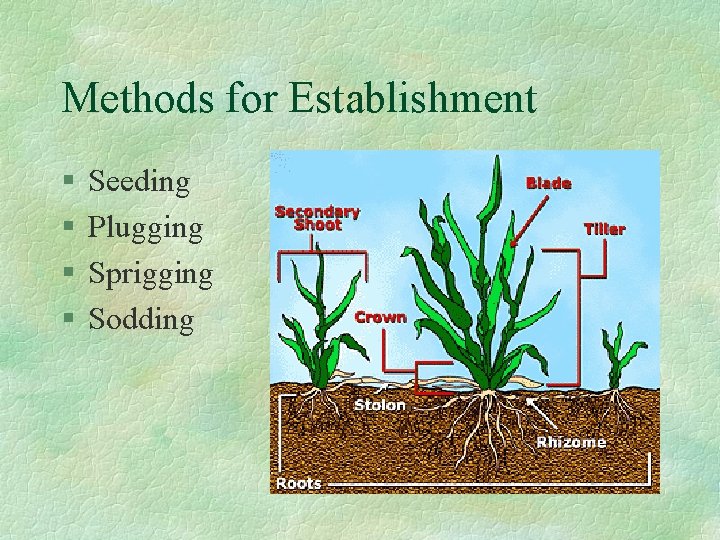
Methods for Establishment § § Seeding Plugging Sprigging Sodding
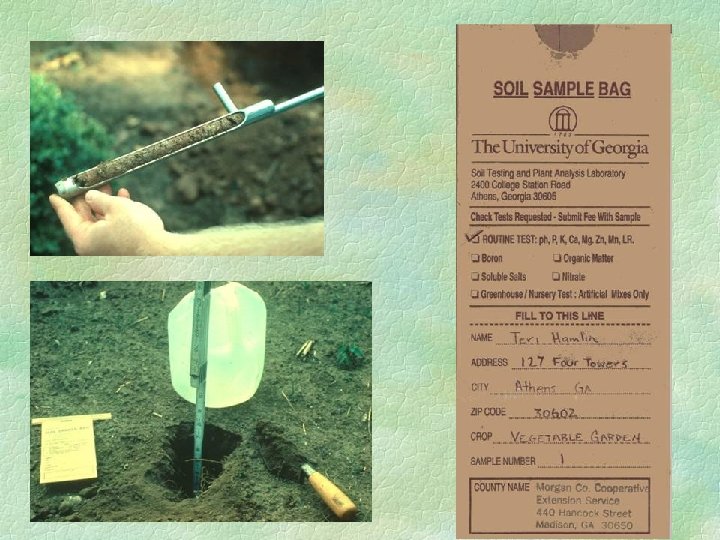
Soil Test
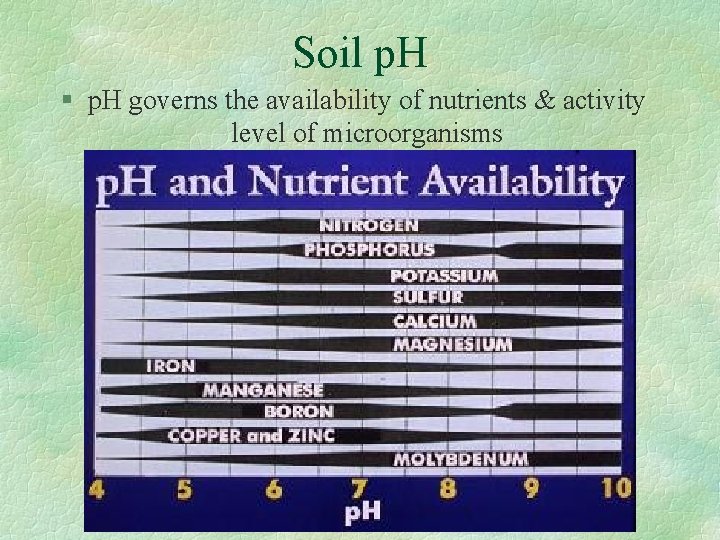
Soil p. H § p. H governs the availability of nutrients & activity level of microorganisms
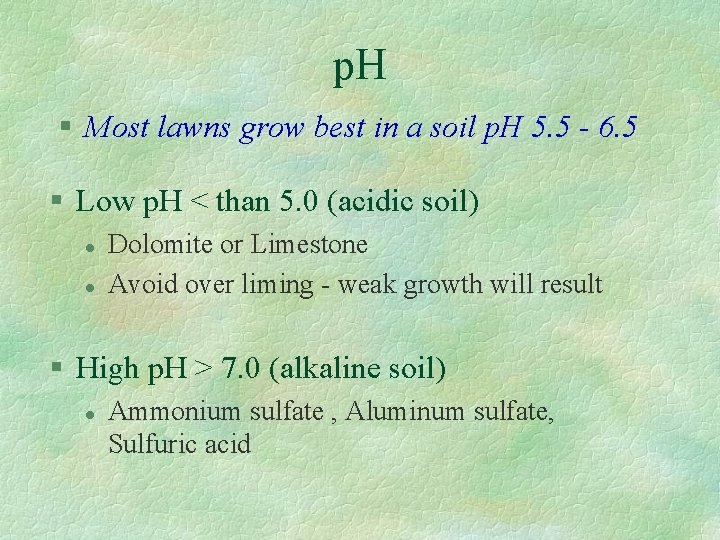
p. H § Most lawns grow best in a soil p. H 5. 5 - 6. 5 § Low p. H < than 5. 0 (acidic soil) l l Dolomite or Limestone Avoid over liming - weak growth will result § High p. H > 7. 0 (alkaline soil) l Ammonium sulfate , Aluminum sulfate, Sulfuric acid
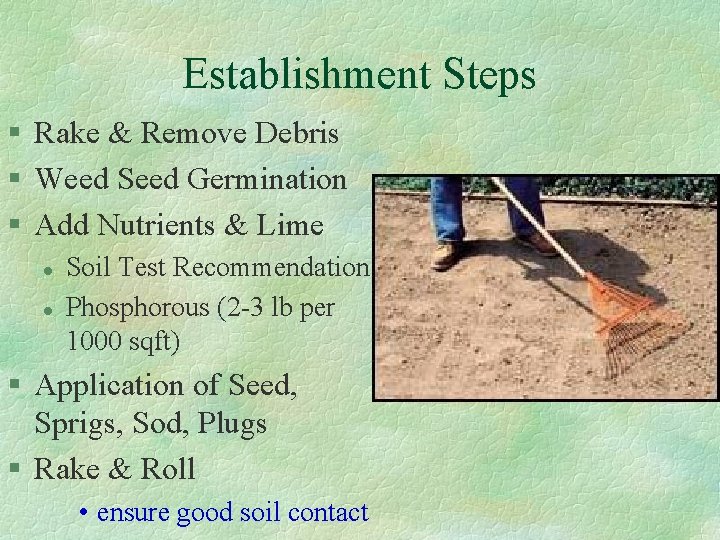
Establishment Steps § Rake & Remove Debris § Weed Seed Germination § Add Nutrients & Lime l l Soil Test Recommendation Phosphorous (2 -3 lb per 1000 sqft) § Application of Seed, Sprigs, Sod, Plugs § Rake & Roll • ensure good soil contact
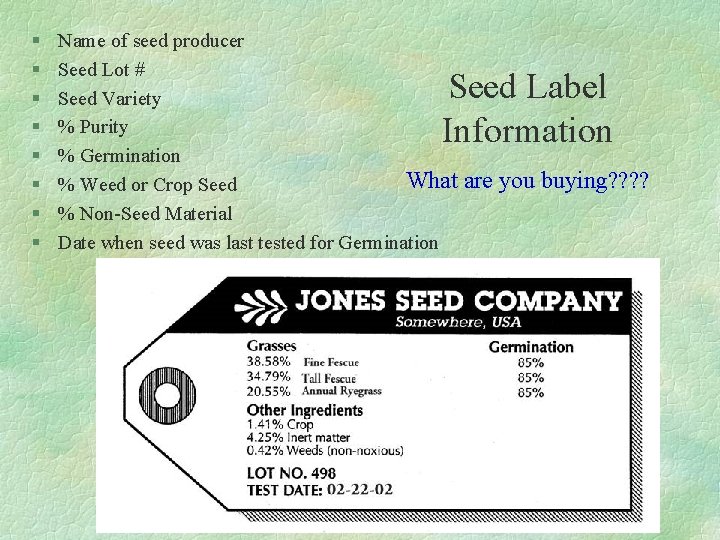
§ § § § Name of seed producer Seed Lot # Seed Variety % Purity % Germination What % Weed or Crop Seed % Non-Seed Material Date when seed was last tested for Germination Seed Label Information are you buying? ?
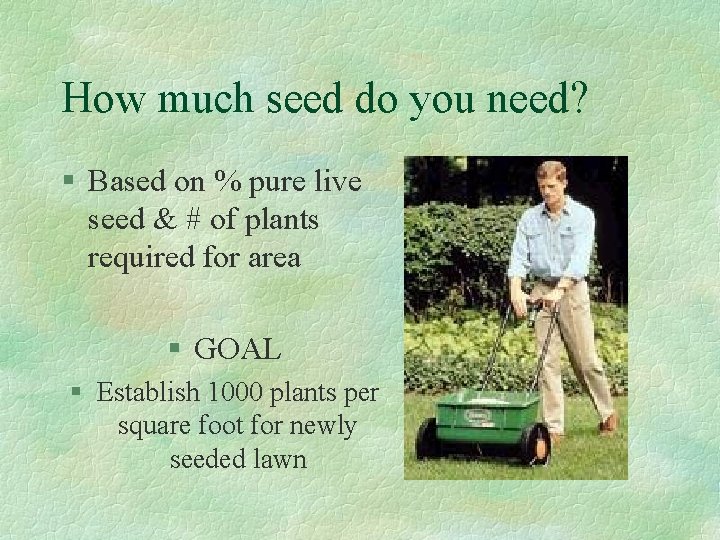
How much seed do you need? § Based on % pure live seed & # of plants required for area § GOAL § Establish 1000 plants per square foot for newly seeded lawn
Pure Seed or Mixture § Mixture l l l meets wide environmental & use requirements select mixture based on desired characteristics turfgrass vary in resistance to disease and insects § What can be mixed? l Any turf that spreads by rhizomes or tillers l (Fescue, Bluegrass, Ryegrass) l Do not use stolon grasses, tend to segregate • Bermuda, Bentgrass, Zoysia, Centipede, St Augustine)
Water § Seedbed must stay moist for seeds to germinate 1 st 3 weeks Seed & Sprigs Keep moist by frequent, light watering until new root system develops
Sodding § Any turfgrass that spreads by rhizomes or stolons § Best Time: when turfgrass is actively growing § Advantages: l Instant Lawn l Less Weed Competition l Decrease Erosion § Disadvantages l High cost
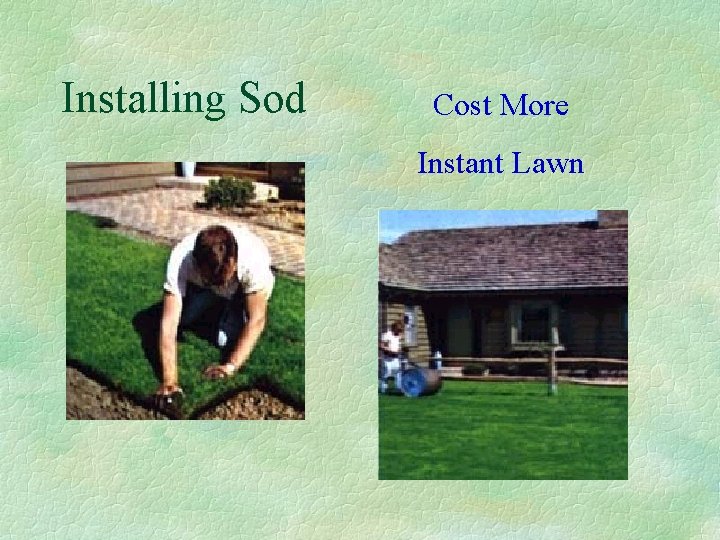
Installing Sod Cost More Instant Lawn
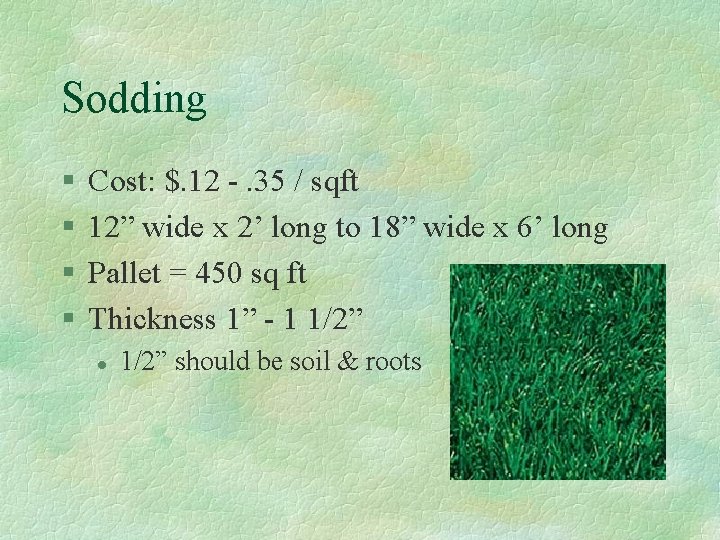
Sodding § § Cost: $. 12 -. 35 / sqft 12” wide x 2’ long to 18” wide x 6’ long Pallet = 450 sq ft Thickness 1” - 1 1/2” l 1/2” should be soil & roots
Sprigs & Plugs § § Most common: Bermuda & Bentgrass Sold by Bushel 1 Bushel = 1 sqft of sod Home Lawn: Sprig 4 -5 Bushels per 1000 Sq ft § Trays of 1 -2 Dozen (4”pots)
Sprigs & Plugs § Time of Year l Early Spring to Late Summer § Spacing • 10 -12” apart, checkerboard § Planting l set root systems completely under soil surface § Soil Contact l Roll area after planting
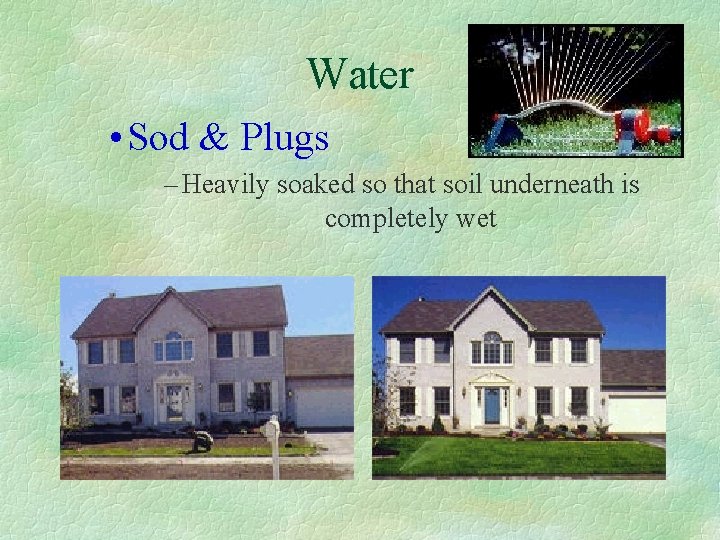
Water • Sod & Plugs – Heavily soaked so that soil underneath is completely wet
Establishment § Mowing l as soon as grass gets high enough to cut at its optimum height § Weed Control l 1 st year chemical weed control is discouraged
Converting Old Lawns § § Grass selection: Bermuda, Zoysia, Centipede conversion 2 year for conversion Steps: l 1. Cut Lawn Closely l 2. Dethatch / Aerification l 3. Correct p. H / Nutrient Level l 4. Sprig / Plug / Seed l 5. Roll & Water Thoroughly
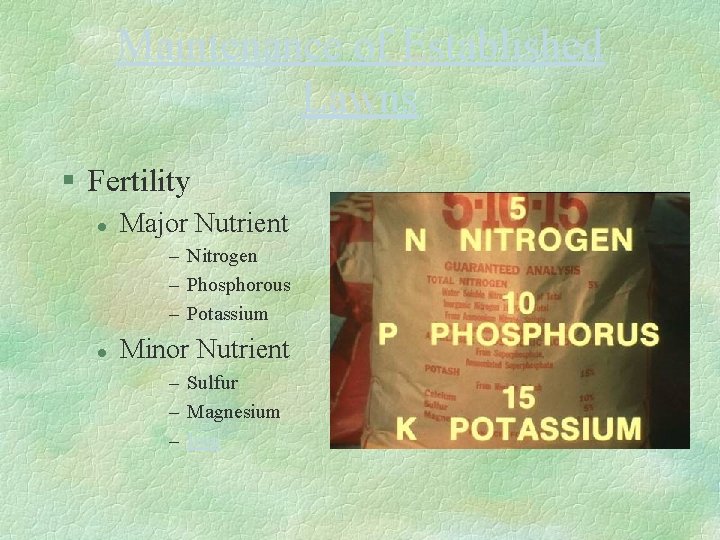
Maintenance of Established Lawns § Fertility l Major Nutrient – Nitrogen – Phosphorous – Potassium l Minor Nutrient – Sulfur – Magnesium – Iron
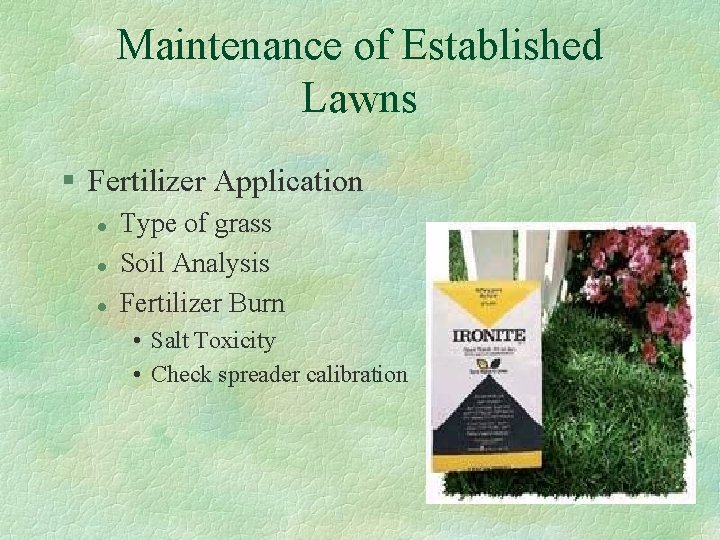
Maintenance of Established Lawns § Fertilizer Application l l l Type of grass Soil Analysis Fertilizer Burn • Salt Toxicity • Check spreader calibration
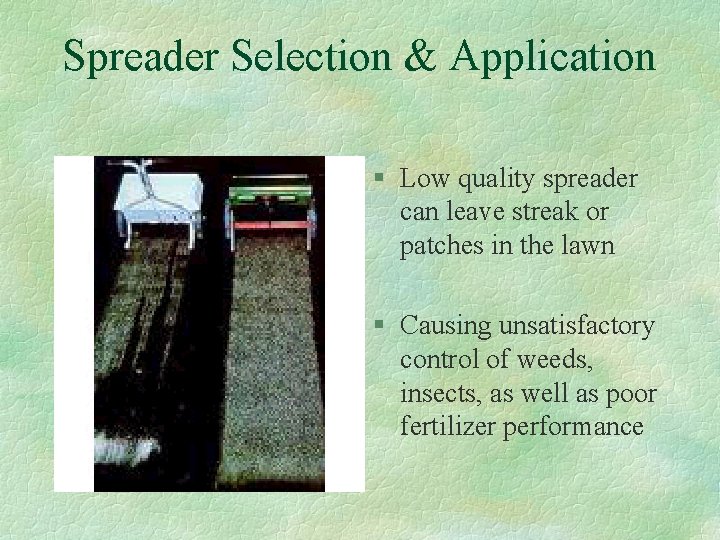
Spreader Selection & Application § Low quality spreader can leave streak or patches in the lawn § Causing unsatisfactory control of weeds, insects, as well as poor fertilizer performance
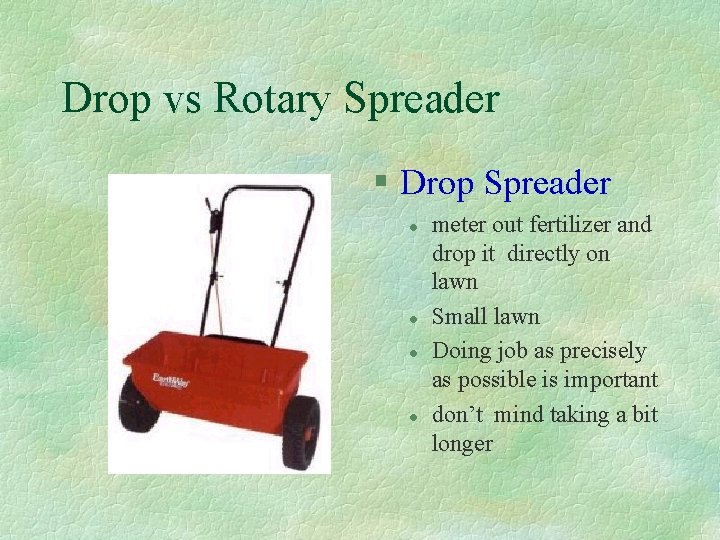
Drop vs Rotary Spreader § Drop Spreader l l meter out fertilizer and drop it directly on lawn Small lawn Doing job as precisely as possible is important don’t mind taking a bit longer
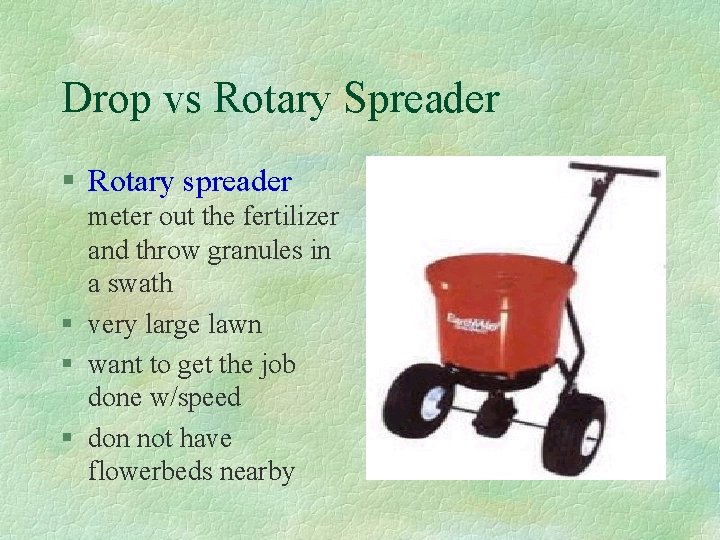
Drop vs Rotary Spreader § Rotary spreader meter out the fertilizer and throw granules in a swath § very large lawn § want to get the job done w/speed § don not have flowerbeds nearby
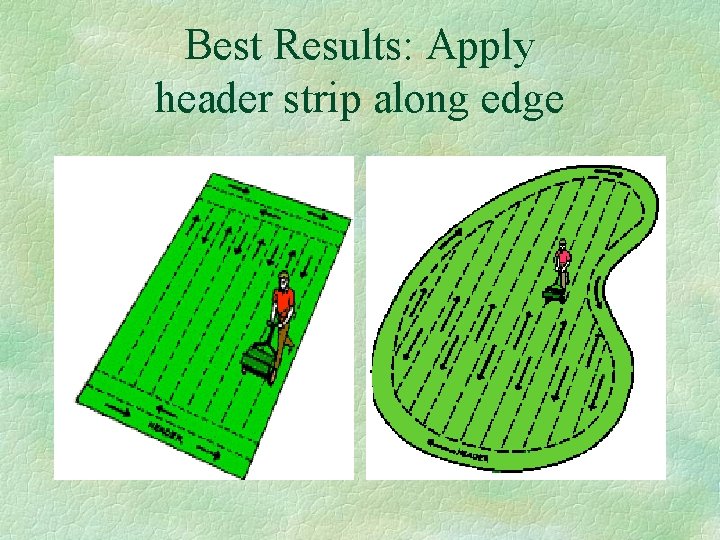
Best Results: Apply header strip along edge
When to Fertilize § Cool Season Grass l l Fescue Sept, Nov, Feb, April § Warm Season Grass l l Bermuda: April, May, June Centipede: June Zoysia: April, June St. Augustine: May, June, July, Aug
FESCUE ALERT! § Fertilize fescue with caution. § Too much will make it disease prone and drought sensitive. § If you haven't fertilized in six weeks, apply now at half the rate recommended on the bag.
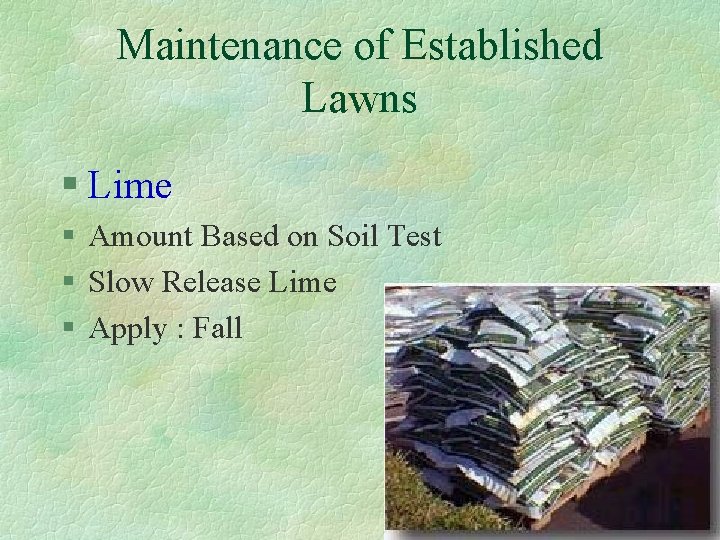
Maintenance of Established Lawns § Lime § Amount Based on Soil Test § Slow Release Lime § Apply : Fall
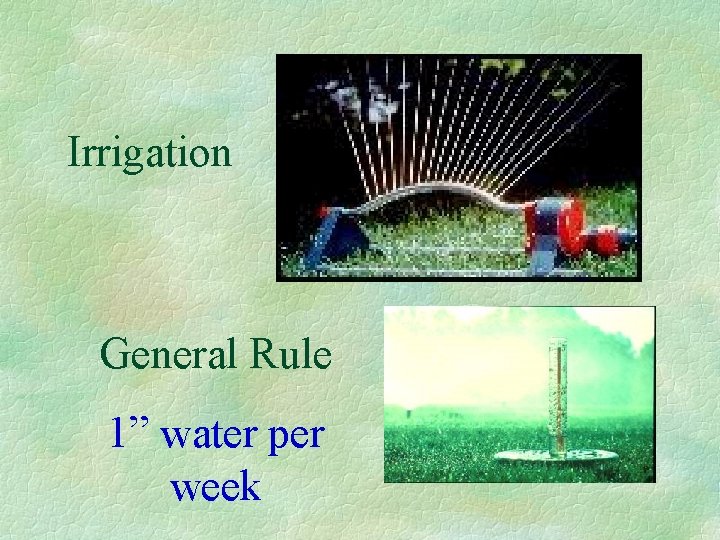
Irrigation General Rule 1” water per week
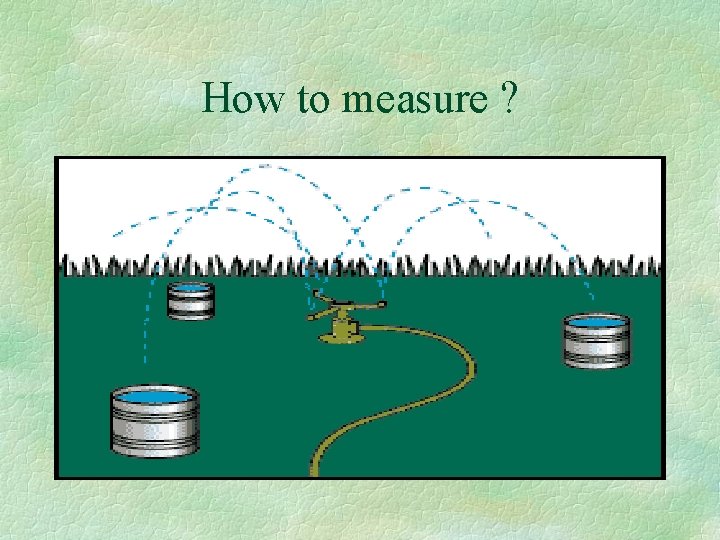
How to measure ?
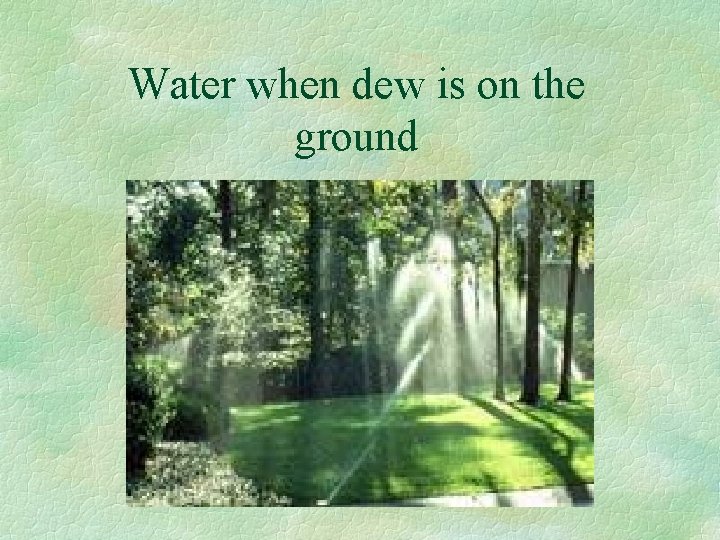
Water when dew is on the ground
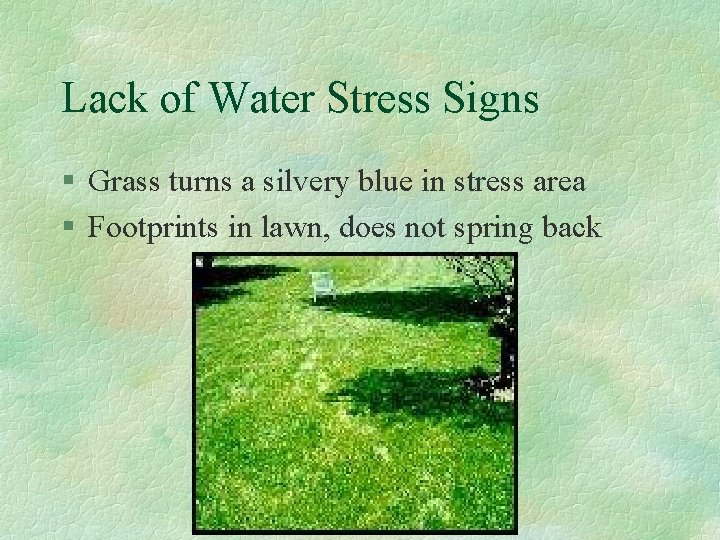
Lack of Water Stress Signs § Grass turns a silvery blue in stress area § Footprints in lawn, does not spring back
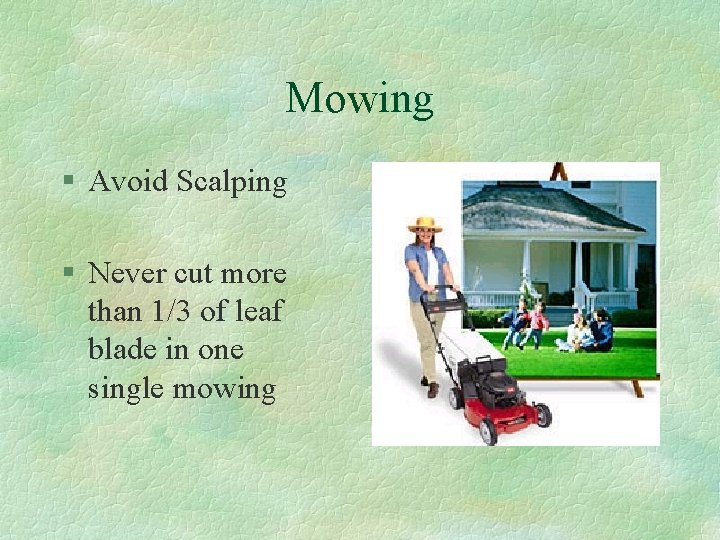
Mowing § Avoid Scalping § Never cut more than 1/3 of leaf blade in one single mowing
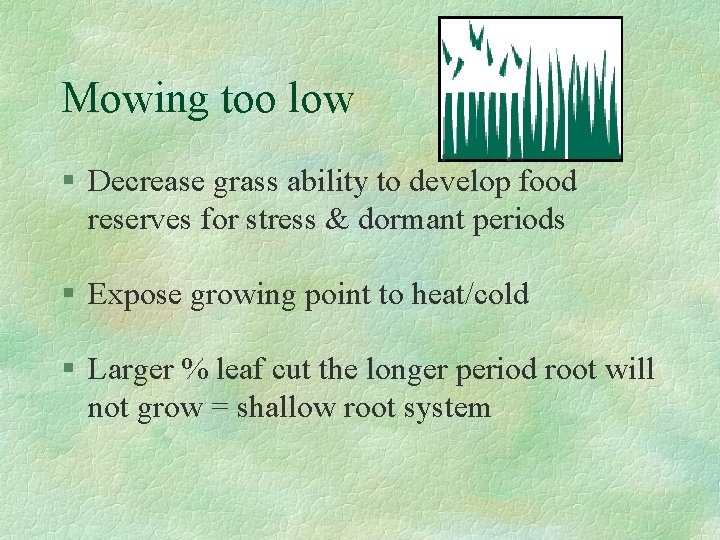
Mowing too low § Decrease grass ability to develop food reserves for stress & dormant periods § Expose growing point to heat/cold § Larger % leaf cut the longer period root will not grow = shallow root system
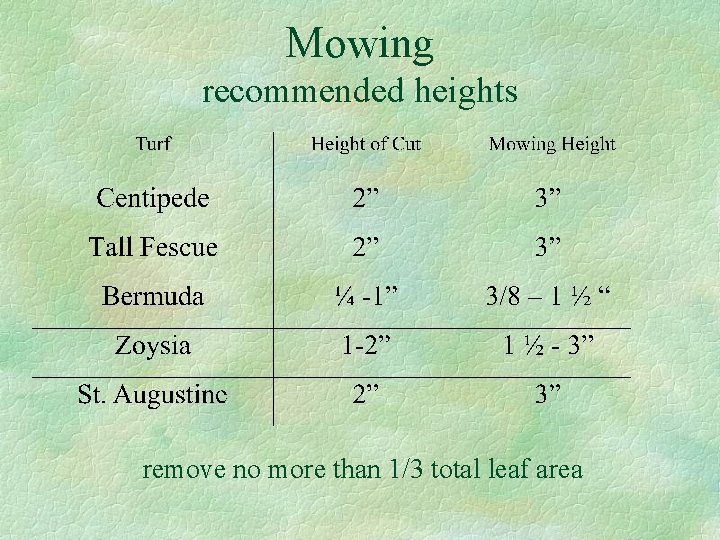
Mowing recommended heights remove no more than 1/3 total leaf area
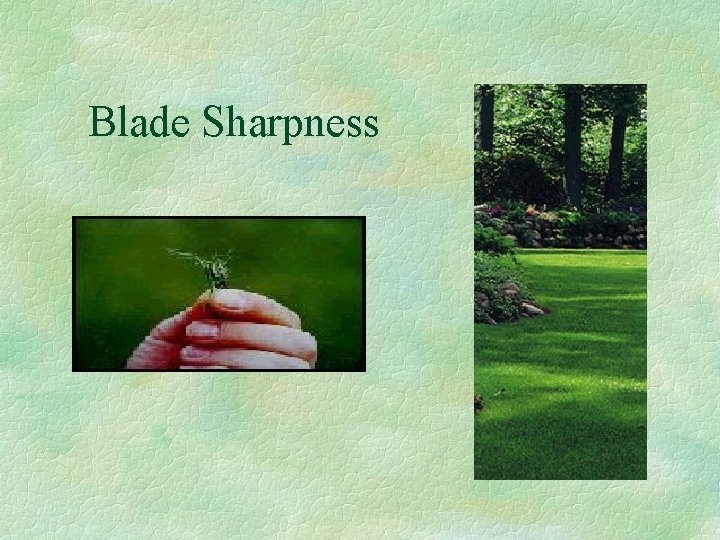
Blade Sharpness
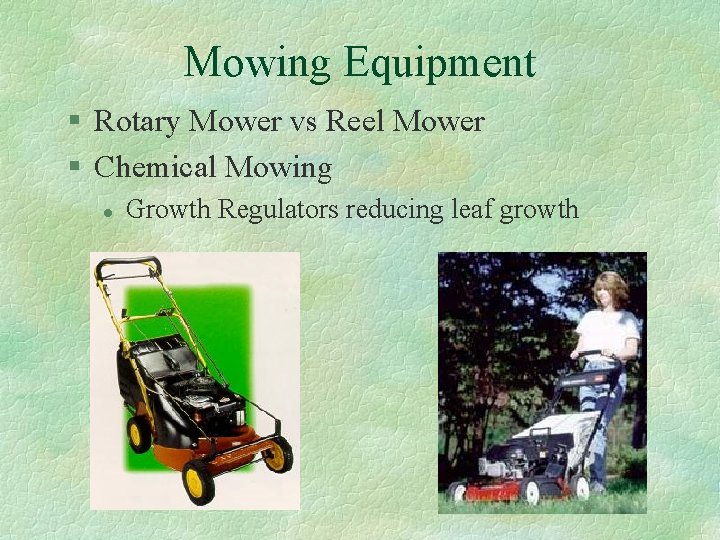
Mowing Equipment § Rotary Mower vs Reel Mower § Chemical Mowing l Growth Regulators reducing leaf growth
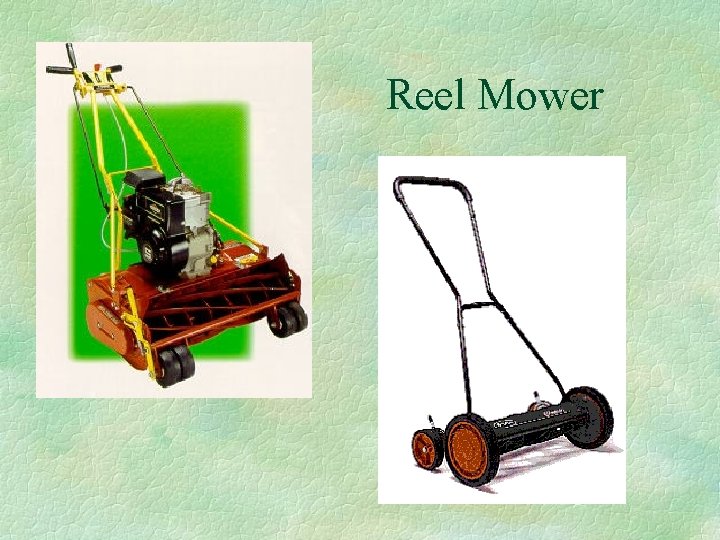
Reel Mower
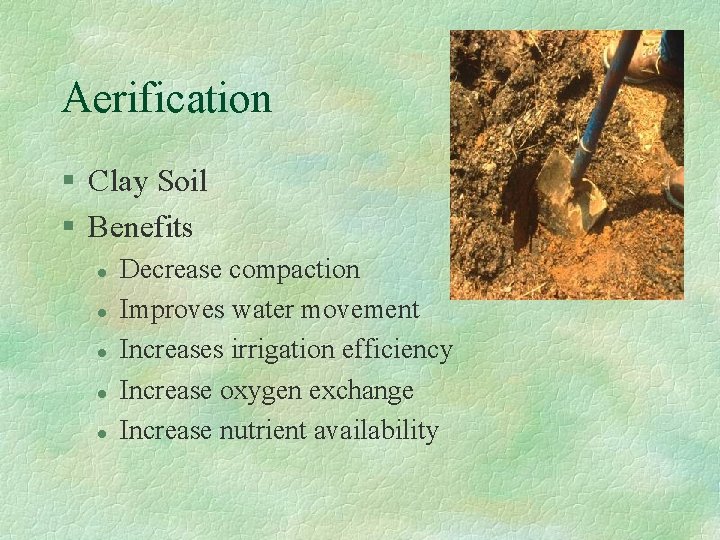
Aerification § Clay Soil § Benefits l l l Decrease compaction Improves water movement Increases irrigation efficiency Increase oxygen exchange Increase nutrient availability
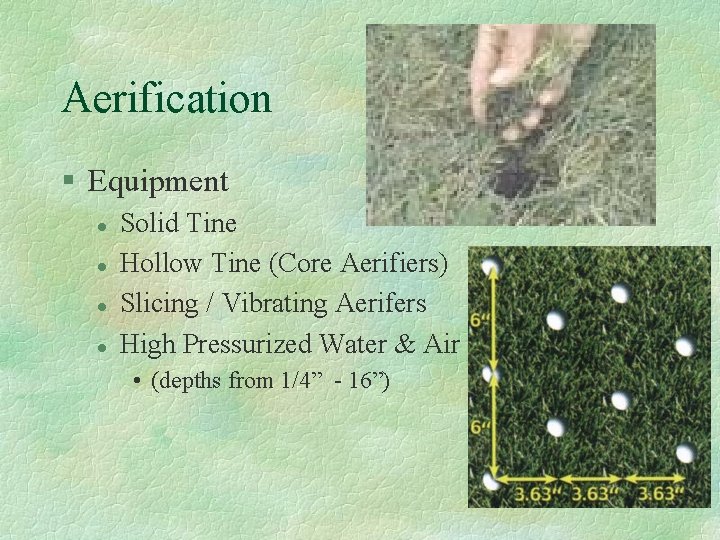
Aerification § Equipment l l Solid Tine Hollow Tine (Core Aerifiers) Slicing / Vibrating Aerifers High Pressurized Water & Air • (depths from 1/4” - 16”)
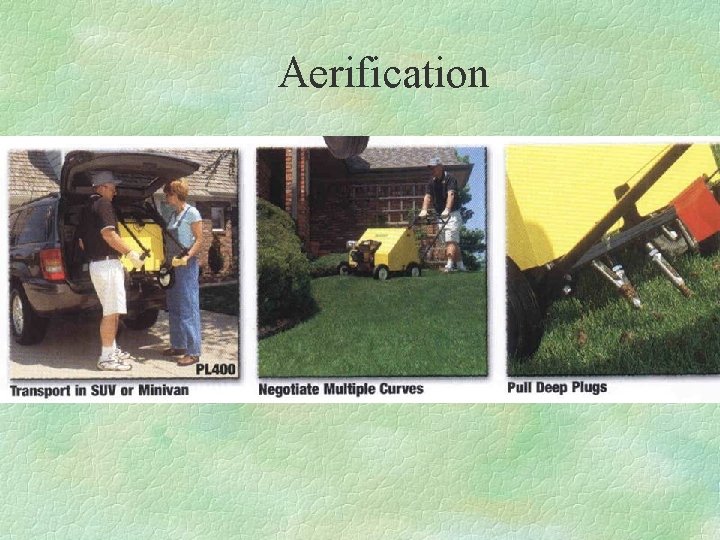
Aerification
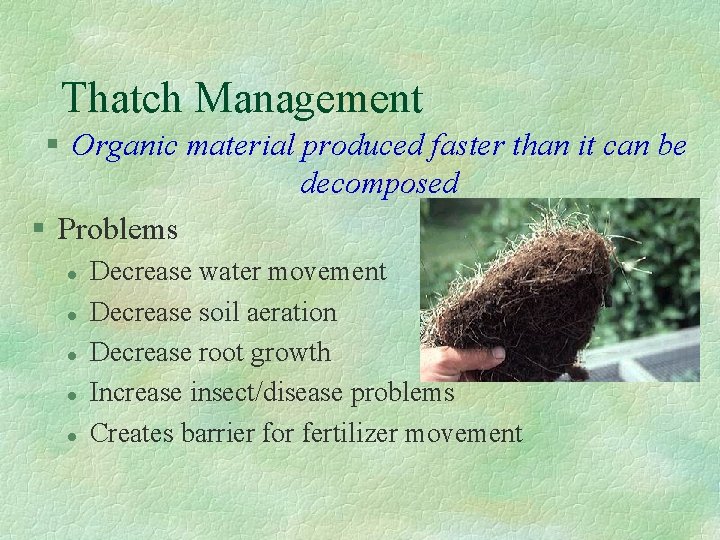
Thatch Management § Organic material produced faster than it can be decomposed § Problems l l l Decrease water movement Decrease soil aeration Decrease root growth Increase insect/disease problems Creates barrier for fertilizer movement
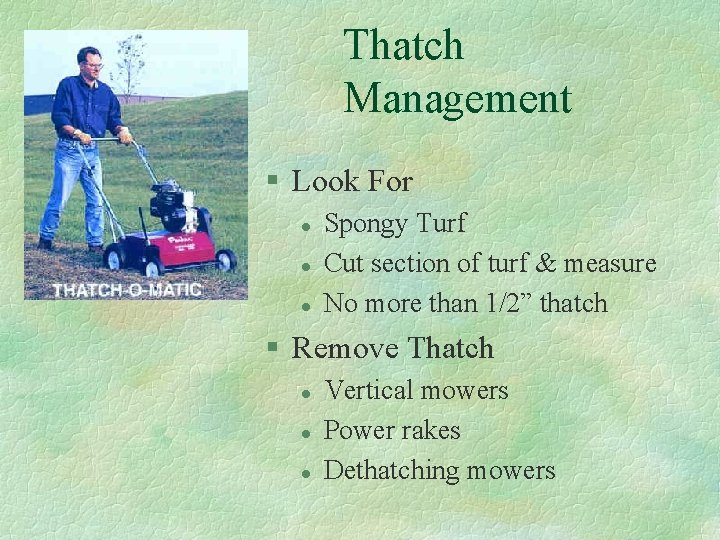
Thatch Management § Look For l l l Spongy Turf Cut section of turf & measure No more than 1/2” thatch § Remove Thatch l l l Vertical mowers Power rakes Dethatching mowers
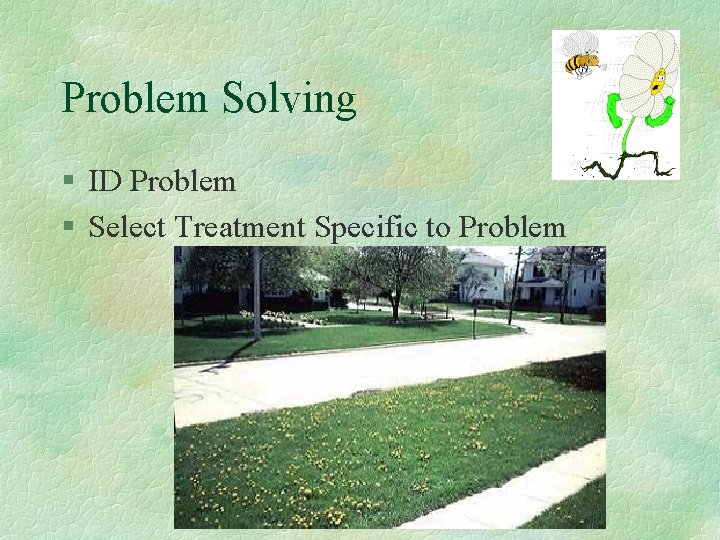
Problem Solving § ID Problem § Select Treatment Specific to Problem
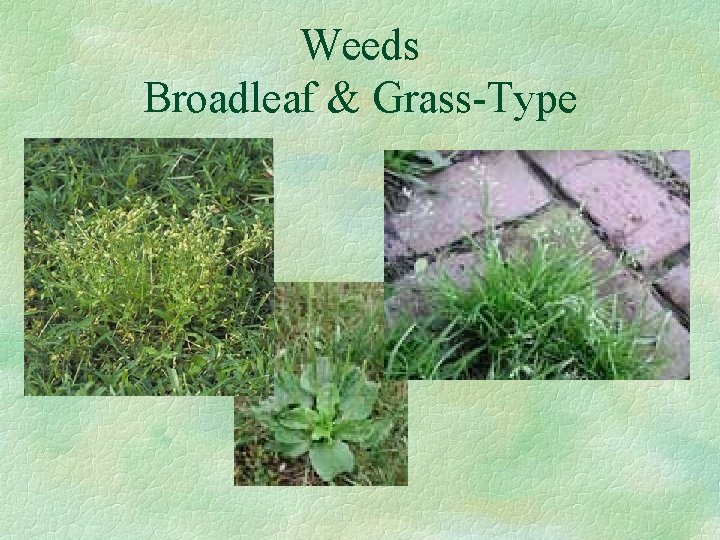
Weeds Broadleaf & Grass-Type
Weed Control § Pre-emergence l l Apply: Feb -March & Sept - Oct Balan, Surflan, Dacthal, Ronstar § Post-emergence l l Apply: Summer during Early Weed Growth MSMA, Trimec, Acclain, Weedar, Banvel
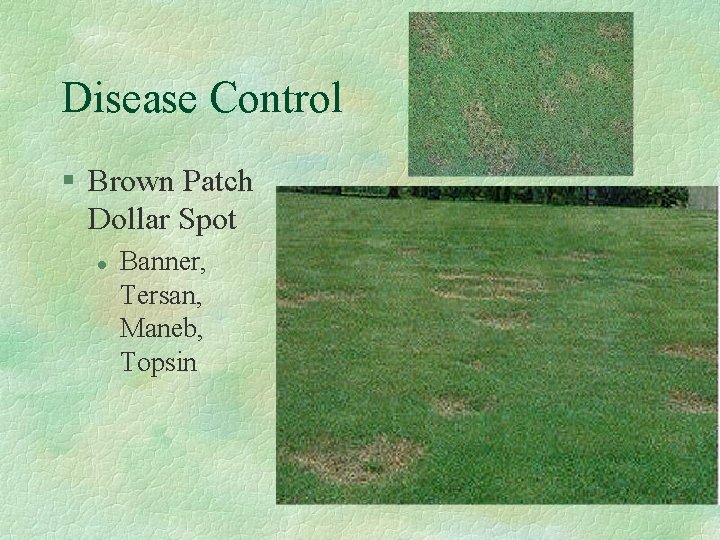
Disease Control § Brown Patch Dollar Spot l Banner, Tersan, Maneb, Topsin
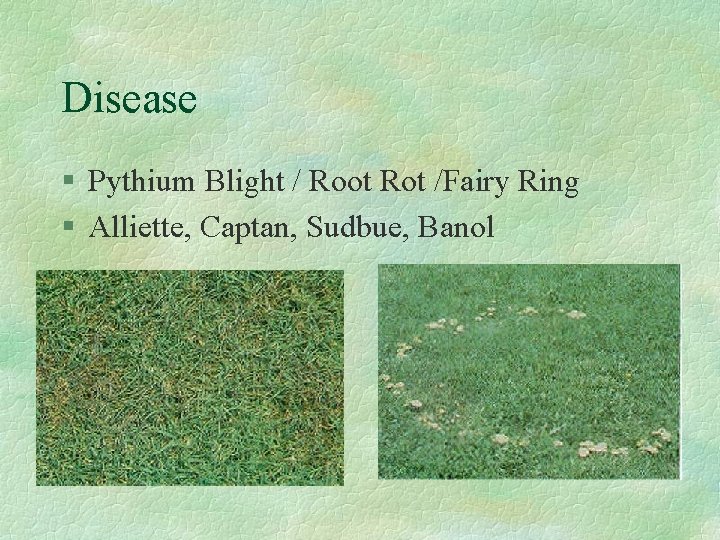
Disease § Pythium Blight / Root Rot /Fairy Ring § Alliette, Captan, Sudbue, Banol
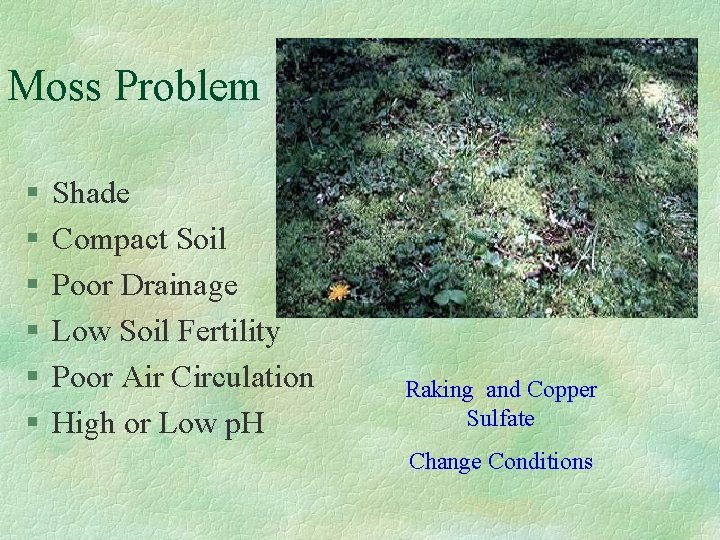
Moss Problem § § § Shade Compact Soil Poor Drainage Low Soil Fertility Poor Air Circulation High or Low p. H Raking and Copper Sulfate Change Conditions
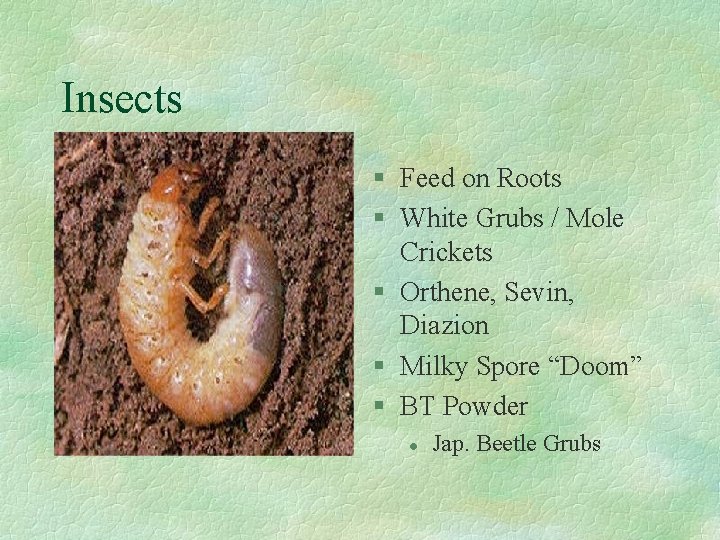
Insects § Feed on Roots § White Grubs / Mole Crickets § Orthene, Sevin, Diazion § Milky Spore “Doom” § BT Powder l Jap. Beetle Grubs
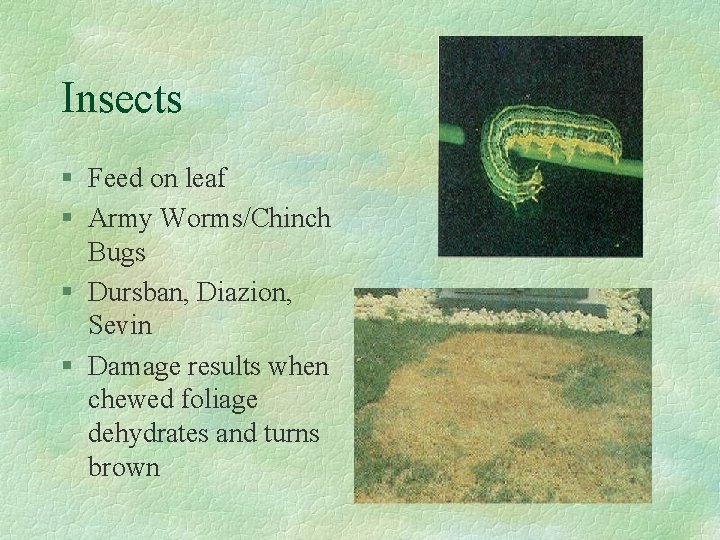
Insects § Feed on leaf § Army Worms/Chinch Bugs § Dursban, Diazion, Sevin § Damage results when chewed foliage dehydrates and turns brown
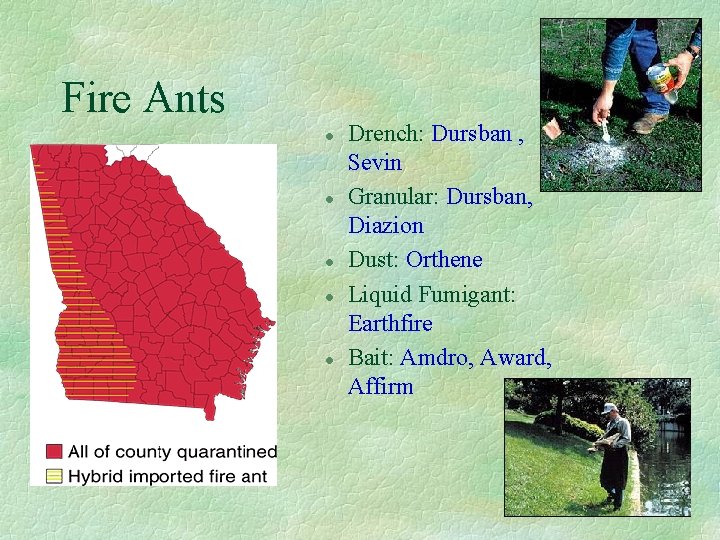
Fire Ants l l l Drench: Dursban , Sevin Granular: Dursban, Diazion Dust: Orthene Liquid Fumigant: Earthfire Bait: Amdro, Award, Affirm
Low Maintenance thamlin@doe. k 12. ga. us
- Slides: 54