
Lawmaking Process Bills u Drafting a Bill Legislators
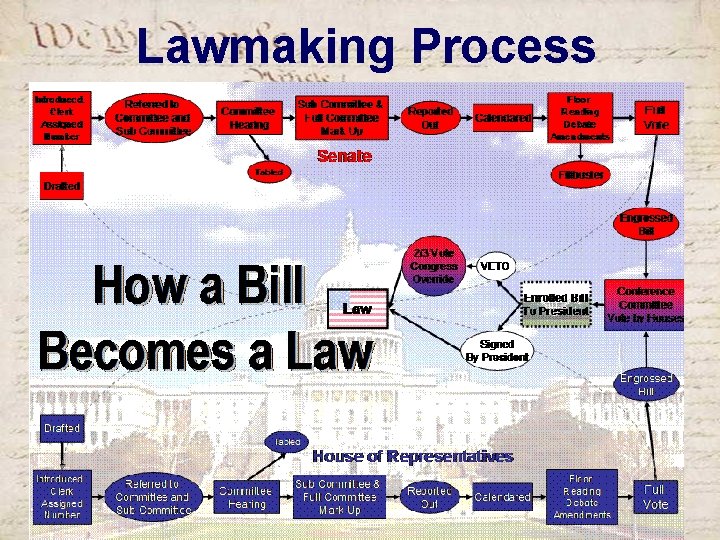
Lawmaking Process
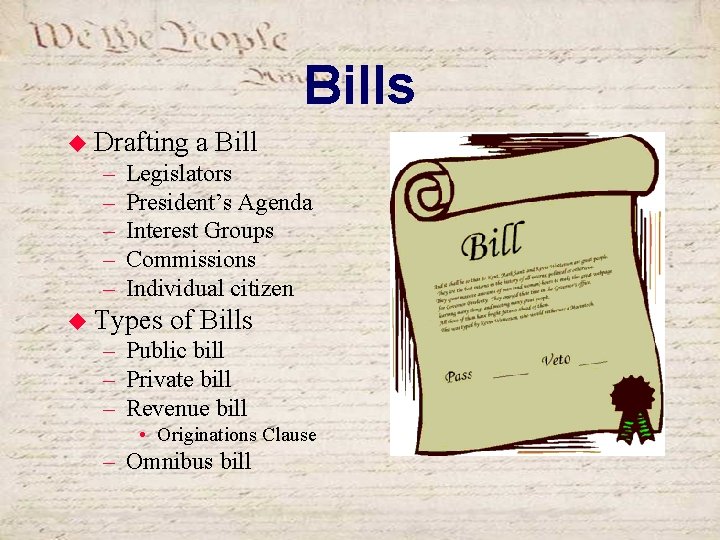
Bills u Drafting – – – a Bill Legislators President’s Agenda Interest Groups Commissions Individual citizen u Types of Bills – Public bill – Private bill – Revenue bill • Originations Clause – Omnibus bill
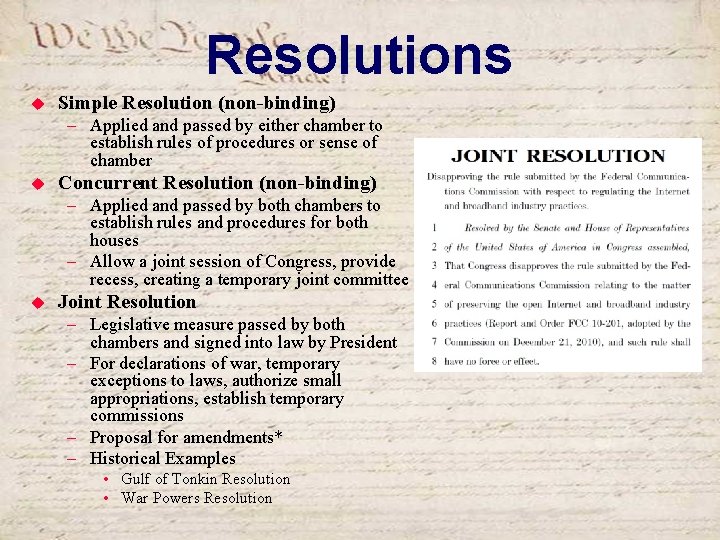
Resolutions u Simple Resolution (non-binding) – Applied and passed by either chamber to establish rules of procedures or sense of chamber u Concurrent Resolution (non-binding) – Applied and passed by both chambers to establish rules and procedures for both houses – Allow a joint session of Congress, provide recess, creating a temporary joint committee u Joint Resolution – Legislative measure passed by both chambers and signed into law by President – For declarations of war, temporary exceptions to laws, authorize small appropriations, establish temporary commissions – Proposal for amendments* – Historical Examples • Gulf of Tonkin Resolution • War Powers Resolution
§ Types of Legislative Actions Distributive § Distribution of goods/services for general public § i. e. highway construction project § Redistributive § Using taxes on one segment of population for entitlements on another segment § i. e. Social Security § Regulatory § Mandates and limits on groups and individuals § i. e. Clean Air and Water Act § Constituent § Establish executive agencies § i. e. Department of Homeland Security after 9/11
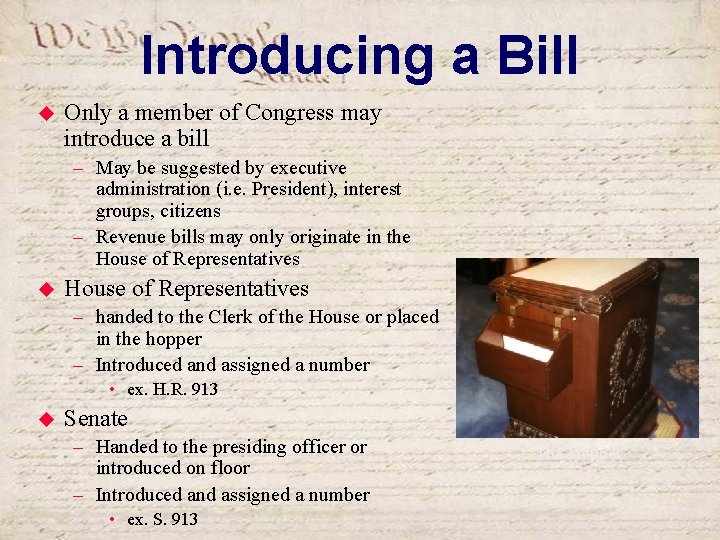
Introducing a Bill u Only a member of Congress may introduce a bill – May be suggested by executive administration (i. e. President), interest groups, citizens – Revenue bills may only originate in the House of Representatives u House of Representatives – handed to the Clerk of the House or placed in the hopper – Introduced and assigned a number • ex. H. R. 913 u Senate – Handed to the presiding officer or introduced on floor – Introduced and assigned a number • ex. S. 913 The Hopper
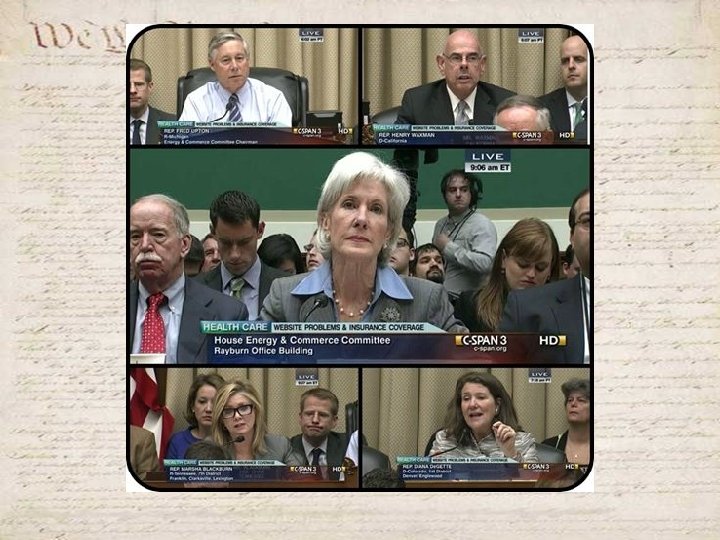
Committees § Committee Work § Consider bills, maintain oversight, conduct investigations § Gatekeeping authority § Proposal power § Hearings and Testimonies § Allows for specialists to determine merits of a bill § Subpoena power § Bill Assignments § Speaker of the House/Presiding Senate Officer
Types of Committees § Standing Committee § Permanent committee over specific policy § Subcommittee § Subset of a standing committee for specific details of a bill § Select Committee § Temporary committee for specific purpose § Usually for investigations on major public concerns § Joint Committee § Made up of members of both houses § Conference Committee § Temporary committee of both houses to resolve differences of chamber versions of a bill
Standing Committees House u u u u u Rules Ways and Means Appropriations Judiciary Agriculture Armed Services Budget Education and the Workforce Ethics Financial Services Foreign Services Homeland Security House Administration Energy and Commerce Natural Resources Oversight and Government Reform Science, Space, and Technology Small Business Transportation and Infrastructure Veterans’ Affairs Senate u u u u Appropriations Finance Judiciary Foreign Relations Agriculture, Nutrition, Forestry Armed Services Banking, Housing, Urban Affairs Budget Commerce, Science, Transportation Energy and Natural Resources Environment and Public Works Health, Education, Labor, and Pensions Homeland Security and Government Affairs Rules and Administration Small Business and Entrepreneurship Veterans’ Affairs
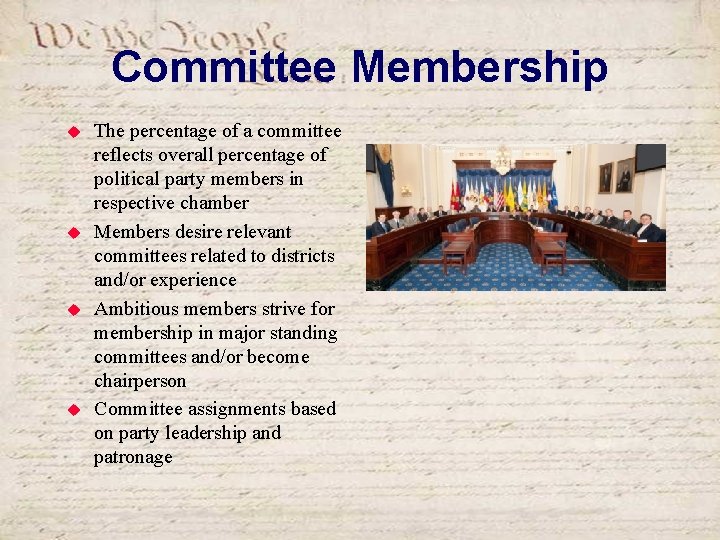
Committee Membership u u The percentage of a committee reflects overall percentage of political party members in respective chamber Members desire relevant committees related to districts and/or experience Ambitious members strive for membership in major standing committees and/or become chairperson Committee assignments based on party leadership and patronage
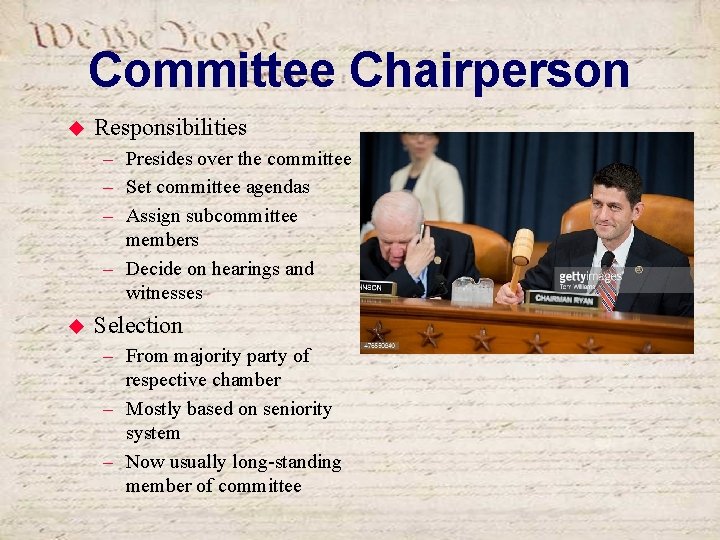
Committee Chairperson u Responsibilities – Presides over the committee – Set committee agendas – Assign subcommittee members – Decide on hearings and witnesses u Selection – From majority party of respective chamber – Mostly based on seniority system – Now usually long-standing member of committee Paul Ryan, House Ways and Means Chairman
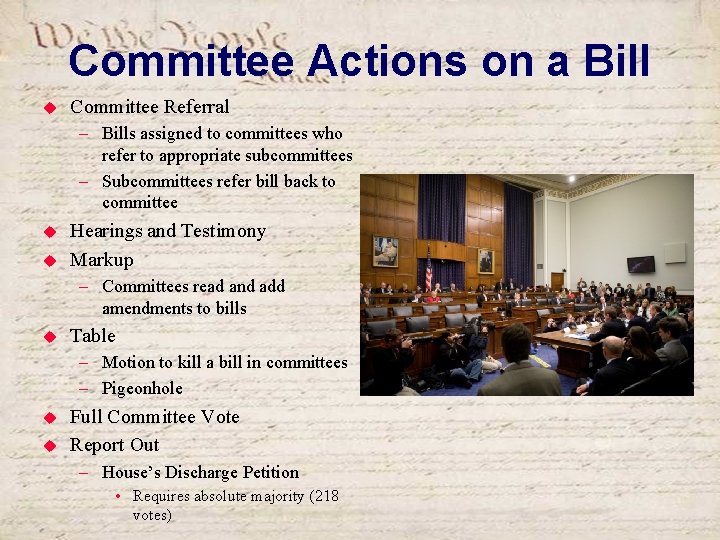
Committee Actions on a Bill u Committee Referral – Bills assigned to committees who refer to appropriate subcommittees – Subcommittees refer bill back to committee u u Hearings and Testimony Markup – Committees read and add amendments to bills u Table – Motion to kill a bill in committees – Pigeonhole u u Full Committee Vote Report Out – House’s Discharge Petition • Requires absolute majority (218 votes)
House Rules Committee u u u Once a House bill is reported out by committee(s) it must be assigned to the HOUSE RULES COMMITTEE before it reaches the House floor for debate and voting Sets rules, restrictions, and times on bills during floor debate with input by Speaker of the House CLOSED RULE – Severe limits on floor debate – No amendments – Bill proponents tend to prefer closed rule u OPEN RULE – Allows floor debate – Allows amendments – Bill opponents tend to prefer open rule
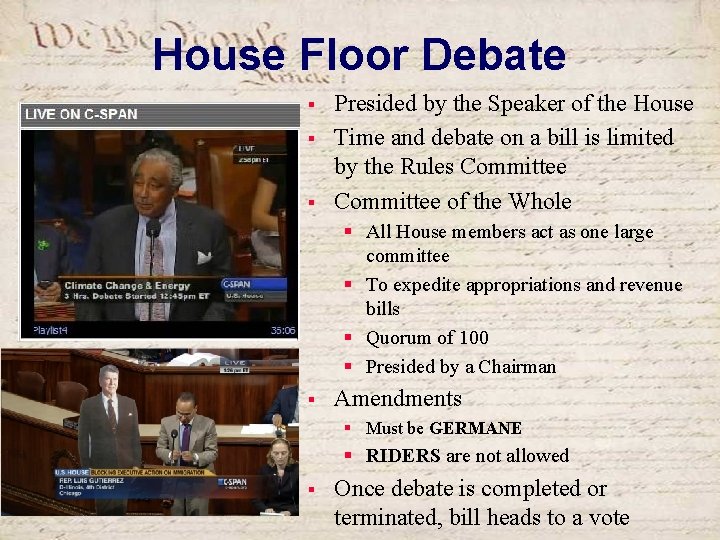
House Floor Debate § § § Presided by the Speaker of the House Time and debate on a bill is limited by the Rules Committee of the Whole § All House members act as one large committee § To expedite appropriations and revenue bills § Quorum of 100 § Presided by a Chairman § Amendments § Must be GERMANE § RIDERS are not allowed § Once debate is completed or terminated, bill heads to a vote
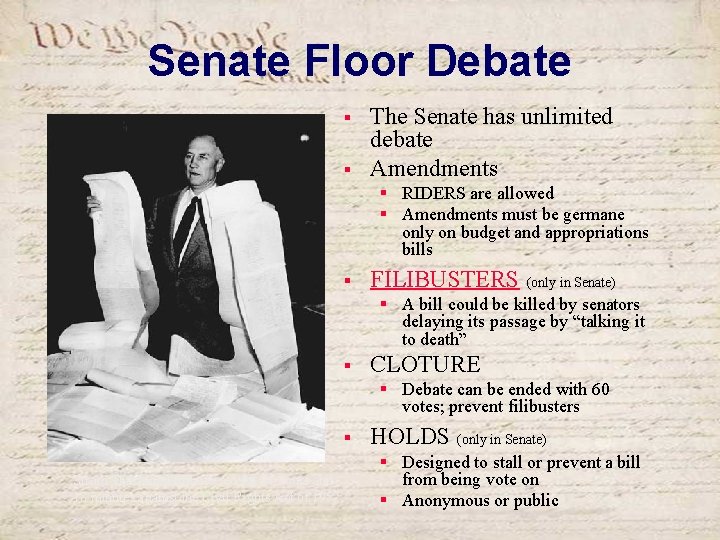
Senate Floor Debate § § The Senate has unlimited debate Amendments § RIDERS are allowed § Amendments must be germane only on budget and appropriations bills § FILIBUSTERS (only in Senate) § A bill could be killed by senators delaying its passage by “talking it to death” § CLOTURE § Debate can be ended with 60 votes; prevent filibusters § Strom Thurmond filibustered for 24 hours and 18 minutes against the Civil Rights Act of 1957 HOLDS (only in Senate) § Designed to stall or prevent a bill from being vote on § Anonymous or public
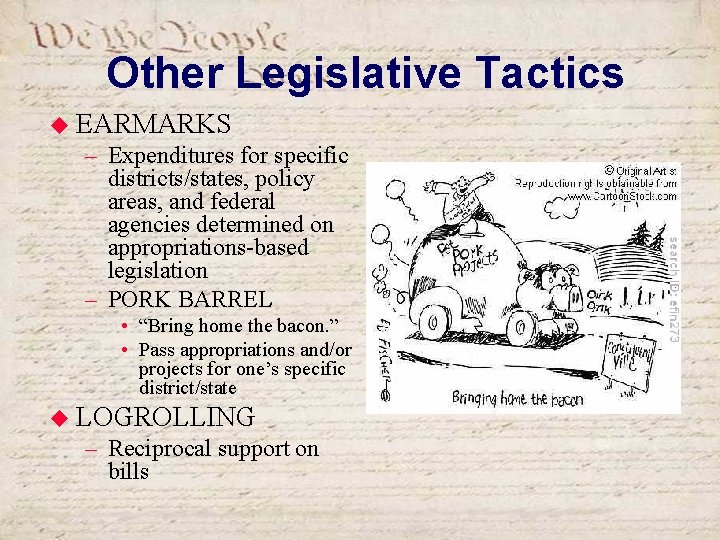
Other Legislative Tactics u EARMARKS – Expenditures for specific districts/states, policy areas, and federal agencies determined on appropriations-based legislation – PORK BARREL • “Bring home the bacon. ” • Pass appropriations and/or projects for one’s specific district/state u LOGROLLING – Reciprocal support on bills
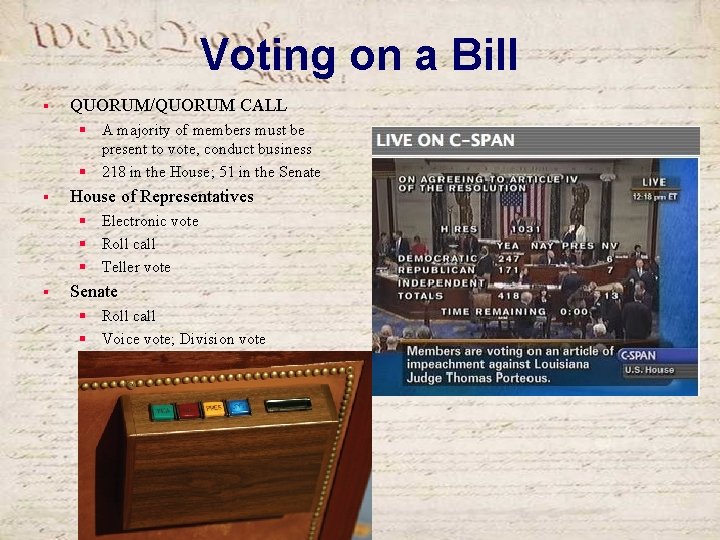
Voting on a Bill § QUORUM/QUORUM CALL § A majority of members must be present to vote, conduct business § 218 in the House; 51 in the Senate § House of Representatives § Electronic vote § Roll call § Teller vote § Senate § Roll call § Voice vote; Division vote
How a Member Represents and Votes § Representational View/ Delegate Model § Vote based on interests and beliefs of districts/states § CASEWORK § Organizational View § Influenced by party members, president, lobbyists § Vote based on party lines § PATRONAGE § Attitudinal View/Trustee Model § Based on ideology, personal beliefs
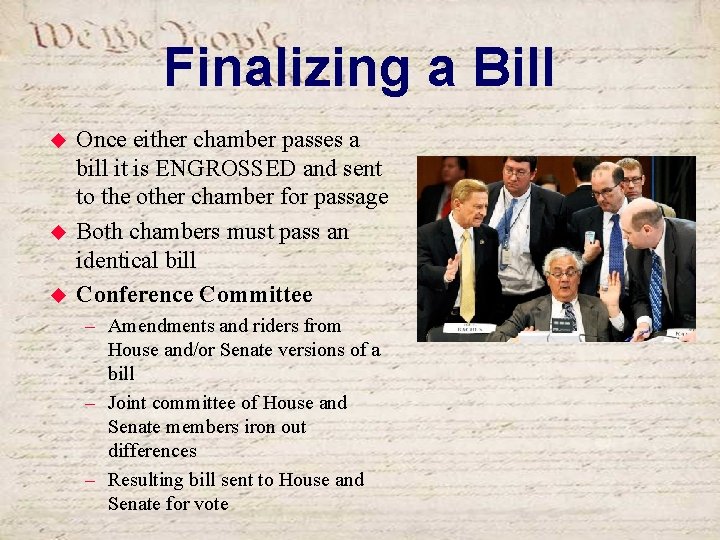
Finalizing a Bill u u u Once either chamber passes a bill it is ENGROSSED and sent to the other chamber for passage Both chambers must pass an identical bill Conference Committee – Amendments and riders from House and/or Senate versions of a bill – Joint committee of House and Senate members iron out differences – Resulting bill sent to House and Senate for vote
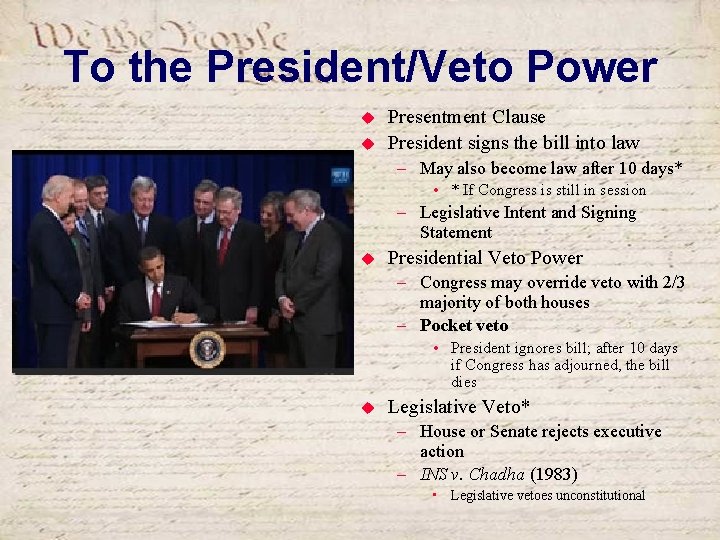
To the President/Veto Power u u Presentment Clause President signs the bill into law – May also become law after 10 days* • * If Congress is still in session – Legislative Intent and Signing Statement u Presidential Veto Power – Congress may override veto with 2/3 majority of both houses – Pocket veto • President ignores bill; after 10 days if Congress has adjourned, the bill dies u Legislative Veto* – House or Senate rejects executive action – INS v. Chadha (1983) • Legislative vetoes unconstitutional
- Slides: 21