
Law of inheritance Chromosomal theory Proposed genetic factors
- Slides: 26
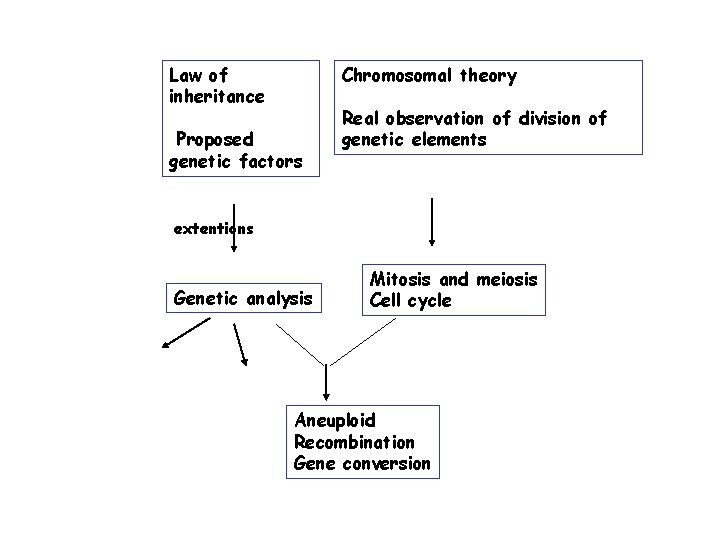
Law of inheritance Chromosomal theory Proposed genetic factors Real observation of division of genetic elements extentions Genetic analysis Mitosis and meiosis Cell cycle Aneuploid Recombination Gene conversion
Evidence that Genes Reside in the Nucleus • 1667 – Anton van Leeuwenhoek – Microscopist – Semen contains spermatozoa (sperm animals) – Hypothesized that sperm enter egg to achieve fertilization • 1854 -1874 – confirmation of fertilization through union of eggs and sperm – Recorded frog and sea urchin fertilization using microscopy and time-lapse drawings and micrographs
Evidence that Genes Reside in Chromosomes • 1880 s – innovations in microscopy and staining techniques identified thread-like structures • Provided a means to follow movement of chromosomes during cell division • Mitosis – two daughter cells contained same number of chromosomes as parent cell (somatic cells) • Meiosis – daughter cells contained half the number of chromosomes as the parents (sperm and eggs)
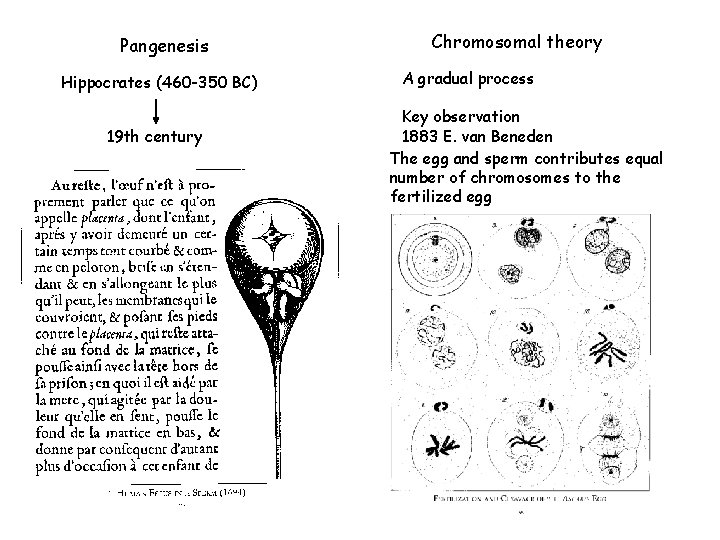
Pangenesis Hippocrates (460 -350 BC) 19 th century Chromosomal theory A gradual process Key observation 1883 E. van Beneden The egg and sperm contributes equal number of chromosomes to the fertilized egg
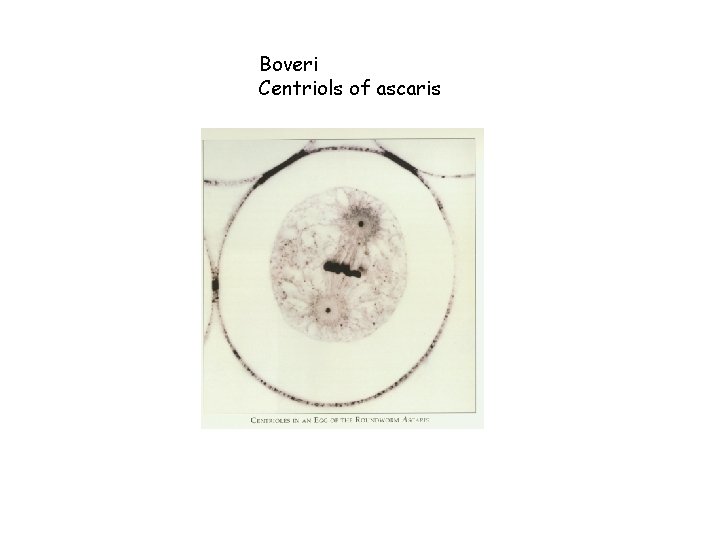
Boveri Centriols of ascaris
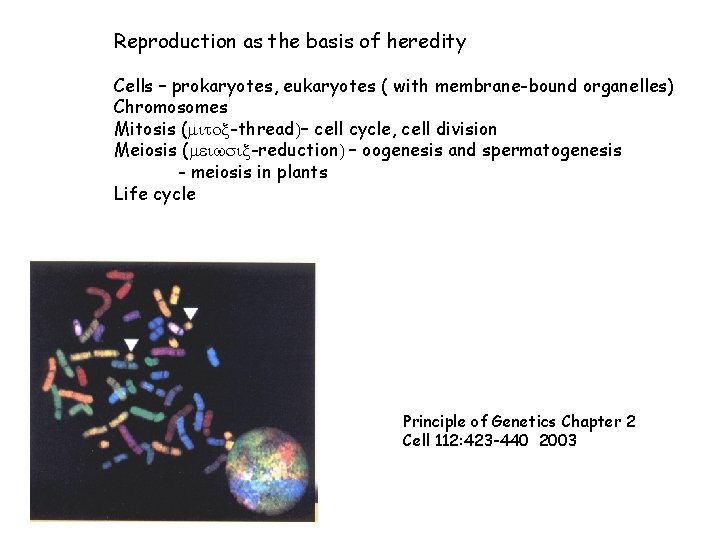
Reproduction as the basis of heredity Cells – prokaryotes, eukaryotes ( with membrane-bound organelles) Chromosomes Mitosis (mitox-thread)– cell cycle, cell division Meiosis (meiwsix-reduction) – oogenesis and spermatogenesis - meiosis in plants Life cycle Principle of Genetics Chapter 2 Cell 112: 423 -440 2003
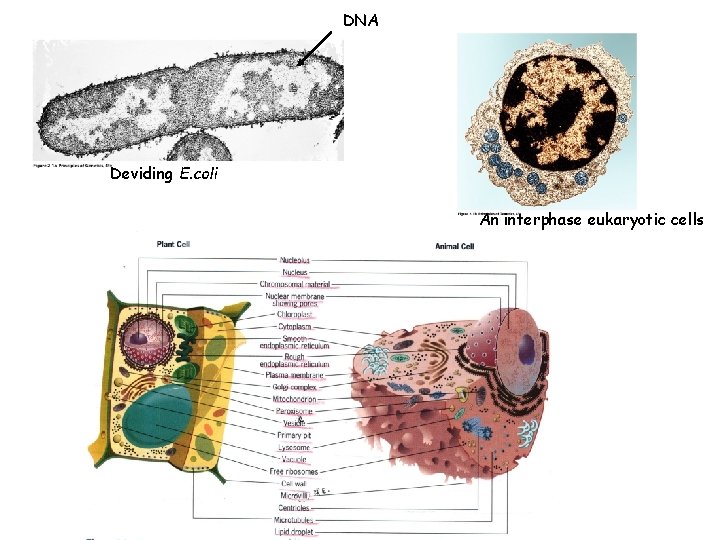
DNA Deviding E. coli An interphase eukaryotic cells
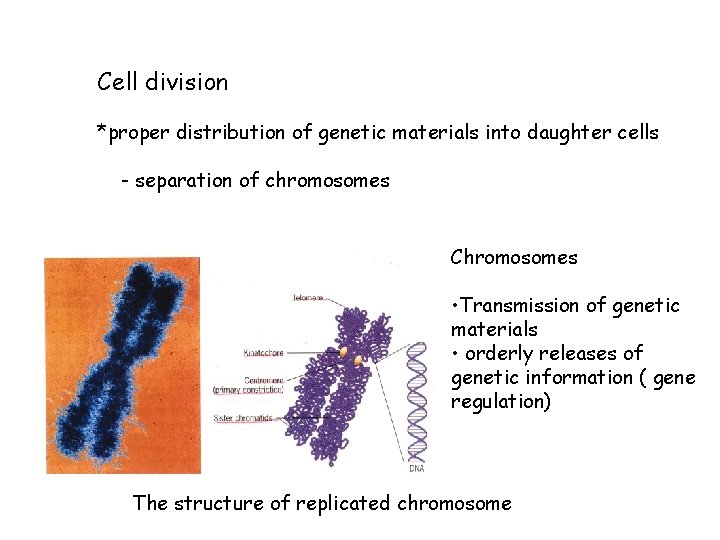
Cell division *proper distribution of genetic materials into daughter cells - separation of chromosomes Chromosomes • Transmission of genetic materials • orderly releases of genetic information ( gene regulation) The structure of replicated chromosome
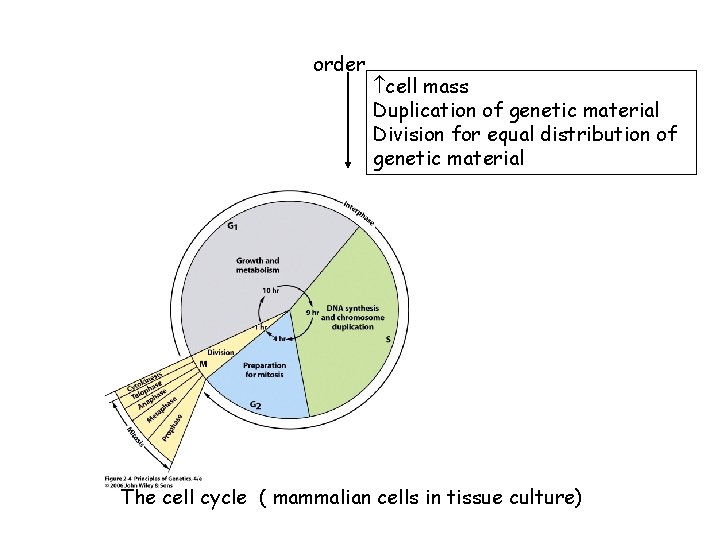
order cell mass Duplication of genetic material Division for equal distribution of genetic material The cell cycle ( mammalian cells in tissue culture)
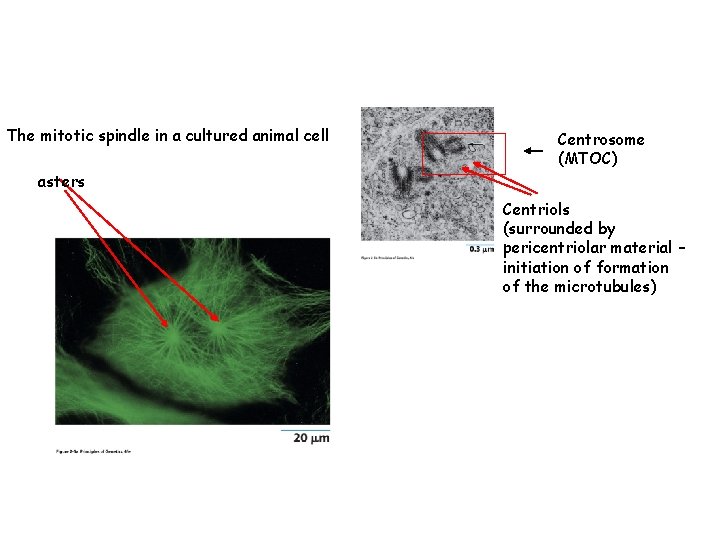
The mitotic spindle in a cultured animal cell Centrosome (MTOC) asters Centriols (surrounded by pericentriolar material – initiation of formation of the microtubules)
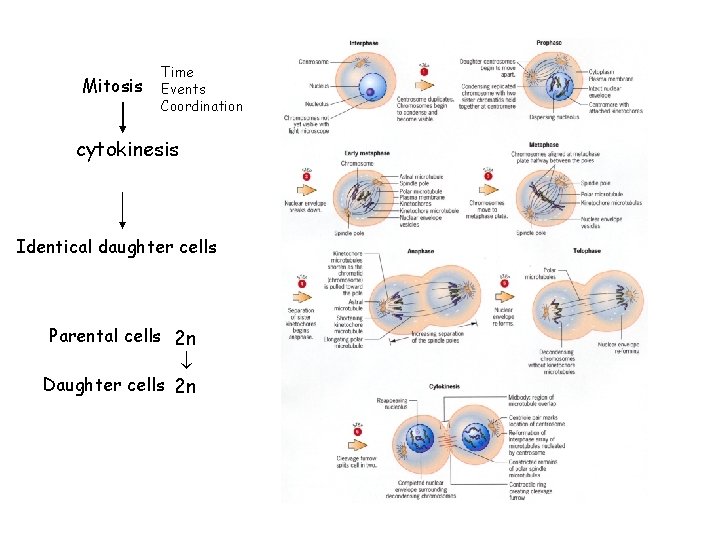
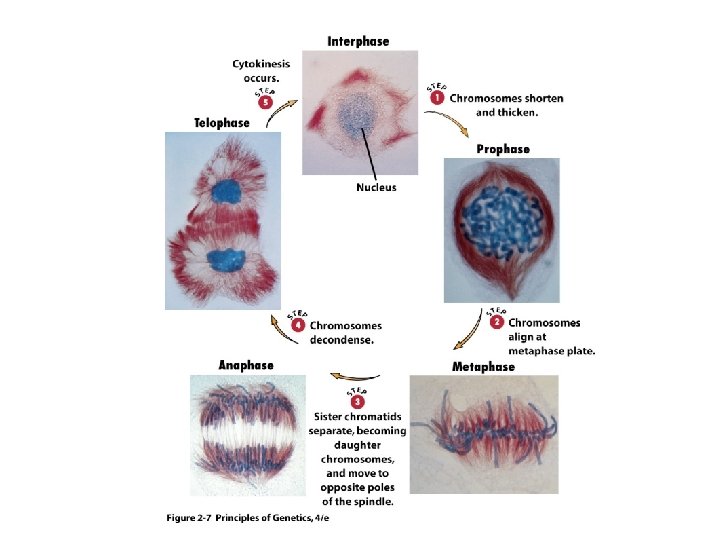
Mitosis Time Events Coordination cytokinesis Identical daughter cells Parental cells 2 n Daughter cells 2 n
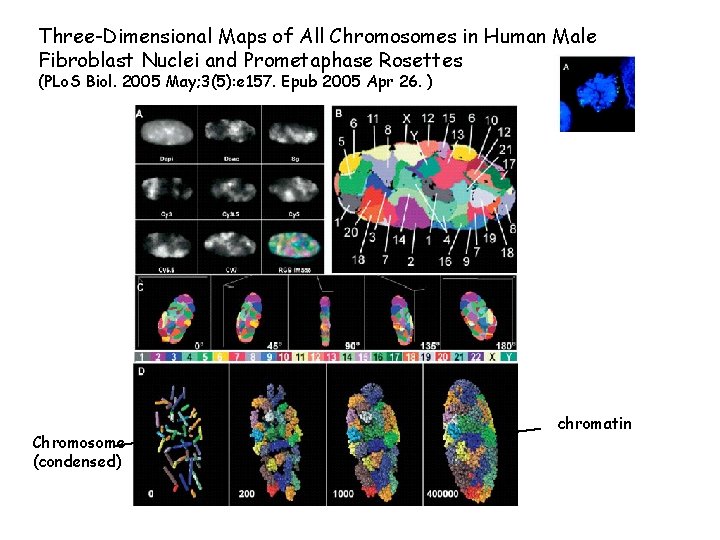
Three-Dimensional Maps of All Chromosomes in Human Male Fibroblast Nuclei and Prometaphase Rosettes (PLo. S Biol. 2005 May; 3(5): e 157. Epub 2005 Apr 26. ) Chromosome (condensed) chromatin
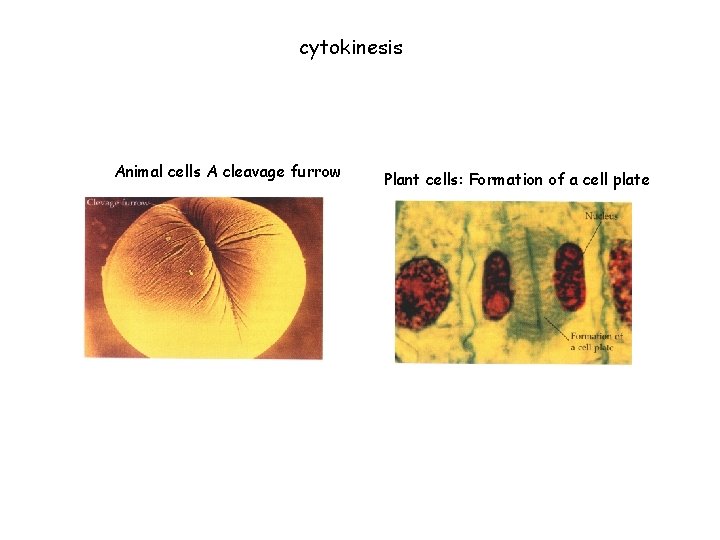
cytokinesis Animal cells A cleavage furrow Plant cells: Formation of a cell plate
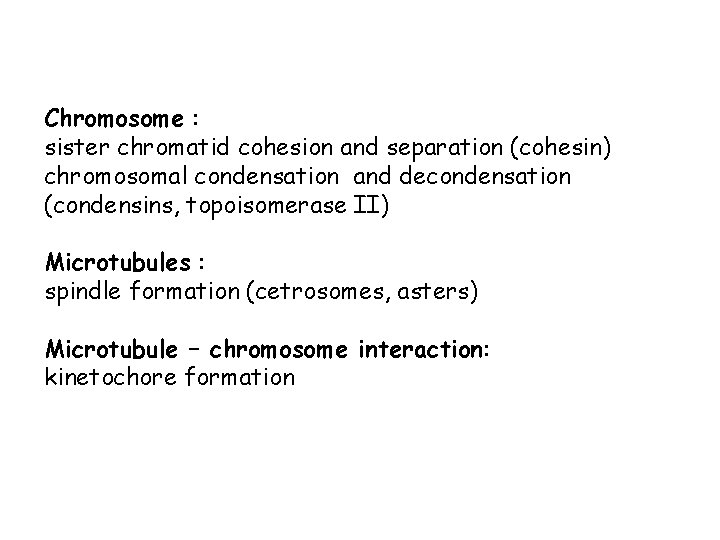
Chromosome : sister chromatid cohesion and separation (cohesin) chromosomal condensation and decondensation (condensins, topoisomerase II) Microtubules : spindle formation (cetrosomes, asters) Microtubule – chromosome interaction: kinetochore formation
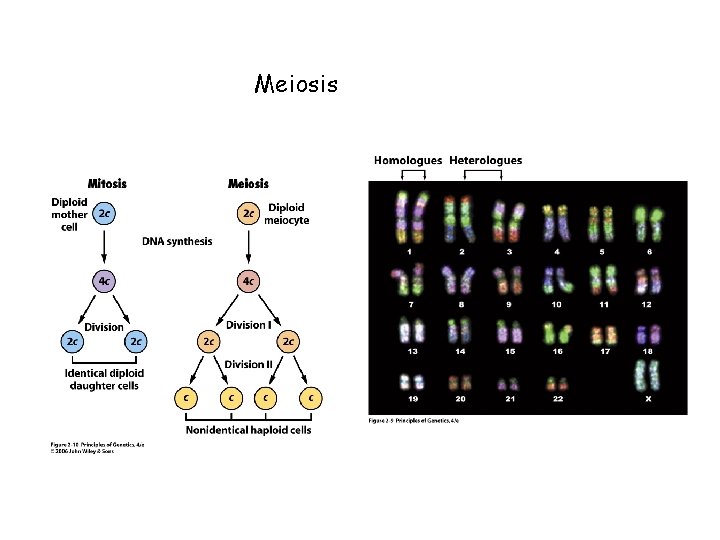
Meiosis
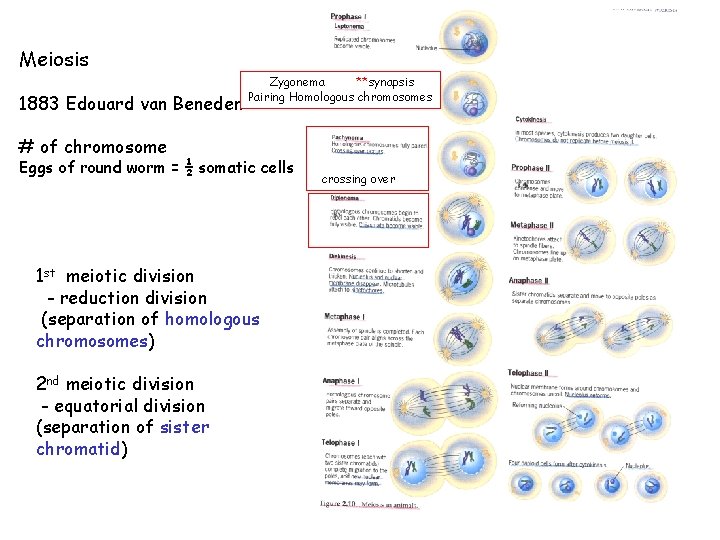
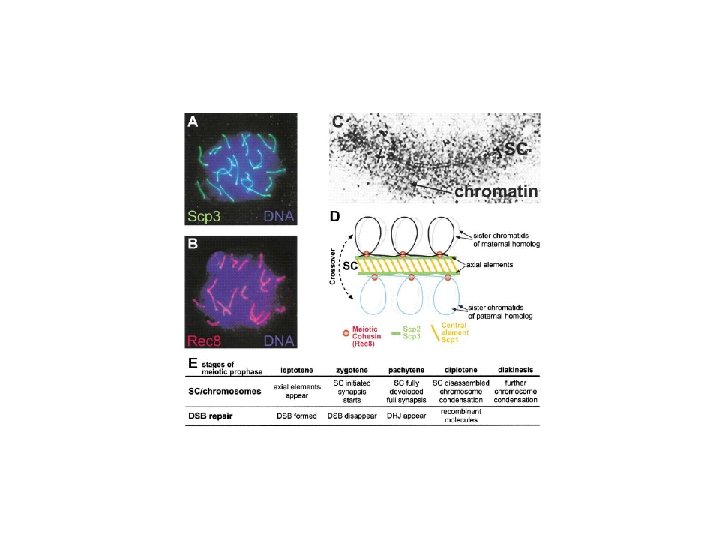
Meiosis 1883 Edouard van Beneden Zygonema **synapsis Pairing Homologous chromosomes # of chromosome Eggs of round worm = ½ somatic cells 1 st meiotic division - reduction division (separation of homologous chromosomes) 2 nd meiotic division - equatorial division (separation of sister chromatid) crossing over
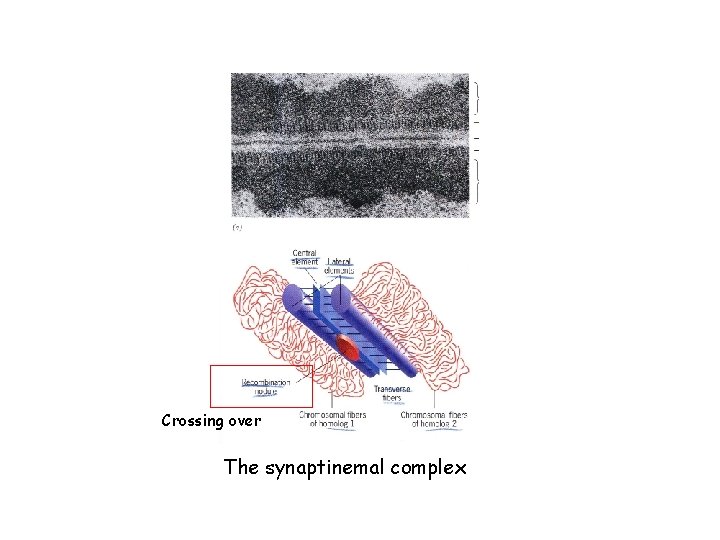
Crossing over The synaptinemal complex
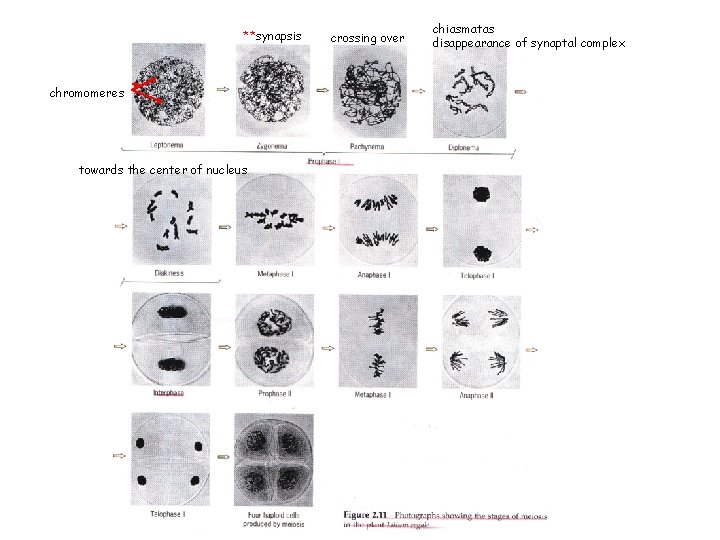
**synapsis chromomeres towards the center of nucleus crossing over chiasmatas disappearance of synaptal complex
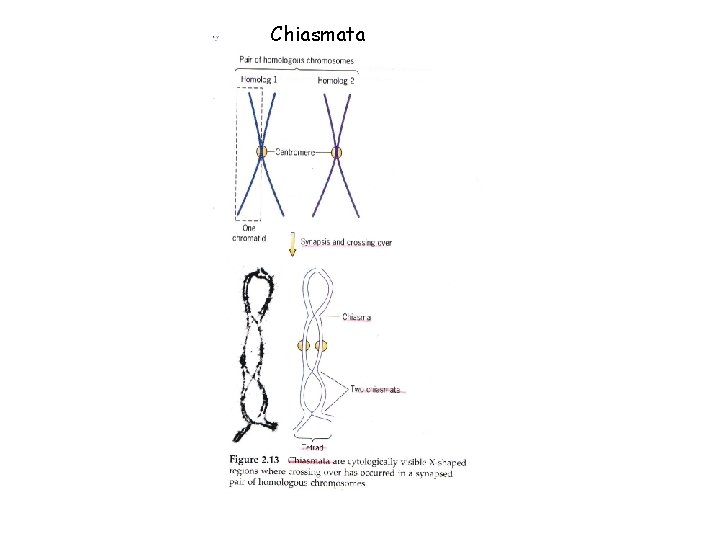
Chiasmata
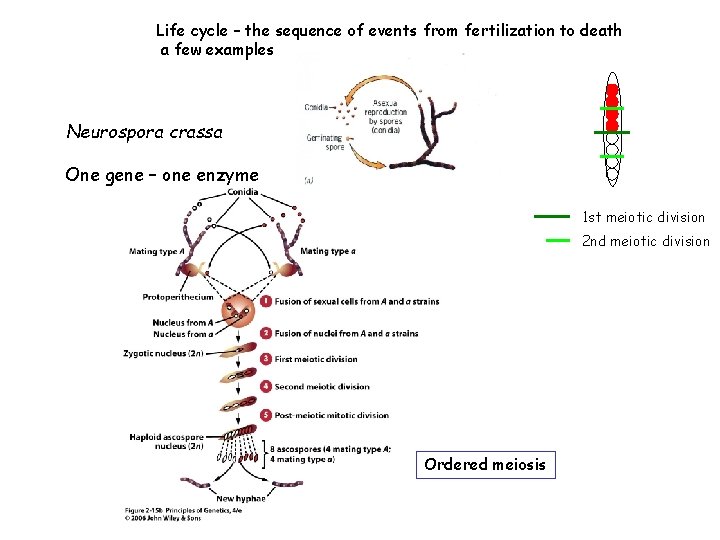
Life cycle – the sequence of events from fertilization to death a few examples Neurospora crassa One gene – one enzyme 1 st meiotic division 2 nd meiotic division Ordered meiosis
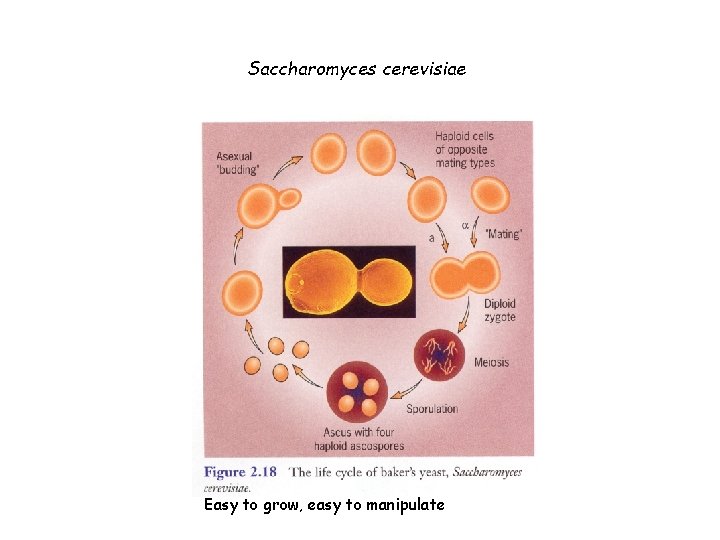
Saccharomyces cerevisiae Easy to grow, easy to manipulate
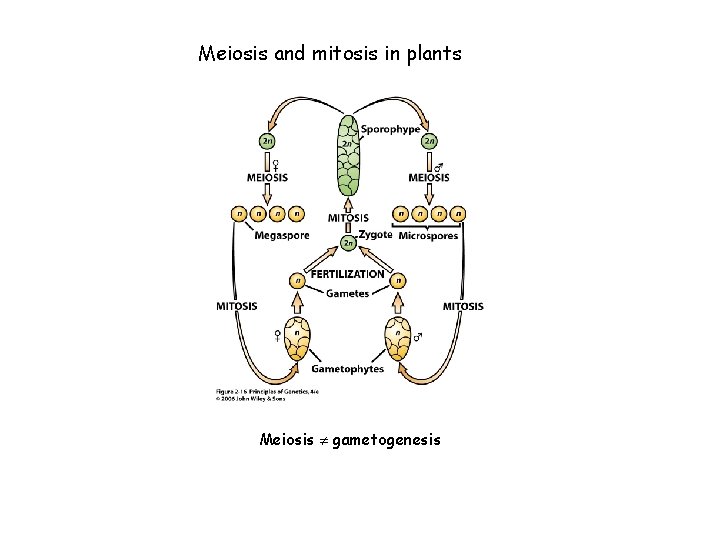
Meiosis and mitosis in plants Meiosis gametogenesis
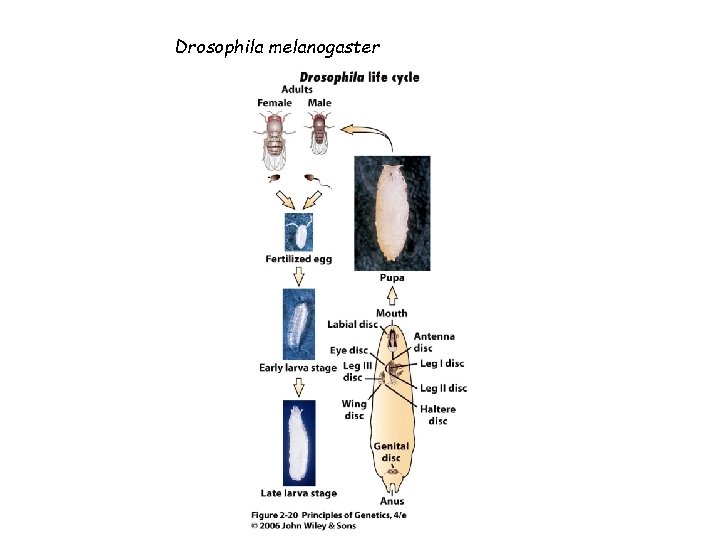
Drosophila melanogaster
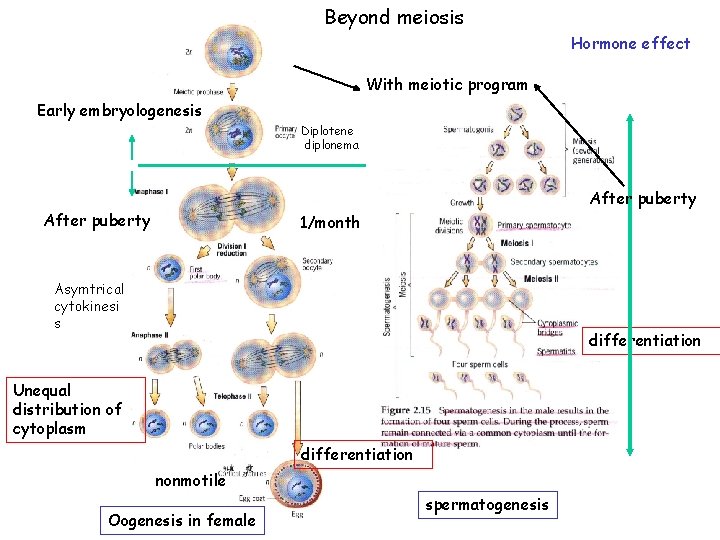
Beyond meiosis Hormone effect With meiotic program Early embryologenesis Diplotene diplonema After puberty 1/month Asymtrical cytokinesi s differentiation Unequal distribution of cytoplasm differentiation nonmotile Oogenesis in female spermatogenesis