
LAW OF CONSERVATION OF MASS DEFINITE PROPORTIONS AND
- Slides: 9
LAW OF CONSERVATION OF MASS, DEFINITE PROPORTIONS, AND MULTIPLE PROPORTIONS
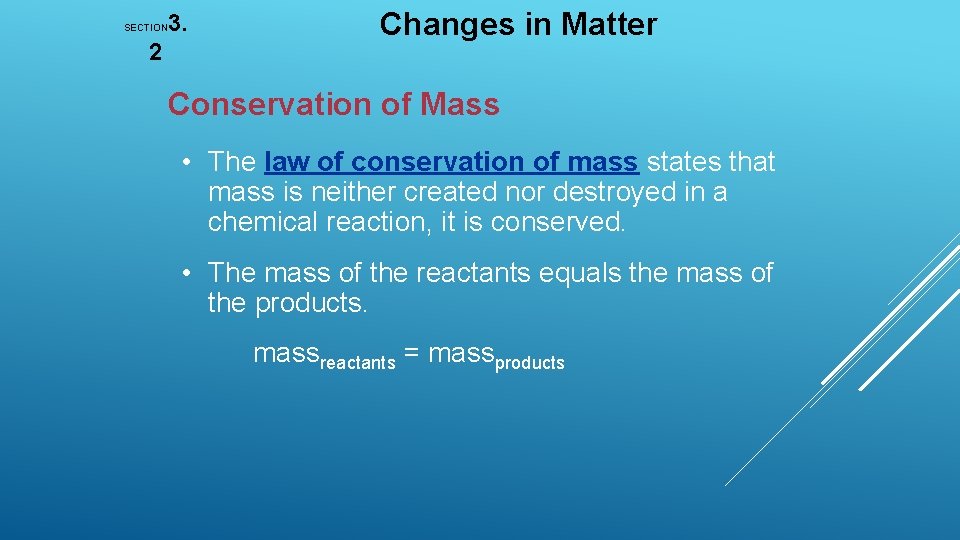
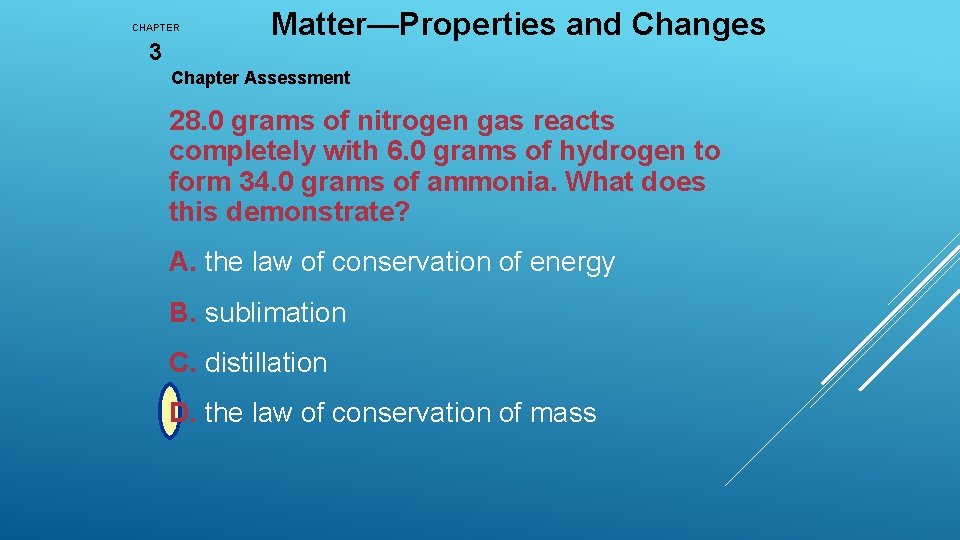
3. SECTION 2 Changes in Matter Conservation of Mass • The law of conservation of mass states that mass is neither created nor destroyed in a chemical reaction, it is conserved. • The mass of the reactants equals the mass of the products. massreactants = massproducts
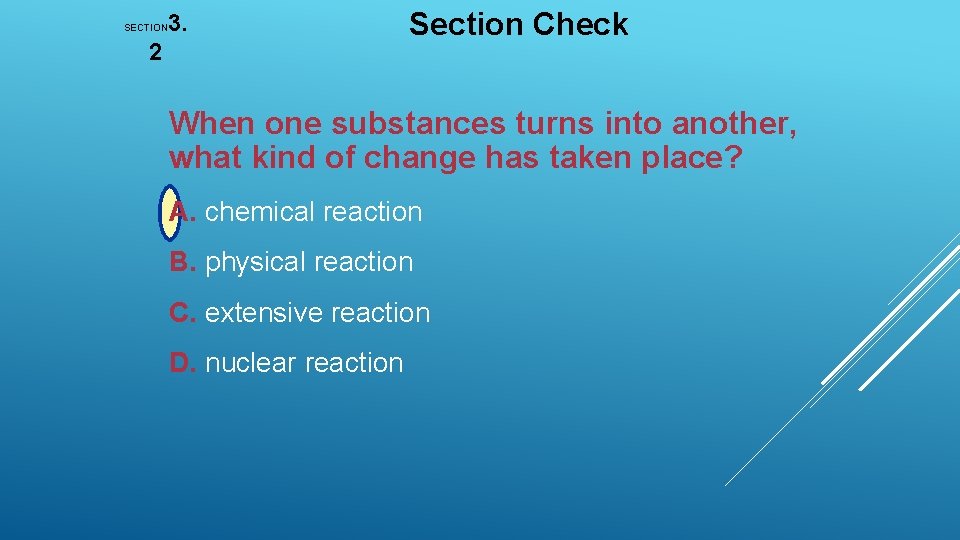
3. SECTION 2 Section Check When one substances turns into another, what kind of change has taken place? A. chemical reaction B. physical reaction C. extensive reaction D. nuclear reaction
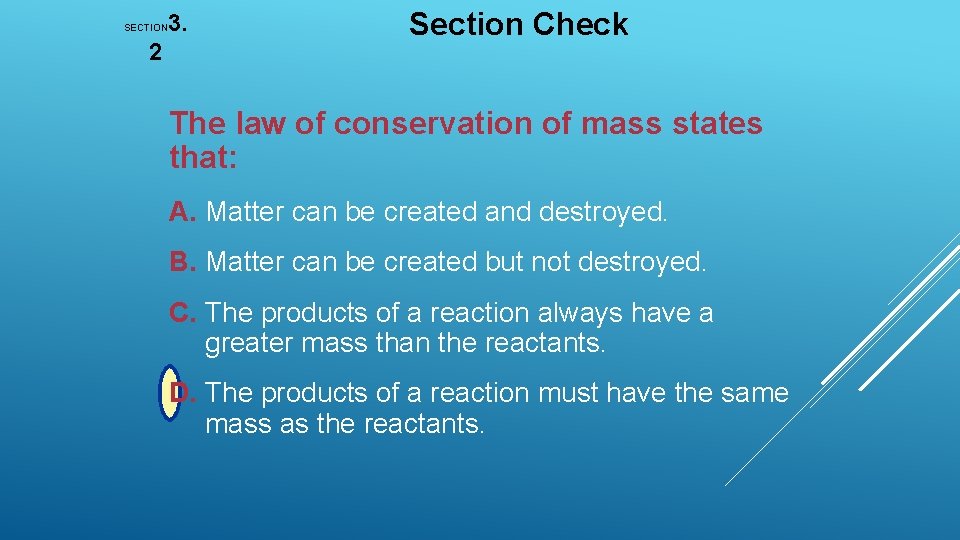
3. SECTION 2 Section Check The law of conservation of mass states that: A. Matter can be created and destroyed. B. Matter can be created but not destroyed. C. The products of a reaction always have a greater mass than the reactants. D. The products of a reaction must have the same mass as the reactants.
3. SECTION 4 Elements and Compounds Law of Definite Proportions • The law of definite proportions states that a compound is always composed of the same elements in the same proportion by mass, no matter how large or small the sample. –Ex. Water is always composed of 2 Hydrogen to 1 Oxygen
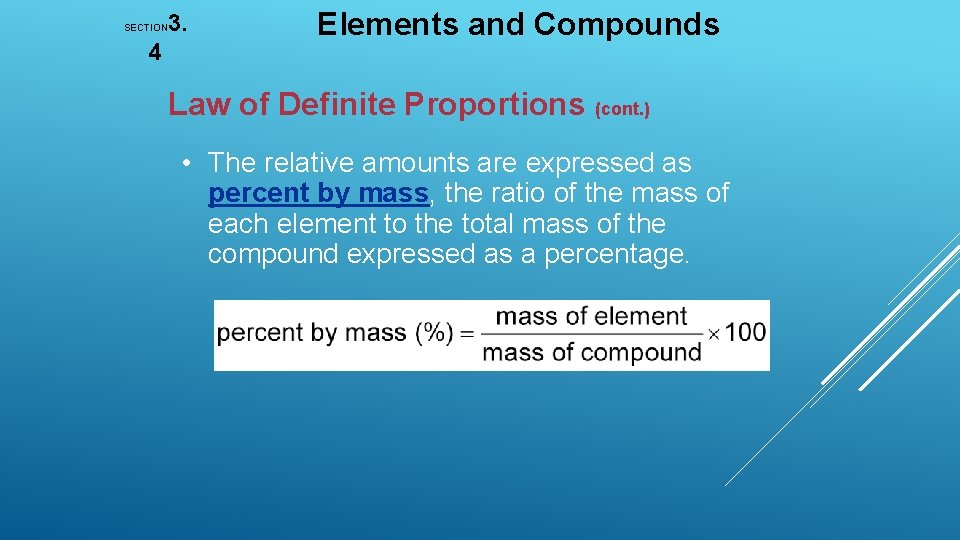
3. SECTION 4 Elements and Compounds Law of Definite Proportions (cont. ) • The relative amounts are expressed as percent by mass, the ratio of the mass of each element to the total mass of the compound expressed as a percentage.
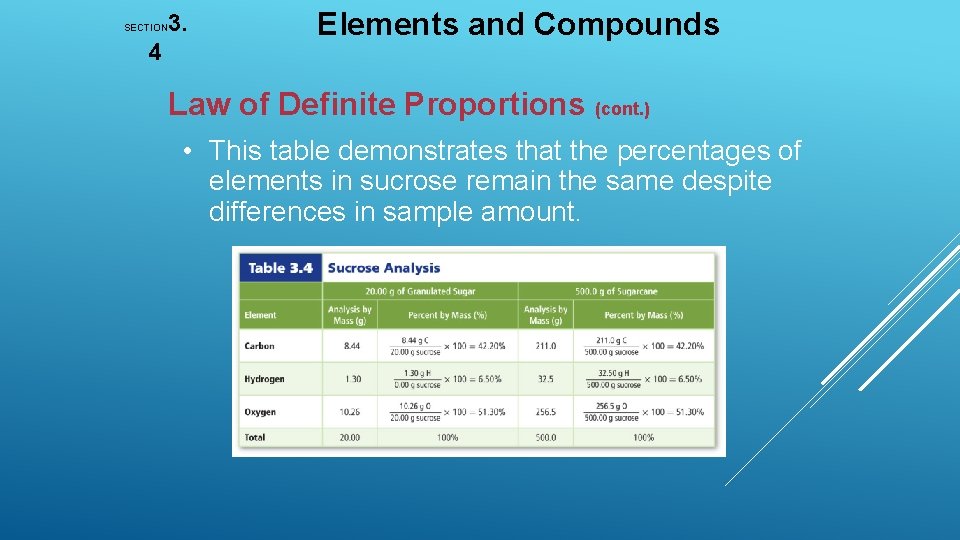
3. SECTION 4 Elements and Compounds Law of Definite Proportions (cont. ) • This table demonstrates that the percentages of elements in sucrose remain the same despite differences in sample amount.
3. SECTION 4 Elements and Compounds Law of Multiple Proportions • The law of multiple proportions states that when different compounds are formed by a combination of the same elements, different masses of one element combine with the same relative mass of the other element in whole number ratios. – Ex. Peroxide, H 2 O 2, and water, H 2 O. – Different compounds formed from the same elements. – Hydrogen mass the same in both compounds but oxygen mass is a 2: 1 ratio in peroxide to water.
CHAPTER 3 Matter—Properties and Changes Chapter Assessment 28. 0 grams of nitrogen gas reacts completely with 6. 0 grams of hydrogen to form 34. 0 grams of ammonia. What does this demonstrate? A. the law of conservation of energy B. sublimation C. distillation D. the law of conservation of mass