
Law Enforcement Report Writing UNIT TWO How to








- Slides: 63
Law Enforcement Report Writing UNIT TWO How to write a Report Protocols Participant Handout
2. 0 How to Write a Police Report If you're a police officer who is deployed to the scene of an incident, writing up a detailed and accurate report is an important part of doing your job correctly. A good incident report gives a thorough _______ of what happened. Don't gloss over unsavory information or leave out important facts.
2. 0 How to Write a Police Report - Continued Four Parts: 1. Following Protocol 1. 2. Describing What Happened 3. Editing Your Report Sample Police Report and 4. Things to Include
2. 1 Part 1 of 4: Following Protocol Get the correct forms from your agency. Each law enforcement agency has a different protocol in place for dealing with an incident and filing a report. You may be responsible for filling out a form issued by your agency, or you may be asked to type or write up the report by hand. .
2. 1 Part 1 of 4: Following Protocol 1. Start the report as soon as possible. a. Start by thinking through exactly what happened and jot exactly what happened down some notes as soon as down some notes possible after the incident. b. Write your report the same day as the incident, if you can. as the incident
2. 1 Part 1 of 4: Following Protocol – Continued 1. Continued: c. Try to do your report write-up within the first __ hours after the incident. d. If you can’t write the report on the day that the incident happened, make sure you write down the date that you did write it, to ______ any confusion. ______ it
2. 1 Part 1 of 4: Following Protocol – Continued 1. Continued: e. At least make some notes right after the incident.
2. 2 Part 1 of 4: Following Protocol – Continued 2. Give the basic facts. Your facts form may have blank spaces for you to fill out with information about the incident. If not, start the report with a _______ clearly stating the _______ following basic information:
2. 2 Part 1 of 4: Following Protocol – Continued a. The ____, _______ and _______ of the incident (Be specific. Write the exact street address, etc. ). b. Your name and ____ number name ____ c. Names of ______who ______ were present
2. 3 Part 1 of 4: Following Protocol – Continued 3. Include a line about the basic 3. nature of the ______. nature ______ a. Describe what brought to you to the ____ of the incident. b. If you got a call, describe the call and note what time you call note what time received it.
2. 3 Part 1 of 4: Following Protocol – Continued 3. Include a line about the basic nature of the incident – Cont’d: c. Write an ____, ________ sentence describing what happened. d. Don't write what you _________ have happened
2. 3 Part 1 of 4: Following Protocol – Continued 3. Include a line about the basic nature of the incident – Cont’d: e. Stick to the _____, and be objective.
For example A report might say: On 8/23/10 at approximately 2340 hours officer was assigned to 17 Dist. response vehicle. Officer at that time was notified via radio by central dispatch of a 911 call at the location of 123 maple street. Officer was also informed by central dispatch that this 911 call may be domestic related.
2. 4 Part 1 of 4: Following Protocol – Continued 4. Include a line about the basic 4. nature of the _______. a. Describe _______ what brought to you to the scene of the incident. b. If you got a call, describe the call and note what time you received it. Write an objective, factual sentence describing what happened.
2. 4 Part 1 of 4: Following Protocol – Continued 4. Include a line about the basic 4. nature of the incident. c. Don't write what you think might have happened. d. Stick to the _______, and be ____________
For example A report might say: On 8/23/10 at approximately 2340 hours officer was assigned to 17 Dist. response vehicle. Officer at that time was notified via radio by central dispatch of a 911 call at the location of 123 maple street. Officer was also informed by central dispatch that this 911 call may be domestic related.
2. 4 Part 2 of 4: Describing What Happened 1. Write in the ____-person telling ____ what happened. a. This should be a detailed a. chronological narrative of what chronological narrative happened when you reported to the scene. b. Use the full names of the people who are included in your report.
2. 4 Part 2 of 4: Describing What Happened – Continued 1. Write in the first-person telling first what happened…. Continued: c. Start a new paragraph to c. describe each person's actions separately. d. Answer the ____, Answer _____, ______, _______, ______ of _______ and ______ what happened
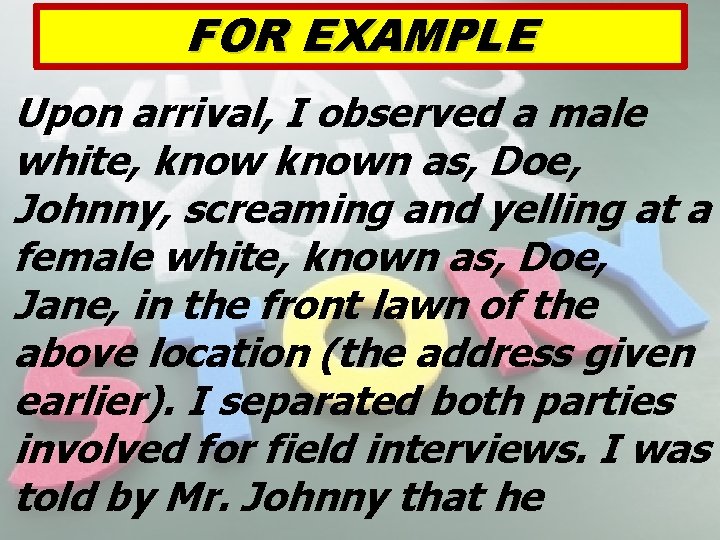
FOR EXAMPLE Upon arrival, I observed a male white, known as, Doe, Johnny, screaming and yelling at a female white, known as, Doe, Jane, in the front lawn of the above location (the address given earlier). I separated both parties involved for field interviews. I was told by Mr. Johnny that he
FOR EXAMPLE – Cont’d: had came from work and discovered that dinner was not made for him. He then stated that he became upset at his wife Mrs. Jane for not having the dinner ready for him
2. 5 Part 2 of 4: Describing What Happened – Continued 2. Include rich ______ 2. rich ______in your report. a. If possible, make sure to include direct quotes from witnesses and other people involved in the incident.
2. 5 Part 2 of 4: Describing What Happened – Continued 2. Include rich detail in your report…. Cont’d: b. Include an accurate _____ of your own role in the course of what occurred. c. If you had to use _______ force to detain someone, don't gloss over it.
2. 5 Part 2 of 4: Describing What Happened – Continued 2. Include rich detail in your report…. Cont’d: d. Report how you _____ the situation and its aftermath. e. Follow your agency’s protocol with regard to reporting on witnesses and ________
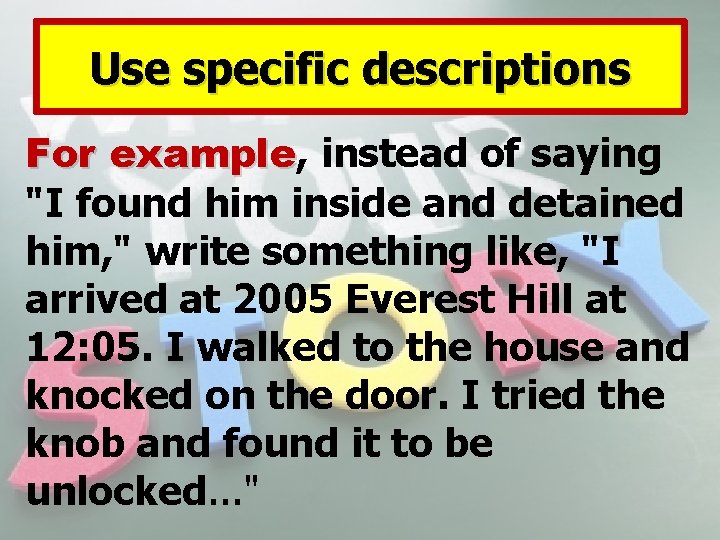
Use specific descriptions For example, instead of saying example "I found him inside and detained him, " write something like, "I arrived at 2005 Everest Hill at 12: 05. I walked to the house and knocked on the door. I tried the knob and found it to be unlocked. . . "
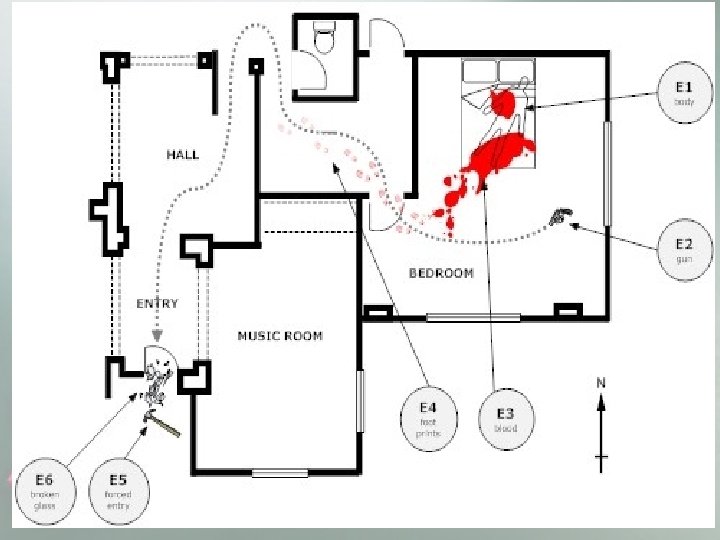
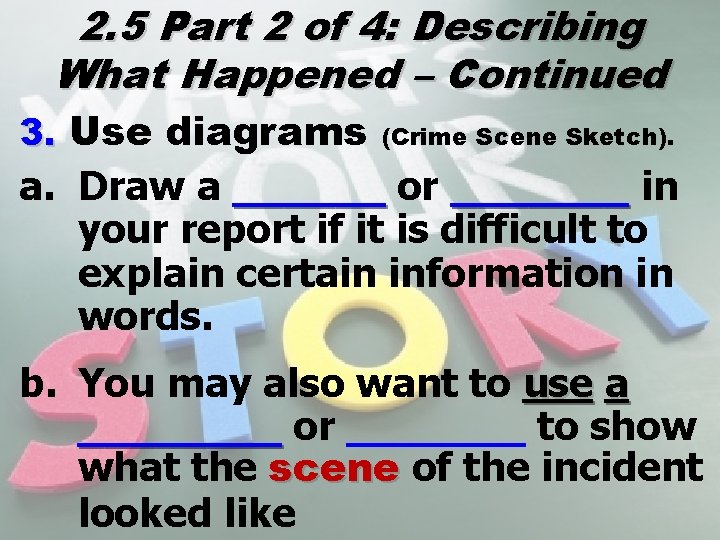
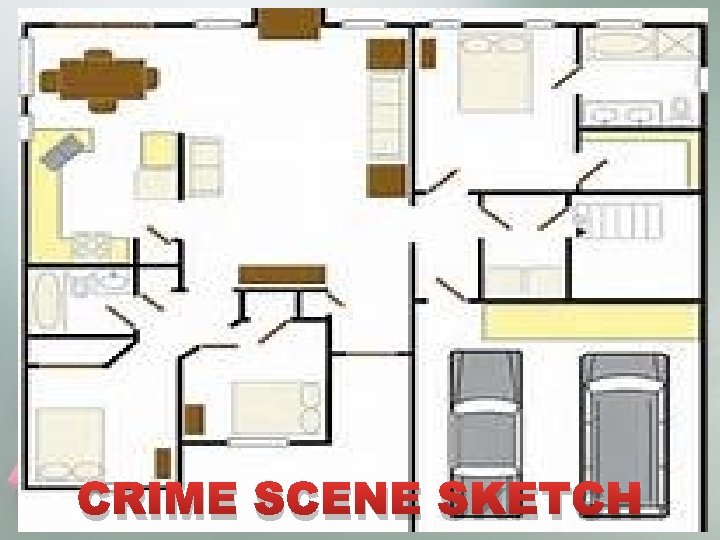
2. 5 Part 2 of 4: Describing What Happened – Continued 3. Use diagrams (Crime Scene Sketch). a. Draw a ______ or _______ in _______ your report if it is difficult to explain certain information in words. b. You may also want to use a ____ or _______ to show ____ what the scene of the incident scene looked like
CRIME SCENE SKETCH
TRAFFIC ACCIDENT REPORT • Police officers often have to write reports about ____________. ______ • It can be much clearer to ______ with a picture or a ______ diagram how the accident occurred.
TRAFFIC ACCIDENT SKETCH
TRAFFIC ACCIDENT REPORT • You can draw a ______ of the street and use arrows to show where each was moving when they hit each other.
NOTES
2. 5 Part 2 of 4: Describing What Happened – Continued 4. Be _______ a. Write as much as you can remember and include as many remember _____ as you can remember. _____ b. Don't leave room for people b. reading the report to ______ something the wrong way.
2. 5 Part 2 of 4: Describing What Happened – Continued 4. Be thorough. c. Don't worry about your report c. being too long or wordy d. The important thing is to report d. a complete picture of what picture occurred _____ ____________ ______ _____
FOR EXAMPLE instead of saying “when I arrived, his face was red, ” you could say, “when I arrived, he was yelling, out of breath, and his face was red with anger. ” The second example is better than the first because there are multiple reasons someone’s face is red, not just that they are angry
2. 6 Part 2 of 4: Describing What Happened – Hearsay 5. Be accurate. If you did not see something happen, make sure that you don't report that you did a. If a witness tells you something that you did not see, whatever the witness says is considered “____. ” Hearsay is something ____ you hear that you cannot substantiate by personal knowledge. b. Report _____ as hearsay, not as _____ something you personally saw
2. 6 Part 2 of 4: Describing What Happened – Hearsay Cont’d c. Even though it is hearsay, make sure to write down what each individual at the scene said to you. d. Remember it may be important, even if they are ____ e. Include any information about the witnesses ____, in case what he ____ or she told you becomes controversial.
2. 6 Part 2 of 4: Describing What Happened – Be Clear! 6. Be clear. Don't use _____, confusing language to describe what happened. a. Your writing should be _______and b. _____.
2. 6 Part 2 of 4: Describing What Happened – Be Clear (Cont’d) 6. Be clear…. continued. c. Don't use _____ or technical words. d. Use short, _______, to-the-point, fact-oriented sentences that don't leave room for interpretation.
CONCISE • Pronounced Kan-sis • Adjective, giving a lot of information clearly and in a few words: brief but comprehensive. • Synonyms, succinct, pithy, incisive, brief, short and to the point and/or short and sweet
Remember to Use the party’s name when possible, so you can avoid confusion when talking about multiple people. Also, spell out abbreviations. For abbreviations example, say “personal vehicle” instead of “P. O. V. ” (personally owned vehicle), and “scene of the crime” instead of “code 11, ” which is a police term for “on the scene. ”
2. 6 Part 2 of 4: Describing What Happened – Be Honest 7. Be honest. Even if you're not 7. proud of how you handled the situation, it's critical that you write an honest account. a. If you write something ____ it may end up surfacing later, putting your job in jeopardy and b. causing _______ for the people _______ involved in the incident.
2. 6 Part 2 of 4: Describing What Happened – Be Honest Preserve your ____ and that of the Enforcement agency you represent by telling the truth
2. 7 Part 3 of 4: Editing Your Report 1. Edit and ____ your report. ____ Read through it to make sure it's understandable and easy to understand. a. Double check all of the _____, _____ including spellings of names, dates, times, addresses, license plate numbers, and so on.
2. 7 Part 3 of 4: Editing Your Report – Cont’d 2. Submit your incident report. 2. Find out the name of the person or agency to whom your report must be sent. a. If you can, submit an incident report in ______, then write it up b. Make yourself available to answer b. further ____ or provide ____ clarification
2. 7 Part 3 of 4: Editing Your Report – Cont’d c. ___ c. ___ and proofread your report. d. Make sure you didn't leave out any _______ that should have been included. e. Look for obvious ______ in the narrative that you might need to fill in. narrative
Proofread & Edit your REPORT f. Check it one more time for _____ and _____ errors. _________ g. ____ any words that could ____ words be seen as subjective, like words describing feelings and emotions feelings
2. 7 Part 3 of 4: Editing Your Report – Cont’d h. If you have to mail or email your report, follow up with a phone call within a ____ day period. i. Do this to make sure your report was ______.
2. 8 Part 4 of 4: Checklist of what to include in your report 1. Items to Include in the Report: √ Existing witness reports _______ √ Description of the crime scene: √ Complete (Accurate) _____ Address √ Specific crime committed _______ √ Crime scene evidence ____
2. 8 Part 4 of 4: Checklist of what to include in your report 1. Items to Include in the Report: 1. ØLocation(s) ØDate ________ ØTime
2. 8 Part 4 of 4: Checklist of what to include in your report - Cont’d 2. Chronological ________ (include each of the following, if they apply): a. _____ did you come upon the _____ scene? b. _____ was involved? _____ c. Which _______ avenues _______ are being taken?
2. 8 Part 4 of 4: Checklist of what to include in your report - Cont’d 2. Chronological narrative (include each of the following, if they apply): d. _______was said? _______ e. _______ made _______ f. ______ g. Reason why the officer was on the scene
2. 8 Part 4 of 4: Checklist of what to include in your report - Cont’d 2. Chronological narrative (include each of the following, if they apply): h. _____ i. Description of ______ ______ j. Description of ______ committed
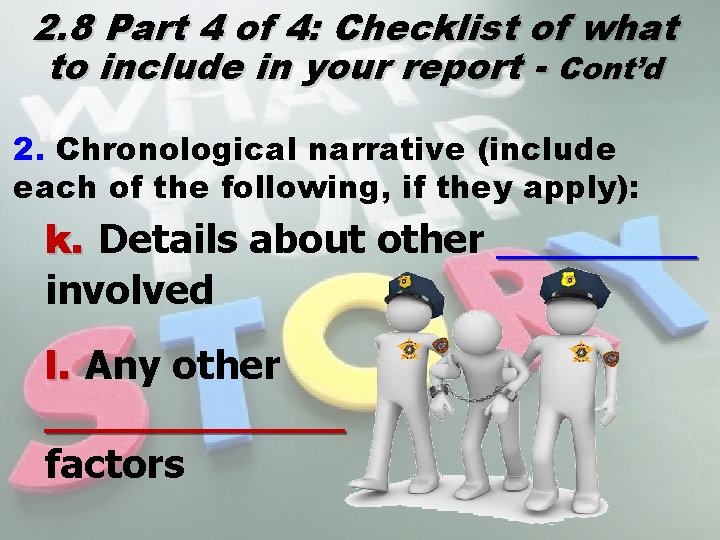
2. 8 Part 4 of 4: Checklist of what to include in your report - Cont’d 2. Chronological narrative (include each of the following, if they apply): k. Details about other __________ involved l. Any other ________ factors
2. 8 Part 4 of 4: Checklist of what to include in your report - Cont’d 3. Editing Steps a. Report is _______(unless _______ specifically requested to be hand-written) b. Report is ____ (continues ____ up until the present day) c. Report contains proper ____, __________, and _______
2. 8 Part 4 of 4: Checklist of what to include in your report - Cont’d 3. Editing Steps - Continued d. Names of witnesses and places are ______ correctly ______ e. Report is _____ of subjective _____ wording and ____ opinions ____ (except in witness reports) (See your participant handout for SAMPLE REPORT)
2. 9 Two-Secrets to good report writing: Organization and Clarity 1. Set the scene, by _____ the _____, ___________ and other information before it is discussed. 2. What is the secret to good report writing? The answer is twofold — ______ and ______
2. 9 2 -Secrets to good report writing: Organization and Clarity – Continued 3. By following these two principles, you’re already on the path to a great report. 4. A major problem for a lot of report writers is organization, not writing the report in chronological order.
2. 9 Writing in chronological order 5. The problem with chronological order is: the order according to whom? a. Is it the ____, a. ____ b. the ____, b. ____ c. a c. ______ or ______ d. perhaps even the ______? d. ______
2. 9 Writing in chronological order…. Continued 6. Each of these actors in the event has their own ______ to the ______ order of events.
QUESTIONS
2. 10 PRACTICLE EXCERISE • Given you assigned scenario you are to complete a Bexar County Constable’s Office PCT#4 REPORT Form. • You have 20 minutes to complete this task using everything you have learned so far.
Recognition Course Research & Development • Deputy Sheriff Brian Higby, Bexar County Sheriff’s Office Training Academy. (For Unit One) • Dr. Yong. Sok KIM, Ph. D. Criminal Justice • Deputy Chief George D. Little, C. C. P. S. , MS Counter-Terrorism & Criminology, 44 -year LE Veteran
SOURCES • Deputy Chief George D. Little – Research • Dr. Yong. Sok Kim – Research • Police. One. com