
Law 5 Referee Mechanics 1 Law 5 Referee
- Slides: 18
Law 5 – Referee Mechanics 1
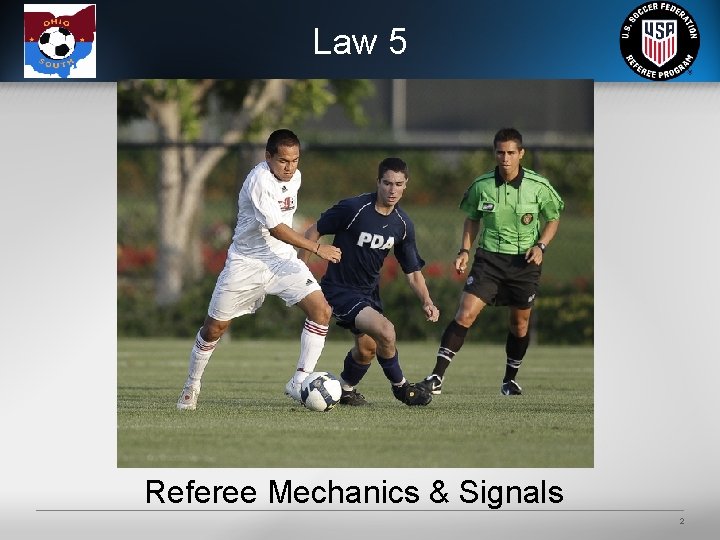
Law 5 Referee Mechanics & Signals 2
Law 5 All Referee Mechanics & Signals are here 3
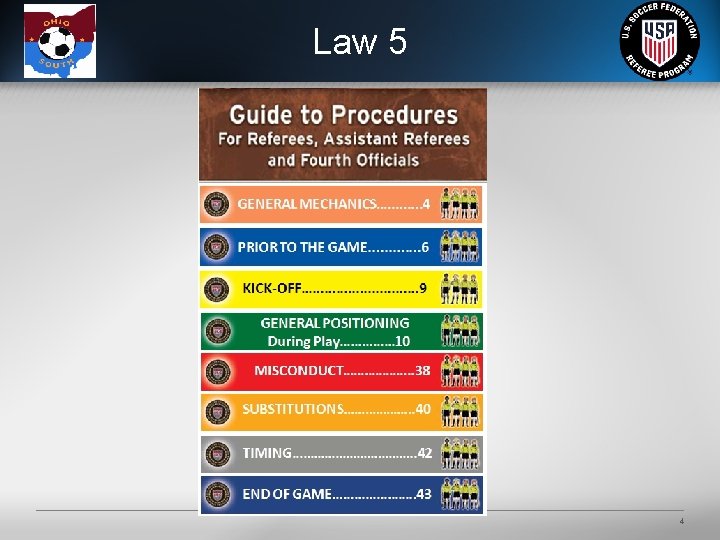
Law 5 4
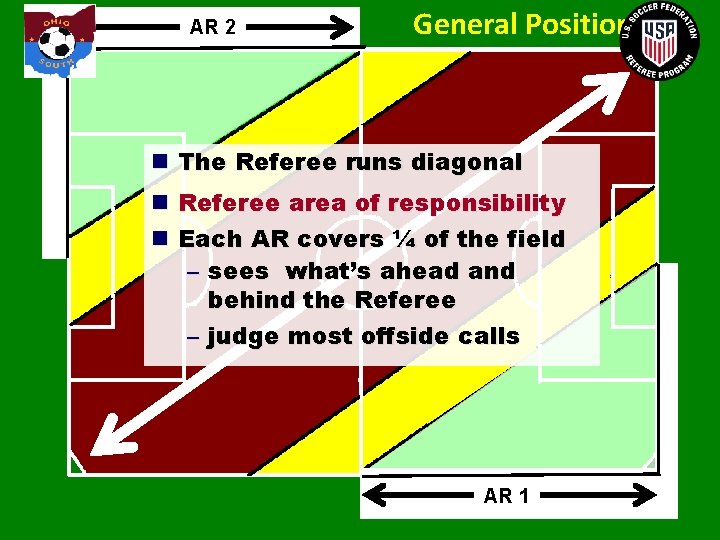
AR 2 General Positioning n The Referee runs diagonal n n Referee area of responsibility Each AR covers ¼ of the field – sees what’s ahead and behind the Referee – judge most offside calls AR 1 5
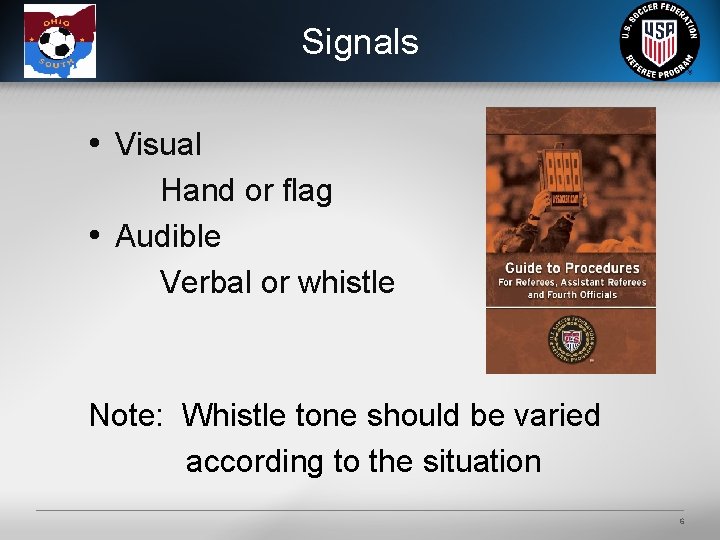
Signals • Visual Hand or flag • Audible Verbal or whistle Note: Whistle tone should be varied according to the situation 6
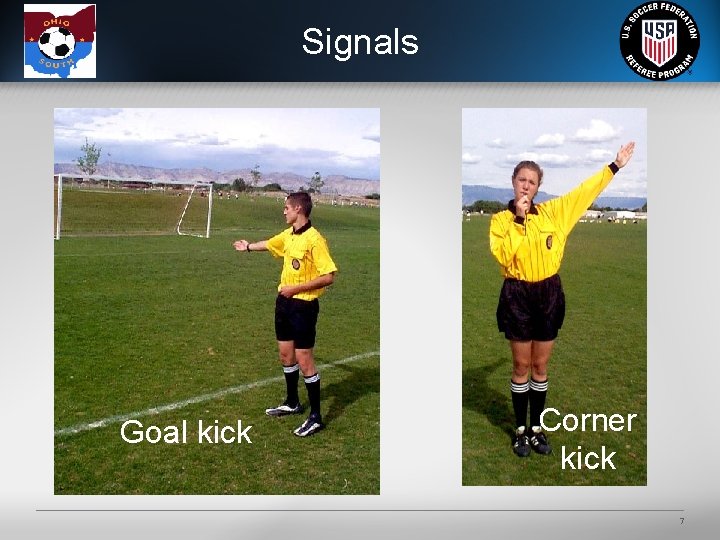
Signals Goal kick Corner kick 7
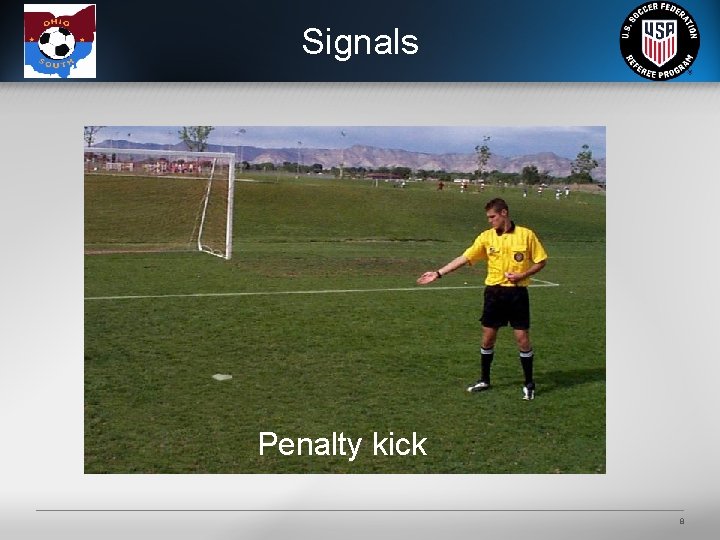
Signals Penalty kick 8
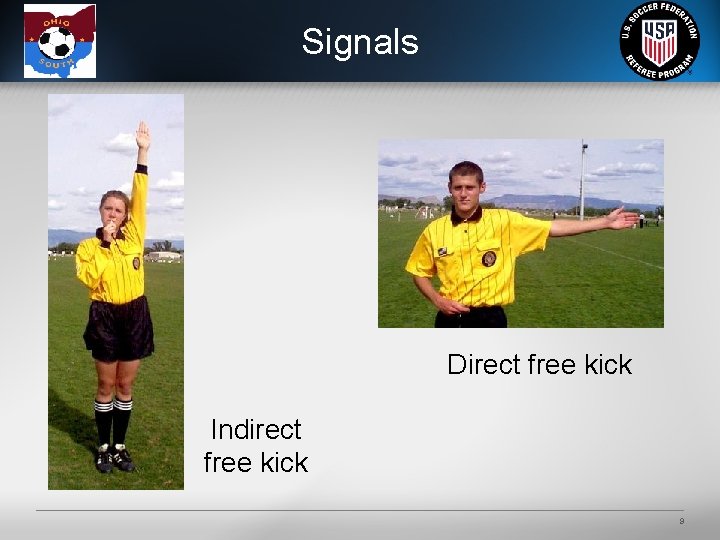
Signals Direct free kick Indirect free kick 9
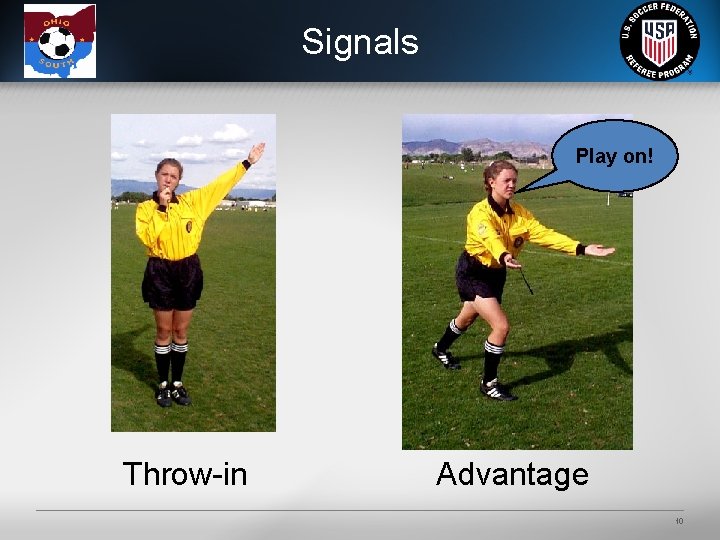
Signals Play on! Throw-in Advantage 10
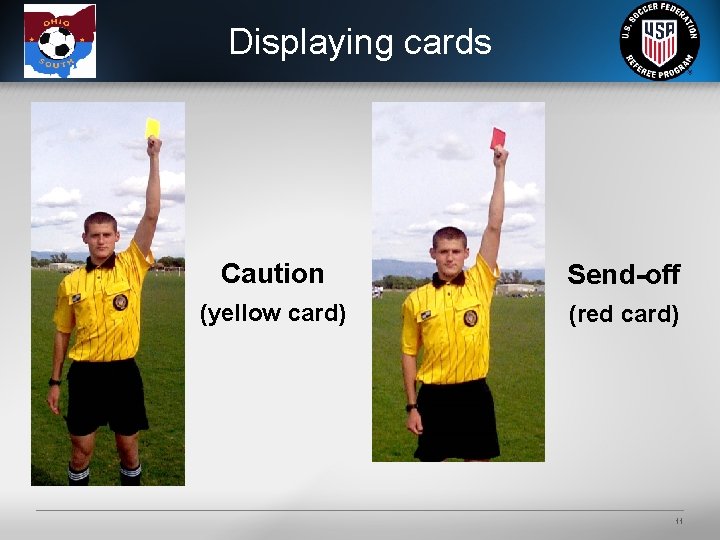
Displaying cards Caution Send-off (yellow card) (red card) 11
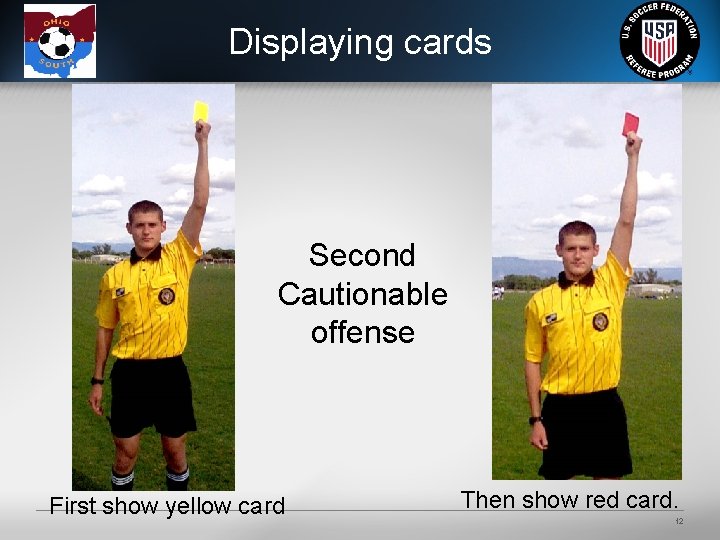
Displaying cards Second Cautionable offense First show yellow card Then show red card. 12
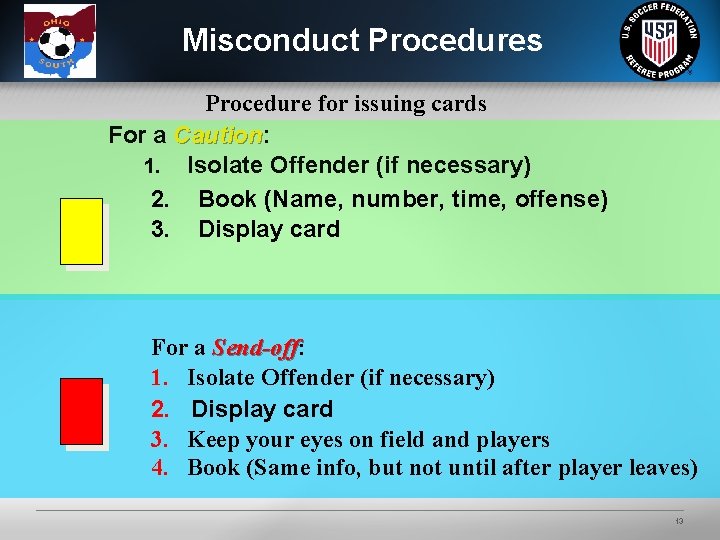
Misconduct Procedures Procedure for issuing cards For a Caution: Caution 1. Isolate Offender (if necessary) 2. Book (Name, number, time, offense) 3. Display card For a Send-off: Send-off 1. Isolate Offender (if necessary) 2. Display card 3. Keep your eyes on field and players 4. Book (Same info, but not until after player leaves) 13
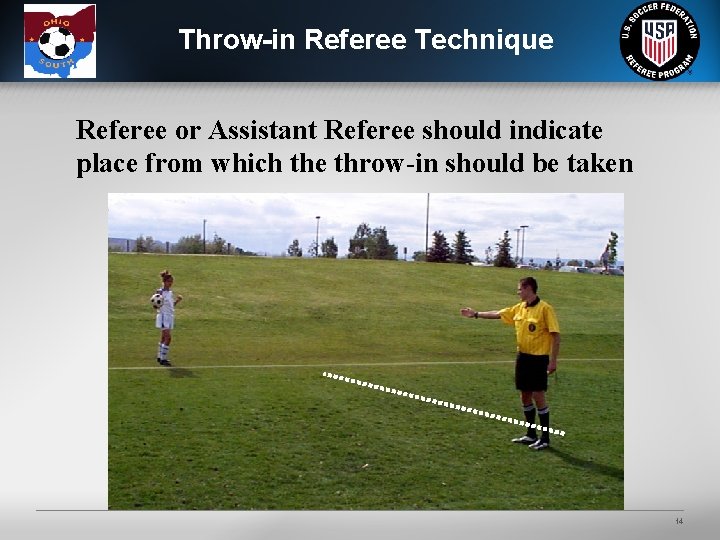
Throw-in Referee Technique Referee or Assistant Referee should indicate place from which the throw-in should be taken 14
Review What is the referee signal for… • • A Throw-in? Advantage? IFK? DFK? Goal? Offside? Penalty Kick? Caution or send-off players and subs? 15
Review When may the referee: • Report or dismiss team officials? • When they act irresponsibly • Do you show cards to them? • No, only to players and substitutes • Stop, suspend or abandon a match? • Outside interference • Weather • Infringements of the Law 16
Review A referee must: • • • Know the Laws of the Game Be firm (Not overbearing) Signal calls (Do not explain them) Be near to play (If nothing else) If in doubt - don’t interfere Use common sense (Law 18) 17
Referee Mechanics 18