
Laura Brunell Ph D Chair and Associate Professor
Laura Brunell, Ph. D. Chair and Associate Professor of Political Science GEL Weekend April 14, 2012 It’s a Wiki World: Technology and Politics in the New Millenium
Impetus
My Interests How technology has changed access to and the generation of knowledge/information/news How these changes are radically democratizing the post-modern world
The Post-Modern World Knowledge is not seen as fixed, determined Rathere is contest over what counts as knowledge, what is knowable Questioning science as usual (method) Deconstructing existing meta-narratives; Constructing new narratives in their places
What’s does Wiki mean? http: //en. wikipedia. org/wiki/Wiki_(disa mbiguation) a collaborative website; Wiki. Web, the original wiki website, and originator of the word "wiki" Wiki software, software used to run a wiki website Wikipedia, a wiki encyclopedia sometimes referred to as "wiki"
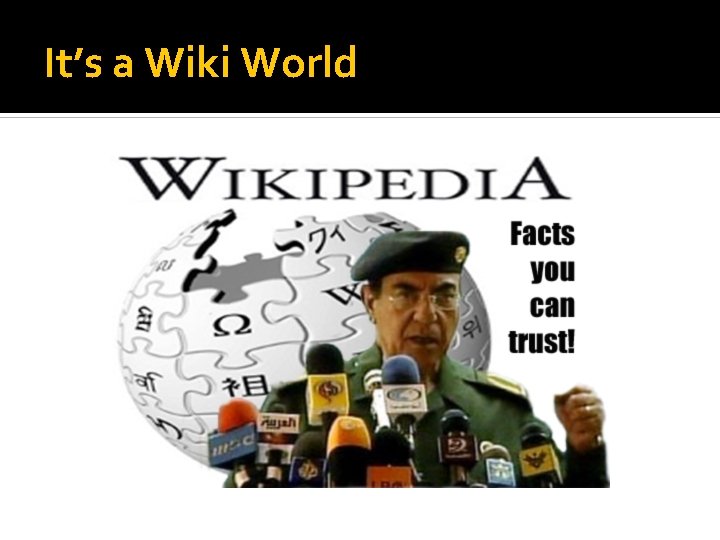
It’s a Wiki World
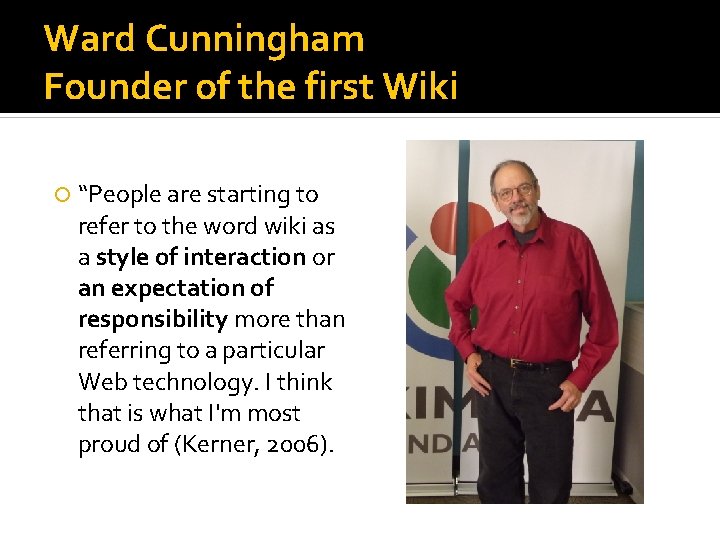
Ward Cunningham Founder of the first Wiki “People are starting to refer to the word wiki as a style of interaction or an expectation of responsibility more than referring to a particular Web technology. I think that is what I'm most proud of (Kerner, 2006).
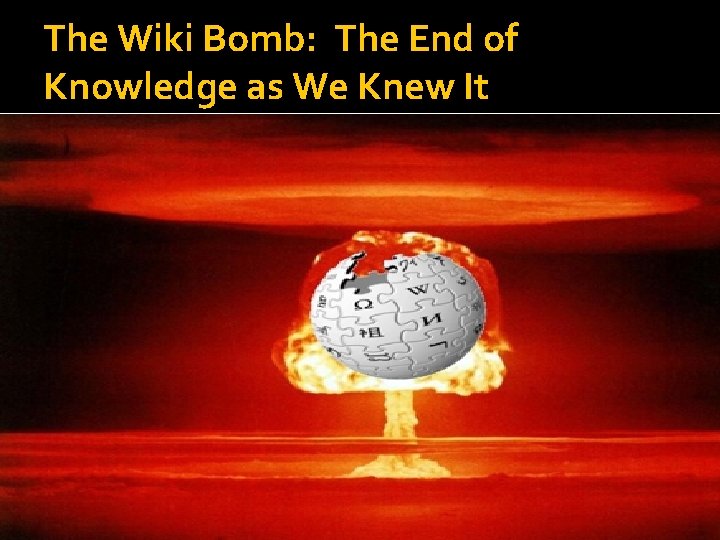
The Wiki Bomb: The End of Knowledge as We Knew It
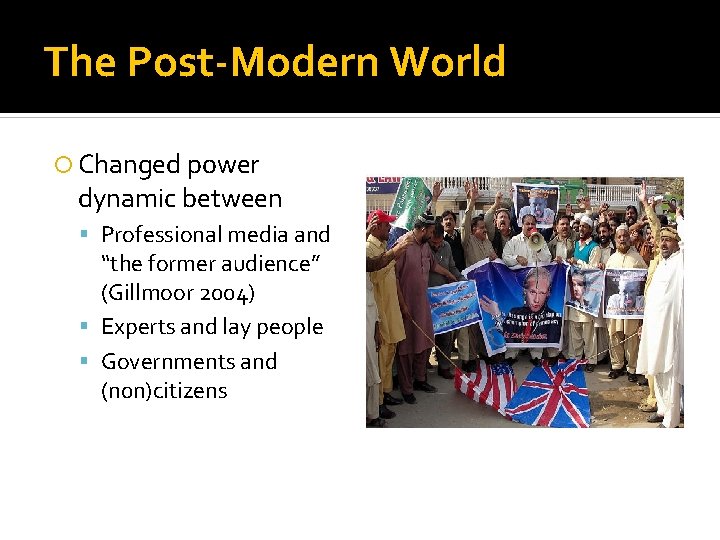
The Post-Modern World Changed power dynamic between Professional media and “the former audience” (Gillmoor 2004) Experts and lay people Governments and (n 0 n)citizens
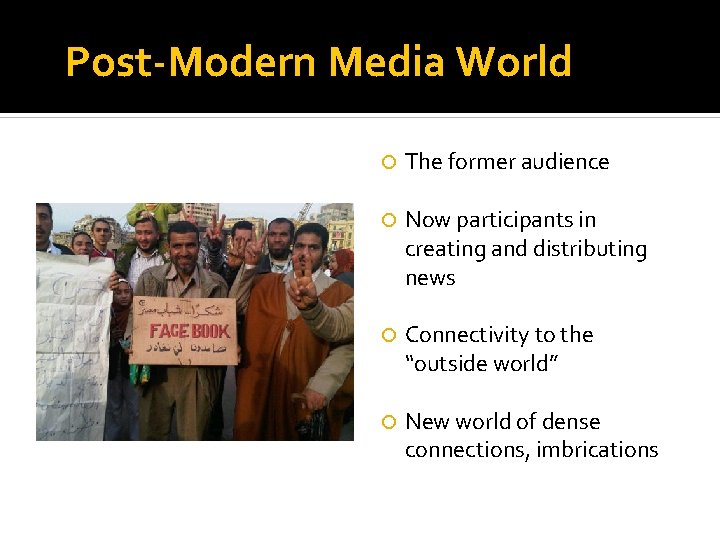
Post-Modern Media World The former audience Now participants in creating and distributing news Connectivity to the “outside world” New world of dense connections, imbrications
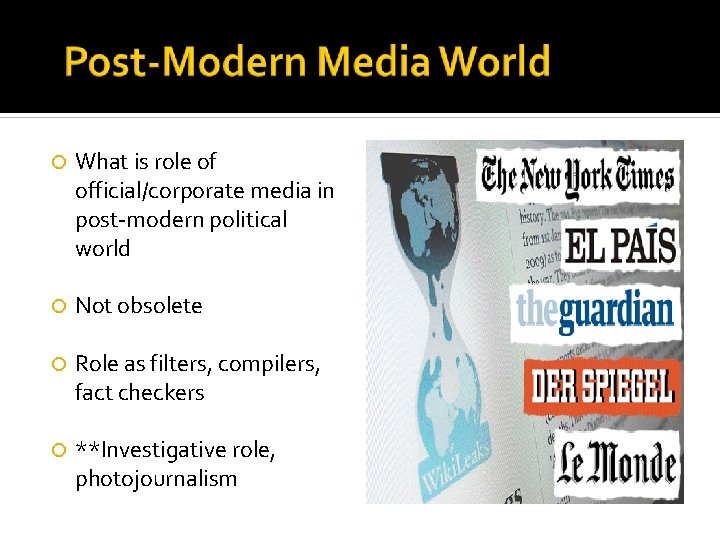
What is role of official/corporate media in post-modern political world Not obsolete Role as filters, compilers, fact checkers **Investigative role, photojournalism
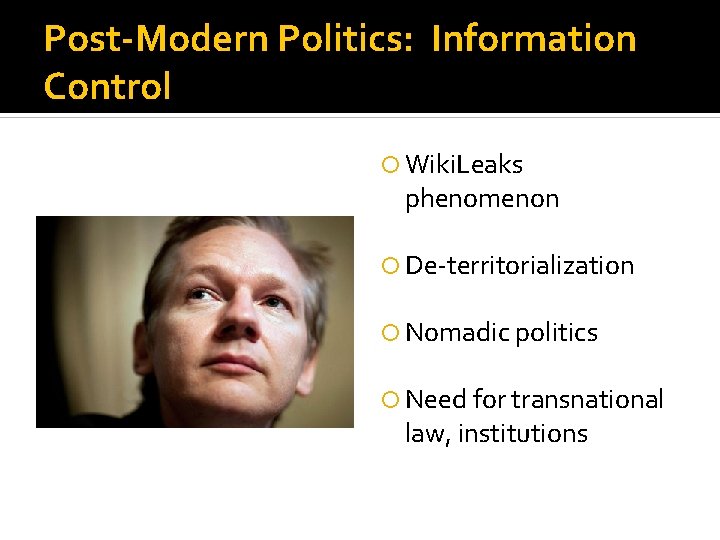
Post-Modern Politics: Information Control Wiki. Leaks phenomenon De-territorialization Nomadic politics Need for transnational law, institutions
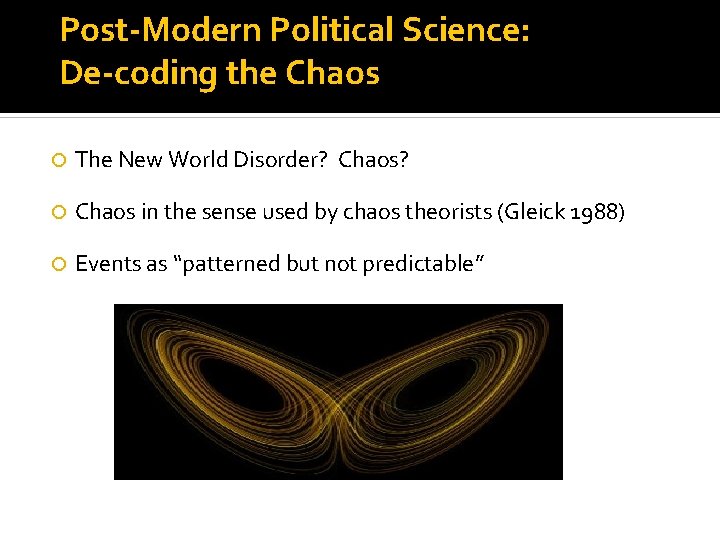
Post-Modern Political Science: De-coding the Chaos The New World Disorder? Chaos in the sense used by chaos theorists (Gleick 1988) Events as “patterned but not predictable”
Post-Modern Political Science: Decoding the Chaos Spread of Democracy in the Arab World as the 4 th Wave of Democratization
Post-Modern Political Science: Chaos as the New World Order Patterned but not predictable (in terms of precise timing and location) Pattern: We know what causes political unrest Dictatorship a necessary but not sufficient condition Pattern: **Relative deprivation (Gurr 1968) Rising expectations for political participation, upward mobility, employment Caused by rising levels of literacy, education, contact with the West, other groups “living better”
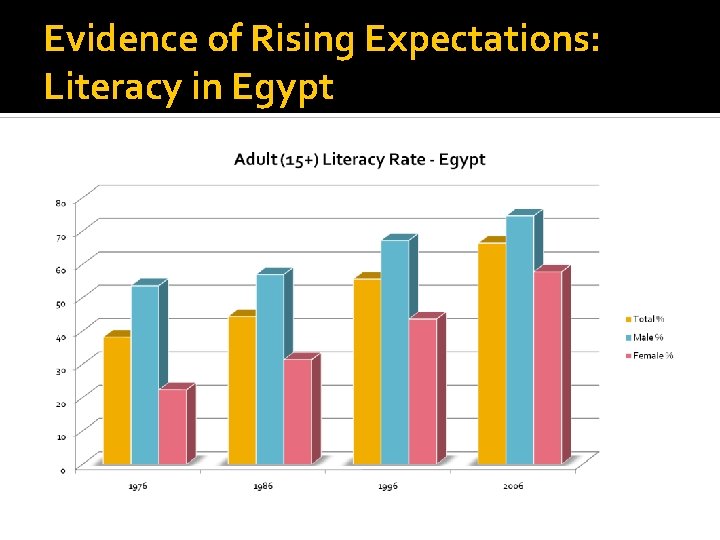
Evidence of Rising Expectations: Literacy in Egypt
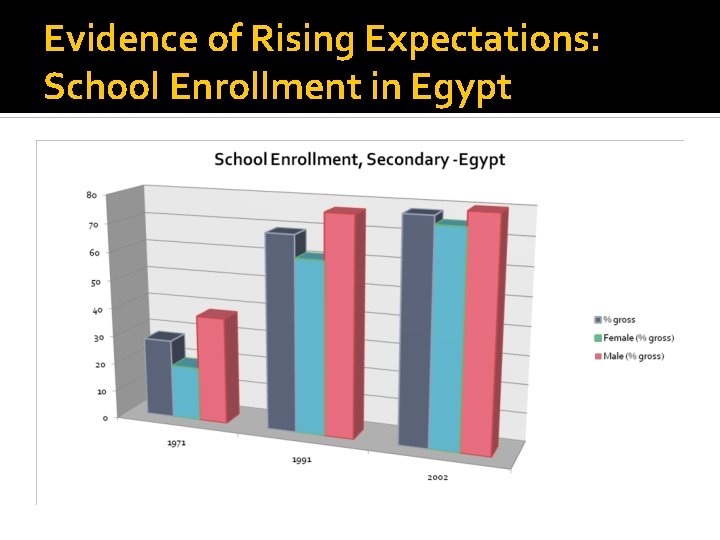
Evidence of Rising Expectations: School Enrollment in Egypt
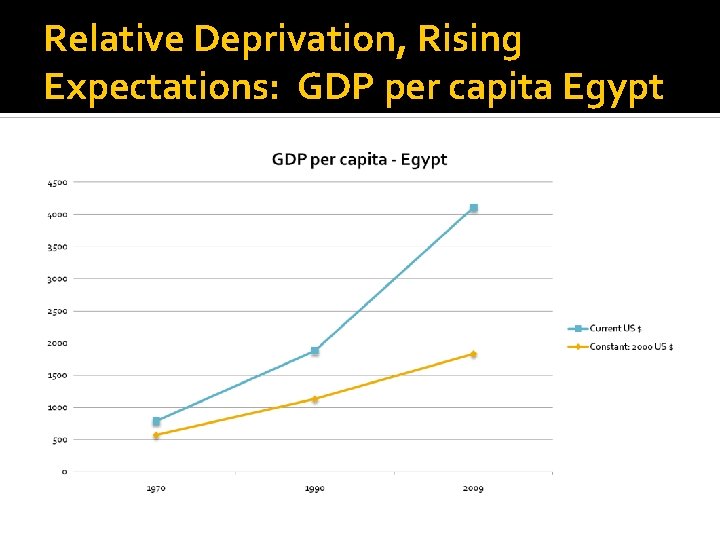
Relative Deprivation, Rising Expectations: GDP per capita Egypt
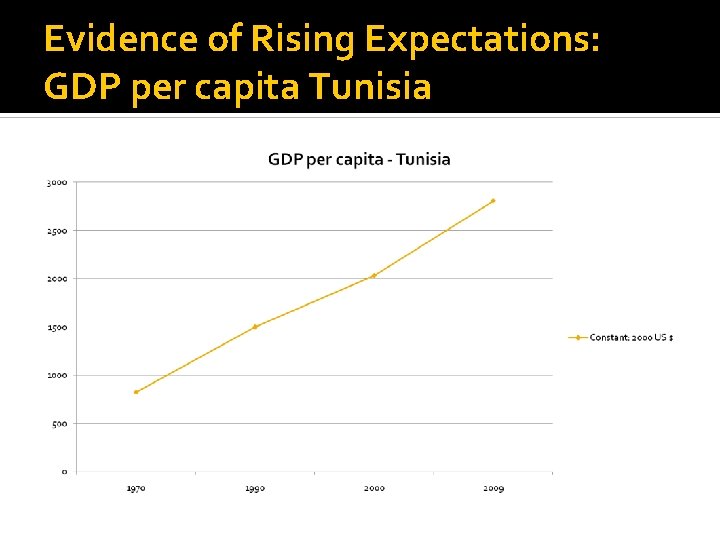
Evidence of Rising Expectations: GDP per capita Tunisia
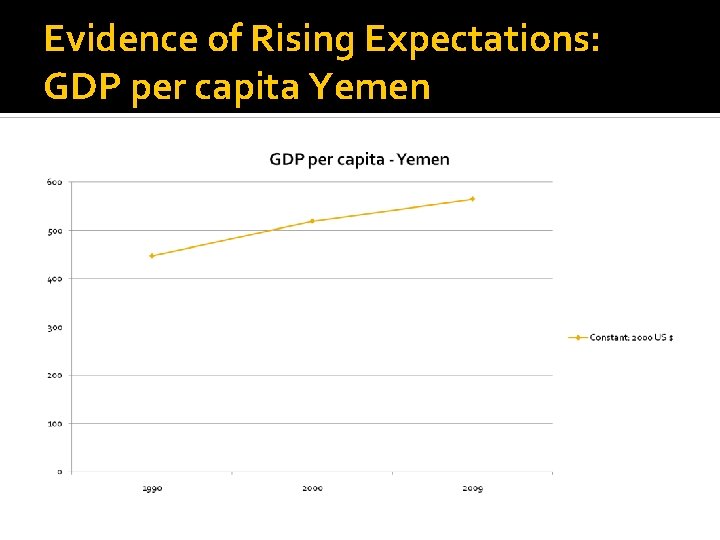
Evidence of Rising Expectations: GDP per capita Yemen
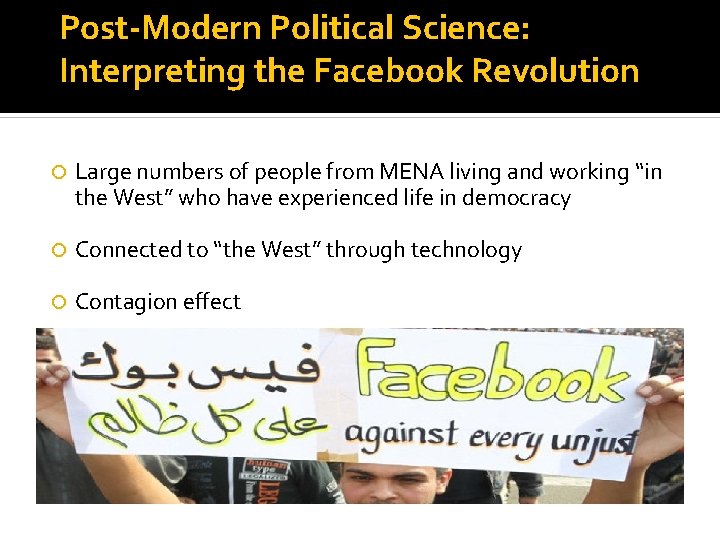
Post-Modern Political Science: Interpreting the Facebook Revolution Large numbers of people from MENA living and working “in the West” who have experienced life in democracy Connected to “the West” through technology Contagion effect
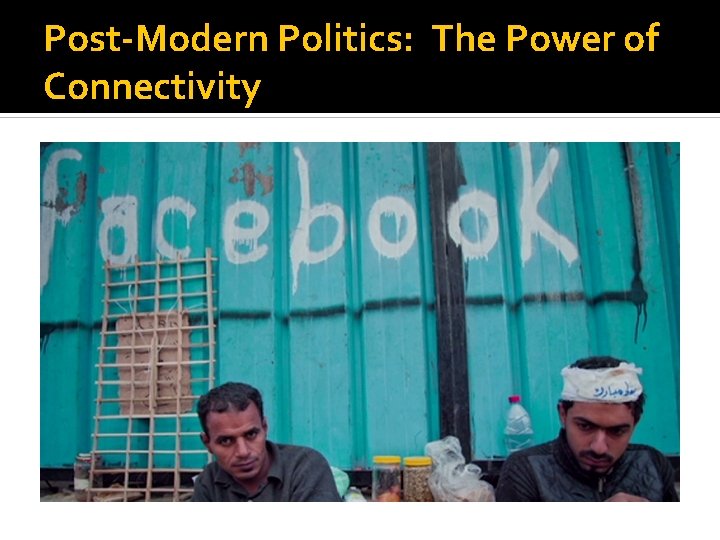
Post-Modern Politics: The Power of Connectivity
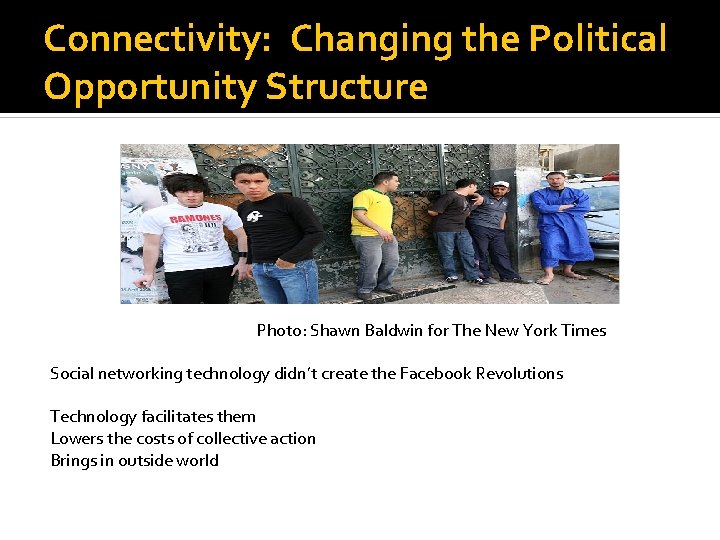
Connectivity: Changing the Political Opportunity Structure Photo: Shawn Baldwin for The New York Times Social networking technology didn’t create the Facebook Revolutions Technology facilitates them Lowers the costs of collective action Brings in outside world
Summary and Concluding Questions It’s a Wiki World Collaborative Connected Rapidly changing Appears chaotic but may be patterned if not predictable What’s your profile? Where does you fit in the Wiki. World? What are you doing to contribute to the Wiki. World? Have you thought about yourself, your vocation in these terms?
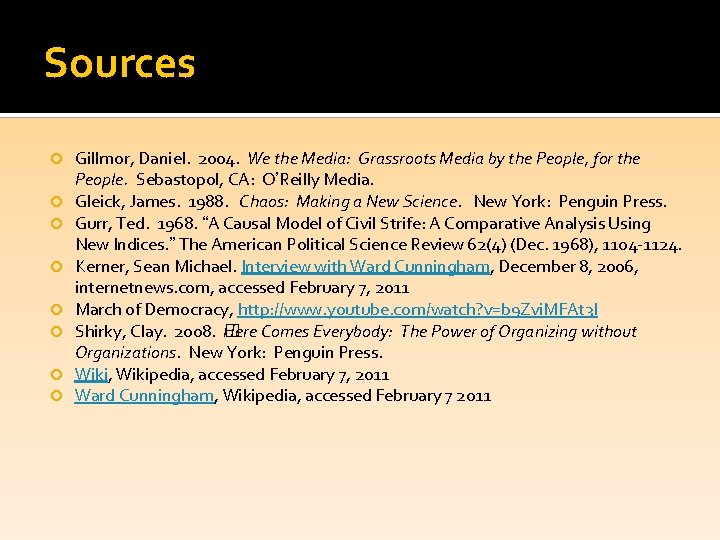
Sources Gillmor, Daniel. 2004. We the Media: Grassroots Media by the People, for the People. Sebastopol, CA: O’Reilly Media. Gleick, James. 1988. Chaos: Making a New Science. New York: Penguin Press. Gurr, Ted. 1968. “A Causal Model of Civil Strife: A Comparative Analysis Using New Indices. ” The American Political Science Review 62(4) (Dec. 1968), 1104 -1124. Kerner, Sean Michael. Interview with Ward Cunningham, December 8, 2006, internetnews. com, accessed February 7, 2011 March of Democracy, http: //www. youtube. com/watch? v=b 9 Zvi. MFAt 3 I Shirky, Clay. 2008. � Here Comes Everybody: The Power of Organizing without Organizations. New York: Penguin Press. Wiki, Wikipedia, accessed February 7, 2011 Ward Cunningham, Wikipedia, accessed February 7 2011
- Slides: 25