
Launching the New Nation 1787 1800 Unit 4


- Slides: 23
Launching the New Nation (1787 -1800) Unit 4: Section 10 How did the United States build a government, expand its territory, and conduct foreign policy in its early years?
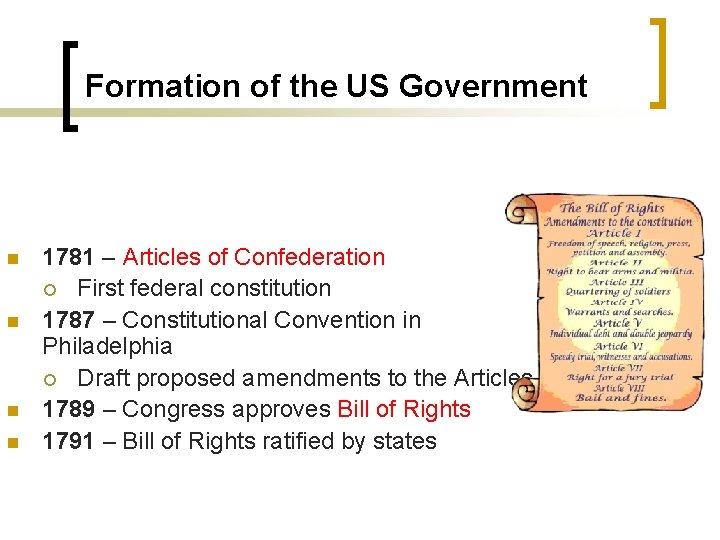
Formation of the US Government n n 1781 – Articles of Confederation ¡ First federal constitution 1787 – Constitutional Convention in Philadelphia ¡ Draft proposed amendments to the Articles 1789 – Congress approves Bill of Rights 1791 – Bill of Rights ratified by states
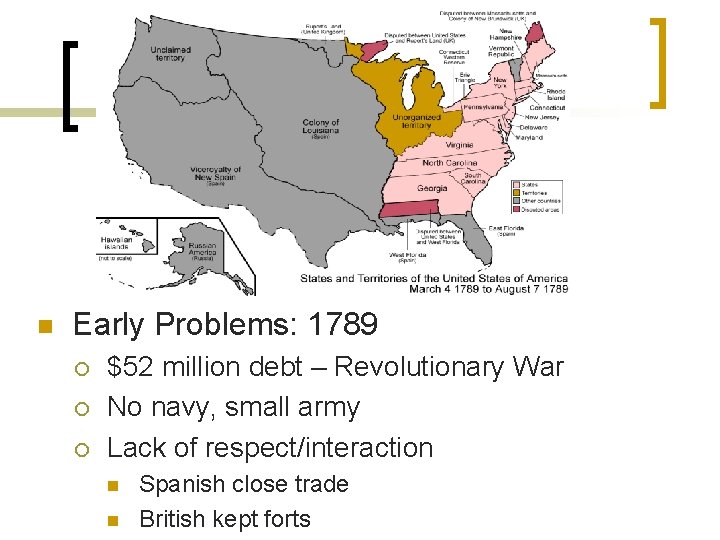
n Early Problems: 1789 ¡ ¡ ¡ $52 million debt – Revolutionary War No navy, small army Lack of respect/interaction n n Spanish close trade British kept forts
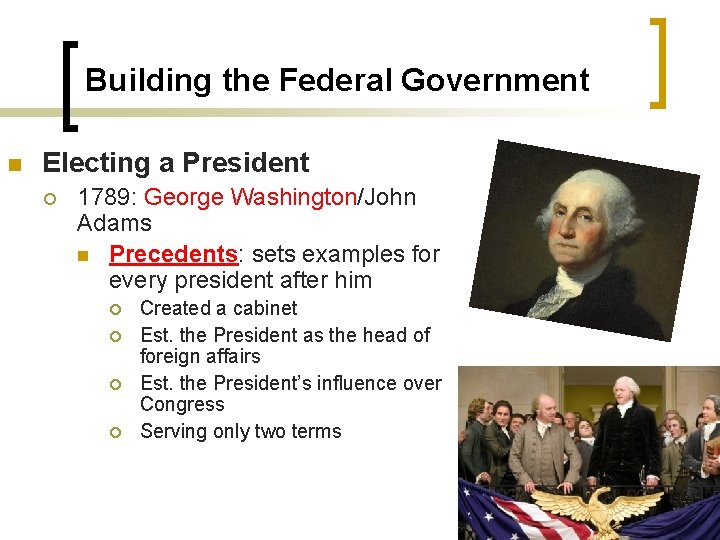
Building the Federal Government n Electing a President ¡ 1789: George Washington/John Adams n Precedents: sets examples for every president after him ¡ ¡ Created a cabinet Est. the President as the head of foreign affairs Est. the President’s influence over Congress Serving only two terms
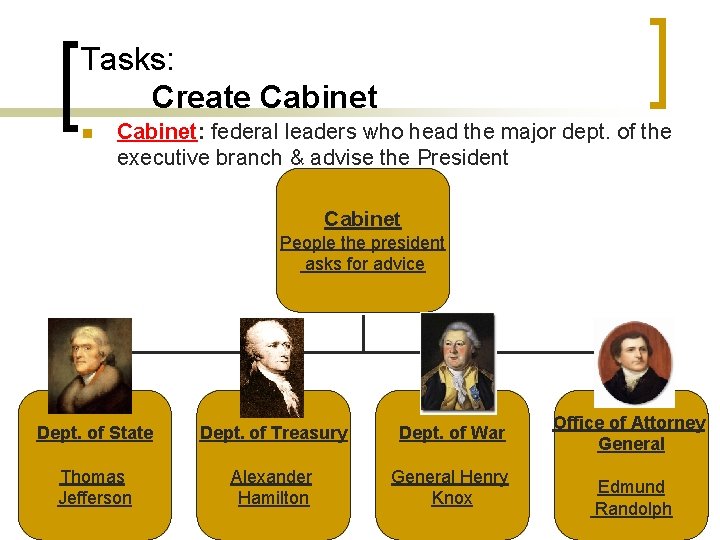
Tasks: Create Cabinet n Cabinet: federal leaders who head the major dept. of the executive branch & advise the President Cabinet People the president asks for advice Dept. of State Dept. of Treasury Dept. of War Thomas Jefferson Alexander Hamilton General Henry Knox Office of Attorney General Edmund Randolph
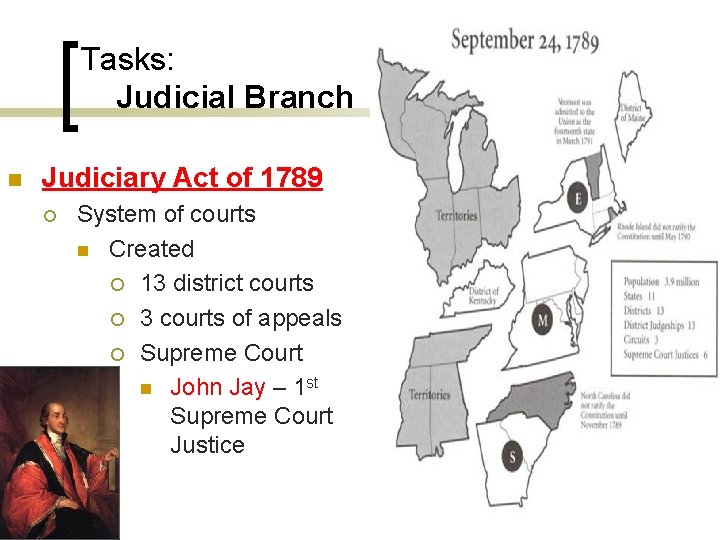
Tasks: Judicial Branch n Judiciary Act of 1789 ¡ System of courts n Created ¡ 13 district courts ¡ 3 courts of appeals ¡ Supreme Court n John Jay – 1 st Supreme Court Justice
Tasks: Financing the Government n n Nation’s Debt ¡ In debt from the Revolution & the inability of the AOC to tax Hamilton’s Plans Stir Debate ¡ Federal govn’t should pay all debts, including state debts (Federalist) n ¡ show federal govn’t authority Opposition (Antifederalist) n Threat to states rights n Two clear, separate beliefs
Hamilton’s Economic Plan Tariffs Excise State Debt Assumption Protective Bank of the US Funding
Hamiltion’s Economic Plan n Hamilton’s Plan n Protective Tariff: tax on imports to protect American goods n Excise taxes: tax on consumer goods to raise revenue for the federal government & protect American manufacturer’s from foreign competition
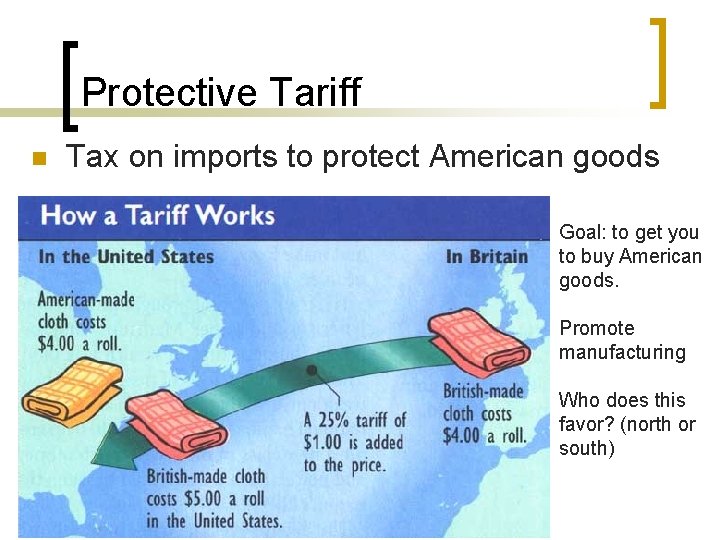
Protective Tariff n Tax on imports to protect American goods Goal: to get you to buy American goods. Promote manufacturing Who does this favor? (north or south)
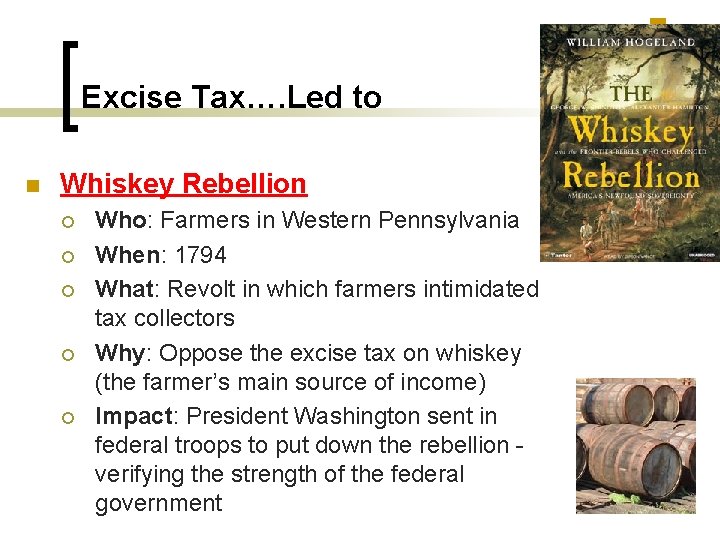
Excise Tax…. Led to n Whiskey Rebellion ¡ ¡ ¡ Who: Farmers in Western Pennsylvania When: 1794 What: Revolt in which farmers intimidated tax collectors Why: Oppose the excise tax on whiskey (the farmer’s main source of income) Impact: President Washington sent in federal troops to put down the rebellion verifying the strength of the federal government
Hamilton’s Economic Plan n State Debt Assumption n Opposition ¡ Southern states oppose n Already paid off war debts n Shift wealth to merchants (north) n Tax farmers
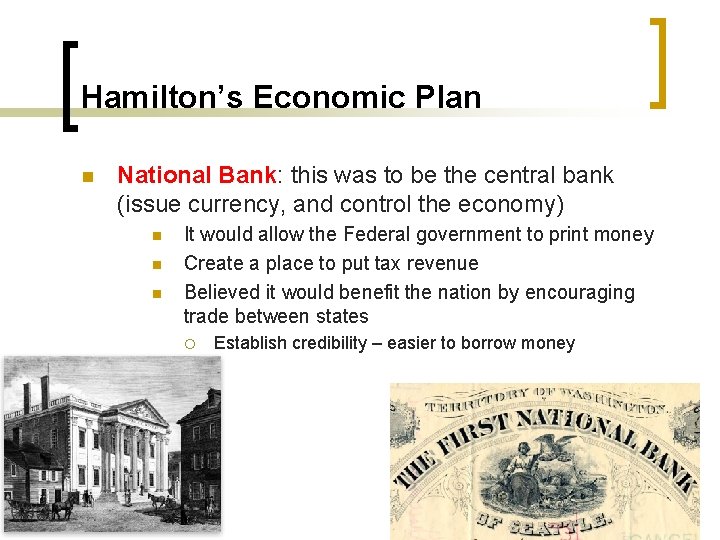
Hamilton’s Economic Plan n National Bank: this was to be the central bank (issue currency, and control the economy) n n n It would allow the Federal government to print money Create a place to put tax revenue Believed it would benefit the nation by encouraging trade between states ¡ Establish credibility – easier to borrow money
Hamiltion’s Economic Plan National Bank cont’d n. Problem ¡ ¡ Creation of bank not listed in Constitution Not part of enumerated powers (fed. Gov’t powers) n. Congress passed anyways Hamilton said b/c of the necessary and proper clause Congress had implied powers (powers not listed in constitution) n 1791 Bank of USA was established for 20 years!!! ¡
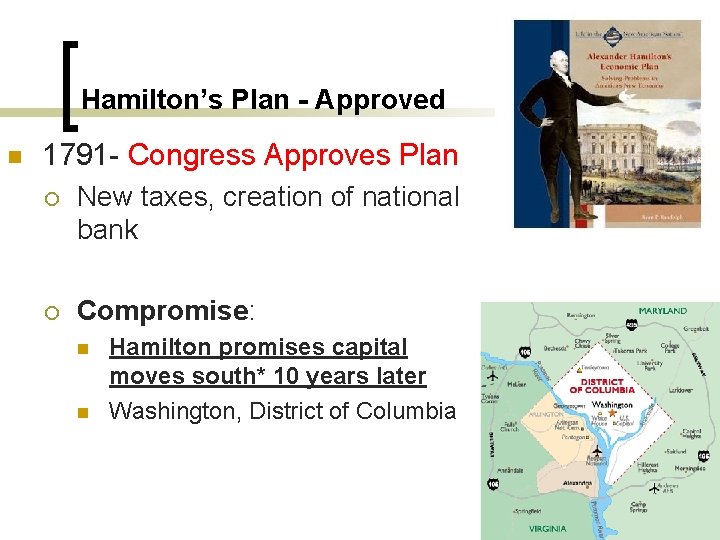
Hamilton’s Plan - Approved n 1791 - Congress Approves Plan ¡ New taxes, creation of national bank ¡ Compromise: n n Hamilton promises capital moves south* 10 years later Washington, District of Columbia
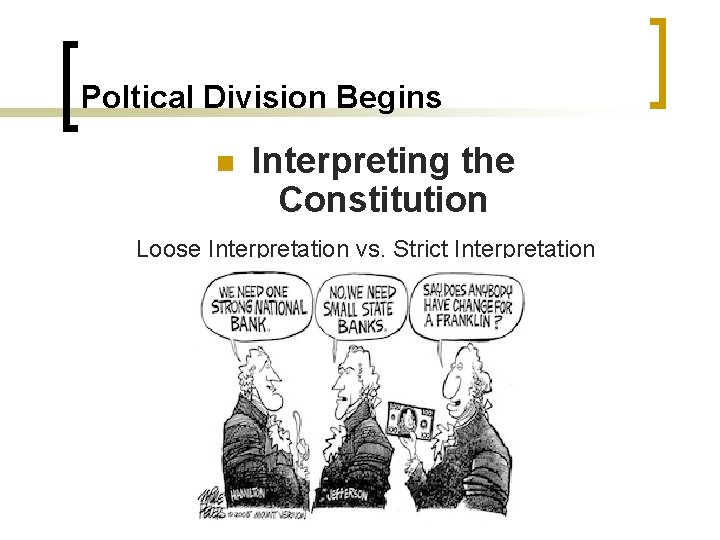
Poltical Division Begins n Interpreting the Constitution Loose Interpretation vs. Strict Interpretation
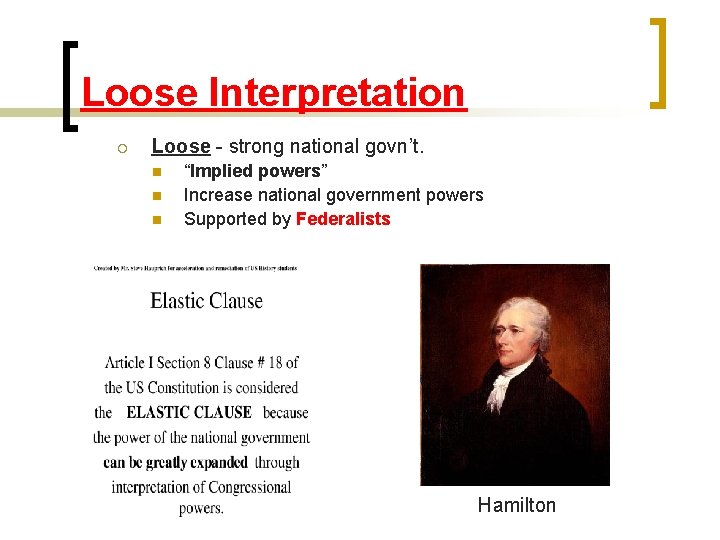
Loose Interpretation ¡ Loose - strong national govn’t. n n n “Implied powers” Increase national government powers Supported by Federalists Hamilton
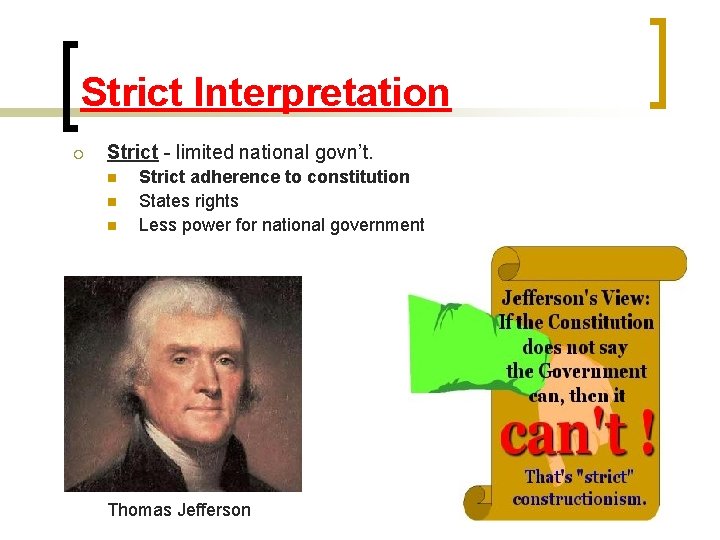
Strict Interpretation ¡ Strict - limited national govn’t. n n n Strict adherence to constitution States rights Less power for national government Thomas Jefferson
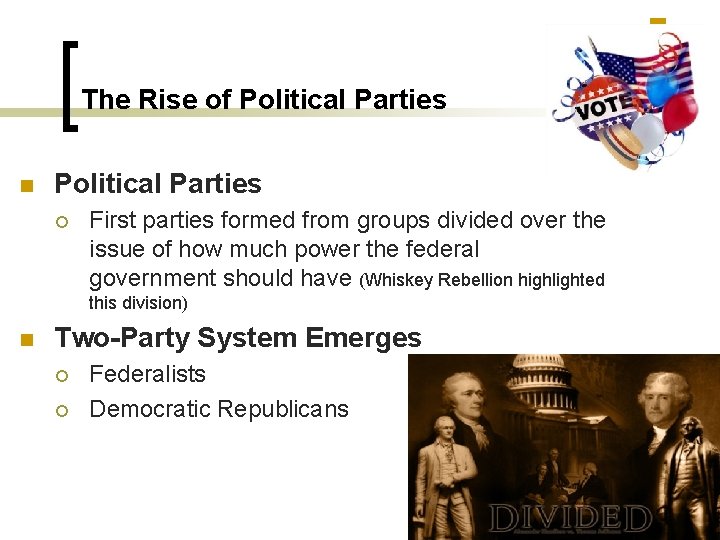
The Rise of Political Parties n Political Parties ¡ First parties formed from groups divided over the issue of how much power the federal government should have (Whiskey Rebellion highlighted this division) n Two-Party System Emerges ¡ ¡ Federalists Democratic Republicans
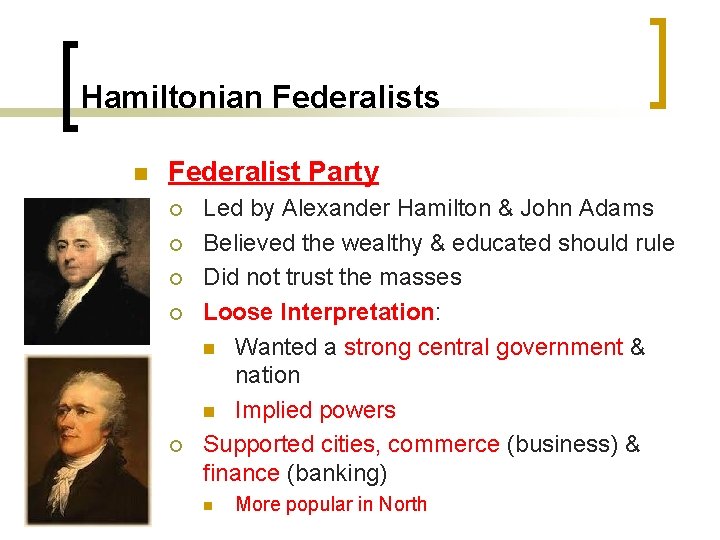
Hamiltonian Federalists n Federalist Party ¡ ¡ ¡ Led by Alexander Hamilton & John Adams Believed the wealthy & educated should rule Did not trust the masses Loose Interpretation: n Wanted a strong central government & nation n Implied powers Supported cities, commerce (business) & finance (banking) n More popular in North
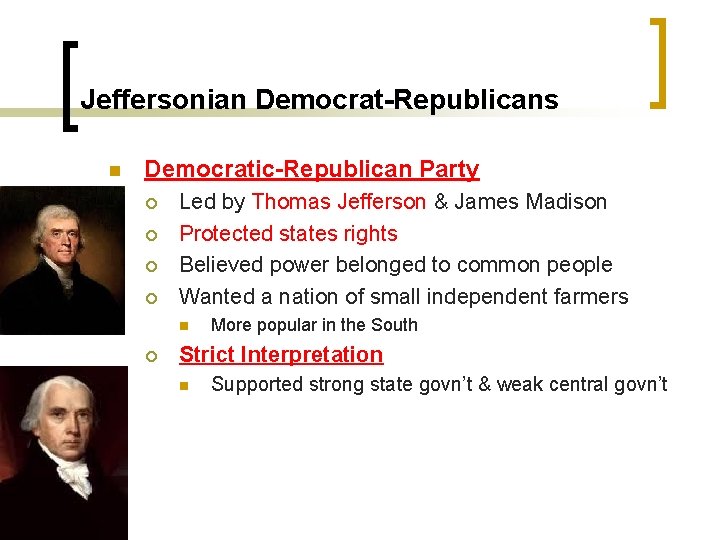
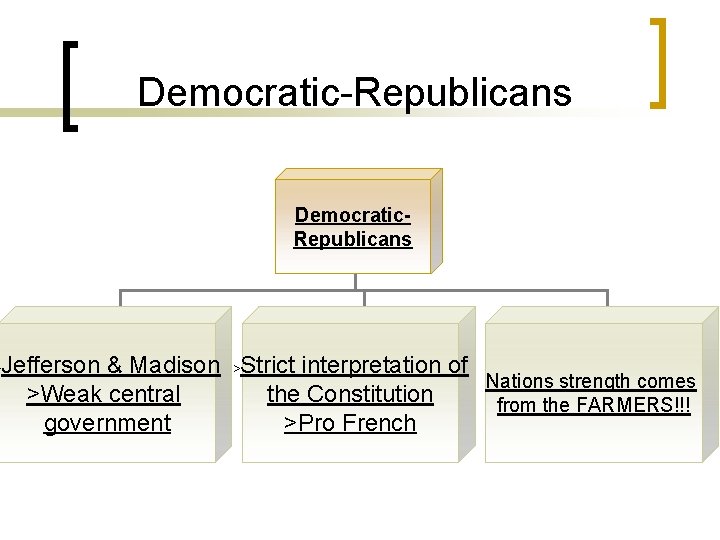
Jeffersonian Democrat-Republicans n Democratic-Republican Party ¡ ¡ Led by Thomas Jefferson & James Madison Protected states rights Believed power belonged to common people Wanted a nation of small independent farmers n ¡ More popular in the South Strict Interpretation n Supported strong state govn’t & weak central govn’t
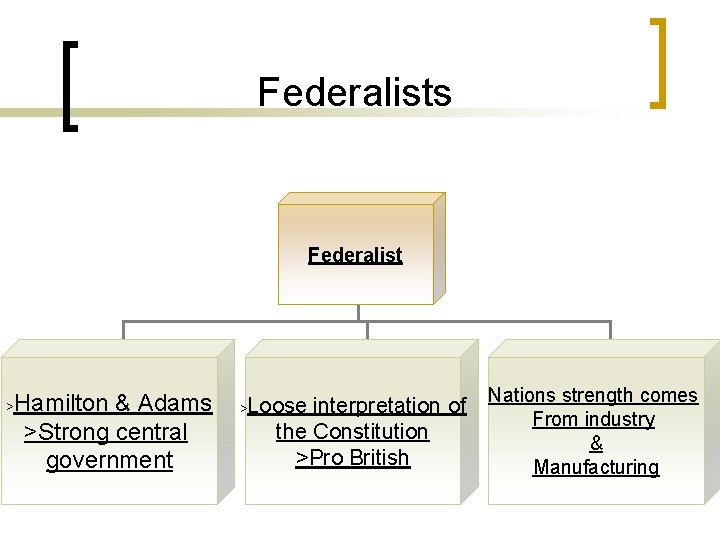
Federalists Federalist > Hamilton & Adams >Strong central government > Loose interpretation of the Constitution >Pro British Nations strength comes From industry & Manufacturing
> Democratic-Republicans Democratic. Republicans Jefferson & Madison >Strict interpretation of Nations strength comes >Weak central the Constitution from the FARMERS!!! government >Pro French