
Launching of the second European Climate Change Programme
- Slides: 46
Launching of the second European Climate Change Programme (ECCP II) Stakeholder Conference Brussels 24 th October 2005 Lars Strömberg Vattenfall AB Stockholm/Berlin © Vattenfall AB
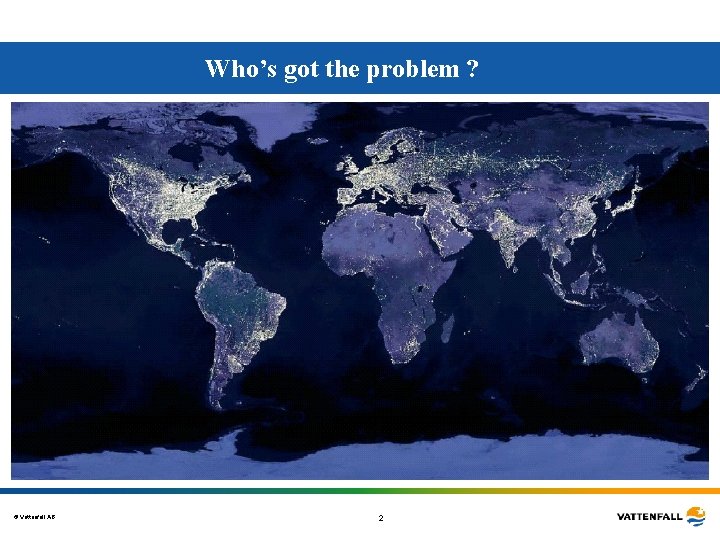
Who’s got the problem ? © Vattenfall AB 2
CO 2 free power plant ECCP I - experiences © Vattenfall AB 3
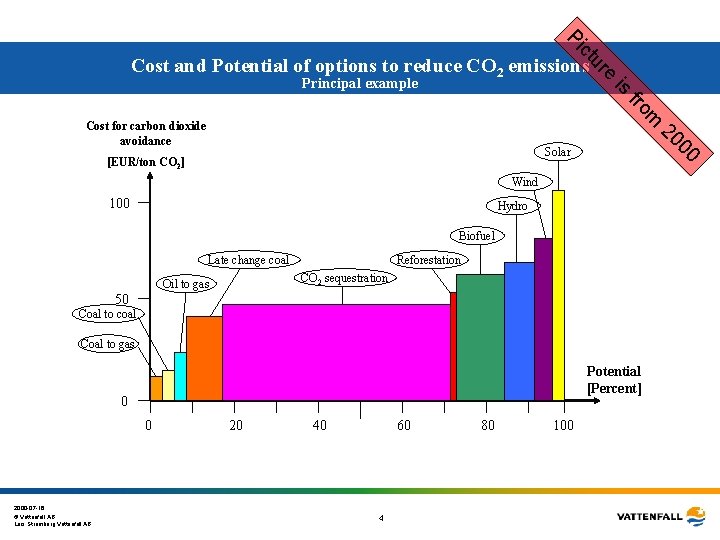
ct Pi is Principal example e ur Cost and Potential of options to reduce CO 2 emissions m fro 20 Cost for carbon dioxide avoidance 00 Solar [EUR/ton CO 2] Wind 100 Hydro Biofuel Late change coal Reforestation CO 2 sequestration Oil to gas 50 Coal to coal Coal to gas Potential [Percent] 0 0 20 40 60 80 The picture will look different when different time perspectives are adopted 2000 -07 -16 © Vattenfall AB Lars Strömberg Vattenfall AB 4 100
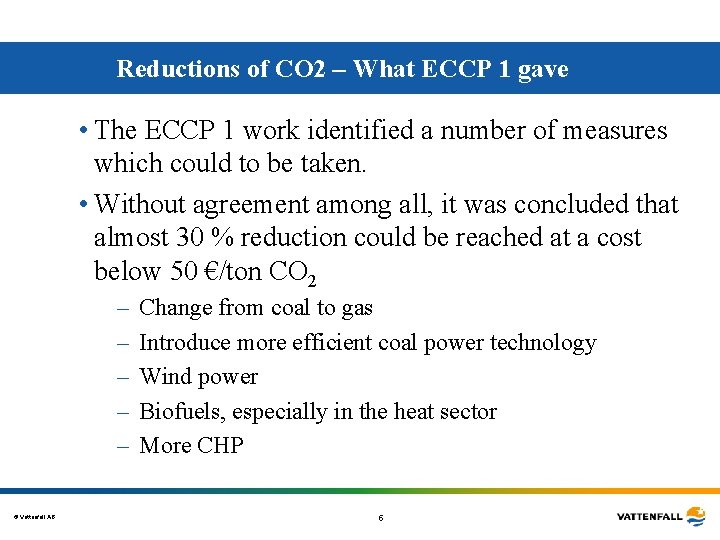
Reductions of CO 2 – What ECCP 1 gave • The ECCP 1 work identified a number of measures which could to be taken. • Without agreement among all, it was concluded that almost 30 % reduction could be reached at a cost below 50 €/ton CO 2 – – – © Vattenfall AB Change from coal to gas Introduce more efficient coal power technology Wind power Biofuels, especially in the heat sector More CHP 5
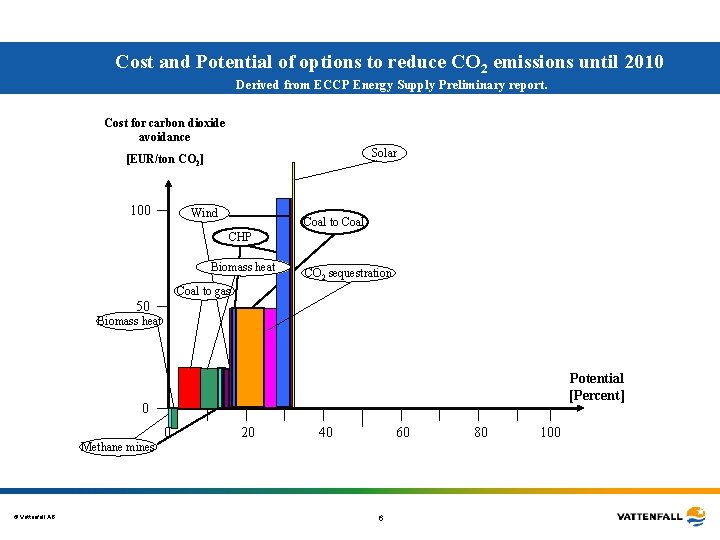
Cost and Potential of options to reduce CO 2 emissions until 2010 Derived from ECCP Energy Supply Preliminary report. Cost for carbon dioxide avoidance Solar [EUR/ton CO 2] 100 Wind Coal to Coal CHP Biomass heat CO 2 sequestration Coal to gas 50 Biomass heat Potential [Percent] 0 0 20 40 60 Methane mines © Vattenfall AB 6 80 100
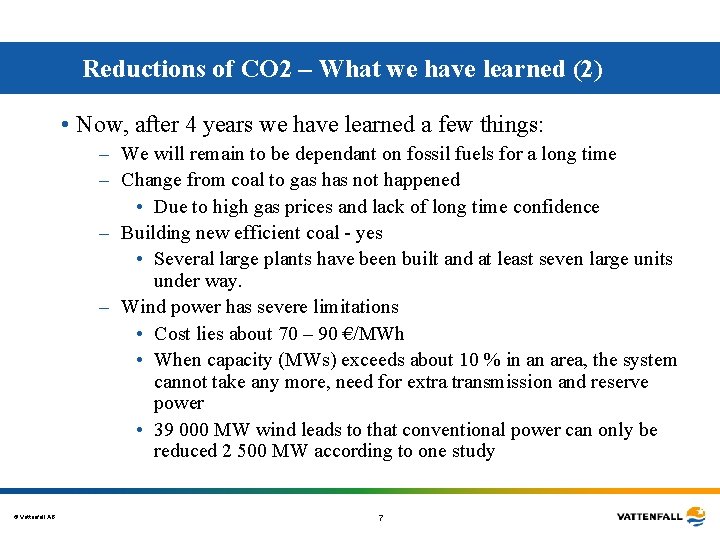
Reductions of CO 2 – What we have learned (2) • Now, after 4 years we have learned a few things: – We will remain to be dependant on fossil fuels for a long time – Change from coal to gas has not happened • Due to high gas prices and lack of long time confidence – Building new efficient coal - yes • Several large plants have been built and at least seven large units under way. – Wind power has severe limitations • Cost lies about 70 – 90 €/MWh • When capacity (MWs) exceeds about 10 % in an area, the system cannot take any more, need for extra transmission and reserve power • 39 000 MW wind leads to that conventional power can only be reduced 2 500 MW according to one study © Vattenfall AB 7
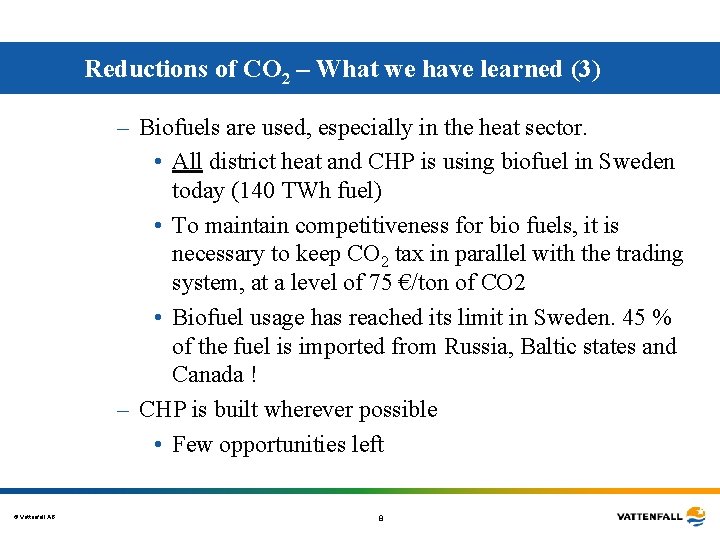
Reductions of CO 2 – What we have learned (3) – Biofuels are used, especially in the heat sector. • All district heat and CHP is using biofuel in Sweden today (140 TWh fuel) • To maintain competitiveness for bio fuels, it is necessary to keep CO 2 tax in parallel with the trading system, at a level of 75 €/ton of CO 2 • Biofuel usage has reached its limit in Sweden. 45 % of the fuel is imported from Russia, Baltic states and Canada ! – CHP is built wherever possible • Few opportunities left © Vattenfall AB 8
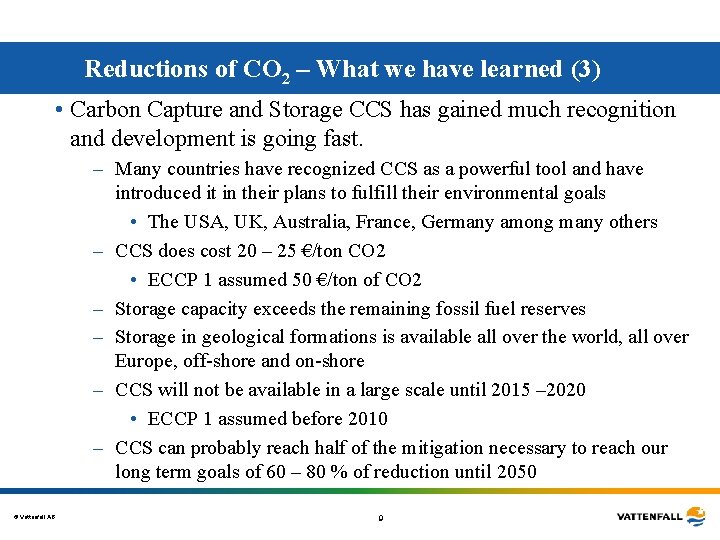
Reductions of CO 2 – What we have learned (3) • Carbon Capture and Storage CCS has gained much recognition and development is going fast. – Many countries have recognized CCS as a powerful tool and have introduced it in their plans to fulfill their environmental goals • The USA, UK, Australia, France, Germany among many others – CCS does cost 20 – 25 €/ton CO 2 • ECCP 1 assumed 50 €/ton of CO 2 – Storage capacity exceeds the remaining fossil fuel reserves – Storage in geological formations is available all over the world, all over Europe, off-shore and on-shore – CCS will not be available in a large scale until 2015 – 2020 • ECCP 1 assumed before 2010 – CCS can probably reach half of the mitigation necessary to reach our long term goals of 60 – 80 % of reduction until 2050 © Vattenfall AB 9
Emission Trading sets the commercial framework for new technology in Europe © Vattenfall AB 10
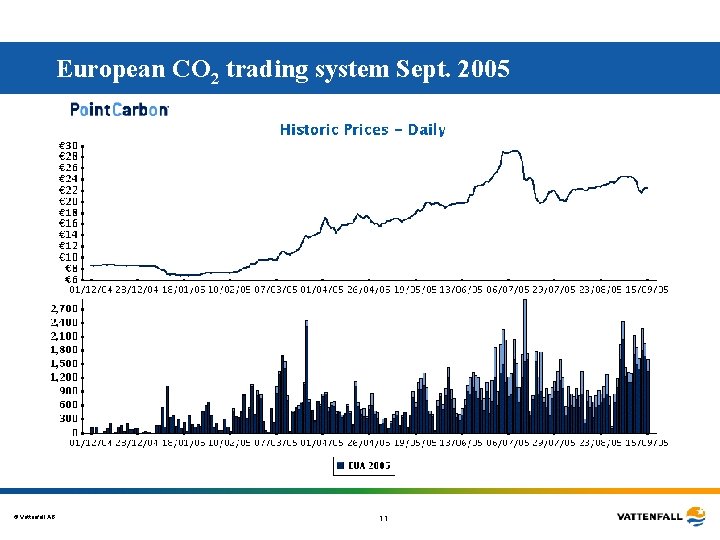
European CO 2 trading system Sept. 2005 © Vattenfall AB 11
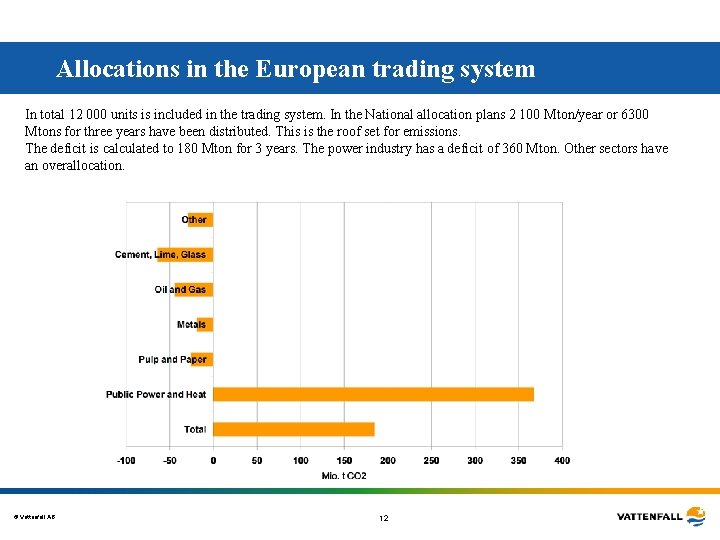
Allocations in the European trading system In total 12 000 units is included in the trading system. In the National allocation plans 2 100 Mton/year or 6300 Mtons for three years have been distributed. This is the roof set for emissions. The deficit is calculated to 180 Mton for 3 years. The power industry has a deficit of 360 Mton. Other sectors have an overallocation. © Vattenfall AB 12
Marginal cost vs. Reduction of CO 2 emissions in EUR/ton CO 2 Source: ECOFYS Economic evaluation of sectorial reduction objectives for climate change The price in Sept 2005 is about 24 €/ton CO 2 ? ? ? © Vattenfall AB 13
Capture and storage of CO 2 Capture and storage © Vattenfall AB 14
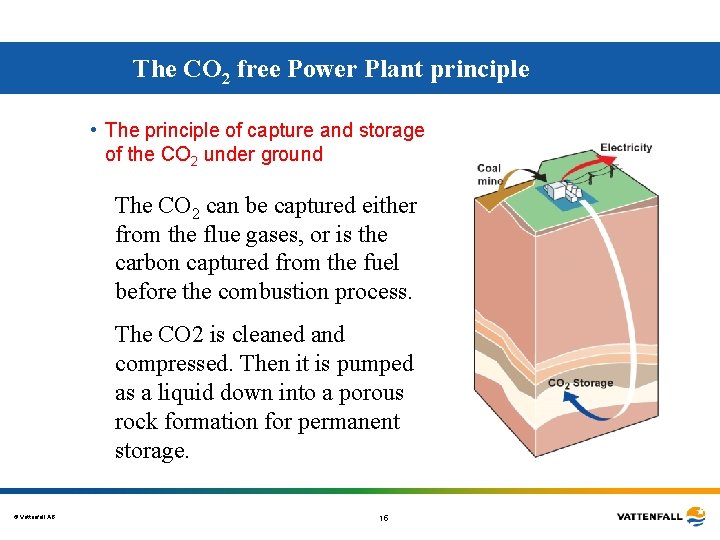
The CO 2 free Power Plant principle • The principle of capture and storage of the CO 2 under ground The CO 2 can be captured either from the flue gases, or is the carbon captured from the fuel before the combustion process. The CO 2 is cleaned and compressed. Then it is pumped as a liquid down into a porous rock formation for permanent storage. © Vattenfall AB 15
CO 2 free power plant Storage and transport © Vattenfall AB 16
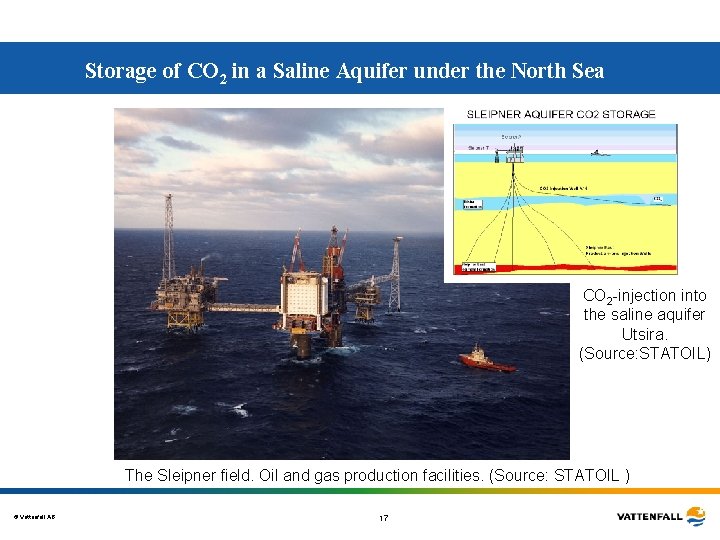
Storage of CO 2 in a Saline Aquifer under the North Sea CO 2 -injection into the saline aquifer Utsira. (Source: STATOIL) The Sleipner field. Oil and gas production facilities. (Source: STATOIL ) © Vattenfall AB 17
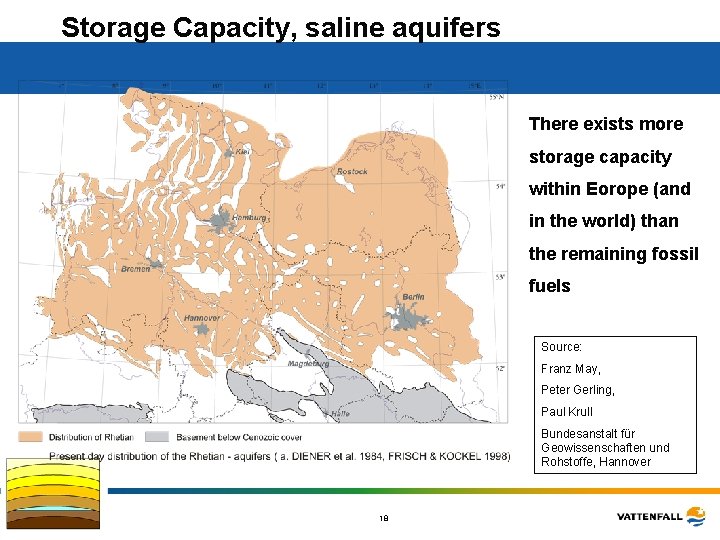
Storage Capacity, saline aquifers There exists more storage capacity within Eorope (and in the world) than the remaining fossil fuels Source: Franz May, Peter Gerling, Paul Krull Bundesanstalt für Geowissenschaften und Rohstoffe, Hannover © Vattenfall AB 18
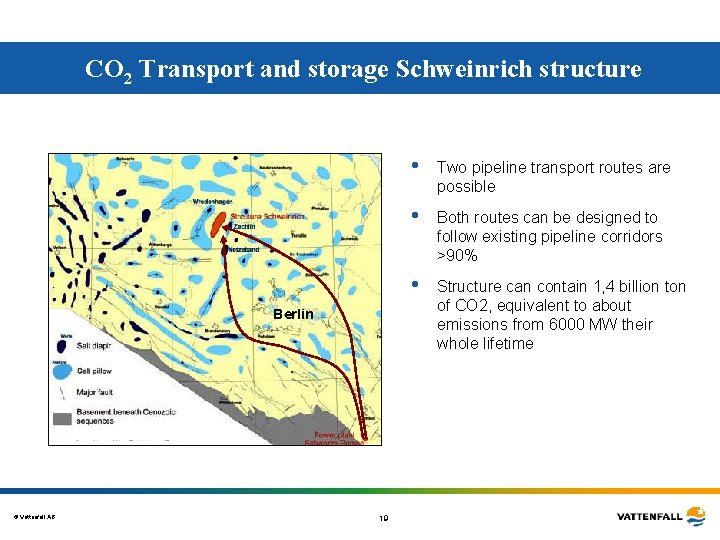
CO 2 Transport and storage Schweinrich structure h Two pipeline transport routes are possible h Both routes can be designed to follow existing pipeline corridors >90% h Structure can contain 1, 4 billion ton of CO 2, equivalent to about emissions from 6000 MW their whole lifetime Berlin © Vattenfall AB 19
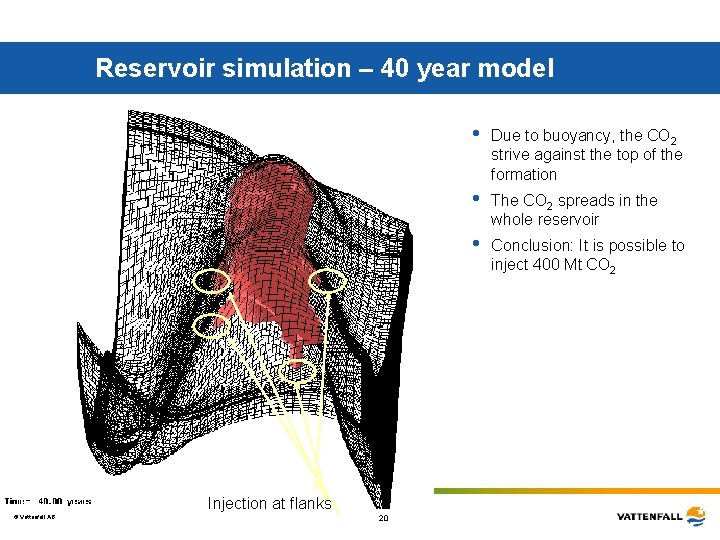
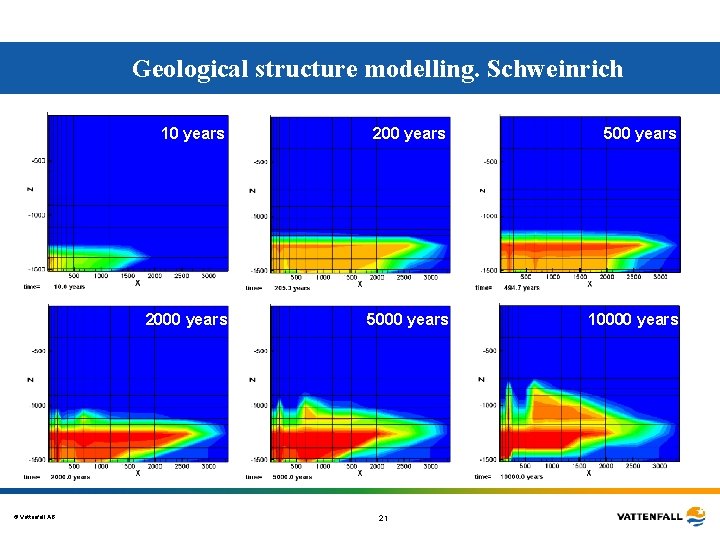
Reservoir simulation – 40 year model h Due to buoyancy, the CO 2 strive against the top of the formation h The CO 2 spreads in the whole reservoir h Conclusion: It is possible to inject 400 Mt CO 2 Injection at flanks © Vattenfall AB 20
Geological structure modelling. Schweinrich © Vattenfall AB 10 years 200 years 500 years 2000 years 5000 years 10000 years 21
CO 2 free power plant Capture © Vattenfall AB 22
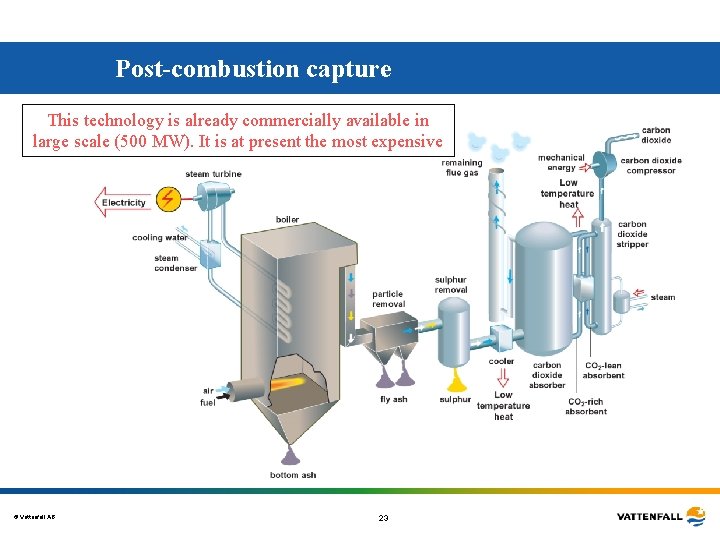
Post-combustion capture This technology is already commercially available in large scale (500 MW). It is at present the most expensive © Vattenfall AB 23
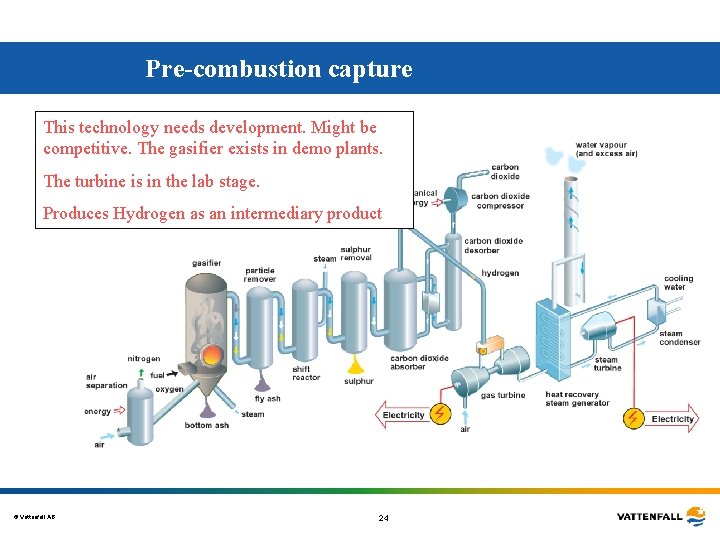
Pre-combustion capture This technology needs development. Might be competitive. The gasifier exists in demo plants. The turbine is in the lab stage. Produces Hydrogen as an intermediary product © Vattenfall AB 24
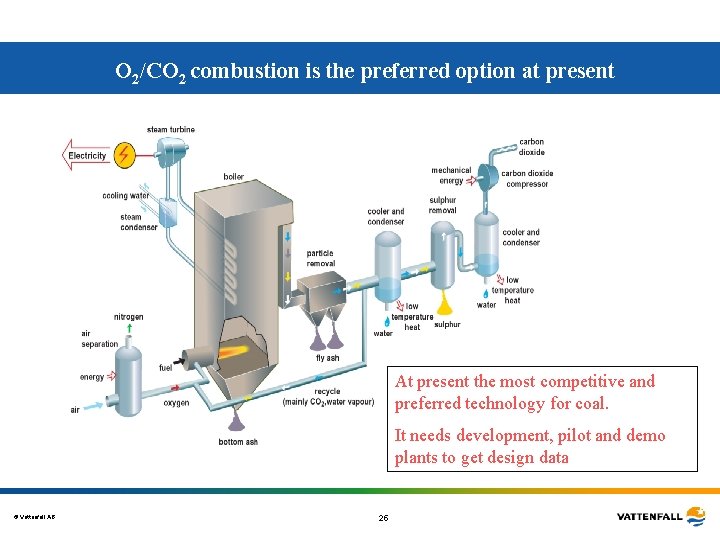
O 2/CO 2 combustion is the preferred option at present At present the most competitive and preferred technology for coal. It needs development, pilot and demo plants to get design data © Vattenfall AB 25
Total generation cost of electricity with CO 2 penalty © Vattenfall AB 26
Generation cost with and without CO 2 capture © Vattenfall AB 27
Electricity generation costs PF © Vattenfall AB CC PF oxyfuel 28 CC CO 2 capt.
Generation costs incl. CO 2 costs (20 €/ton) PF © Vattenfall AB CC PF oxyfuel 29 CC CO 2 capt.
Avoidance costs of CO 2 Avoidance costs PF with CO 2 capture © Vattenfall AB Gas CC with CO 2 capt 30
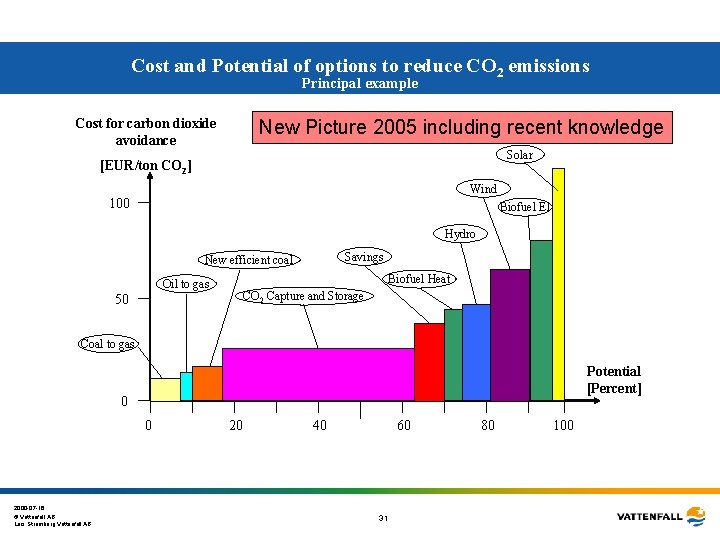
Cost and Potential of options to reduce CO 2 emissions Principal example Cost for carbon dioxide avoidance New Picture 2005 including recent knowledge Solar [EUR/ton CO 2] Wind 100 Biofuel El Hydro Savings New efficient coal Biofuel Heat Oil to gas CO 2 Capture and Storage 50 Coal to gas Potential [Percent] 0 0 20 40 60 2000 -07 -16 © Vattenfall AB Lars Strömberg Vattenfall AB 31 80 100
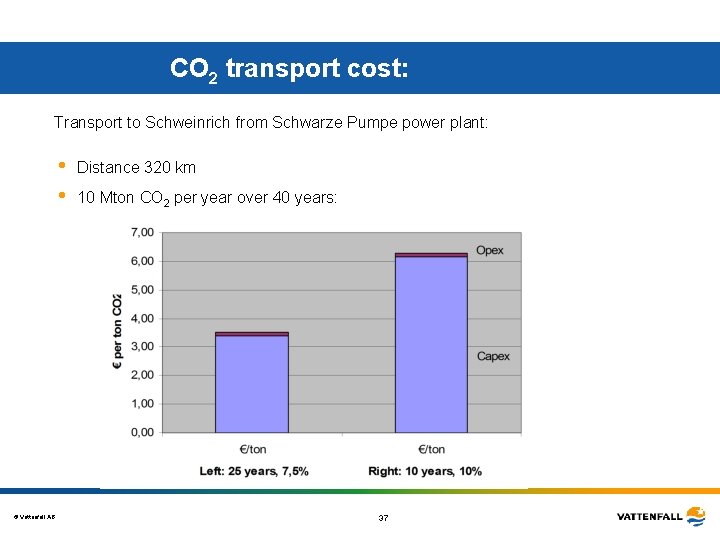
Conclusions from analysis - Reduction of CO 2 • Carbon capture and storage from Coal fired Power plants can be done at a cost close to 20 €/ton CO 2 – Capture at about 15 €/ton of CO 2 – Storage at lower than 2 €/ton CO 2 – Transport depending on distance and volume, but 5 €/ton of CO 2 for large plants on shore • More than enough storage capacity on shore and off shore is at hand in saline aquifers • Technology choice is not yet made. Oxyfuel is preferred technology in Vattenfall at present • The commercial choice stands between Gasfired CC without CCS, taking the penalty of CO 2 emission, and Coal fired plants with CCS Lars Strömberg AB © Vattenfall AB Corporate Strategies 2003 07 05 32
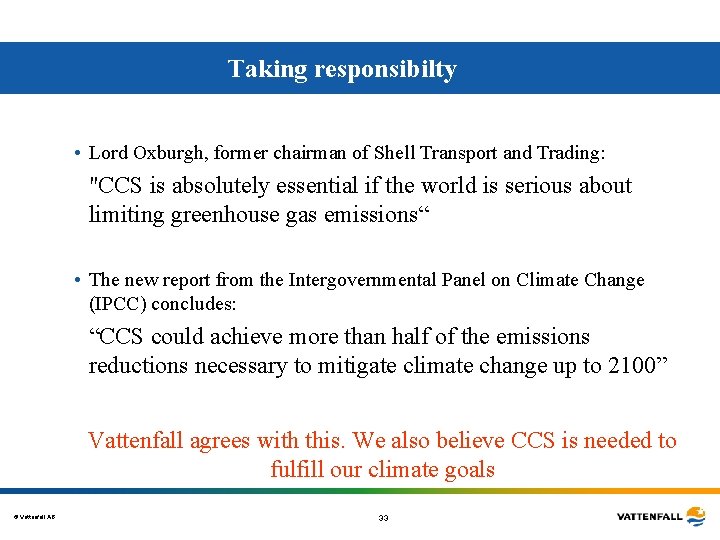
Taking responsibilty • Lord Oxburgh, former chairman of Shell Transport and Trading: "CCS is absolutely essential if the world is serious about limiting greenhouse gas emissions“ • The new report from the Intergovernmental Panel on Climate Change (IPCC) concludes: “CCS could achieve more than half of the emissions reductions necessary to mitigate climate change up to 2100” Vattenfall agrees with this. We also believe CCS is needed to fulfill our climate goals © Vattenfall AB 33
CO 2 free power plant Back up © Vattenfall AB 34
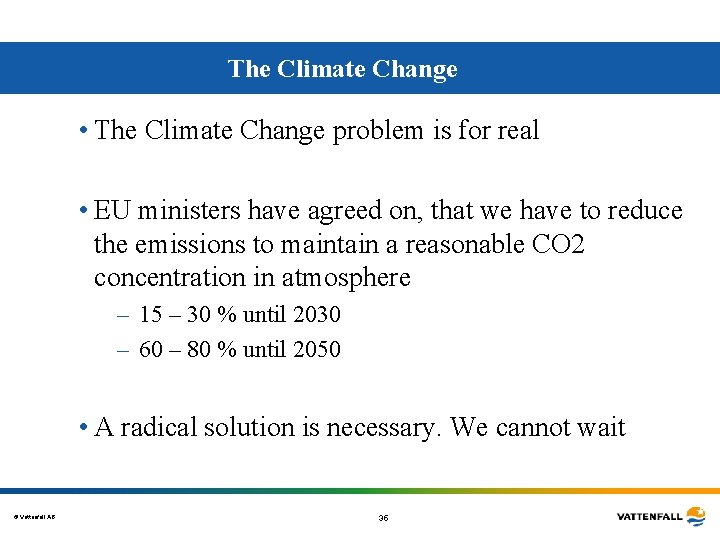
The Climate Change • The Climate Change problem is for real • EU ministers have agreed on, that we have to reduce the emissions to maintain a reasonable CO 2 concentration in atmosphere – 15 – 30 % until 2030 – 60 – 80 % until 2050 • A radical solution is necessary. We cannot wait © Vattenfall AB 35
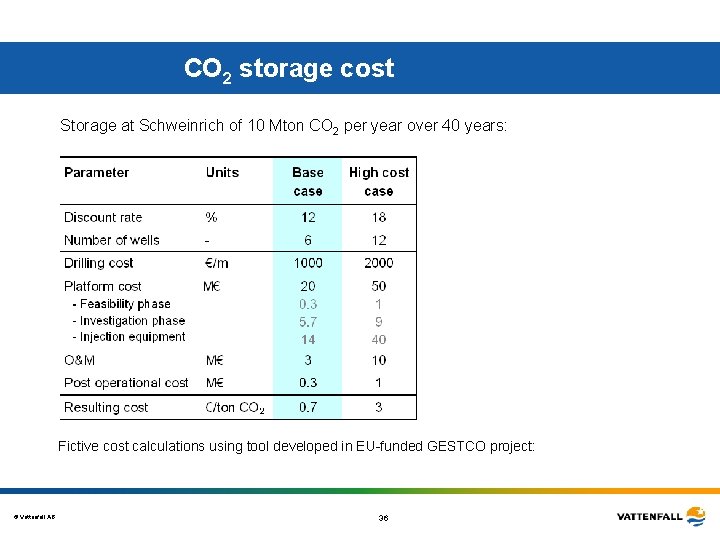
CO 2 storage cost Storage at Schweinrich of 10 Mton CO 2 per year over 40 years: Fictive cost calculations using tool developed in EU-funded GESTCO project: © Vattenfall AB 36
CO 2 transport cost: Transport to Schweinrich from Schwarze Pumpe power plant: h Distance 320 km h 10 Mton CO 2 per year over 40 years: © Vattenfall AB 37
CO 2 free power plant Pilot Plant © Vattenfall AB 38
Construction area © Vattenfall AB 39
Boxberg IV Why Oxy-fuel technology ? We work with all three (four) technologies, but: • • • © Vattenfall AB Oxyfuel technology is the technology giving lowest costs at present It is suitable for coal and have relatively little development work left We can build on our good experience with present PF technology 40
CO 2 free power plant Analysis of some technology options © Vattenfall AB 41
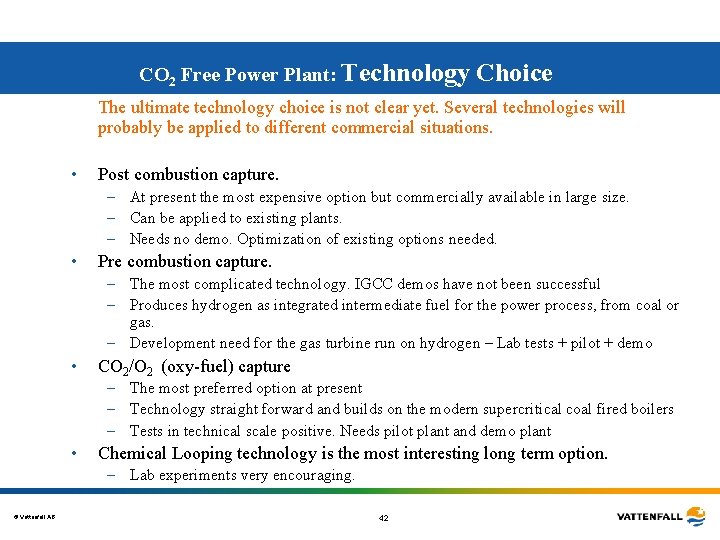
CO 2 Free Power Plant: Technology Choice The ultimate technology choice is not clear yet. Several technologies will probably be applied to different commercial situations. • Post combustion capture. – At present the most expensive option but commercially available in large size. – Can be applied to existing plants. – Needs no demo. Optimization of existing options needed. • Pre combustion capture. – The most complicated technology. IGCC demos have not been successful – Produces hydrogen as integrated intermediate fuel for the power process, from coal or gas. – Development need for the gas turbine run on hydrogen – Lab tests + pilot + demo • CO 2/O 2 (oxy-fuel) capture – The most preferred option at present – Technology straight forward and builds on the modern supercritical coal fired boilers – Tests in technical scale positive. Needs pilot plant and demo plant • Chemical Looping technology is the most interesting long term option. – Lab experiments very encouraging. © Vattenfall AB 42
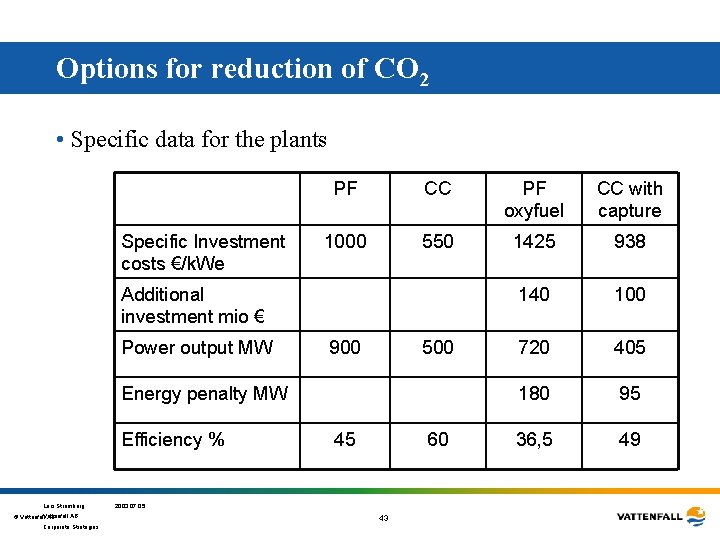
Options for reduction of CO 2 • Specific data for the plants Specific Investment costs €/k. We PF CC PF oxyfuel CC with capture 1000 550 1425 938 140 100 720 405 180 95 36, 5 49 Additional investment mio € Power output MW 900 500 Energy penalty MW Efficiency % Lars Strömberg AB © Vattenfall AB Corporate Strategies 45 60 2003 07 05 43
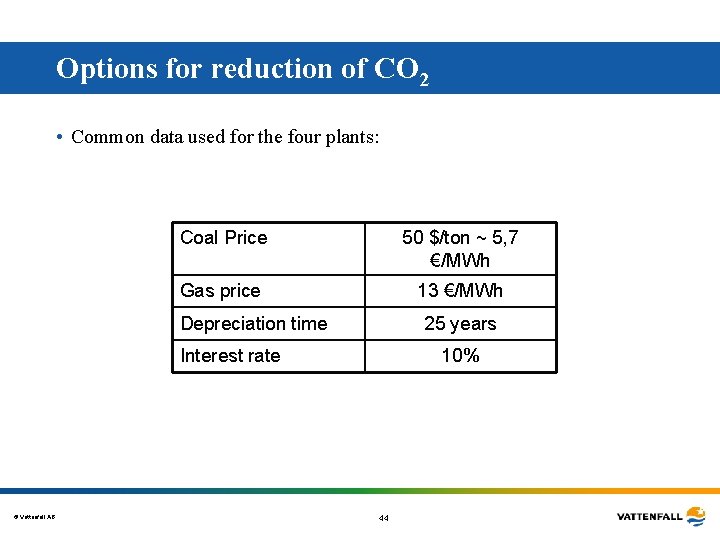
Options for reduction of CO 2 • Common data used for the four plants: Coal Price 50 $/ton ~ 5, 7 €/MWh Gas price 13 €/MWh Depreciation time 25 years Interest rate © Vattenfall AB 10% 44
The Problem • Fossil fuels are needed – Analysis show that fossil fuels will remain as major energy source in 2030 ( 85 %) • The top priority is to introduce renewable energy sources in the energy system – All analysis show that renewable energy sources will play a large role, but not large enough and soon enough • In several countries nuclear power is decommissioned • No renewable energy source not known today can play a significant role in 25 years from now, i. e. 2030 • © Vattenfall AB Emissions from fossil fuels must be reduced 45
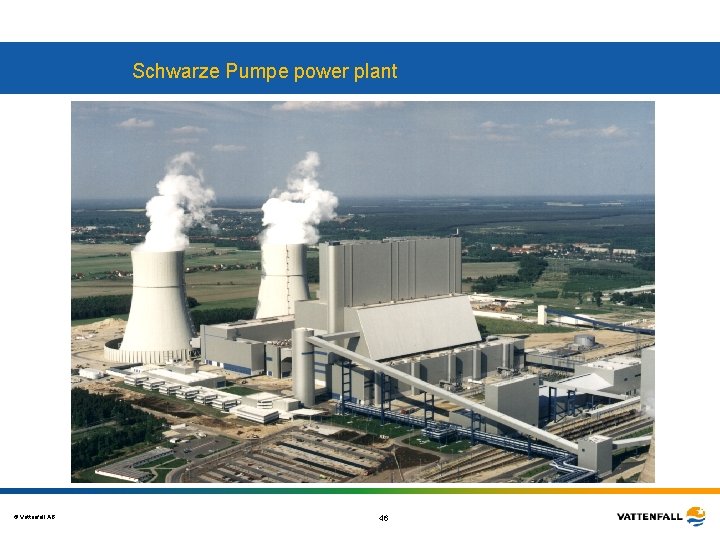
Schwarze Pumpe power plant © Vattenfall AB 46