
Launch of the UAS for Payload Delivery Evidence

- Slides: 30
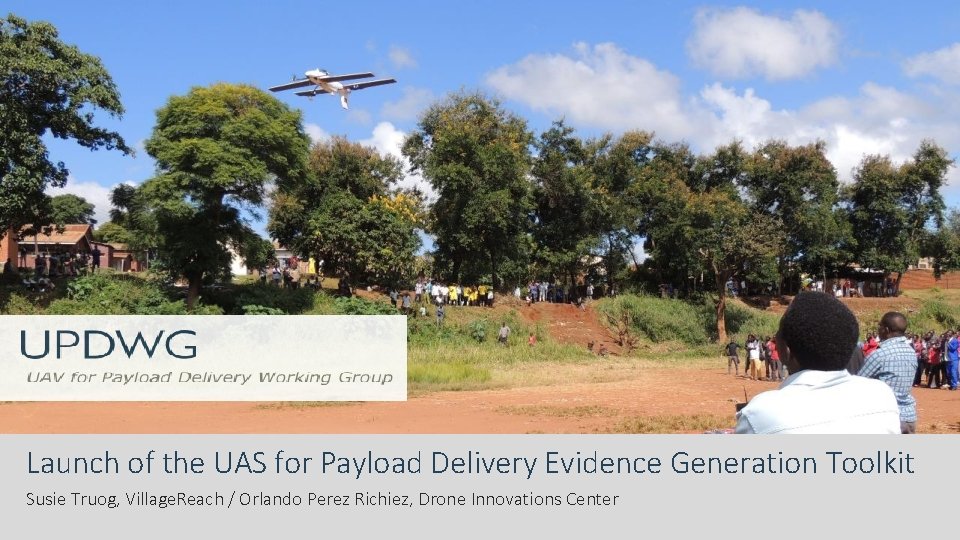
Launch of the UAS for Payload Delivery Evidence Generation Toolkit Susie Truog, Village. Reach / Orlando Perez Richiez, Drone Innovations Center
Announcement: UPDWG Steering Committee
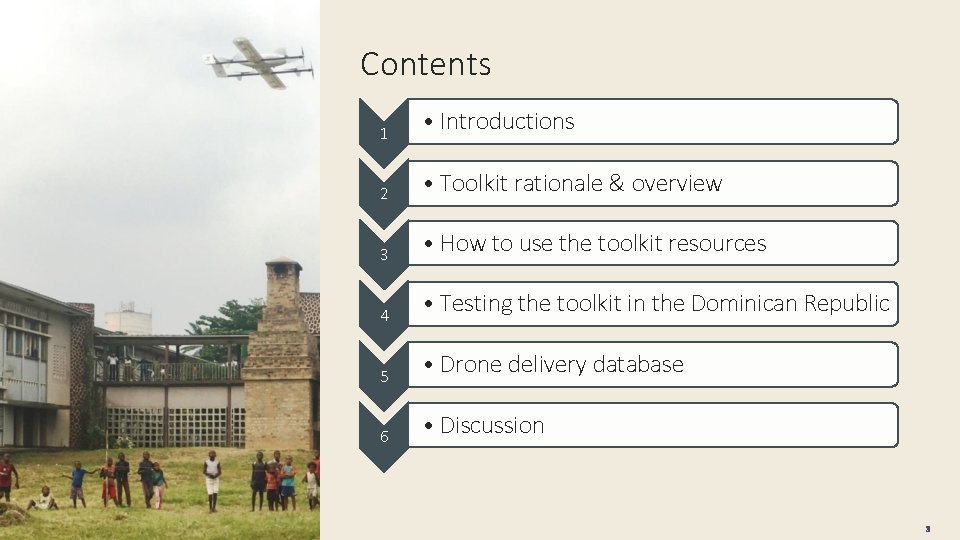
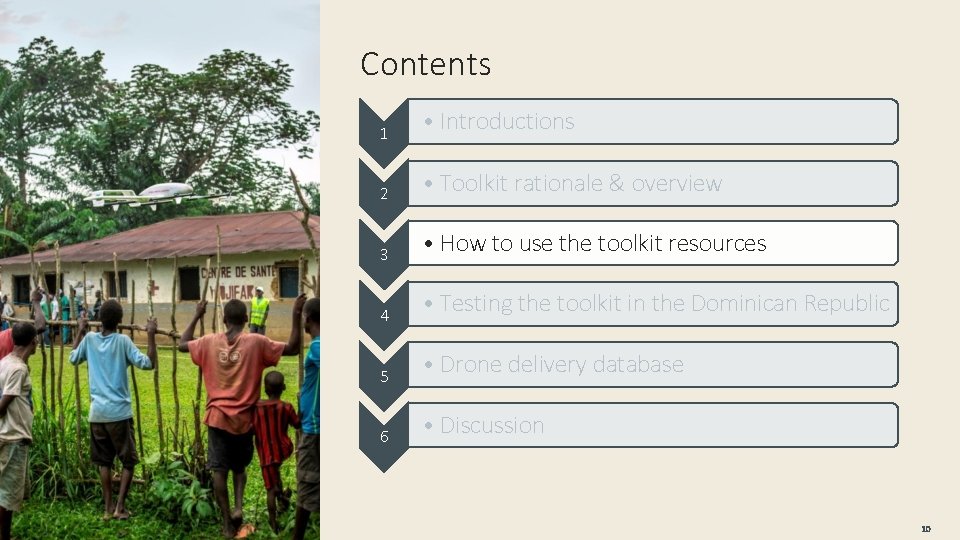
Contents 1 • Introductions 2 • Toolkit rationale & overview 3 • How to use the toolkit resources 4 • Testing the toolkit in the Dominican Republic 5 • Drone delivery database 6 • Discussion
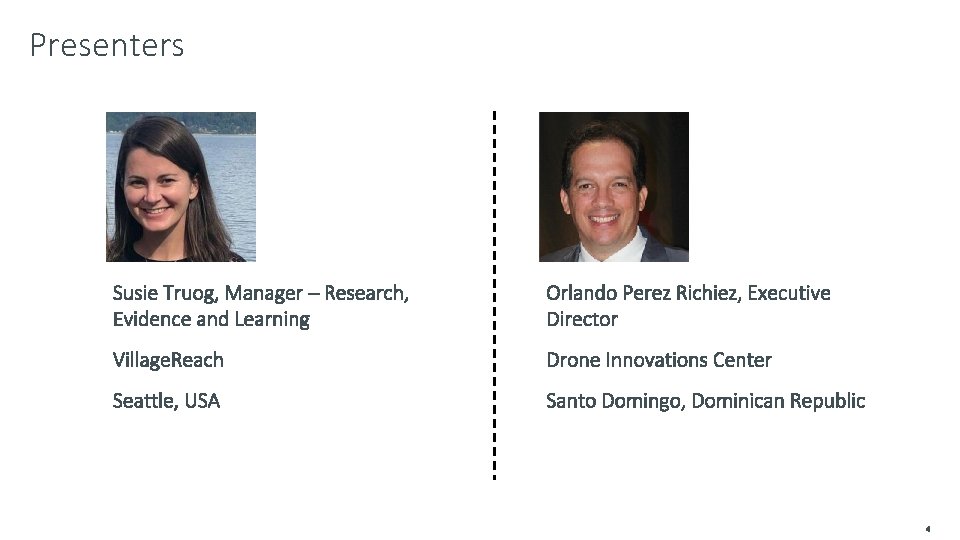
Presenters
Stakeholder Acknowledgements
Contents 1 • Introductions 2 • Toolkit rationale & overview 3 • How to use the toolkit resources 4 • Testing the toolkit in the Dominican Republic 5 • Drone delivery database 6 • Discussion
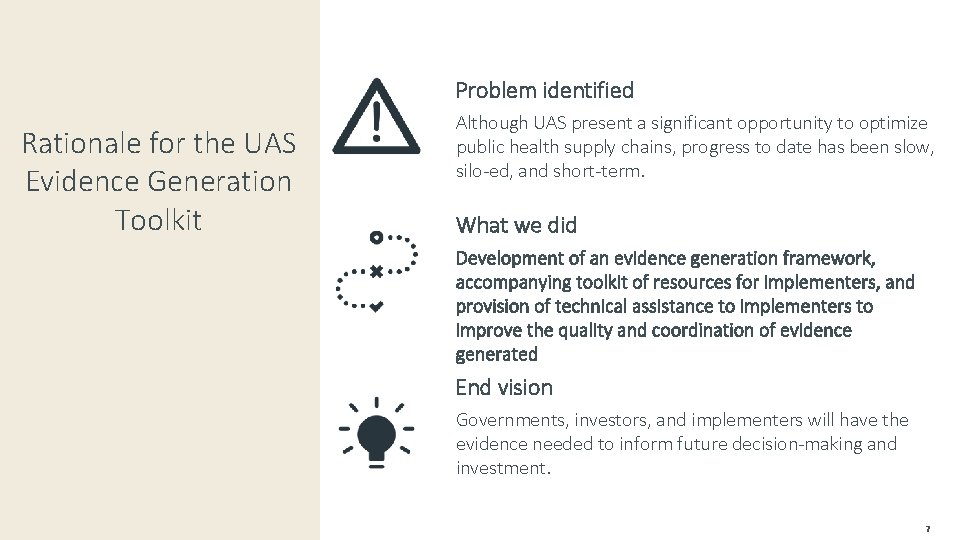
Problem identified Rationale for the UAS Evidence Generation Toolkit Although UAS present a significant opportunity to optimize public health supply chains, progress to date has been slow, silo-ed, and short-term. What we did End vision Governments, investors, and implementers will have the evidence needed to inform future decision-making and investment.
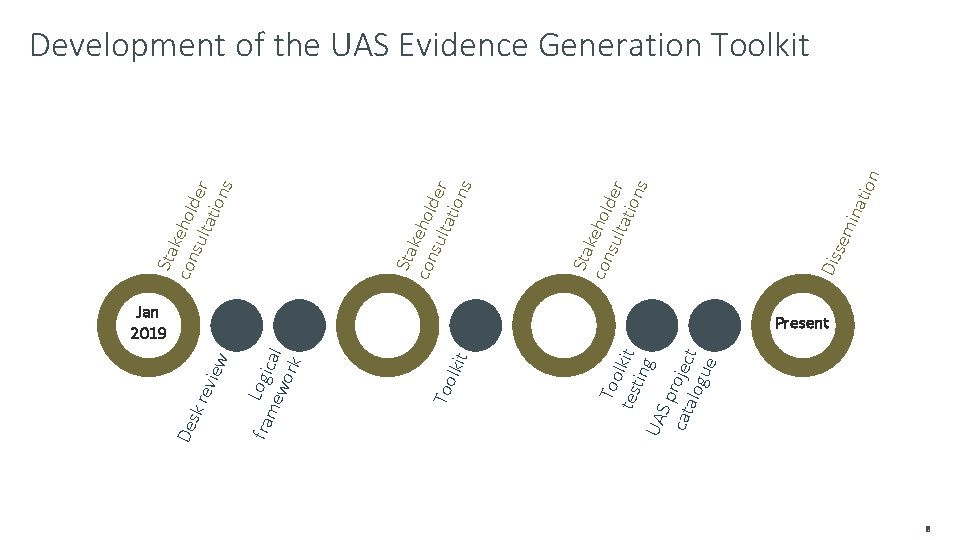
Too tes lkit ting UA Sp cat rojec alo gue t Too lkit fram Logic ew al ork view k re Des Jan 2019 ina tion Dis sem Sta con kehold sult er atio ns Development of the UAS Evidence Generation Toolkit Present
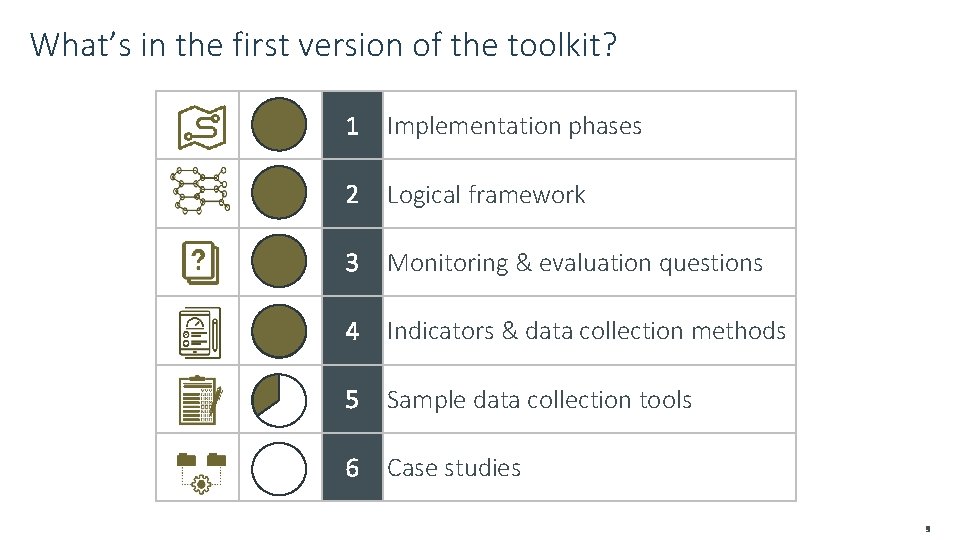
What’s in the first version of the toolkit? 1 Implementation phases 2 Logical framework 3 Monitoring & evaluation questions 4 Indicators & data collection methods 5 Sample data collection tools 6 Case studies
Contents 1 • Introductions 2 • Toolkit rationale & overview 3 • How to use the toolkit resources 4 • Testing the toolkit in the Dominican Republic 5 • Drone delivery database 6 • Discussion
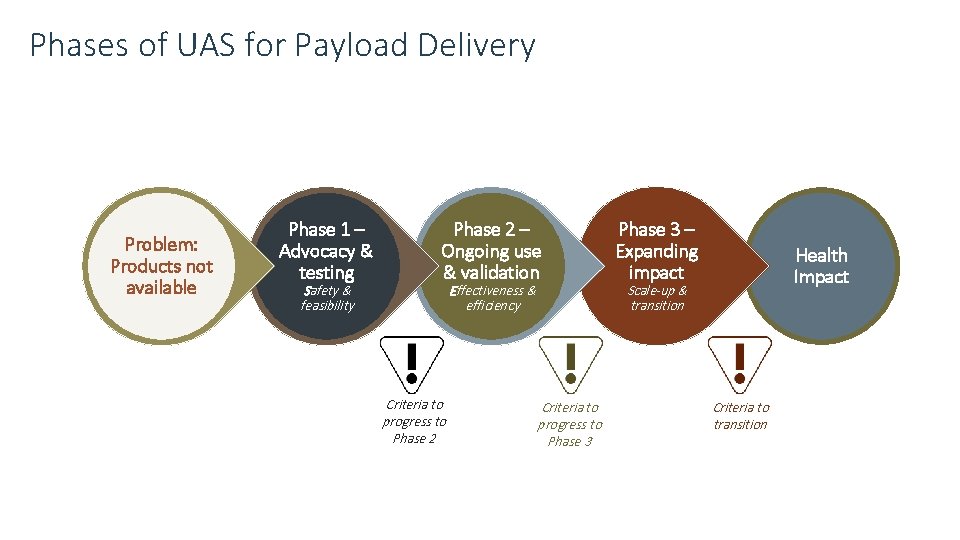
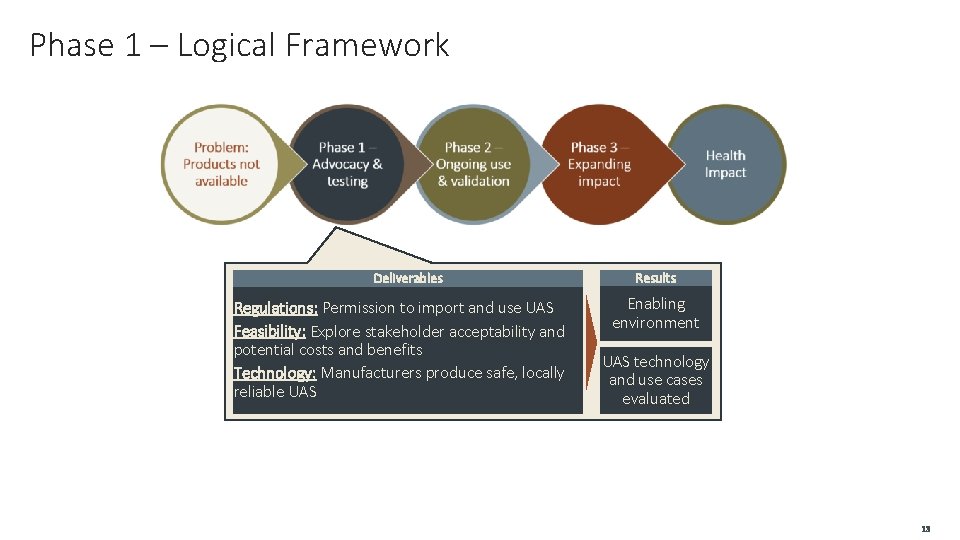
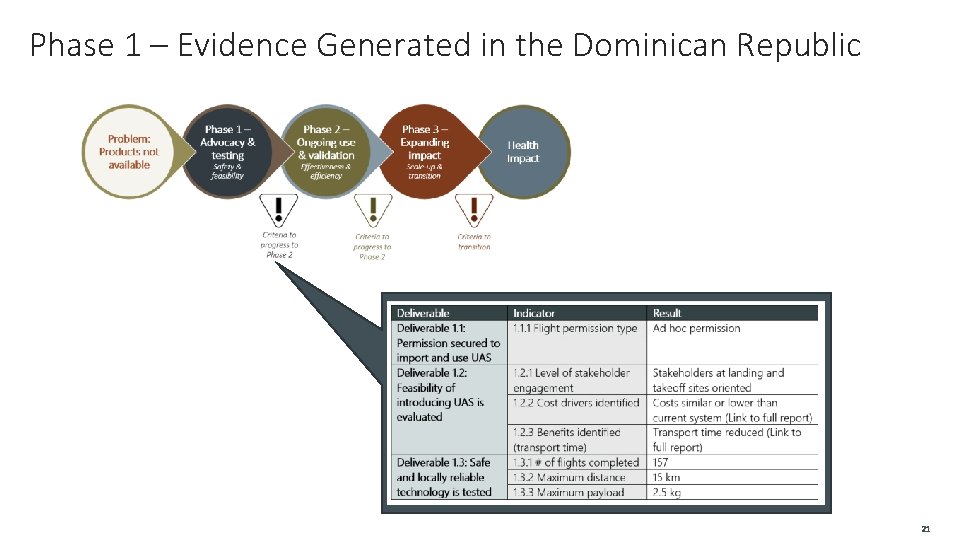
Phases of UAS for Payload Delivery Problem: Products not available Phase 1 – Advocacy & testing Safety & feasibility Phase 2 – Ongoing use & validation Effectiveness & efficiency Criteria to progress to Phase 2 Criteria to progress to Phase 3 – Expanding impact Health Impact Scale-up & transition Criteria to transition
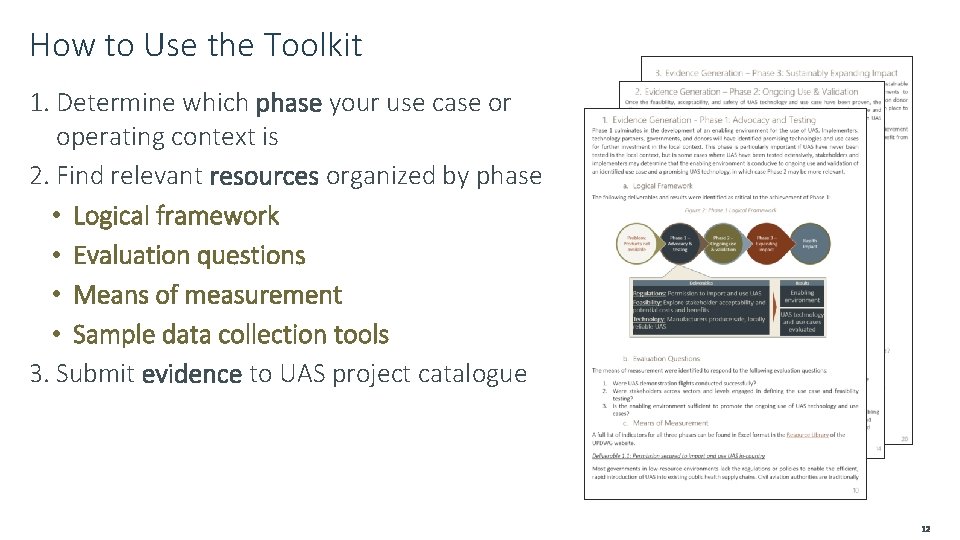
How to Use the Toolkit 1. Determine which phase your use case or operating context is 2. Find relevant resources organized by phase • Logical framework • Evaluation questions • Means of measurement • Sample data collection tools 3. Submit evidence to UAS project catalogue
Phase 1 – Logical Framework Deliverables Regulations: Permission to import and use UAS Feasibility: Explore stakeholder acceptability and potential costs and benefits Technology: Manufacturers produce safe, locally reliable UAS Results Enabling environment UAS technology and use cases evaluated
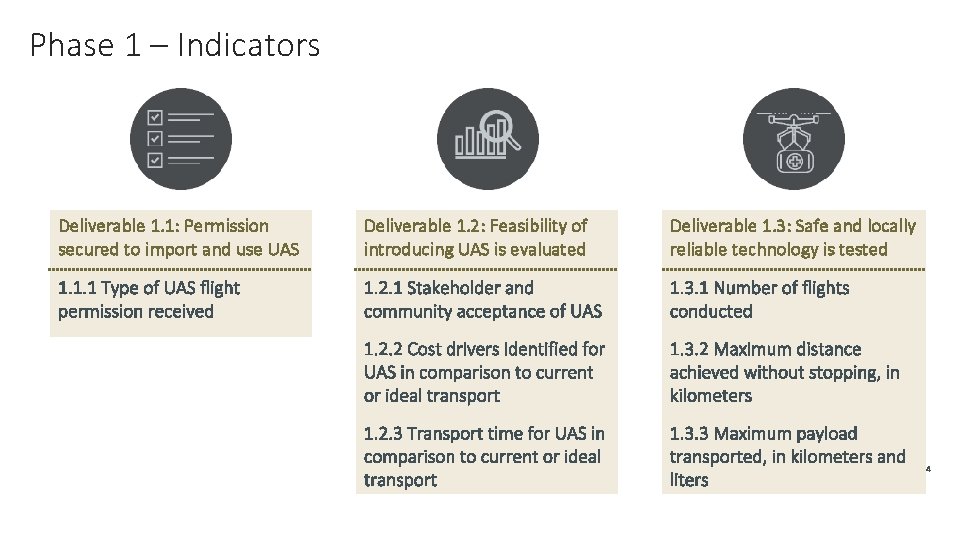
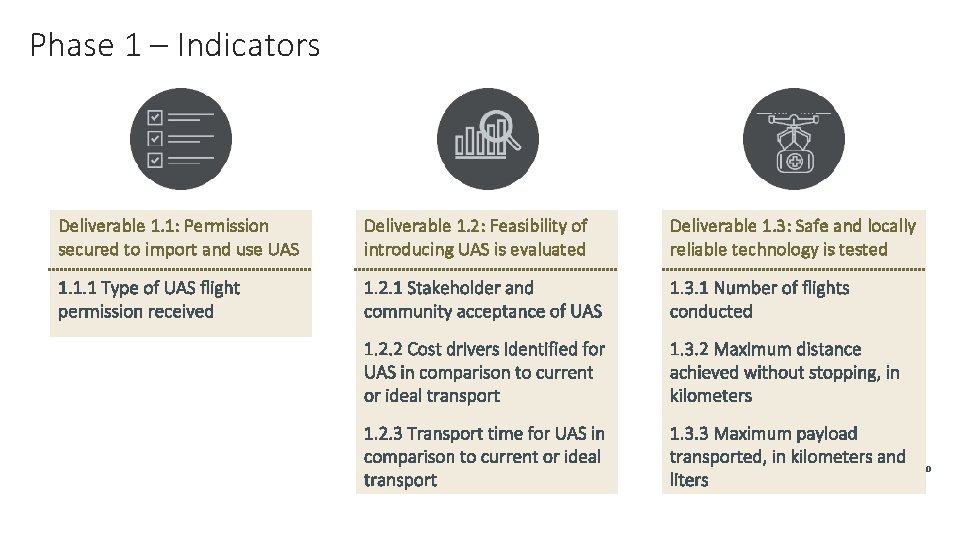
Phase 1 – Indicators Deliverable 1. 1: Permission secured to import and use UAS Deliverable 1. 2: Feasibility of introducing UAS is evaluated Deliverable 1. 3: Safe and locally reliable technology is tested
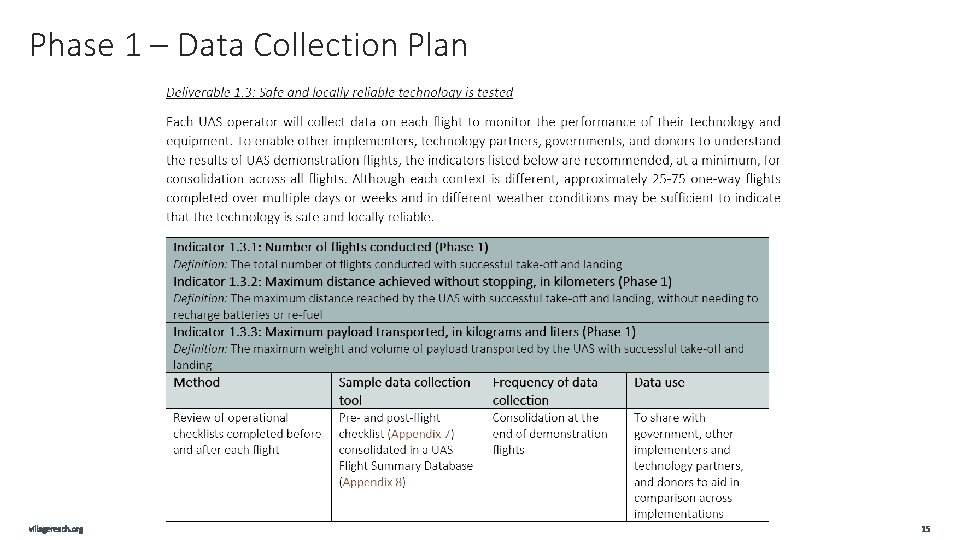
Phase 1 – Data Collection Plan
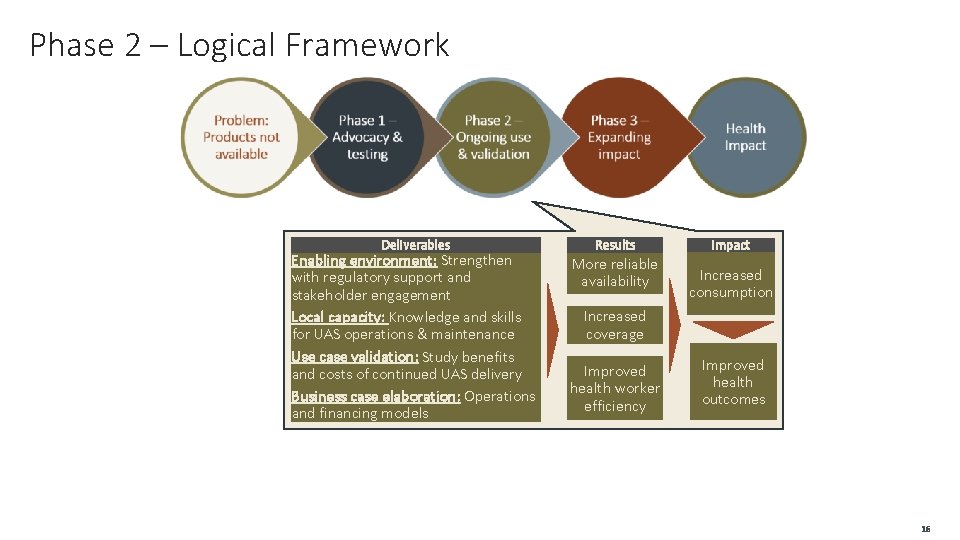
Phase 2 – Logical Framework Deliverables Enabling environment: Strengthen with regulatory support and stakeholder engagement Local capacity: Knowledge and skills for UAS operations & maintenance Use case validation: Study benefits and costs of continued UAS delivery Business case elaboration: Operations and financing models Results More reliable availability Impact Increased consumption Increased coverage Improved health worker efficiency Improved health outcomes
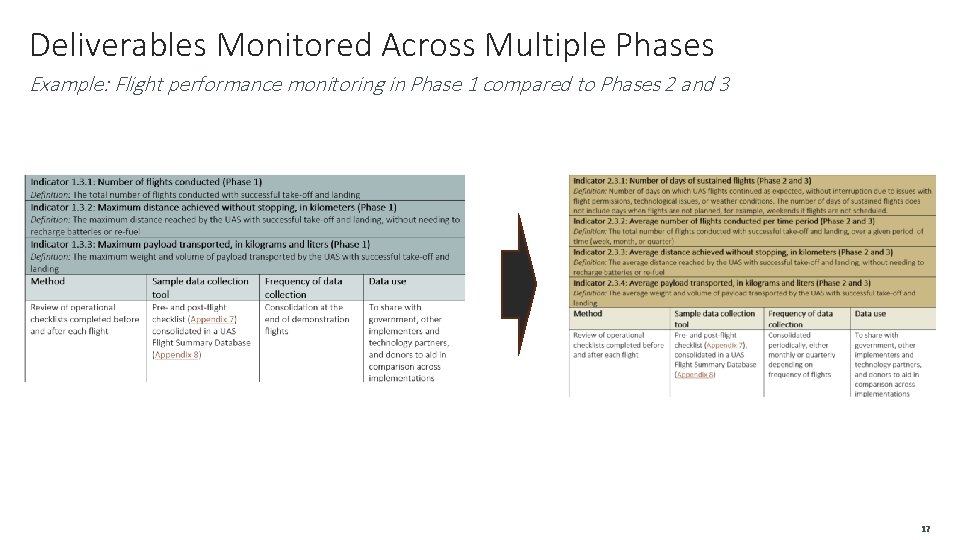
Deliverables Monitored Across Multiple Phases Example: Flight performance monitoring in Phase 1 compared to Phases 2 and 3
Contents 1 • Introductions 2 • Toolkit rationale & overview 3 • How to use the toolkit resources 4 • Testing the toolkit in the Dominican Republic 5 • Drone delivery database 6 • Discussion
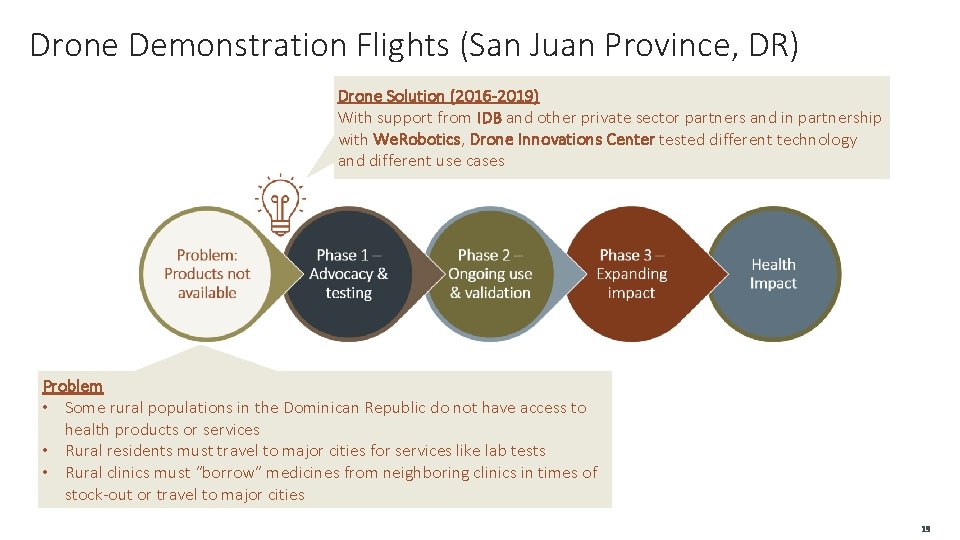
Drone Demonstration Flights (San Juan Province, DR) Drone Solution (2016 -2019) With support from IDB and other private sector partners and in partnership with We. Robotics, Drone Innovations Center tested different technology and different use cases Problem • Some rural populations in the Dominican Republic do not have access to health products or services • Rural residents must travel to major cities for services like lab tests • Rural clinics must “borrow” medicines from neighboring clinics in times of stock-out or travel to major cities
Phase 1 – Indicators Deliverable 1. 1: Permission secured to import and use UAS Deliverable 1. 2: Feasibility of introducing UAS is evaluated Deliverable 1. 3: Safe and locally reliable technology is tested
Phase 1 – Evidence Generated in the Dominican Republic
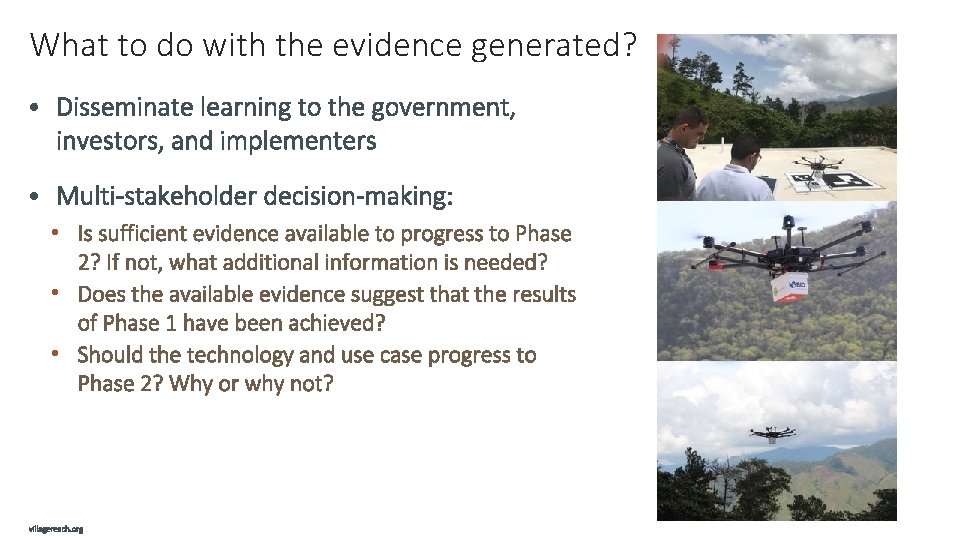
What to do with the evidence generated? • • •
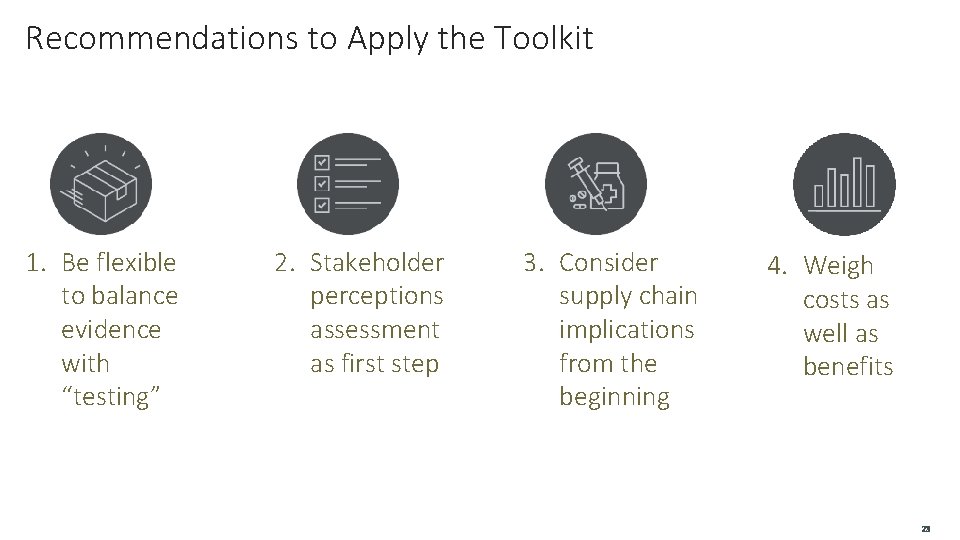
Recommendations to Apply the Toolkit 1. Be flexible to balance evidence with “testing” 2. Stakeholder perceptions assessment as first step 3. Consider supply chain implications from the beginning 4. Weigh costs as well as benefits
Contents 1 • Introductions 2 • Toolkit rationale & overview 3 • How to use the toolkit resources 4 • Testing the toolkit in the Dominican Republic 5 • Drone delivery database 6 • Discussion
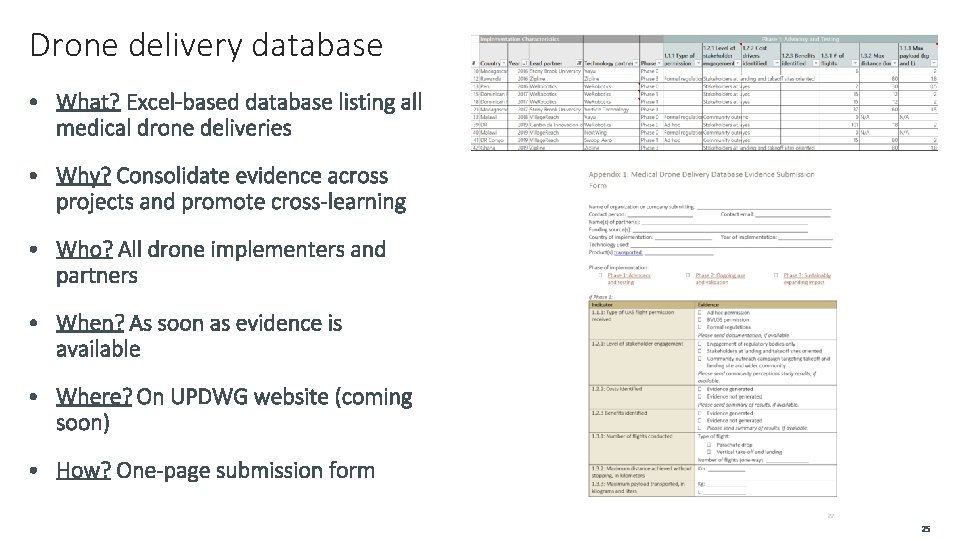
Drone delivery database
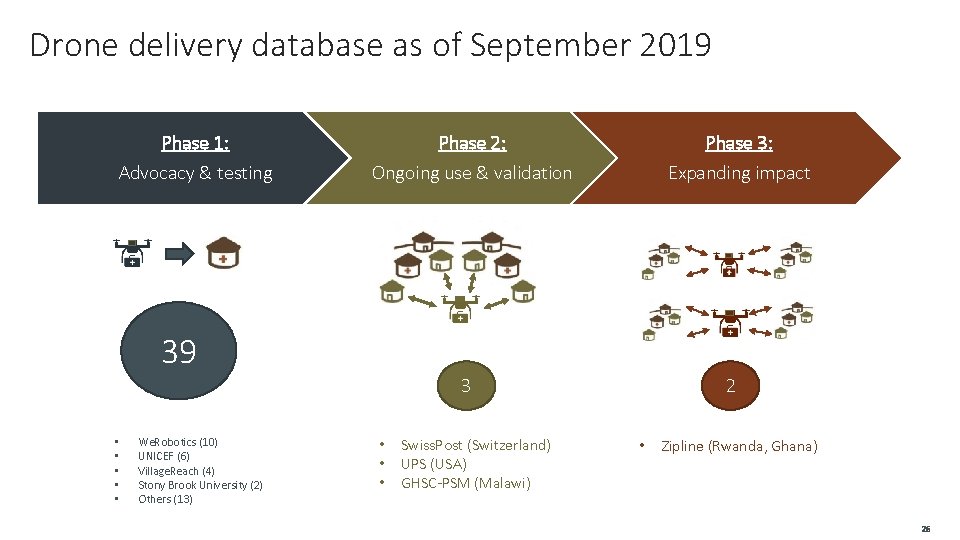
Drone delivery database as of September 2019 Phase 1: Advocacy & testing Phase 2: Ongoing use & validation Phase 3: Expanding impact 39 3 • • • We. Robotics (10) UNICEF (6) Village. Reach (4) Stony Brook University (2) Others (13) • • • Swiss. Post (Switzerland) UPS (USA) GHSC-PSM (Malawi) 2 • Zipline (Rwanda, Ghana)
Contents 1 • Introductions 2 • Toolkit rationale & overview 3 • Roadmap to introducing UAS 4 • How to use the toolkit resources 5 • Testing the toolkit in the Dominican Republic 6 • UAS project catalogue 7 • Discussion
Do you… Please contact: Susie Truog at susie. truog@villagereach. org UPDWG at info@UPDWG. org
Thank you!
Questions for Discussion