
LATITUDE CLIMATE ELEVATION CLIMATE Earths annual revolutions around
- Slides: 12
LATITUDE, CLIMATE, & ELEVATION
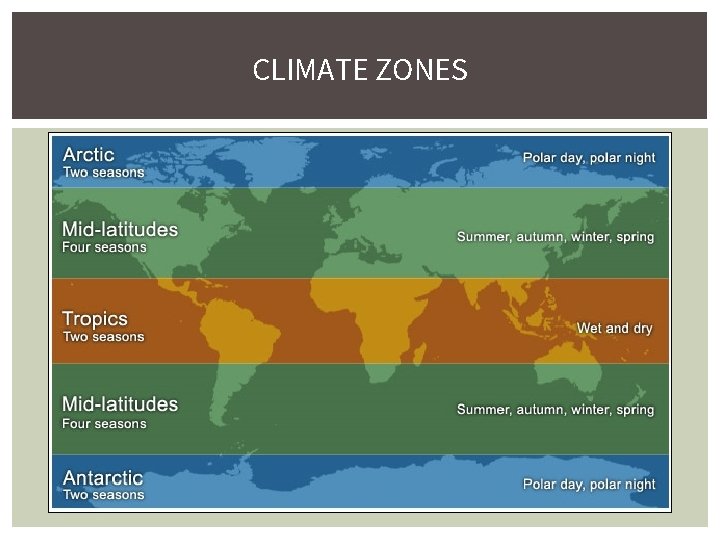
CLIMATE �Earth’s annual revolutions around the sun creates predictable climate patterns. �These patterns correspond with bands, or zones of latitude �The low latitude zone: 30°N to 30°S �The mid latitude zone: 30°N to 60°N and 30°S to 60°S �The high latitude zone : 60°N to 90°N and 60°S to 90°S
CLIMATE ZONES
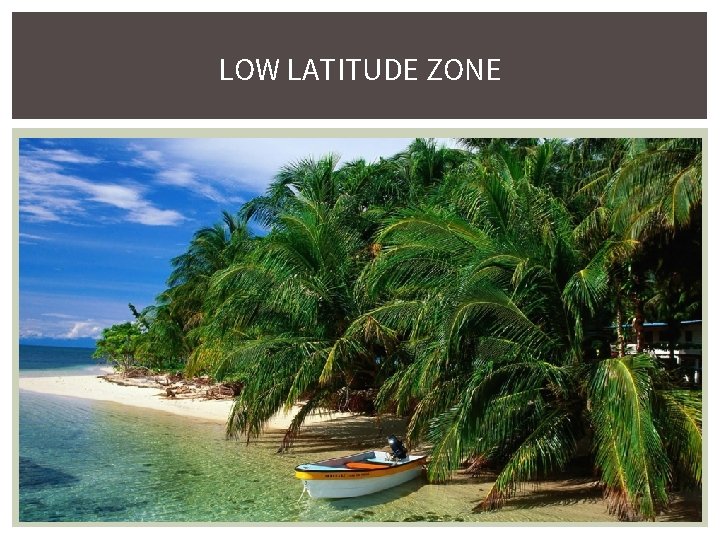
LOW LATITUDE ZONE �Includes the Tropic of Capricorn, the Tropic of Cancer, and the equator �Receives direct rays from the sun year-round �Warm and hot climates �Has two seasons, wet and dry. �Also referred to as the Tropic Zone
LOW LATITUDE ZONE
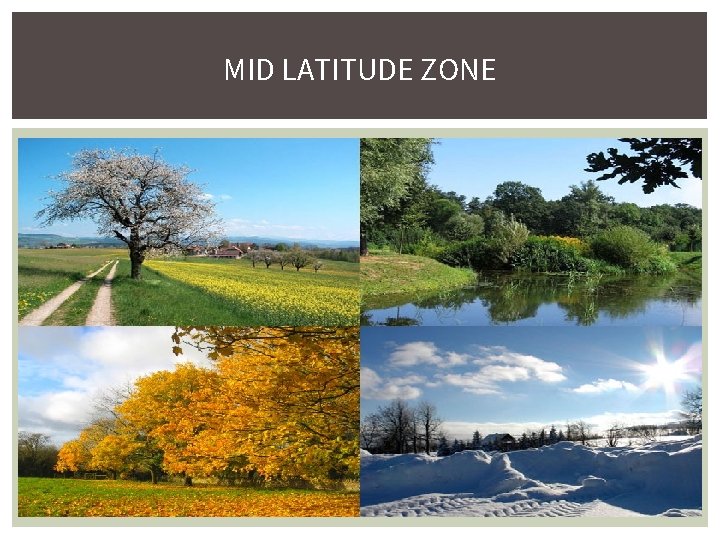
MID LATITUDE ZONE �Has climates with the most variable weather on earth. �Generally has temperate climates (fairly hot to fairly cold) with dramatic seasonal weather changes (experiences four seasons. ) �Warm/hot and cool/cold air masses move across the affect the weather throughout the year �Also referred to as the Temperate Zones mid-latitudes and
MID LATITUDE ZONE
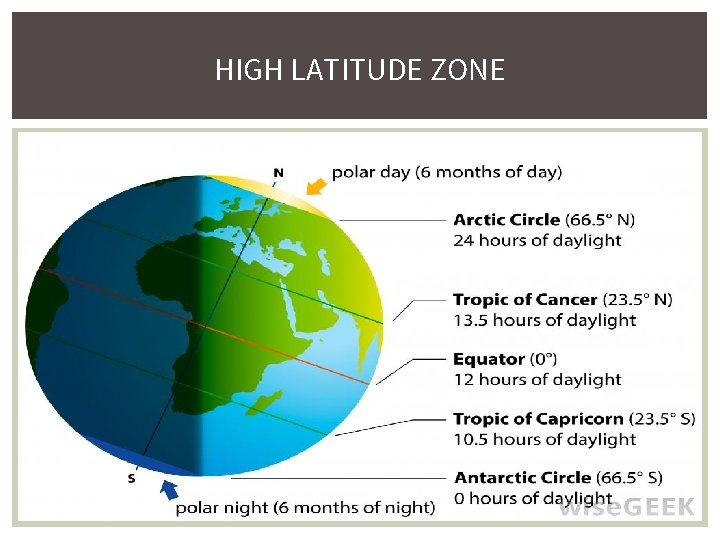
HIGH LATITUDE ZONE �Has the coldest climates on Earth �When the Northern or Southern Hemisphere is tilted toward the sun its polar area receives nearly continuous, but indirect, sunlight. �Has two seasons, polar night and polar day. �Also referred to as the Artic and Antarctic Zones
HIGH LATITUDE ZONE
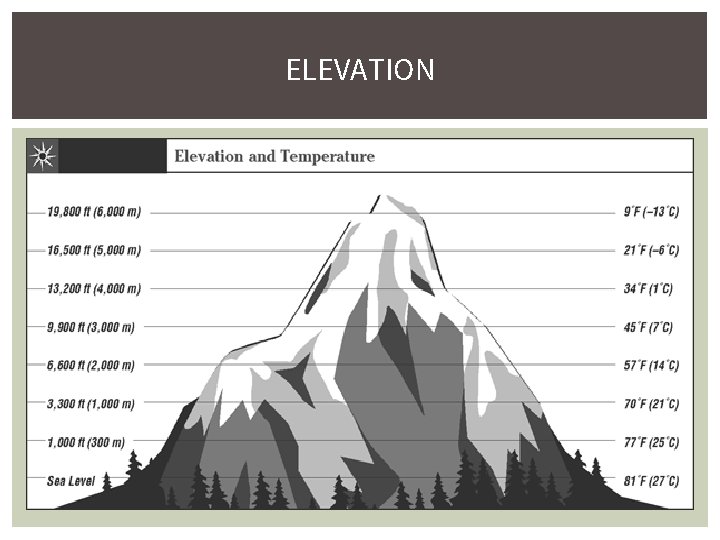
ELEVATION �At all latitudes, elevation influences the climate because of the relationship between the elevation of a place and its temperature �The Earth’s atmosphere thins as elevation increases �Less dense air retains less heat. �As elevation increases, temperatures decrease by about 3. 5°F for every 1000 feet.
ELEVATION
CONCLUSION QUESTIONS 1. Using latitude zones and elevation predict and describe the climate of one city on each of the 7 continents. Explain your prediction. 2. Why would Mexico City, Mexico, which is farther south (closer to the equator) than Baghdad, Iraq, yet Mexico City have a far cooler climate? 3. Where can you find snow in the low latitude zone of the African continent? Why is it there? Journal Responses: 1. In your own words, how does latitude and elevation affect climate? 2. Which climate zone would you prefer to live in and why?