
LATIN AMERICAN IMPERIALISM AND INDEPENDENCE Objectives Understand revolutions
LATIN AMERICAN IMPERIALISM AND INDEPENDENCE
Objectives ■ Understand revolutions in Latin America and their worldly impacts. ■ Describe how the Enlightenment helped spark revolutions in certain areas.
Warm Up ■ “Poor Man’s Burden” ■ Parody of “The White Man’s Burden” ■ How is it similar or different to WMB? ■ What is the “poor man’s burden”?
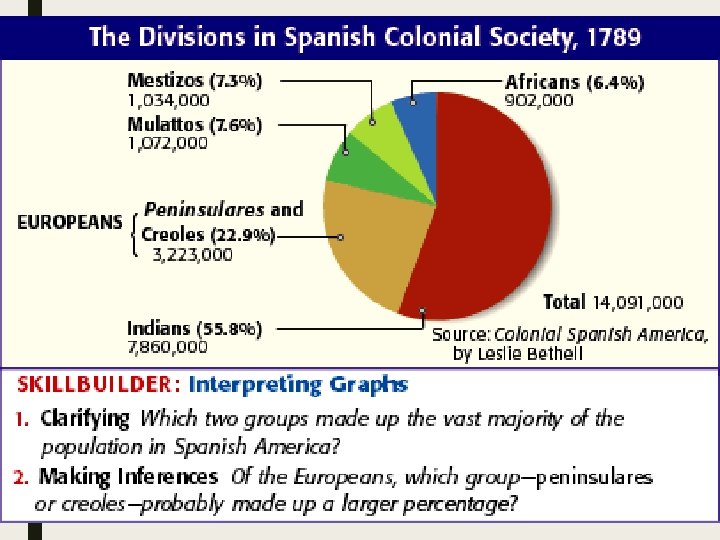
Colonial Society Divided ■ A Race and Class System – Latin America has social classes that determine jobs and authority ■ Peninsulares—born in Spain, they head colonial government and society ■ Creoles—American-born Spaniards who can become army officers ■ Mestizos—have both European and Native American ancestry ■ Mulattos—have both European and African ancestry ■ Slaves and ‘Native Americans’ are at the bottom of society
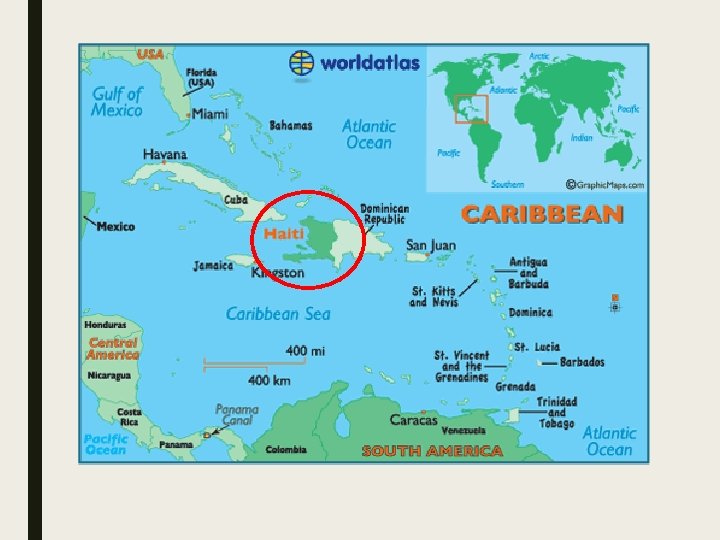
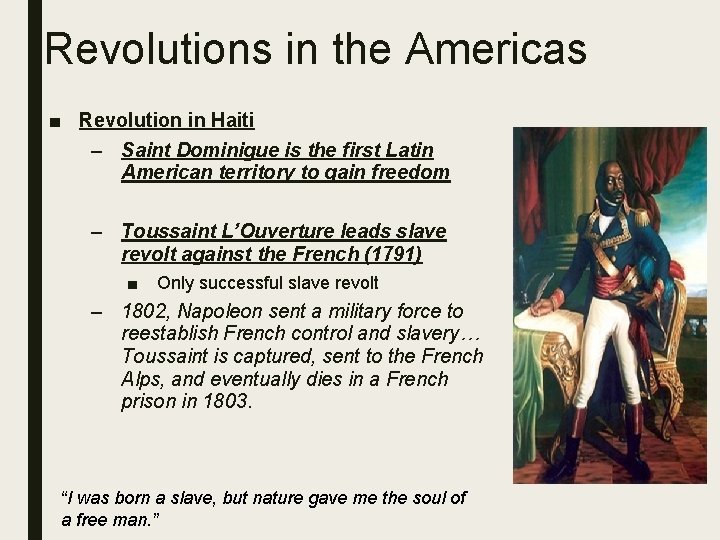
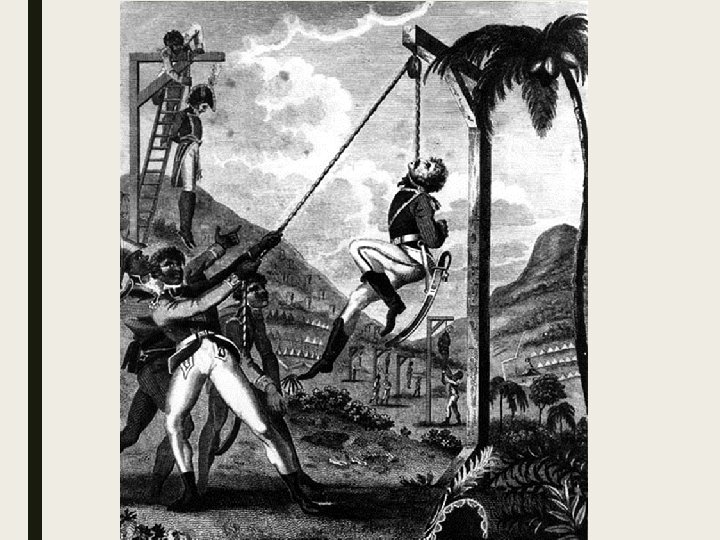
Revolutions in the Americas ■ Revolution in Haiti – Saint Dominigue is the first Latin American territory to gain freedom – Toussaint L’Ouverture leads slave revolt against the French (1791) ■ Only successful slave revolt – 1802, Napoleon sent a military force to reestablish French control and slavery… Toussaint is captured, sent to the French Alps, and eventually dies in a French prison in 1803. “I was born a slave, but nature gave me the soul of a free man. ”
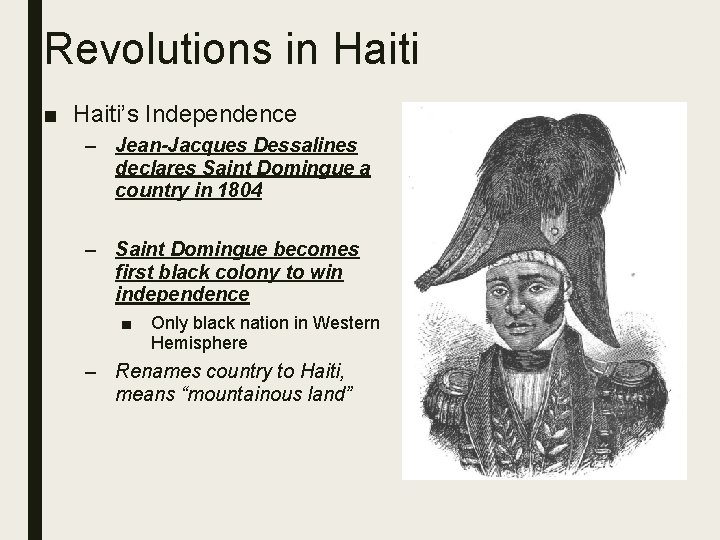
Revolutions in Haiti ■ Haiti’s Independence – Jean-Jacques Dessalines declares Saint Domingue a country in 1804 – Saint Domingue becomes first black colony to win independence ■ Only black nation in Western Hemisphere – Renames country to Haiti, means “mountainous land”
Creoles Lead Independence ■ Creoles were often the most educated people within Latin society – often traveled to Europe for education ■ Study Enlightenment ideas and when they return to Latin American – bring revolutionary ideas with them ■ Napoleon’s victory over Spain in 1808 led to many revolts within Spanish colonies
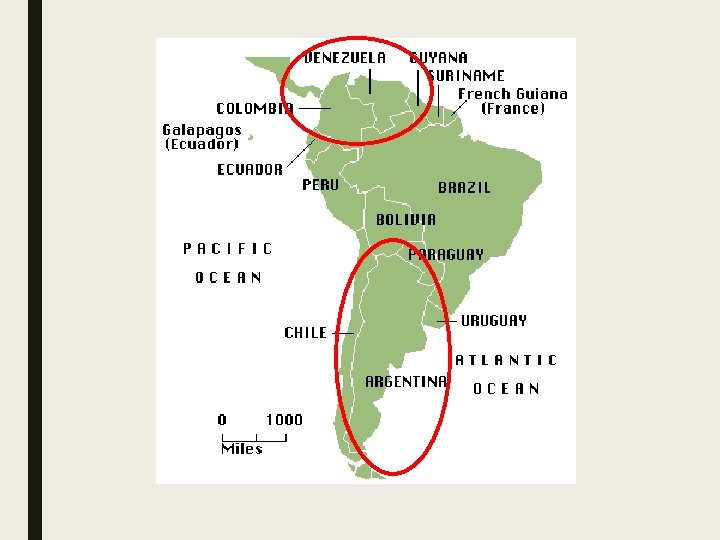
■ The Spread of Enlightenment Ideas – Creole Leaders: – Simón Bolívar—wealthy Creole who leads Venezuela in revolution – José de San Martín—leader who leads Argentinean revolutionary forces
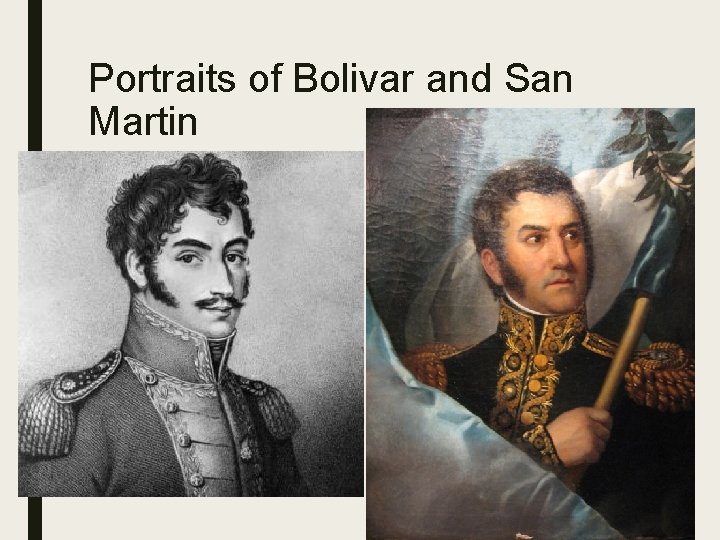
Portraits of Bolivar and San Martin
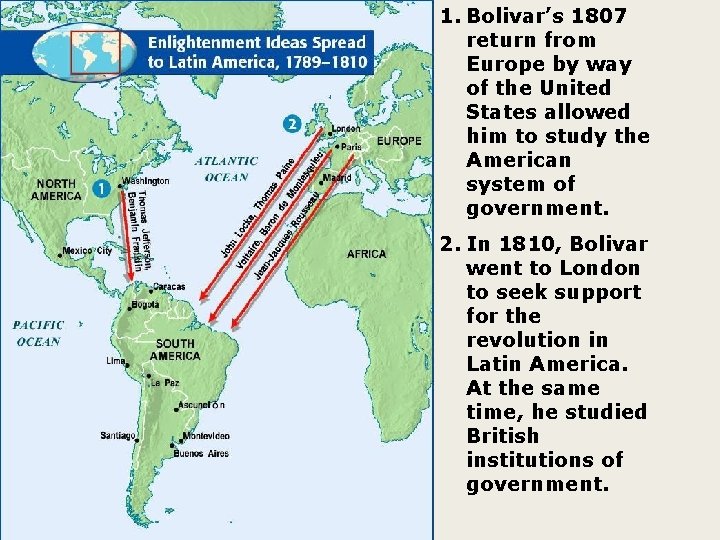
1. Bolivar’s 1807 return from Europe by way of the United States allowed him to study the American system of government. 2. In 1810, Bolivar went to London to seek support for the revolution in Latin America. At the same time, he studied British institutions of government.
Bolívar’s Victory ■ Under Bolivar, Venezuela, declared its independence from Spain in 1811 – He led a volunteer army of revolutionaries; suffered many defeats. Had to go into exile twice. ■ Turning point: August 1819, Bolivar leads 2, 000 soldiers going through the Andes and takes the Spanish army by surprise and wins ■ 1821, Bolivar won Venezuela’s independence
San Martin Leads Forces ■ San Martin, Argentina, declared independence in 1816, but Spanish forces in Chile and Peru still posed a threat ■ 1817, Martin leads an army across the Andes into Chile. ■ He is joined by Bernardo O’Higgins (son of a former viceroy of Peru) and with his help he helps free Argentina from Chile

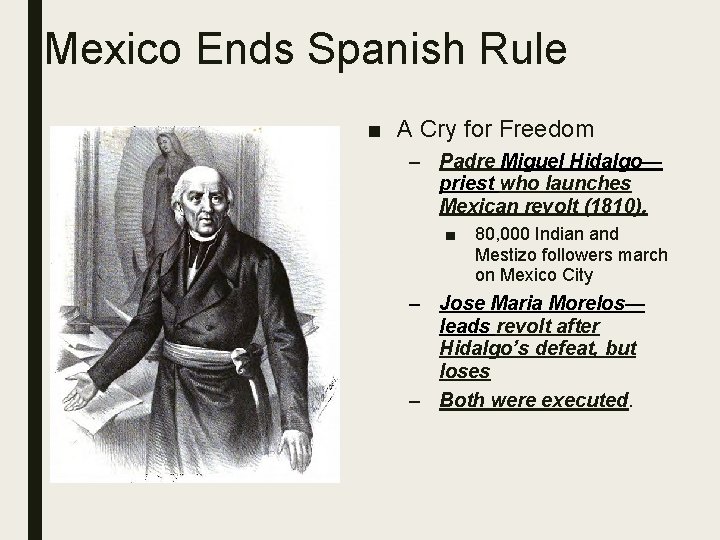
Mexico Ends Spanish Rule ■ A Cry for Freedom – Padre Miguel Hidalgo— priest who launches Mexican revolt (1810). ■ 80, 000 Indian and Mestizo followers march on Mexico City – Jose Maria Morelos— leads revolt after Hidalgo’s defeat, but loses – Both were executed.
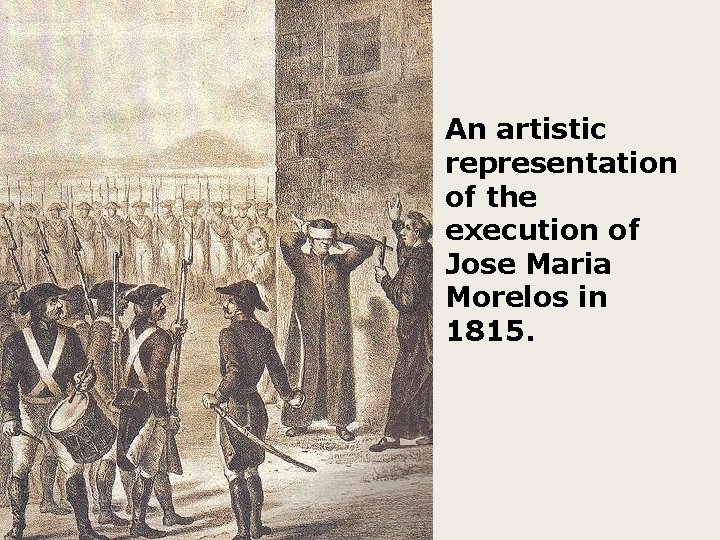
An artistic representation of the execution of Jose Maria Morelos in 1815.
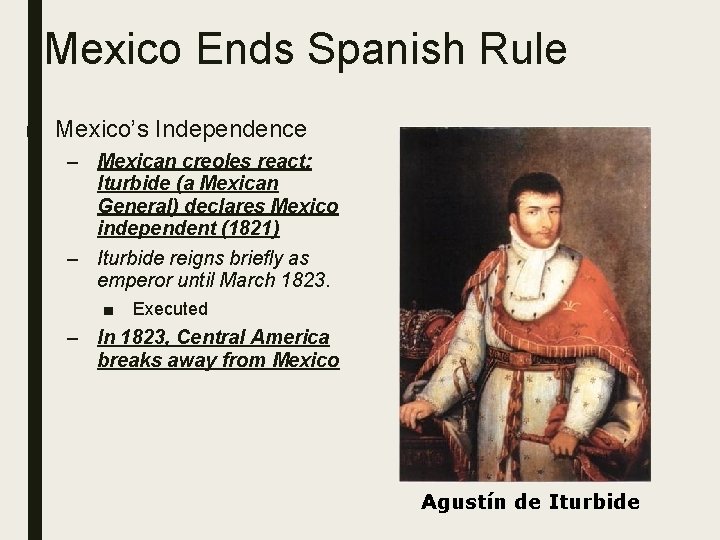
Mexico Ends Spanish Rule ■ Mexico’s Independence – Mexican creoles react; Iturbide (a Mexican General) declares Mexico independent (1821) – Iturbide reigns briefly as emperor until March 1823. ■ Executed – In 1823, Central America breaks away from Mexico Agustín de Iturbide
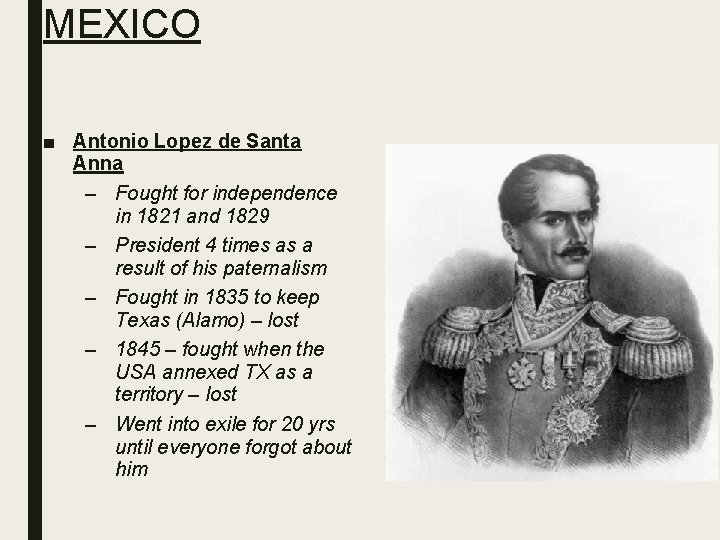
MEXICO ■ Antonio Lopez de Santa Anna – Fought for independence in 1821 and 1829 – President 4 times as a result of his paternalism – Fought in 1835 to keep Texas (Alamo) – lost – 1845 – fought when the USA annexed TX as a territory – lost – Went into exile for 20 yrs until everyone forgot about him
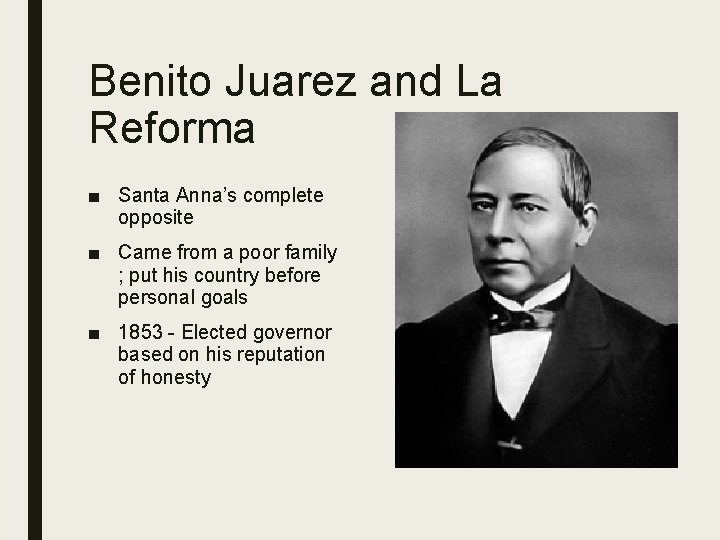
Benito Juarez and La Reforma ■ Santa Anna’s complete opposite ■ Came from a poor family ; put his country before personal goals ■ 1853 - Elected governor based on his reputation of honesty
La Reforma ■ Redistribution of land, separation of church and state, education for everyone ■ Santa Anna in office – sent Juarez into exile b/c of his popularity ■ When Santa Anna was sent into exile, Juarez was back in gov’t
Juarez… ■ Juarez returned from exile – had to fight the French – Napoleon III had invaded ■ After 5 years of fighting, French left ■ Juarez reinstated La Reforma – Modernized the country – Industrialization
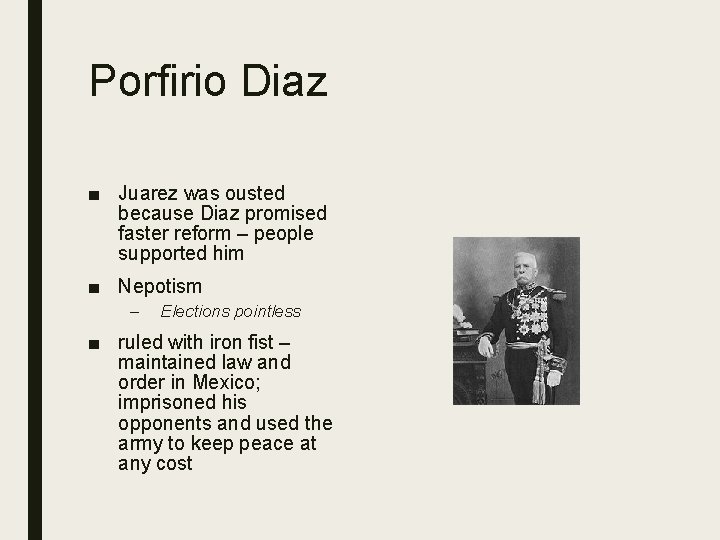
Porfirio Diaz ■ Juarez was ousted because Diaz promised faster reform – people supported him ■ Nepotism – Elections pointless ■ ruled with iron fist – maintained law and order in Mexico; imprisoned his opponents and used the army to keep peace at any cost
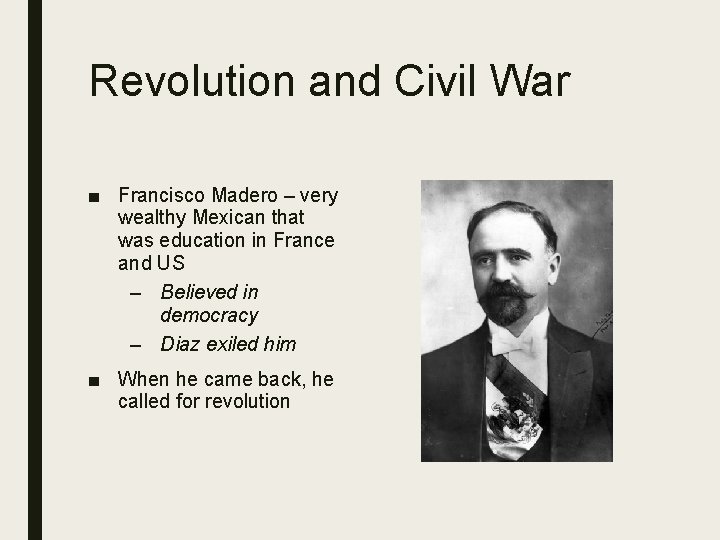
Revolution and Civil War ■ Francisco Madero – very wealthy Mexican that was education in France and US – Believed in democracy – Diaz exiled him ■ When he came back, he called for revolution
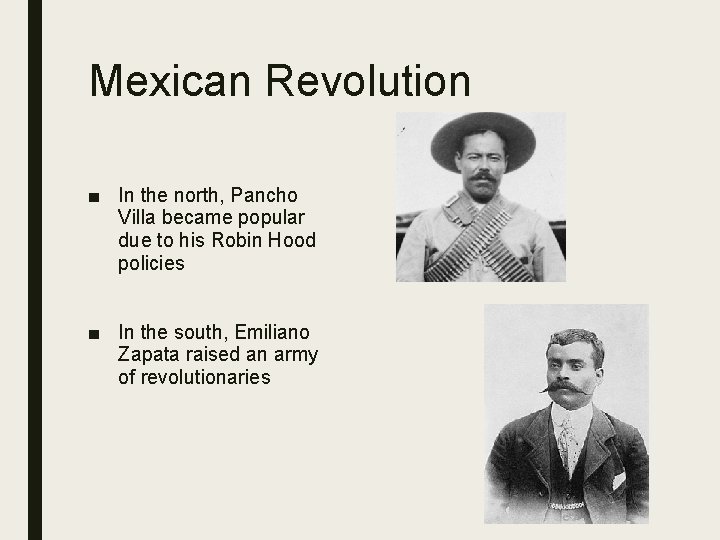
Mexican Revolution ■ In the north, Pancho Villa became popular due to his Robin Hood policies ■ In the south, Emiliano Zapata raised an army of revolutionaries
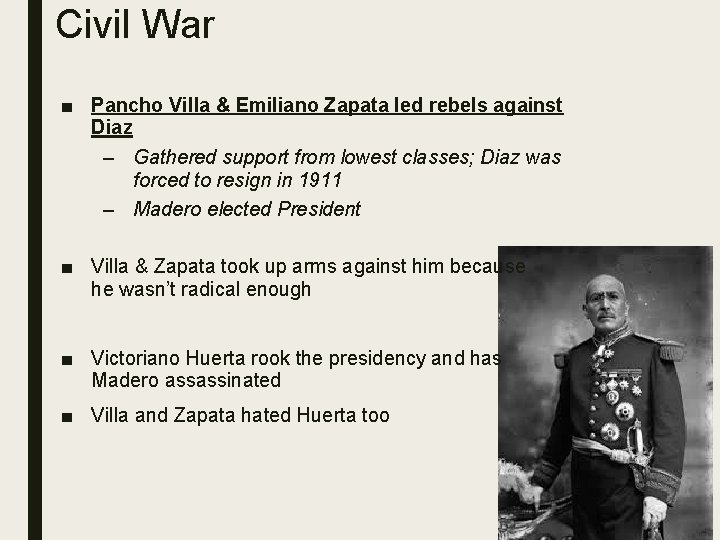
Civil War ■ Pancho Villa & Emiliano Zapata led rebels against Diaz – Gathered support from lowest classes; Diaz was forced to resign in 1911 – Madero elected President ■ Villa & Zapata took up arms against him because he wasn’t radical enough ■ Victoriano Huerta rook the presidency and has Madero assassinated ■ Villa and Zapata hated Huerta too
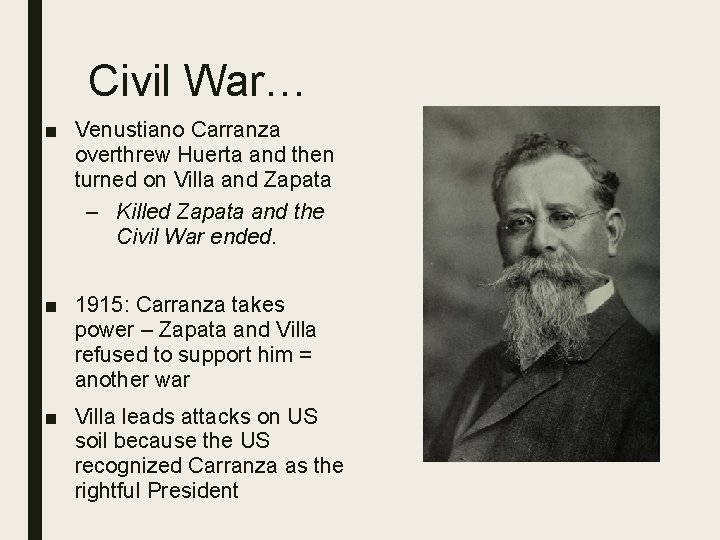
Civil War… ■ Venustiano Carranza overthrew Huerta and then turned on Villa and Zapata – Killed Zapata and the Civil War ended. ■ 1915: Carranza takes power – Zapata and Villa refused to support him = another war ■ Villa leads attacks on US soil because the US recognized Carranza as the rightful President
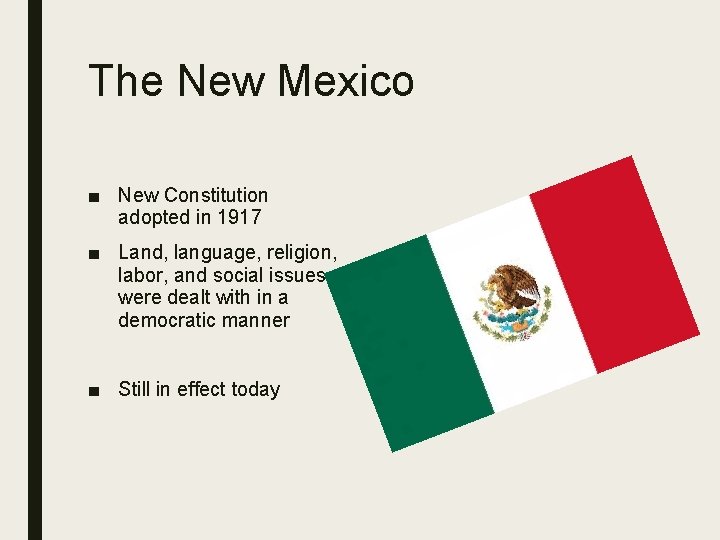
The New Mexico ■ New Constitution adopted in 1917 ■ Land, language, religion, labor, and social issues were dealt with in a democratic manner ■ Still in effect today
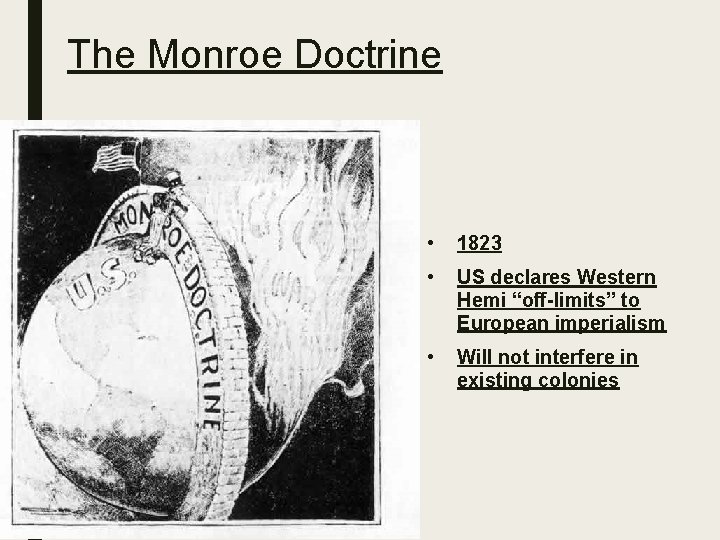
The Monroe Doctrine • 1823 • US declares Western Hemi “off-limits” to European imperialism • Will not interfere in existing colonies
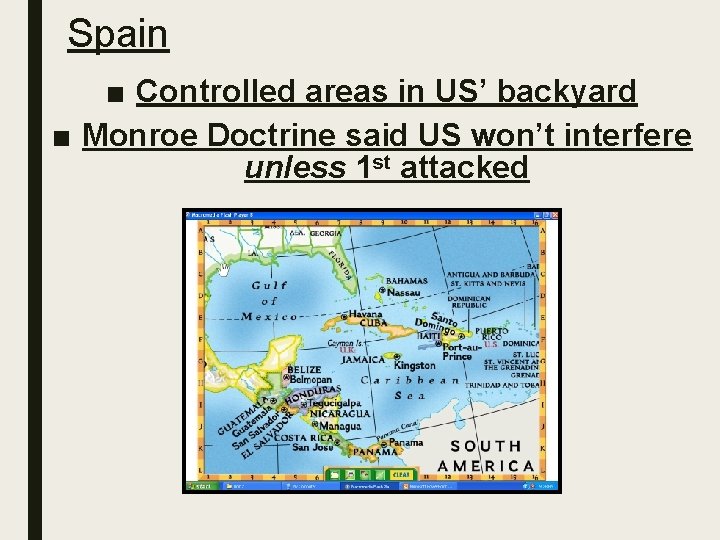
Spain ■ Controlled areas in US’ backyard ■ Monroe Doctrine said US won’t interfere unless 1 st attacked
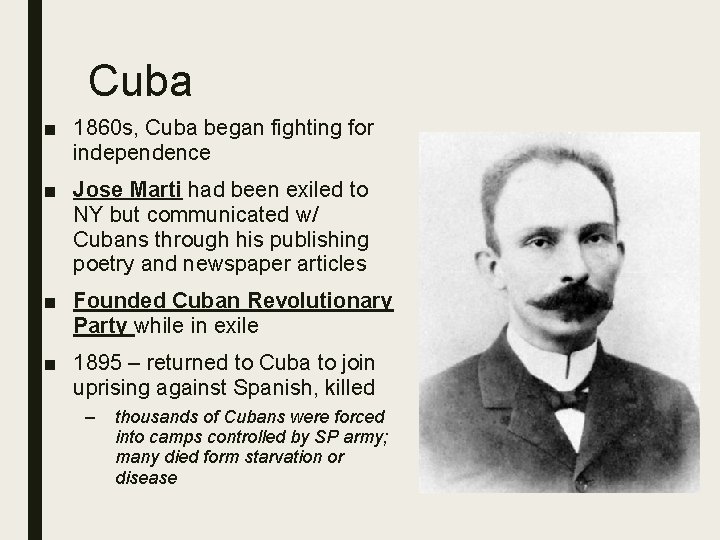
Cuba ■ 1860 s, Cuba began fighting for independence ■ Jose Marti had been exiled to NY but communicated w/ Cubans through his publishing poetry and newspaper articles ■ Founded Cuban Revolutionary Party while in exile ■ 1895 – returned to Cuba to join uprising against Spanish, killed – thousands of Cubans were forced into camps controlled by SP army; many died form starvation or disease
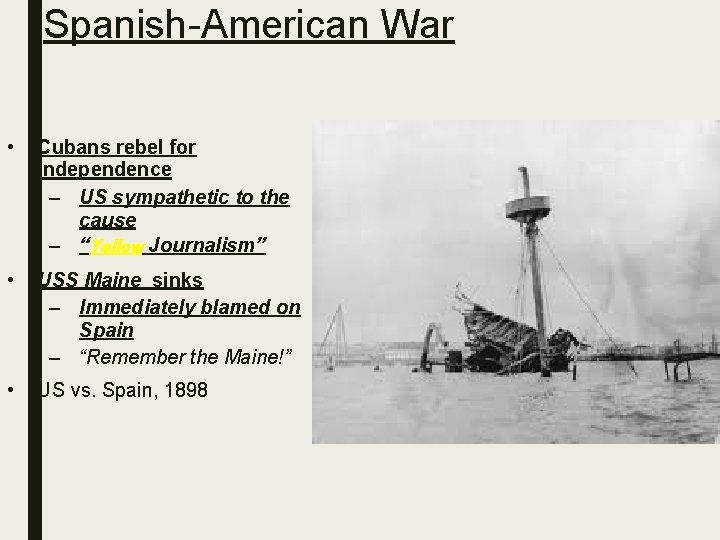
Spanish-American War • Cubans rebel for independence – US sympathetic to the cause – “Yellow Journalism” • USS Maine sinks – Immediately blamed on Spain – “Remember the Maine!” • US vs. Spain, 1898
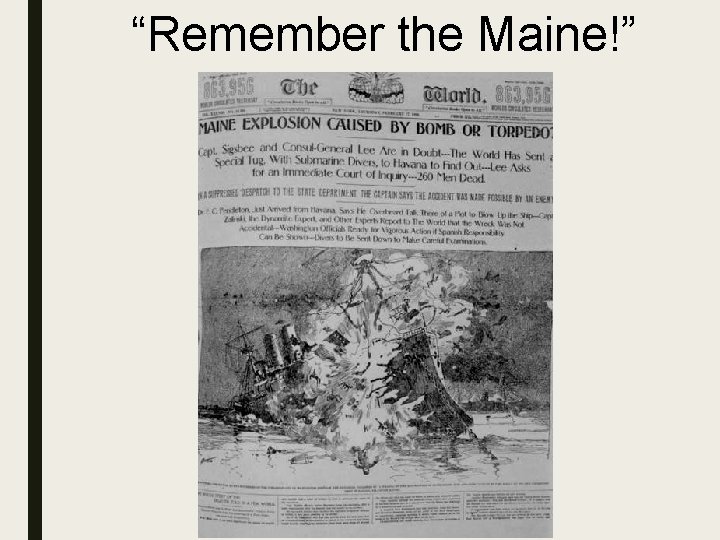
“Remember the Maine!”
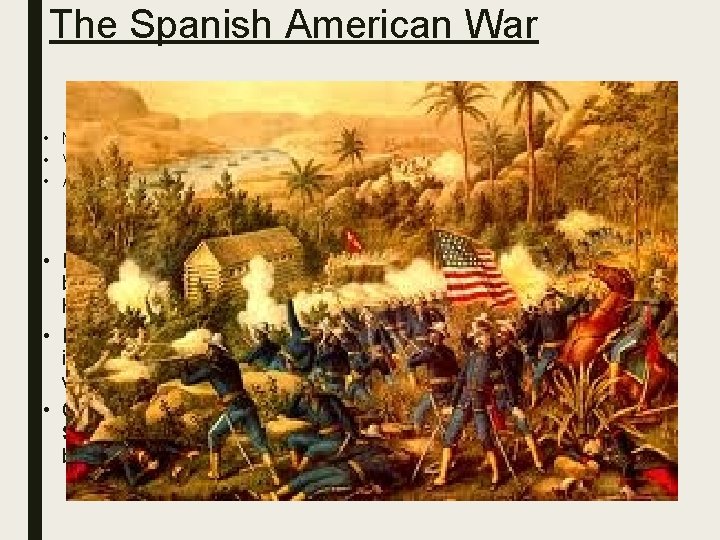
The Spanish American War Sympathy for Rebels • Many people in U. S. felt sympathy for Cuban rebels • Viewed Cuban struggle for freedom as similar to American Revolution • American newspapers urged United States to enter war War Begins • February 1898, U. S. battleship Maine exploded in Havana’s harbor • Many American’s immediately assumed Spain was to blame • Congress declared war; Spanish-American War began Short War • War disastrous for Spain • Spanish army defeated in Cuba, navy fleets destroyed in Philippines, Cuba • U. S. won war within three months
Result Paris Peace Treaty ended Spanish-American War ■ United States received Puerto Rico, Guam ■ Agreed to purchase Philippines for $20 million ■ Spain agreed to give up Cuba, but U. S. did not want Cuba to have full independence – U. S. made Cuba a protectorate by forcing it to include Platt Amendment as part of new constitution – Platt Amendment allowed U. S. to intervene in Cuba, approve foreign treaties, lease land at Guantánamo Bay for naval base
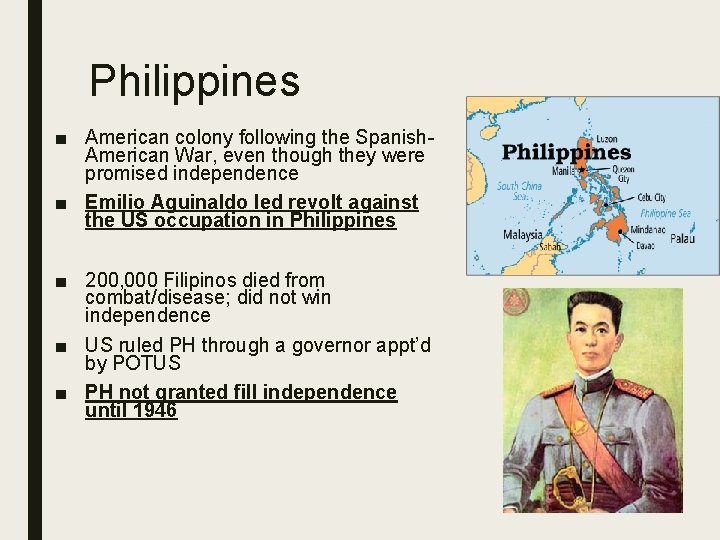
Philippines ■ American colony following the Spanish. American War, even though they were promised independence ■ Emilio Aguinaldo led revolt against the US occupation in Philippines ■ 200, 000 Filipinos died from combat/disease; did not win independence ■ US ruled PH through a governor appt’d by POTUS ■ PH not granted fill independence until 1946
Increasing US Power ■ United States sent troops to several nations in early 1900 s • U. S. forces entered Haiti, the Dominican Republic, Nicaragua, Cuba to restore civil order • United States took control of finances in those countries • Claimed need to prevent financial chaos ■ Reality: U. S. used “world police” ideology to become even more involved in political affairs of Latin American countries
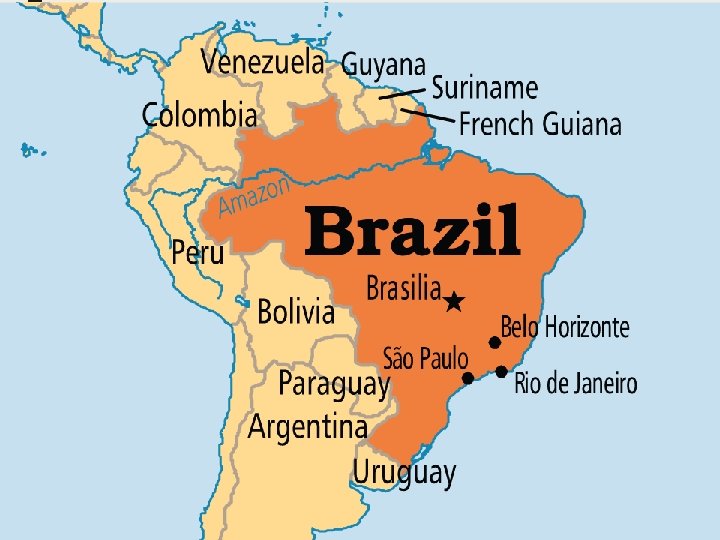
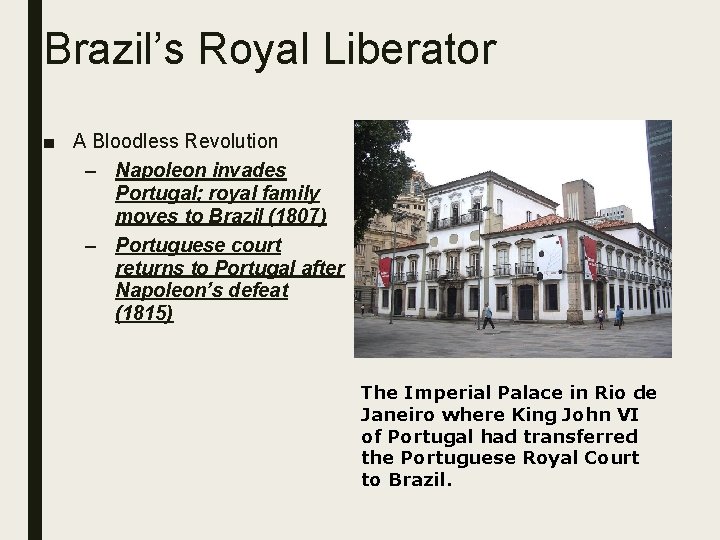
Brazil’s Royal Liberator ■ A Bloodless Revolution – Napoleon invades Portugal; royal family moves to Brazil (1807) – Portuguese court returns to Portugal after Napoleon’s defeat (1815) The Imperial Palace in Rio de Janeiro where King John VI of Portugal had transferred the Portuguese Royal Court to Brazil.
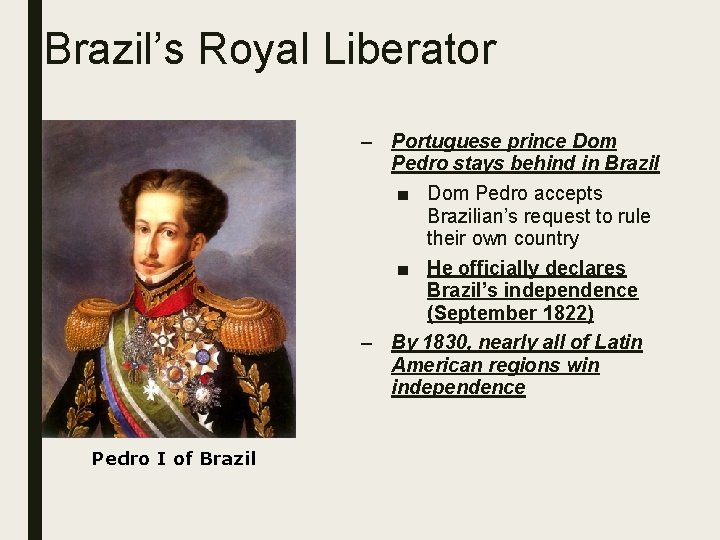
Brazil’s Royal Liberator – Portuguese prince Dom Pedro stays behind in Brazil ■ Dom Pedro accepts Brazilian’s request to rule their own country ■ He officially declares Brazil’s independence (September 1822) – By 1830, nearly all of Latin American regions win independence Pedro I of Brazil
The Beard Chronicles Using one of the fabulous beards or mustaches we encountered today, choose one of the Latin American Revolutionaries we discussed today, draw your own beard template and write a short story from their perspective, telling their tale as either a success or a failure. You must include how they were inspired by an Enlightenment thinker.
- Slides: 43