
Latin America Government Government Systems Lets Review Unitary
- Slides: 24
Latin America Government
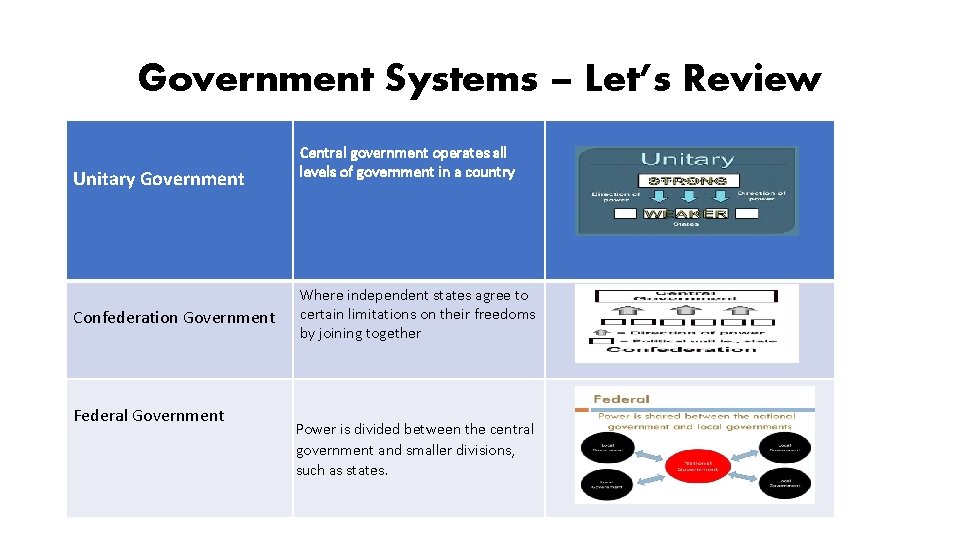
Government Systems – Let’s Review Unitary Government Confederation Government Federal Government Central government operates all levels of government in a country Where independent states agree to certain limitations on their freedoms by joining together Power is divided between the central government and smaller divisions, such as states.
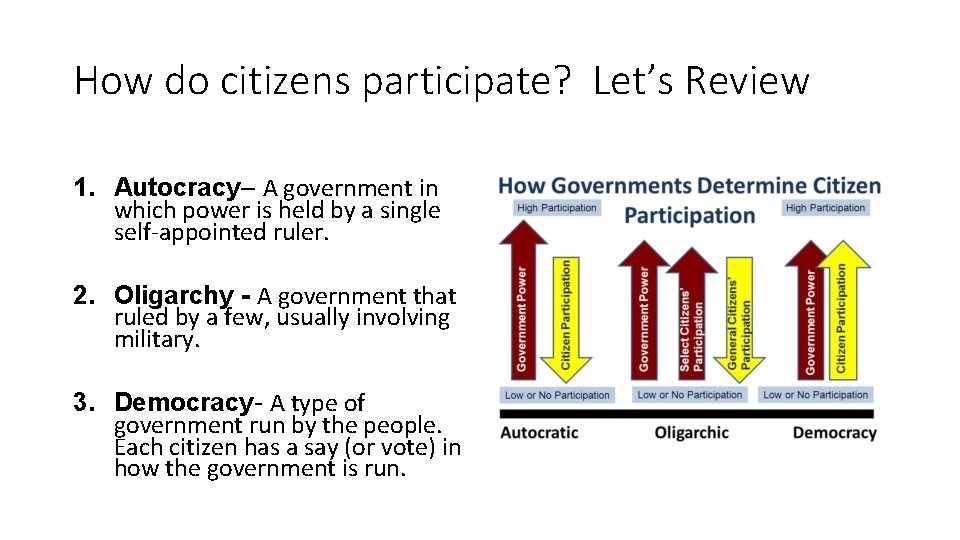
How do citizens participate? Let’s Review 1. Autocracy– A government in which power is held by a single self-appointed ruler. 2. Oligarchy - A government that ruled by a few, usually involving military. 3. Democracy- A type of government run by the people. Each citizen has a say (or vote) in how the government is run.
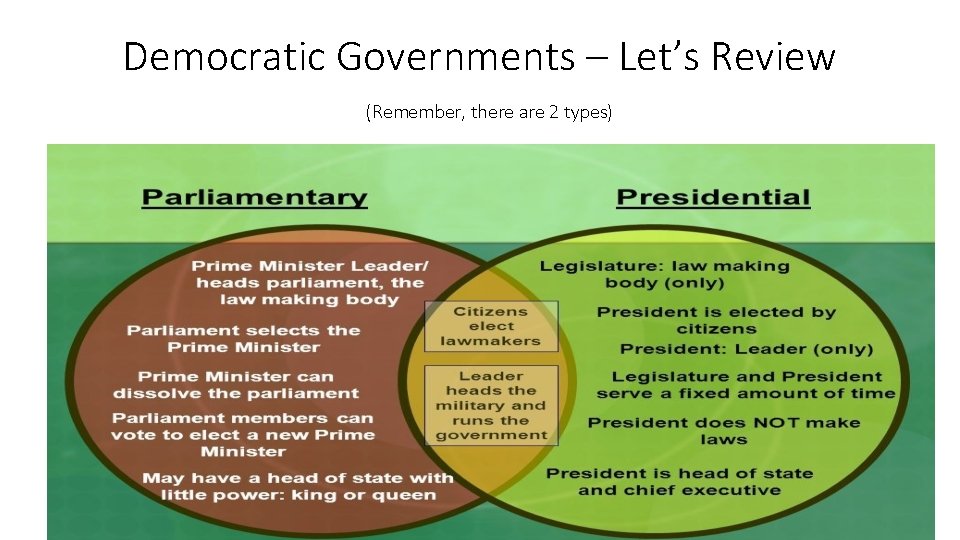
Democratic Governments – Let’s Review (Remember, there are 2 types)
BRAZIL A Federal Republic
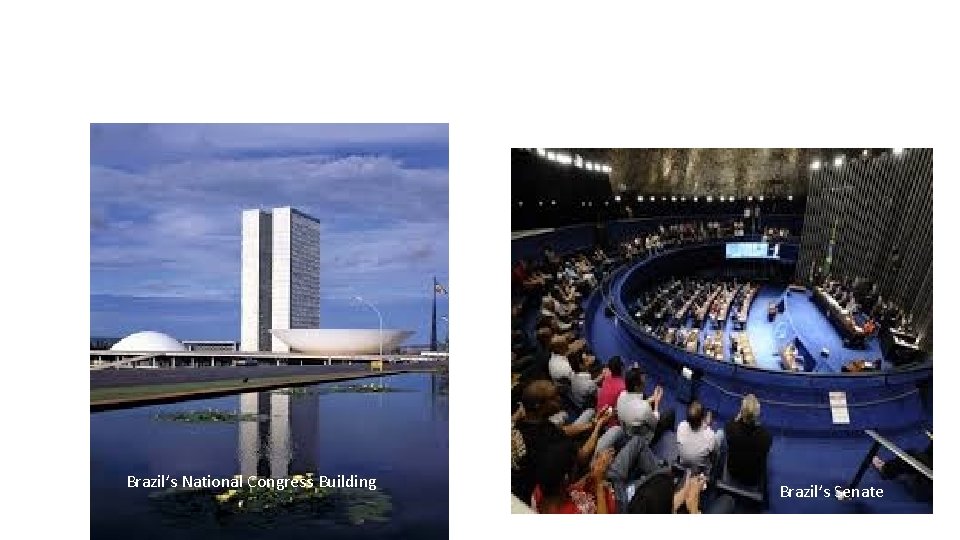
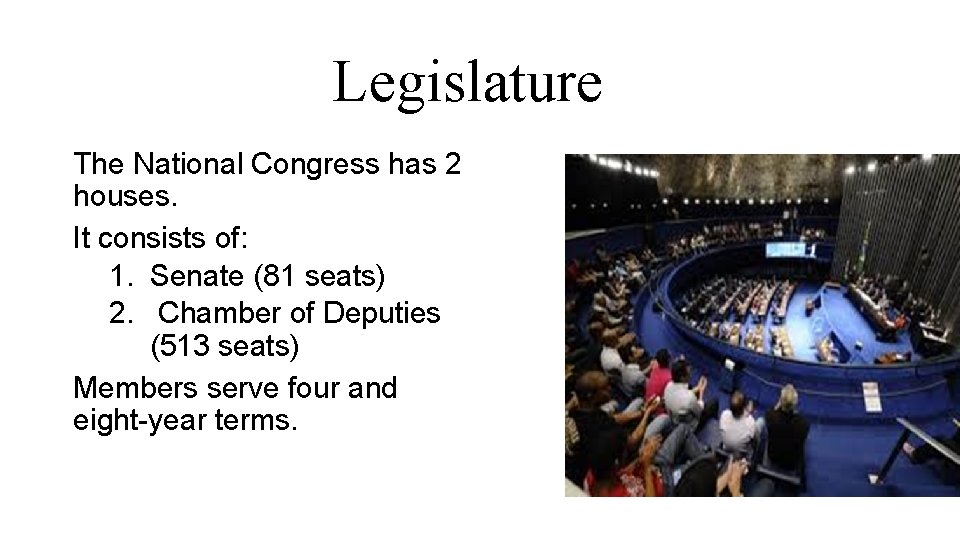
Brazil’s National Congress Building Brazil’s Senate
Brazil is a Federal System of Government 1. Brazil has a federal system, which means that the national government and the state governments SHARE power. (Remember the arrows in the review slide) 2. There are 26 states in Brazil.
Brazil’s Leadership consists of… President & Vice President 1. President: holds the most political power; the president is both the chief executive and the head of state. 2. Vice President: helps in the dayto-day running of the government; performs ceremonial duties. How are Leaders Chosen 1. President: elected by popular vote for a single fouryear term 2. Vice President: runs on the same ticket as the president
Legislature The National Congress has 2 houses. It consists of: 1. Senate (81 seats) 2. Chamber of Deputies (513 seats) Members serve four and eight-year terms.
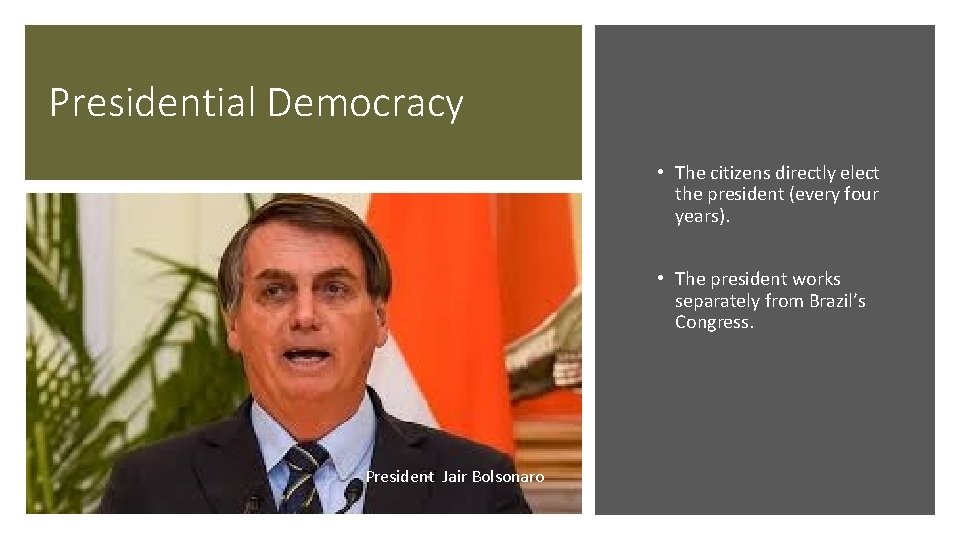
Presidential Democracy • The citizens directly elect the president (every four years). • The president works separately from Brazil’s Congress. President Jair Bolsonaro
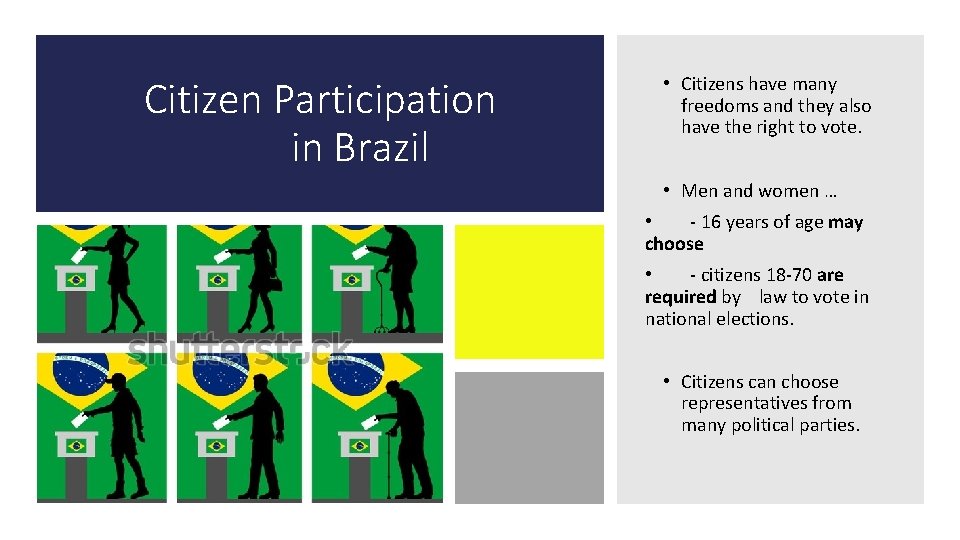
Citizen Participation in Brazil • Citizens have many freedoms and they also have the right to vote. • Men and women … • - 16 years of age may choose • - citizens 18 -70 are required by law to vote in national elections. • Citizens can choose representatives from many political parties.
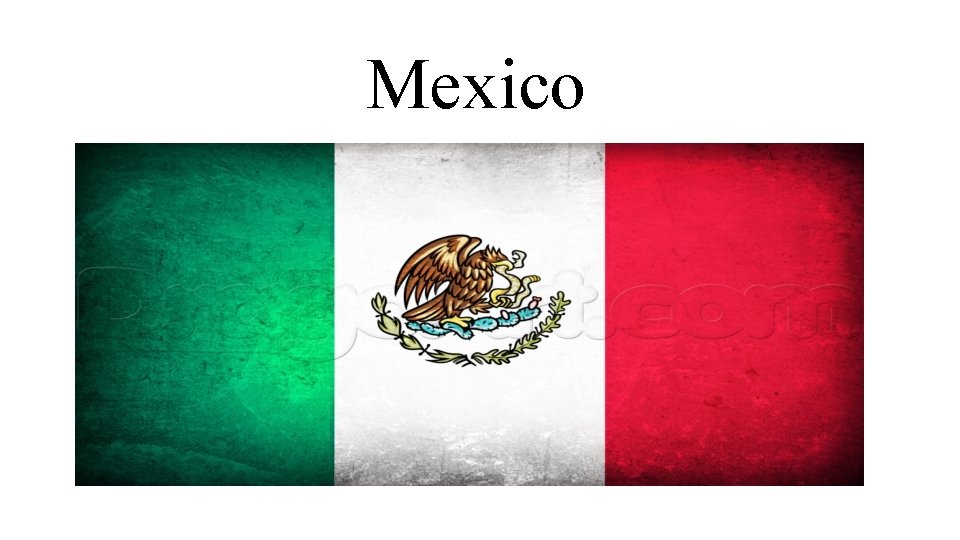
Mexico
Mexico is a Federal System of Government 1. Mexico has a federal system, which means that the national government and the state governments SHARE power. (Remember the arrows in the review slide) 2. There are 31 states in Mexico.
Mexico’s Leadership consists of… President • holds the most political power • is both the chief executive and the head of state. How are Leaders Chosen President: elected by popular vote for a single six-year term
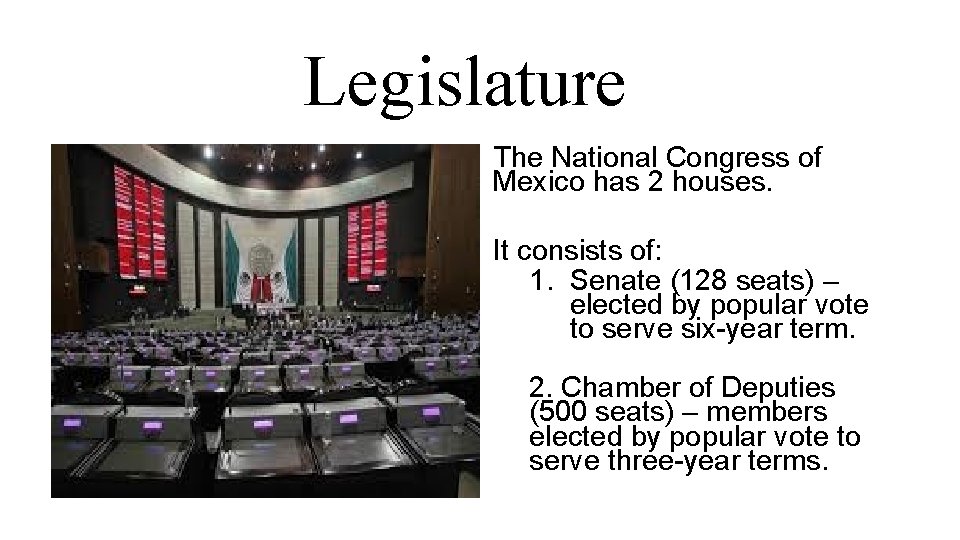
Legislature The National Congress of Mexico has 2 houses. It consists of: 1. Senate (128 seats) – elected by popular vote to serve six-year term. 2. Chamber of Deputies (500 seats) – members elected by popular vote to serve three-year terms.
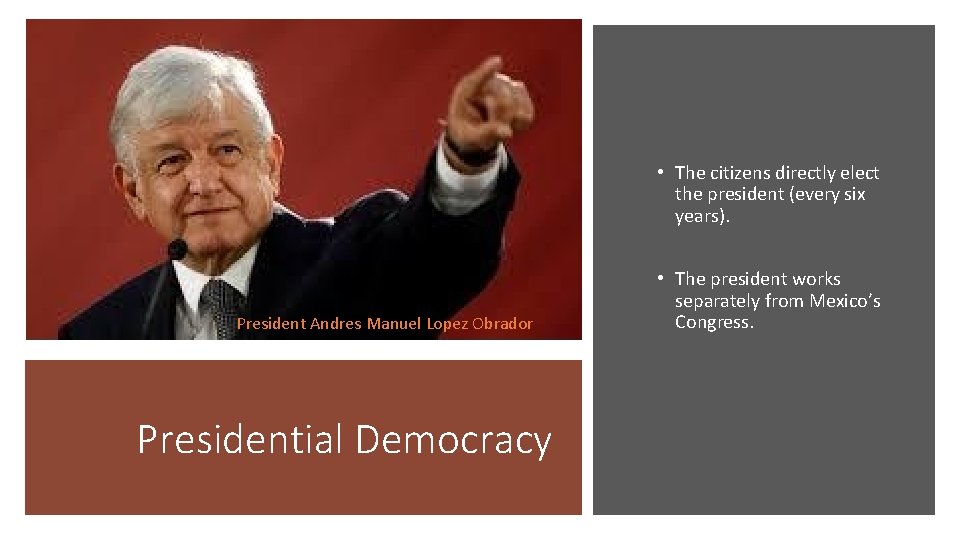
• The citizens directly elect the president (every six years). President Andres Manuel Lopez Obrador Presidential Democracy • The president works separately from Mexico’s Congress.
Citizen Participation in Mexico • Citizens of Mexico have many freedoms, and they also have the right to vote. • It is universal and compulsory (but not enforced) that citizens who are 18 or older vote in national elections. • There are many political parties in Mexico.
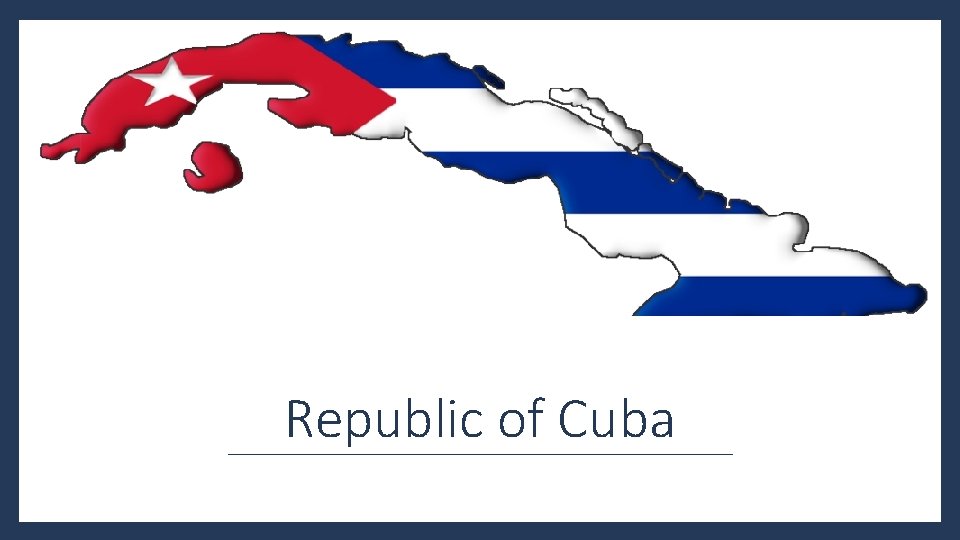
Republic of Cuba
Cuba is a Unitary System of Government 1. Which means … the national (central) government holds all of the power. 2. The provinces are under central government control. 3. There are 15 provinces in Cuba.
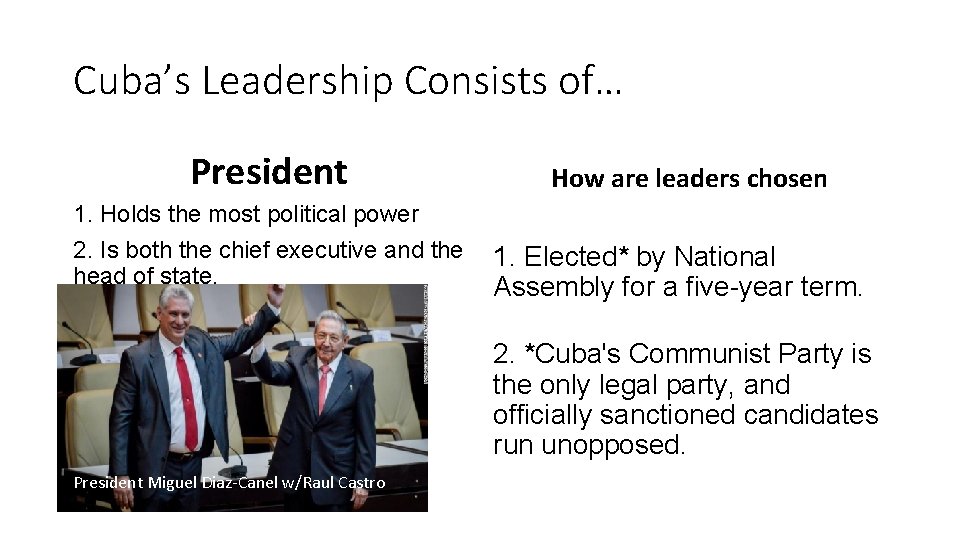
Cuba’s Leadership Consists of… President 1. Holds the most political power 2. Is both the chief executive and the head of state. How are leaders chosen 1. Elected* by National Assembly for a five-year term. 2. *Cuba's Communist Party is the only legal party, and officially sanctioned candidates run unopposed. President Miguel Diaz-Canel w/Raul Castro
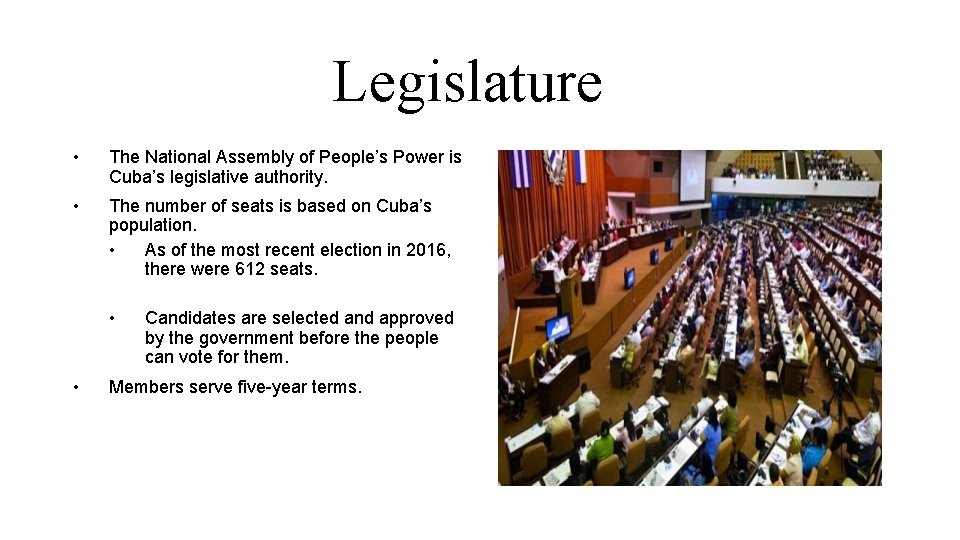
Legislature • The National Assembly of People’s Power is Cuba’s legislative authority. • The number of seats is based on Cuba’s population. • As of the most recent election in 2016, there were 612 seats. • • Candidates are selected and approved by the government before the people can vote for them. Members serve five-year terms.
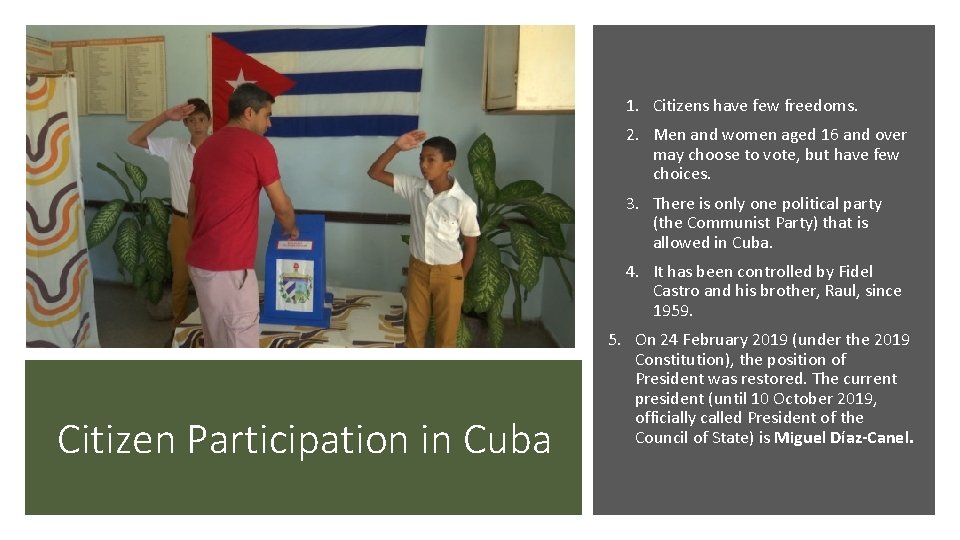
1. Citizens have few freedoms. 2. Men and women aged 16 and over may choose to vote, but have few choices. 3. There is only one political party (the Communist Party) that is allowed in Cuba. 4. It has been controlled by Fidel Castro and his brother, Raul, since 1959. Citizen Participation in Cuba 5. On 24 February 2019 (under the 2019 Constitution), the position of President was restored. The current president (until 10 October 2019, officially called President of the Council of State) is Miguel Díaz-Canel.
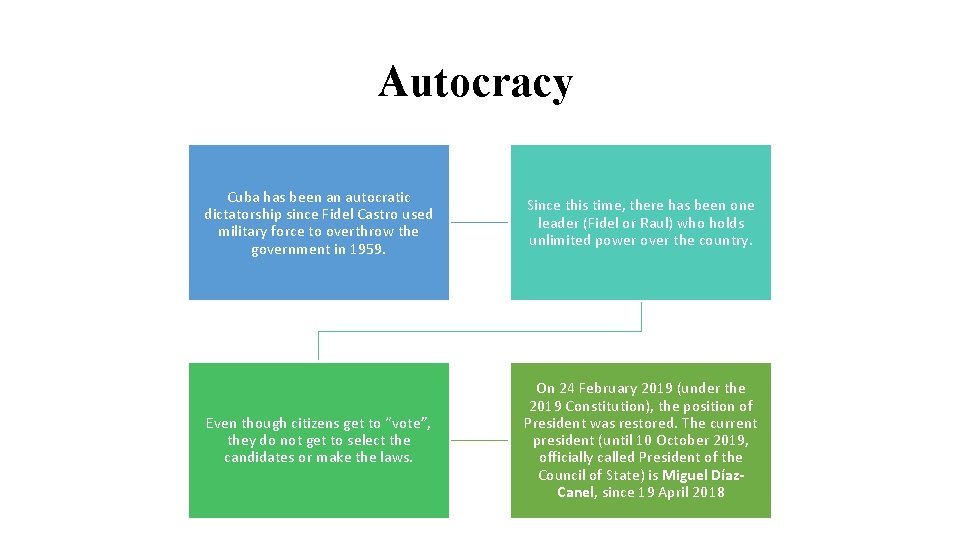
Autocracy Cuba has been an autocratic dictatorship since Fidel Castro used military force to overthrow the government in 1959. Since this time, there has been one leader (Fidel or Raul) who holds unlimited power over the country. Even though citizens get to “vote”, they do not get to select the candidates or make the laws. On 24 February 2019 (under the 2019 Constitution), the position of President was restored. The current president (until 10 October 2019, officially called President of the Council of State) is Miguel Díaz. Canel, since 19 April 2018
Assignment - Triple Venn Diagram • Use the Venn Diagram to compare and contrast the three Latin American governments from this lesson. • Below is a diagram sample. The venn is under separate attachment.