
Latin America chapter 8 Latin America 8 million

- Slides: 24
Latin America chapter 8
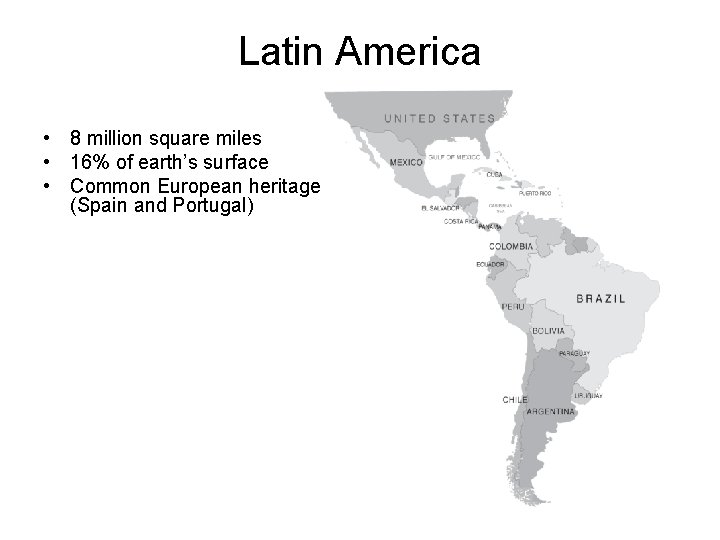
Latin America • 8 million square miles • 16% of earth’s surface • Common European heritage (Spain and Portugal)
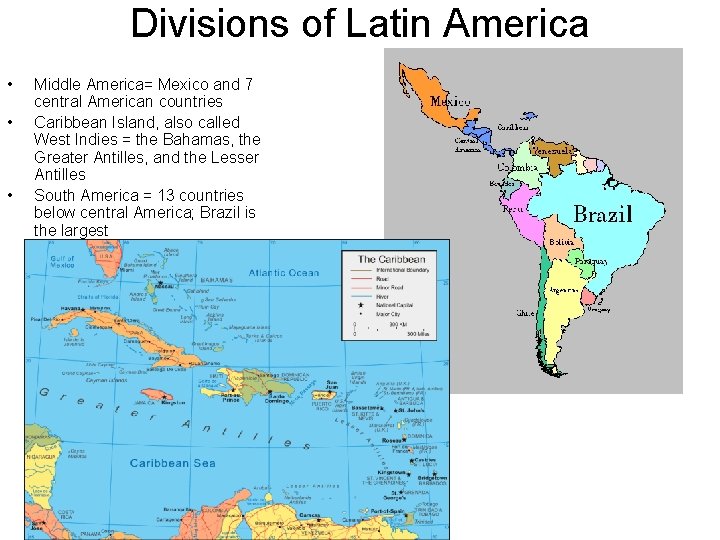
Divisions of Latin America • • • Middle America= Mexico and 7 central American countries Caribbean Island, also called West Indies = the Bahamas, the Greater Antilles, and the Lesser Antilles South America = 13 countries below central America; Brazil is the largest
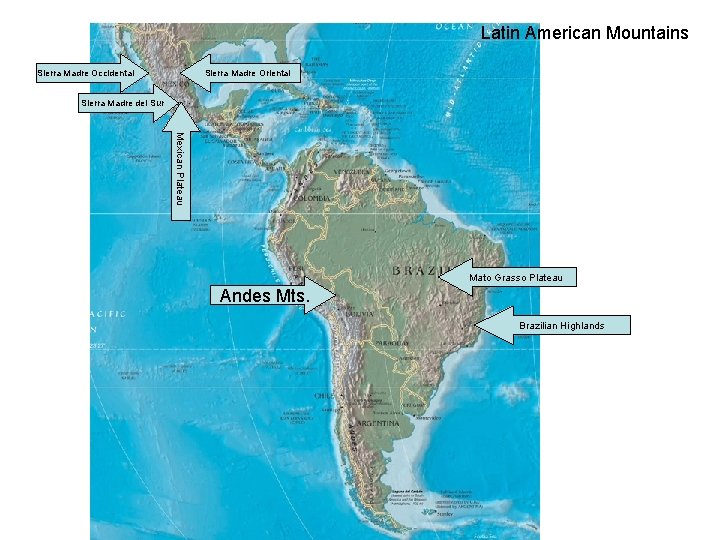
Latin American Mountains Sierra Madre Occidental Sierra Madre Oriental Sierra Madre del Sur Mexican Plateau Mato Grasso Plateau Andes Mts. Brazilian Highlands
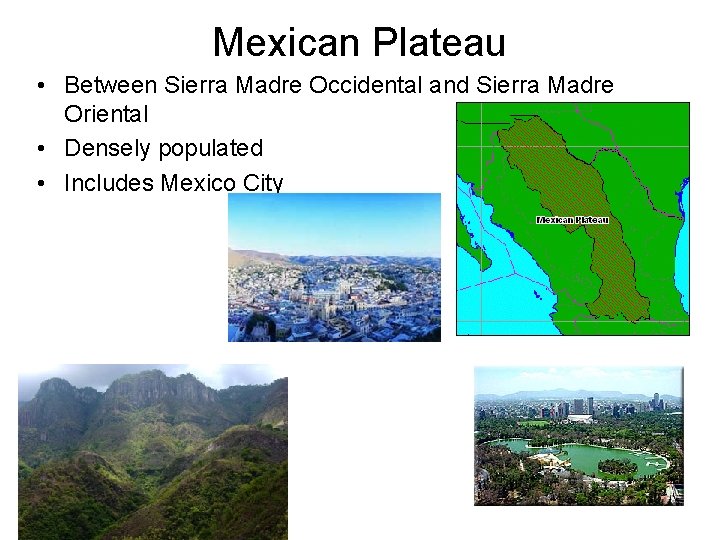
Mexican Plateau • Between Sierra Madre Occidental and Sierra Madre Oriental • Densely populated • Includes Mexico City
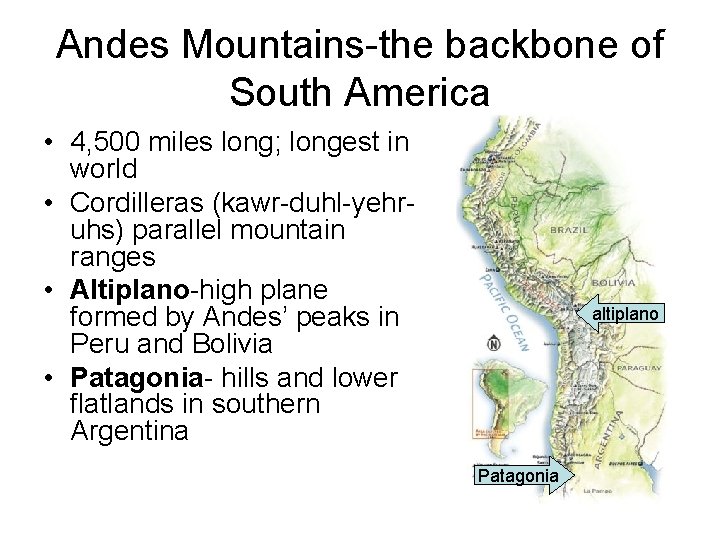
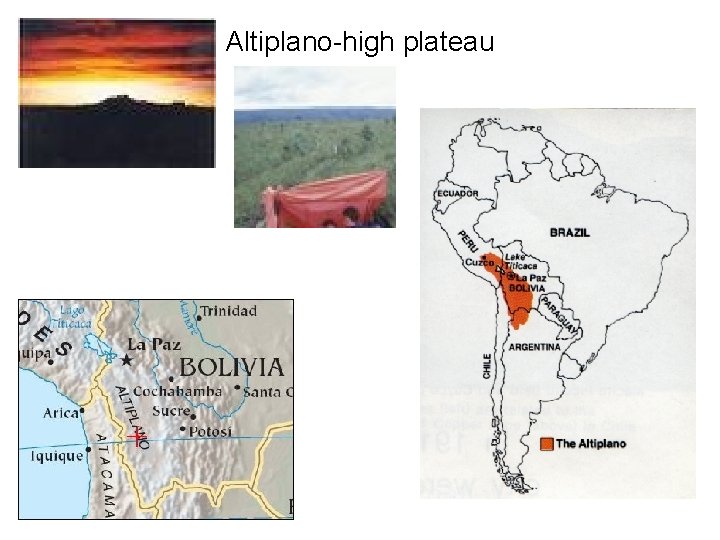
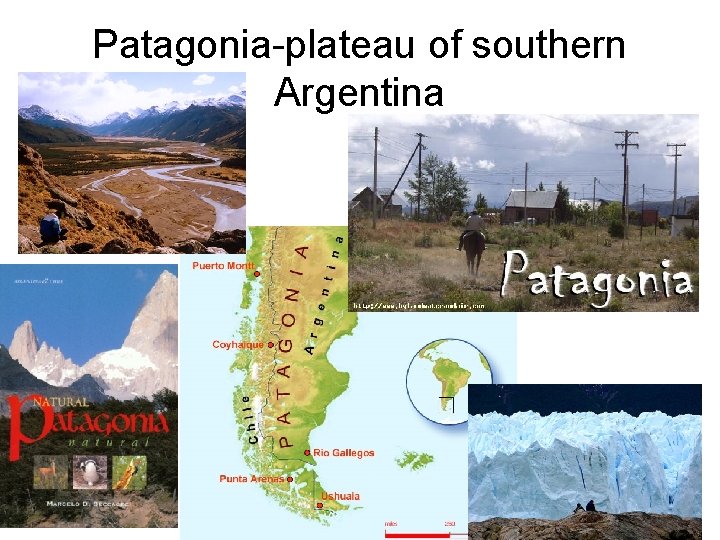
Andes Mountains-the backbone of South America • 4, 500 miles long; longest in world • Cordilleras (kawr-duhl-yehruhs) parallel mountain ranges • Altiplano-high plane formed by Andes’ peaks in Peru and Bolivia • Patagonia- hills and lower flatlands in southern Argentina altiplano Patagonia
Altiplano-high plateau
Patagonia-plateau of southern Argentina
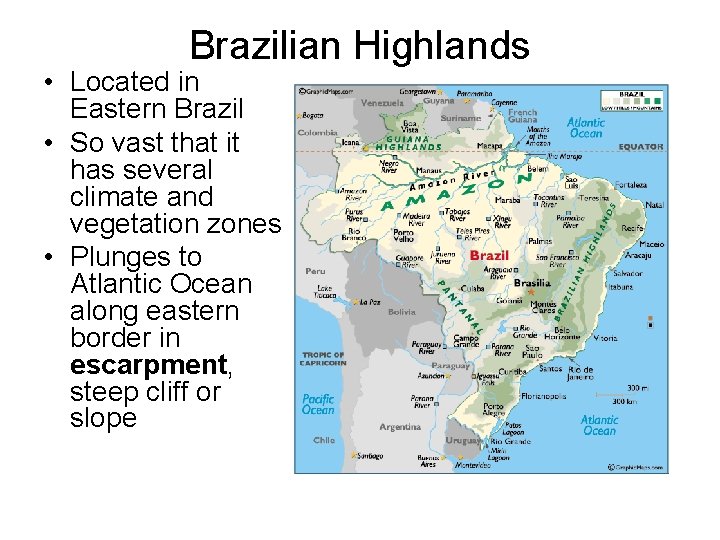
Brazilian Highlands • Located in Eastern Brazil • So vast that it has several climate and vegetation zones • Plunges to Atlantic Ocean along eastern border in escarpment, steep cliff or slope
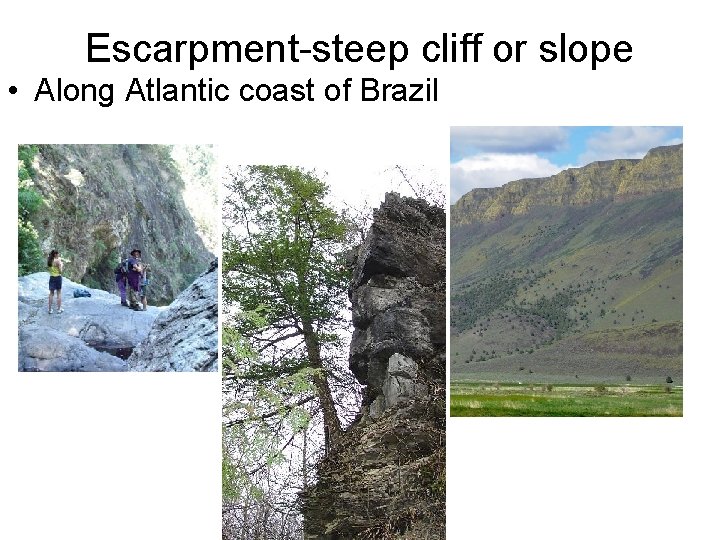
Escarpment-steep cliff or slope • Along Atlantic coast of Brazil
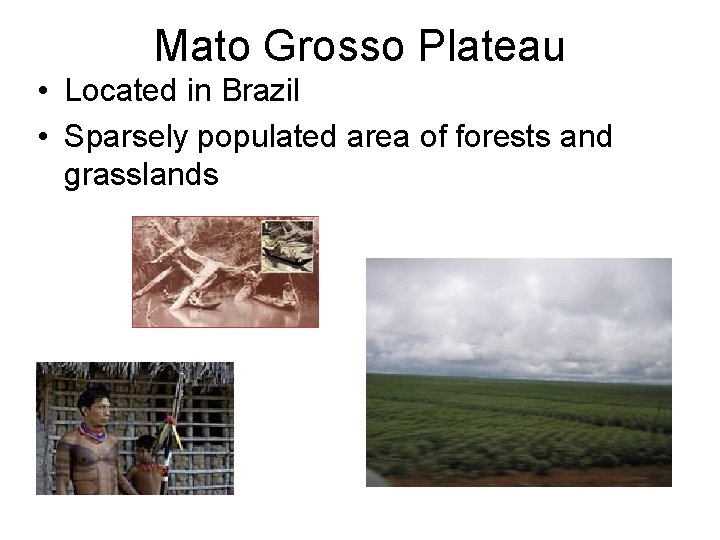
Mato Grosso Plateau • Located in Brazil • Sparsely populated area of forests and grasslands
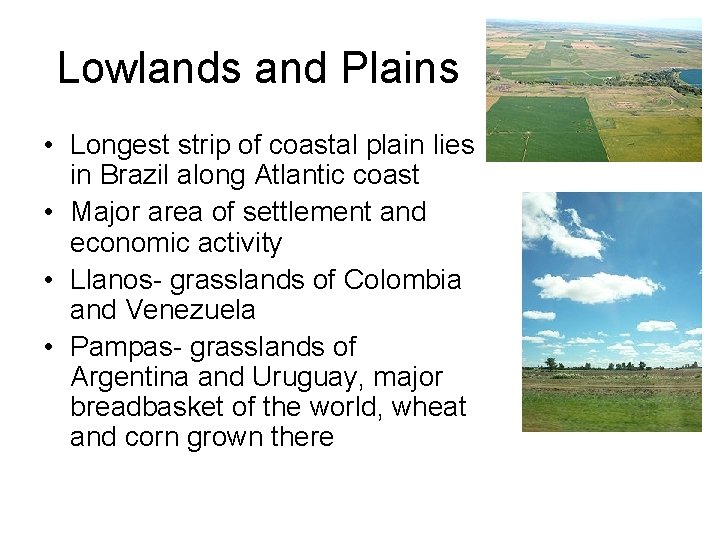
Lowlands and Plains • Longest strip of coastal plain lies in Brazil along Atlantic coast • Major area of settlement and economic activity • Llanos- grasslands of Colombia and Venezuela • Pampas- grasslands of Argentina and Uruguay, major breadbasket of the world, wheat and corn grown there
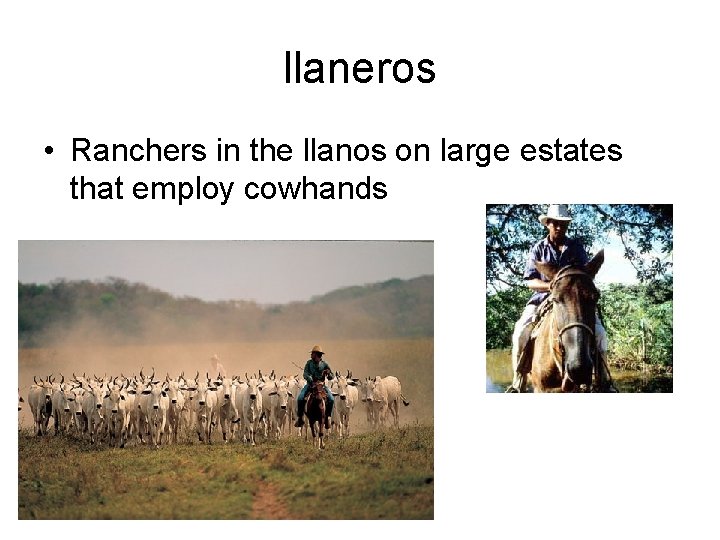
llaneros • Ranchers in the llanos on large estates that employ cowhands
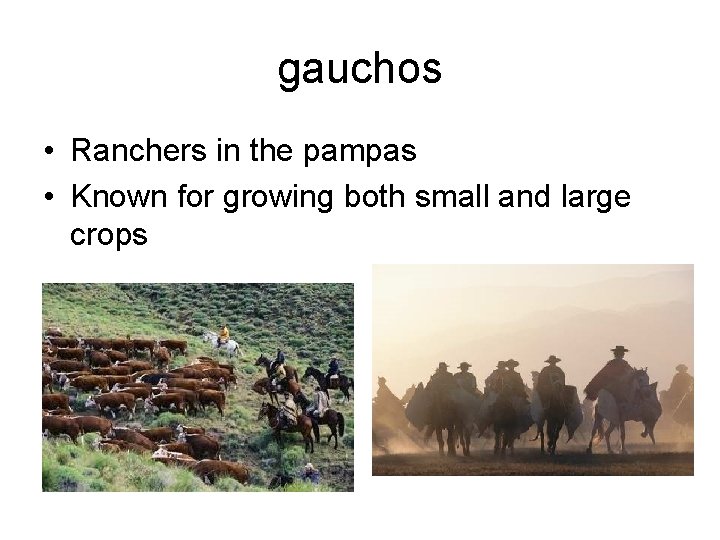
gauchos • Ranchers in the pampas • Known for growing both small and large crops
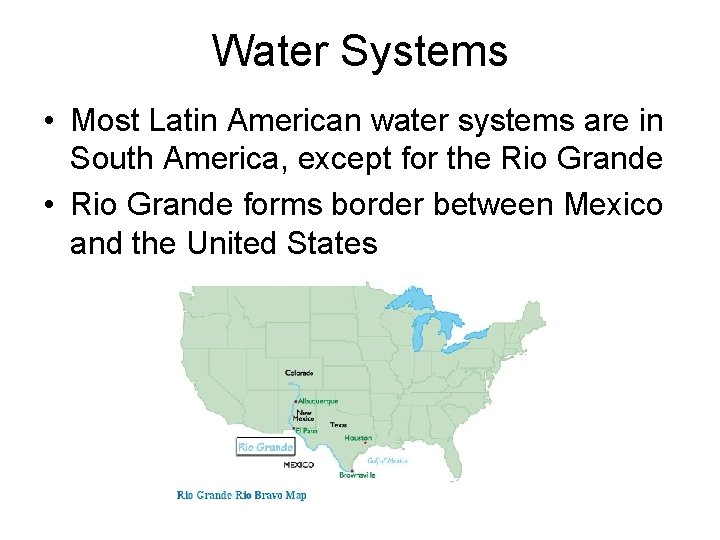
Water Systems • Most Latin American water systems are in South America, except for the Rio Grande • Rio Grande forms border between Mexico and the United States
Amazon River • Longest river in the western hemisphere • Carries ten times more water than the Mississippi River • Hundreds of smaller rivers join the Amazon to form the Amazon River Basin • Navigable up to 2, 300 miles from the mouth
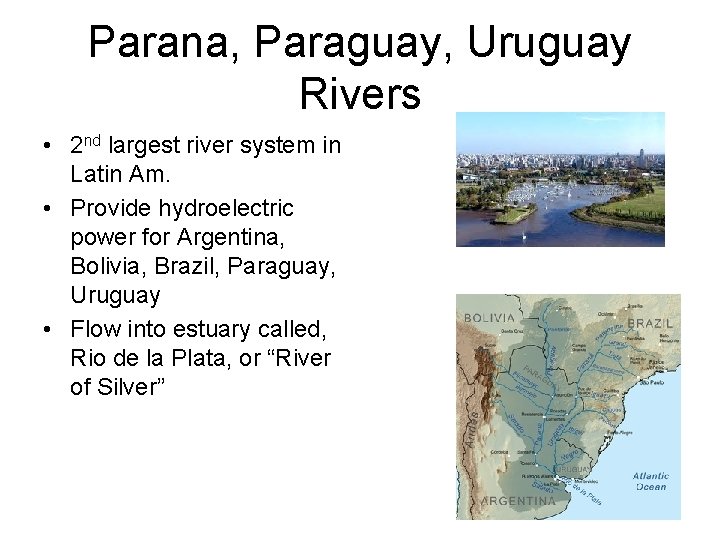
Parana, Paraguay, Uruguay Rivers • 2 nd largest river system in Latin Am. • Provide hydroelectric power for Argentina, Bolivia, Brazil, Paraguay, Uruguay • Flow into estuary called, Rio de la Plata, or “River of Silver”
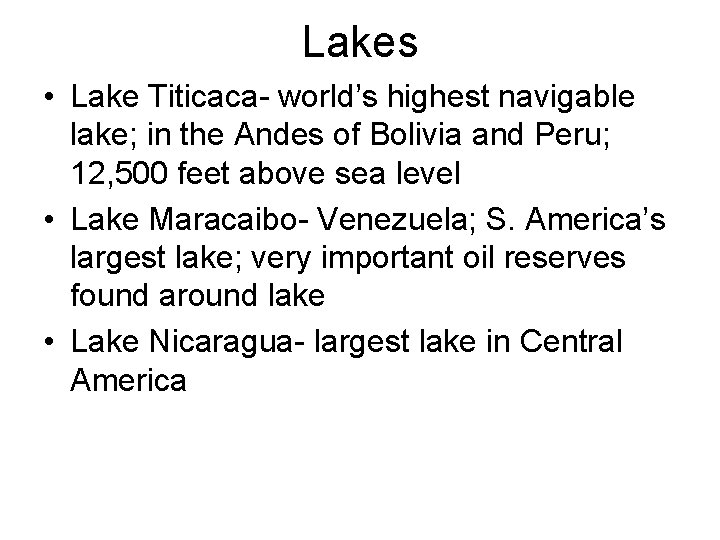
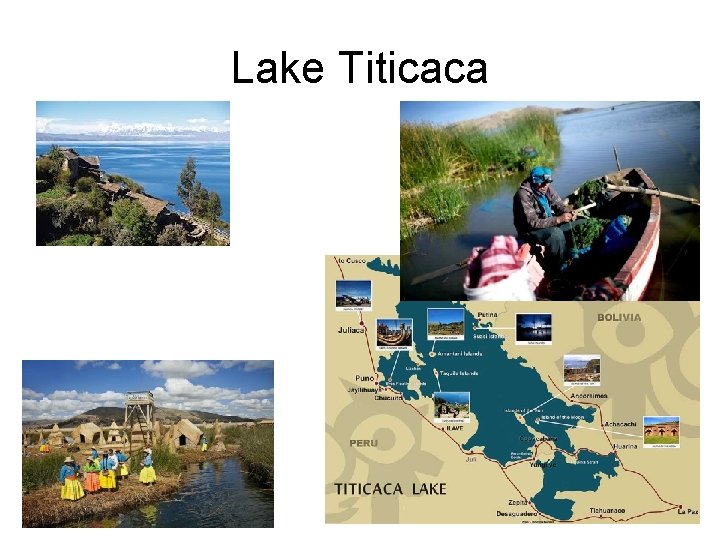
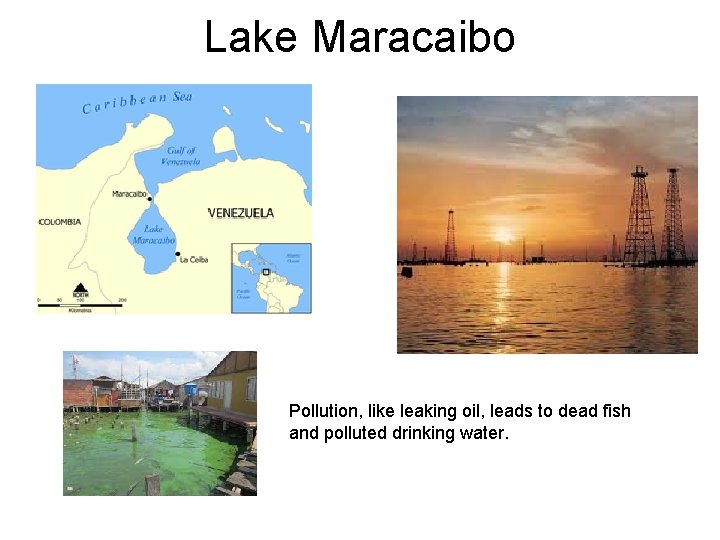
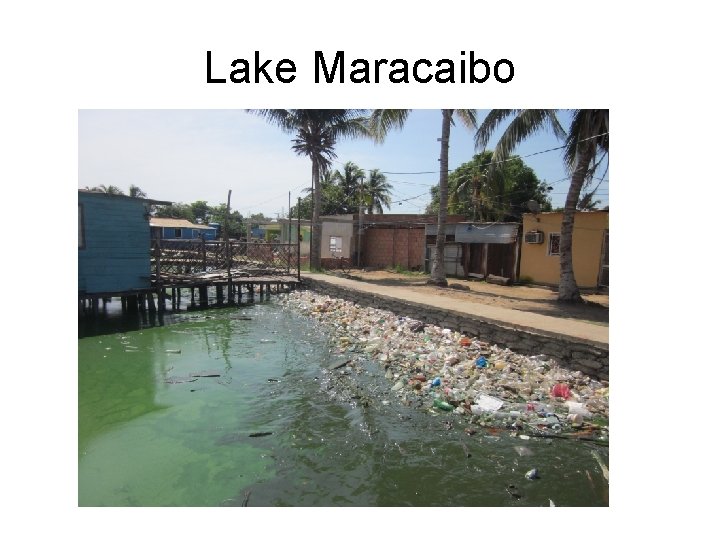
Lakes • Lake Titicaca- world’s highest navigable lake; in the Andes of Bolivia and Peru; 12, 500 feet above sea level • Lake Maracaibo- Venezuela; S. America’s largest lake; very important oil reserves found around lake • Lake Nicaragua- largest lake in Central America
Lake Titicaca
Lake Maracaibo Pollution, like leaking oil, leads to dead fish and polluted drinking water.
Lake Maracaibo
Natural Resources • • • Farmland Oil-Venezuela and Mexico Gold-Venezuela and Brazil Silver- Mexico and Peru Emeralds- Colombia
Section 2 Climate and Vegetation