
LATI 50 REVIEW AND OVERVIEW SPRING 2013 Why
![Course Organization (III) � 7: Current Developments The Immigration Debate [United States] The Ebullience](https://slidetodoc.com/presentation_image_h2/4893e6ab281649d7630dde4c3fd47f64/image-10.jpg "Course Organization (III) � 7: Current Developments The Immigration Debate [United States] The Ebullience")
- Slides: 12
LATI 50 REVIEW AND OVERVIEW SPRING 2013
Why Latin America? �It’s big �It’s there �It’s a mirror �It’s a paradox
Why Latin America? �It’s big �It’s there �It’s a mirror �It’s a paradox
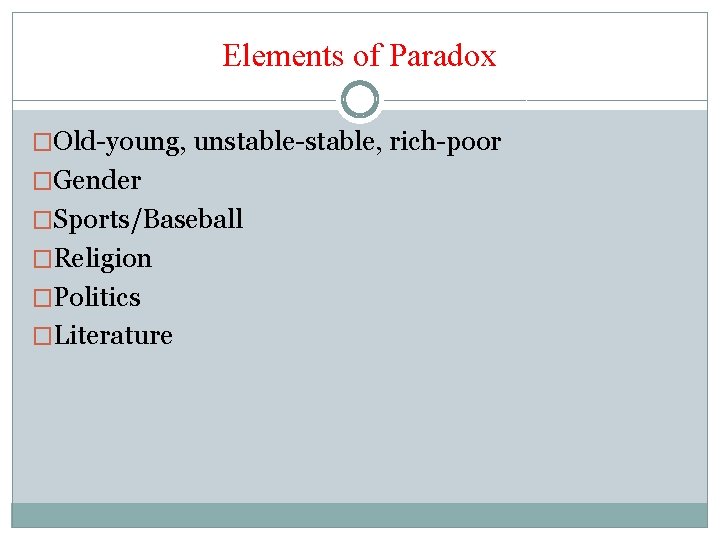
Elements of Paradox �Old-young, unstable-stable, rich-poor �Gender �Sports/Baseball �Religion �Politics �Literature
Elements of Paradox �Old-young, unstable-stable, rich-poor �Gender �Sports/Baseball �Religion �Politics �Literature
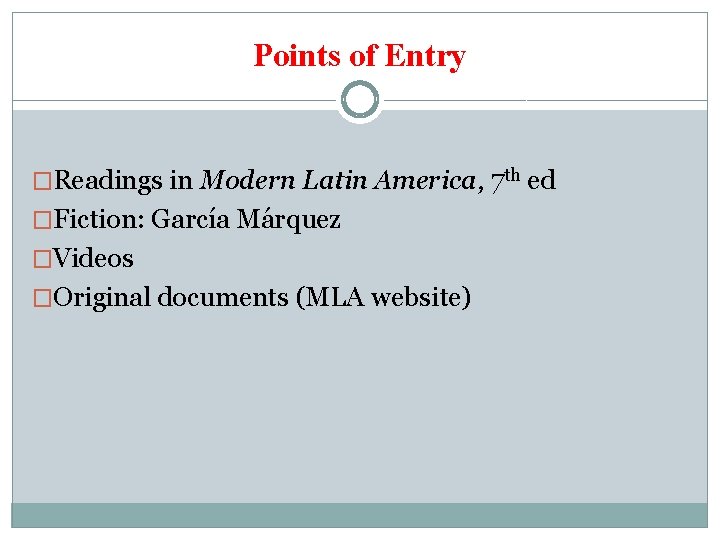
Points of Entry �Readings in Modern Latin America, 7 th ed �Fiction: García Márquez �Videos �Original documents (MLA website)
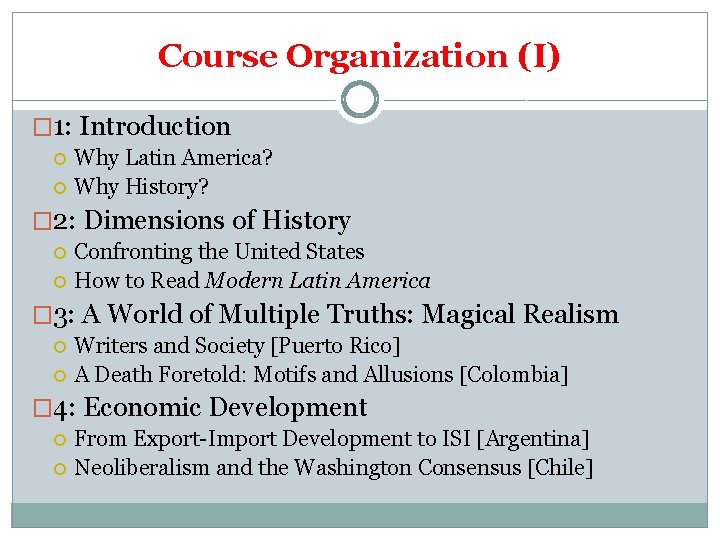
Course Organization (I) � 1: Introduction Why Latin America? Why History? � 2: Dimensions of History Confronting the United States How to Read Modern Latin America � 3: A World of Multiple Truths: Magical Realism Writers and Society [Puerto Rico] A Death Foretold: Motifs and Allusions [Colombia] � 4: Economic Development From Export-Import Development to ISI [Argentina] Neoliberalism and the Washington Consensus [Chile]
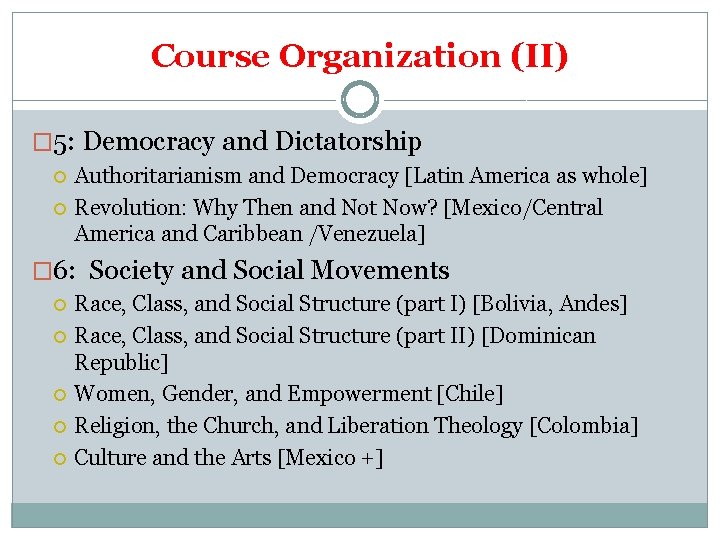
Course Organization (II) � 5: Democracy and Dictatorship Authoritarianism and Democracy [Latin America as whole] Revolution: Why Then and Not Now? [Mexico/Central America and Caribbean /Venezuela] � 6: Society and Social Movements Race, Class, and Social Structure (part I) [Bolivia, Andes] Race, Class, and Social Structure (part II) [Dominican Republic] Women, Gender, and Empowerment [Chile] Religion, the Church, and Liberation Theology [Colombia] Culture and the Arts [Mexico +]
Course Organization (III) � 7: Current Developments The Immigration Debate [United States] The Ebullience of Brazil [Brazil] The Latino Experience in America [Florida, New York, California] � 8: Review and Overview
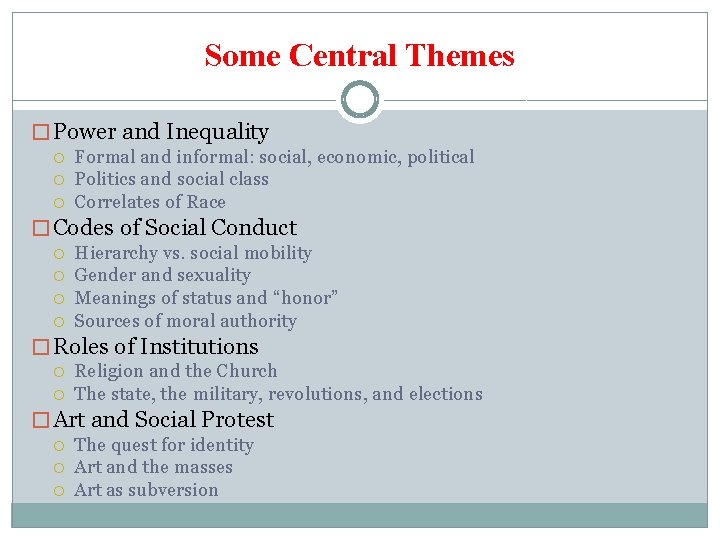
Some Central Themes � Power and Inequality Formal and informal: social, economic, political Politics and social class Correlates of Race � Codes of Social Conduct Hierarchy vs. social mobility Gender and sexuality Meanings of status and “honor” Sources of moral authority � Roles of Institutions Religion and the Church The state, the military, revolutions, and elections � Art and Social Protest The quest for identity Art and the masses Art as subversion
¡Adelante!