
Laterally confined Semiconductor Quantum dots Martin Ebner and
Laterally confined Semiconductor Quantum dots Martin Ebner and Christoph Faigle
Semiconductor Quantum Dots • • • Material Composition & Fabrication Biasing Energy diagram Coulomb blockade Spin blockade QPC Readout Rabi oscillations Summary
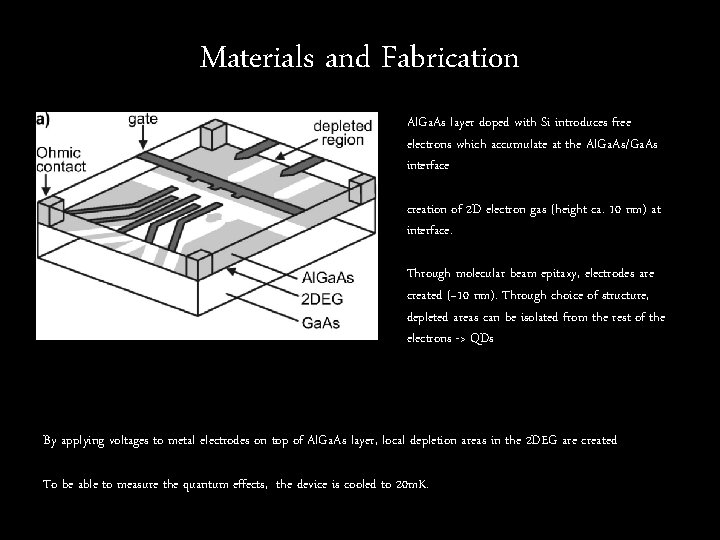
Materials and Fabrication Al. Ga. As layer doped with Si introduces free electrons which accumulate at the Al. Ga. As/Ga. As interface creation of 2 D electron gas (height ca. 10 nm) at interface. Through molecular beam epitaxy, electrodes are created (~10 nm). Through choice of structure, depleted areas can be isolated from the rest of the electrons -> QDs By applying voltages to metal electrodes on top of Al. Ga. As layer, local depletion areas in the 2 DEG are created To be able to measure the quantum effects, the device is cooled to 20 m. K.
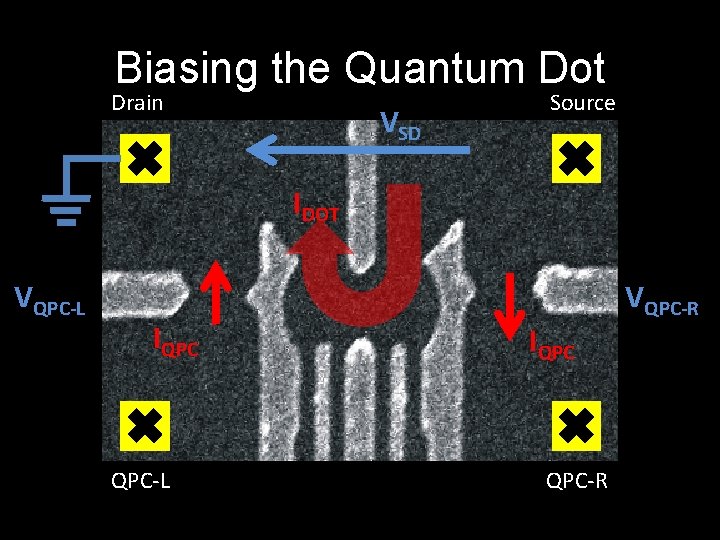
Biasing the Quantum Dot Drain VSD Source IDOT VQPC-L IQPC QPC-L VQPC-R IQPC QPC-R
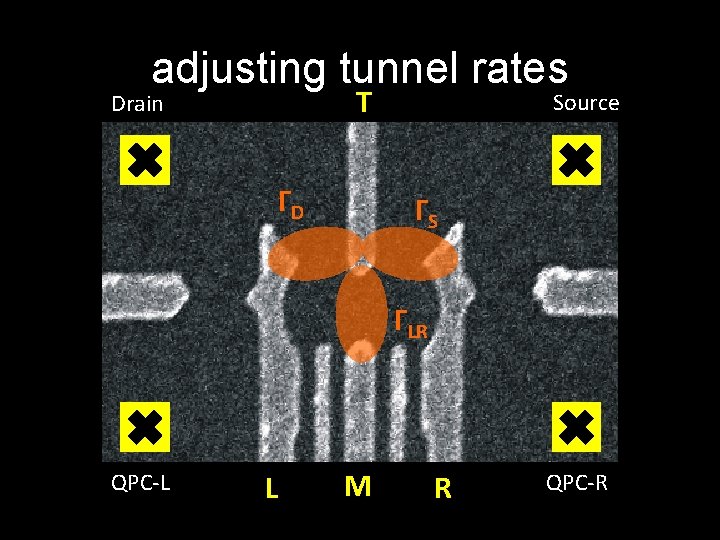
adjusting tunnel rates T Drain ΓD Source ΓS ΓLR QPC-L L M R QPC-R
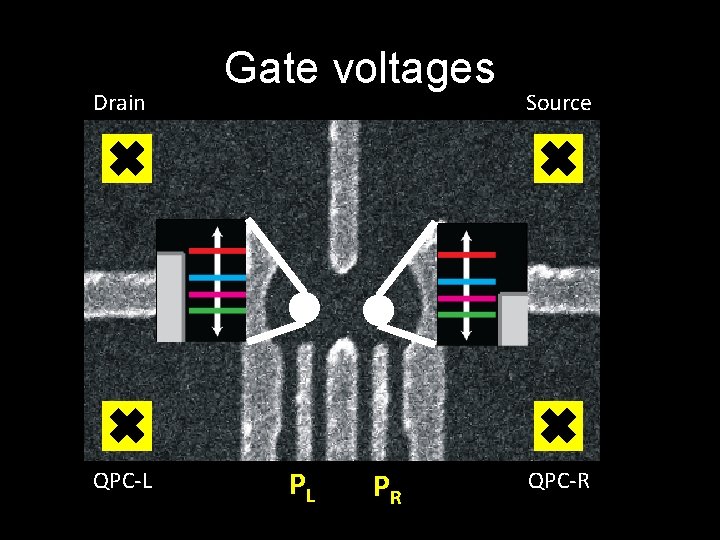
Drain QPC-L Gate voltages PL PR Source QPC-R
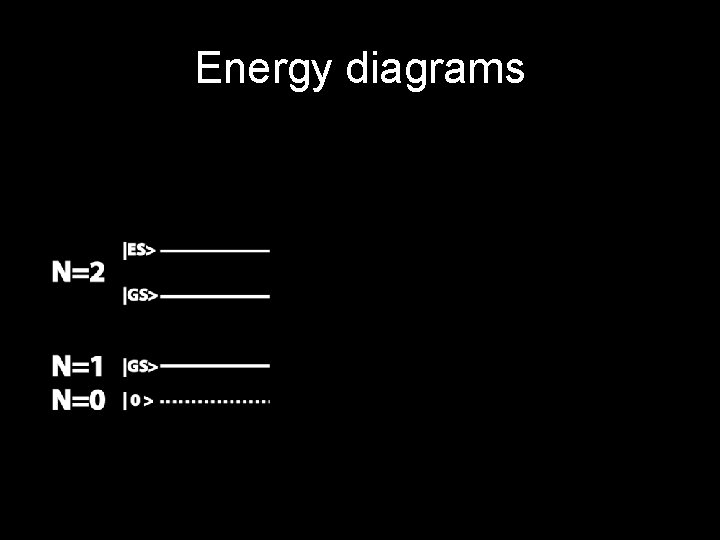
Energy diagrams
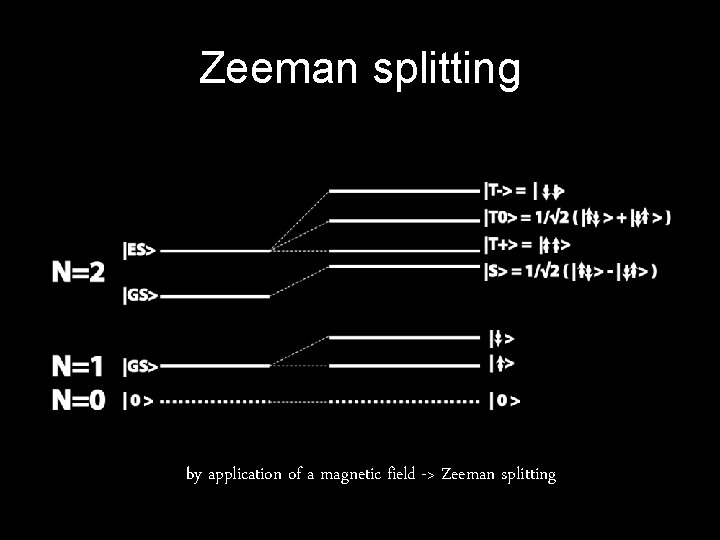
Zeeman splitting by application of a magnetic field -> Zeeman splitting
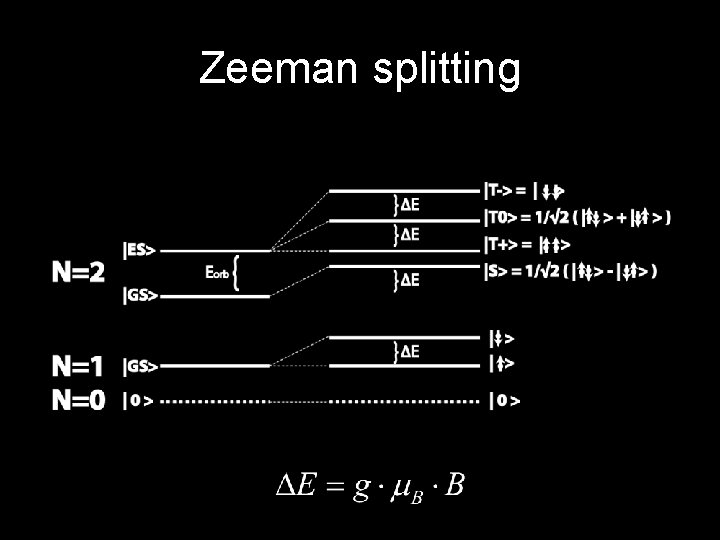
Zeeman splitting
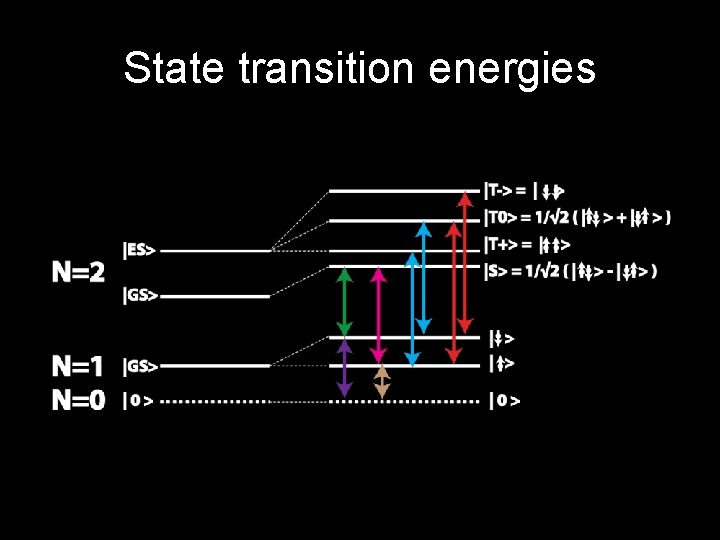
State transition energies
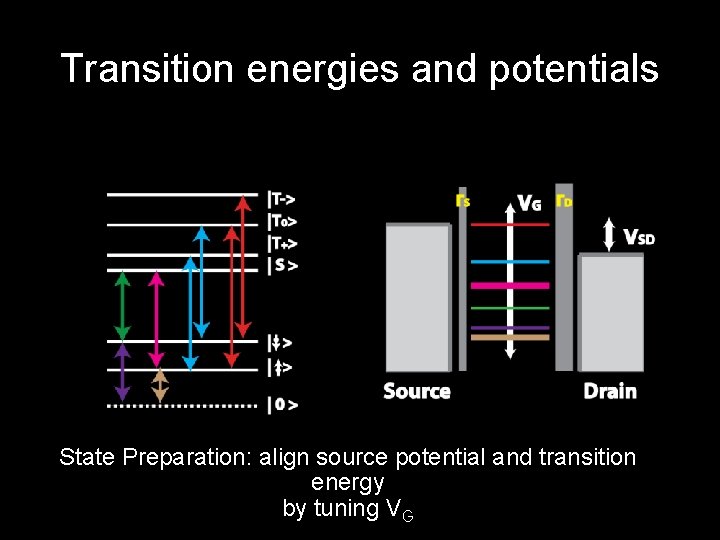
Transition energies and potentials State Preparation: align source potential and transition energy by tuning VG
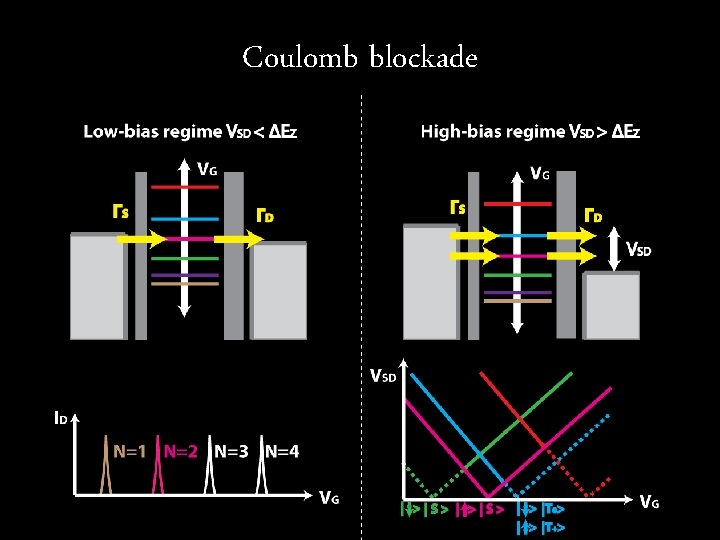
Coulomb blockade
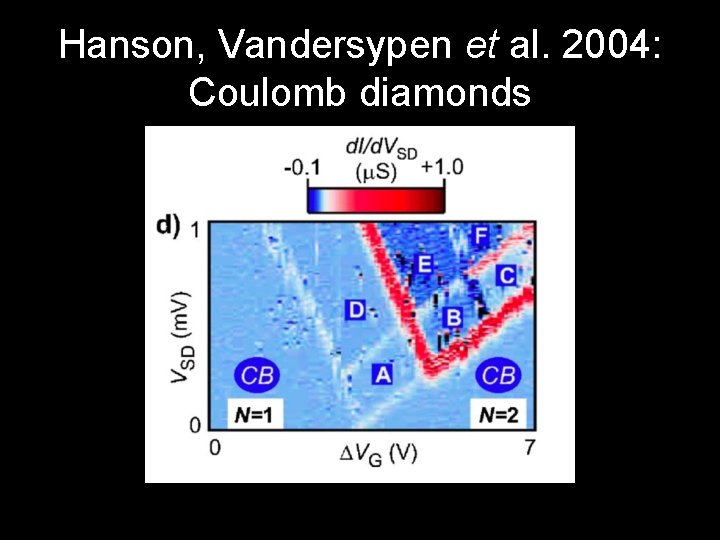
Hanson, Vandersypen et al. 2004: Coulomb diamonds
Transition potentials and tunneling • Source-drain potential differences lead to single-electron tunneling, depending on the potential of the gate • Tunneling works only when ground to ground-state transition levels are tuned into the bias window. Once initial current flows excited state transitions can contribute to the tunneling two-path tunneling • If the next ground state also falls into the potential window, there can be two-electron tunneling • Allowed regions are mapped by the coulomb diagram, in Coulomb blockade regions, there is no tunneling and thus no current flow
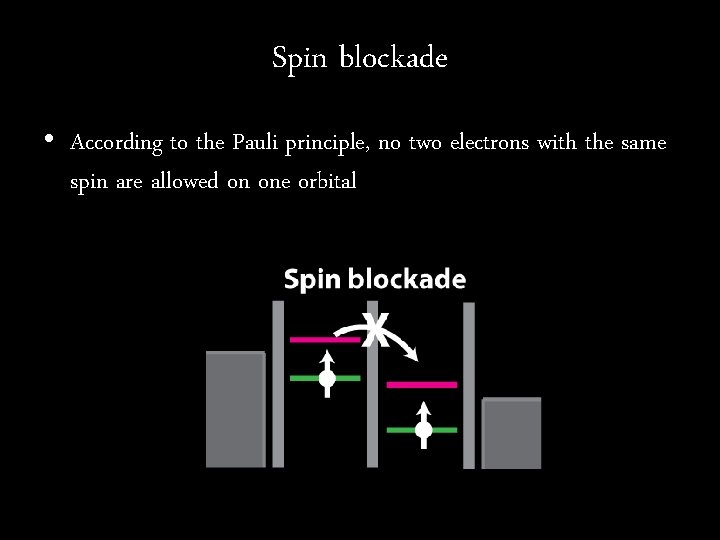
Spin blockade • According to the Pauli principle, no two electrons with the same spin are allowed on one orbital
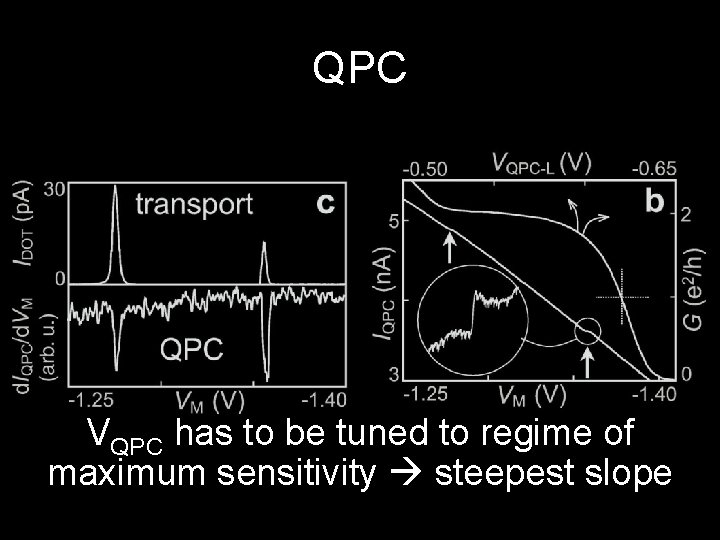
QPC VQPC has to be tuned to regime of maximum sensitivity steepest slope
Charge sensing • • determine number of electrons on dot non-invasive (no current flow) only one reservoir needed conductance of QPC electrometer depends on electrostatic environment • failure for long tunnel times and high tunnel barriers • measurement time about 10 us
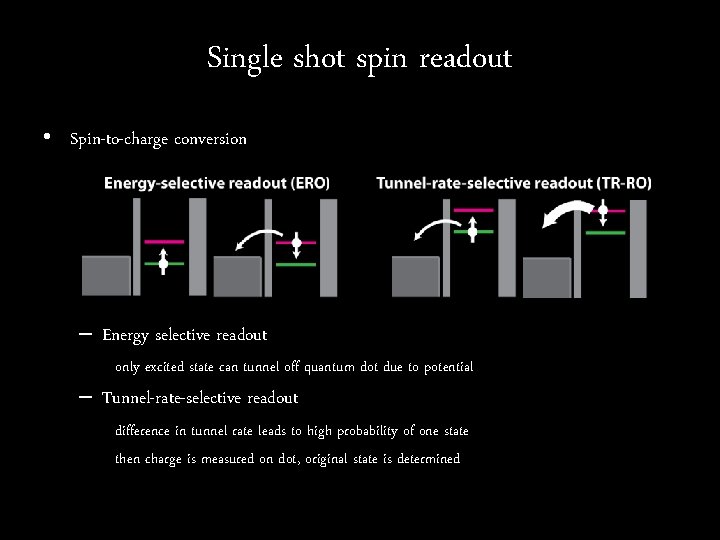
Single shot spin readout • Spin-to-charge conversion – Energy selective readout only excited state can tunnel off quantum dot due to potential – Tunnel-rate-selective readout difference in tunnel rate leads to high probability of one state then charge is measured on dot, original state is determined
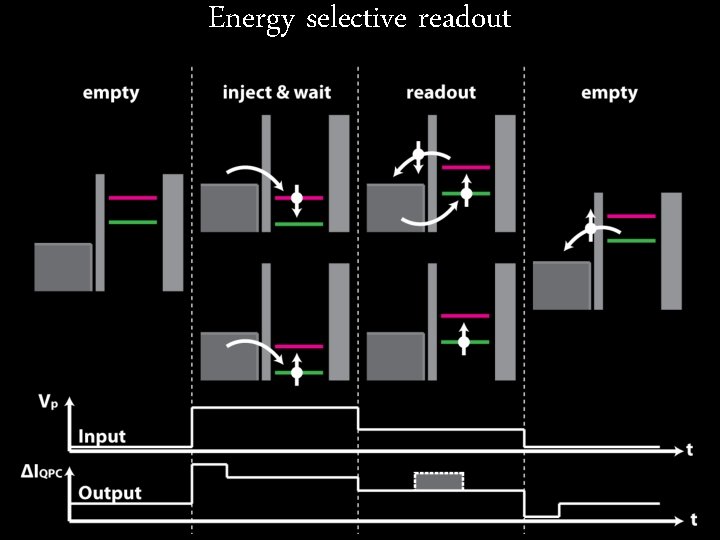
Energy selective readout
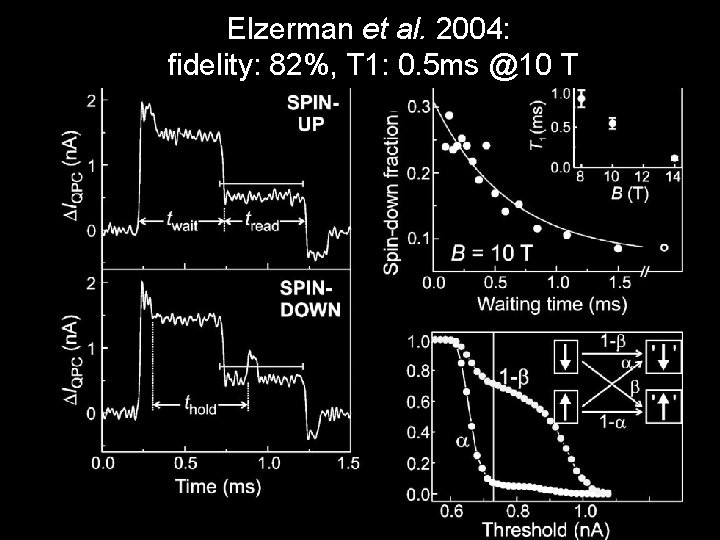
Elzerman et al. 2004: fidelity: 82%, T 1: 0. 5 ms @10 T
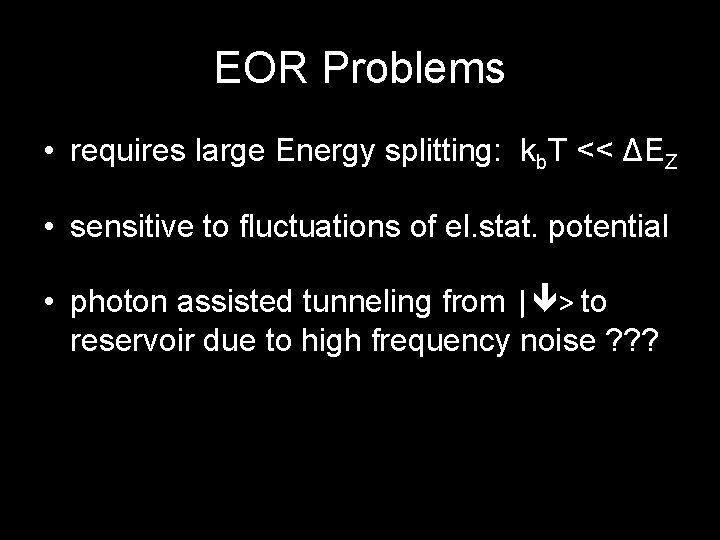
EOR Problems • requires large Energy splitting: kb. T << ΔEZ • sensitive to fluctuations of el. stat. potential • photon assisted tunneling from | > to reservoir due to high frequency noise ? ? ?
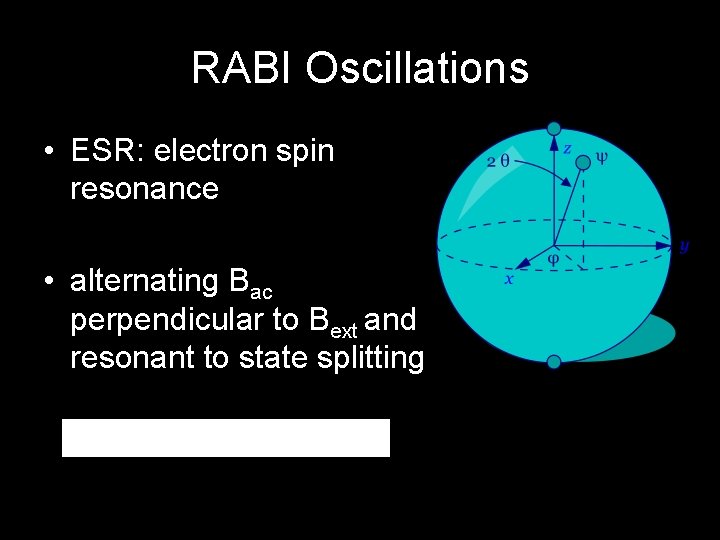
RABI Oscillations • ESR: electron spin resonance • alternating Bac perpendicular to Bext and resonant to state splitting
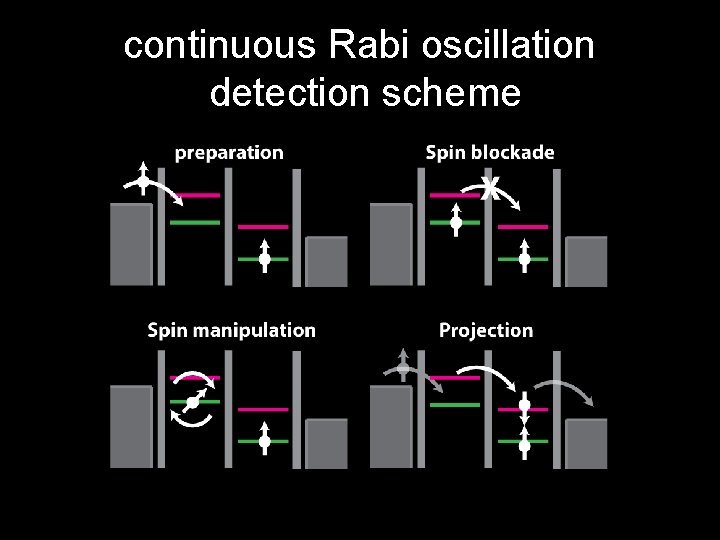
continuous Rabi oscillation detection scheme
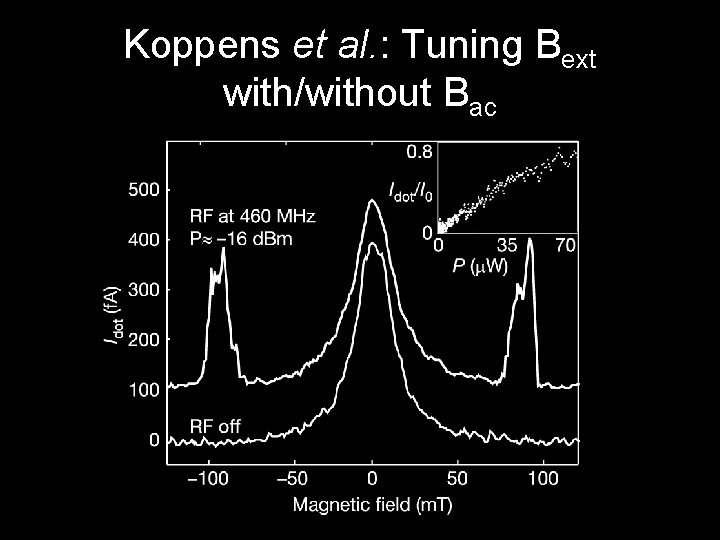
Koppens et al. : Tuning Bext with/without Bac
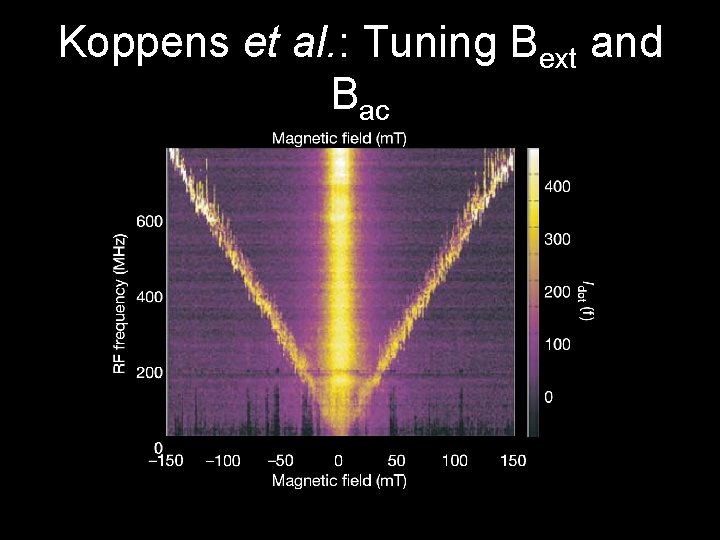
Koppens et al. : Tuning Bext and Bac
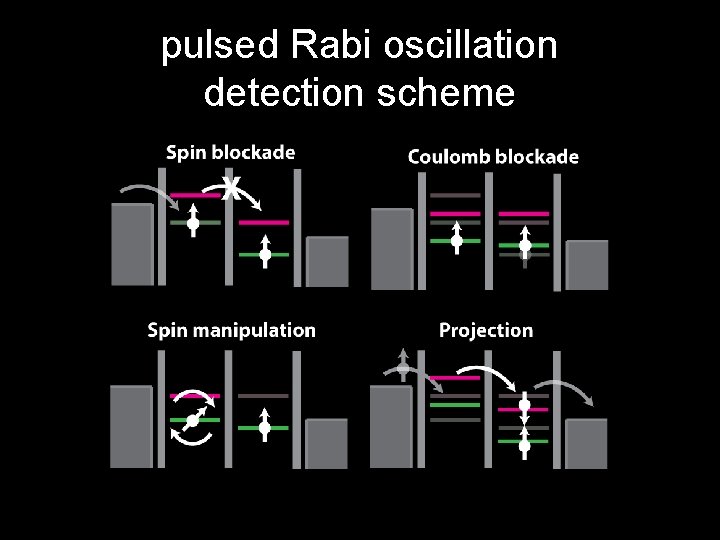
pulsed Rabi oscillation detection scheme
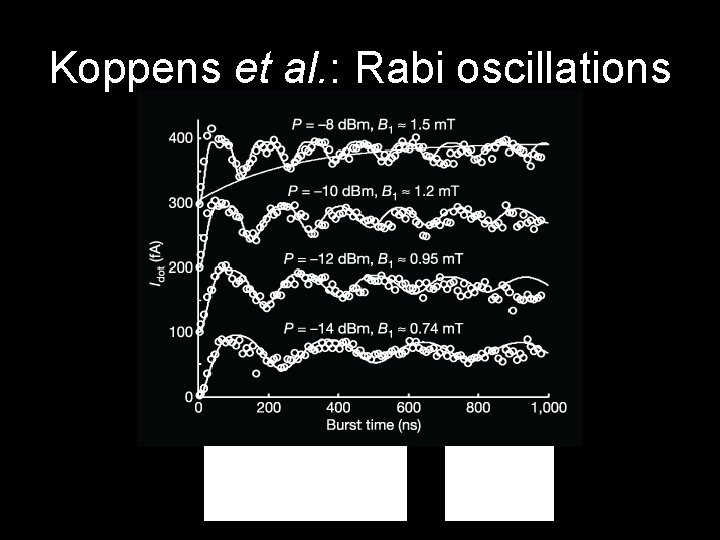
Koppens et al. : Rabi oscillations
Rabi performance • fidelity: 73% (131° instead of 180°) – use stronger Bac – application of composite pulses – measure and compensate nuclear field fluctuations (nuclear state narrowing) • qbit discrimination: – Bac or Bext gradient – local g-factor engineering – use electric field (spin-orbit-interaction)
Summary 1. A scalable physical system with wellcharacterized qubits. _✔ 2. The ability to initialize the state of the qubits to a simple fiducial state. _✔ 3. Long (relative) decoherence times, much longer than the gate-operation time. ? (T 1 ≈ 1 ms, T 2* ≈ 10 ns, T 2 > 1μs [spin echo]) 4. A universal set of quantum gates. ✖ NO ENTANGLEMENT YET (2005) 5. A qubit-specific measurement capability. ✔ (Treadout ≈ 10μs)

Thanks for your attention!
- Slides: 35