
LATE PRECAMBRIAN EVOLUTION OF NORTH AMERICA PLATE TECTONICS
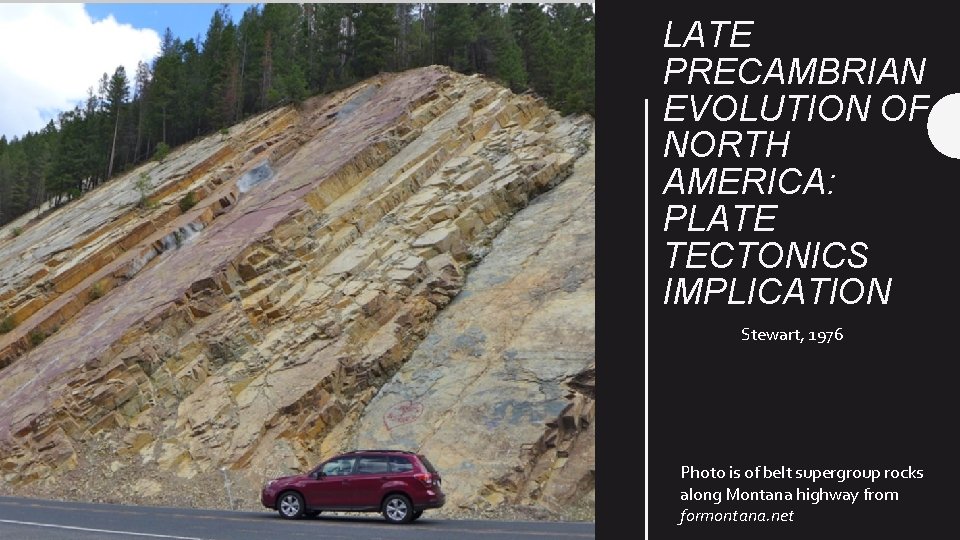
LATE PRECAMBRIAN EVOLUTION OF NORTH AMERICA: PLATE TECTONICS IMPLICATION Stewart, 1976 Photo is of belt supergroup rocks along Montana highway from formontana. net
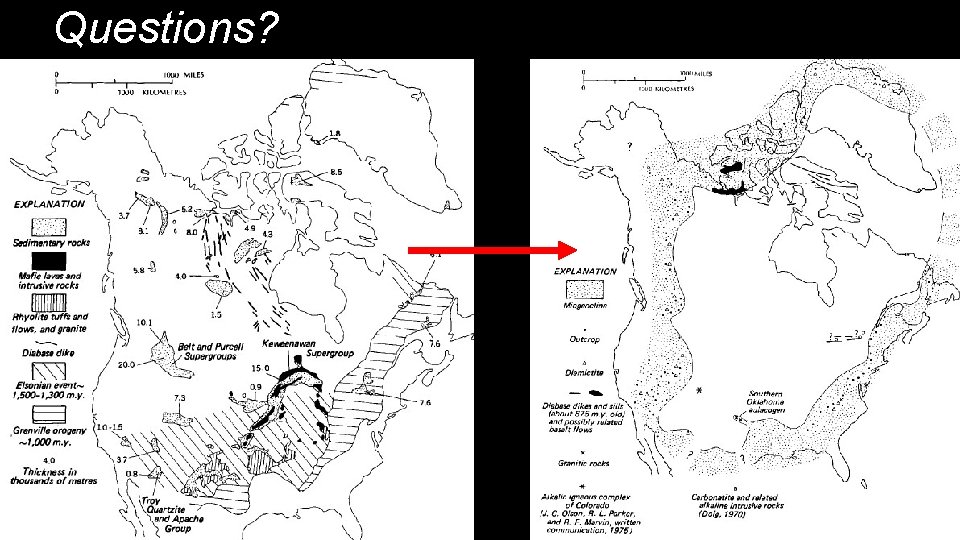
Motivation • Describe the change from “belt” supergroup rocks deposited in intra continental basins in the Precambrian, to miogeoclinal rocks deposited at the continent margins in the late Precambrian to Cambrian • Understand how plate tectonics can be attributed to this change

Precambrian rocks • 1, 700 to 850 Ma • The two supergroups were deposited in fault bounded “epicratonic” basins • Each contain more than 15, 000 m of sediments and volcanic rocks • Other Precambrian rocks were deposited in shallower troughs • Two orogenic events are also represented with the Elsonian event, and the Grenville orogeny
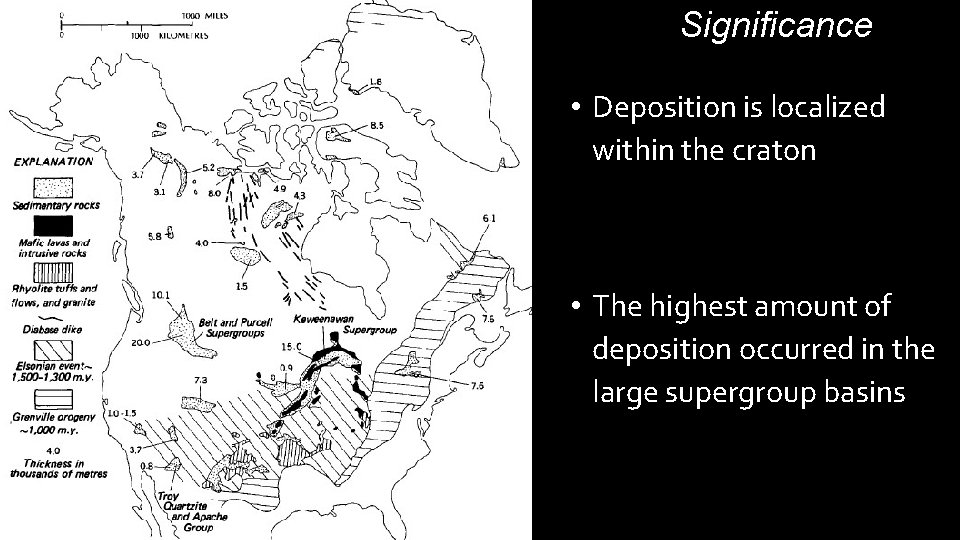
Significance • Deposition is localized within the craton • The highest amount of deposition occurred in the large supergroup basins

Late Precambrian and lower Cambrian rocks • 850 – 540 Ma • Remarkably similar detrital sequence across north America • Thin sandstones on the craton edges grading into thick miogeoclinal sequences away from the continent • Voluminous mafic volcanic rocks (Aged ~645 Ma) are widespread in the Canadian arctic
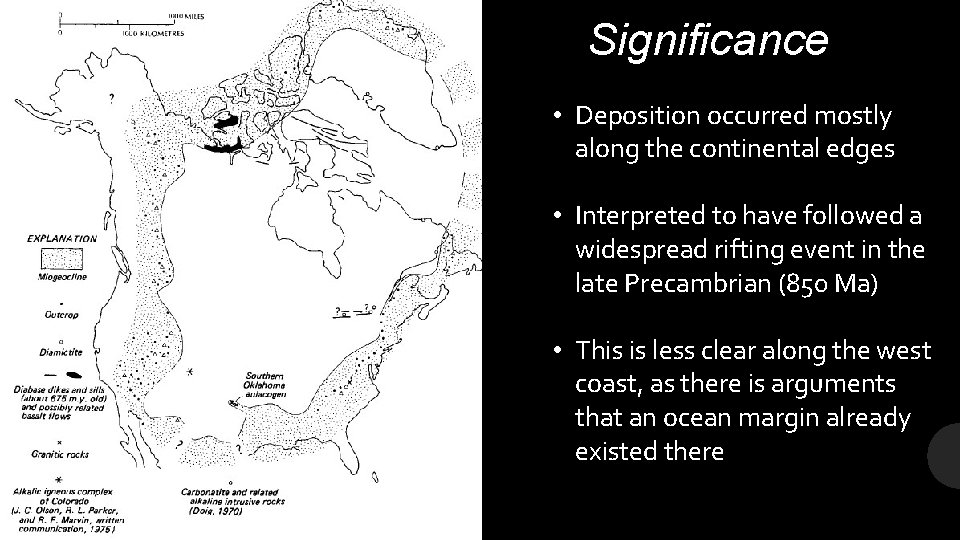
Significance • Deposition occurred mostly along the continental edges • Interpreted to have followed a widespread rifting event in the late Precambrian (850 Ma) • This is less clear along the west coast, as there is arguments that an ocean margin already existed there
Discussion • Beginning as early as 2, 000 Ma, the plate tectonic regime that the rocks studied in this paper record is that of cratonic instability • Basins and troughs developed within the craton from 1, 700 – 850 Ma, as well as emplacement of extensive basaltic dyke swarms • There was a distinct change in the tectonic setting of NA at 850 Ma, that may indicate that the entire continent began rifting along its margins • Following this change at 850 Ma, the craton has acted more or less stable in that it has remained in the same configuration, as evidence by the spatial correlation of Precambrian miogeoclinal rocks and Paleozoic <17 Ma rocks
Questions?
- Slides: 8