
Late Paleozoic Earth History http jan ucc nau
- Slides: 39
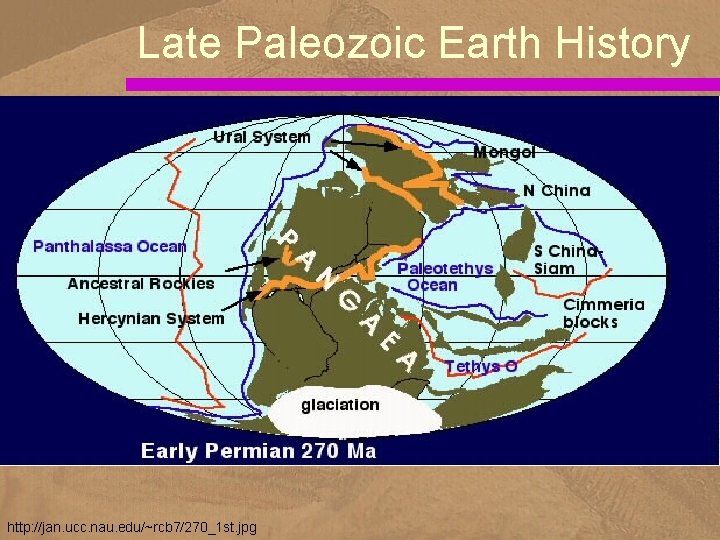
Late Paleozoic Earth History http: //jan. ucc. nau. edu/~rcb 7/270_1 st. jpg
Early Paleozoic • Marine conditions in North America • Major orogenies – Taconian orogeny in Ordovician
Late Paleozoic • Devonian, Carboniferous, and Permian periods • “Carbon-bearing” – worldwide coal deposits • Mississippian and Pennsylvanian used only in North America – Mississippian – last widespread carbonates in North America – Pennsylvanian – coal deposits
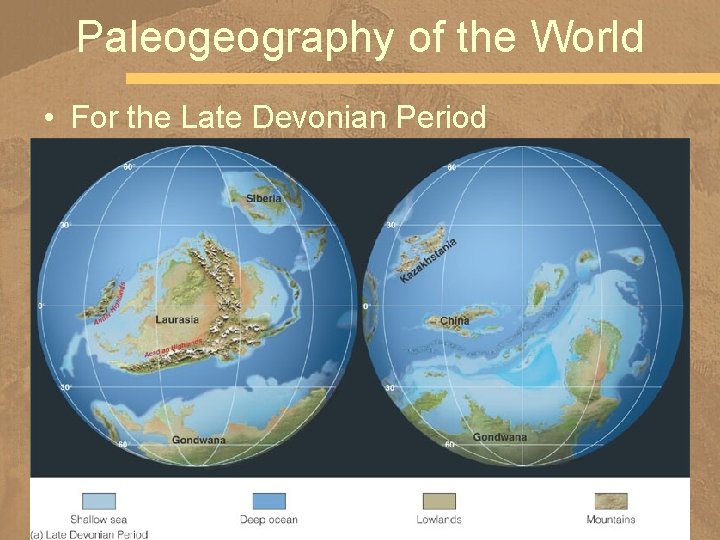
Paleogeography of the World • For the Late Devonian Period
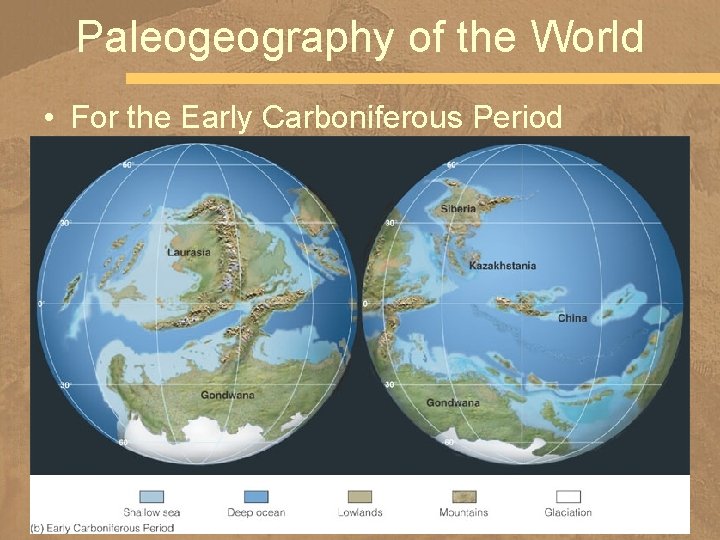
Paleogeography of the World • For the Early Carboniferous Period
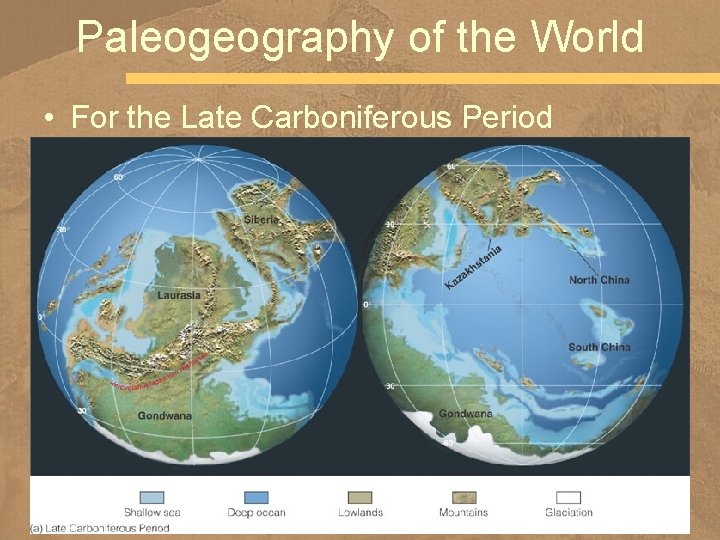
Paleogeography of the World • For the Late Carboniferous Period
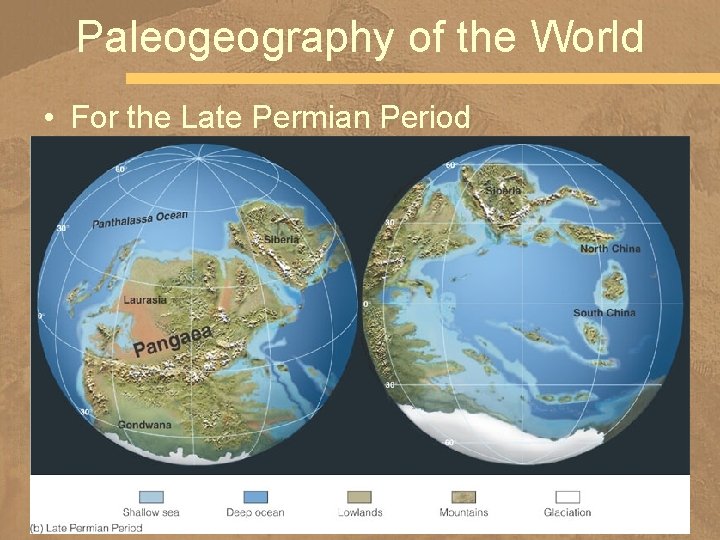
Paleogeography of the World • For the Late Permian Period
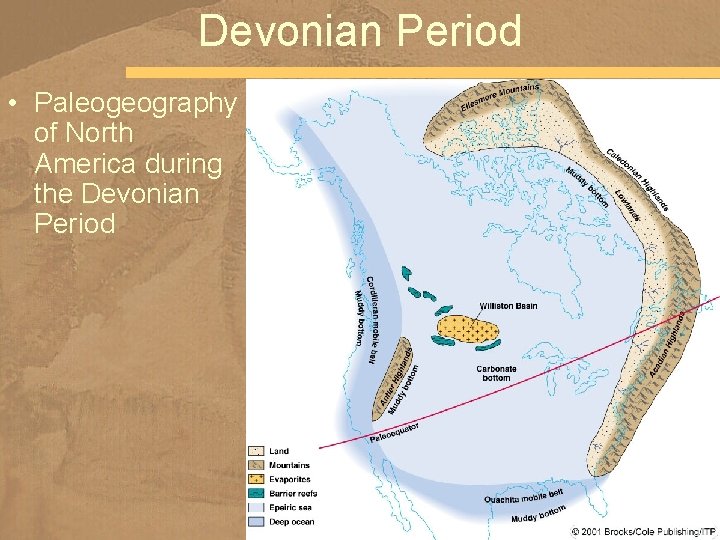
Late Paleozoic History of North America • The Late Paleozoic cratonic history of North America included – extensive shallow-marine carbonate deposition – large coal-forming swamps – dry, evaporite-forming terrestrial conditions
Devonian Period • Paleogeography of North America during the Devonian Period
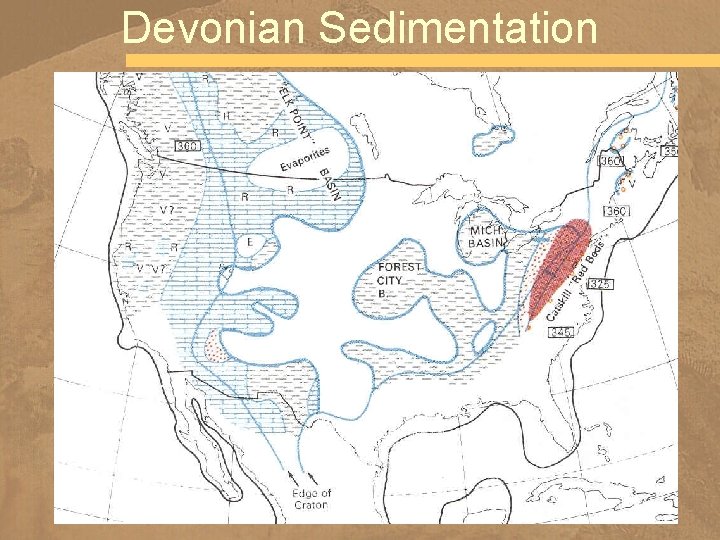
Devonian Sedimentation
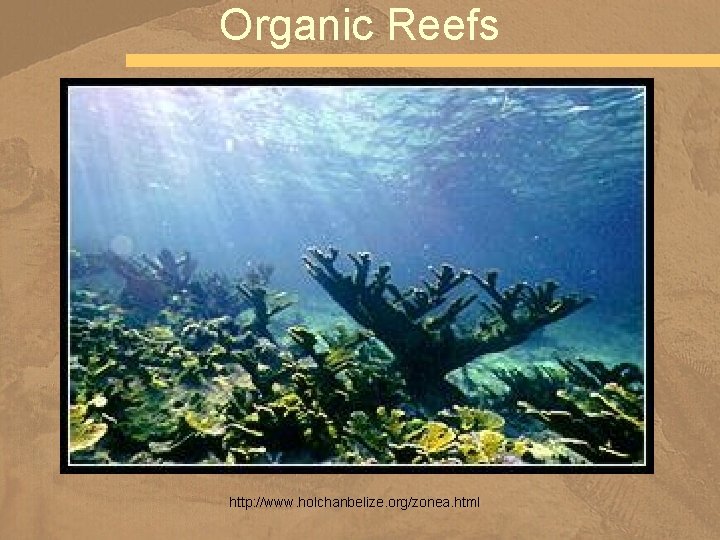
Organic Reefs http: //www. holchanbelize. org/zonea. html
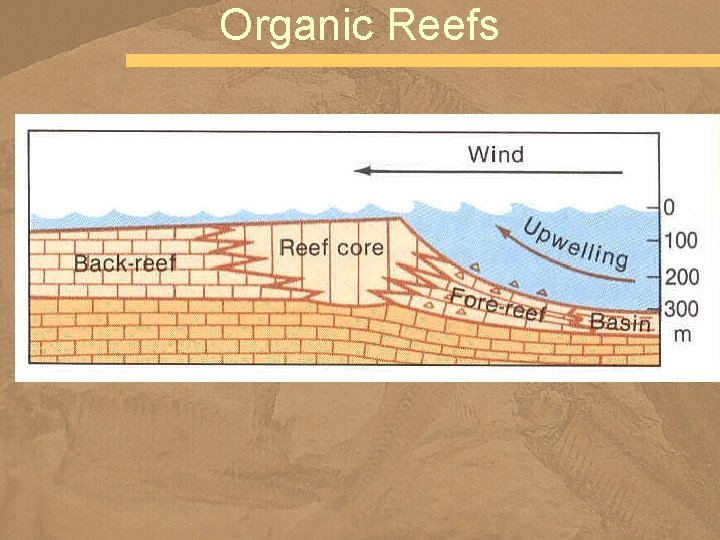
Organic Reefs
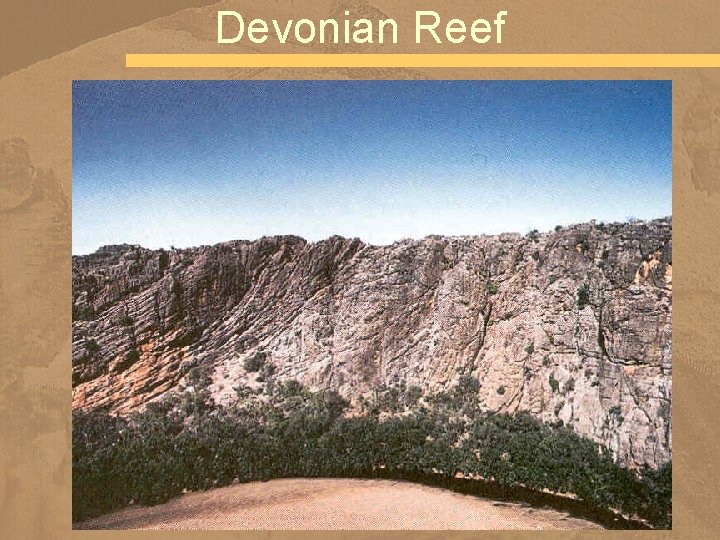
Devonian Reef
Evaporites • Evaporation of large volumes of water causes salts to precipitate • Extensive in Silurian and Devonian
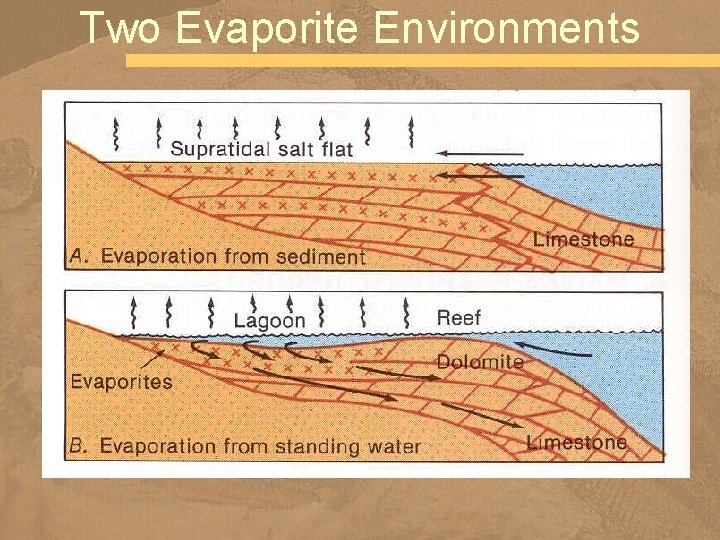
Two Evaporite Environments • Restricted basin – seawater washed over bar, cannot escape – hypersaline solution forms • Supra-tidal – few cm above average high tide – occasionally flooded
Two Evaporite Environments
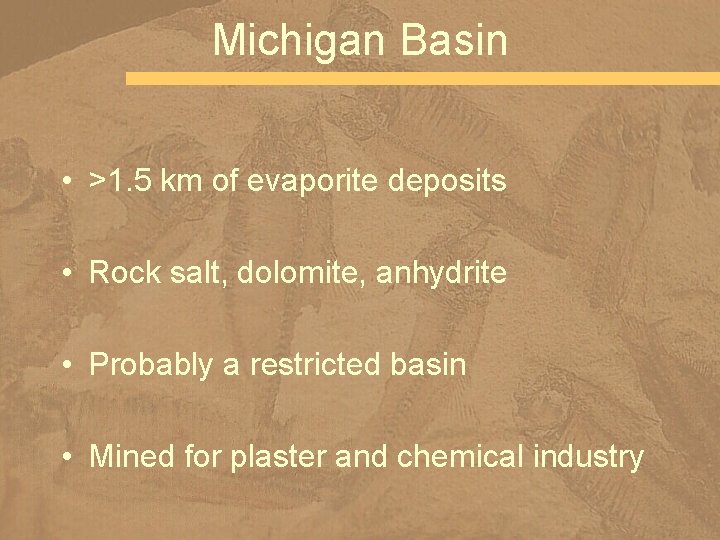
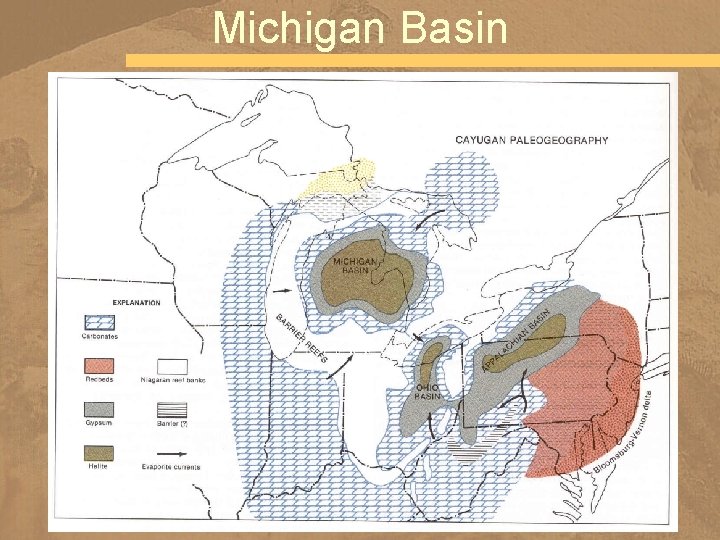
Michigan Basin • >1. 5 km of evaporite deposits • Rock salt, dolomite, anhydrite • Probably a restricted basin • Mined for plaster and chemical industry
Michigan Basin
Another Orogeny on East Coast • Acadian orogeny in Devonian • Superimposed on Taconian orogeny in same location • Catskill clastic wedge
Plate Tectonics and Evolution • Lots of mountain-building in Devonian created significant amount of land above SL • Coincided with evolution of land plants and animals
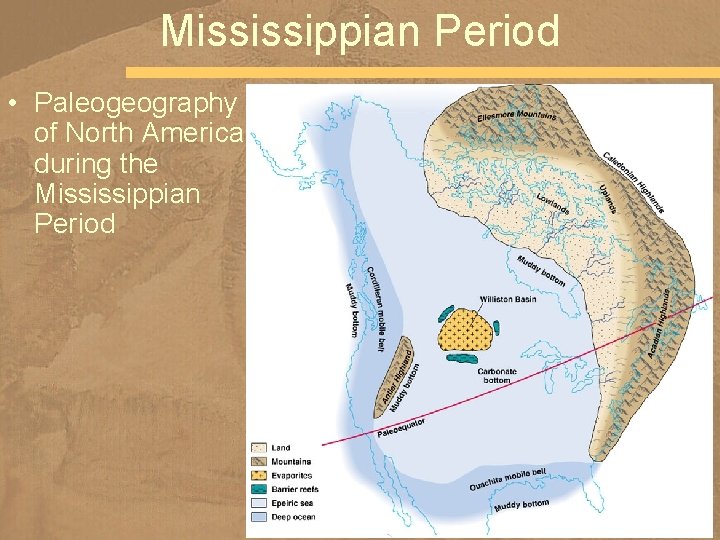
Mississippian Period • Paleogeography of North America during the Mississippian Period
Mississippian Carbonates • Cross-bedding, ripple marks, and wellsorted fossil fragments • Indicative of a shallow-water environment • Analogous to present-day Bahama Banks
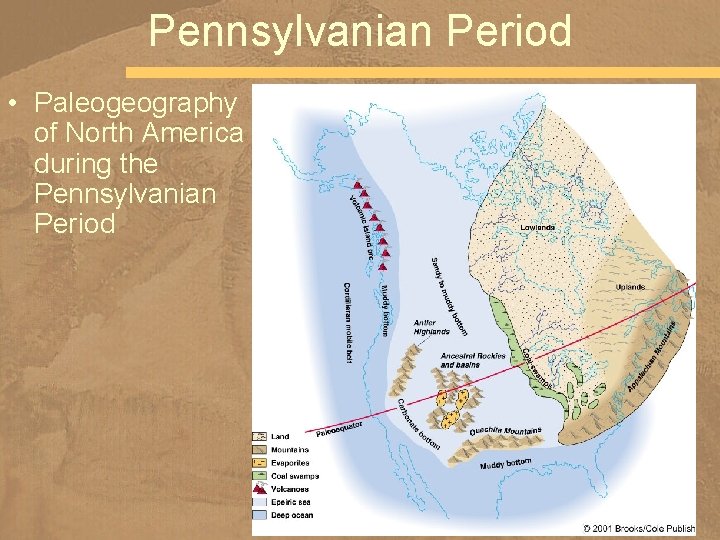
Pennsylvanian Period • Paleogeography of North America during the Pennsylvanian Period
Coal Swamps • Low coastal plain swamps next to Appalachian Mountains • Accumulation and burial of tons of plant material • Modern analogs: Florida Everglades, south Louisiana swamps
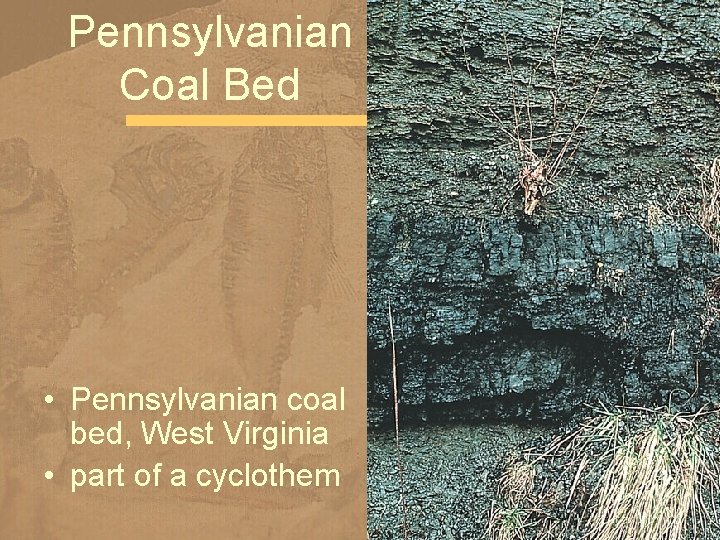
Pennsylvanian Coal Bed • Pennsylvanian coal bed, West Virginia • part of a cyclothem
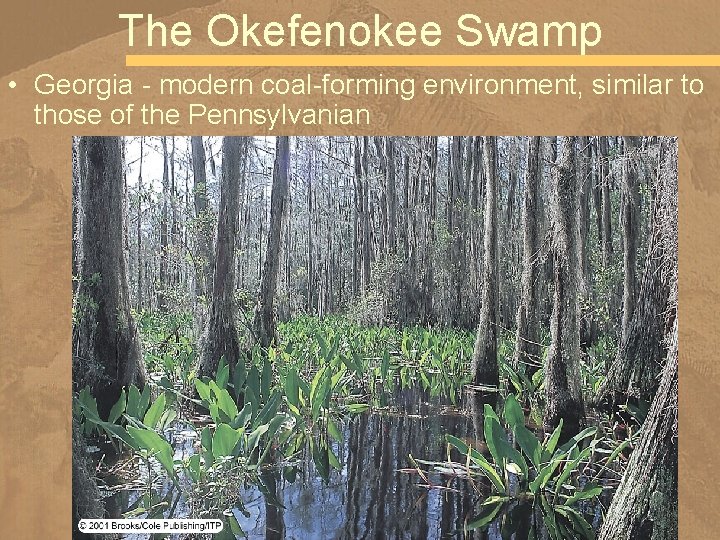
The Okefenokee Swamp • Georgia - modern coal-forming environment, similar to those of the Pennsylvanian
Modern Analogues • Modern coal-forming environments • • the Mississippi delta the Okefenokee Swamp, Georgia the Florida Everglades and the Dutch lowlands • By studying these modern analogues, geologists can make reasonable deductions about conditions existing in the geologic past
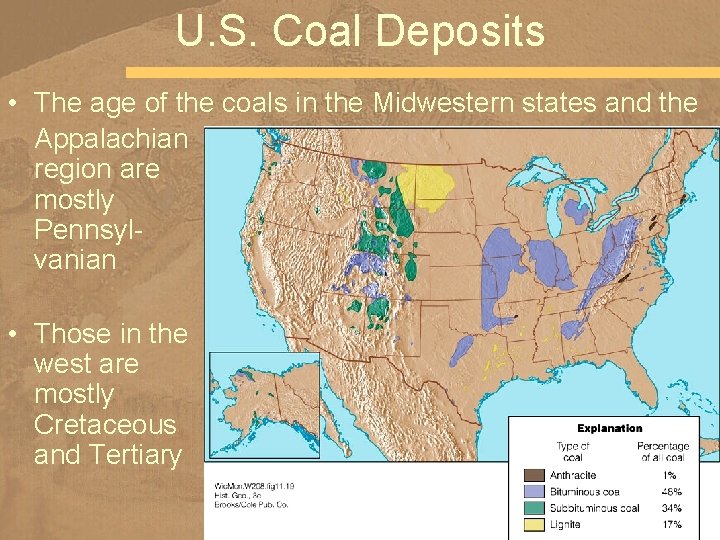
U. S. Coal Deposits • The age of the coals in the Midwestern states and the Appalachian region are mostly Pennsylvanian • Those in the west are mostly Cretaceous and Tertiary
The Permian Period • The assembly of Pangaea – completed during the Permian – result of the many continental collisions that began during the Carboniferous
Climatic Consequences • The formation of a single large landmass had climatic consequences for the continent • Terrestrial Permian sediments indicate that arid and semiarid conditions were widespread over Pangaea The mountain ranges were high enough to create rain shadows that blocked the moist, subtropical, easterly winds much as the southern Andes Mountains do in western South America today
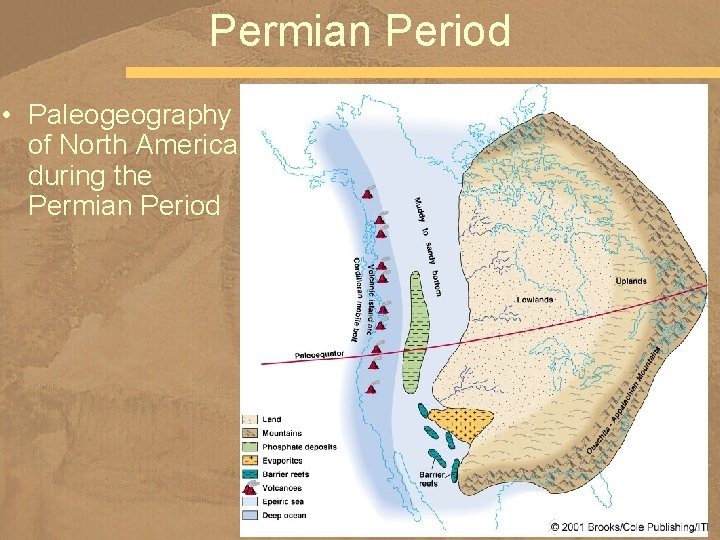
Permian Period • Paleogeography of North America during the Permian Period
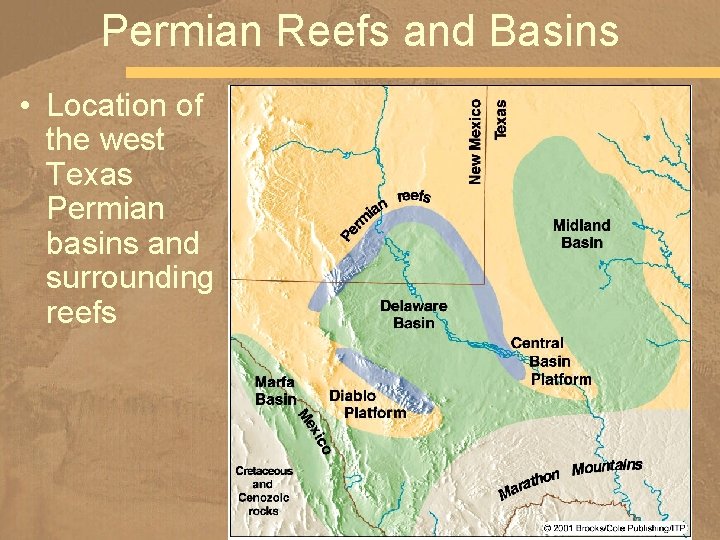
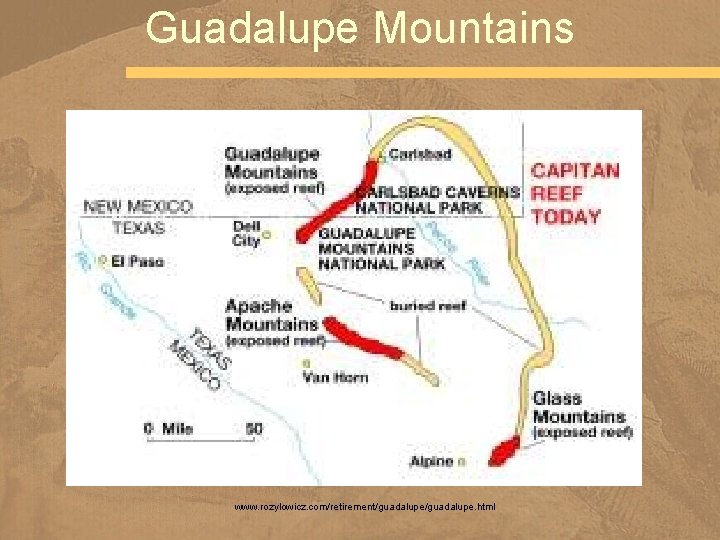
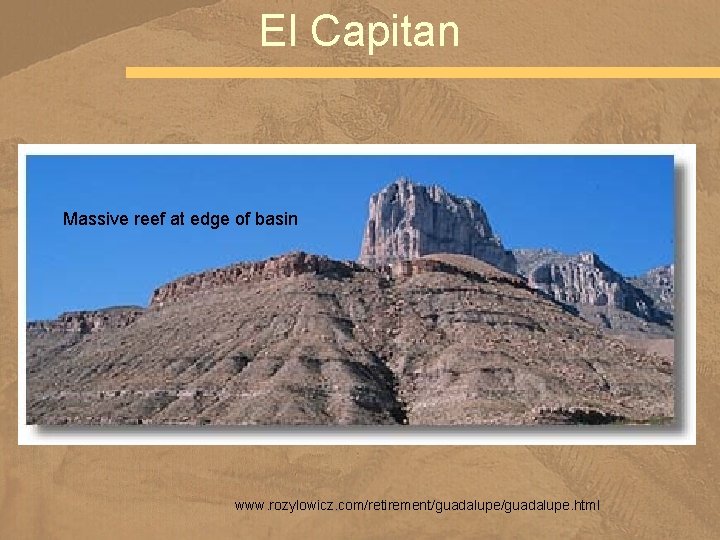
Early Permian • Shallow sea still covered western United States and SW Texas • Organic reef complex flourished at edge of 300 m deep basin • El Capitan – massive reef core
Permian Reefs and Basins • Location of the west Texas Permian basins and surrounding reefs
Guadalupe Mountains www. rozylowicz. com/retirement/guadalupe. html
El Capitan Massive reef at edge of basin www. rozylowicz. com/retirement/guadalupe. html
Permian Basin • Prolific oil producer • Ancient basins near reef – source of organic material • Deformation during Late Paleozoic provided trapping structures
Also in Permian • Widespread evaporites and red beds • Indicate arid conditions as shallow seas retreated and evaporated • More land than ever before – collisions and mountain-building events
How did this affect North America? • Ancestral Rockies • Marathon uplift of West Texas • Ozarks and Ouachitas • Great Smoky Mountains • Appalachians (for the third time)
Hydrocarbons • Permian reefs and other strata in the western United States, particularly Texas, – have also been prolific producers