
Late 18 th c French Economic Advantages V




- Slides: 63
Late 18 th c. : French Economic Advantages V Napoleonic Code. V French communal law. Free contracts ) Open markets ) Uniform & clear commercial regulations ) Standards weights & measures. Established technical schools. The government encouraged & honoured inventors & inventions. V Bank of France European model providing a reliable currency. V V V
French Economic Disadvantages V Years of war ) ) ) Supported the American Revolution. French Revolution. Early 19 th cent. Napoleonic Wars V Heavy debts. V High unemployment soldiers returning from the battlefronts. V French businessmen were afraid to take risks.
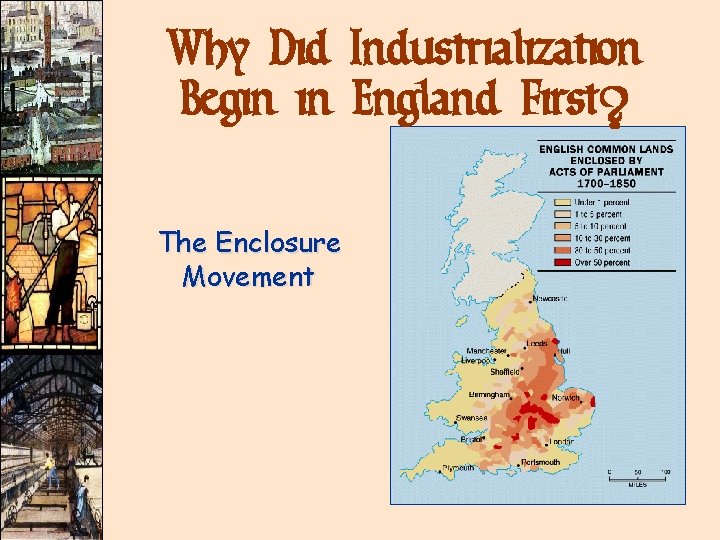
Why Did Industrialization Begin in England First? The Enclosure Movement
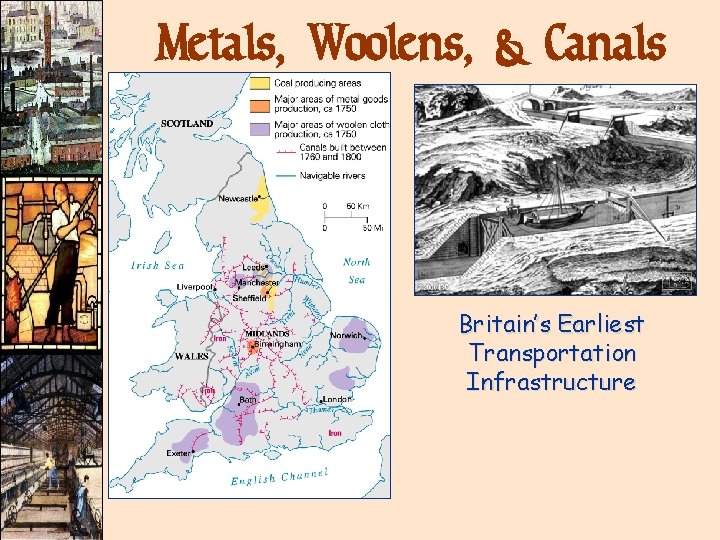
Metals, Woolens, & Canals Britain’s Earliest Transportation Infrastructure
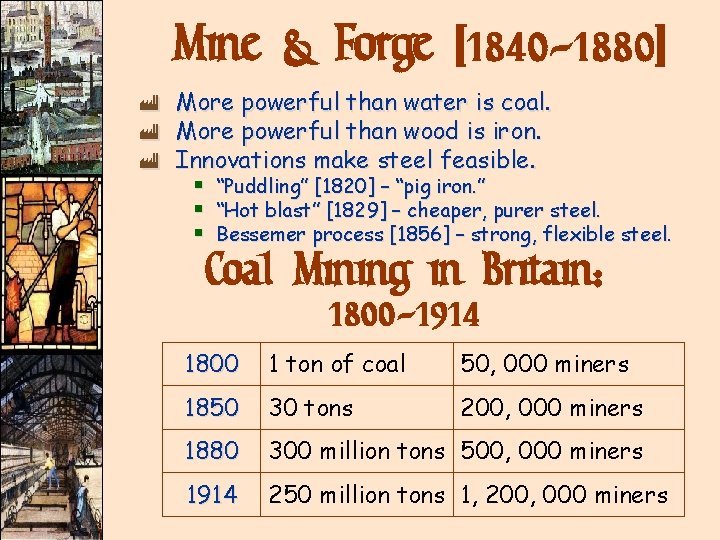
Mine & Forge [1840 -1880] ù ù ù More powerful than water is coal. More powerful than wood is iron. Innovations make steel feasible. § “Puddling” [1820] – “pig iron. ” § “Hot blast” [1829] – cheaper, purer steel. § Bessemer process [1856] – strong, flexible steel. Coal Mining in Britain: 1800 -1914 1800 1 ton of coal 50, 000 miners 1850 30 tons 200, 000 miners 1880 300 million tons 500, 000 miners 1914 250 million tons 1, 200, 000 miners
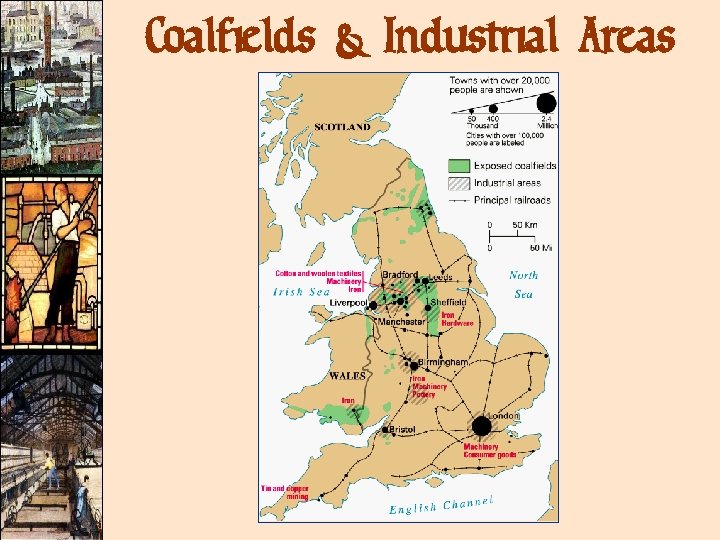
Coalfields & Industrial Areas
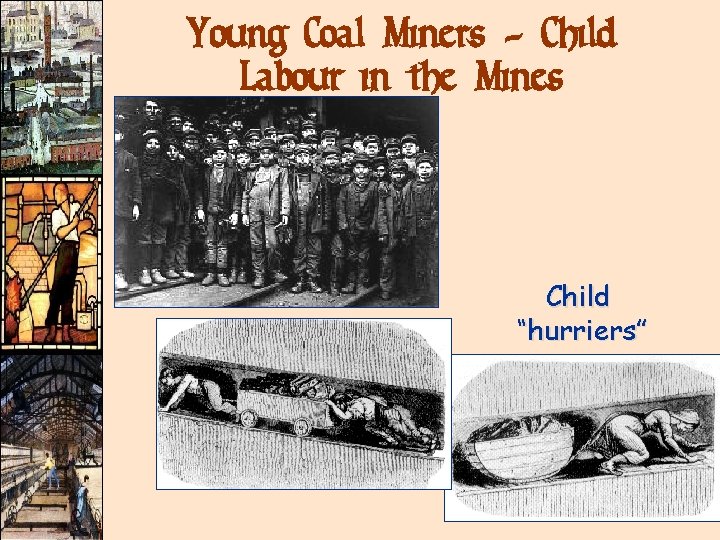
Young Coal Miners - Child Labour in the Mines Child “hurriers”
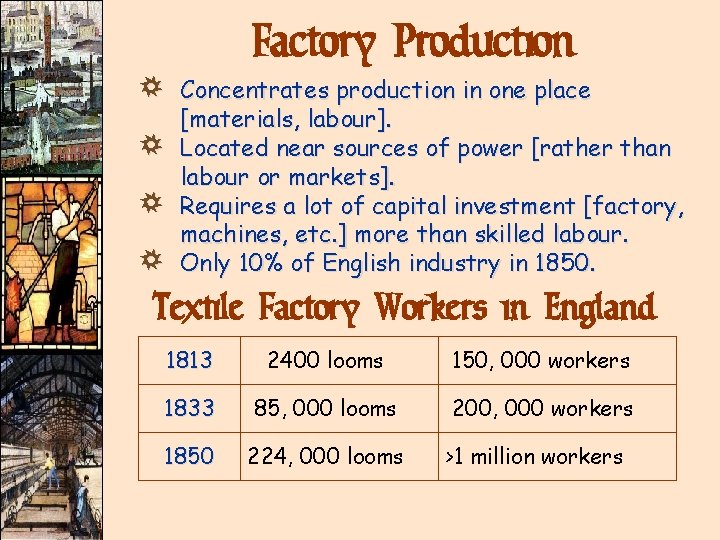
Factory Production ) Concentrates production in one place ) ) ) [materials, labour]. Located near sources of power [rather than labour or markets]. Requires a lot of capital investment [factory, machines, etc. ] more than skilled labour. Only 10% of English industry in 1850. Textile Factory Workers in England 1813 2400 looms 150, 000 workers 1833 85, 000 looms 200, 000 workers 1850 224, 000 looms >1 million workers
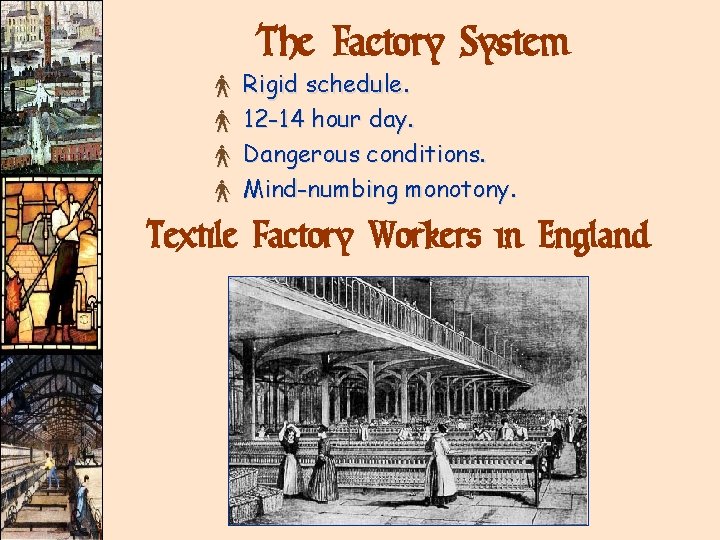
The Factory System × Rigid schedule. × 12 -14 hour day. × Dangerous conditions. × Mind-numbing monotony. Textile Factory Workers in England
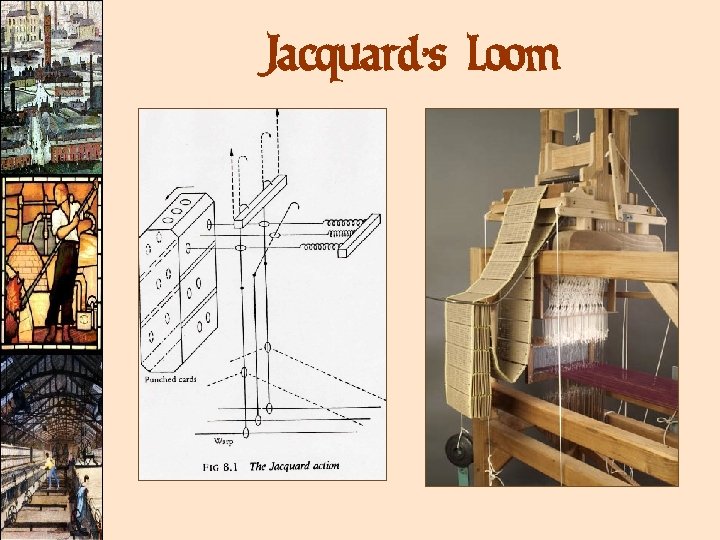
Jacquard’s Loom
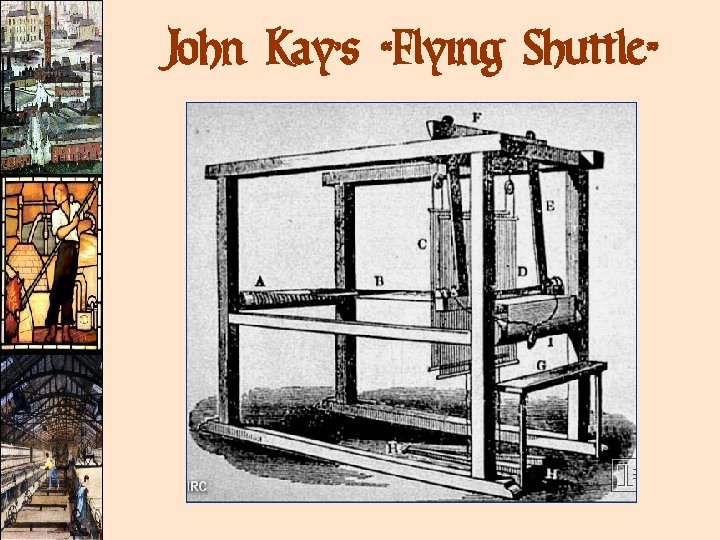
John Kay’s “Flying Shuttle”
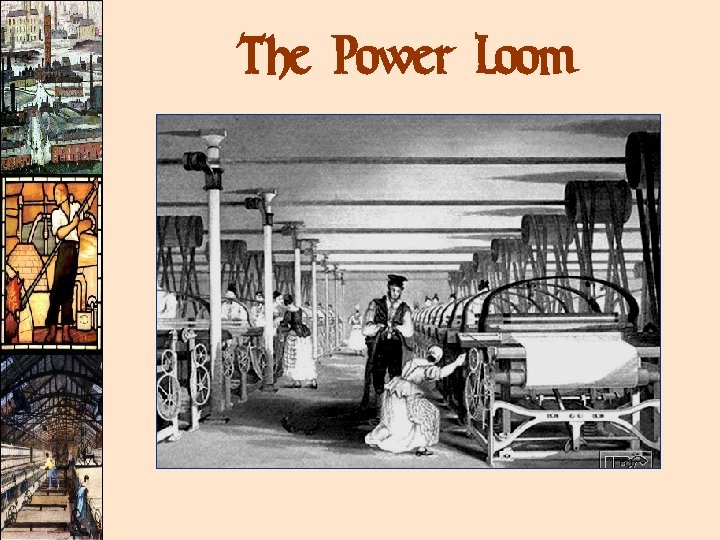
The Power Loom
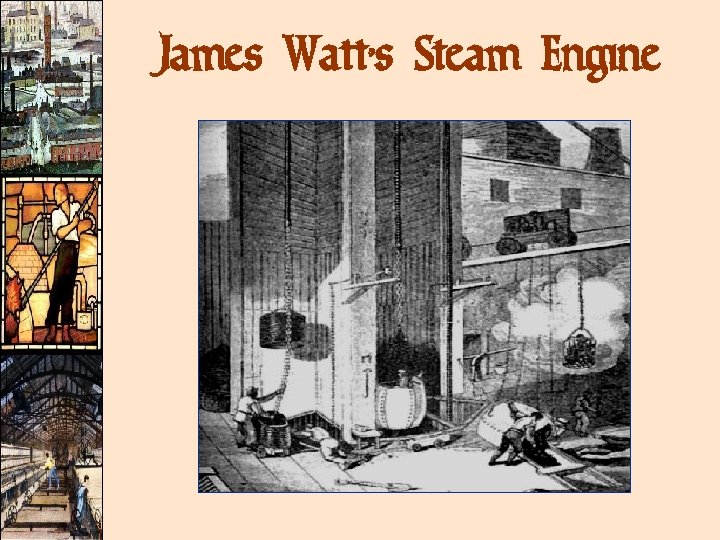
James Watt’s Steam Engine
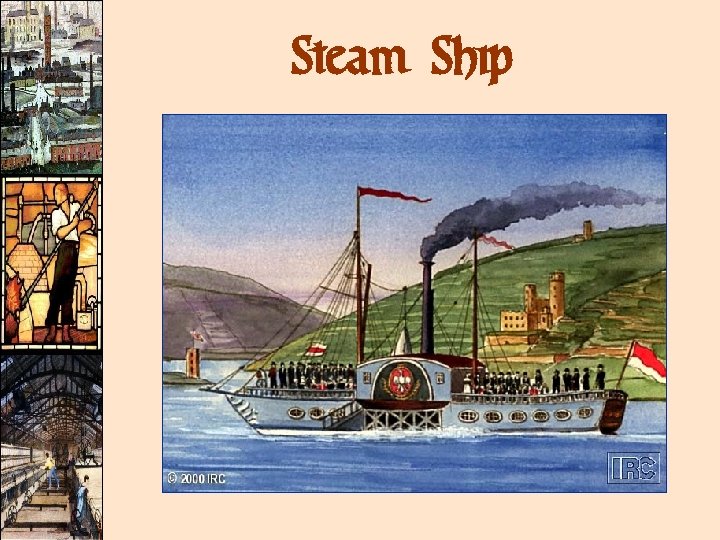
Steam Ship
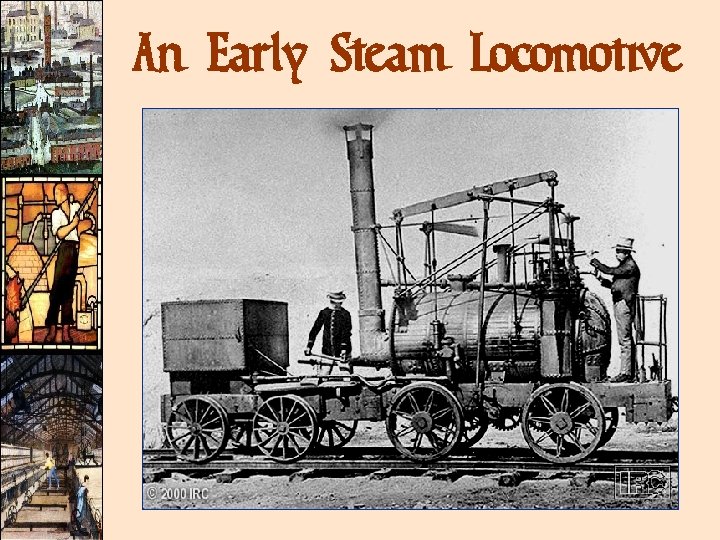
An Early Steam Locomotive
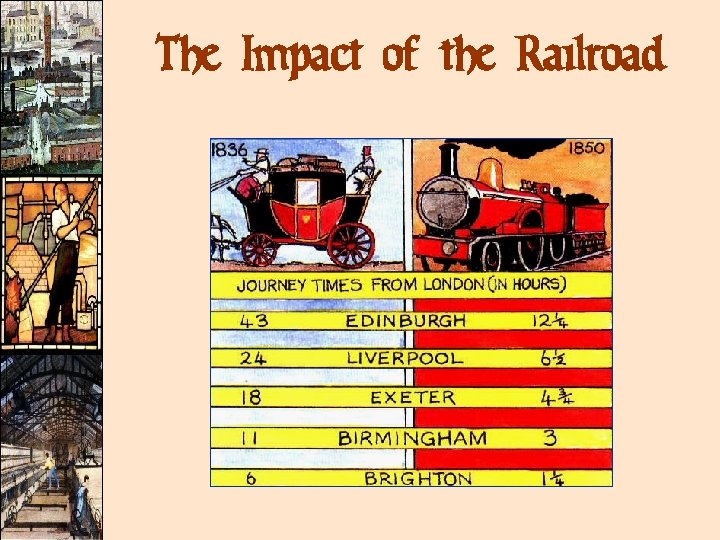
The Impact of the Railroad
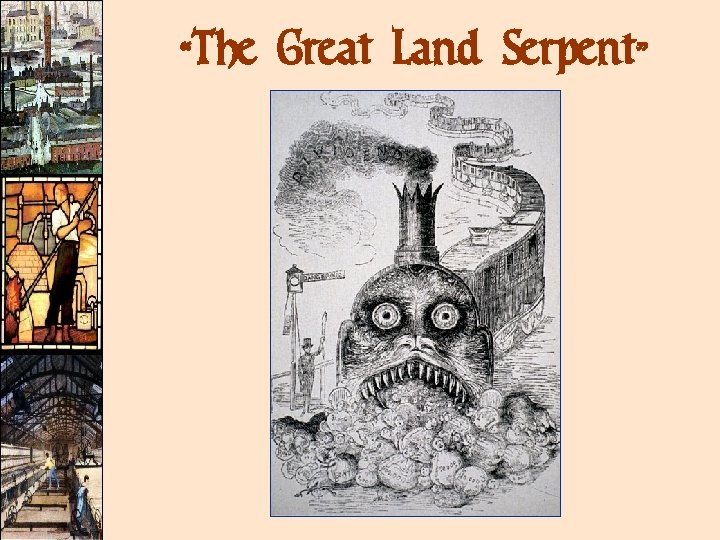
“The Great Land Serpent”
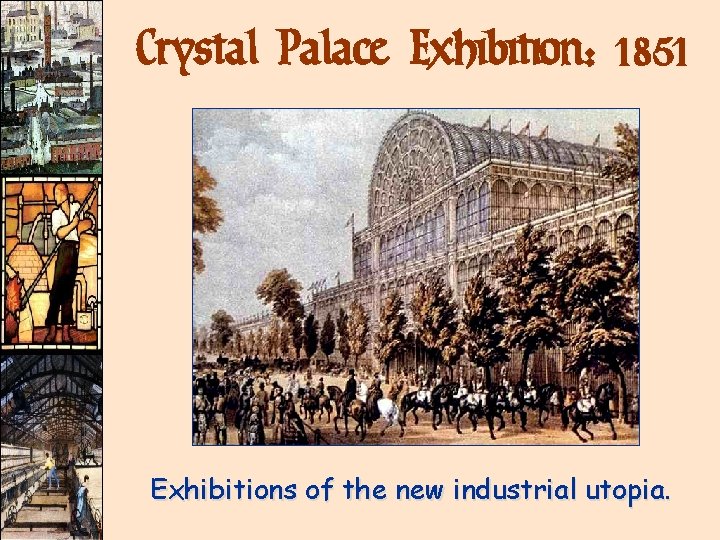
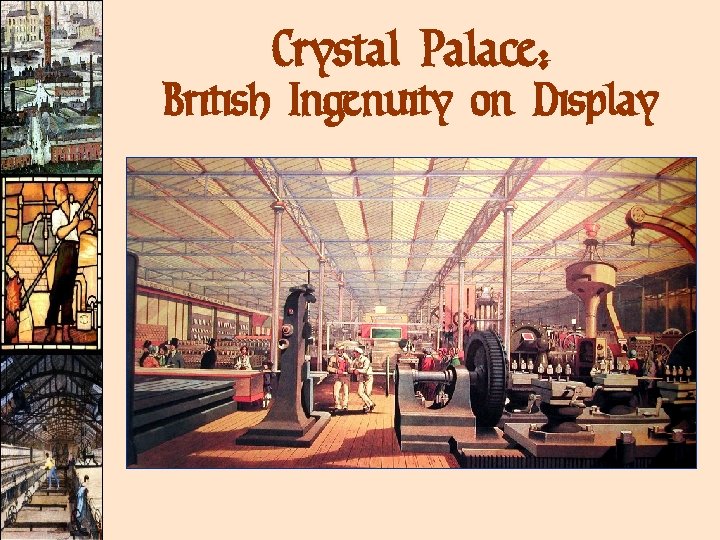
Crystal Palace Exhibition: 1851 Exhibitions of the new industrial utopia.
Crystal Palace: British Ingenuity on Display
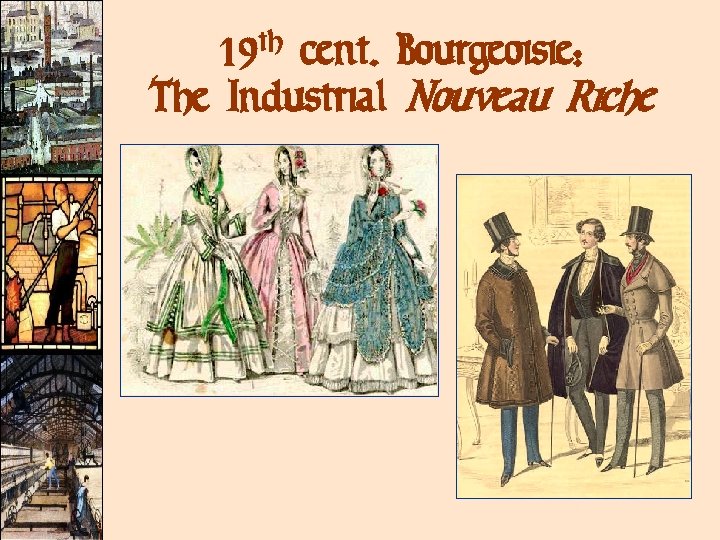
19 th cent. Bourgeoisie: The Industrial Nouveau Riche
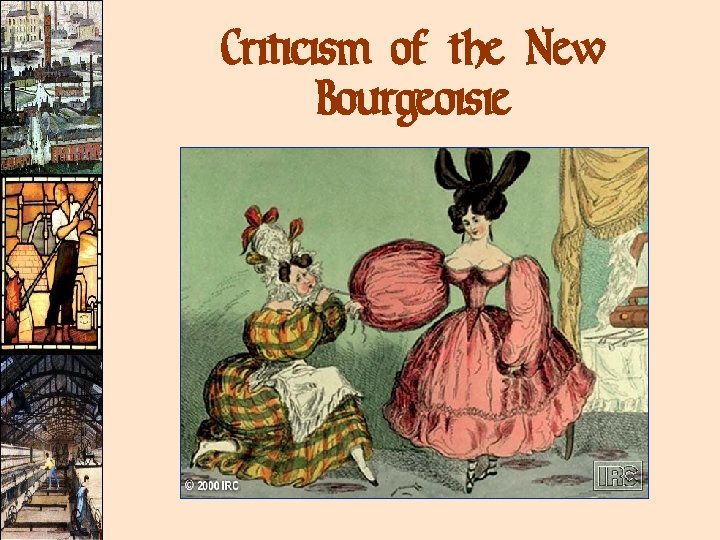
Criticism of the New Bourgeoisie
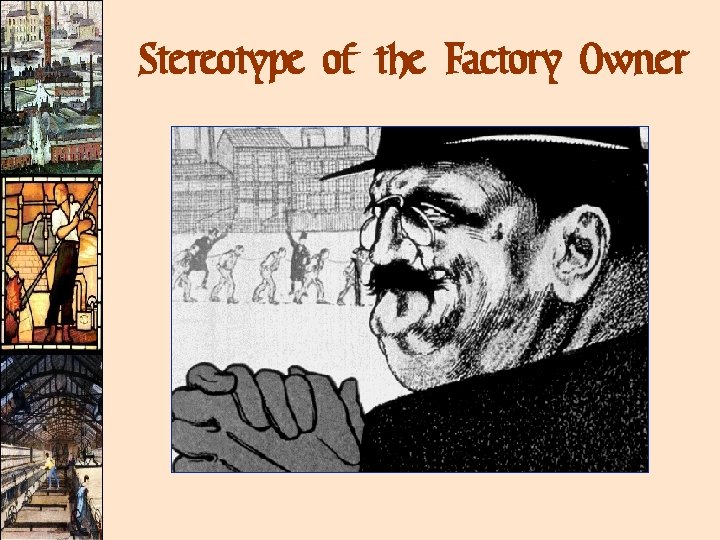
Stereotype of the Factory Owner
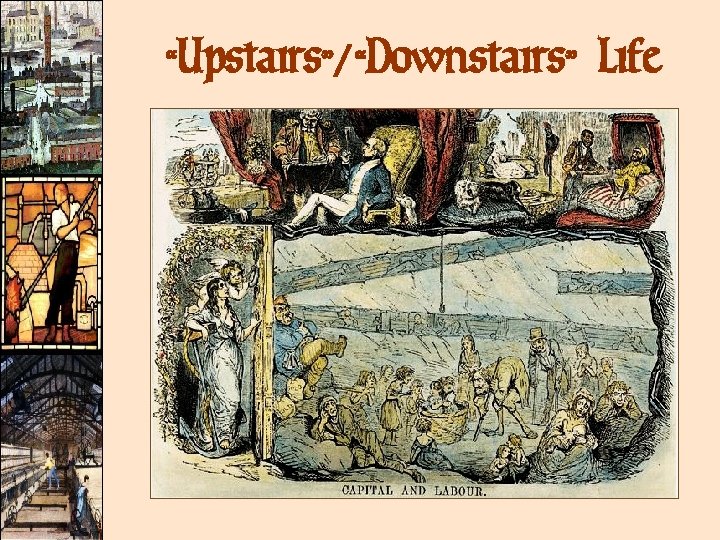
“Upstairs”/“Downstairs” Life
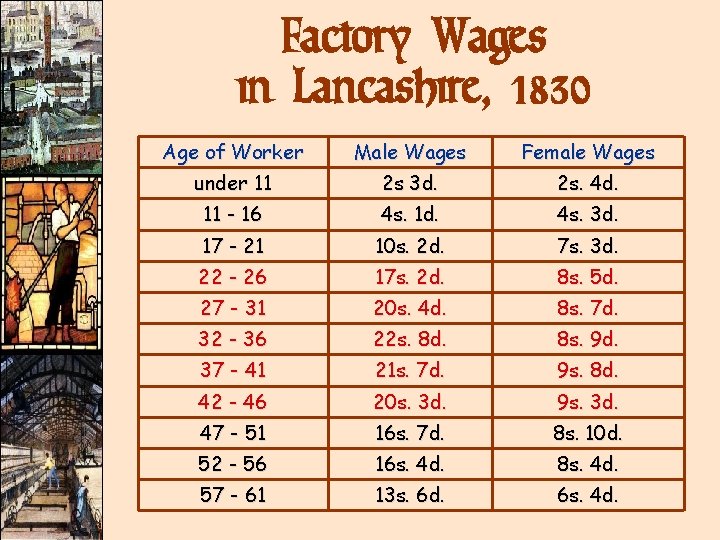
Factory Wages in Lancashire, 1830 Age of Worker Male Wages Female Wages under 11 2 s 3 d. 2 s. 4 d. 11 - 16 4 s. 1 d. 4 s. 3 d. 17 - 21 10 s. 2 d. 7 s. 3 d. 22 - 26 17 s. 2 d. 8 s. 5 d. 27 - 31 20 s. 4 d. 8 s. 7 d. 32 - 36 22 s. 8 d. 8 s. 9 d. 37 - 41 21 s. 7 d. 9 s. 8 d. 42 - 46 20 s. 3 d. 9 s. 3 d. 47 - 51 16 s. 7 d. 8 s. 10 d. 52 - 56 16 s. 4 d. 8 s. 4 d. 57 - 61 13 s. 6 d. 6 s. 4 d.
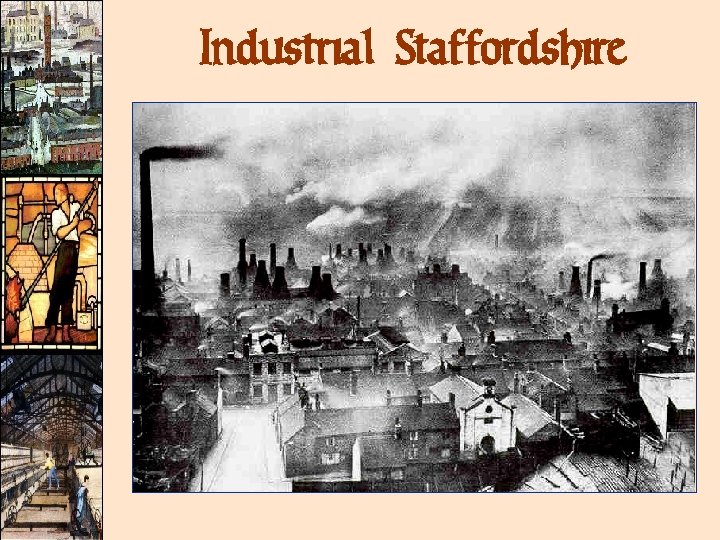
Industrial Staffordshire
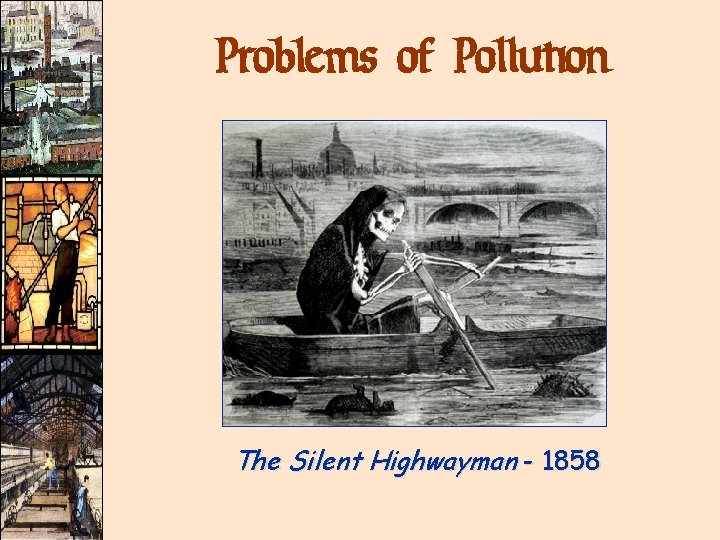
Problems of Pollution The Silent Highwayman - 1858
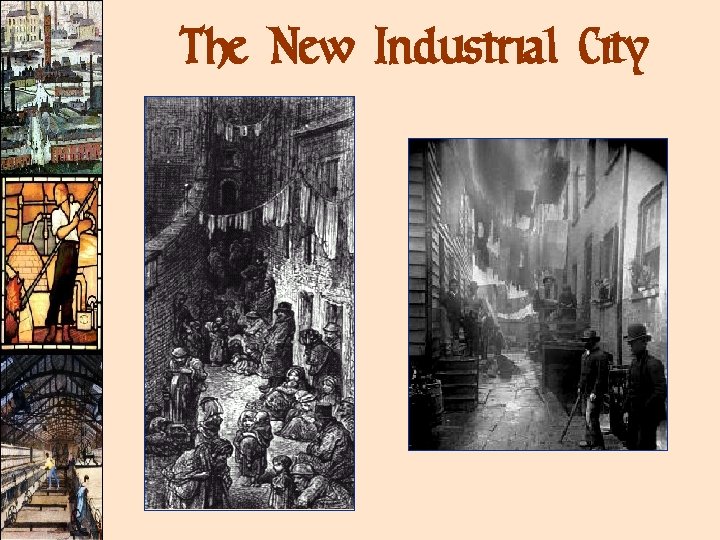
The New Industrial City
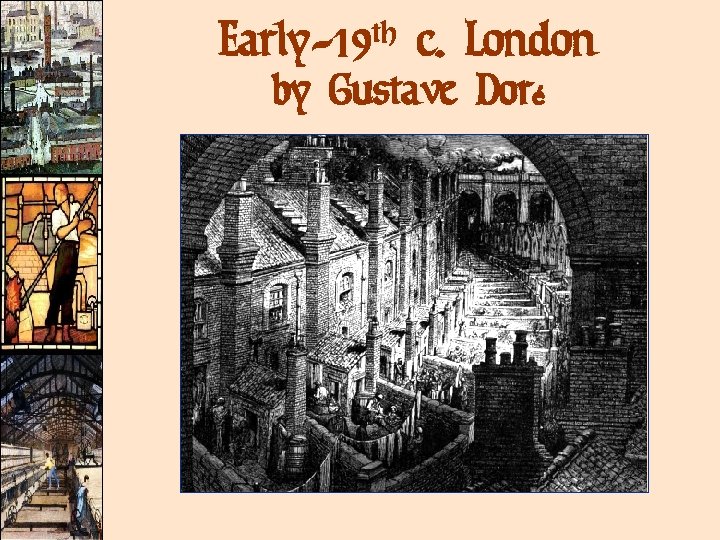
Early-19 th c. London by Gustave Doré
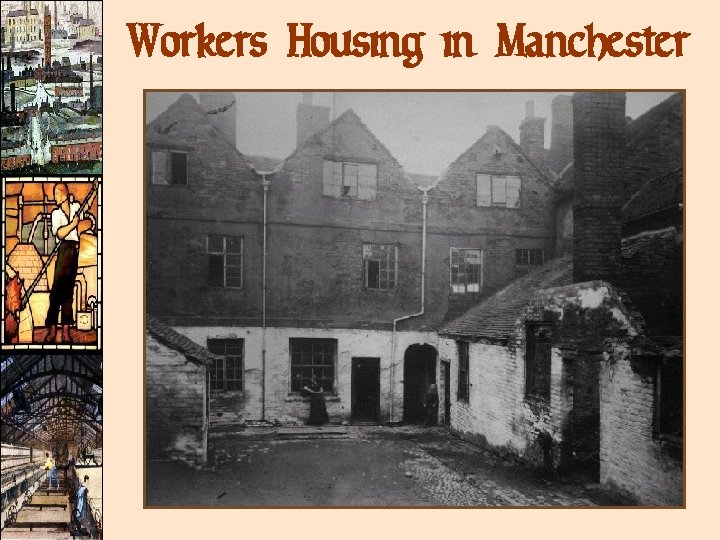
Workers Housing in Manchester
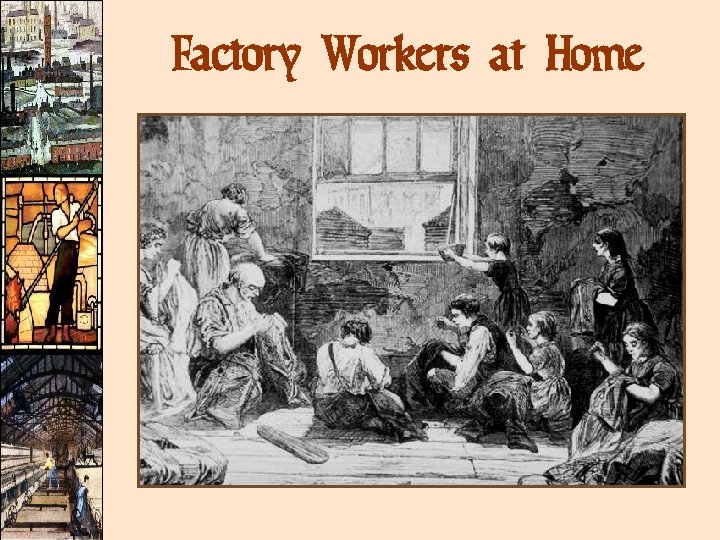
Factory Workers at Home
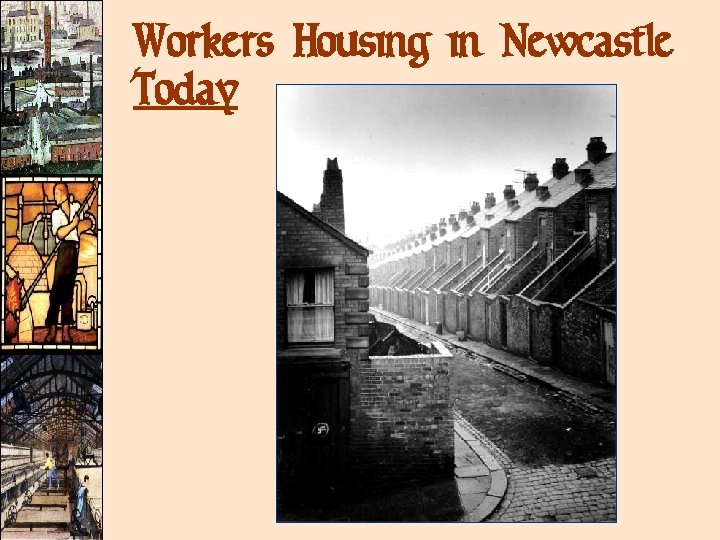
Workers Housing in Newcastle Today
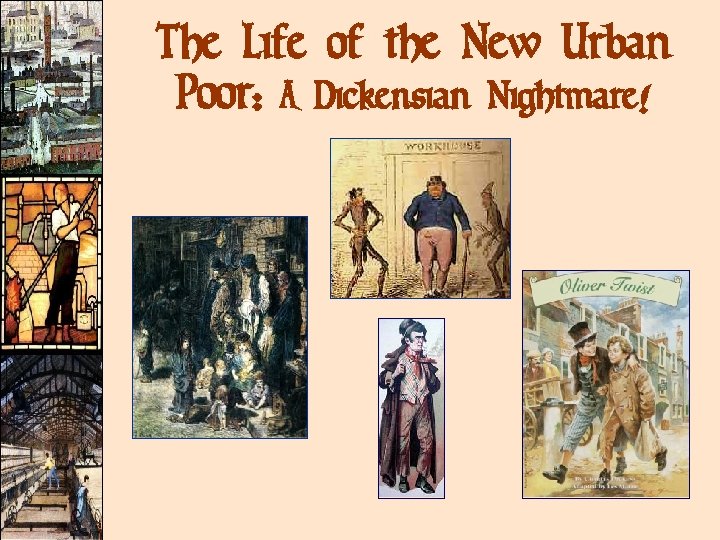
The Life of the New Urban Poor: A Dickensian Nightmare!
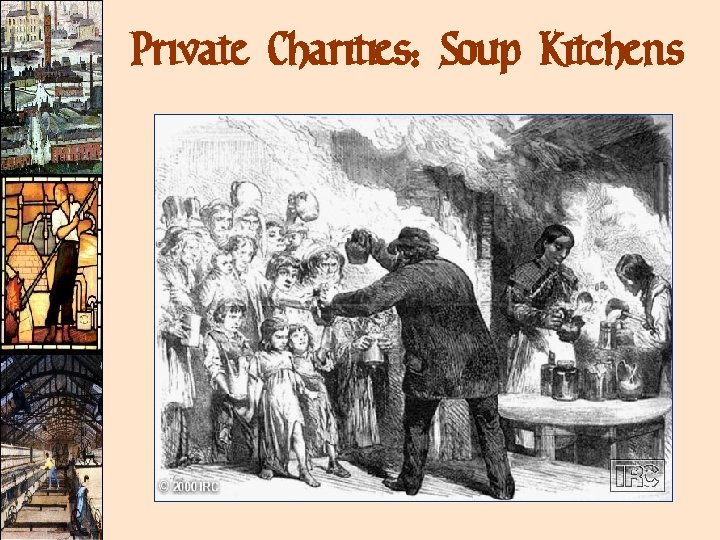
Private Charities: Soup Kitchens
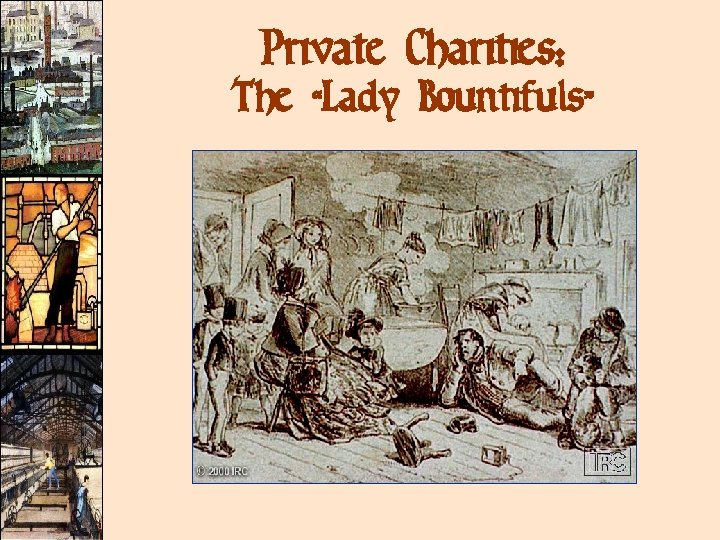
Private Charities: The “Lady Bountifuls”
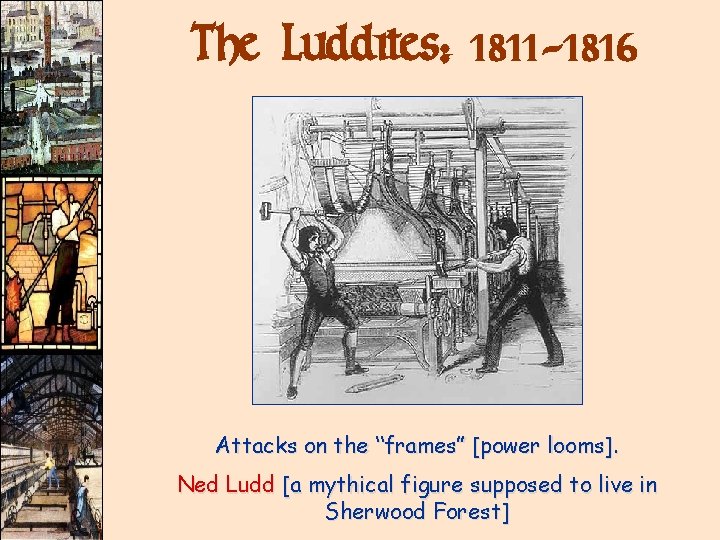
The Luddites: 1811 -1816 Attacks on the “frames” [power looms]. Ned Ludd [a mythical figure supposed to live in Sherwood Forest]
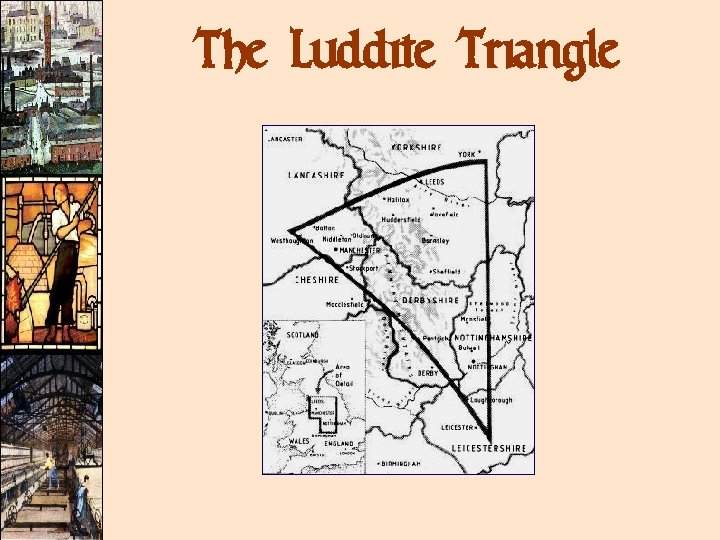
The Luddite Triangle
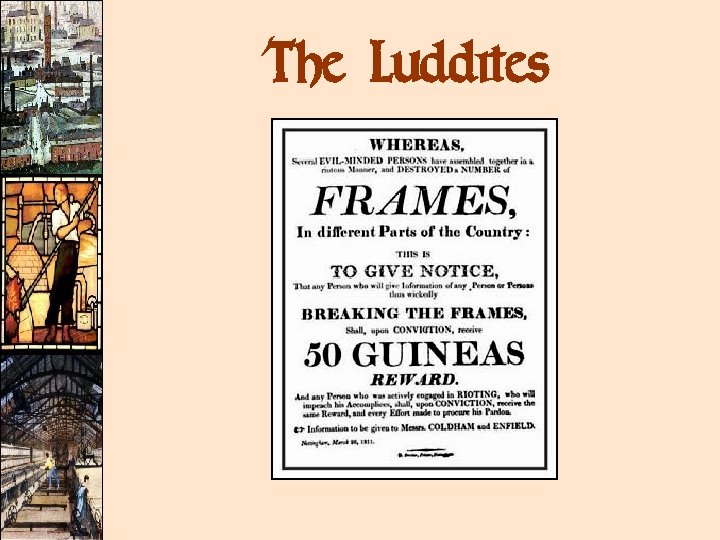
The Luddites
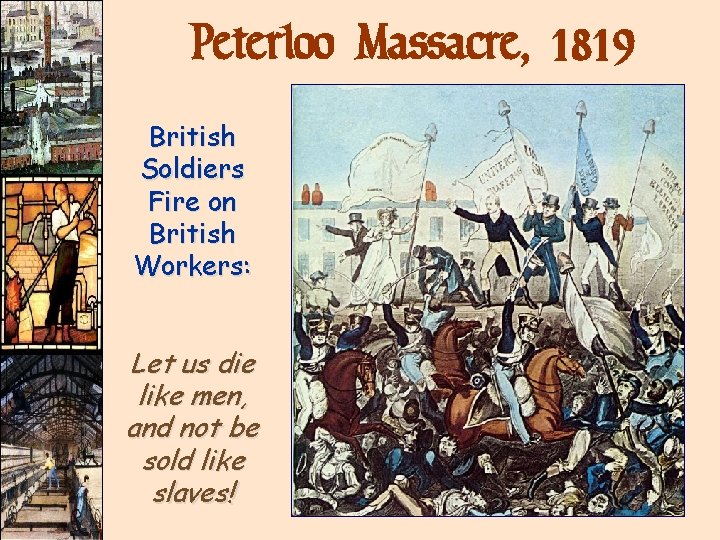
Peterloo Massacre, 1819 British Soldiers Fire on British Workers: Let us die like men, and not be sold like slaves!
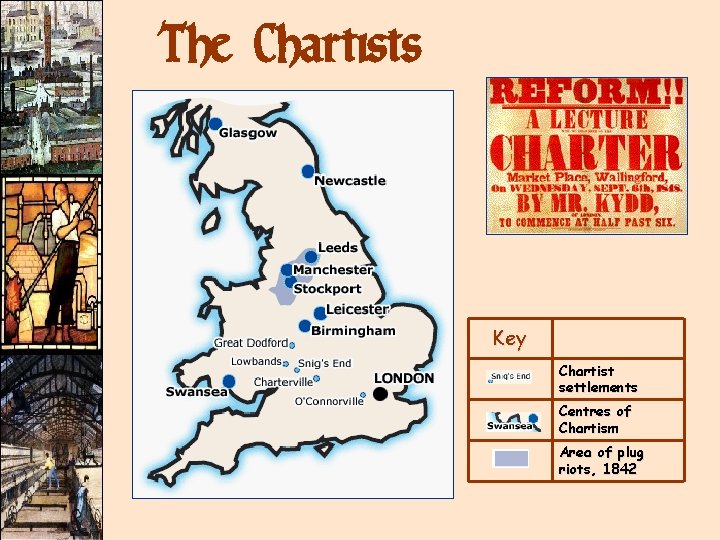
The Chartists Key Chartist settlements Centres of Chartism Area of plug riots, 1842
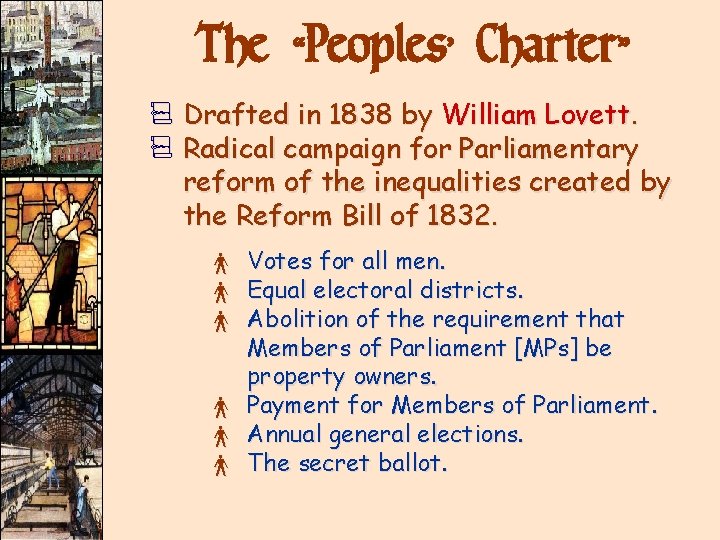
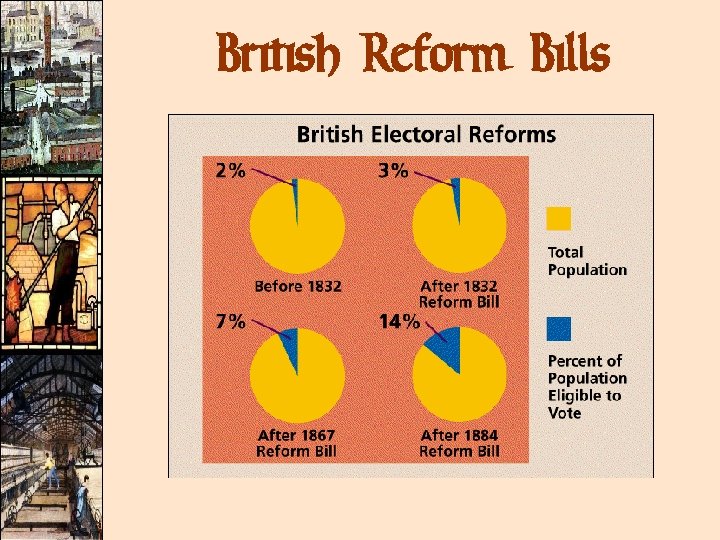
The “Peoples’ Charter” V Drafted in 1838 by William Lovett. V Radical campaign for Parliamentary reform of the inequalities created by the Reform Bill of 1832. Votes for all men. Equal electoral districts. Abolition of the requirement that Members of Parliament [MPs] be property owners. × Payment for Members of Parliament. × Annual general elections. × The secret ballot. × × ×
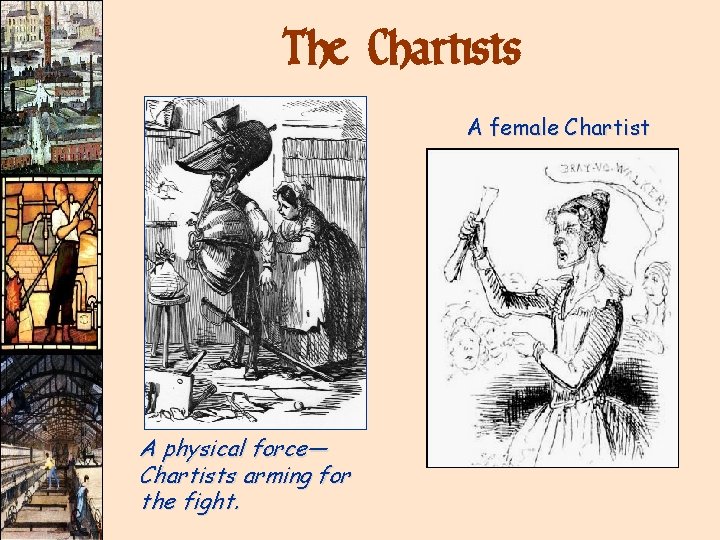
The Chartists A female Chartist A physical force— Chartists arming for the fight.
Anti-Corn Law League, 1845 4 Give manufactures more outlets for their products. 4 Expand employment. 4 Lower the price of bread. 4 Make British agriculture more efficient and productive. 4 Expose trade and agriculture to foreign competition. 4 Promote international peace through trade contact.
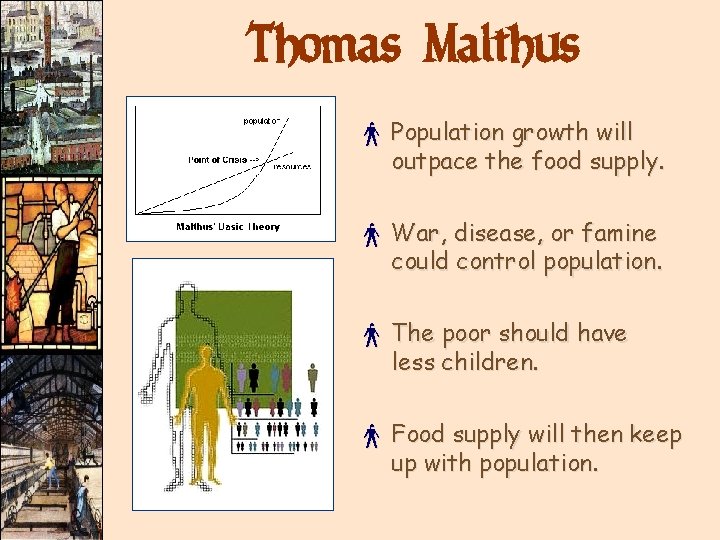
Thomas Malthus × Population growth will outpace the food supply. × War, disease, or famine could control population. × The poor should have less children. × Food supply will then keep up with population.
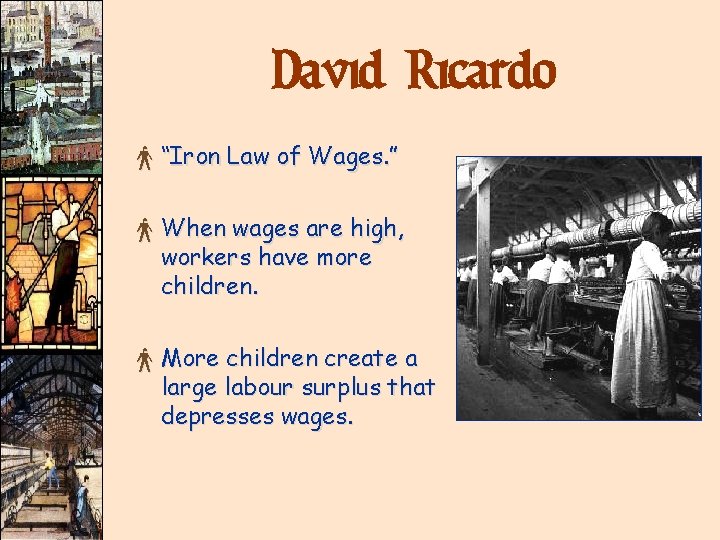
David Ricardo × “Iron Law of Wages. ” × When wages are high, workers have more children. × More children create a large labour surplus that depresses wages.
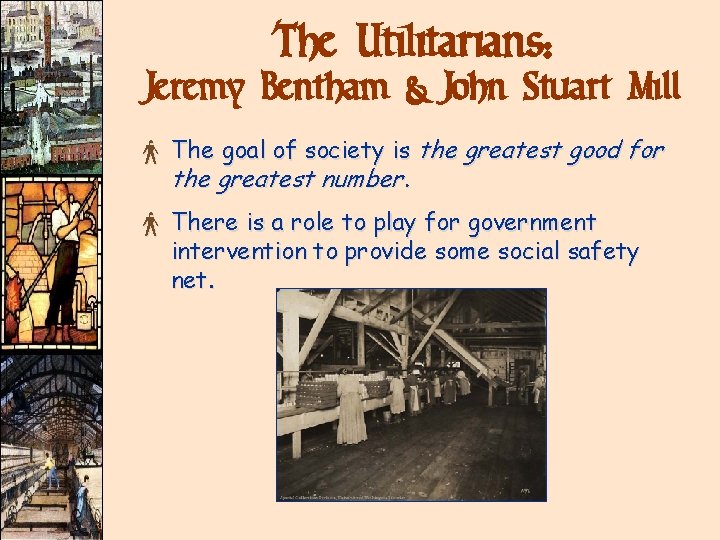
The Utilitarians: Jeremy Bentham & John Stuart Mill × The goal of society is the greatest good for the greatest number. × There is a role to play for government intervention to provide some social safety net.
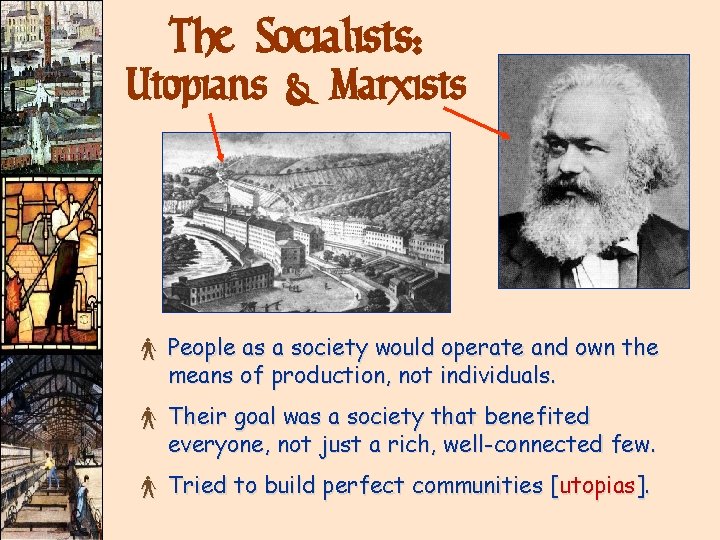
The Socialists: Utopians & Marxists × People as a society would operate and own the means of production, not individuals. × Their goal was a society that benefited everyone, not just a rich, well-connected few. × Tried to build perfect communities [utopias].
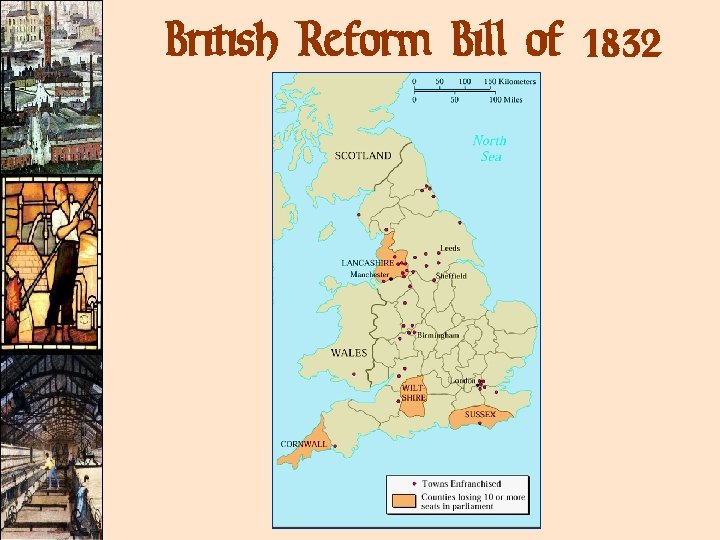
Government Response k Abolition of slavery in the colonies in 1832 [to raise wages in Britain]. k Sadler Commission to look into working conditions § Factory Act [1833] – child labour. k New Poor Law [1834] – indoor relief. § Poor houses. k Reform Bill [1832] – broadens the vote for the cities.
British Reform Bill of 1832
British Reform Bills
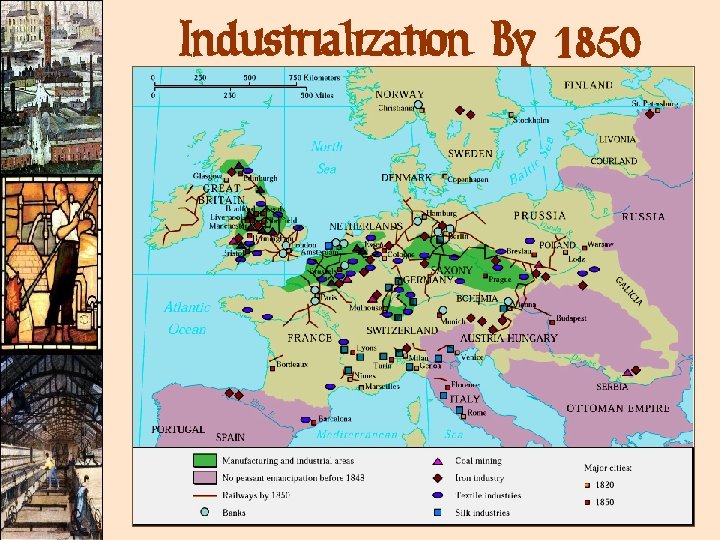
By 1850: Zones of Industrialization on the European Continent ù ù ù Northeast France. Belgium. The Netherlands. Western German states. Northern Italy East Germany Saxony
Industrialization By 1850
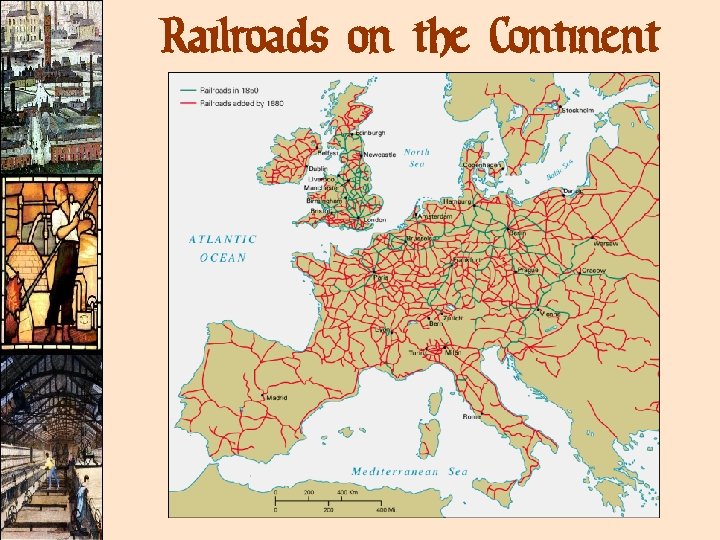
Railroads on the Continent
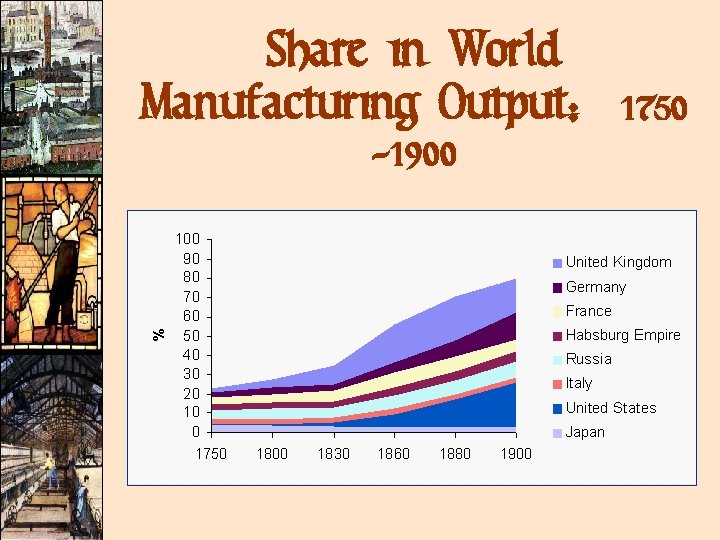
Share in World Manufacturing Output: 1750 -1900
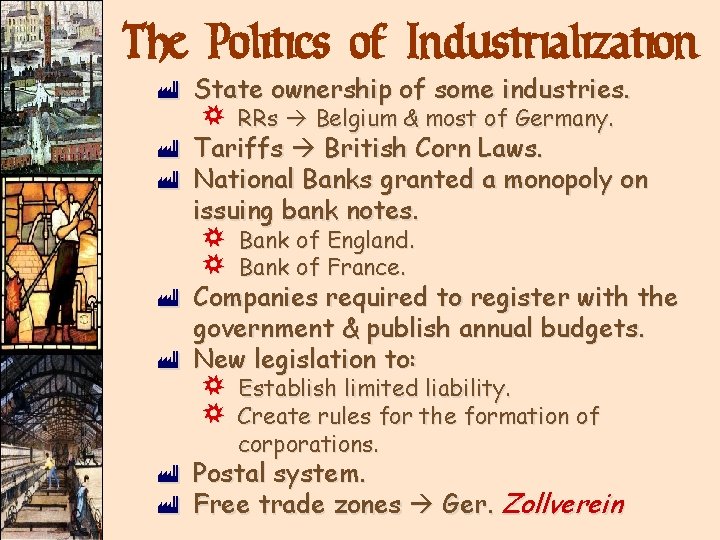
The Politics of Industrialization ù State ownership of some industries. ) RRs Belgium & most of Germany. ù Tariffs British Corn Laws. ù National Banks granted a monopoly on issuing bank notes. ) ) Bank of England. Bank of France. ù Companies required to register with the government & publish annual budgets. ù New legislation to: ) Establish limited liability. ) Create rules for the formation of corporations. ù Postal system. ù Free trade zones Ger. Zollverein
Bibliographic Sources ) “Images of the Industrial Revolution. ” Mt. Holyoke College. http: //www. mtholyoke. edu/courses/rschwart /ind_rev/images-ind-era. html ) “The Peel Web: A Web of English History. ” http: //dspace. dial. pipex. com/mbloy/ceight/primary. htm