
Last session of the conference Core Differences Comparing



- Slides: 32
Last session of the conference!
Core Differences: Comparing On. Campus to Distance Student Advising Using NACADA’s Academic Advising Core Competencies Guide Rebecca Dale Academic Advisor K-State Global Campus
What’s on the agenda • • • K-State Global Campus Introduction of myself Why this topic? Core Competencies overview Strategies for distance students
K-State Global Campus • Online campus of K-State • 70+ online programs – 12, 548 students enrolled in FY ‘ 17 – 4, 904 studied solely through Global Campus • Noncredit programs – Conferences – Professional Development • Oversee non-standard courses
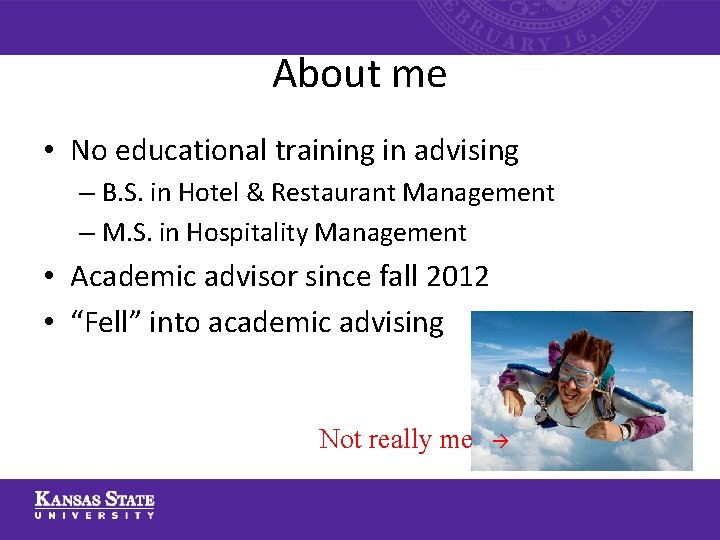
About me • No educational training in advising – B. S. in Hotel & Restaurant Management – M. S. in Hospitality Management • Academic advisor since fall 2012 • “Fell” into academic advising Not really me
Why this topic? • Difficult transition to distance advising • Use resources I was not familiar with • Bring a different perspective to distance advising • Bring on-campus relationships to Global Campus • Continually evaluate our advising systems
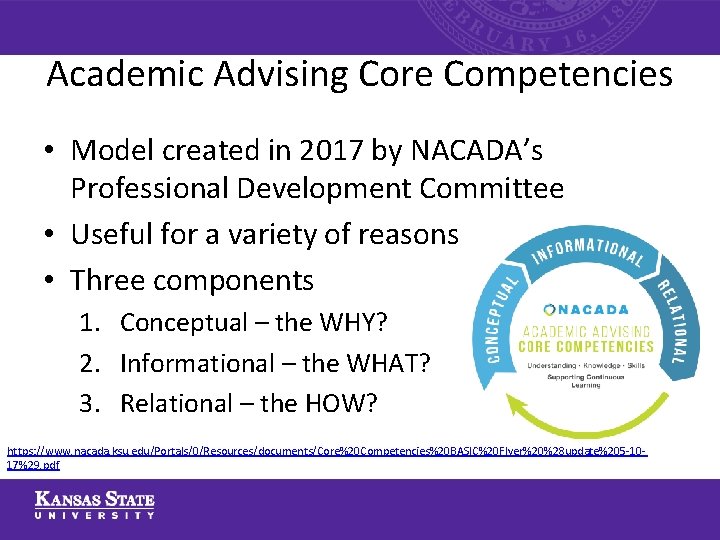
Academic Advising Core Competencies • Model created in 2017 by NACADA’s Professional Development Committee • Useful for a variety of reasons • Three components 1. Conceptual – the WHY? 2. Informational – the WHAT? 3. Relational – the HOW? https: //www. nacada. ksu. edu/Portals/0/Resources/documents/Core%20 Competencies%20 BASIC%20 Flyer%20%28 update%205 -1017%29. pdf
Let’s take a closer look
Conceptual • Provides the context for academic advising. • Covers the ideas and theories that advisors should know to effectively advise students. NACADA: The Global Community for Academic Advising. (2017). NACADA academic advising core competencies model. Retrieved from https: //www. nacada. ksu. edu/Resources/Pillars/Core. Competencies. aspx
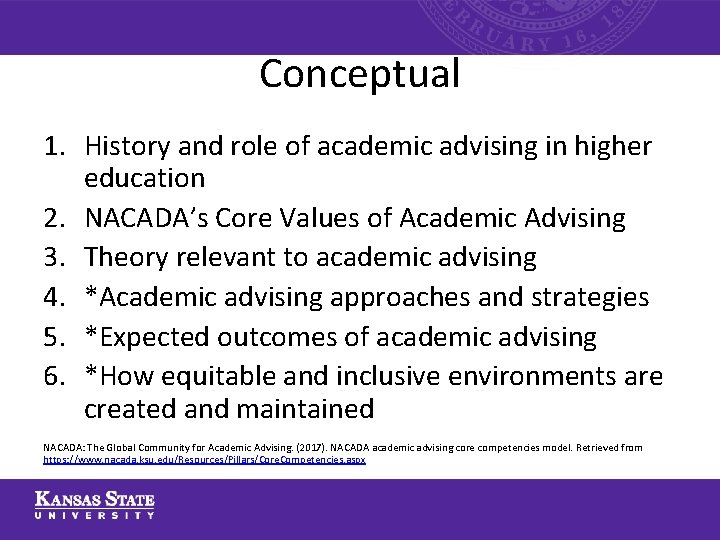
Conceptual 1. History and role of academic advising in higher education 2. NACADA’s Core Values of Academic Advising 3. Theory relevant to academic advising 4. *Academic advising approaches and strategies 5. *Expected outcomes of academic advising 6. *How equitable and inclusive environments are created and maintained NACADA: The Global Community for Academic Advising. (2017). NACADA academic advising core competencies model. Retrieved from https: //www. nacada. ksu. edu/Resources/Pillars/Core. Competencies. aspx
Informational • Provides the substance. • Covers knowledge that advisors must know/master to guide students to be successful at their institution. NACADA: The Global Community for Academic Advising. (2017). NACADA academic advising core competencies model. Retrieved from https: //www. nacada. ksu. edu/Resources/Pillars/Core. Competencies. aspx
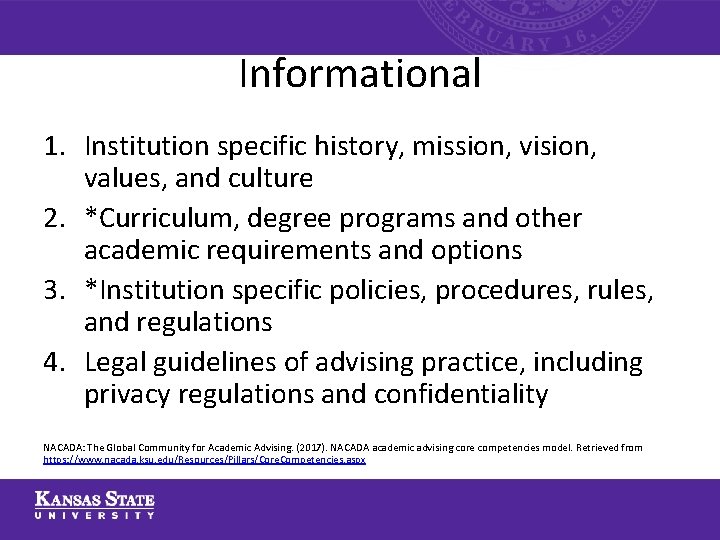
Informational 1. Institution specific history, mission, vision, values, and culture 2. *Curriculum, degree programs and other academic requirements and options 3. *Institution specific policies, procedures, rules, and regulations 4. Legal guidelines of advising practice, including privacy regulations and confidentiality NACADA: The Global Community for Academic Advising. (2017). NACADA academic advising core competencies model. Retrieved from https: //www. nacada. ksu. edu/Resources/Pillars/Core. Competencies. aspx
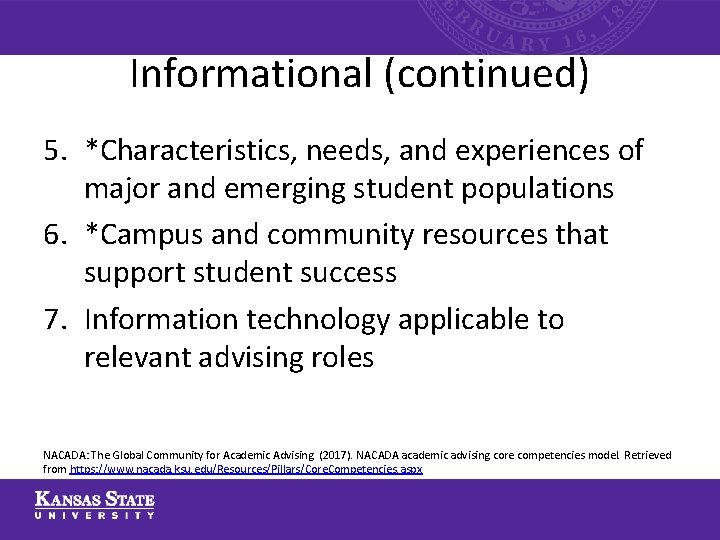
Informational (continued) 5. *Characteristics, needs, and experiences of major and emerging student populations 6. *Campus and community resources that support student success 7. Information technology applicable to relevant advising roles NACADA: The Global Community for Academic Advising. (2017). NACADA academic advising core competencies model. Retrieved from https: //www. nacada. ksu. edu/Resources/Pillars/Core. Competencies. aspx
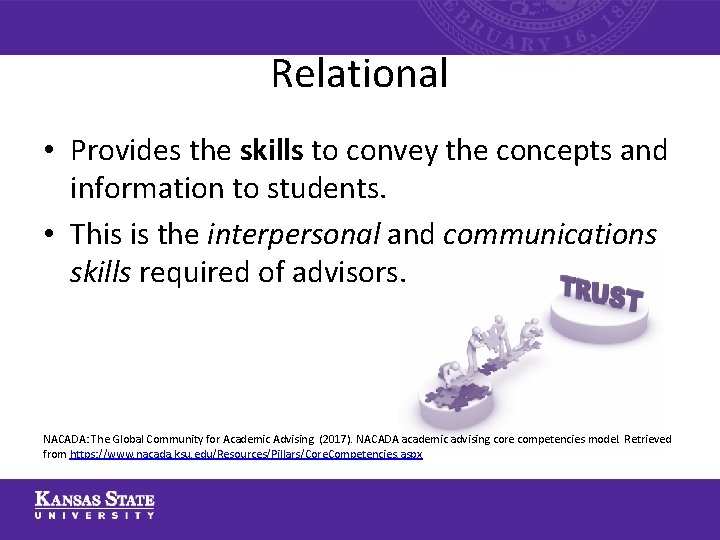
Relational • Provides the skills to convey the concepts and information to students. • This is the interpersonal and communications skills required of advisors. NACADA: The Global Community for Academic Advising. (2017). NACADA academic advising core competencies model. Retrieved from https: //www. nacada. ksu. edu/Resources/Pillars/Core. Competencies. aspx
Relational 1. Articulate a personal philosophy of academic advising 2. *Create rapport and build academic advising relationships 3. *Communicate in an inclusive and respectful manner 4. *Plan and conduct successful advising interactions NACADA: The Global Community for Academic Advising. (2017). NACADA academic advising core competencies model. Retrieved from https: //www. nacada. ksu. edu/Resources/Pillars/Core. Competencies. aspx
Relational (continued) 5. Promote student understanding of the logic and purpose of the curriculum 6. *Facilitate problem solving, decision-making, meaning-making, planning, and goal setting 7. *Engage in on-going assessment and development of the advising practice NACADA: The Global Community for Academic Advising. (2017). NACADA academic advising core competencies model. Retrieved from https: //www. nacada. ksu. edu/Resources/Pillars/Core. Competencies. aspx
Strategies for Distance Students CONCEPTUAL – THE WHY?
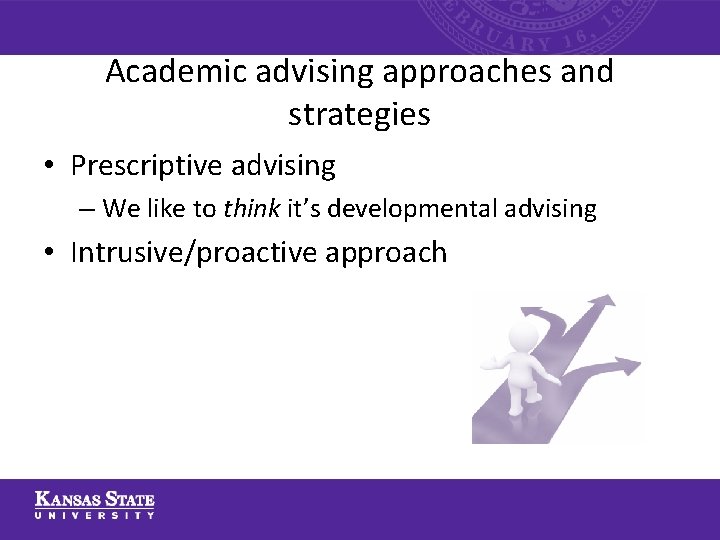
Academic advising approaches and strategies • Prescriptive advising – We like to think it’s developmental advising • Intrusive/proactive approach
Expected outcomes of academic advising • We serve as main point of contact • Modified K-State Advising Syllabus
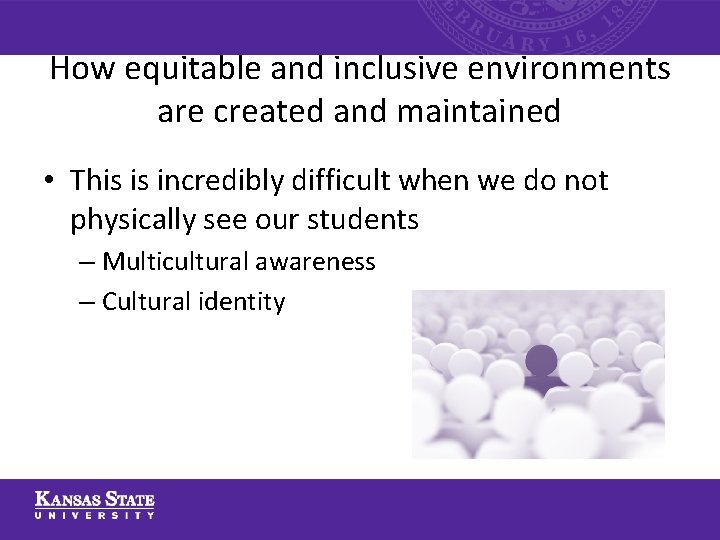
How equitable and inclusive environments are created and maintained • This is incredibly difficult when we do not physically see our students – Multicultural awareness – Cultural identity
Strategies for Distance Students INFORMATIONAL – THE WHAT?
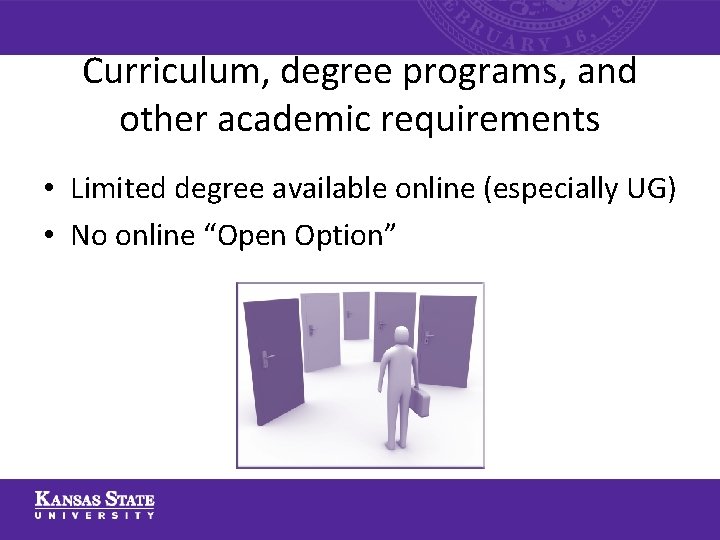
Curriculum, degree programs, and other academic requirements • Limited degree available online (especially UG) • No online “Open Option”
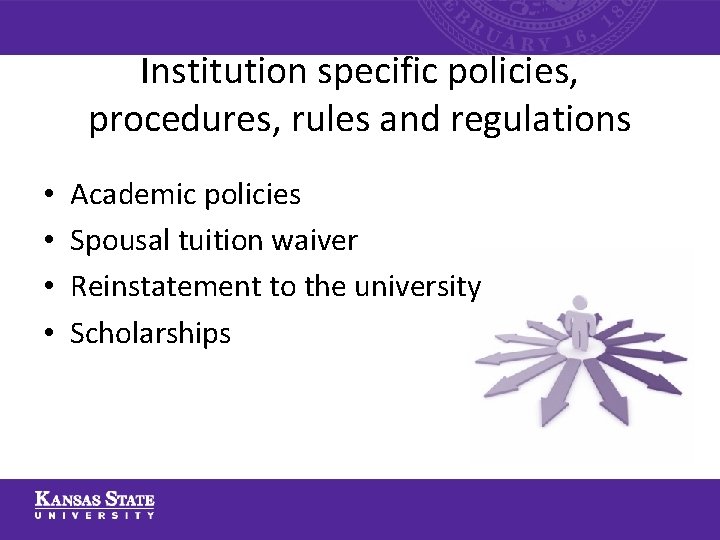
Institution specific policies, procedures, rules and regulations • • Academic policies Spousal tuition waiver Reinstatement to the university Scholarships
Characteristics, needs, and experiences of major and emerging student populations • Majority are adults – Competing priorities – Enrollment habits – Transfer institutions – Expectations of education – Many veterans and some active duty
Campus and community resources that support student success • • • Office of Student Financial Assistance Cashier’s Office Proctoring services Veterans Affairs Office of Student Life Other services
Strategies for Distance Students RELATIONAL – THE HOW?
Create rapport and build academic advising relationships • Methods of communication • Genuine interactions • Intentional/direct messaging “My name is Becca Dale and I am your academic advisor. It’s nice to “meet” you. ”
Plan and conduct successful advising interactions • Emails are appointments – Welcome emails – Encourage at least 1 appointment – Difficult conversations – B. L. U. F. Bottom Line Up Front – Emails get loooooong – School email vs. Personal email
Facilitate problem-solving, decisionmaking, meaning-making, planning and goal setting • Post questions/scenarios • Goal setting is hard online • Meaning-making a bit easier
On-going assessment and development of self and advising practices • Attend NACADA Annual Conference • Webinars • Review of internal procedures
Questions?
Thanks Safe travels Rebecca Dale rebeccad@ksu. edu