
Last lesson we looked at external factors These
- Slides: 7
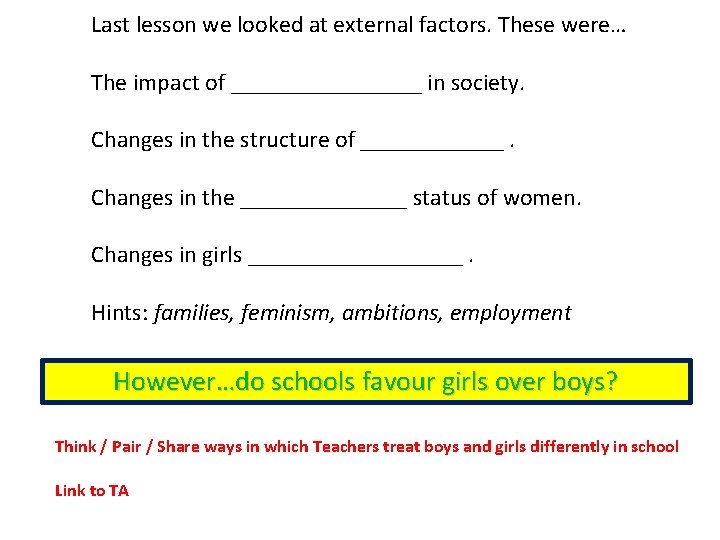
Last lesson we looked at external factors. These were… The impact of ________ in society. Changes in the structure of ______. Changes in the _______ status of women. Changes in girls _________. Hints: families, feminism, ambitions, employment However…do schools favour girls over boys? Think / Pair / Share ways in which Teachers treat boys and girls differently in school Link to TA
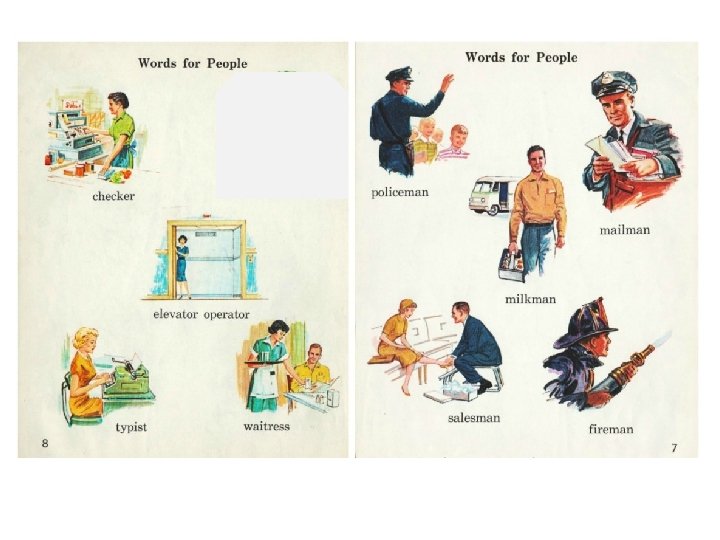
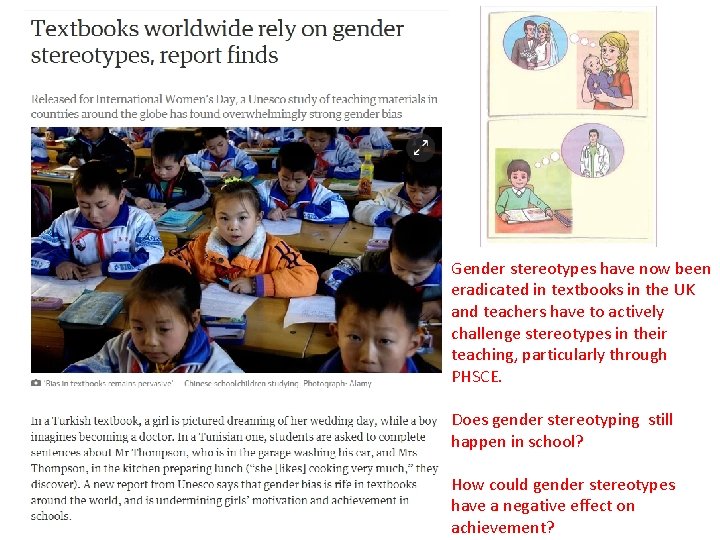
Gender stereotypes have now been eradicated in textbooks in the UK and teachers have to actively challenge stereotypes in their teaching, particularly through PHSCE. Does gender stereotyping still happen in school? How could gender stereotypes have a negative effect on achievement?
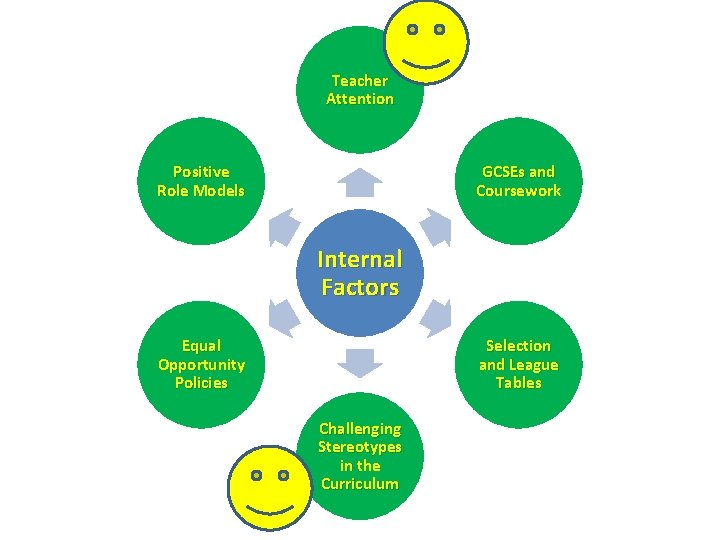
Teacher Attention Positive Role Models GCSEs and Coursework Internal Factors Equal Opportunity Policies Selection and League Tables Challenging Stereotypes in the Curriculum
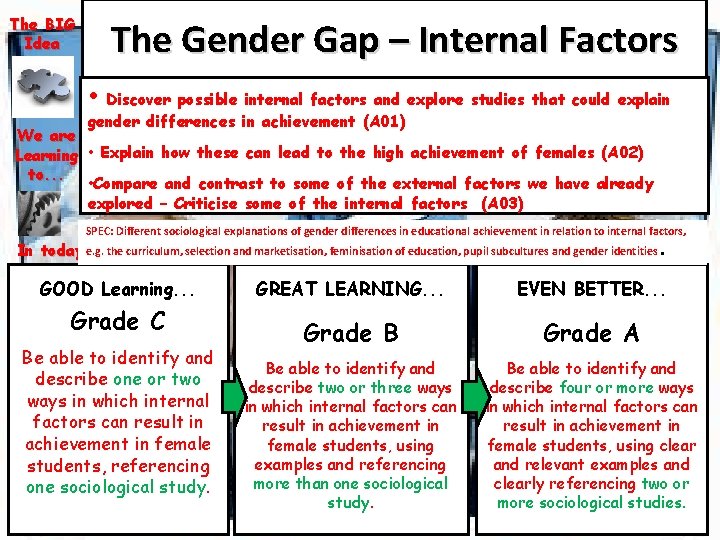
The BIG Idea The Gender Gap – Internal Factors • Discover possible internal factors and explore studies that could explain gender differences in achievement (A 01) We are Learning • Explain how these can lead to the high achievement of females (A 02) to. . . • Compare and contrast to some of the external factors we have already explored – Criticise some of the internal factors (A 03) SPEC: Different sociological explanations of gender differences in educational achievement in relation to internal factors, e. g. lesson. . . the curriculum, selection and marketisation, feminisation of education, pupil subcultures and gender identities. In today’s GOOD Learning. . . Grade C Be able to identify and describe one or two ways in which internal factors can result in achievement in female students, referencing one sociological study. GREAT LEARNING. . . EVEN BETTER. . . Grade B Grade A Be able to identify and describe two or three ways in which internal factors can result in achievement in female students, using examples and referencing more than one sociological study. Be able to identify and describe four or more ways in which internal factors can result in achievement in female students, using clear and relevant examples and clearly referencing two or more sociological studies.
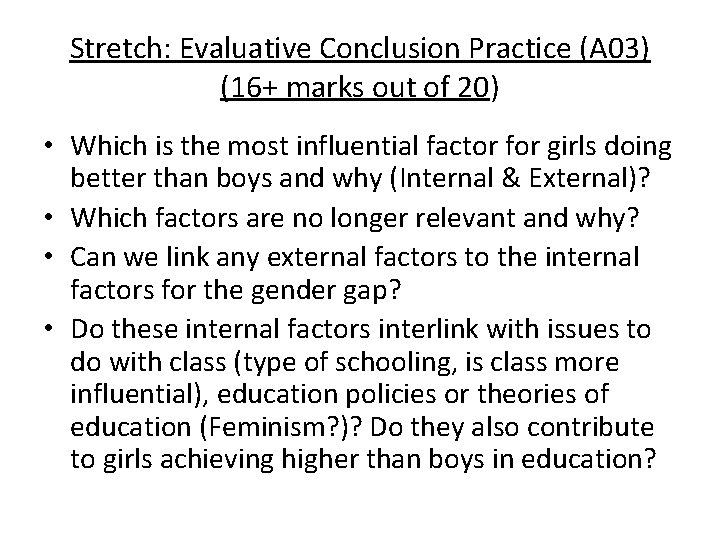
Stretch: Evaluative Conclusion Practice (A 03) (16+ marks out of 20) • Which is the most influential factor for girls doing better than boys and why (Internal & External)? • Which factors are no longer relevant and why? • Can we link any external factors to the internal factors for the gender gap? • Do these internal factors interlink with issues to do with class (type of schooling, is class more influential), education policies or theories of education (Feminism? )? Do they also contribute to girls achieving higher than boys in education?
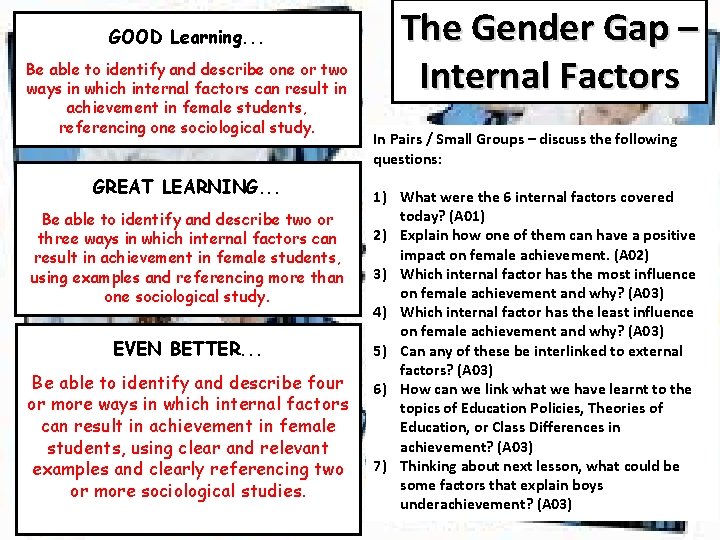
GOOD Learning. . . Be able to identify and describe one or two ways in which internal factors can result in achievement in female students, referencing one sociological study. GREAT LEARNING. . . Be able to identify and describe two or three ways in which internal factors can result in achievement in female students, using examples and referencing more than one sociological study. EVEN BETTER. . . Be able to identify and describe four or more ways in which internal factors can result in achievement in female students, using clear and relevant examples and clearly referencing two or more sociological studies. The Gender Gap – Internal Factors In Pairs / Small Groups – discuss the following questions: 1) What were the 6 internal factors covered today? (A 01) 2) Explain how one of them can have a positive impact on female achievement. (A 02) 3) Which internal factor has the most influence on female achievement and why? (A 03) 4) Which internal factor has the least influence on female achievement and why? (A 03) 5) Can any of these be interlinked to external factors? (A 03) 6) How can we link what we have learnt to the topics of Education Policies, Theories of Education, or Class Differences in achievement? (A 03) 7) Thinking about next lesson, what could be some factors that explain boys underachievement? (A 03)