
Last Days of Life Toolkit an introduction to












- Slides: 32
Last Days of Life Toolkit: an introduction to the Medication Management Guidelines
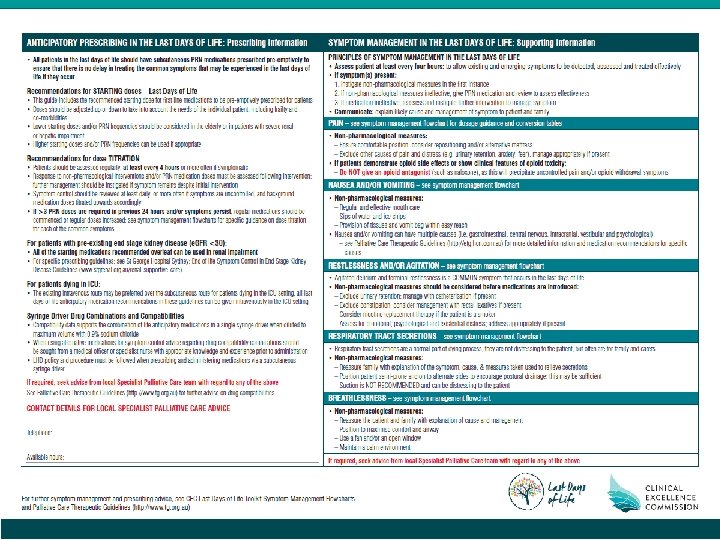
Purpose of Medication Management guides § Good management of symptoms in the last days of life is one of the main concerns of patients and their families § Clinicians have a duty to ensure patients receive appropriate and timely relief from symptoms and distress § Principles of symptom management in last days of life § § § Dying patients are assessed regularly to allow existing and emerging symptoms to be detected, assessed and treated effectively If symptom(s) are present, non-pharmacological measures are instigated in the first instance If non-pharmacological measures are ineffective, as required (PRN) medication is given If the medication ineffective, the patient is reassess and further intervention and/or escalation is implemented to manage the symptom(s) The likely cause and management of the symptom(s) is communicated and explained to patient and their family
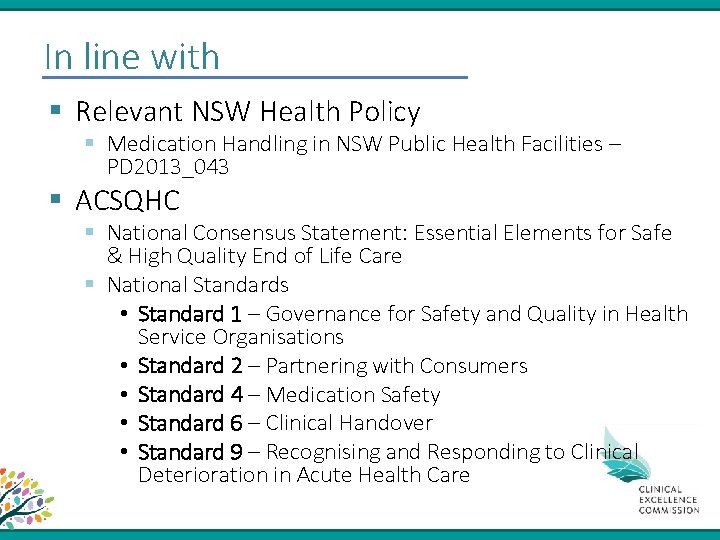
In line with § Relevant NSW Health Policy § Medication Handling in NSW Public Health Facilities – PD 2013_043 § ACSQHC § National Consensus Statement: Essential Elements for Safe & High Quality End of Life Care § National Standards • Standard 1 – Governance for Safety and Quality in Health Service Organisations • Standard 2 – Partnering with Consumers • Standard 4 – Medication Safety • Standard 6 – Clinical Handover • Standard 9 – Recognising and Responding to Clinical Deterioration in Acute Health Care
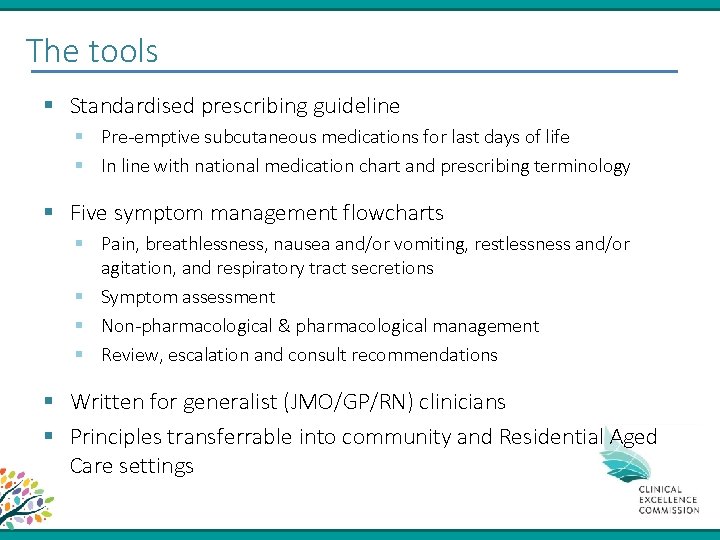
The tools § Standardised prescribing guideline § Pre-emptive subcutaneous medications for last days of life § In line with national medication chart and prescribing terminology § Five symptom management flowcharts § Pain, breathlessness, nausea and/or vomiting, restlessness and/or agitation, and respiratory tract secretions § Symptom assessment § Non-pharmacological & pharmacological management § Review, escalation and consult recommendations § Written for generalist (JMO/GP/RN) clinicians § Principles transferrable into community and Residential Aged Care settings
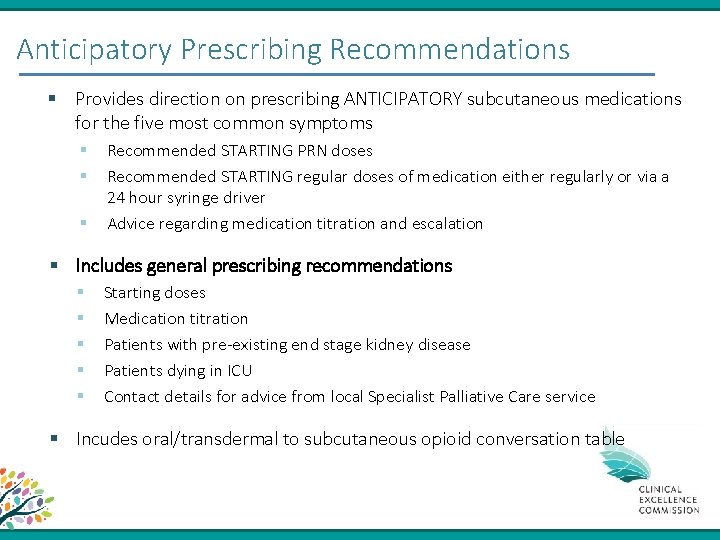
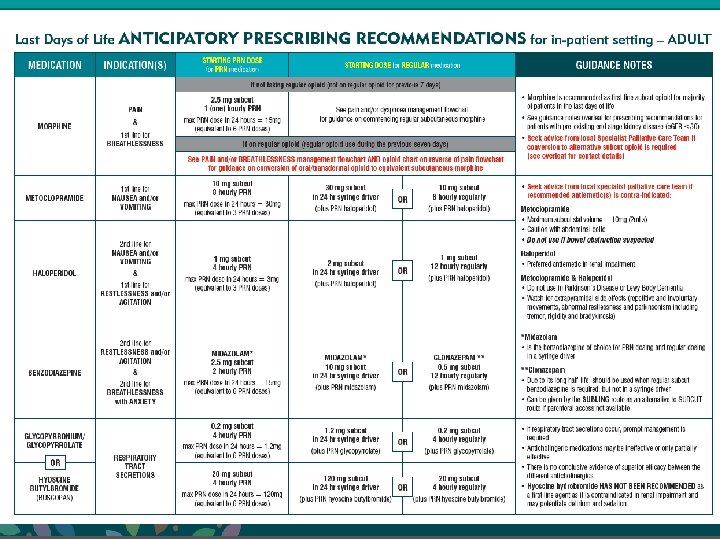
Anticipatory Prescribing Recommendations § Provides direction on prescribing ANTICIPATORY subcutaneous medications for the five most common symptoms § § § Recommended STARTING PRN doses Recommended STARTING regular doses of medication either regularly or via a 24 hour syringe driver Advice regarding medication titration and escalation § Includes general prescribing recommendations § § § Starting doses Medication titration Patients with pre-existing end stage kidney disease Patients dying in ICU Contact details for advice from local Specialist Palliative Care service § Incudes oral/transdermal to subcutaneous opioid conversation table
PRESENTATION NAME – MONTH YYYY PRESENTER NAME 6
PRESENTATION NAME – MONTH YYYY PRESENTER NAME 7
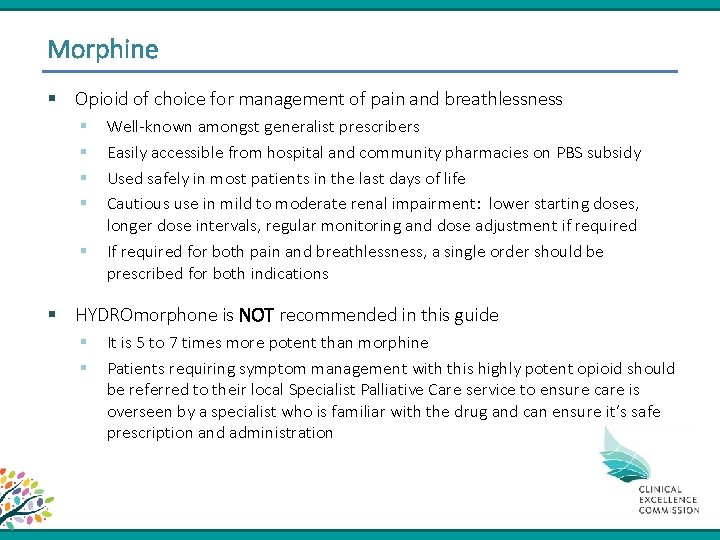
Morphine § Opioid of choice for management of pain and breathlessness § § § Well-known amongst generalist prescribers Easily accessible from hospital and community pharmacies on PBS subsidy Used safely in most patients in the last days of life Cautious use in mild to moderate renal impairment: lower starting doses, longer dose intervals, regular monitoring and dose adjustment if required If required for both pain and breathlessness, a single order should be prescribed for both indications § HYDROmorphone is NOT recommended in this guide § § It is 5 to 7 times more potent than morphine Patients requiring symptom management with this highly potent opioid should be referred to their local Specialist Palliative Care service to ensure care is overseen by a specialist who is familiar with the drug and can ensure it’s safe prescription and administration
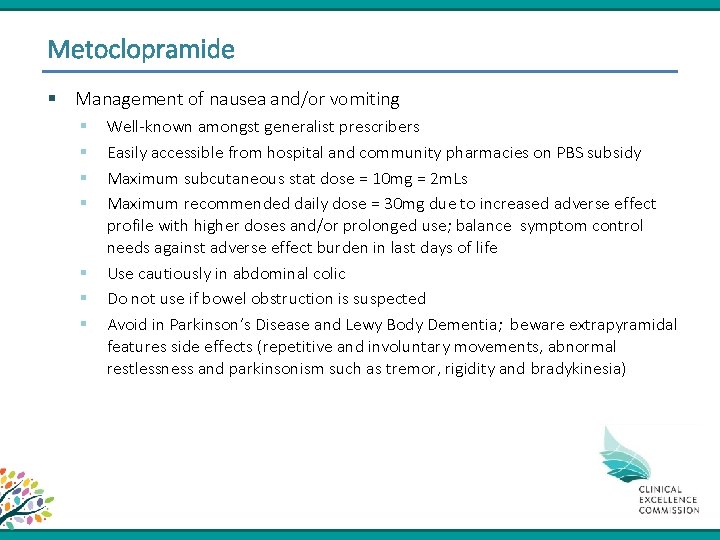
Metoclopramide § Management of nausea and/or vomiting § § § § Well-known amongst generalist prescribers Easily accessible from hospital and community pharmacies on PBS subsidy Maximum subcutaneous stat dose = 10 mg = 2 m. Ls Maximum recommended daily dose = 30 mg due to increased adverse effect profile with higher doses and/or prolonged use; balance symptom control needs against adverse effect burden in last days of life Use cautiously in abdominal colic Do not use if bowel obstruction is suspected Avoid in Parkinson’s Disease and Lewy Body Dementia; beware extrapyramidal features side effects (repetitive and involuntary movements, abnormal restlessness and parkinsonism such as tremor, rigidity and bradykinesia)
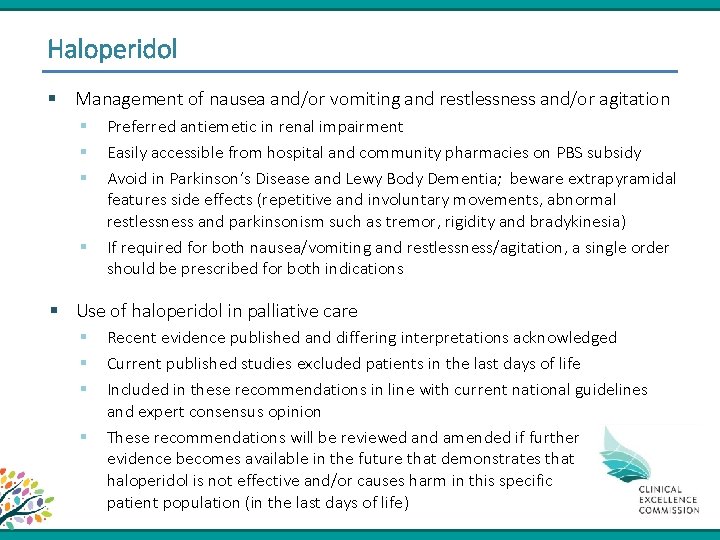
Haloperidol § Management of nausea and/or vomiting and restlessness and/or agitation § § Preferred antiemetic in renal impairment Easily accessible from hospital and community pharmacies on PBS subsidy Avoid in Parkinson’s Disease and Lewy Body Dementia; beware extrapyramidal features side effects (repetitive and involuntary movements, abnormal restlessness and parkinsonism such as tremor, rigidity and bradykinesia) If required for both nausea/vomiting and restlessness/agitation, a single order should be prescribed for both indications § Use of haloperidol in palliative care § § Recent evidence published and differing interpretations acknowledged Current published studies excluded patients in the last days of life Included in these recommendations in line with current national guidelines and expert consensus opinion These recommendations will be reviewed and amended if further evidence becomes available in the future that demonstrates that haloperidol is not effective and/or causes harm in this specific patient population (in the last days of life)
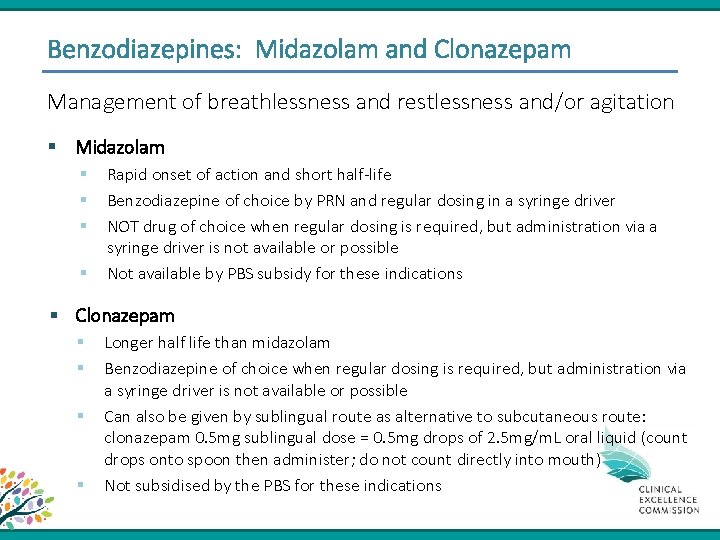
Benzodiazepines: Midazolam and Clonazepam Management of breathlessness and restlessness and/or agitation § Midazolam § § Rapid onset of action and short half-life Benzodiazepine of choice by PRN and regular dosing in a syringe driver NOT drug of choice when regular dosing is required, but administration via a syringe driver is not available or possible Not available by PBS subsidy for these indications § Clonazepam § § Longer half life than midazolam Benzodiazepine of choice when regular dosing is required, but administration via a syringe driver is not available or possible Can also be given by sublingual route as alternative to subcutaneous route: clonazepam 0. 5 mg sublingual dose = 0. 5 mg drops of 2. 5 mg/m. L oral liquid (count drops onto spoon then administer; do not count directly into mouth) Not subsidised by the PBS for these indications
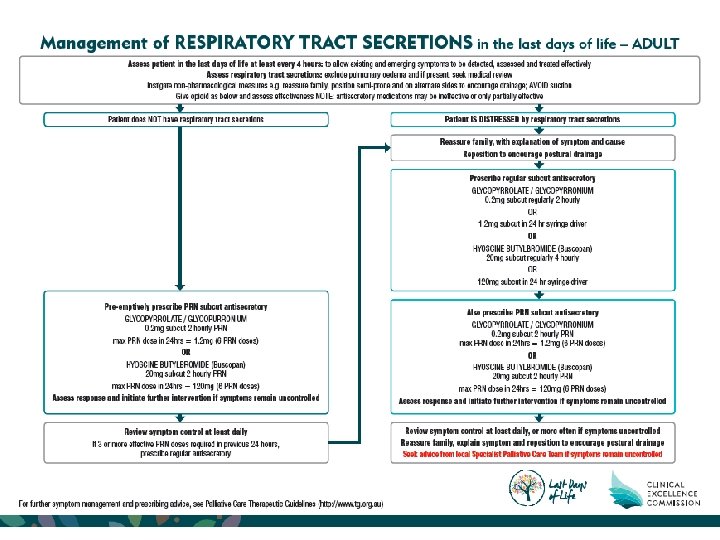
Anti-secretories § Management of respiratory tract secretions § § § Normal part of dying process that require prompt management if they occur Are usually not distressing to patient, but often are for family, carers and staff Non-pharmacological measures are essential first step, along with provision of information, explanation and reassurance for the family and carers. Limited level of evidence to support anti-secretories is acknowledged; a trial with review for effect has been recommended in line with current national guidelines and expert consensus opinion; as further evidence becomes available in the future, these recommendations will be reviewed and amended accordingly Not available by PBS subsidy for this indication § Glycopyrrolate / Glycopyrronium and Hyoscine Butylbromide (Buscopan) § § No conclusive evidence of superior efficacy between different anti-secretories Glycopyrrolate / Glycopyrronium and Hyoscine Butylbromide (Buscopan) do not cross blood-brain barrier so are unlikely to cause central neurological side effects No distinction necessary between conscious and unconscious patients Hyoscine Hydrobromide is NOT recommended as contraindicated in renal impairment and crosses blood-brain barrier so may potentiate delirium and sedation
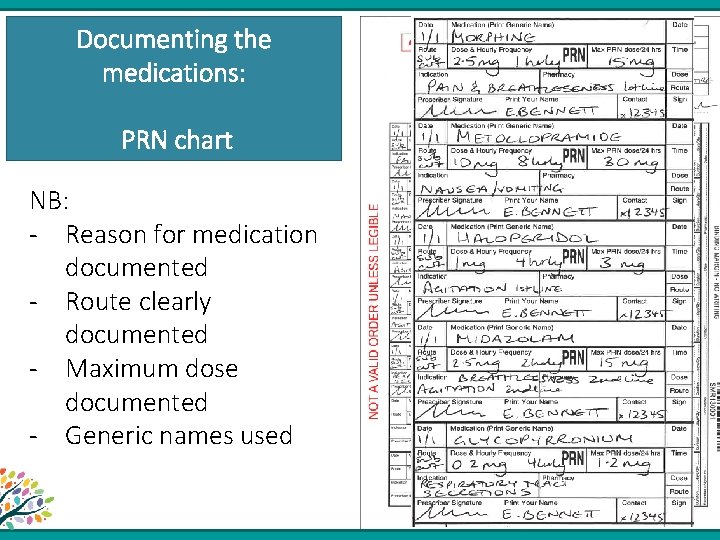
Documenting the medications: PRN chart NB: - Reason for medication documented - Route clearly documented - Maximum dose documented - Generic names used
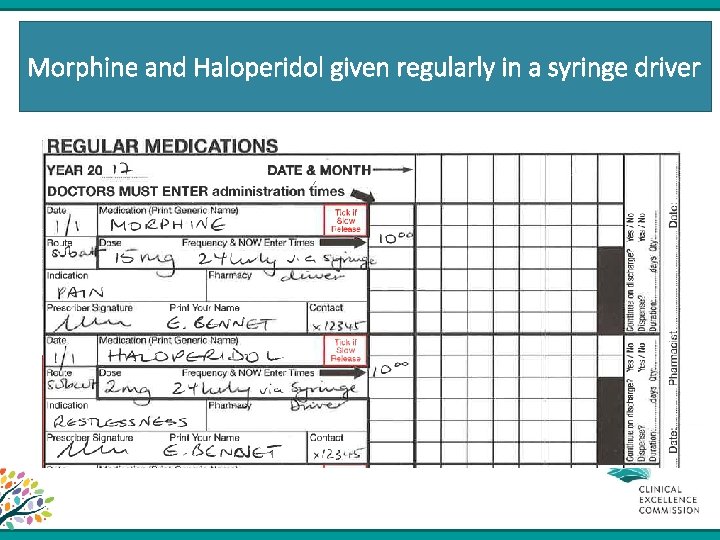
Morphine and Haloperidol given regularly in a syringe driver
Midazolam and Hyoscine Buytlbromide (Buscopan) given regularly in a syringe driver
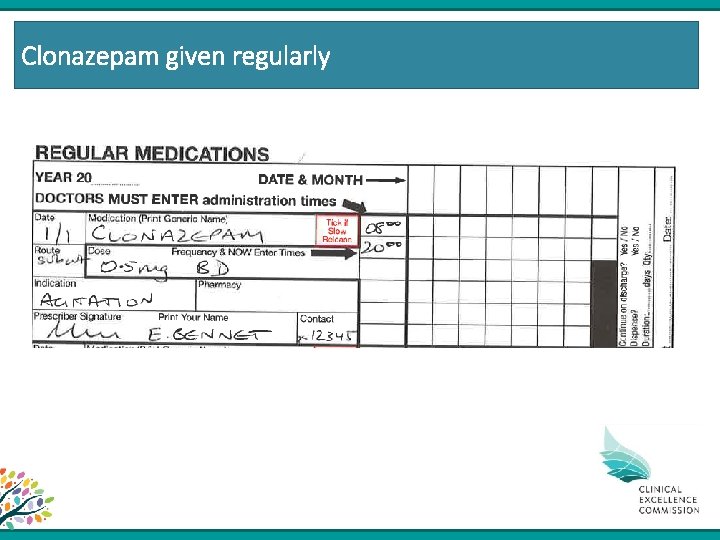
Clonazepam given regularly
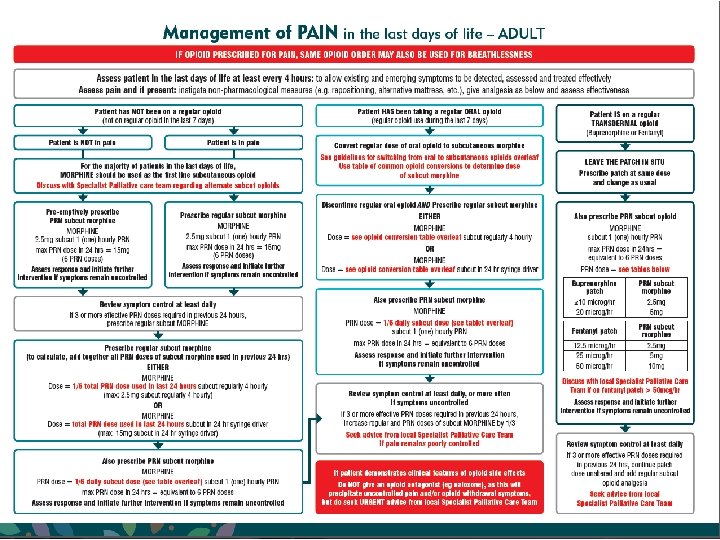
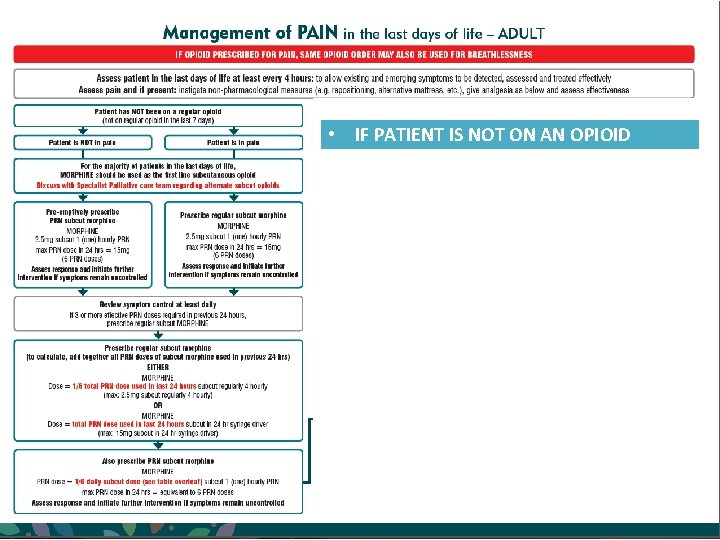
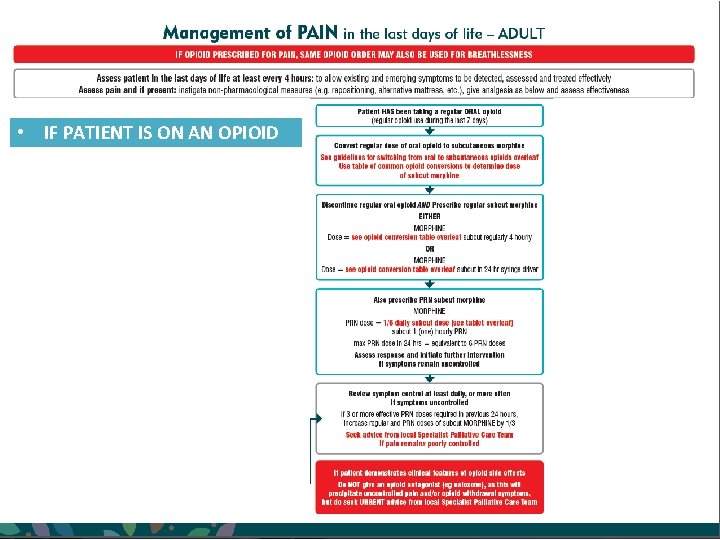
Symptom Management Flowcharts § Step by step guidance of five most common symptoms in last days of life Symptom assessment Instigation of non-pharmacological measures Prescription and administration of PRN and regular medications Review of symptoms following intervention Regular review and assessment of symptom control Escalation and seeking advice from local Specialist Palliative Care service § § § - Pain (includes guide to switch to subcutaneous opioids) Breathlessness Nausea and/or vomiting Restlessness and/or agitation Respiratory tract secretions
PRESENTATION NAME – MONTH YYYY PRESENTER NAME 18
• IF PATIENT IS NOT ON AN OPIOID PRESENTATION NAME – MONTH YYYY PRESENTER NAME 19
• IF PATIENT IS ON AN OPIOID PRESENTATION NAME – MONTH YYYY PRESENTER NAME 20
• IF PATIENT IS ON A TRANSDERMAL OPIOID PATCH PRESENTATION NAME – MONTH YYYY PRESENTER NAME 21
PRESENTATION NAME – MONTH YYYY PRESENTER NAME 22
PRESENTATION NAME – MONTH YYYY PRESENTER NAME 23
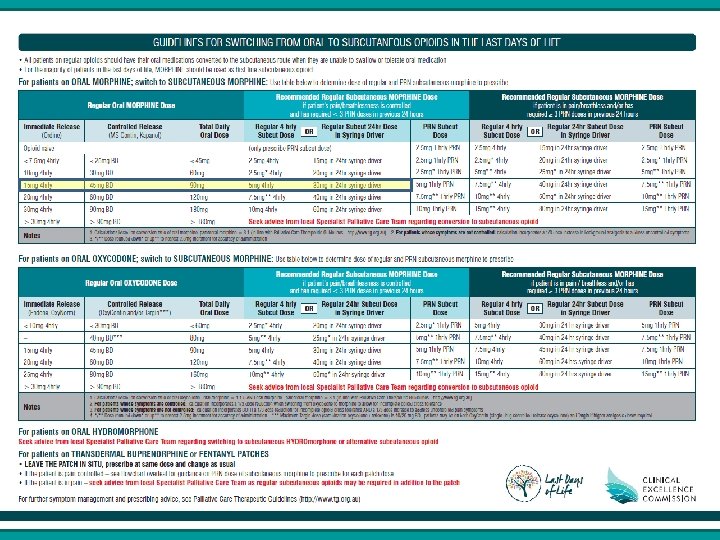
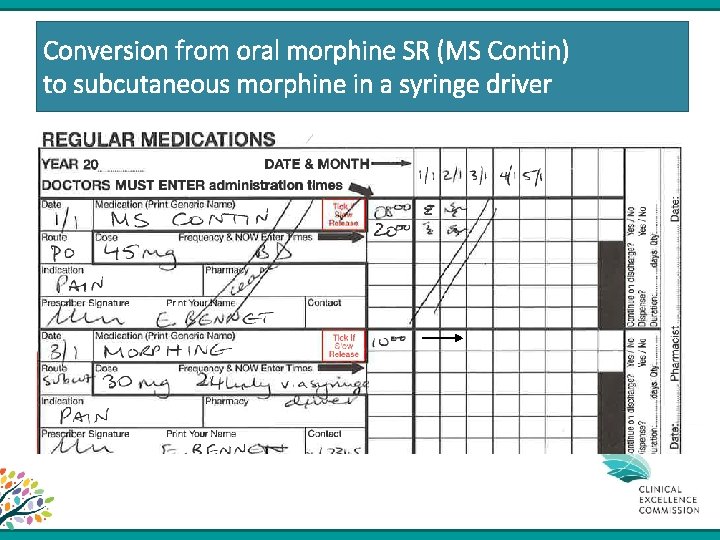
Conversion from oral morphine SR (MS Contin) to subcutaneous morphine in a syringe driver
PRESENTATION NAME – MONTH YYYY PRESENTER NAME 25
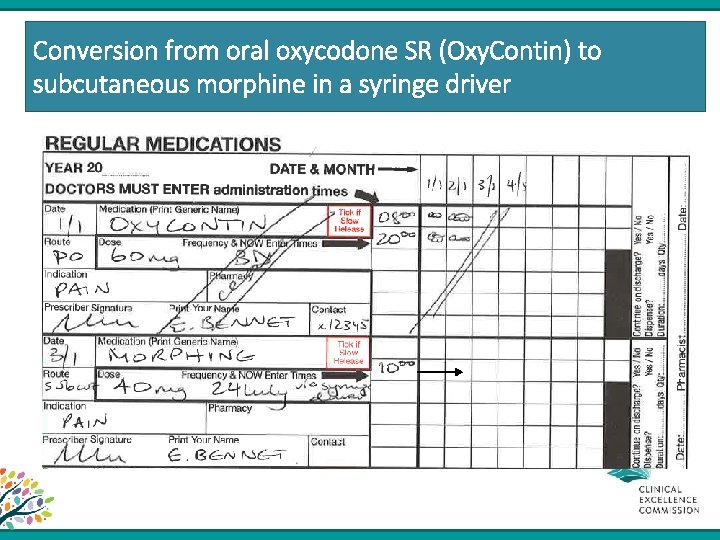
Conversion from oral oxycodone SR (Oxy. Contin) to subcutaneous morphine in a syringe driver
28
30
Safe Prescribing of Last Days of Life Medication § § § Before prescribing medication orders § Discuss need for medication with patient and family § Review current medication and cease non-beneficial/burdensome medication § Continue essential medications via subcutaneous route where possible When prescribing medication orders § Nomenclature: generic drug names, other than for hyoscine butylbromide (Buscopan) where trade name should also be prescribed to avoid risk of confusion with hyoscine hydrobromide (often referred to only as ‘hyoscine’) § Dose: single dose only (not dose ranges) § Route: single route only; subcutaneous as ‘subcut’ and sublingual as ‘subling’ § Indication: document in ‘indication’ box of each medication using terms consistent with symptoms listed in prescribing guide and flowcharts After medication orders are prescribed § Include in clinical handover to all medical and nursing staff involved § Monitor symptoms, and for response to medications and side effects § Adjust as clinically indicated; escalate and seek advice if reqiured
Contact Details End of Life Program Clinical Excellence Commission Telephone: 02 9269 5500 E-mail: CEC-EOL@health. nsw. gov. au