
Last day introduced the protists eukaryotes that are
- Slides: 43
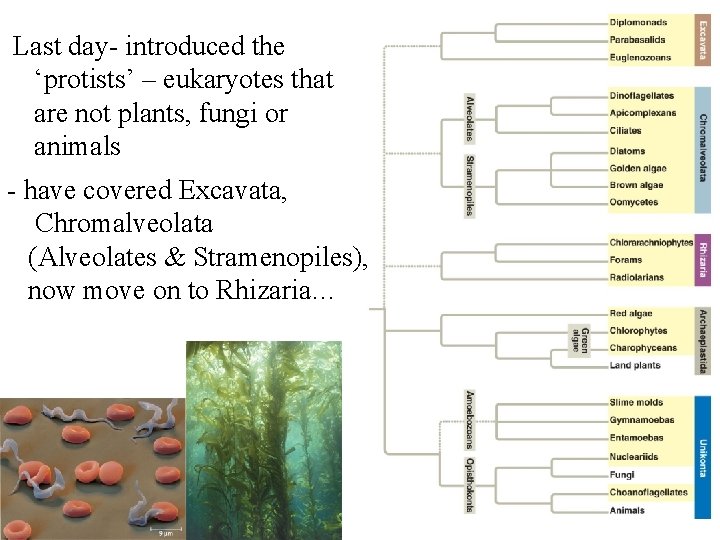
Last day- introduced the ‘protists’ – eukaryotes that are not plants, fungi or animals - have covered Excavata, Chromalveolata (Alveolates & Stramenopiles), now move on to Rhizaria…
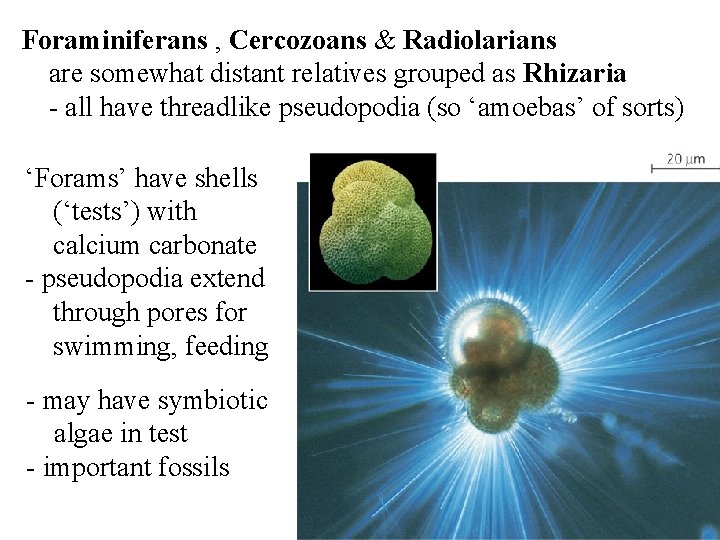
Foraminiferans , Cercozoans & Radiolarians are somewhat distant relatives grouped as Rhizaria - all have threadlike pseudopodia (so ‘amoebas’ of sorts) ‘Forams’ have shells (‘tests’) with calcium carbonate - pseudopodia extend through pores for swimming, feeding - may have symbiotic algae in test - important fossils
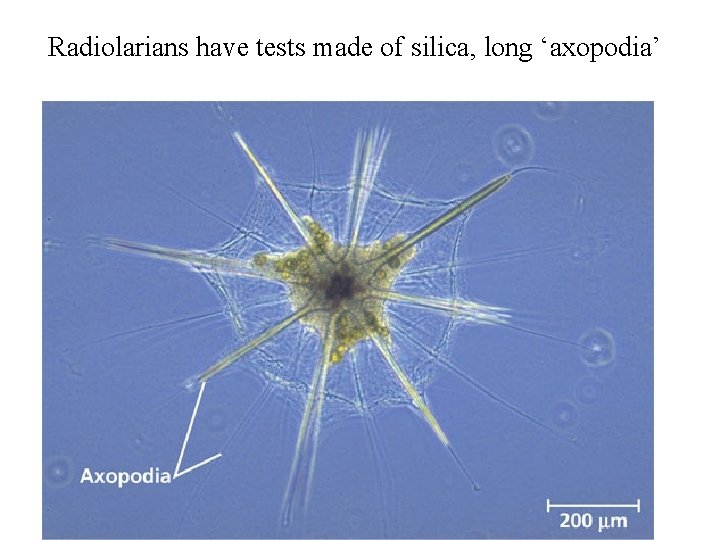
Radiolarians have tests made of silica, long ‘axopodia’
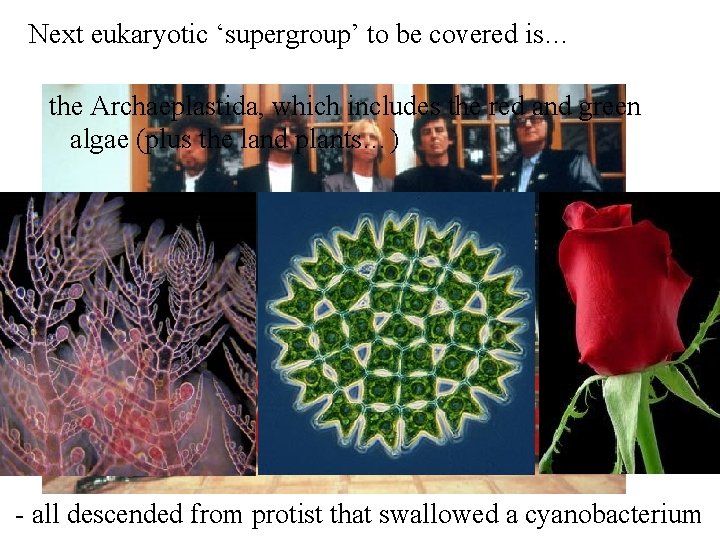
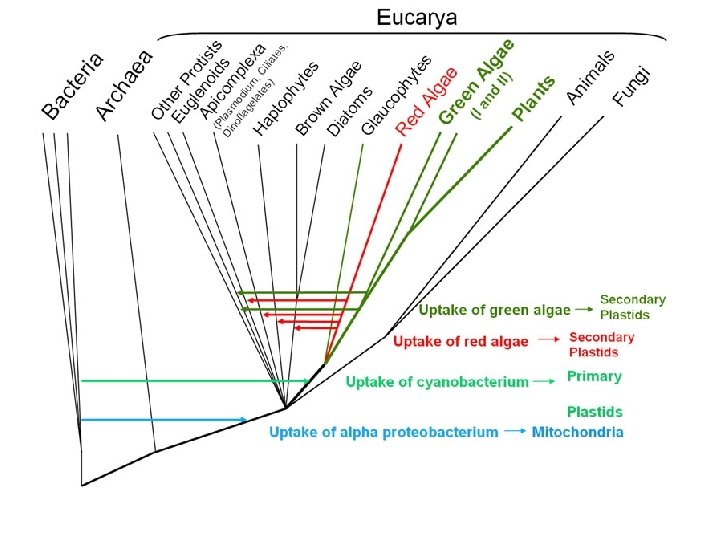
Next eukaryotic ‘supergroup’ to be covered is… the Archaeplastida, which includes the red and green algae (plus the land plants…) - all descended from protist that swallowed a cyanobacterium
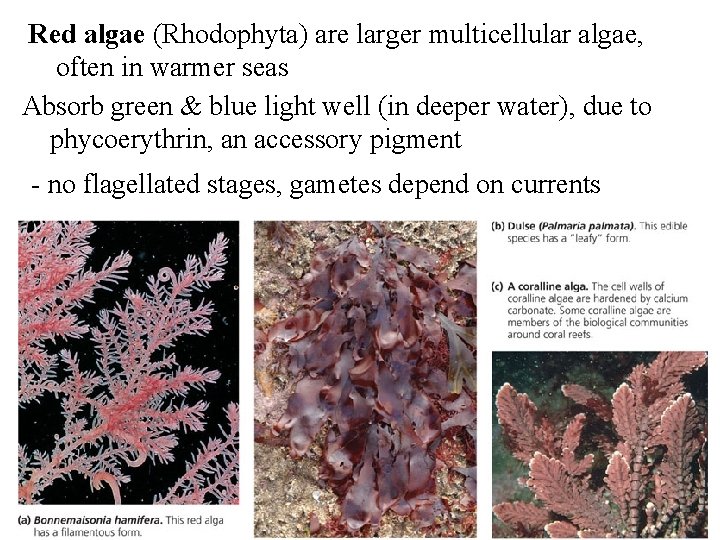
Red algae (Rhodophyta) are larger multicellular algae, often in warmer seas Absorb green & blue light well (in deeper water), due to phycoerythrin, an accessory pigment - no flagellated stages, gametes depend on currents
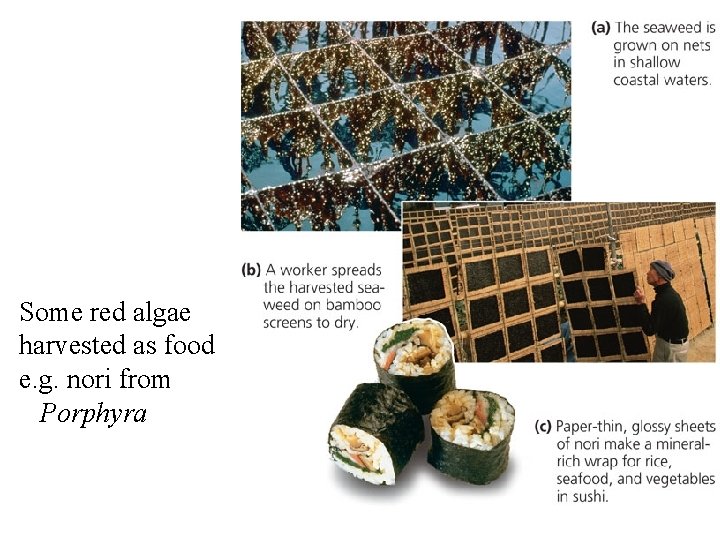
Some red algae harvested as food e. g. nori from Porphyra
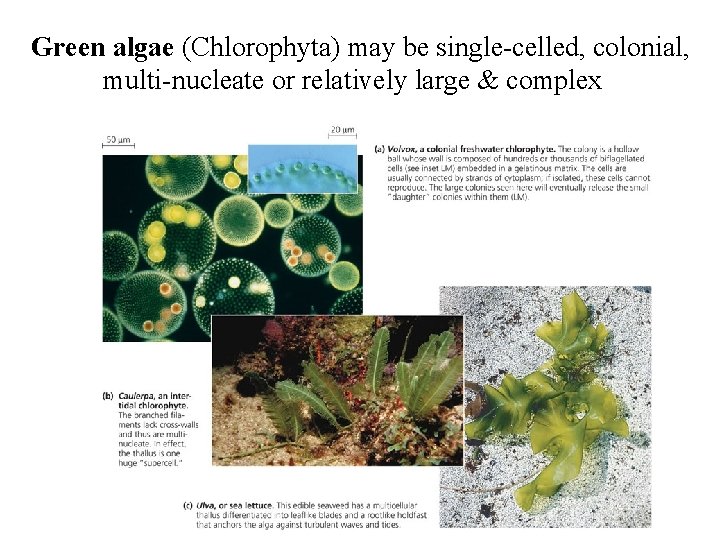
Green algae (Chlorophyta) may be single-celled, colonial, multi-nucleate or relatively large & complex
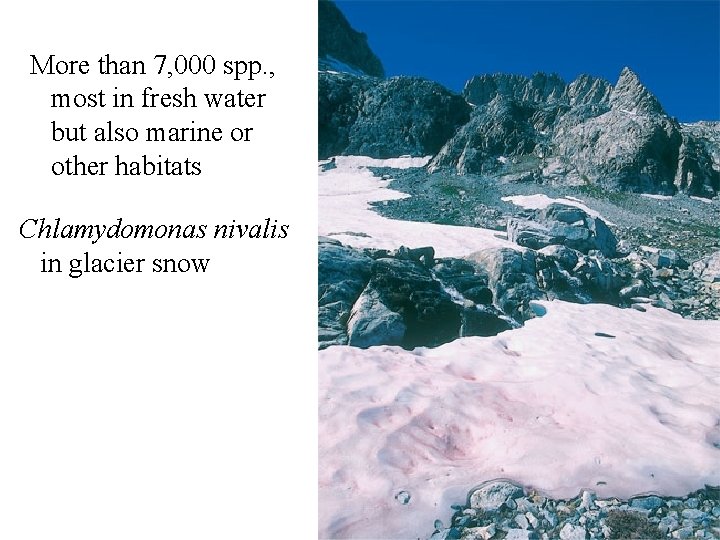
More than 7, 000 spp. , most in fresh water but also marine or other habitats Chlamydomonas nivalis in glacier snow
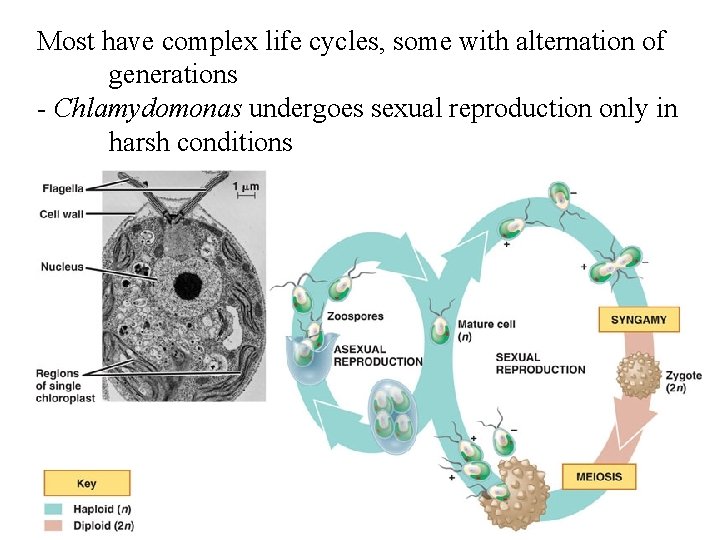
Most have complex life cycles, some with alternation of generations - Chlamydomonas undergoes sexual reproduction only in harsh conditions
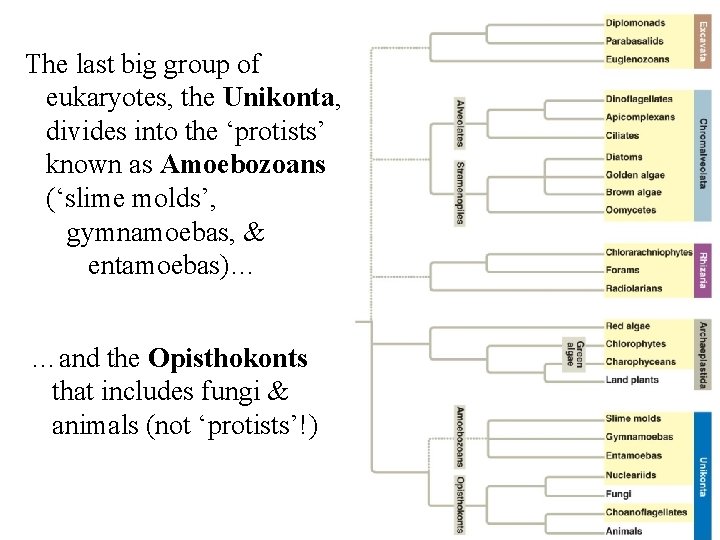
The last big group of eukaryotes, the Unikonta, divides into the ‘protists’ known as Amoebozoans (‘slime molds’, gymnamoebas, & entamoebas)… …and the Opisthokonts that includes fungi & animals (not ‘protists’!)
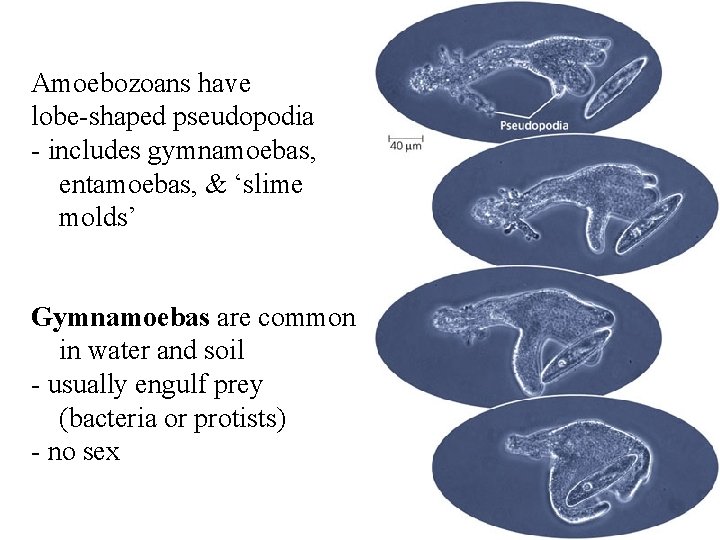
Amoebozoans have lobe-shaped pseudopodia - includes gymnamoebas, entamoebas, & ‘slime molds’ Gymnamoebas are common in water and soil - usually engulf prey (bacteria or protists) - no sex
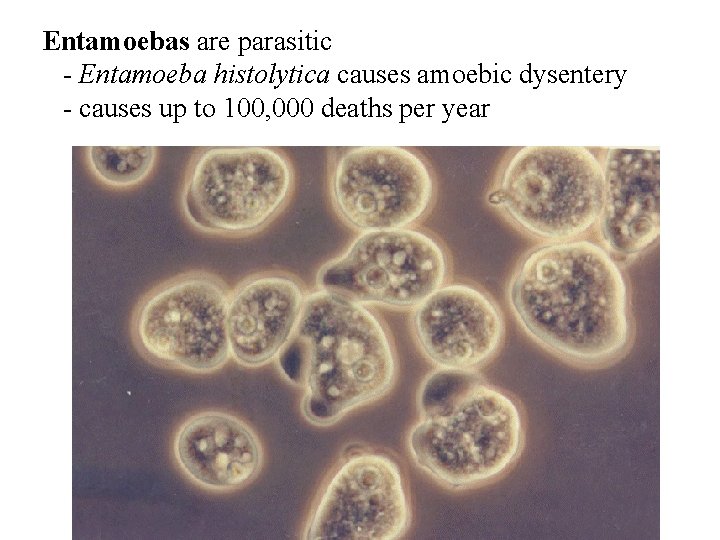
Entamoebas are parasitic - Entamoeba histolytica causes amoebic dysentery - causes up to 100, 000 deaths per year
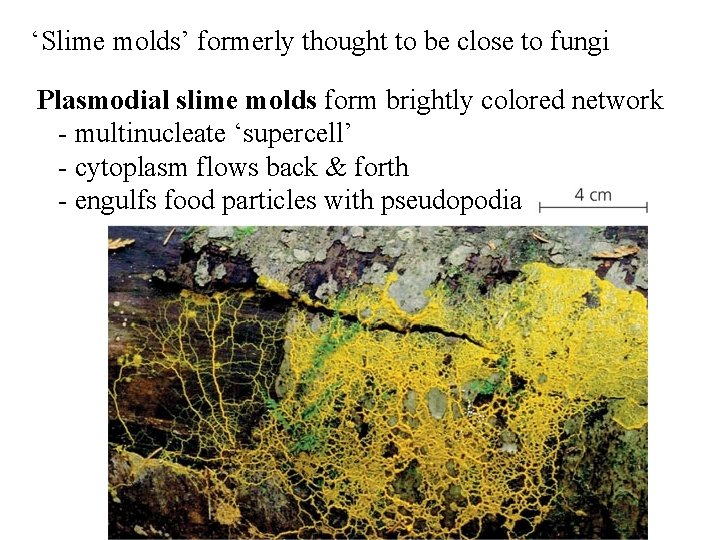
‘Slime molds’ formerly thought to be close to fungi Plasmodial slime molds form brightly colored network - multinucleate ‘supercell’ - cytoplasm flows back & forth - engulfs food particles with pseudopodia
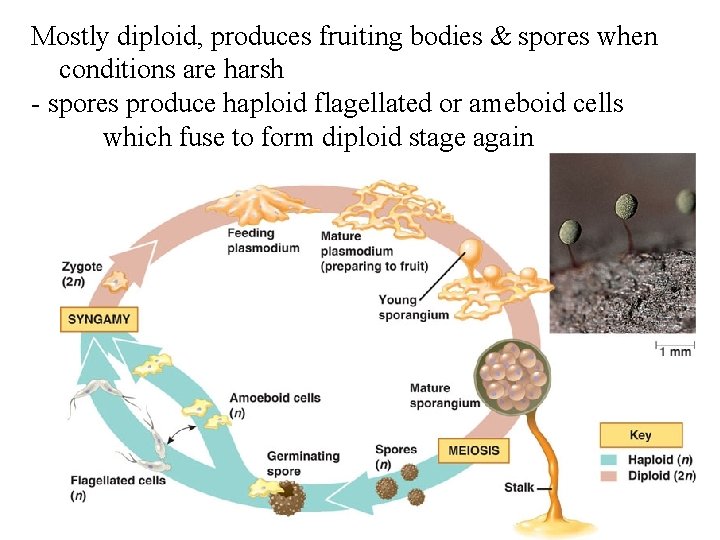
Mostly diploid, produces fruiting bodies & spores when conditions are harsh - spores produce haploid flagellated or ameboid cells which fuse to form diploid stage again
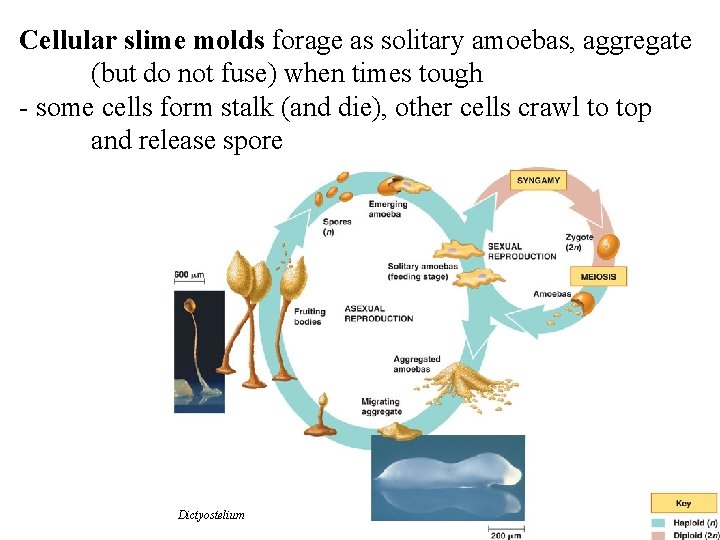
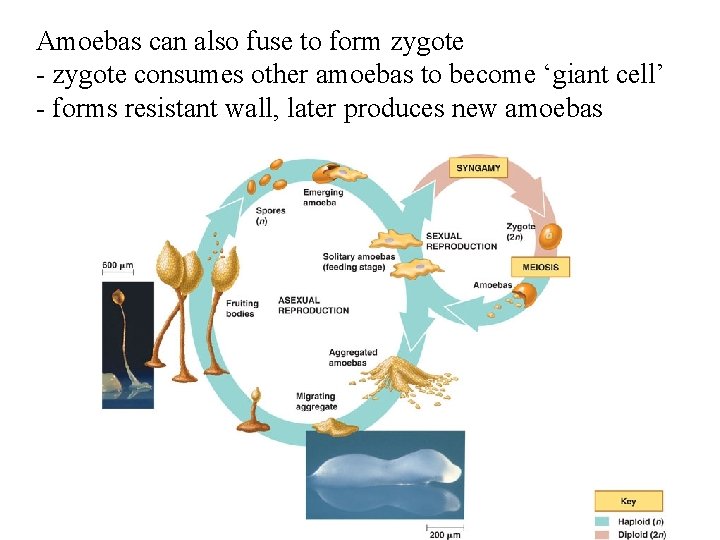
Cellular slime molds forage as solitary amoebas, aggregate (but do not fuse) when times tough - some cells form stalk (and die), other cells crawl to top and release spore Dictyostelium
Amoebas can also fuse to form zygote - zygote consumes other amoebas to become ‘giant cell’ - forms resistant wall, later produces new amoebas
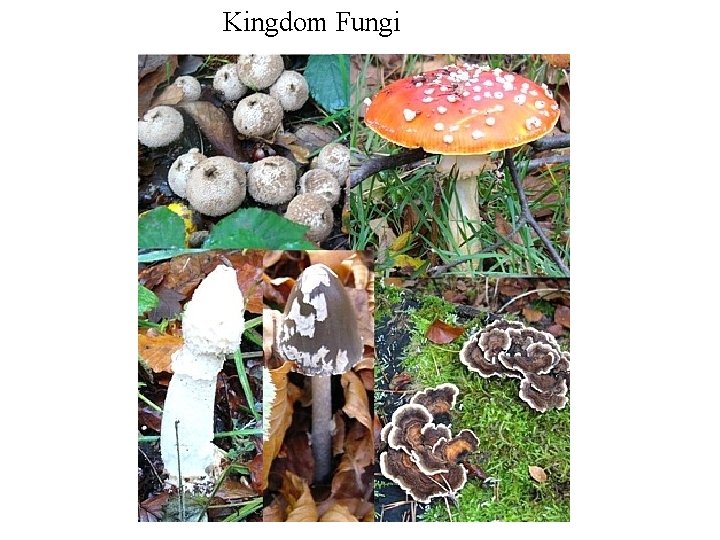
Kingdom Fungi
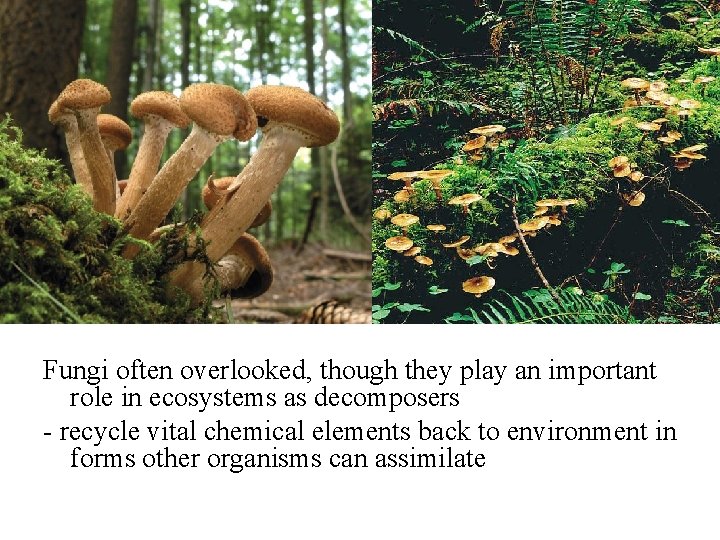
Fungi often overlooked, though they play an important role in ecosystems as decomposers - recycle vital chemical elements back to environment in forms other organisms can assimilate
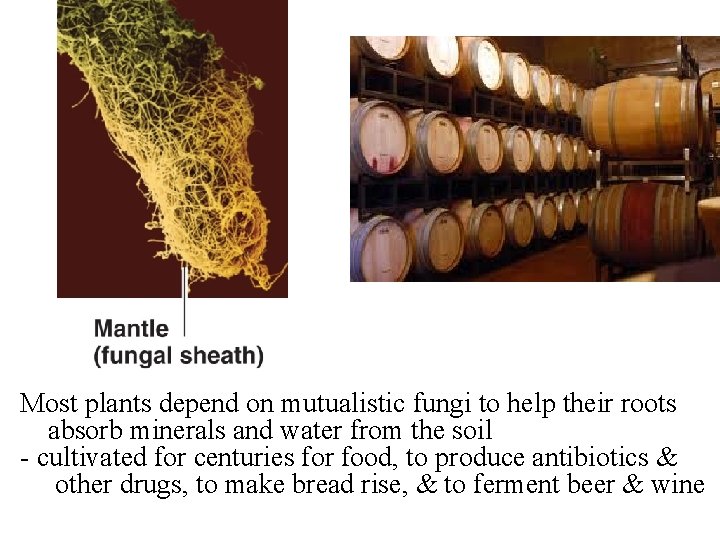
Most plants depend on mutualistic fungi to help their roots absorb minerals and water from the soil - cultivated for centuries for food, to produce antibiotics & other drugs, to make bread rise, & to ferment beer & wine
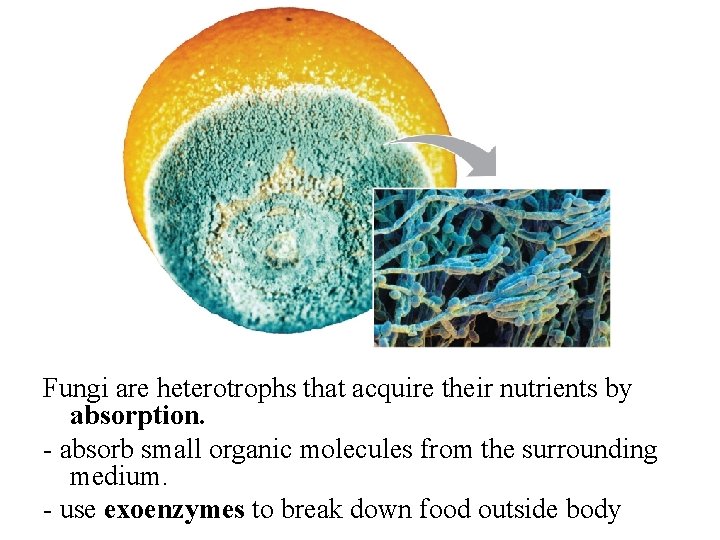
Fungi are heterotrophs that acquire their nutrients by absorption. - absorb small organic molecules from the surrounding medium. - use exoenzymes to break down food outside body
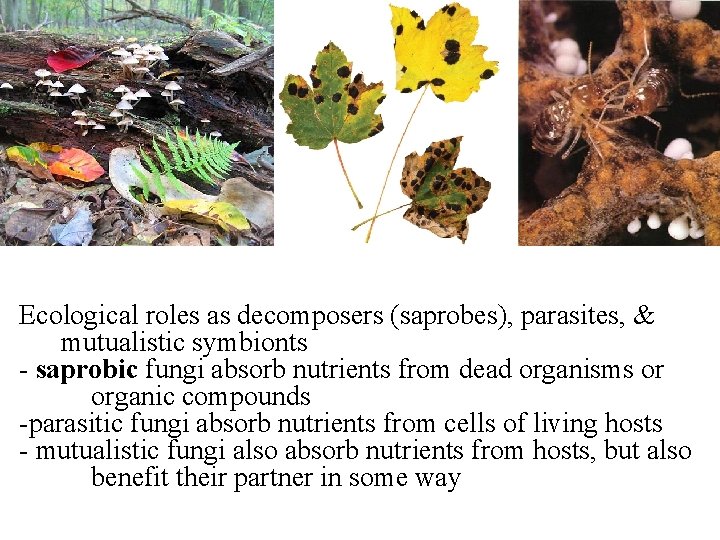
Ecological roles as decomposers (saprobes), parasites, & mutualistic symbionts - saprobic fungi absorb nutrients from dead organisms or organic compounds -parasitic fungi absorb nutrients from cells of living hosts - mutualistic fungi also absorb nutrients from hosts, but also benefit their partner in some way
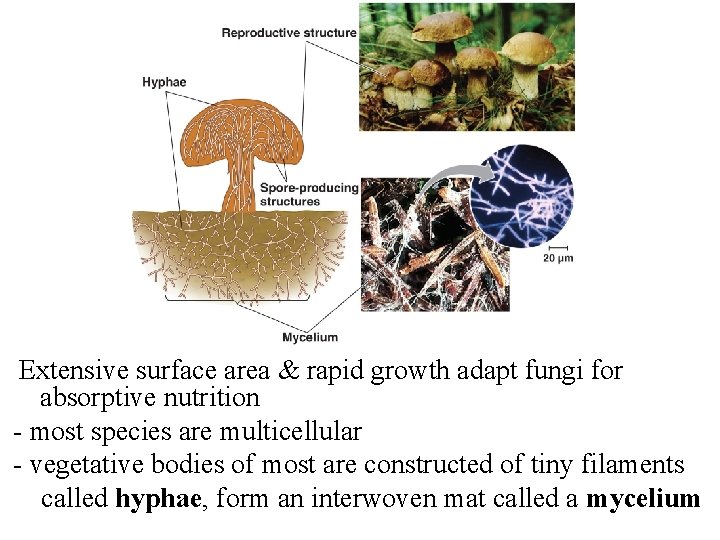
Extensive surface area & rapid growth adapt fungi for absorptive nutrition - most species are multicellular - vegetative bodies of most are constructed of tiny filaments called hyphae, form an interwoven mat called a mycelium
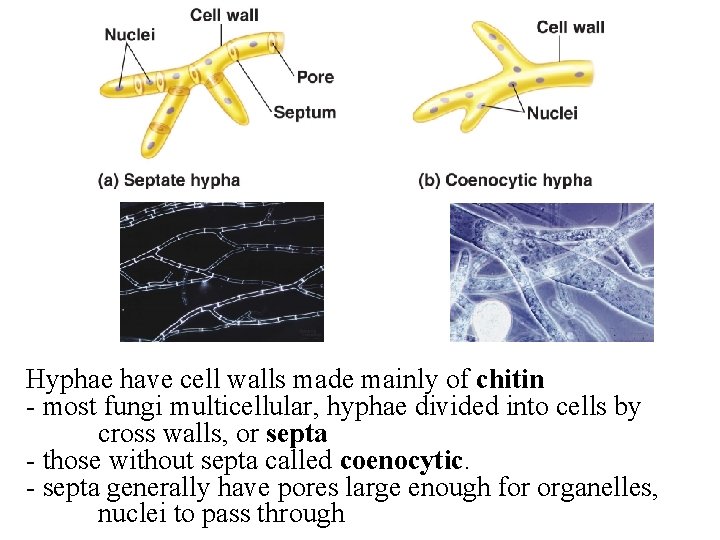
Hyphae have cell walls made mainly of chitin - most fungi multicellular, hyphae divided into cells by cross walls, or septa - those without septa called coenocytic. - septa generally have pores large enough for organelles, nuclei to pass through
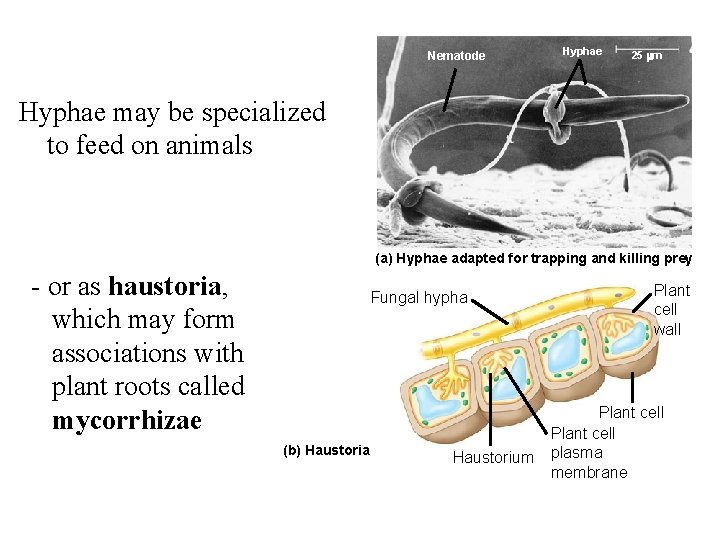
Nematode Hyphae 25 m Hyphae may be specialized to feed on animals (a) Hyphae adapted for trapping and killing prey - or as haustoria, which may form associations with plant roots called mycorrhizae Fungal hypha (b) Haustoria Haustorium Plant cell wall Plant cell plasma membrane
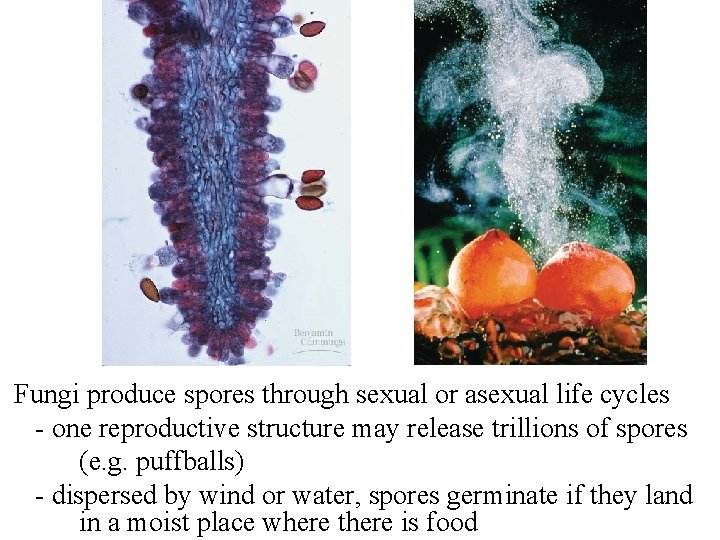
Fungi produce spores through sexual or asexual life cycles - one reproductive structure may release trillions of spores (e. g. puffballs) - dispersed by wind or water, spores germinate if they land in a moist place where there is food
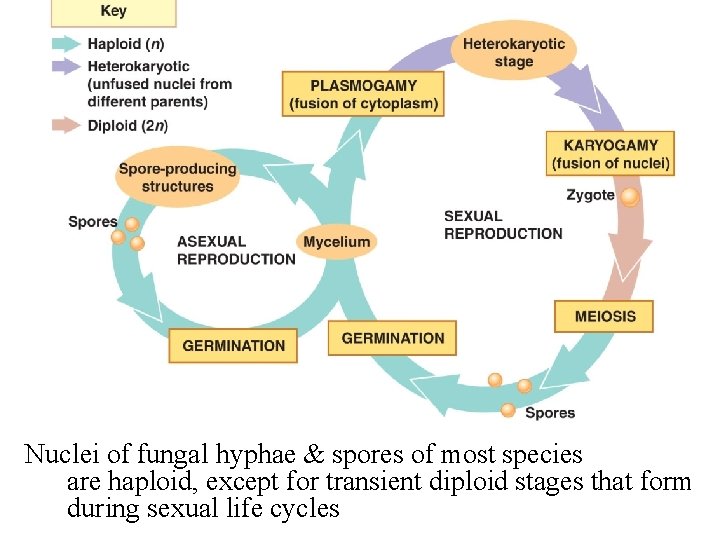
Nuclei of fungal hyphae & spores of most species are haploid, except for transient diploid stages that form during sexual life cycles
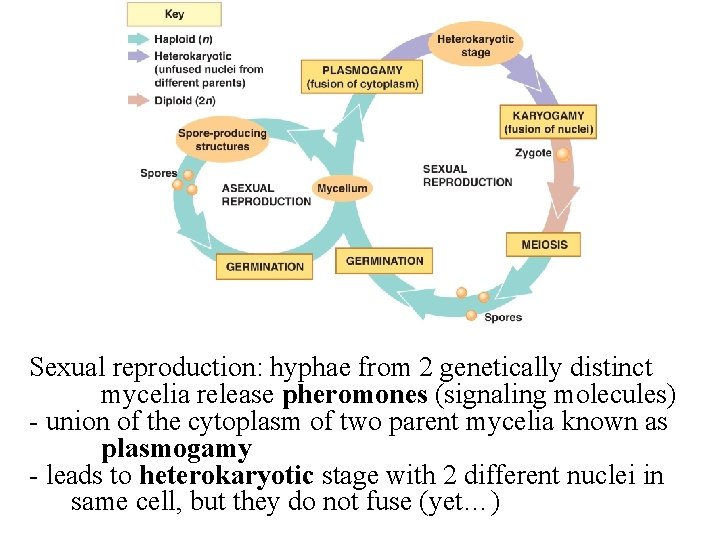
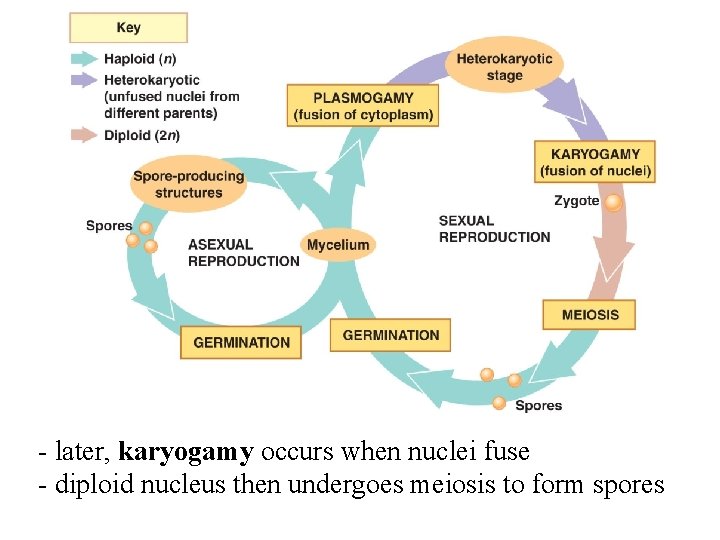
Sexual reproduction: hyphae from 2 genetically distinct mycelia release pheromones (signaling molecules) - union of the cytoplasm of two parent mycelia known as plasmogamy - leads to heterokaryotic stage with 2 different nuclei in same cell, but they do not fuse (yet…)
- later, karyogamy occurs when nuclei fuse - diploid nucleus then undergoes meiosis to form spores
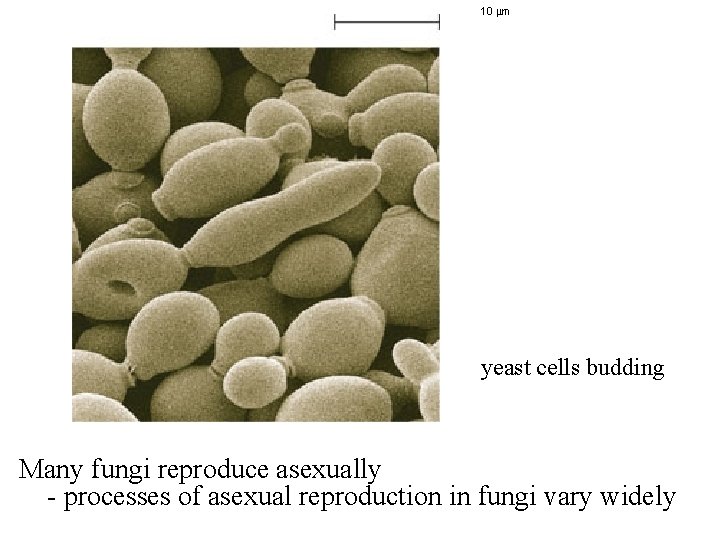
10 m yeast cells budding Many fungi reproduce asexually - processes of asexual reproduction in fungi vary widely
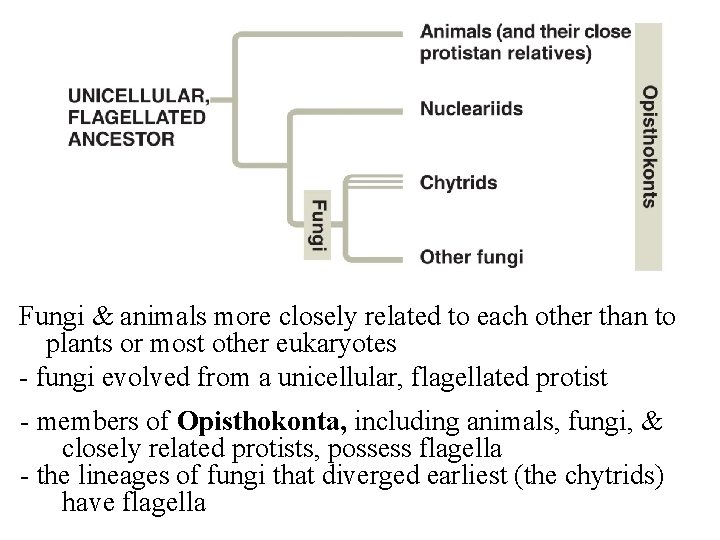
Fungi & animals more closely related to each other than to plants or most other eukaryotes - fungi evolved from a unicellular, flagellated protist - members of Opisthokonta, including animals, fungi, & closely related protists, possess flagella - the lineages of fungi that diverged earliest (the chytrids) have flagella
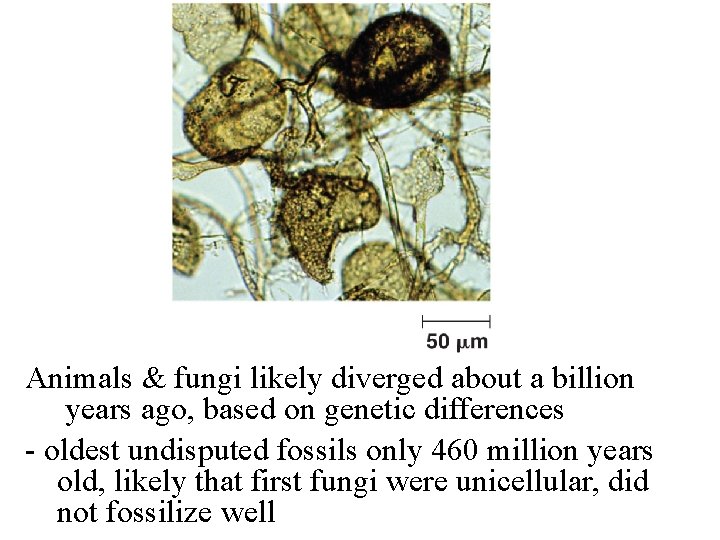
Animals & fungi likely diverged about a billion years ago, based on genetic differences - oldest undisputed fossils only 460 million years old, likely that first fungi were unicellular, did not fossilize well
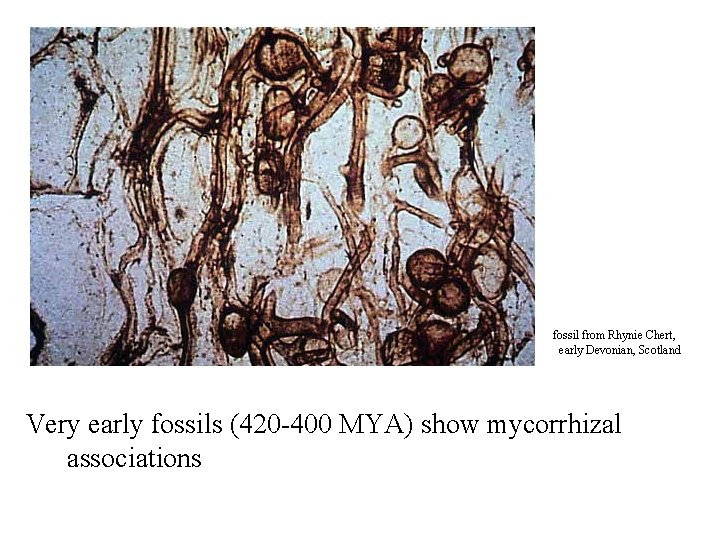
fossil from Rhynie Chert, early Devonian, Scotland Very early fossils (420 -400 MYA) show mycorrhizal associations
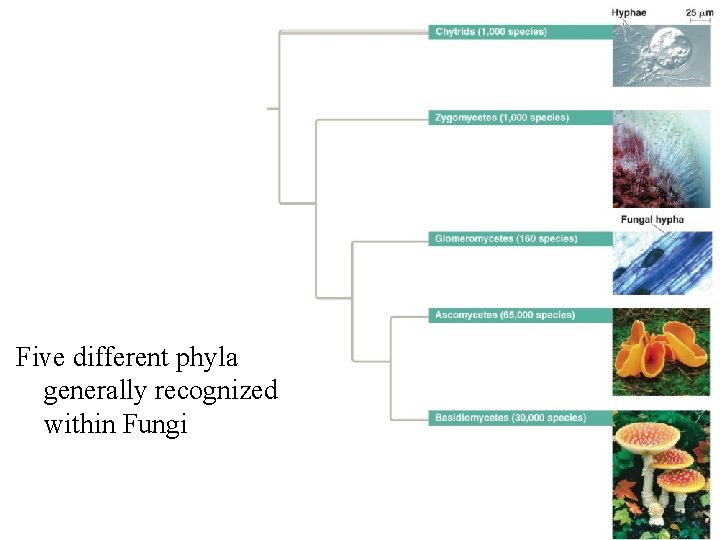
Five different phyla generally recognized within Fungi
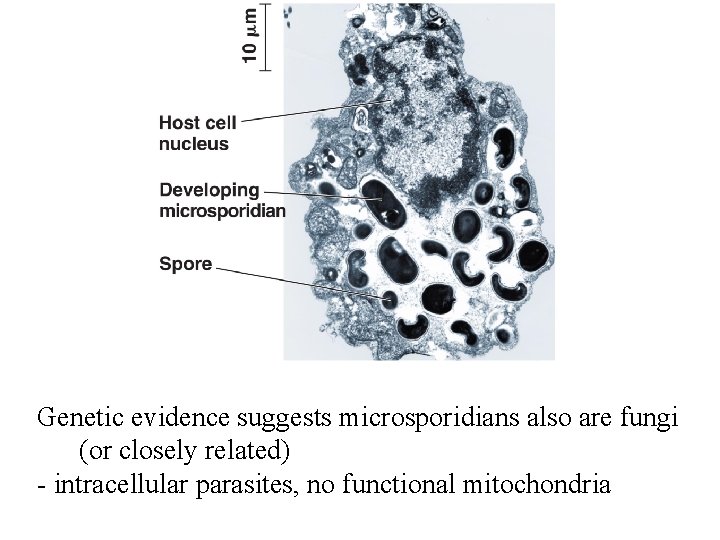
Genetic evidence suggests microsporidians also are fungi (or closely related) - intracellular parasites, no functional mitochondria
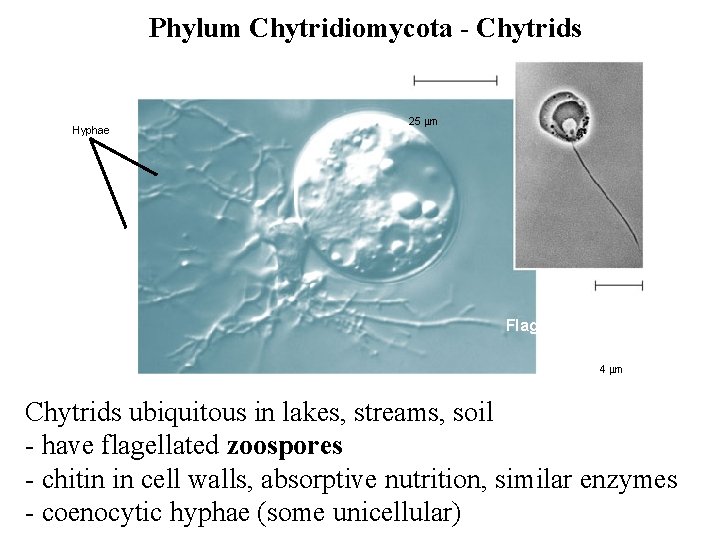
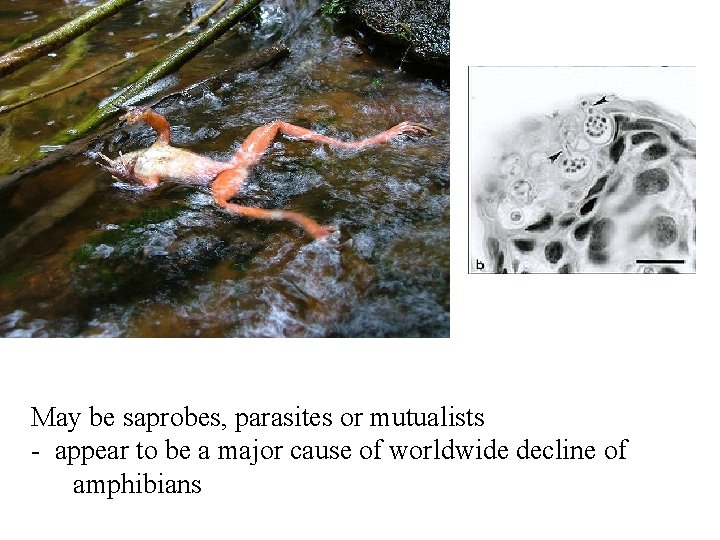
Phylum Chytridiomycota - Chytrids Hyphae 25 m Flagellum 4 m Chytrids ubiquitous in lakes, streams, soil - have flagellated zoospores - chitin in cell walls, absorptive nutrition, similar enzymes - coenocytic hyphae (some unicellular)
May be saprobes, parasites or mutualists - appear to be a major cause of worldwide decline of amphibians
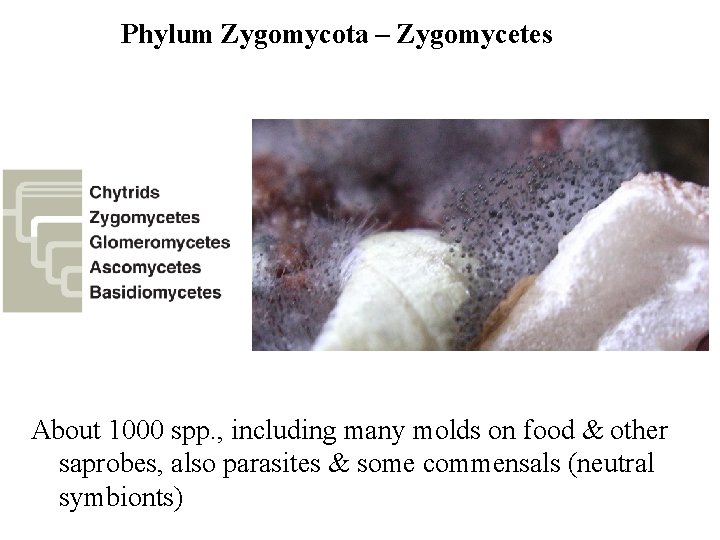
Phylum Zygomycota – Zygomycetes About 1000 spp. , including many molds on food & other saprobes, also parasites & some commensals (neutral symbionts)
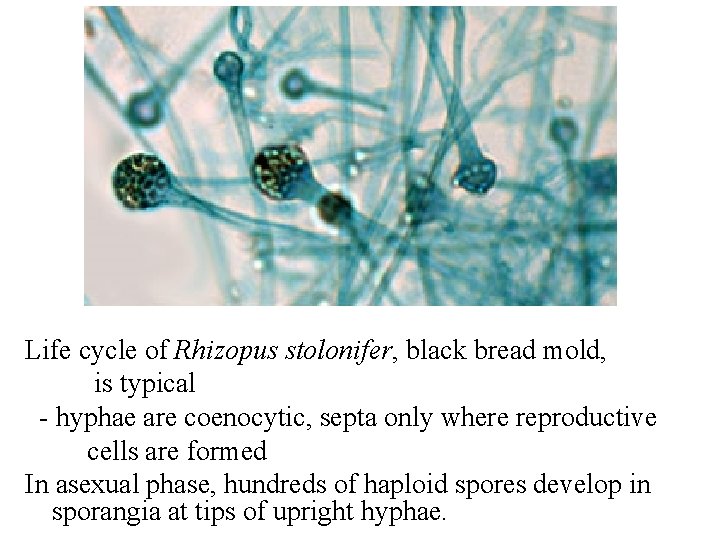
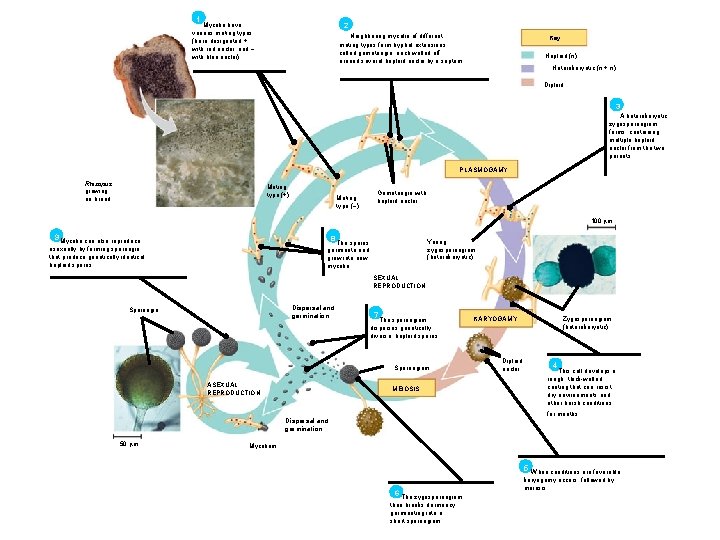
Life cycle of Rhizopus stolonifer, black bread mold, is typical - hyphae are coenocytic, septa only where reproductive cells are formed In asexual phase, hundreds of haploid spores develop in sporangia at tips of upright hyphae.
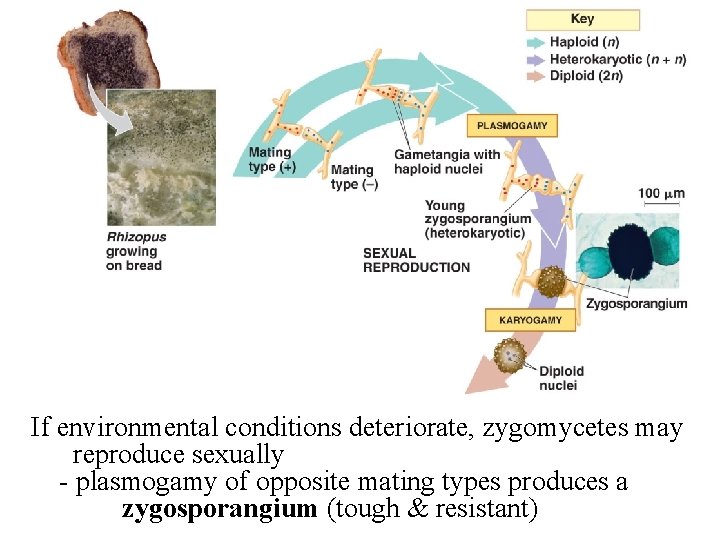
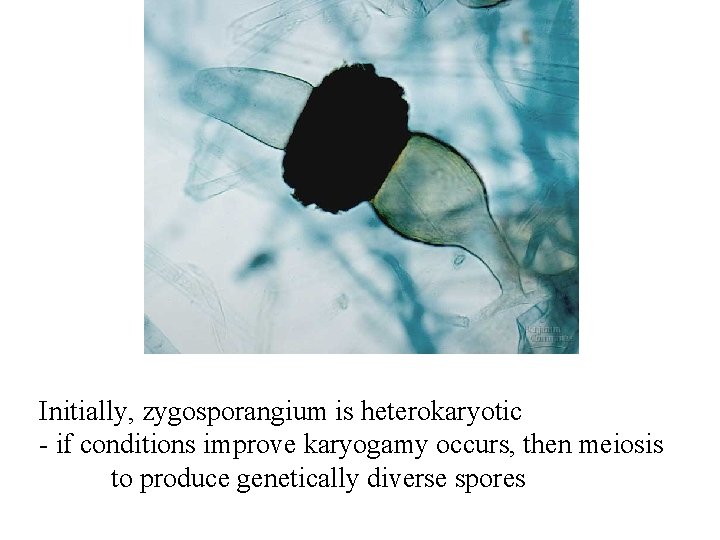
If environmental conditions deteriorate, zygomycetes may reproduce sexually - plasmogamy of opposite mating types produces a zygosporangium (tough & resistant)
Initially, zygosporangium is heterokaryotic - if conditions improve karyogamy occurs, then meiosis to produce genetically diverse spores
1 2 Mycelia have various mating types (here designated +, with red nuclei, and , with blue nuclei). Neighboring mycelia of different mating types form hyphal extensions called gametangia, each walled off around several haploid nuclei by a septum. Key Haploid (n) Heterokaryotic (n + n) Diploid 3 A heterokaryotic zygosporangium forms, containing multiple haploid nuclei from the two parents. PLASMOGAMY Rhizopus growing on bread Mating type (+) Mating type ( ) Gametangia with haploid nuclei 100 m 9 Mycelia can also reproduce asexually by forming sporangia that produce genetically identical haploid spores. 8 Young zygosporangium (heterokaryotic) The spores germinate and grow into new mycelia. SEXUAL REPRODUCTION Dispersal and germination Sporangia 7 The sporangium disperses genetically diverse, haploid spores Sporangium ASEXUAL REPRODUCTION MEIOSIS Diploid nuclei 4 This cell develops a rough, thick-walled coating that can resist dry environments and other harsh conditions for months. Dispersal and germination 50 m Zygosporangium (heterokaryotic) KARYOGAMY Mycelium 5 When conditions are favorable, 6 The zygosporangium then breaks dormancy, germinating into a short sporangium. karyogamy occurs, followed by meiosis.
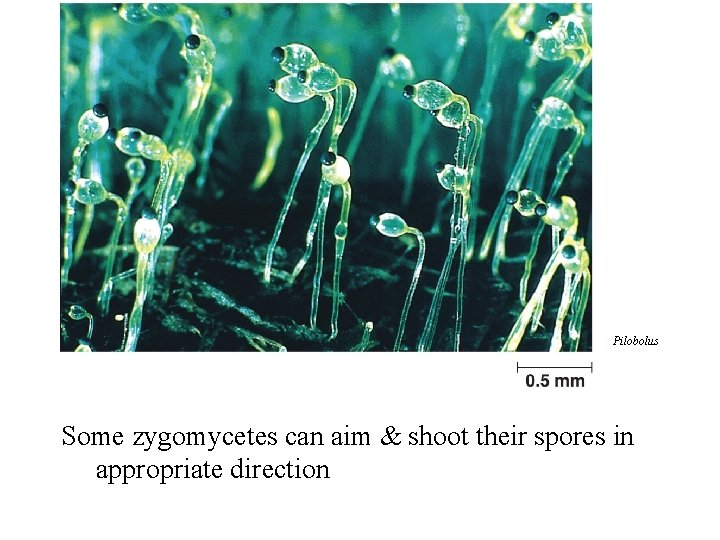
Pilobolus Some zygomycetes can aim & shoot their spores in appropriate direction