
LASHLEY ENGRAM 1944 Lashley trained the rats to
- Slides: 10
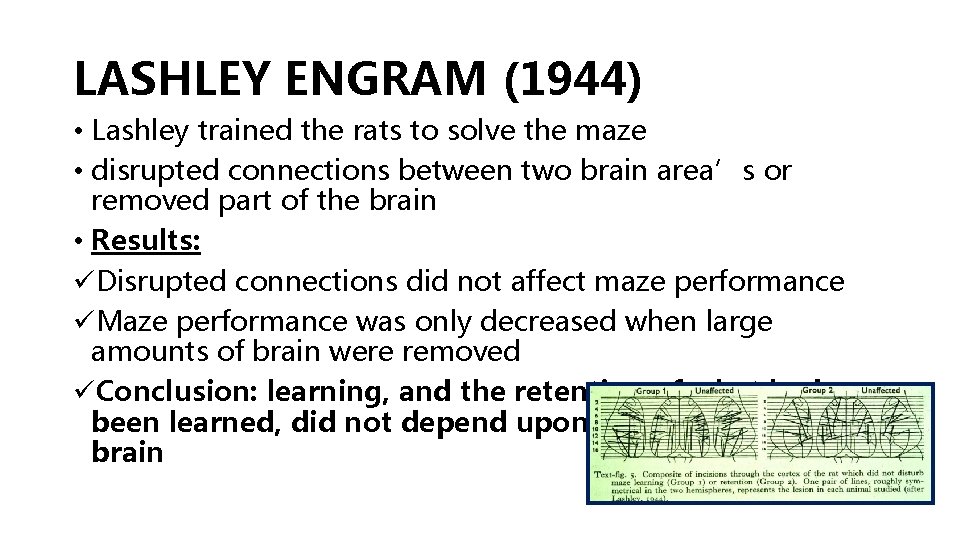
LASHLEY ENGRAM (1944) • Lashley trained the rats to solve the maze • disrupted connections between two brain area’s or removed part of the brain • Results: üDisrupted connections did not affect maze performance üMaze performance was only decreased when large amounts of brain were removed üConclusion: learning, and the retention of what had been learned, did not depend upon specific areas of the brain
TYPES OF LEARNING • Incidental learning (Non-associative learning): • Behavior change is not immediate • Habituation, sensitization • Reflex learning (Associative learning) • Immediate behavior change – Classical conditioning • S-S learning – Operant Conditioning • R-S learning
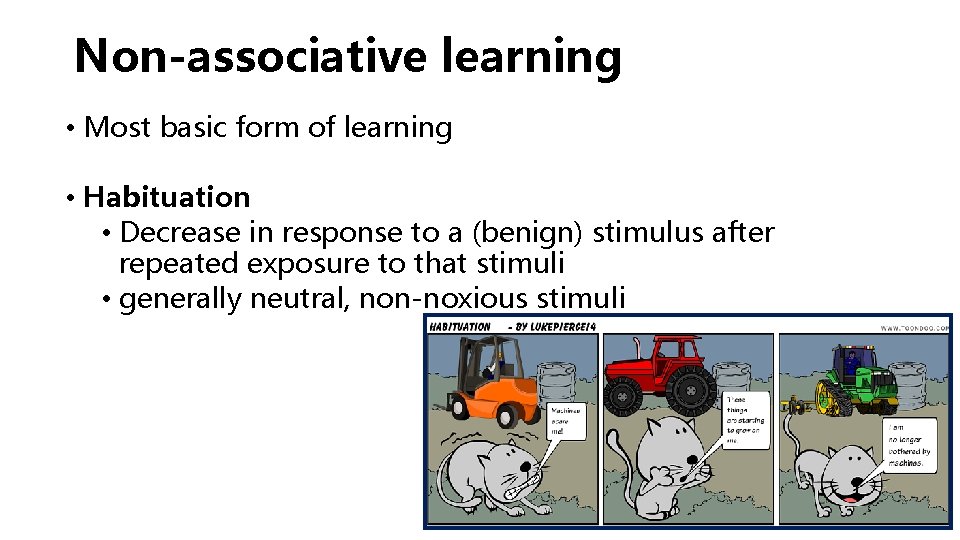
Non-associative learning • Most basic form of learning • Habituation • Decrease in response to a (benign) stimulus after repeated exposure to that stimuli • generally neutral, non-noxious stimuli
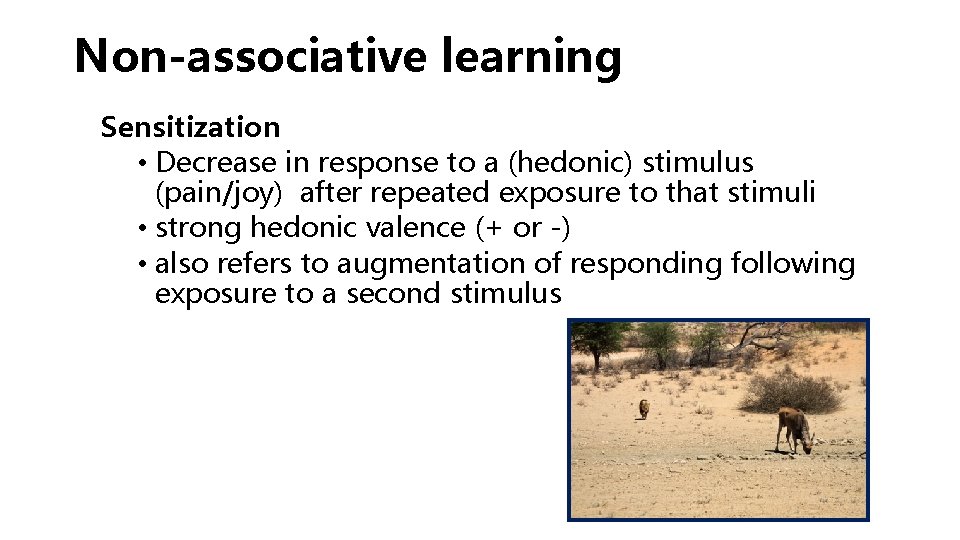
Non-associative learning Sensitization • Decrease in response to a (hedonic) stimulus (pain/joy) after repeated exposure to that stimuli • strong hedonic valence (+ or -) • also refers to augmentation of responding following exposure to a second stimulus
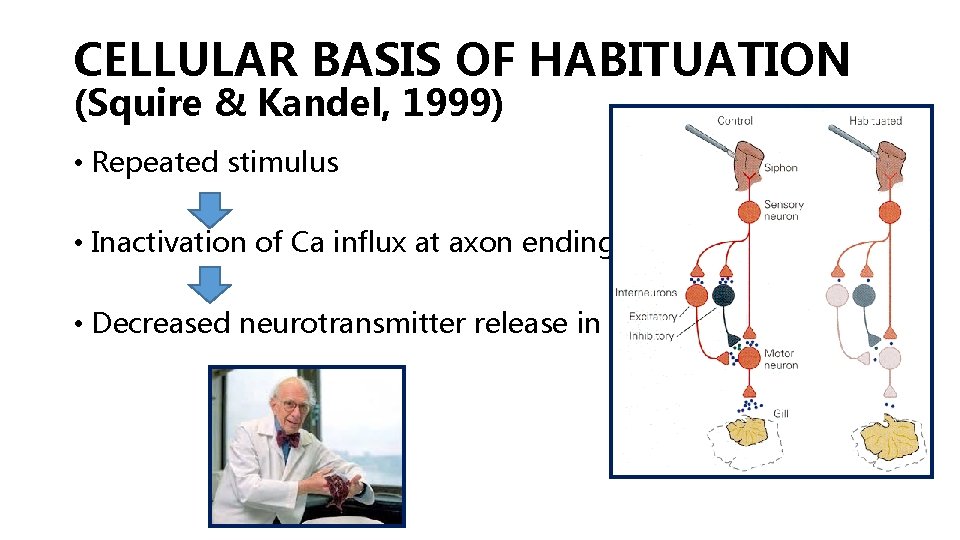
CELLULAR BASIS OF HABITUATION (Squire & Kandel, 1999) • Repeated stimulus • Inactivation of Ca influx at axon endings • Decreased neurotransmitter release in synapsis
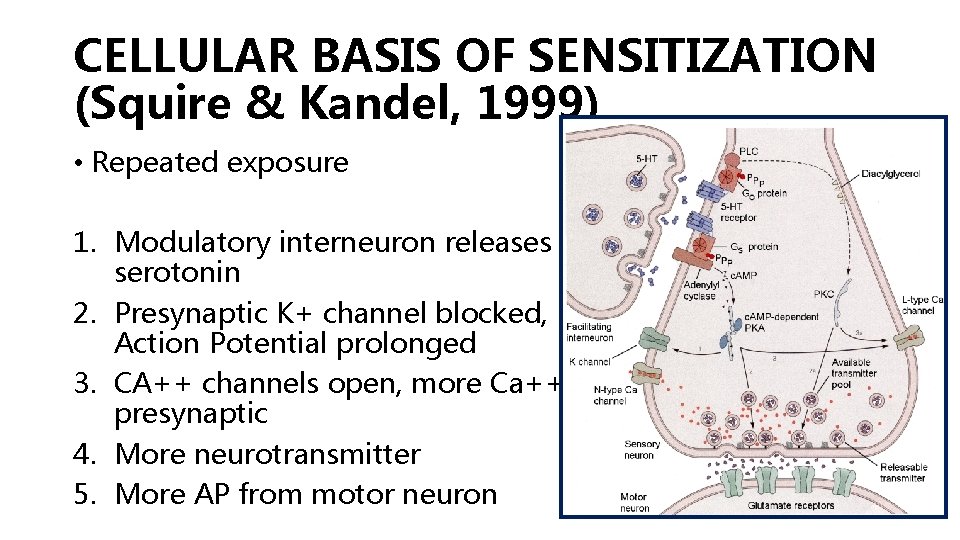
CELLULAR BASIS OF SENSITIZATION (Squire & Kandel, 1999) • Repeated exposure 1. Modulatory interneuron releases serotonin 2. Presynaptic K+ channel blocked, Action Potential prolonged 3. CA++ channels open, more Ca++ in presynaptic 4. More neurotransmitter 5. More AP from motor neuron
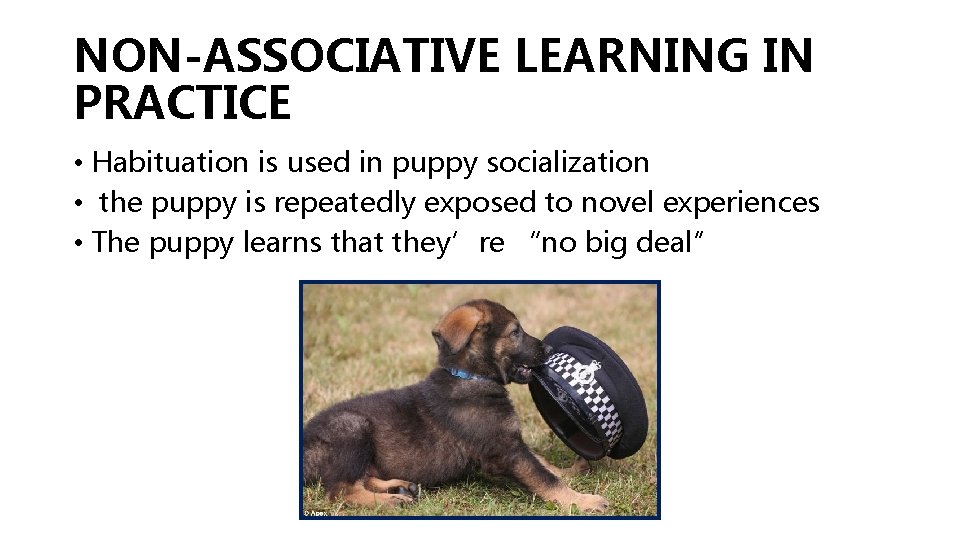
NON-ASSOCIATIVE LEARNING IN PRACTICE • Habituation is used in puppy socialization • the puppy is repeatedly exposed to novel experiences • The puppy learns that they’re “no big deal”
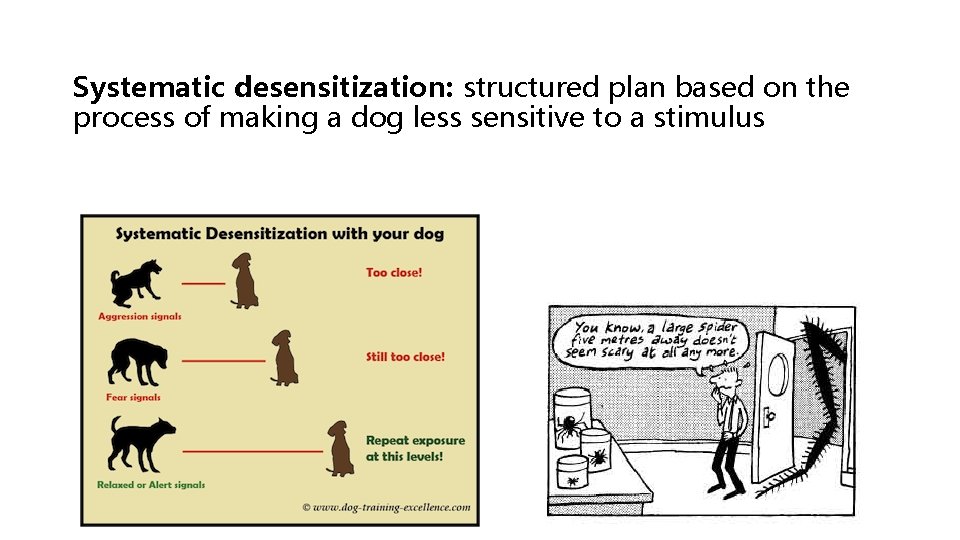
Systematic desensitization: structured plan based on the process of making a dog less sensitive to a stimulus
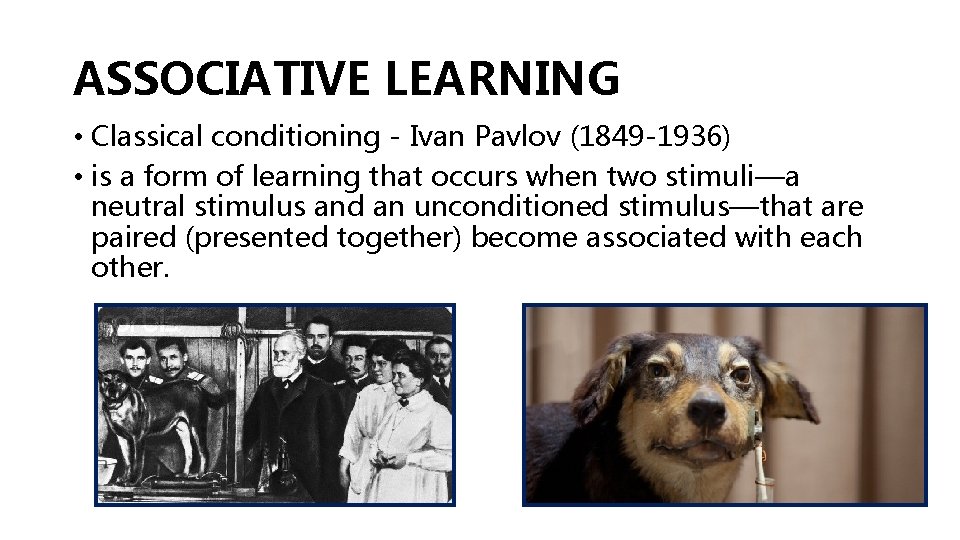
ASSOCIATIVE LEARNING • Classical conditioning - Ivan Pavlov (1849 -1936) • is a form of learning that occurs when two stimuli—a neutral stimulus and an unconditioned stimulus—that are paired (presented together) become associated with each other.