
Laser welding a joining process used for fuel

- Slides: 34
Laser welding: a joining process used for fuel injector fabrication Ing. M. Muhshin Aziz Khan
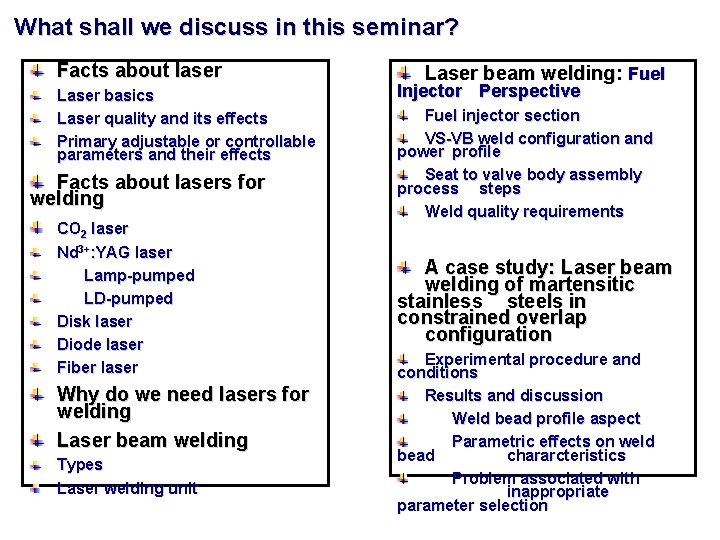
What shall we discuss in this seminar? Facts about laser Laser basics Laser quality and its effects Primary adjustable or controllable parameters and their effects Facts about lasers for welding CO 2 laser Nd 3+: YAG laser Lamp-pumped LD-pumped Disk laser Diode laser Fiber laser Why do we need lasers for welding Laser beam welding Types Laser welding unit Laser beam welding: Fuel Injector Perspective Fuel injector section VS-VB weld configuration and power profile Seat to valve body assembly process steps Weld quality requirements A case study: Laser beam welding of martensitic stainless steels in constrained overlap configuration Experimental procedure and conditions Results and discussion Weld bead profile aspect Parametric effects on weld bead chararcteristics Problem associated with inappropriate parameter selection
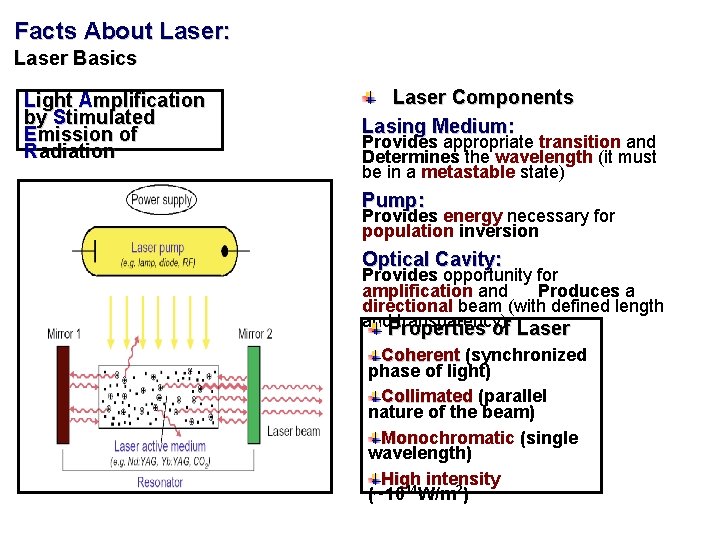
Facts About Laser: Laser Basics Light Amplification by Stimulated Emission of Radiation Laser Components Lasing Medium: Provides appropriate transition and Determines the wavelength (it must be in a metastable state) Pump: Provides energy necessary for population inversion Optical Cavity: Provides opportunity for amplification and Produces a directional beam (with defined length and. Properties transparency) of Laser Properties of Laser Coherent (synchronized phase of light) Collimated (parallel nature of the beam) Monochromatic (single wavelength) High intensity (~1014 W/m 2)
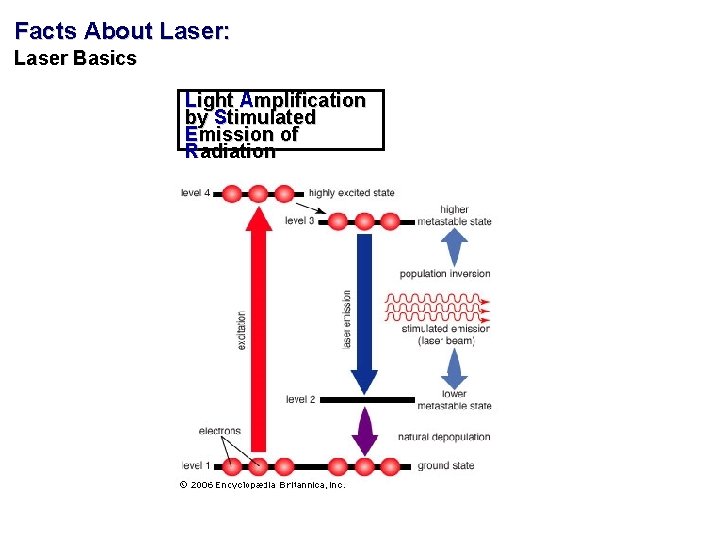
Facts About Laser: Laser Basics Light Amplification by Stimulated Emission of Radiation
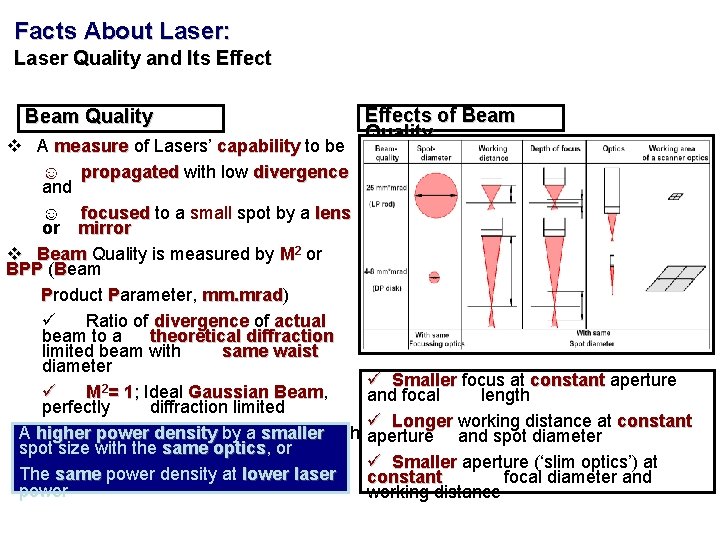
Facts About Laser: Laser Quality and Its Effect Beam Quality v A measure of Lasers’ capability to be ☺ propagated with low divergence and ☺ focused to a small spot by a lens or mirror v Beam Quality is measured by M 2 or BPP (Beam Product Parameter, mm. mrad) mm. mrad ü Ratio of divergence of actual beam to a theoretical diffraction limited beam with same waist diameter ü M 2= 1; Ideal Gaussian Beam, Beam perfectly diffraction limited ü Value of density M 2 tendsby to aincrease A higher power smaller with increasing laser optics, power or spot size with the same optics The same power density at lower laser power Effects of Beam Quality ü Smaller focus at constant aperture and focal length ü Longer working distance at constant aperture and spot diameter ü Smaller aperture (‘slim optics’) at constant focal diameter and working distance
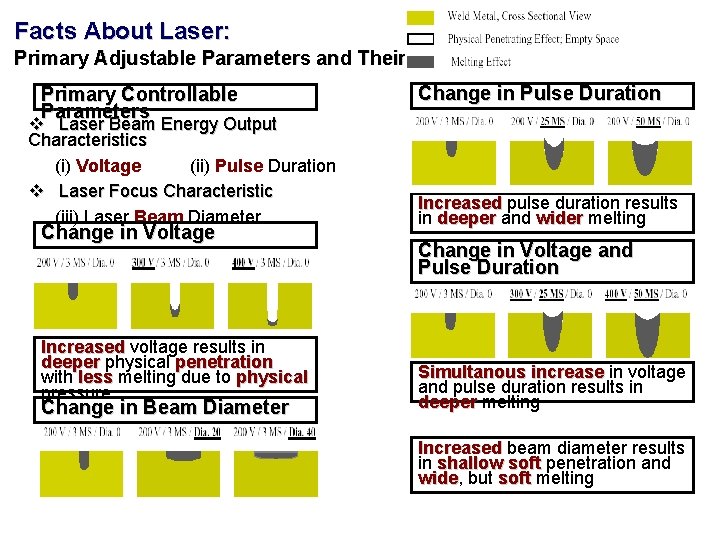
Facts About Laser: Primary Adjustable Parameters and Their Effects Primary Controllable Parameters v Laser Beam Energy Output Characteristics (i) Voltage (ii) Pulse Duration v Laser Focus Characteristic (iii) Laser Beam Diameter Change in Voltage Increased voltage results in deeper physical penetration with less melting due to physical pressure Change in Beam Diameter Change in Pulse Duration Increased pulse duration results in deeper and wider melting Change in Voltage and Pulse Duration Simultanous increase in voltage and pulse duration results in deeper melting Increased beam diameter results in shallow soft penetration and wide, wide but soft melting
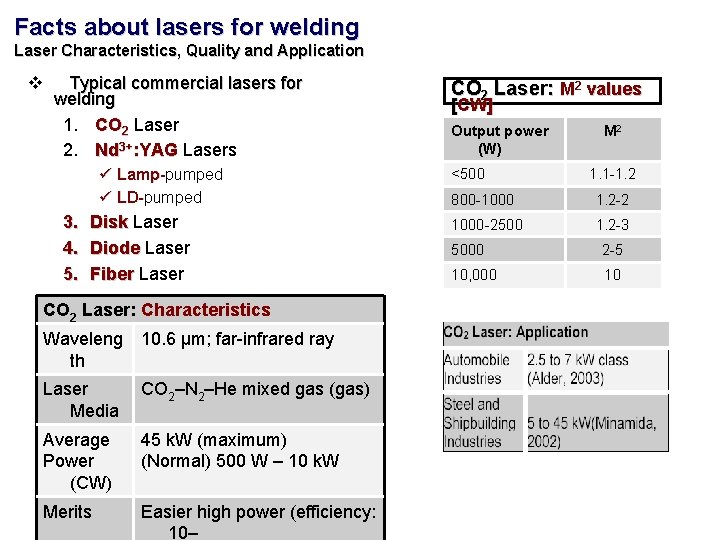
Facts about lasers for welding Laser Characteristics, Quality and Application v Typical commercial lasers for welding 1. CO 2 Laser 2. Nd 3+: YAG Lasers ü Lamp-pumped Lampü LD-pumped LD- 3. Disk Laser 4. Diode Laser 5. Fiber Laser CO 2 Laser: Characteristics Waveleng 10. 6 µm; far-infrared ray th Laser Media CO 2–N 2–He mixed gas (gas) Average Power (CW) 45 k. W (maximum) (Normal) 500 W – 10 k. W Merits Easier high power (efficiency: 10– CO 2 Laser: M 2 values [CW] Output power (W) <500 M 2 1. 1 -1. 2 800 -1000 1. 2 -2 1000 -2500 1. 2 -3 5000 2 -5 10, 000 10
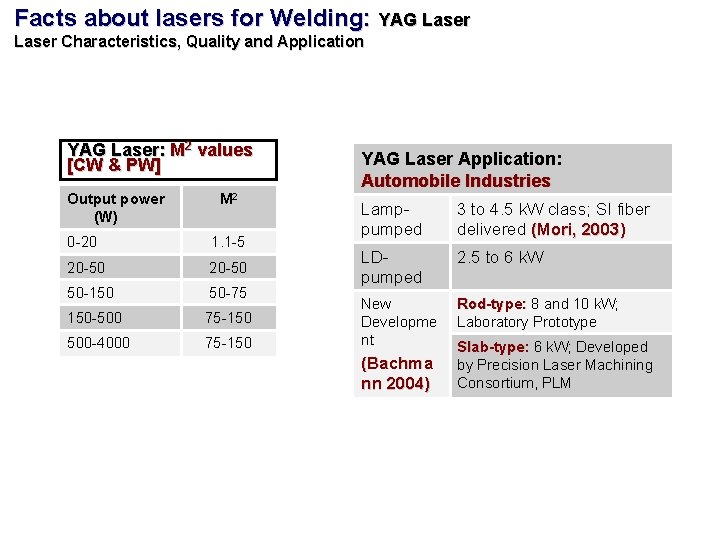
Facts about lasers for Welding: YAG Laser Characteristics, Quality and Application Lamp-pumped YAG Characteristics Laser: Waveleng 1. 06 µm; near-infrared ray th Laser: M 2 values YAG Laser Application: [CW & PW] Laser Nd 3+: Y 3 Al 5 O 12 garnet Automobile Industries Media (solid) 2 Output power M (W) Average 0 -20 Power [CW] 20 -50 10 k. W (cascade type & 1. 1 -5 fiber-coupling) (Normal)20 -50 50 W– 4 k. W Lamppumped 3 to 4. 5 k. W class; SI fiber delivered (Mori, 2003) LDpumped 2. 5 to 6 k. W nn 2004) Consortium, PLM 50 -75 and easier Fiber-delivery, YAG New. LD-pumped Rod-type: 8 and 10 k. W; Laser: handling 75 -150 (efficiency: 1– Characteristics 150 -500 Developme Laboratory Prototype 4%) nt Wavelengt 500 -4000 75 -150 about 6 1 k. W; µm; near. Slab-type: Developed (Bachma by Precision Laser Machining h infrared ray 50 -150 Merits Laser Media Average Power Nd 3+ : Y 3 Al 5 O 12 garnet (solid) [CW] : 13. 5 k. W (fibercoupling max. ) [PW] : 6 k. W (slab type max. )
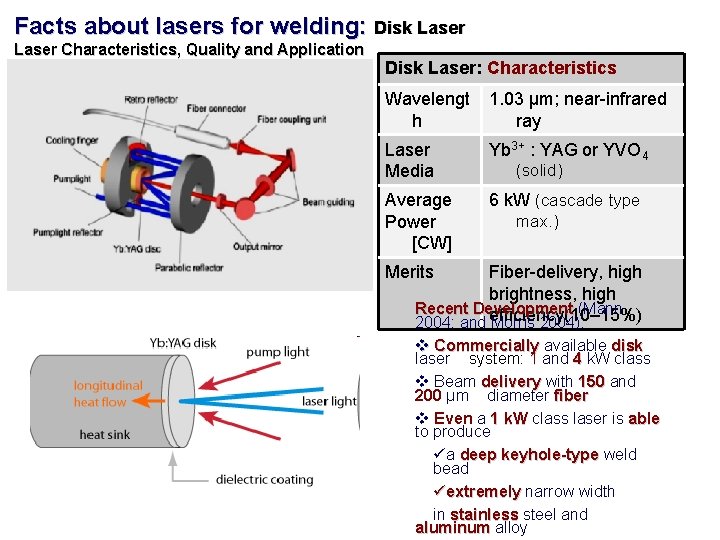
Facts about lasers for welding: Disk Laser Characteristics, Quality and Application Disk Laser: Characteristics Wavelengt h 1. 03 µm; near-infrared ray Laser Media Yb 3+ : YAG or YVO 4 Average Power [CW] 6 k. W (cascade type (solid) max. ) Merits Fiber-delivery, high brightness, high Recent Development (Mann 2004; and efficiency(10– 15%) Morris 2004): v Commercially available disk laser system: 1 and 4 k. W class v Beam delivery with 150 and 200 µm diameter fiber v Even a 1 k. W class laser is able to produce üa deep keyhole-type weld bead üextremely narrow width in stainless steel and aluminum alloy
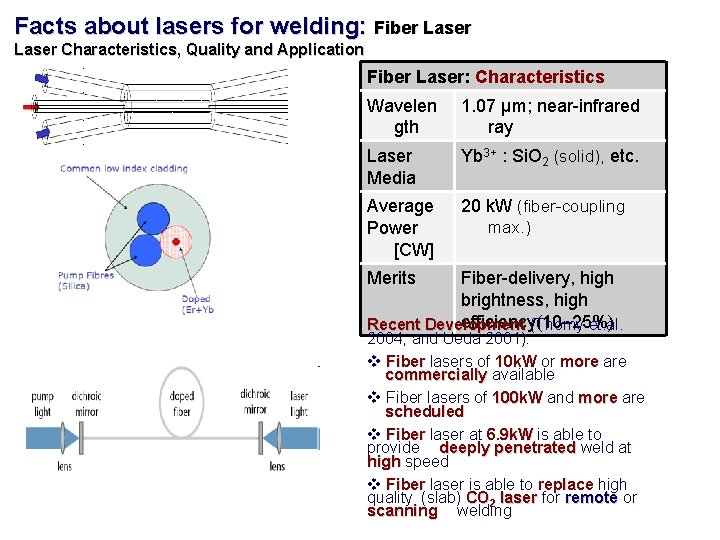
Facts about lasers for welding: Fiber Laser Characteristics, Quality and Application Fiber Laser: Characteristics Wavelen gth 1. 07 µm; near-infrared ray Laser Media Yb 3+ : Si. O 2 (solid), etc. Average Power [CW] 20 k. W (fiber-coupling max. ) Merits Fiber-delivery, high brightness, high efficiency(10– 25%) Recent Development (Thomy et. al. 2004; and Ueda 2001): v Fiber lasers of 10 k. W or more are commercially available v Fiber lasers of 100 k. W and more are scheduled v Fiber laser at 6. 9 k. W is able to provide deeply penetrated weld at high speed v Fiber laser is able to replace high quality (slab) CO 2 laser for remote or scanning welding
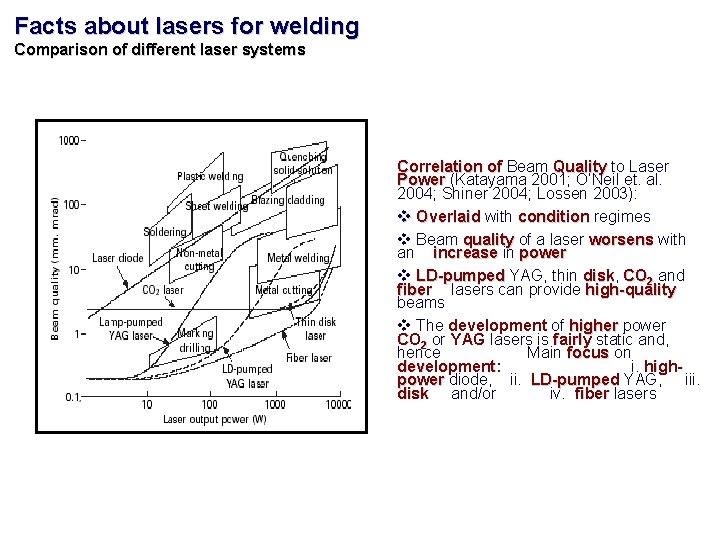
Facts about lasers for welding Comparison of different laser systems Correlation of Beam Quality to Laser Power (Katayama 2001; O’Neil et. al. 2004; Shiner 2004; Lossen 2003): v Overlaid with condition regimes v Beam quality of a laser worsens with an increase in power v LD-pumped YAG, thin disk, disk CO 2 and fiber lasers can provide high-quality beams v The development of higher power CO 2 or YAG lasers is fairly static and, hence Main focus on development: i. highpower diode, ii. LD-pumped YAG, iii. disk and/or iv. fiber lasers
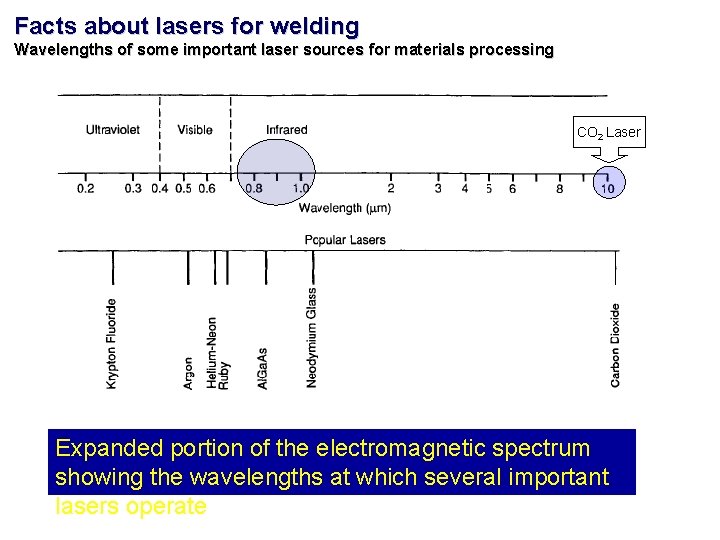
Facts about lasers for welding Wavelengths of some important laser sources for materials processing CO 2 Laser Expanded portion of the electromagnetic spectrum showing the wavelengths at which several important lasers operate
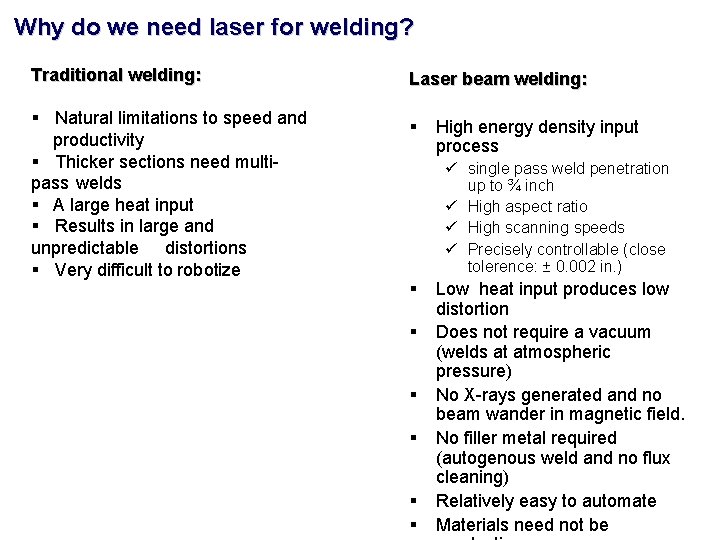
Why do we need laser for welding? Traditional welding: Laser beam welding: § Natural limitations to speed and productivity § Thicker sections need multipass welds § A large heat input § Results in large and unpredictable distortions § Very difficult to robotize § High energy density input process ü single pass weld penetration up to ¾ inch ü High aspect ratio ü High scanning speeds ü Precisely controllable (close tolerence: ± 0. 002 in. ) § § § Low heat input produces low distortion Does not require a vacuum (welds at atmospheric pressure) No X-rays generated and no beam wander in magnetic field. No filler metal required (autogenous weld and no flux cleaning) Relatively easy to automate Materials need not be
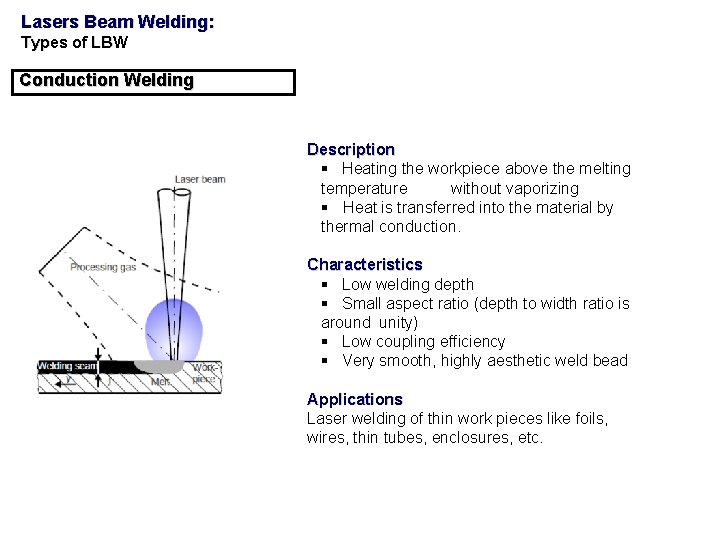
Lasers Beam Welding: Types of LBW Conduction Welding Description § Heating the workpiece above the melting temperature without vaporizing § Heat is transferred into the material by thermal conduction. Characteristics § Low welding depth § Small aspect ratio (depth to width ratio is around unity) § Low coupling efficiency § Very smooth, highly aesthetic weld bead Applications Laser welding of thin work pieces like foils, wires, thin tubes, enclosures, etc.
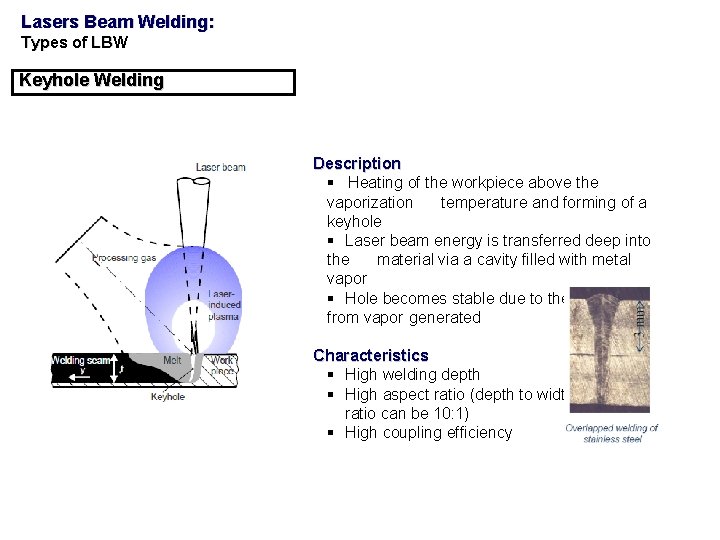
Lasers Beam Welding: Types of LBW Keyhole Welding Description § Heating of the workpiece above the vaporization temperature and forming of a keyhole § Laser beam energy is transferred deep into the material via a cavity filled with metal vapor § Hole becomes stable due to the pressure from vapor generated Characteristics § High welding depth § High aspect ratio (depth to width ratio can be 10: 1) § High coupling efficiency
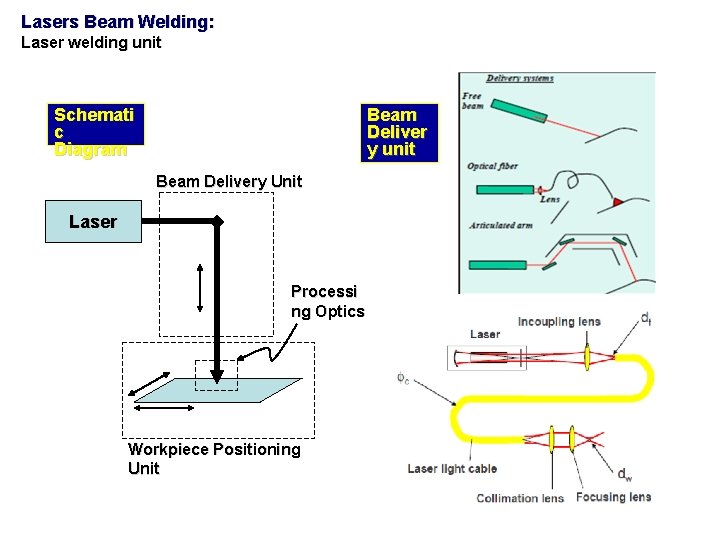
Lasers Beam Welding: Laser welding unit Schemati c Diagram Beam Deliver y unit Beam Delivery Unit Laser Processi ng Optics Workpiece Positioning Unit
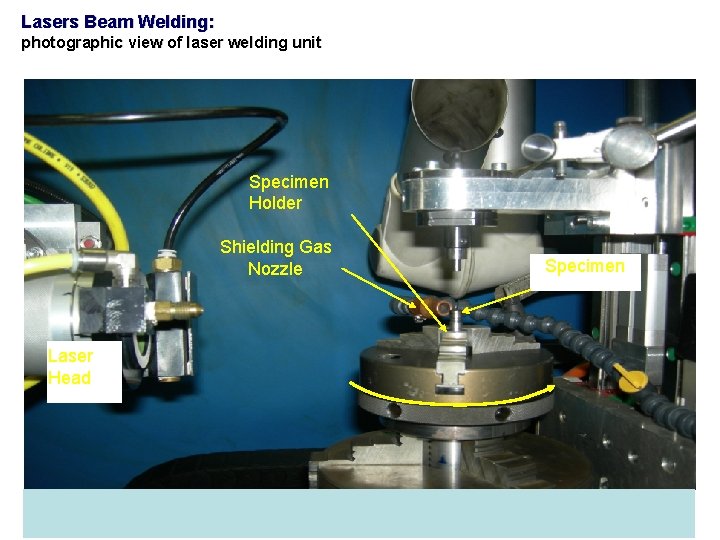
Lasers Beam Welding: photographic view of laser welding unit Specimen Holder Shielding Gas Nozzle Laser Head Specimen
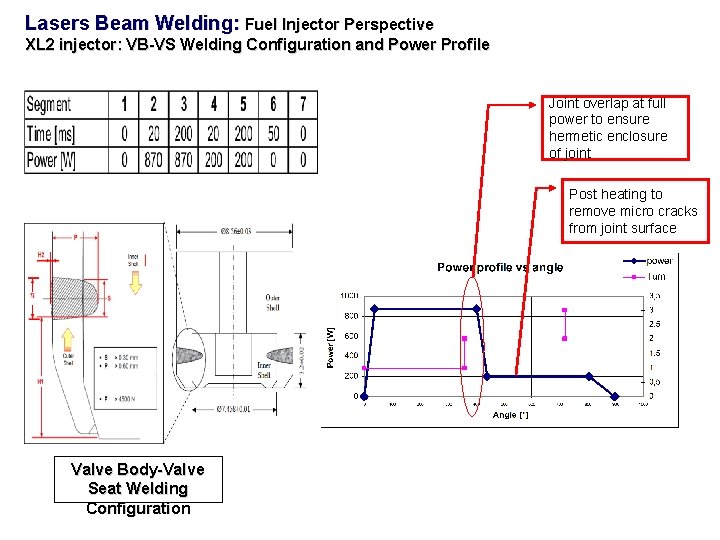
Lasers Beam Welding: Fuel Injector Perspective XL 2 injector: VB-VS Welding Configuration and Power Profile Joint overlap at full power to ensure hermetic enclosure of joint Post heating to remove micro cracks from joint surface Valve Body-Valve Seat Welding Configuration
A Case Study LASER BEAM WELDING OF MARTENSITIC STAINLESS STEELS IN A CONSTRAINED OVERLAP JOINT CONFIGURATION
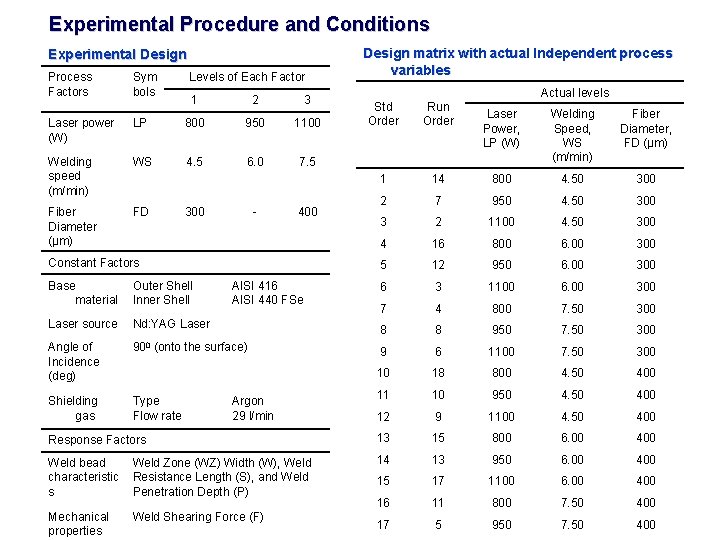
Experimental Procedure and Conditions Experimental Design Process Factors Sym bols Levels of Each Factor 1 2 3 Design matrix with actual Independent process variables Actual levels Std Order Run Order 1 Laser Power, LP (W) Welding Speed, WS (m/min) Fiber Diameter, FD (µm) 14 800 4. 50 300 2 7 950 4. 50 300 3 2 1100 4. 50 300 4 16 800 6. 00 300 5 12 950 6. 00 300 6 3 1100 6. 00 300 7 4 800 7. 50 300 8 8 950 7. 50 300 9 6 1100 7. 50 300 10 18 800 4. 50 400 11 10 950 400 12 9 1100 4. 50 400 Response Factors 13 15 800 6. 00 400 Weld bead characteristic s Weld Zone (WZ) Width (W), Weld Resistance Length (S), and Weld Penetration Depth (P) 14 13 950 6. 00 400 15 17 1100 6. 00 400 16 11 800 7. 50 400 Mechanical properties Weld Shearing Force (F) 17 5 950 7. 50 400 Laser power (W) LP 800 950 1100 Welding speed (m/min) WS 4. 5 6. 0 7. 5 Fiber Diameter (µm) FD 300 - 400 Constant Factors Base material Outer Shell Inner Shell Laser source Nd: YAG Laser Angle of Incidence (deg) 900 Shielding gas Type Flow rate AISI 416 AISI 440 FSe (onto the surface) Argon 29 l/min
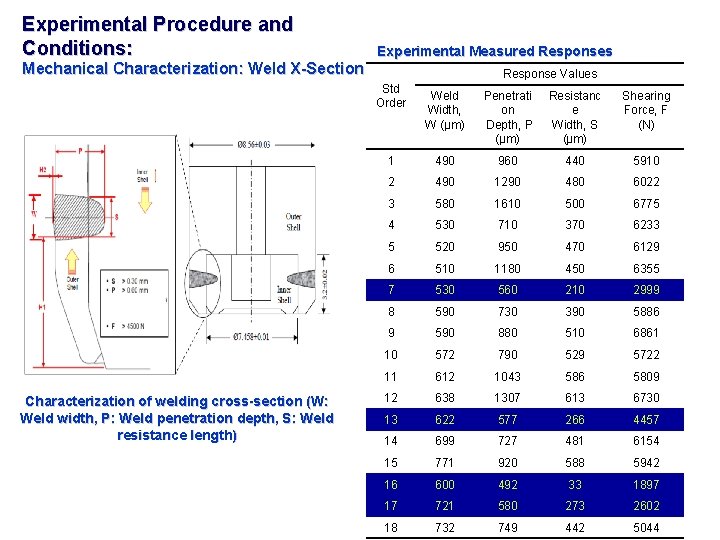
Experimental Procedure and Conditions: Mechanical Characterization: Weld X-Section Experimental Measured Responses Response Values Std Order Characterization of welding cross-section (W: Weld width, P: Weld penetration depth, S: Weld resistance length) Weld Width, W (µm) Penetrati on Depth, P (µm) Resistanc e Width, S (µm) Shearing Force, F (N) 1 490 960 440 5910 2 490 1290 480 6022 3 580 1610 500 6775 4 530 710 370 6233 5 520 950 470 6129 6 510 1180 450 6355 7 530 560 210 2999 8 590 730 390 5886 9 590 880 510 6861 10 572 790 529 5722 11 612 1043 586 5809 12 638 1307 613 6730 13 622 577 266 4457 14 699 727 481 6154 15 771 920 588 5942 16 600 492 33 1897 17 721 580 273 2602 18 732 749 442 5044
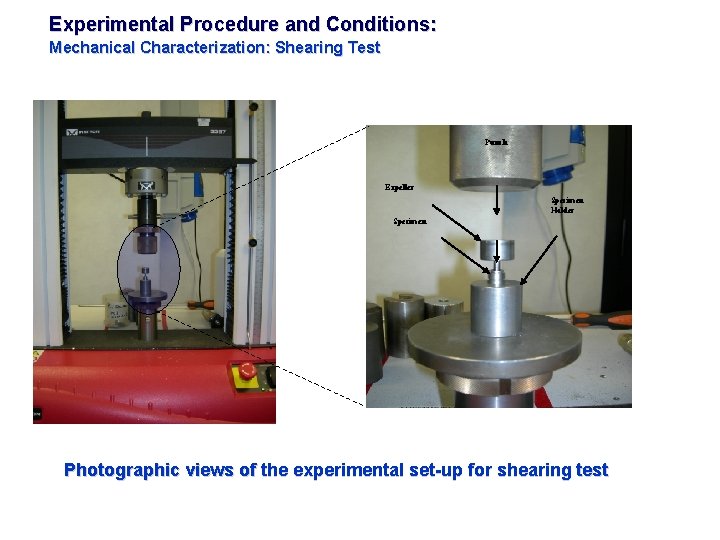
Experimental Procedure and Conditions: Mechanical Characterization: Shearing Test Punch Expeller Specimen Holder Specimen (b) Photographic views of the experimental set-up for shearing test
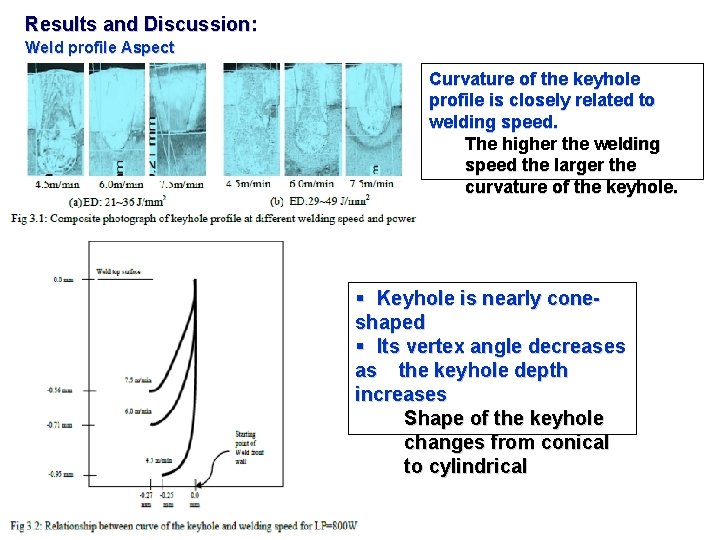
Results and Discussion: Weld profile Aspect Curvature of the keyhole profile is closely related to welding speed. The higher the welding speed the larger the curvature of the keyhole. § Keyhole is nearly coneshaped § Its vertex angle decreases as the keyhole depth increases Shape of the keyhole changes from conical to cylindrical
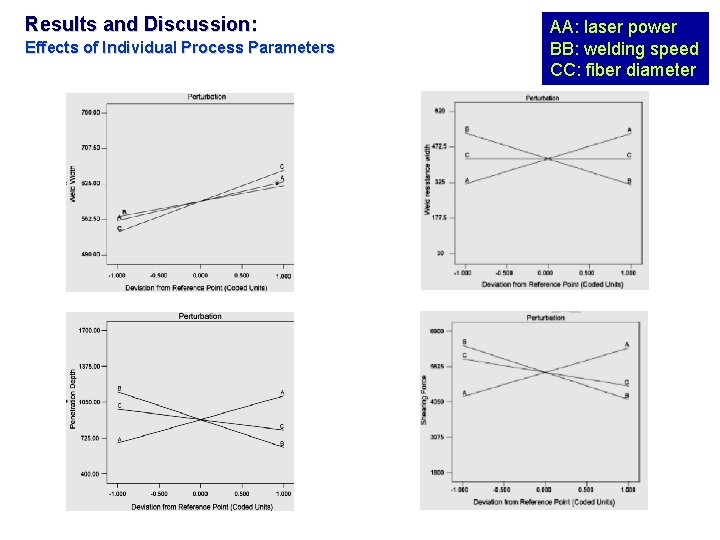
Results and Discussion: Effects of Individual Process Parameters AA: laser power BB: welding speed CC: fiber diameter
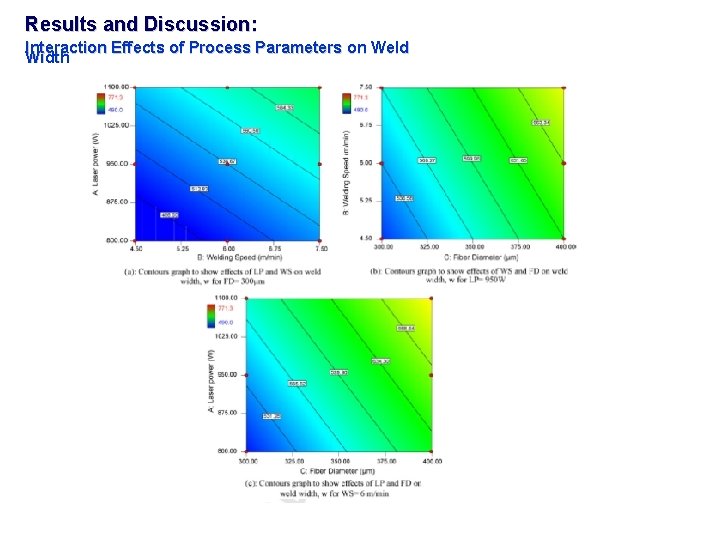
Results and Discussion: Interaction Effects of Process Parameters on Weld Width
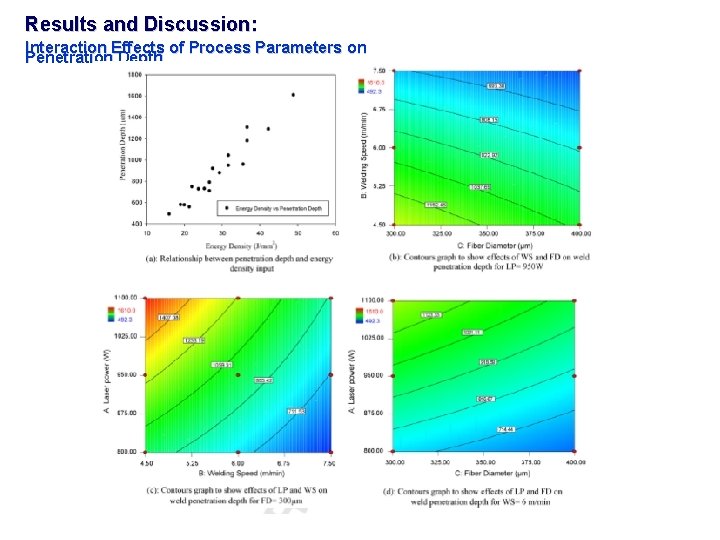
Results and Discussion: Interaction Effects of Process Parameters on Penetration Depth
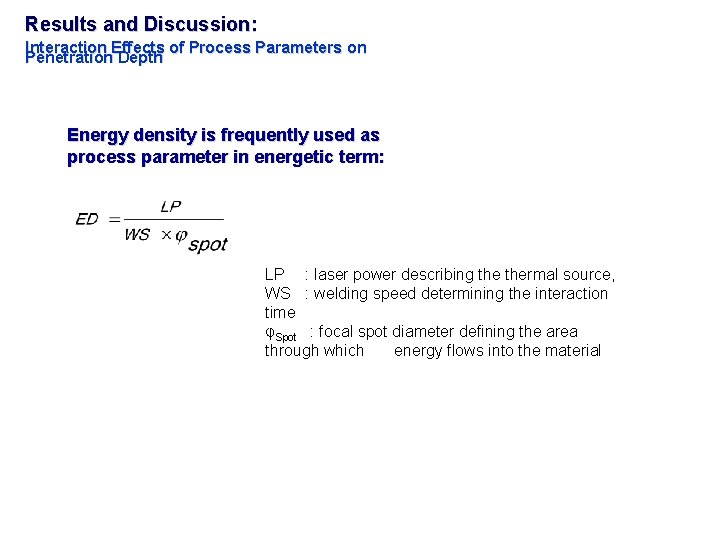
Results and Discussion: Interaction Effects of Process Parameters on Penetration Depth Energy density is frequently used as process parameter in energetic term: LP : laser power describing thermal source, WS : welding speed determining the interaction time φSpot : focal spot diameter defining the area through which energy flows into the material
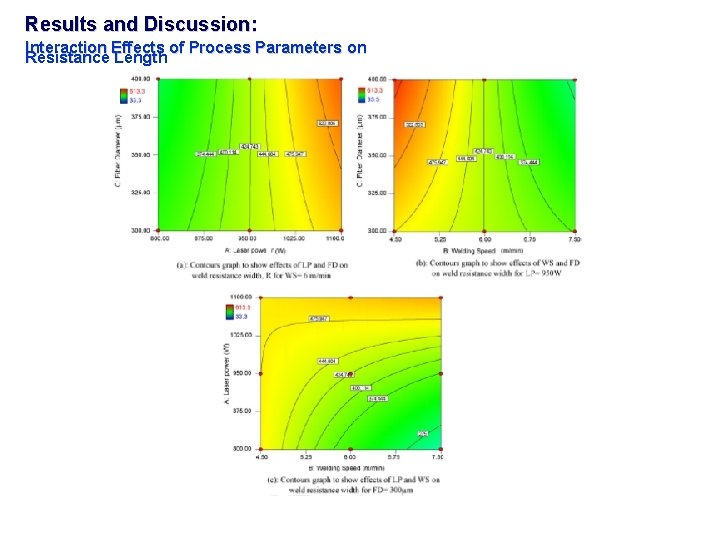
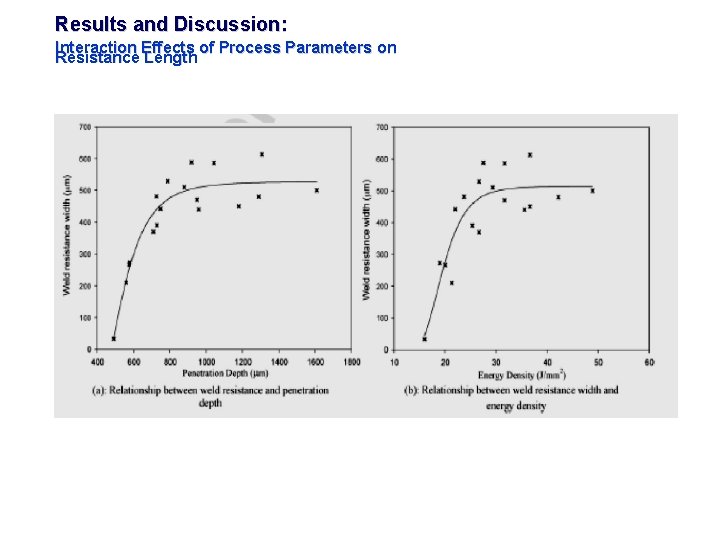
Results and Discussion: Interaction Effects of Process Parameters on Resistance Length
Results and Discussion: Interaction Effects of Process Parameters on Resistance Length
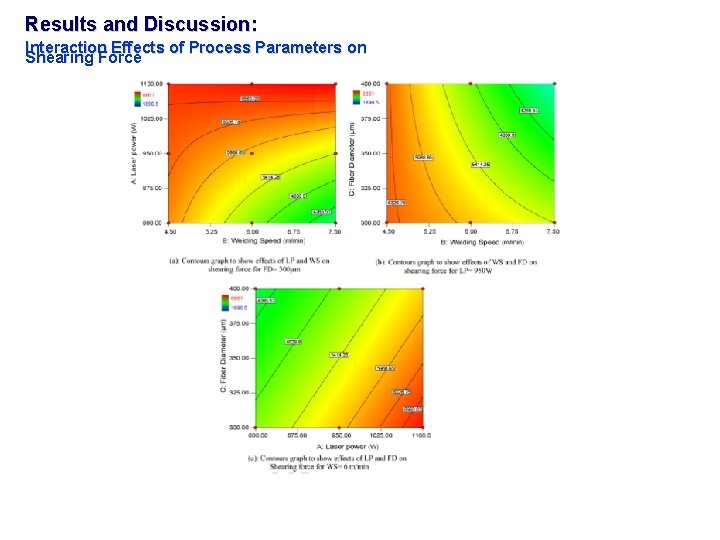
Results and Discussion: Interaction Effects of Process Parameters on Shearing Force
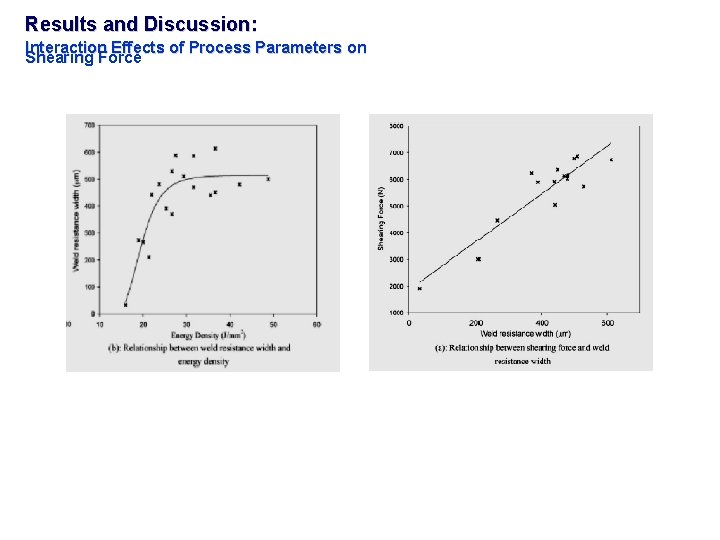
Results and Discussion: Interaction Effects of Process Parameters on Shearing Force
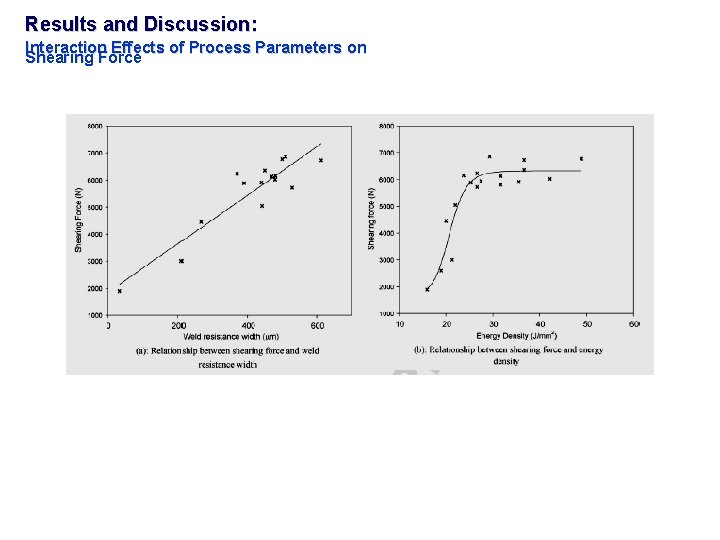
Results and Discussion: Interaction Effects of Process Parameters on Shearing Force
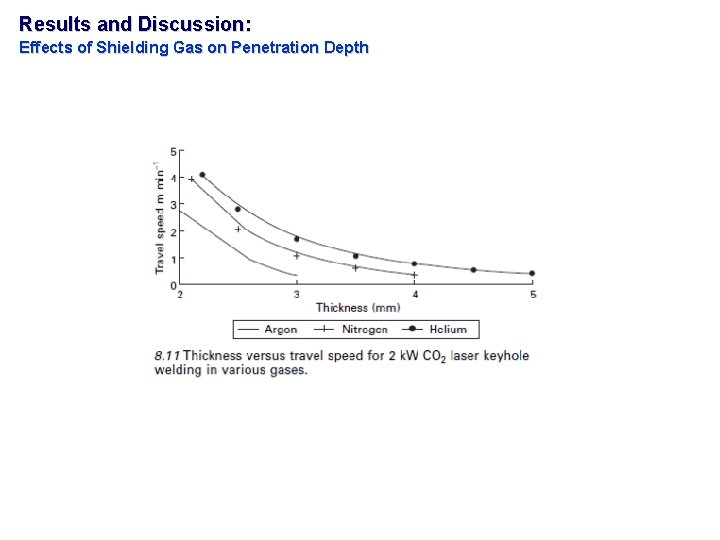
Results and Discussion: Effects of Shielding Gas on Penetration Depth
Thank You for Patience Hearing