
Laser technology Lecture 3 Interferometers Coherence Todays summary
- Slides: 44
Laser technology Lecture 3 Interferometers. Coherence
Today’s summary • Different kinds of interferometers • Multiple beam interferometers: Fabry-Perot resonators – Stokes relationships – Transmission and reflection coefficients for a dielectric slab – Optical resonance • Coherence: spatial / temporal • Kinds of lasers
Interferometers
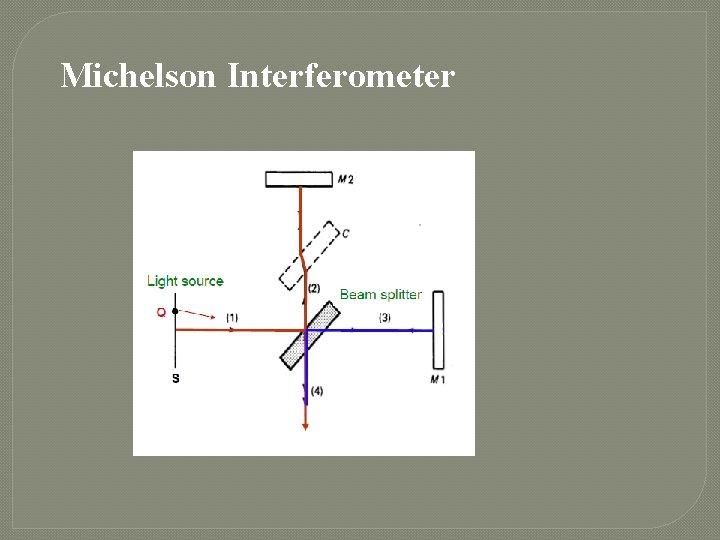
Michelson Interferometer
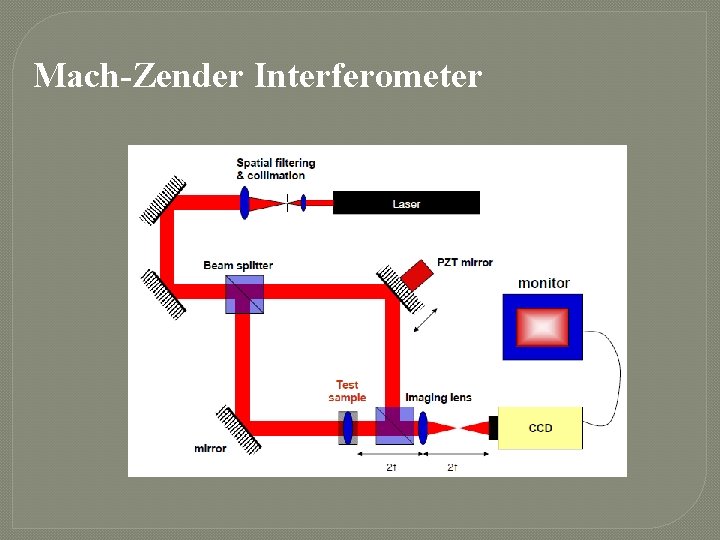
Mach-Zender Interferometer
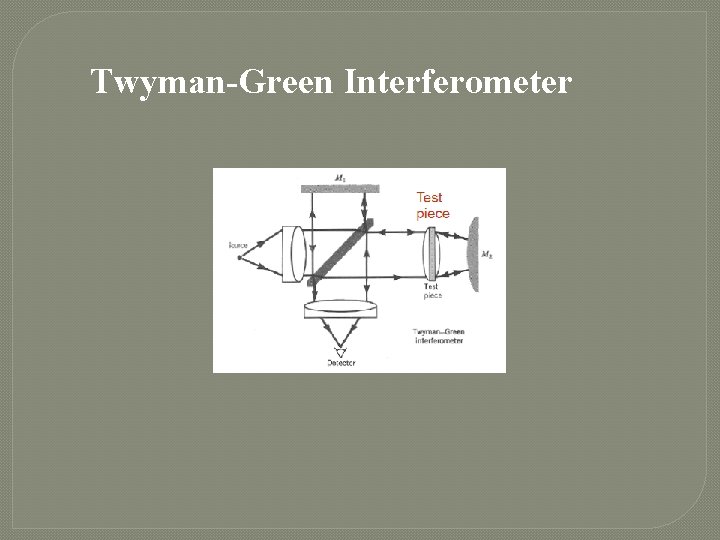
Twyman-Green Interferometer
Fabry-Perot interferometers
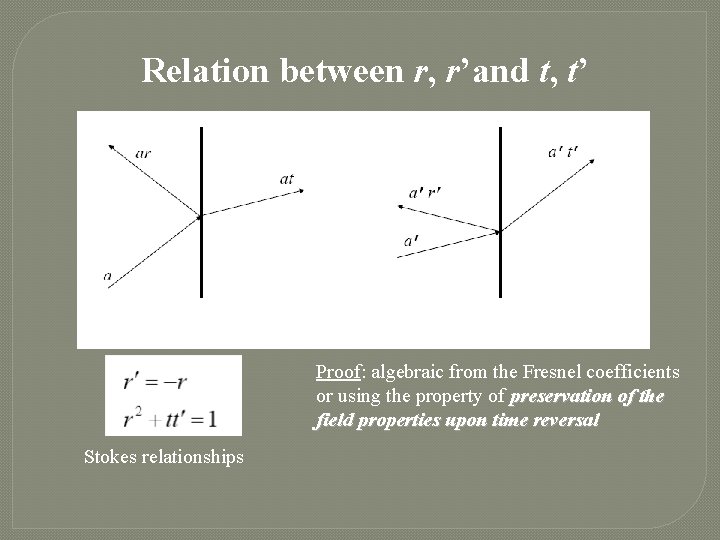
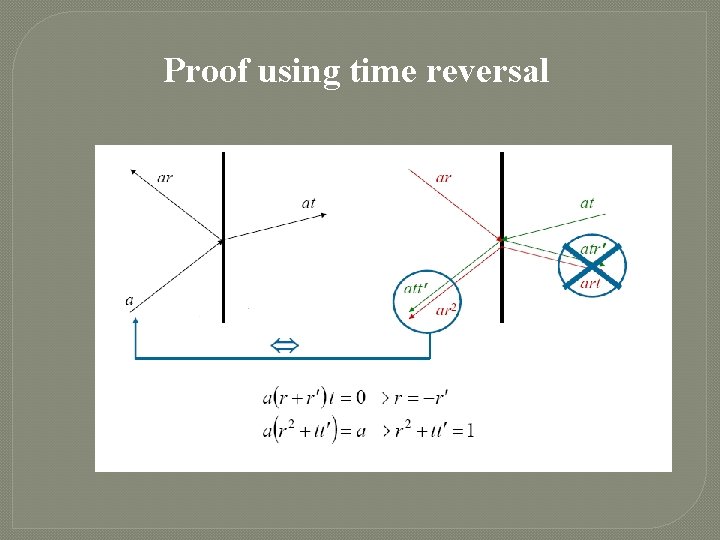
Relation between r, r’and t, t’ air glass Proof: algebraic from the Fresnel coefficients or using the property of preservation of the field properties upon time reversal Stokes relationships
Proof using time reversal air glass
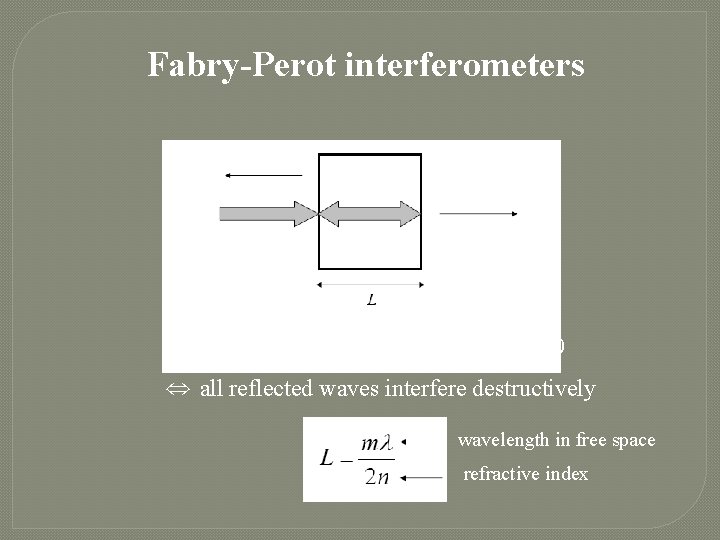
Fabry-Perot interferometers reflected transmitted incident Resonance condition: reflected wave = 0 ⇔ all reflected waves interfere destructively wavelength in free space refractive index
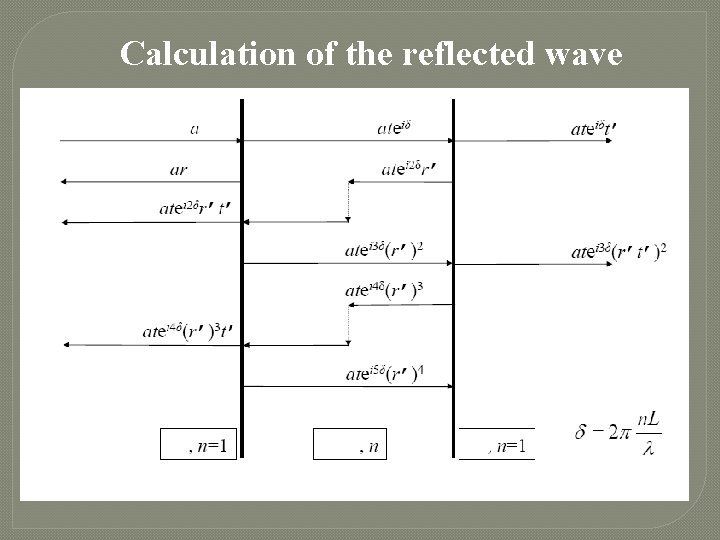
Calculation of the reflected wave incoming reflected transmitted reflected transmitted reflected air glass air
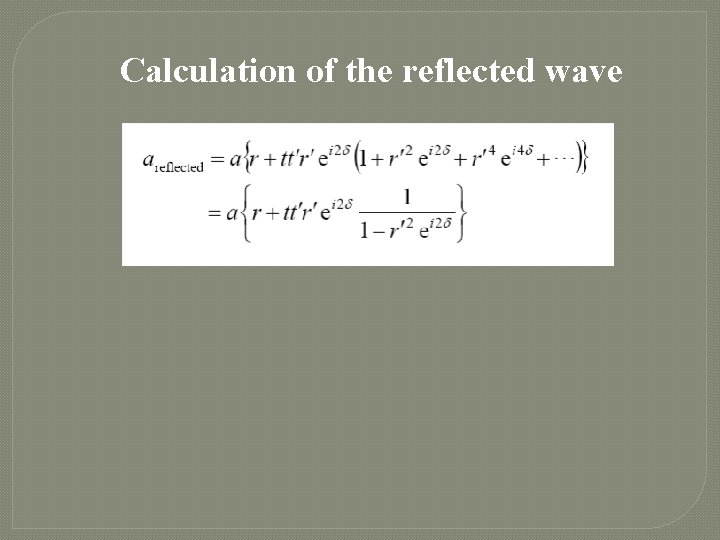
Calculation of the reflected wave
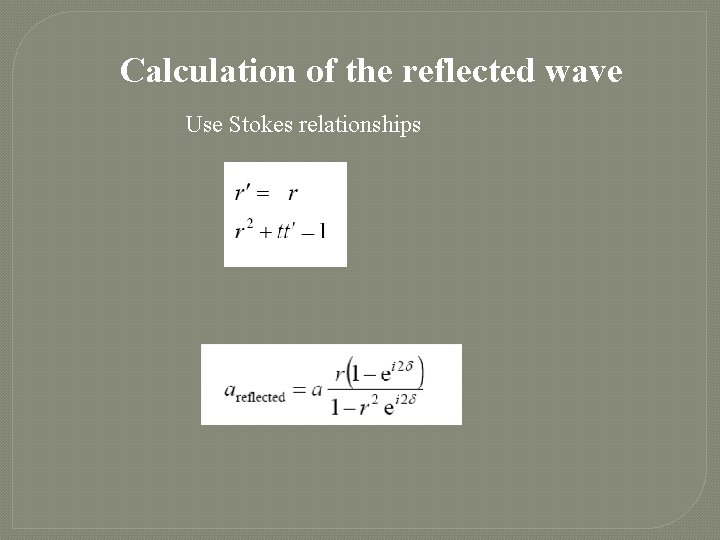
Calculation of the reflected wave Use Stokes relationships
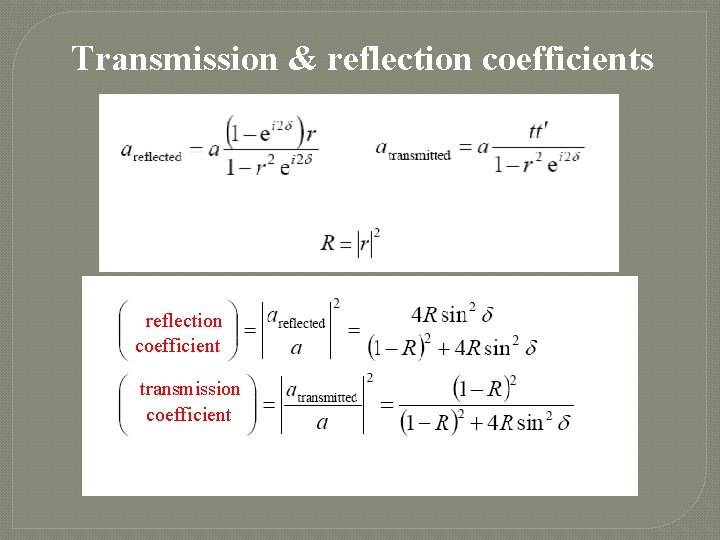
Transmission & reflection coefficients reflection coefficient transmission coefficient
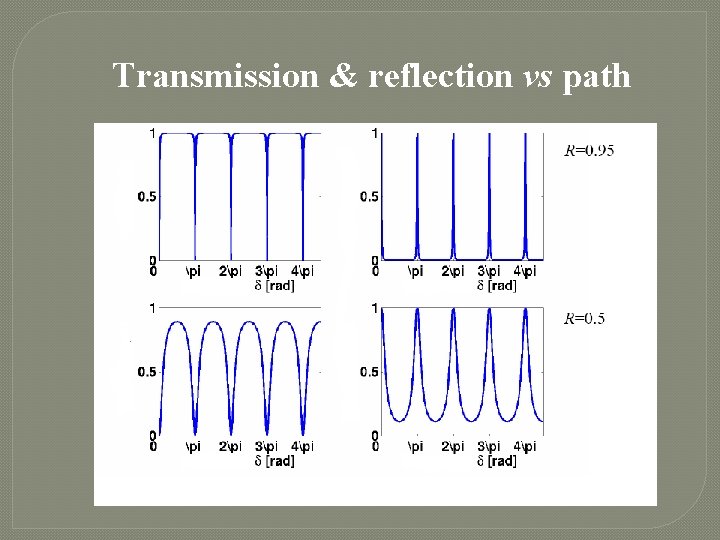
Reflection Transmission & reflection vs path Path delay Reflection Transmission Path delay
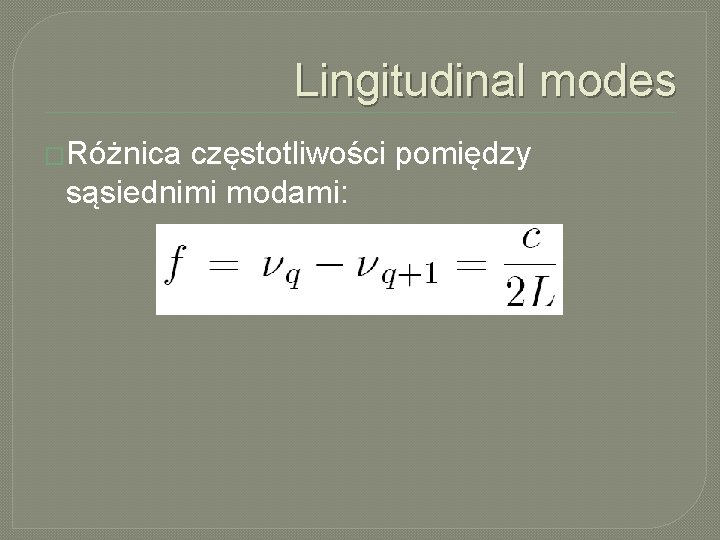
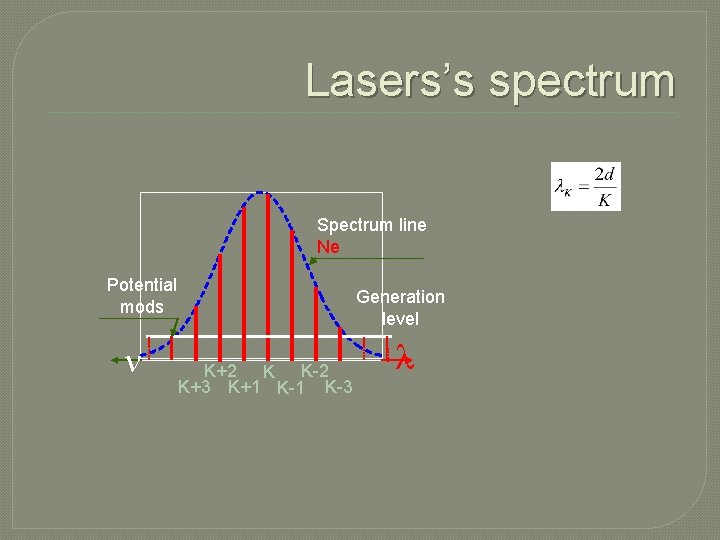
Lingitudinal modes �Różnica częstotliwości pomiędzy sąsiednimi modami:
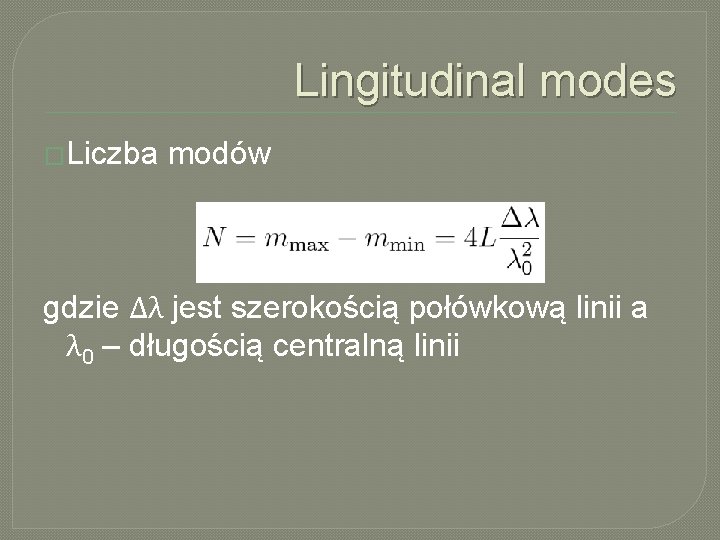
Lingitudinal modes �Liczba modów gdzie Δλ jest szerokością połówkową linii a λ 0 – długością centralną linii
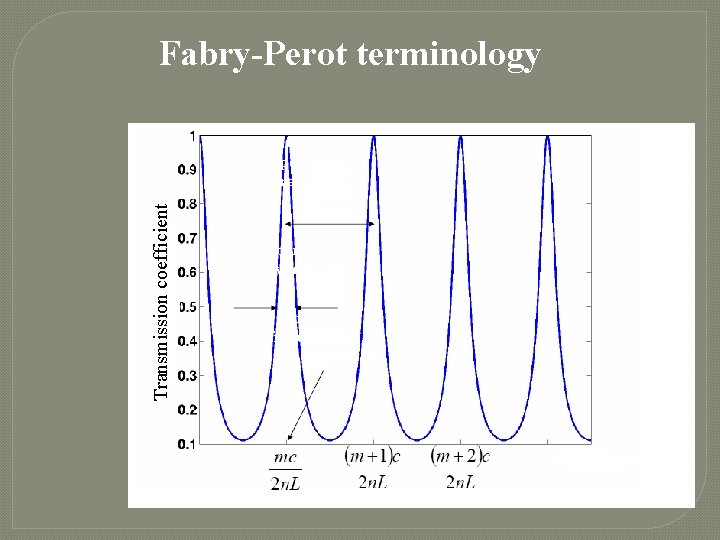
Fabry-Perot terminology Transmission coefficient free Spectral range band width resonance frequencies Frequency v
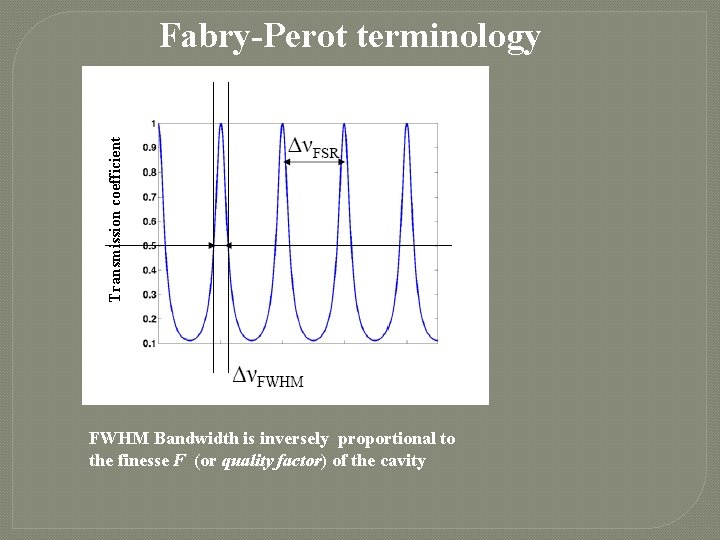
Transmission coefficient Fabry-Perot terminology FWHM Bandwidth is inversely proportional to the finesse F (or quality factor) of the cavity
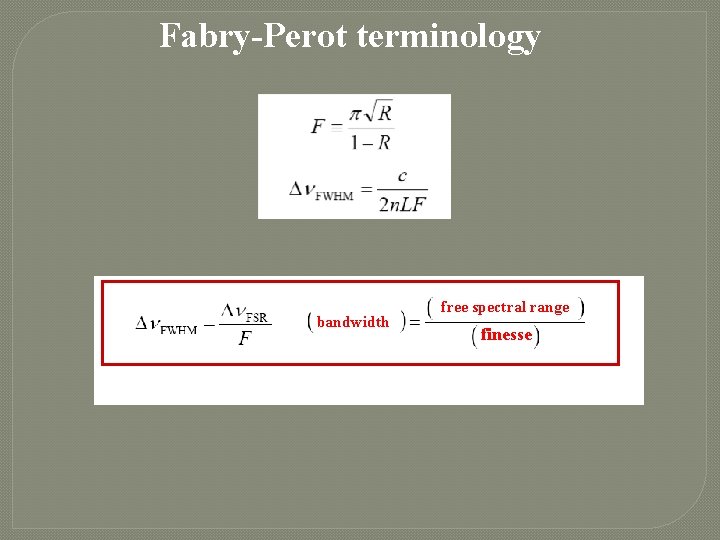
Fabry-Perot terminology bandwidth free spectral range finesse
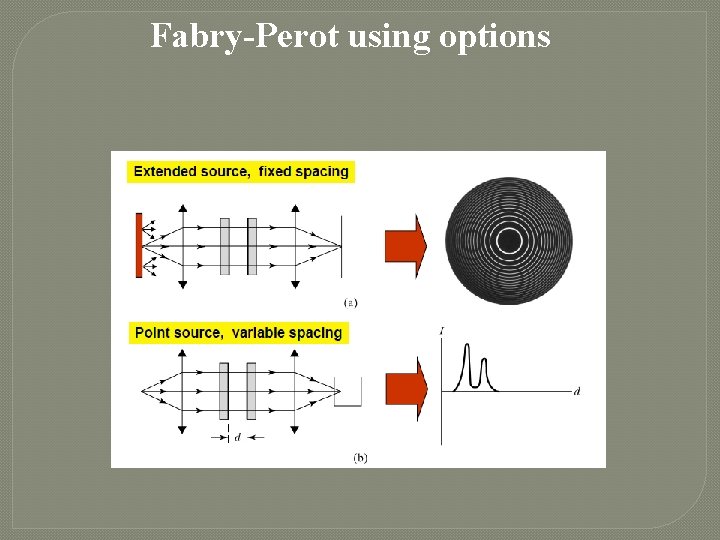
Fabry-Perot using options
Lasers’s spectrum Spectrum line Ne Potential mods Generation level K+2 K K-2 K+3 K+1 K-3
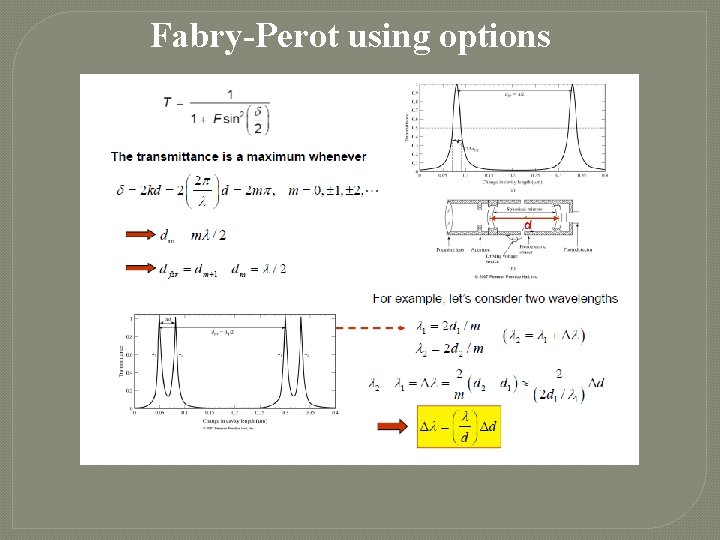
Fabry-Perot using options
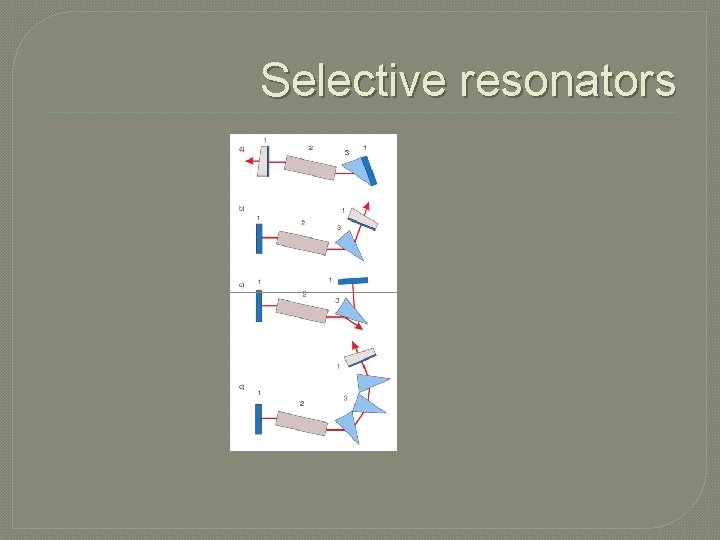
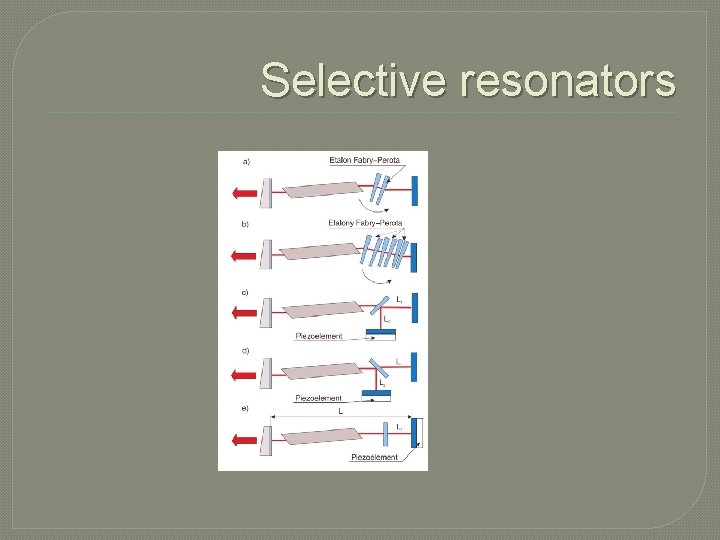
Selective resonators
Selective resonators
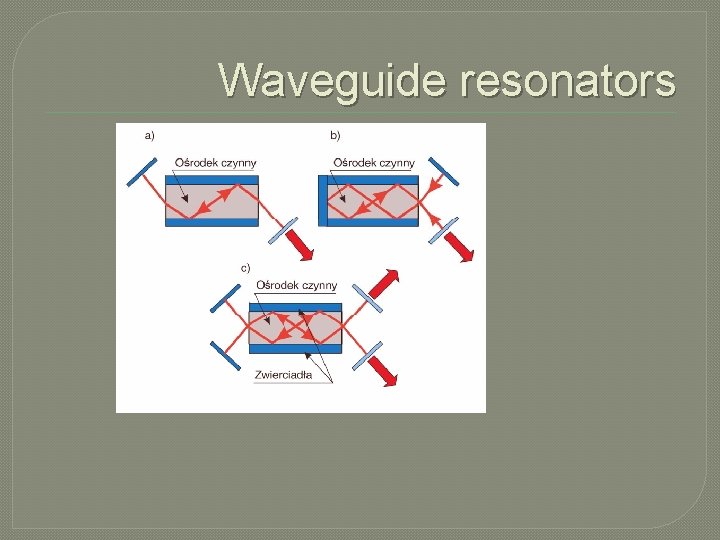
Waveguide resonators
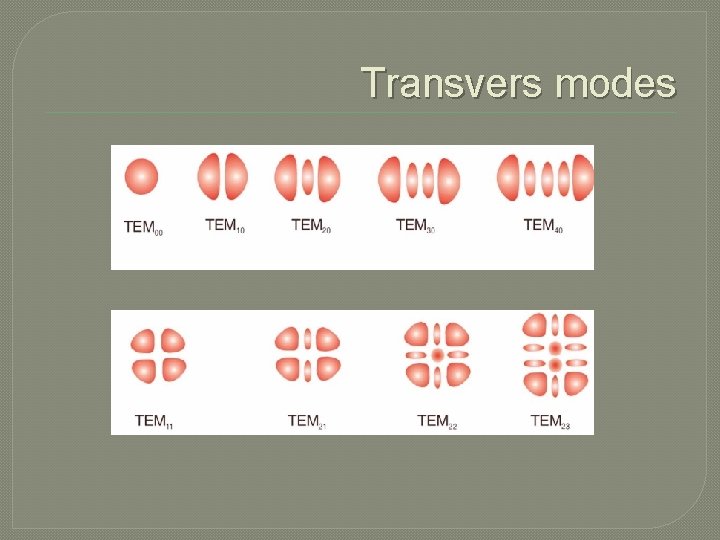
Transverse modes � � Every mod is a superposition of plane waves, which is due to the diffraction losses depend on the x and y coordinates can not give stationary field, and after many reflections the fixed configuration A (x, y) can be achived. The field distribution in the resonator of the two transverse axes of symmetry can be analyzed separately for each axis. Distribution of field for each axis can be described by a function of Hermite-Gaussian In the above equations show that higher-order transverse modes in addition to the curvature of the wavefront described by kr 2/2 R there are phase jumps for π (change the sign of the amplitude) and then for different modes that occures on different places in the wave front. Number of strokes along the axis of symmetry of the phase corresponds to the values of the mode index.
Transverse modes �The intensity of higher order modes reach significant values in a larger area than the primary mode, which means that the laser beam of a higher order takes larger surface on the resonator mirrors, and further has a greater divergence.
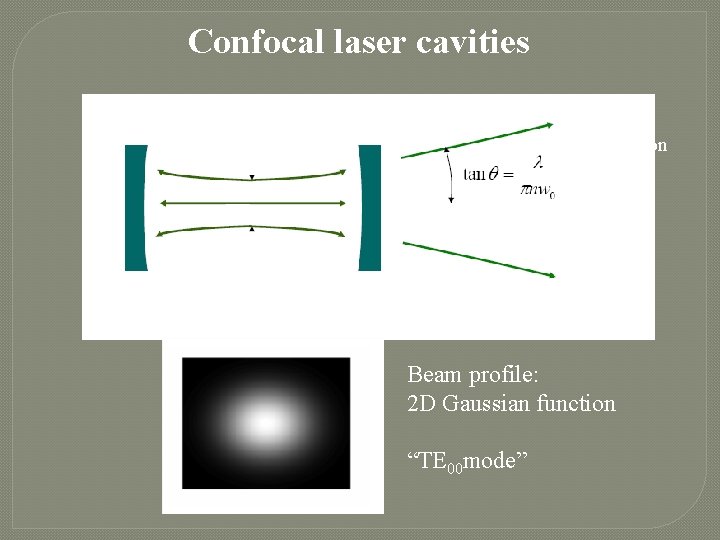
Confocal laser cavities diffraction angle waist w 0 Beam profile: 2 D Gaussian function “TE 00 mode”
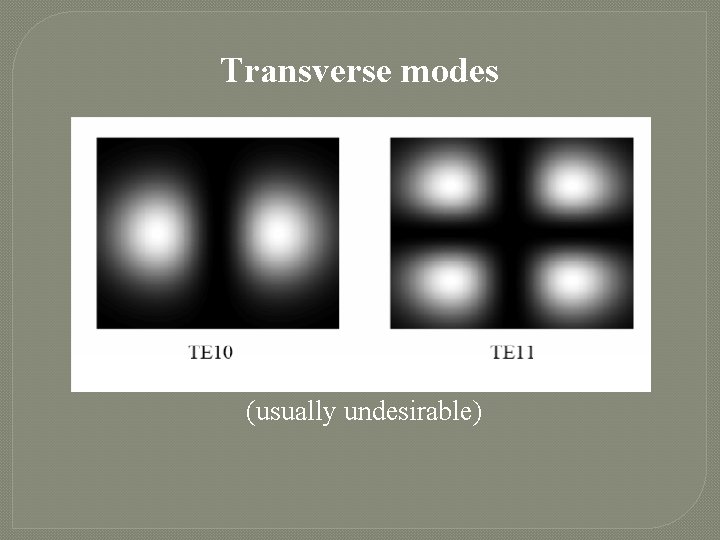
Transverse modes (usually undesirable)
Transvers modes
Lasers
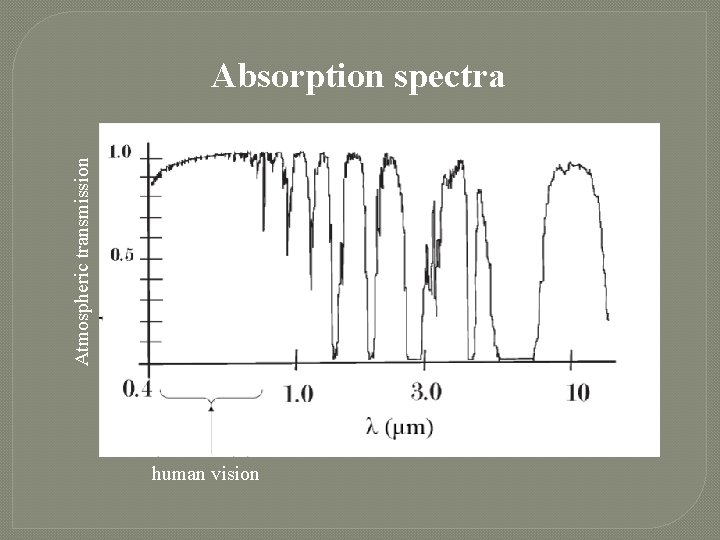
Atmospheric transmission Absorption spectra human vision
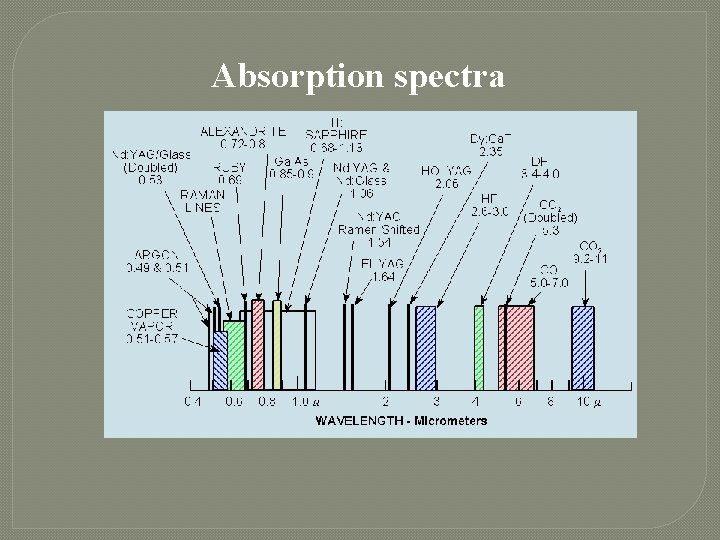
Absorption spectra
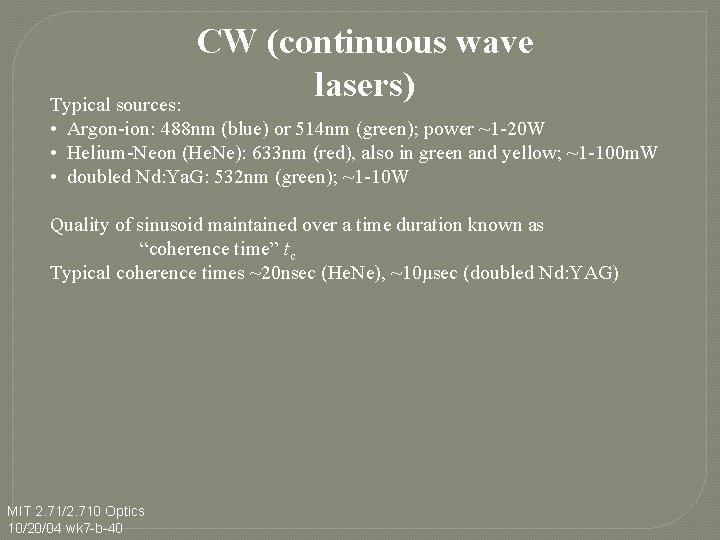
CW (continuous wave lasers) Typical sources: • Argon-ion: 488 nm (blue) or 514 nm (green); power ~1 -20 W • Helium-Neon (He. Ne): 633 nm (red), also in green and yellow; ~1 -100 m. W • doubled Nd: Ya. G: 532 nm (green); ~1 -10 W Quality of sinusoid maintained over a time duration known as “coherence time” tc Typical coherence times ~20 nsec (He. Ne), ~10μsec (doubled Nd: YAG) MIT 2. 71/2. 710 Optics 10/20/04 wk 7 -b-40
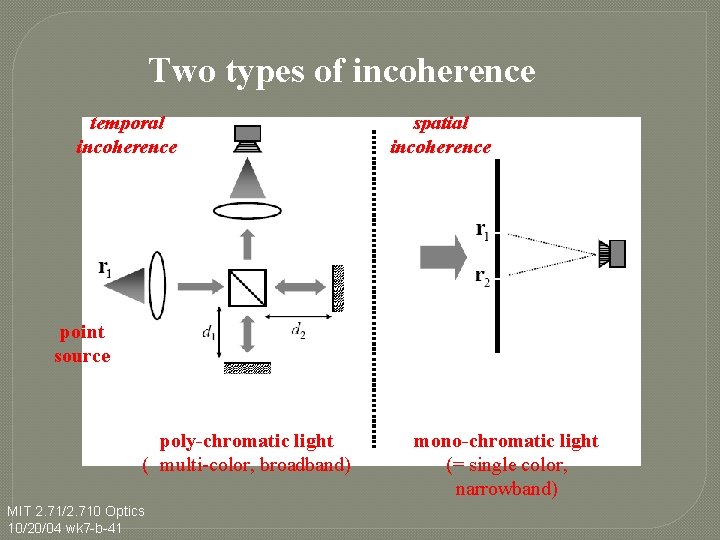
Two types of incoherence temporal incoherence spatial incoherence matched paths point source Michelson interferometer Young interferometer poly-chromatic light (=multi-color, broadband) mono-chromatic light (= single color, narrowband) MIT 2. 71/2. 710 Optics 10/20/04 wk 7 -b-41
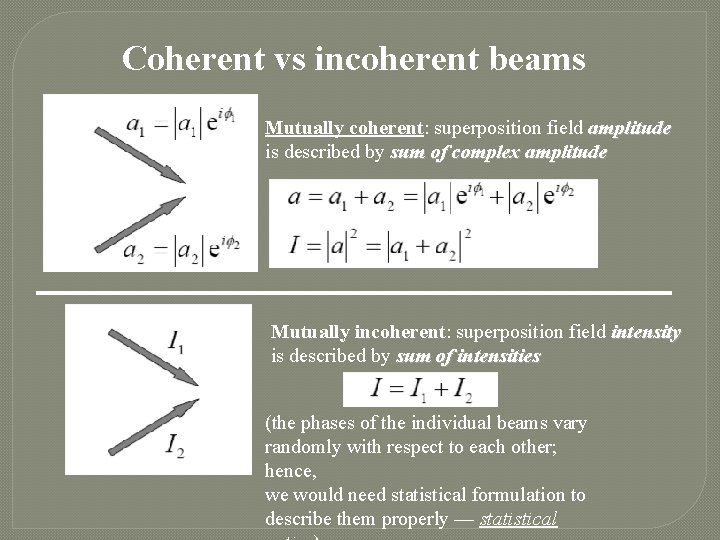
Coherent vs incoherent beams Mutually coherent: superposition field amplitude is described by sum of complex amplitude Mutually incoherent: superposition field intensity is described by sum of intensities (the phases of the individual beams vary randomly with respect to each other; hence, we would need statistical formulation to describe them properly — statistical
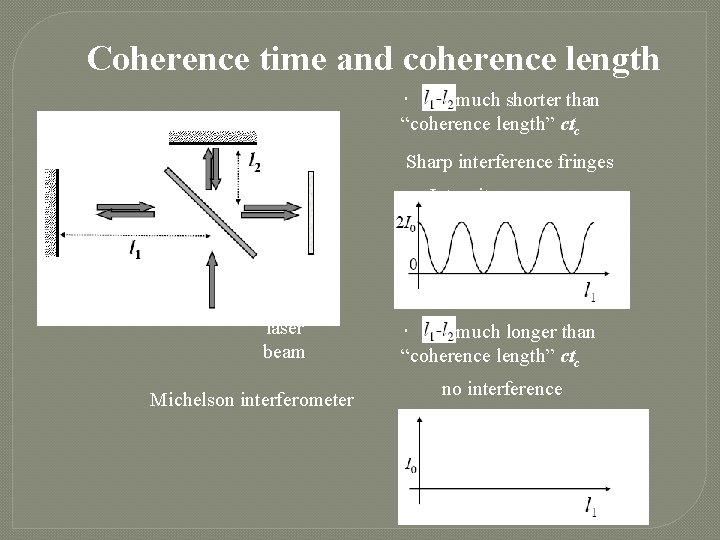
Coherence time and coherence length ‧ much shorter than “coherence length” ctc Sharp interference fringes Intensity incoming laser beam Michelson interferometer ‧ much longer than “coherence length” ctc no interference Intensity
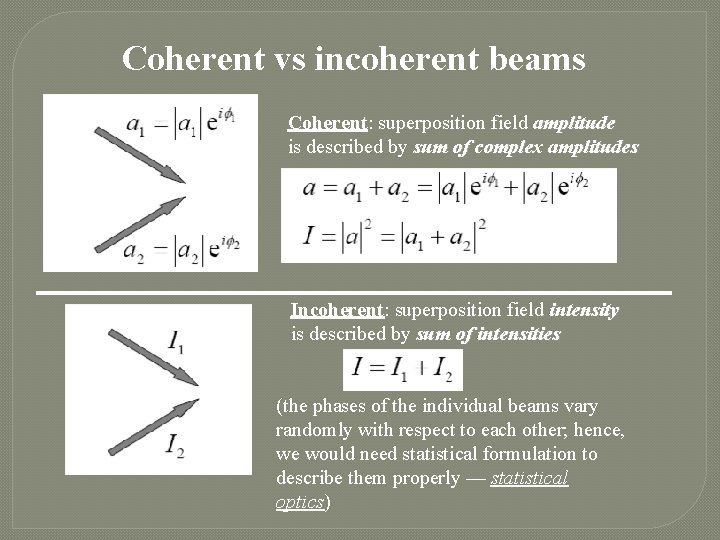
Coherent vs incoherent beams Coherent: superposition field amplitude is described by sum of complex amplitudes Incoherent: superposition field intensity is described by sum of intensities (the phases of the individual beams vary randomly with respect to each other; hence, we would need statistical formulation to describe them properly — statistical optics)
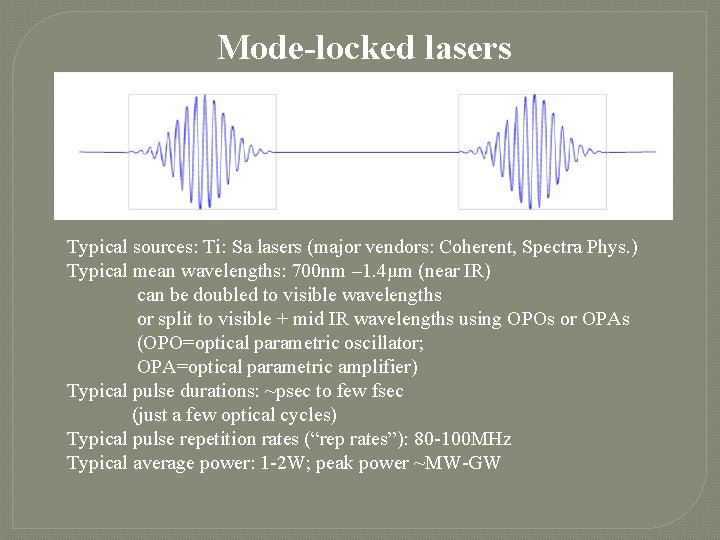
Mode-locked lasers Typical sources: Ti: Sa lasers (major vendors: Coherent, Spectra Phys. ) Typical mean wavelengths: 700 nm – 1. 4μm (near IR) can be doubled to visible wavelengths or split to visible + mid IR wavelengths using OPOs or OPAs (OPO=optical parametric oscillator; OPA=optical parametric amplifier) Typical pulse durations: ~psec to few fsec (just a few optical cycles) Typical pulse repetition rates (“rep rates”): 80 -100 MHz Typical average power: 1 -2 W; peak power ~MW-GW
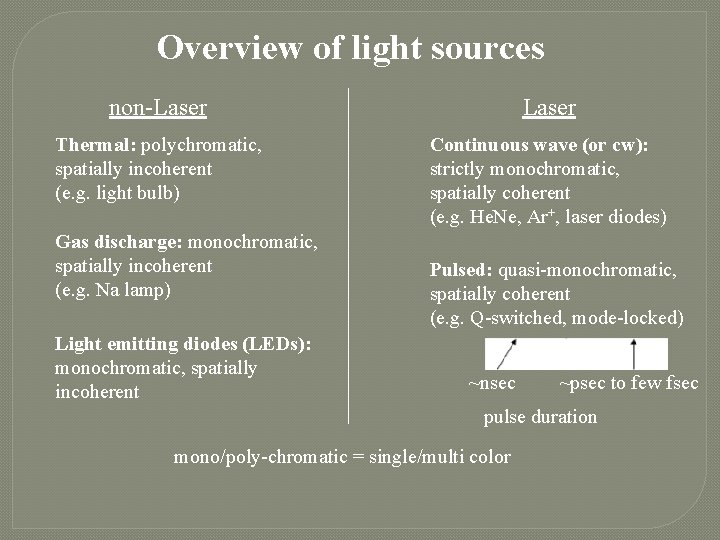
Overview of light sources non-Laser Thermal: polychromatic, spatially incoherent (e. g. light bulb) Continuous wave (or cw): strictly monochromatic, spatially coherent (e. g. He. Ne, Ar+, laser diodes) Gas discharge: monochromatic, spatially incoherent (e. g. Na lamp) Light emitting diodes (LEDs): monochromatic, spatially incoherent Pulsed: quasi-monochromatic, spatially coherent (e. g. Q-switched, mode-locked) ~nsec ~psec to few fsec pulse duration mono/poly-chromatic = single/multi color
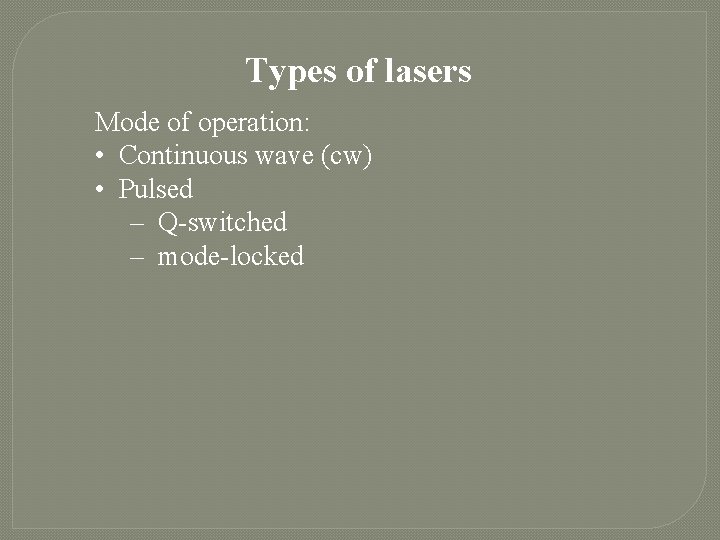
Types of lasers Mode of operation: • Continuous wave (cw) • Pulsed – Q-switched – mode-locked
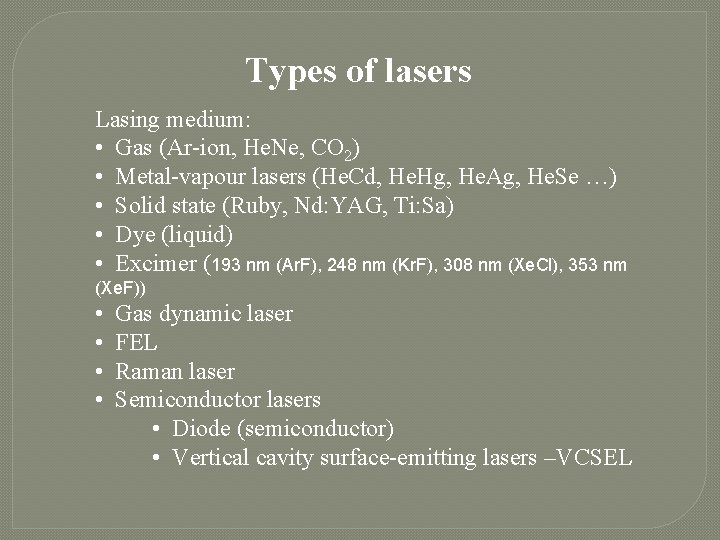
Types of lasers Lasing medium: • Gas (Ar-ion, He. Ne, CO 2) • Metal-vapour lasers (He. Cd, He. Hg, He. Ag, He. Se …) • Solid state (Ruby, Nd: YAG, Ti: Sa) • Dye (liquid) • Excimer (193 nm (Ar. F), 248 nm (Kr. F), 308 nm (Xe. Cl), 353 nm (Xe. F)) • • Gas dynamic laser FEL Raman laser Semiconductor lasers • Diode (semiconductor) • Vertical cavity surface-emitting lasers –VCSEL
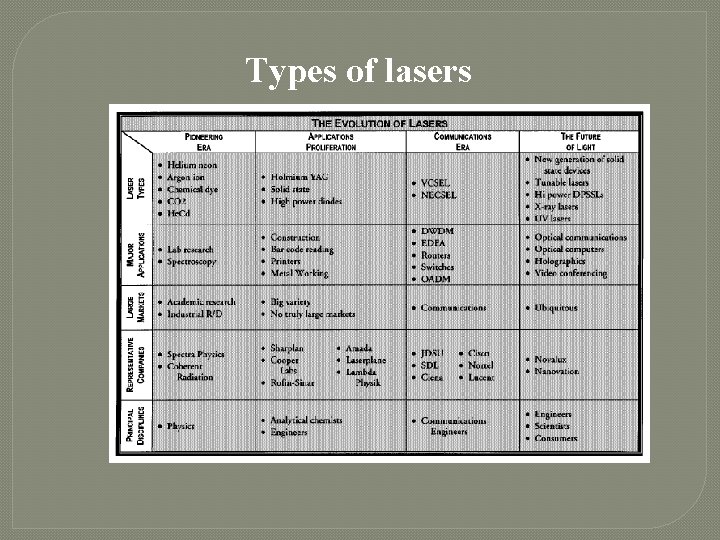
Types of lasers