
Laser Safety Andras Kis Zettl group safety talk
- Slides: 11
Laser Safety Andras Kis Zettl group safety talk 11/16/2006
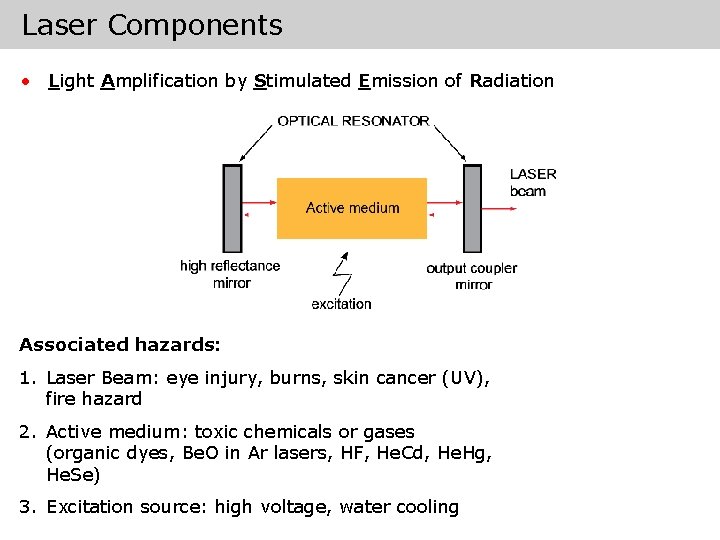
Laser Components • Light Amplification by Stimulated Emission of Radiation Associated hazards: 1. Laser Beam: eye injury, burns, skin cancer (UV), fire hazard 2. Active medium: toxic chemicals or gases (organic dyes, Be. O in Ar lasers, HF, He. Cd, He. Hg, He. Se) 3. Excitation source: high voltage, water cooling
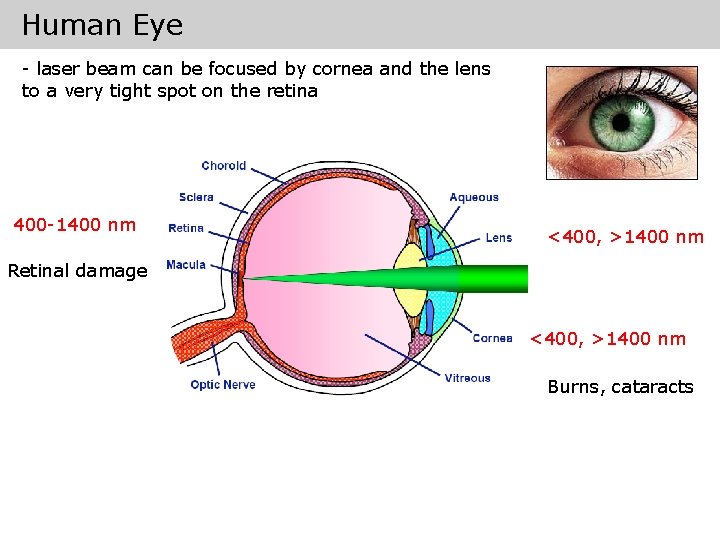
Human Eye - laser beam can be focused by cornea and the lens to a very tight spot on the retina 400 -1400 nm <400, >1400 nm Retinal damage <400, >1400 nm Burns, cataracts
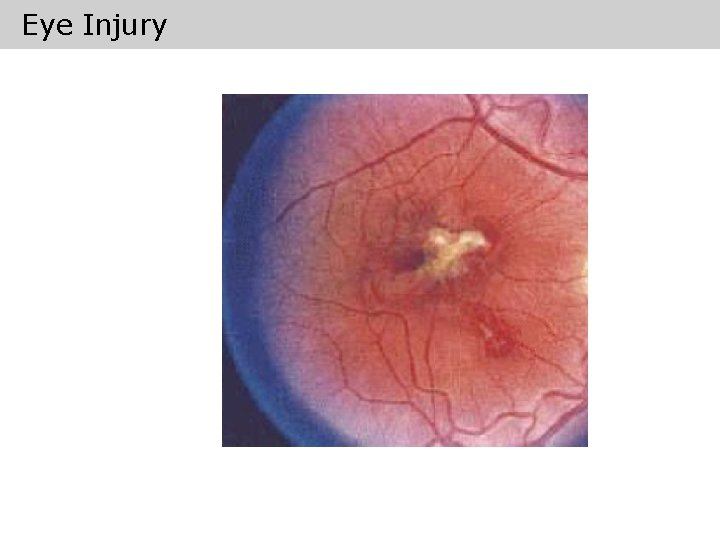
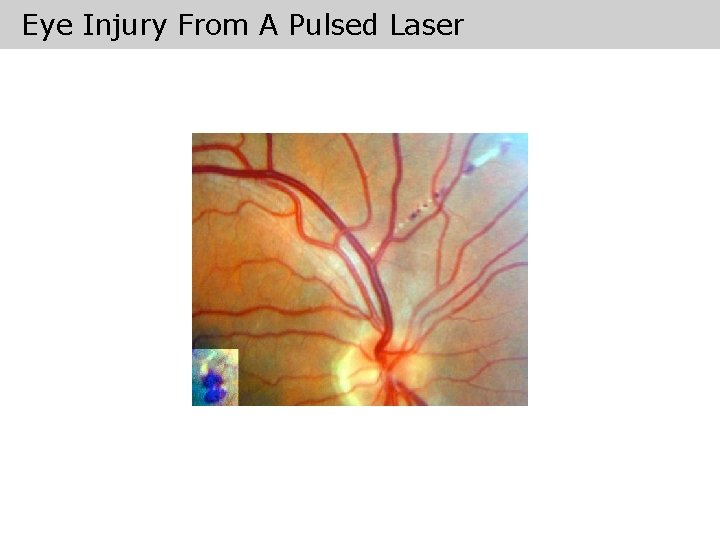
Eye Injury
Eye Injury From A Pulsed Laser
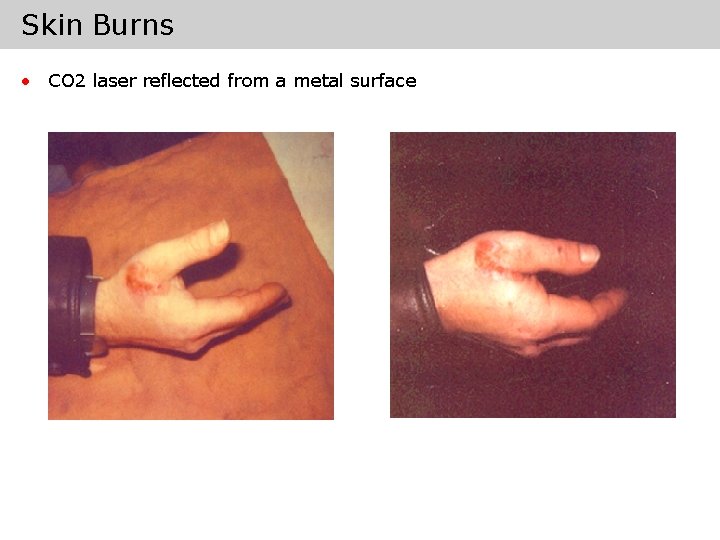
Skin Burns • CO 2 laser reflected from a metal surface
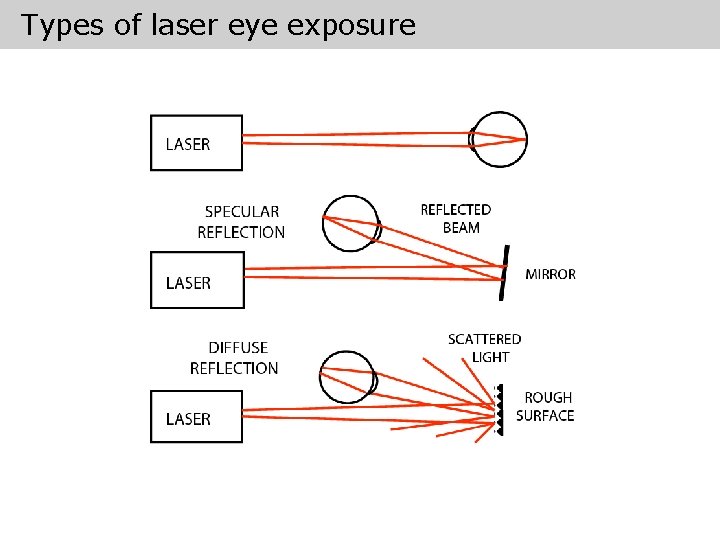
Types of laser eye exposure
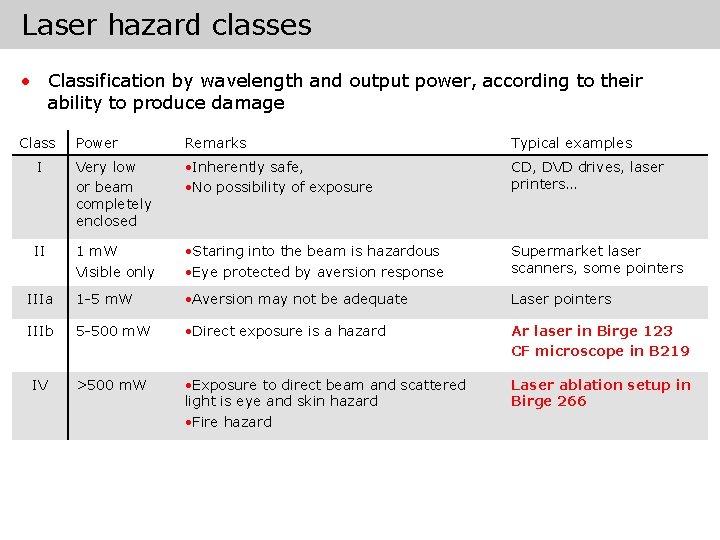
Laser hazard classes • Classification by wavelength and output power, according to their ability to produce damage Class Power Remarks Typical examples I Very low or beam completely enclosed • Inherently safe, • No possibility of exposure CD, DVD drives, laser printers… II 1 m. W Visible only • Staring into the beam is hazardous • Eye protected by aversion response Supermarket laser scanners, some pointers IIIa 1 -5 m. W • Aversion may not be adequate Laser pointers IIIb 5 -500 m. W • Direct exposure is a hazard Ar laser in Birge 123 CF microscope in B 219 IV >500 m. W • Exposure to direct beam and scattered light is eye and skin hazard • Fire hazard Laser ablation setup in Birge 266
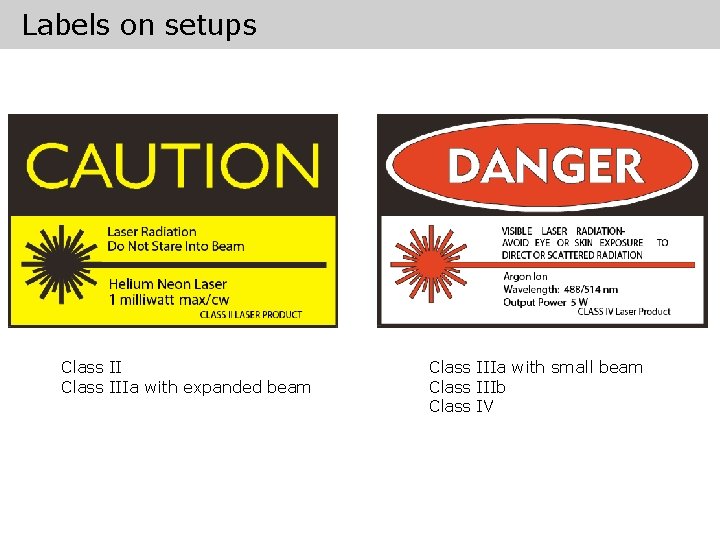
Labels on setups Class IIIa with expanded beam Class IIIa with small beam Class IIIb Class IV
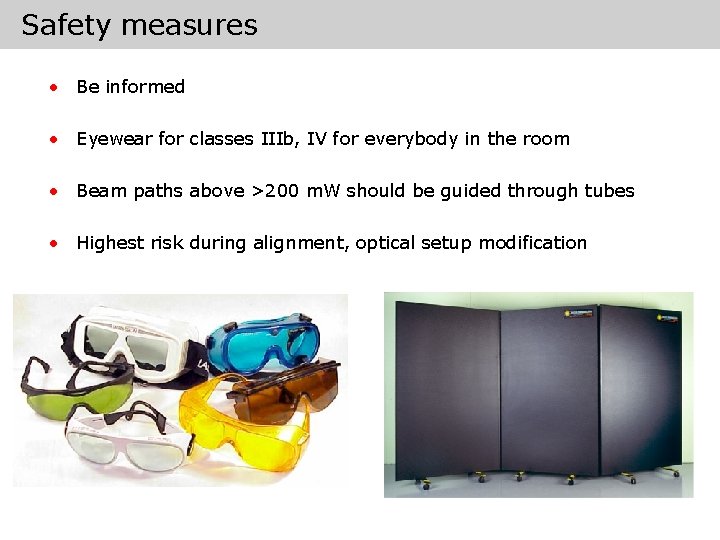
Safety measures • Be informed • Eyewear for classes IIIb, IV for everybody in the room • Beam paths above >200 m. W should be guided through tubes • Highest risk during alignment, optical setup modification
IIIb and IV requirements • EHS 280 Laser Safety Training • EHS 281 Laser Safety Retraining (every 3 years) • On the Job Training – provided by PI/supervisor & documented in the Activity Hazard Document • Laser eye exams Links: UCB laser safety LBL laser safety