
Laser induced fluorescence of tetracene in hydrogen droplets

- Slides: 20
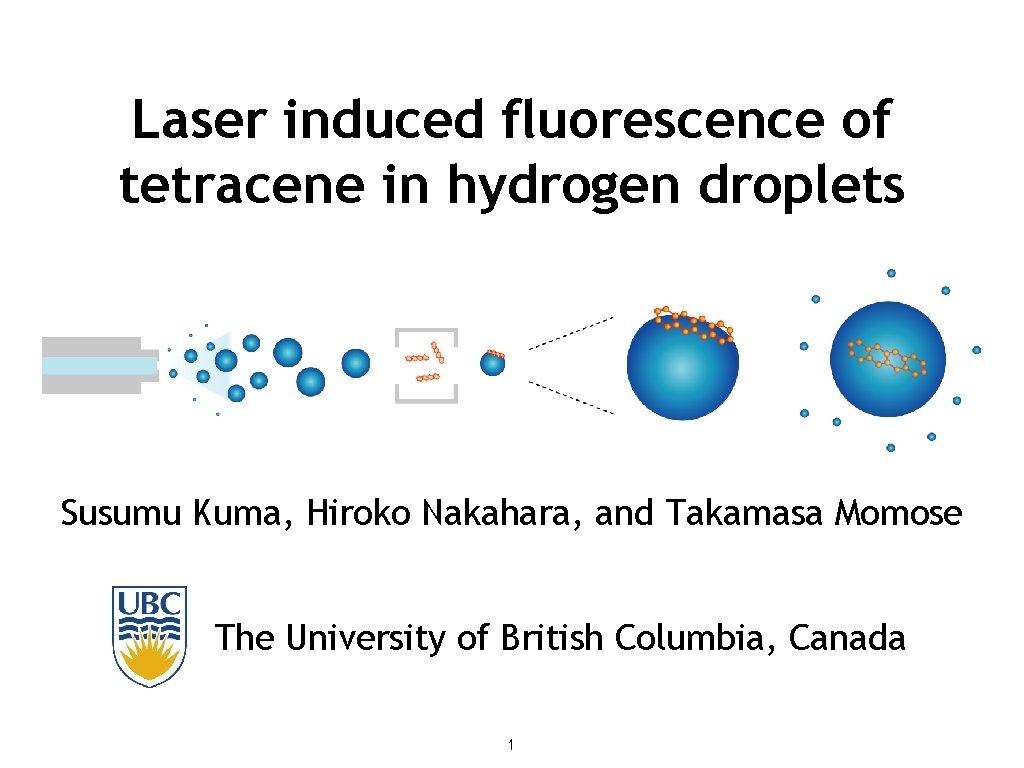
Laser induced fluorescence of tetracene in hydrogen droplets Susumu Kuma, Hiroko Nakahara, and Takamasa Momose The University of British Columbia, Canada 1
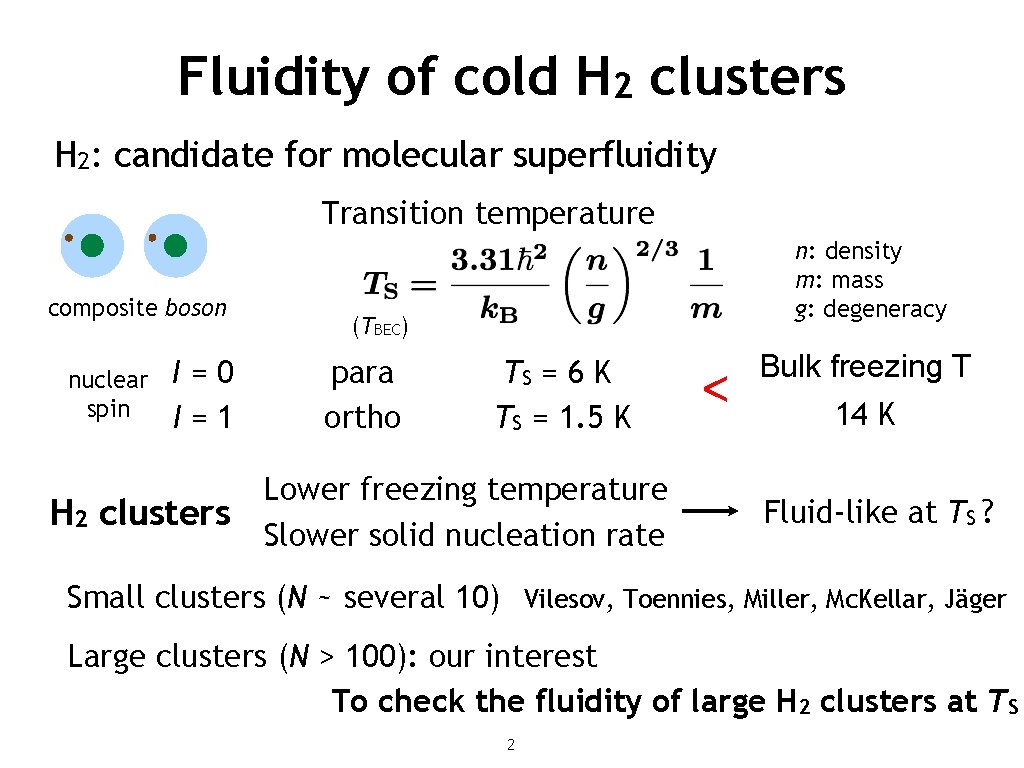
Fluidity of cold H 2 clusters H 2: candidate for molecular superfluidity Transition temperature composite boson nuclear spin I=0 I=1 H 2 clusters n: density m: mass g: degeneracy (TBEC) para ortho TS = 6 K TS = 1. 5 K Lower freezing temperature Slower solid nucleation rate < Bulk freezing T 14 K Fluid-like at TS ? Small clusters (N ~ several 10) Vilesov, Toennies, Miller, Mc. Kellar, Jäger Large clusters (N > 100): our interest To check the fluidity of large H 2 clusters at TS 2
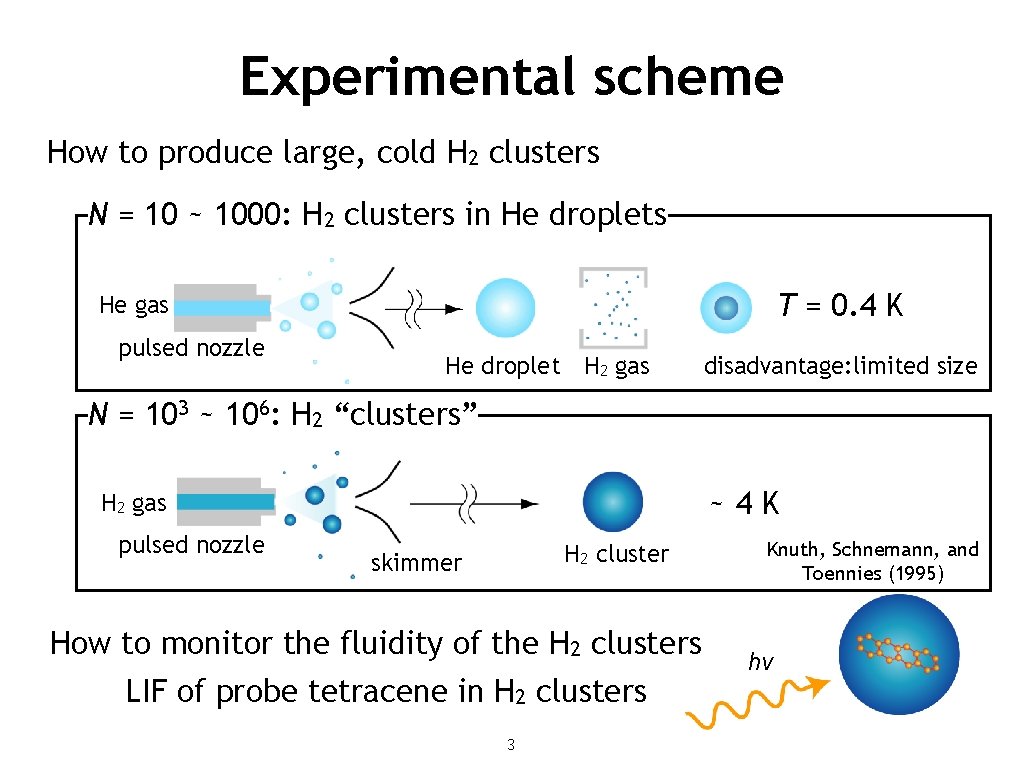
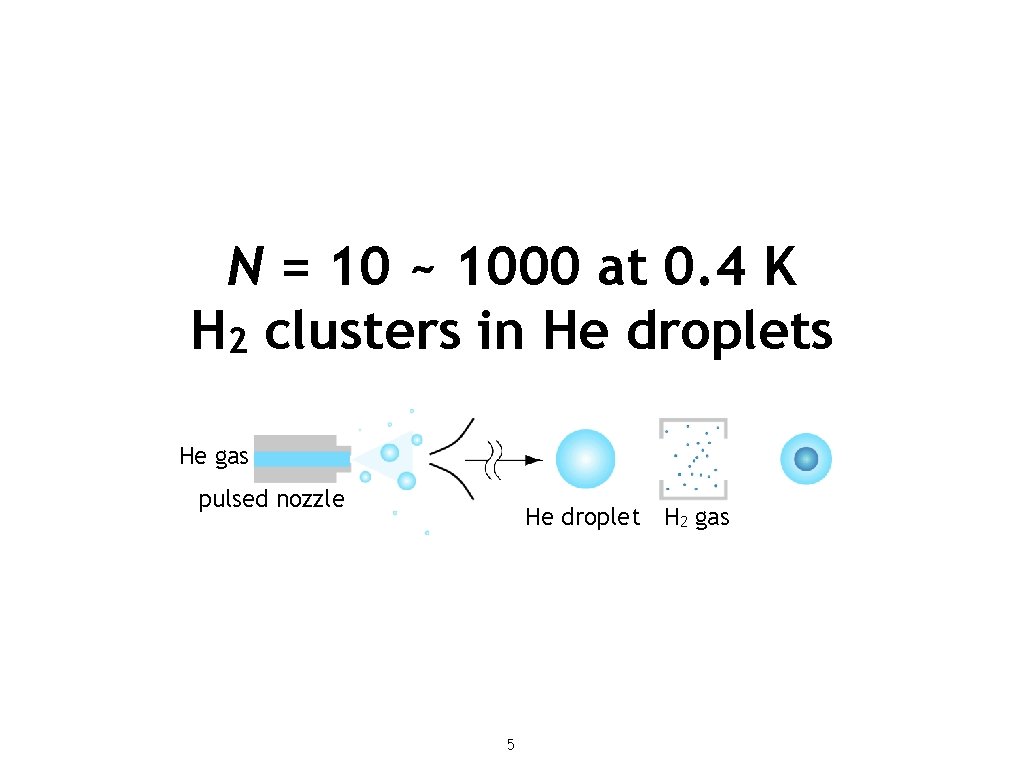
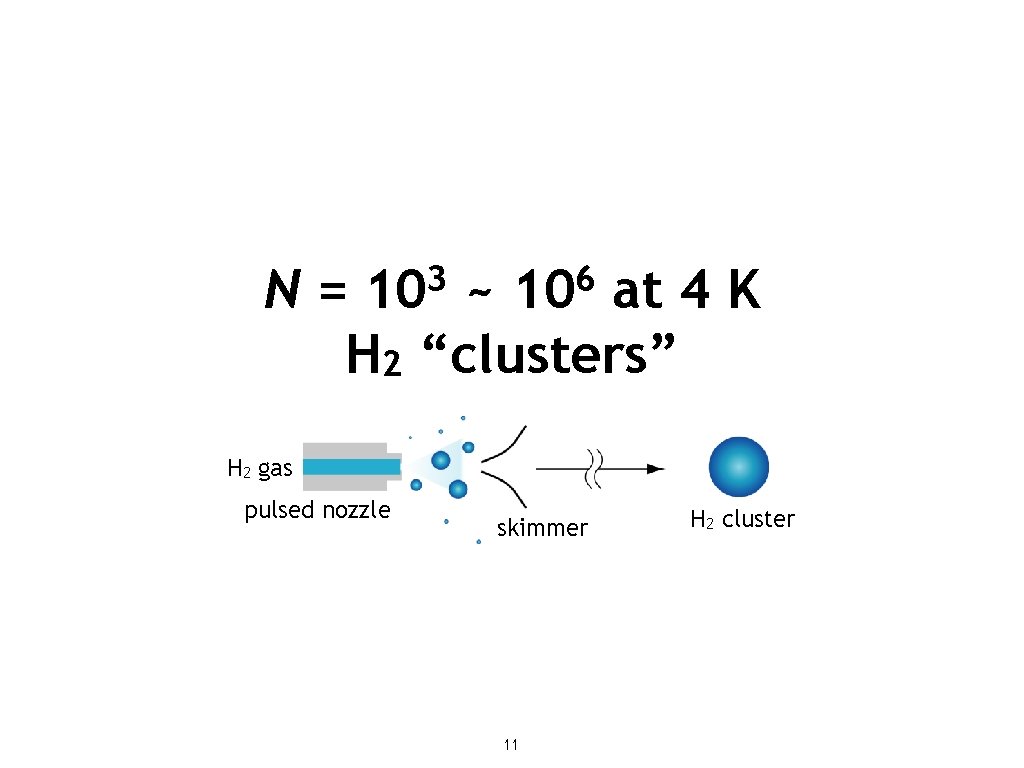
Experimental scheme How to produce large, cold H 2 clusters N = 10 ~ 1000: H 2 clusters in He droplets T = 0. 4 K He gas pulsed nozzle He droplet H 2 gas disadvantage: limited size N = 103 ~ 106: H 2 “clusters” ~4 K H 2 gas pulsed nozzle H 2 cluster skimmer How to monitor the fluidity of the H 2 clusters LIF of probe tetracene in H 2 clusters 3 Knuth, Schnemann, and Toennies (1995) hν
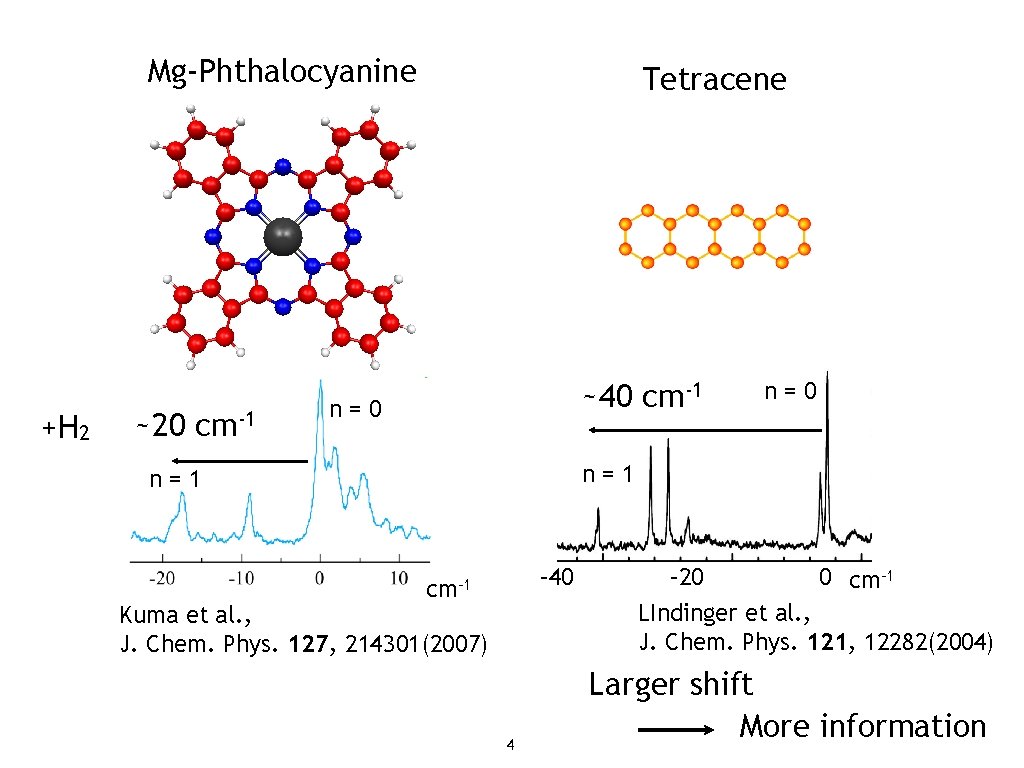
Mg-Phthalocyanine +H 2 ~20 cm-1 Tetracene ~40 cm-1 n=0 n=1 – 40 cm-1 – 20 0 cm-1 LIndinger et al. , J. Chem. Phys. 121, 12282(2004) Kuma et al. , J. Chem. Phys. 127, 214301(2007) 4 Larger shift More information
N = 10 ~ 1000 at 0. 4 K H 2 clusters in He droplets He gas pulsed nozzle He droplet 5 H 2 gas
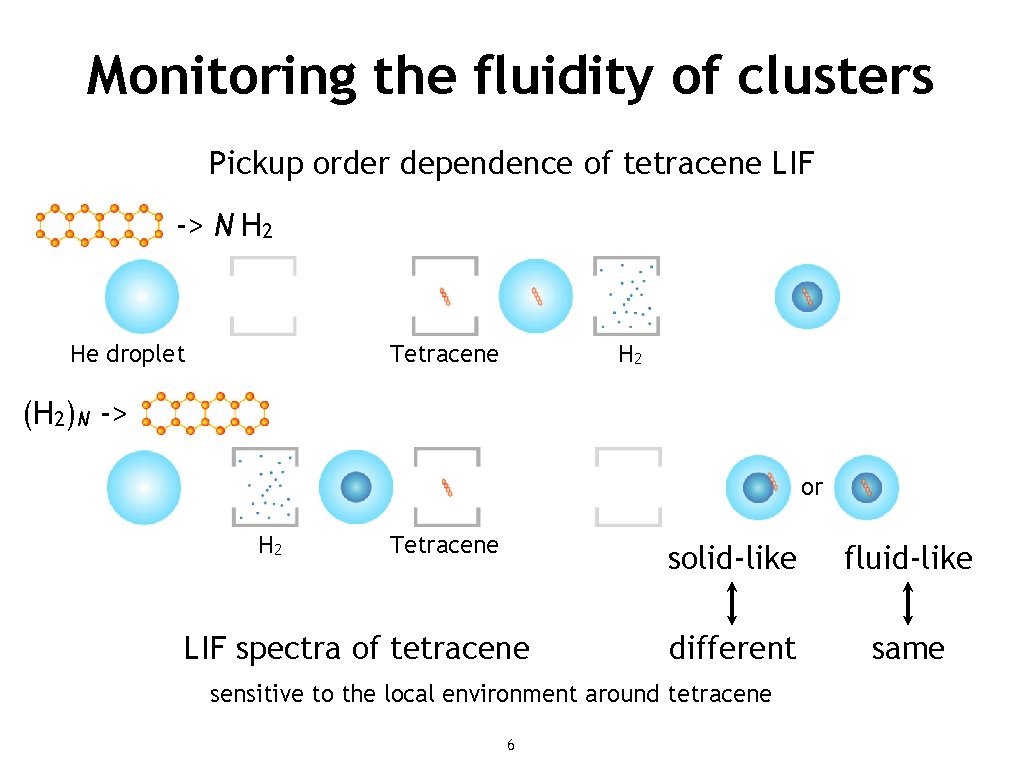
Monitoring the fluidity of clusters Pickup order dependence of tetracene LIF Tetracene -> N H 2 He droplet Tetracene H 2 (H 2)N -> Tetracene or H 2 Tetracene LIF spectra of tetracene solid-like fluid-like different same sensitive to the local environment around tetracene 6
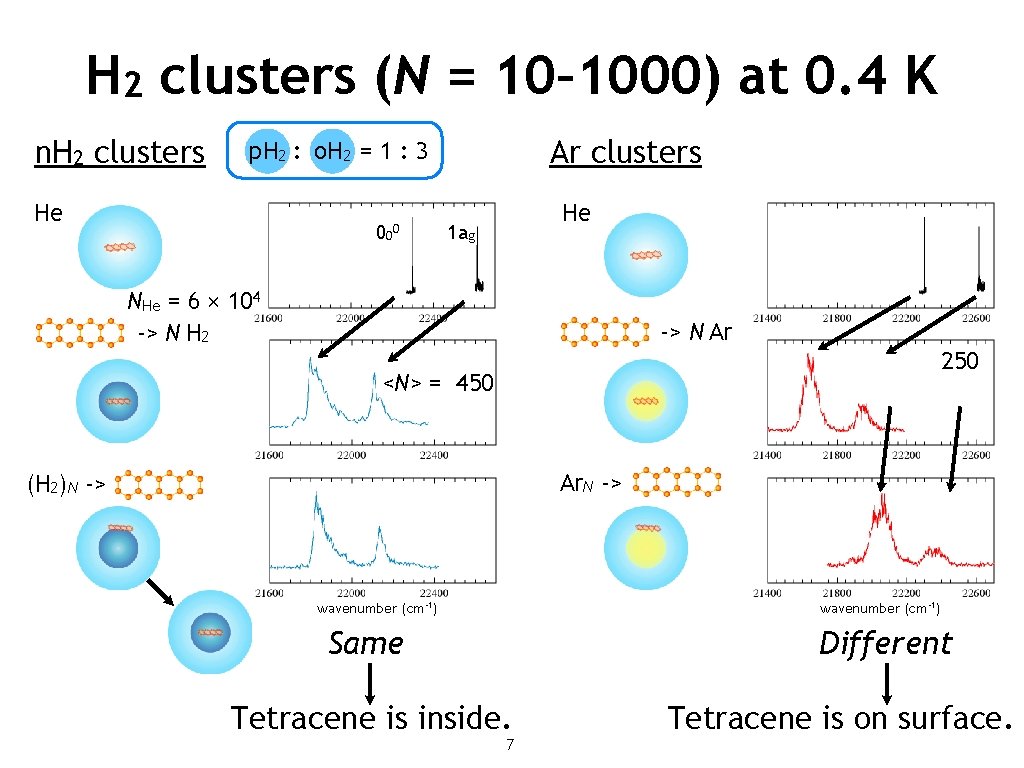
H 2 clusters (N = 10– 1000) at 0. 4 K n. H 2 clusters Ar clusters p. H 2 : o. H 2 = 1 : 3 He 000 He 1 ag NHe = 6 × 10⁴ Tetracene -> N H 2 Tetracene -> N Ar 250 <N> = 450 Ar. N -> Tetracene (H 2)N -> Tetracene wavenumber (cm-1) Same Different Tetracene is inside. 7 Tetracene is on surface.
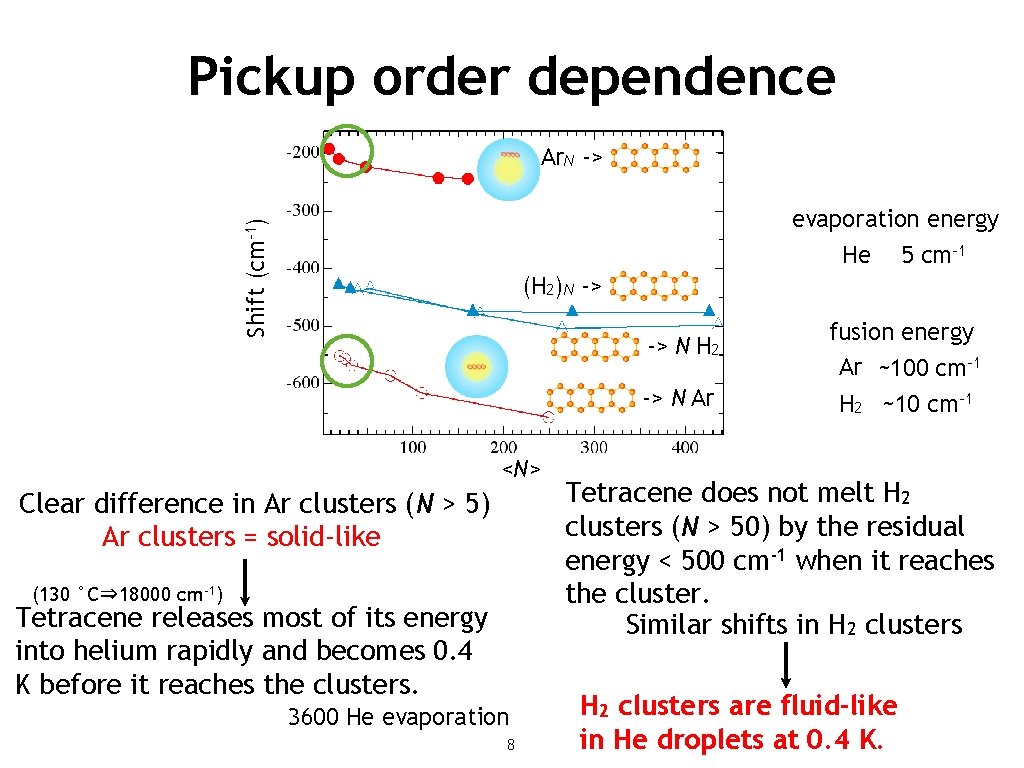
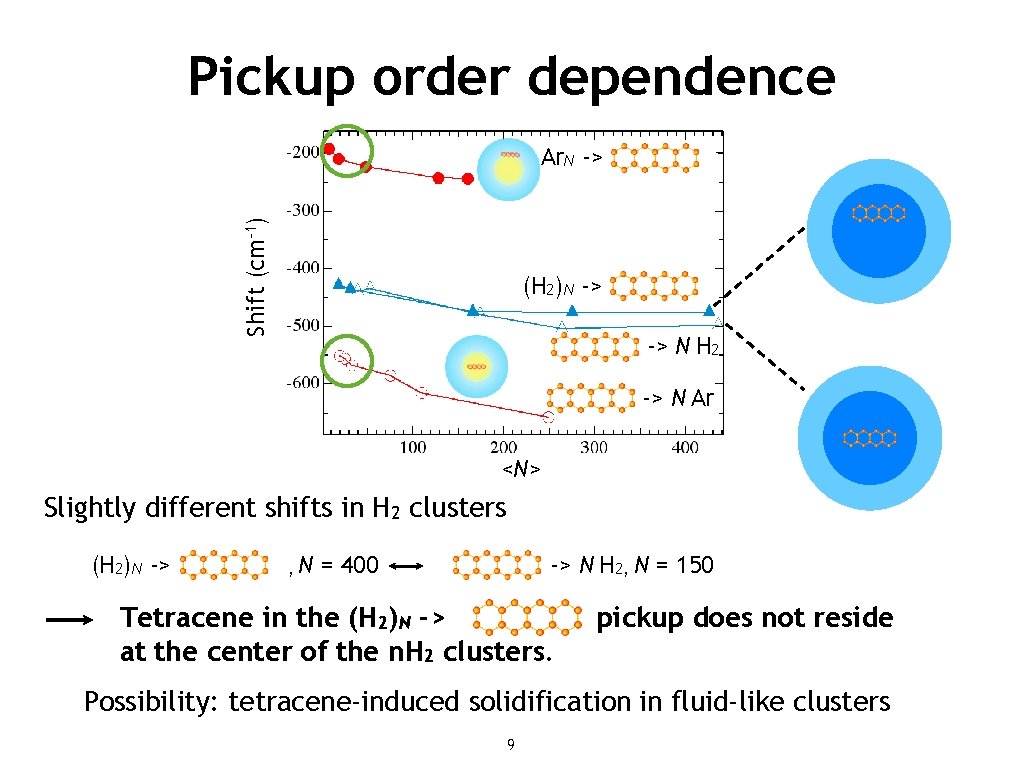
Pickup order dependence Ar. N -> Tetracene Shift (cm-1) evaporation energy He 5 cm-1 (H 2)N -> Tetracene -> N H 2 Tetracene -> N Ar <N> Clear difference in Ar clusters (N > 5) Ar clusters = solid-like (130 °C⇒ 18000 cm-1) Tetracene releases most of its energy into helium rapidly and becomes 0. 4 K before it reaches the clusters. 3600 He evaporation 8 fusion energy Ar ~100 cm-1 H 2 ~10 cm-1 Tetracene does not melt H 2 clusters (N > 50) by the residual energy < 500 cm-1 when it reaches the cluster. Similar shifts in H 2 clusters are fluid-like in He droplets at 0. 4 K.
Pickup order dependence Shift (cm-1) Ar. N -> Tetracene (H 2)N -> Tetracene -> N H 2 Tetracene -> N Ar <N> Slightly different shifts in H 2 clusters (H 2)N -> Tetracene, N = 400 Tetracene -> N H 2, N = 150 Tetracene in the (H 2)N -> Tetracene pickup does not reside at the center of the n. H 2 clusters. Possibility: tetracene-induced solidification in fluid-like clusters 9
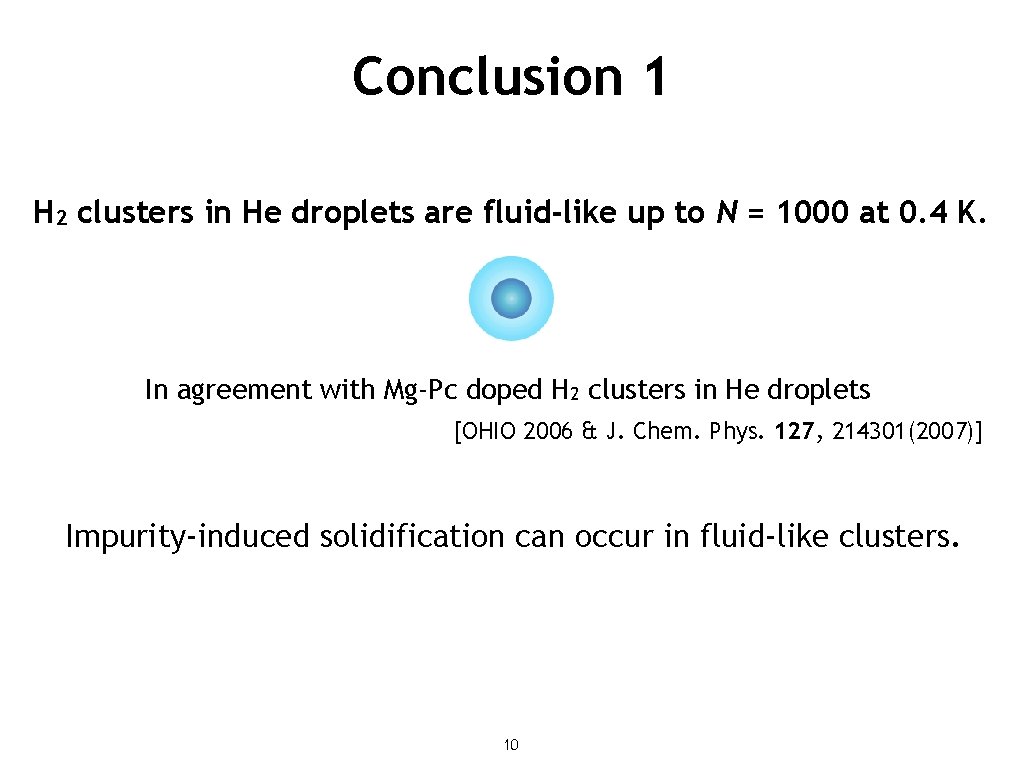
Conclusion 1 H 2 clusters in He droplets are fluid-like up to N = 1000 at 0. 4 K. In agreement with Mg-Pc doped H 2 clusters in He droplets [OHIO 2006 & J. Chem. Phys. 127, 214301(2007)] Impurity-induced solidification can occur in fluid-like clusters. 10
3 10 6 10 N= ~ at 4 K H 2 “clusters” H 2 gas pulsed nozzle skimmer 11 H 2 cluster
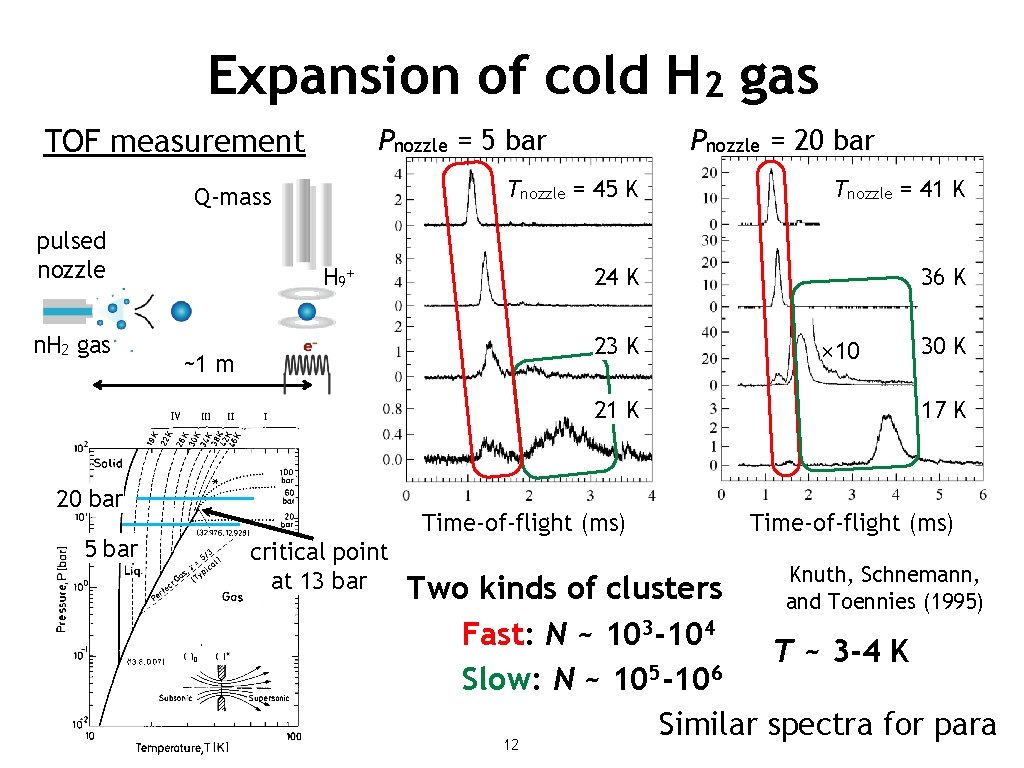
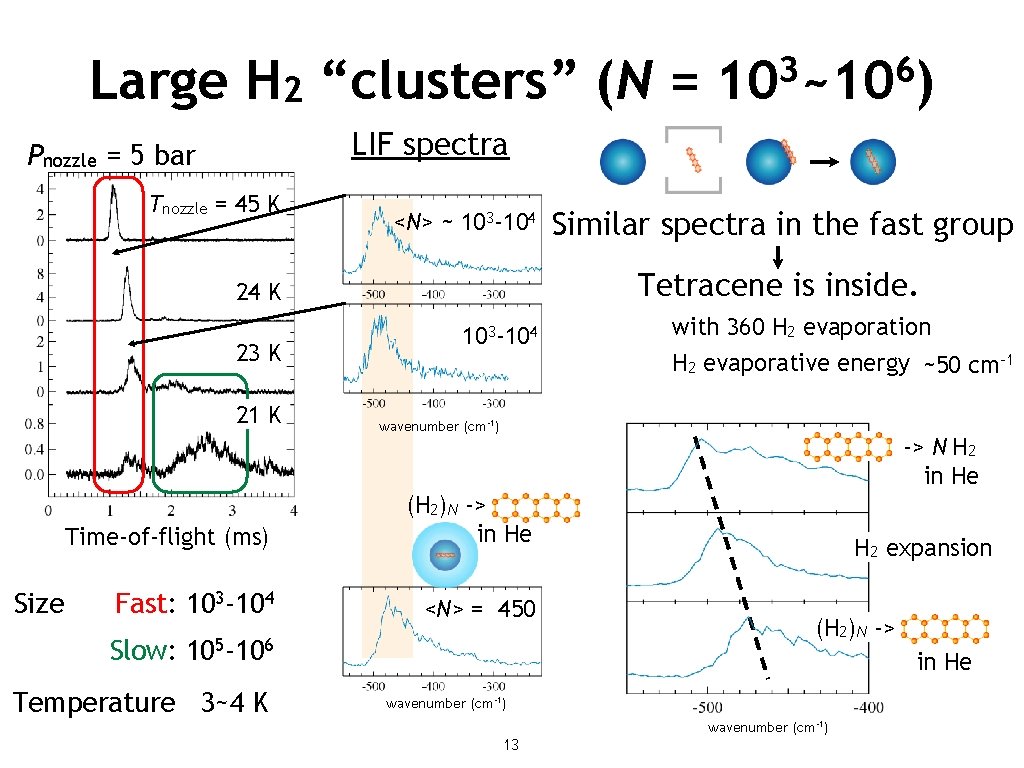
Expansion of cold H 2 gas TOF measurement Pnozzle = 5 bar Q-mass pulsed nozzle n. H 2 gas H 9+ Pnozzle = 20 bar Tnozzle = 45 K Tnozzle = 41 K 24 K 36 K 23 K ~1 m 21 K 20 bar 5 bar Time-of-flight (ms) critical point at 13 bar × 10 30 K 17 K Time-of-flight (ms) Knuth, Schnemann, and Toennies (1995) Two kinds of clusters Fast: N ~ 103 -104 T ~ 3 -4 K Slow: N ~ 105 -106 Similar spectra for para 12
Large H 2 “clusters” (N = LIF spectra Pnozzle = 5 bar Tnozzle = 45 K <N> ~ 103 -104 Similar spectra in the fast group Tetracene is inside. 24 K 23 K 21 K Time-of-flight (ms) Size 3 6 10 ~10 ) Fast: 103 -104 wavenumber (cm-1) Tetrene -> N H 2 in He (H 2)N -> Tetracene in He <N> = 450 Slow: 105 -106 Temperature 3~4 K with 360 H 2 evaporation H 2 evaporative energy ~50 cm-1 H 2 expansion (H 2)N -> Tetracene in He wavenumber (cm-1) 13
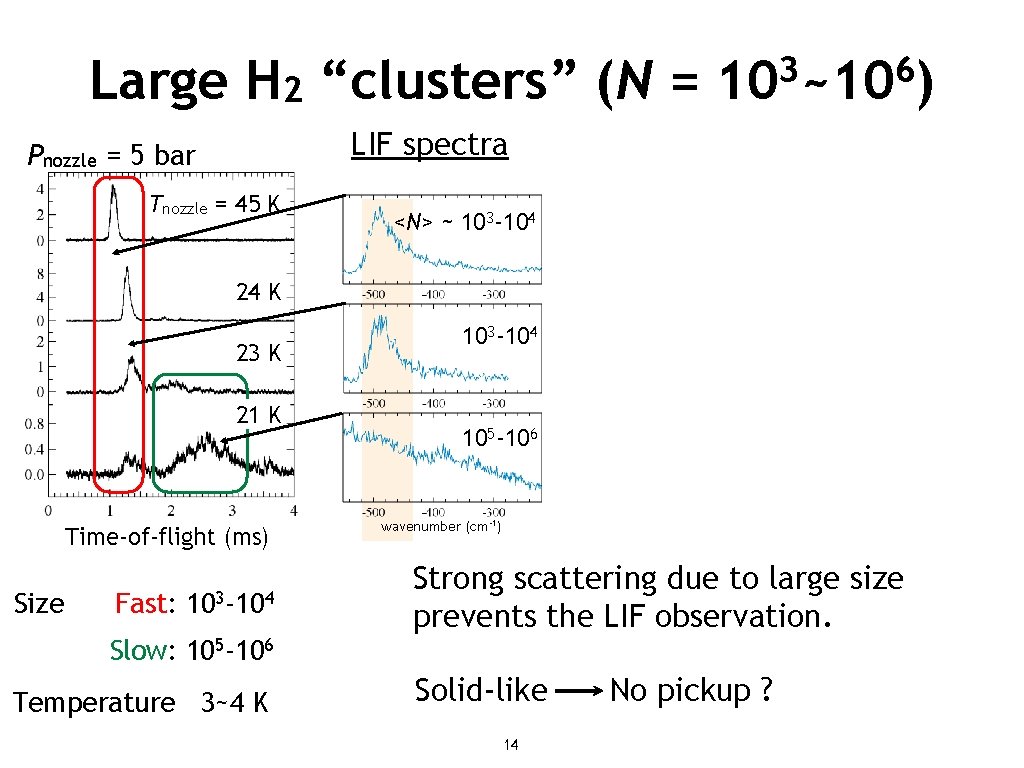
Large H 2 “clusters” (N = 3 6 10 ~10 ) LIF spectra Pnozzle = 5 bar Tnozzle = 45 K <N> ~ 103 -104 24 K 23 K 21 K Time-of-flight (ms) Size Fast: 103 -104 Slow: 105 -106 Temperature 3~4 K 103 -104 105 -106 wavenumber (cm-1) Strong scattering due to large size prevents the LIF observation. Solid-like 14 No pickup ?
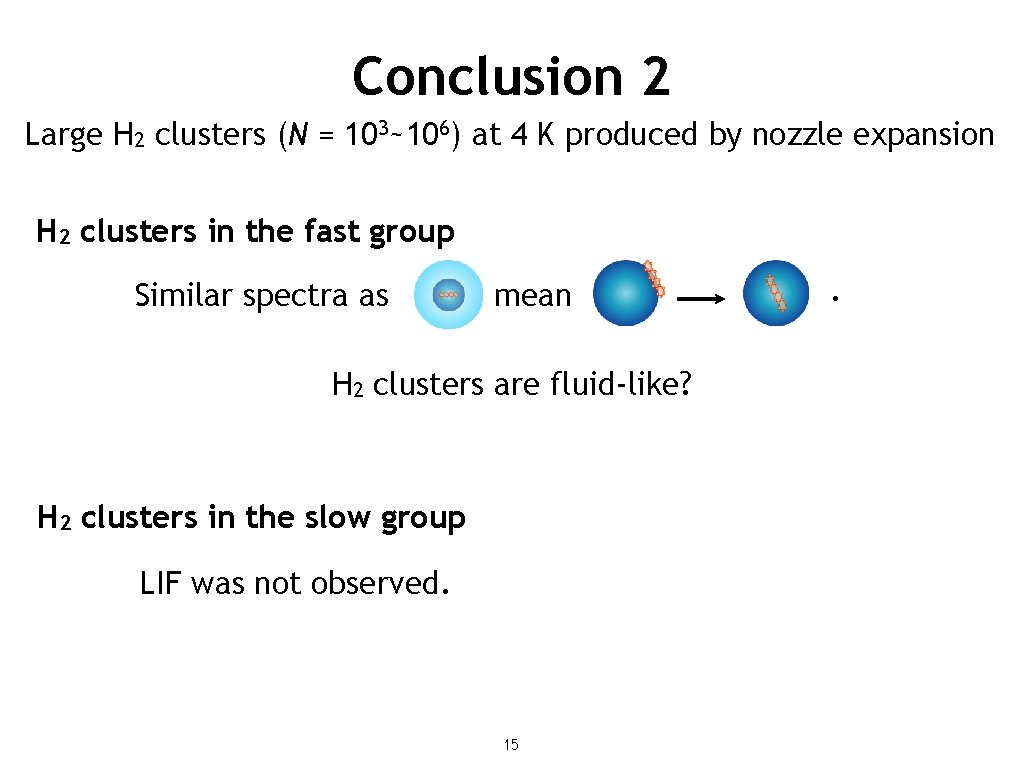
Conclusion 2 Large H 2 clusters (N = 103~106) at 4 K produced by nozzle expansion H 2 clusters in the fast group Similar spectra as mean H 2 clusters are fluid-like? H 2 clusters in the slow group LIF was not observed. 15 .
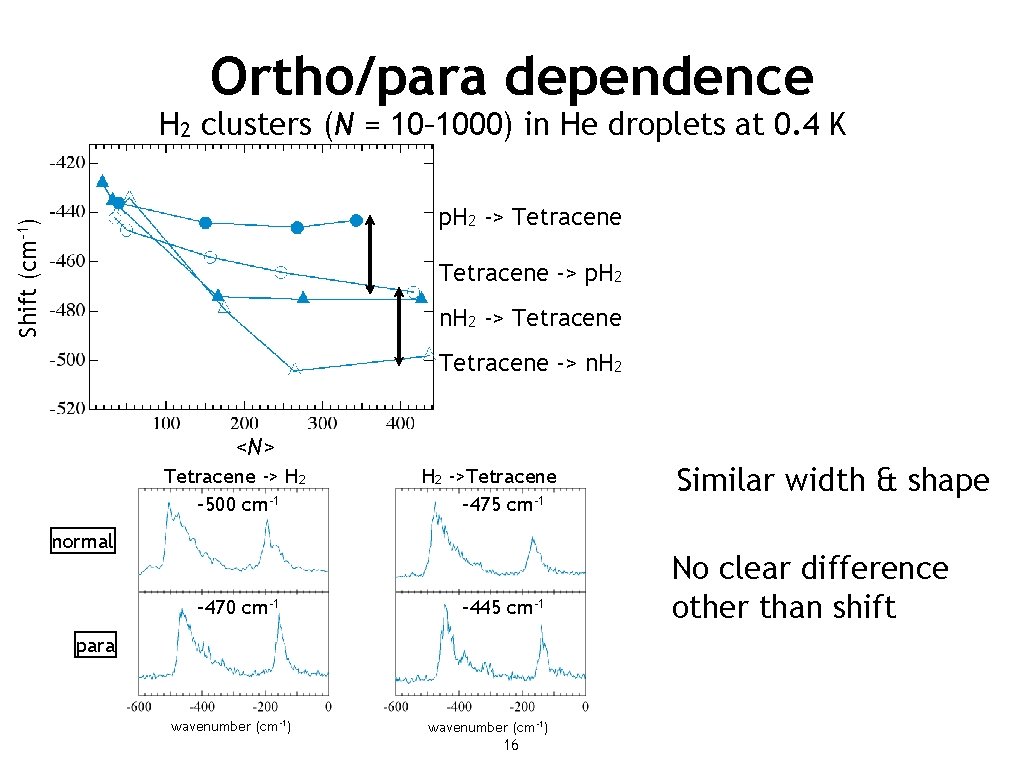
Ortho/para dependence H 2 clusters (N = 10– 1000) in He droplets at 0. 4 K Shift (cm-1) p. H 2 -> Tetracene -> p. H 2 n. H 2 -> Tetracene -> n. H 2 <N> Tetracene -> H 2 – 500 cm-1 H 2 ->Tetracene – 475 cm-1 normal – 470 cm-1 – 445 cm-1 para wavenumber (cm-1) 16 Similar width & shape No clear difference other than shift
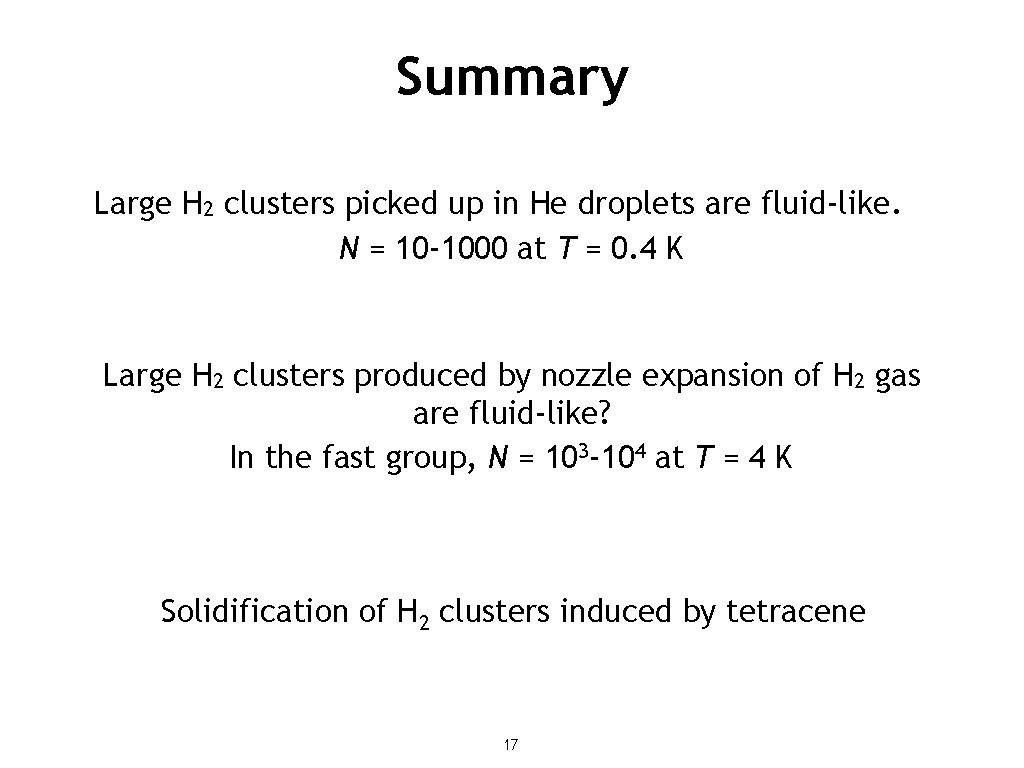
Summary Large H 2 clusters picked up in He droplets are fluid-like. N = 10 -1000 at T = 0. 4 K Large H 2 clusters produced by nozzle expansion of H 2 gas are fluid-like? In the fast group, N = 103 -104 at T = 4 K Solidification of H 2 clusters induced by tetracene 17
Acknowledgments Dr. Andrey F. Vilesov Dr. Mikhail N. Slipchenko Members of Momose lab @ UBC especially, Akira Takahashi & Majd Mustafa $$$ from JSPS (Japan) JST (Japan) NSERC (Canada) 18
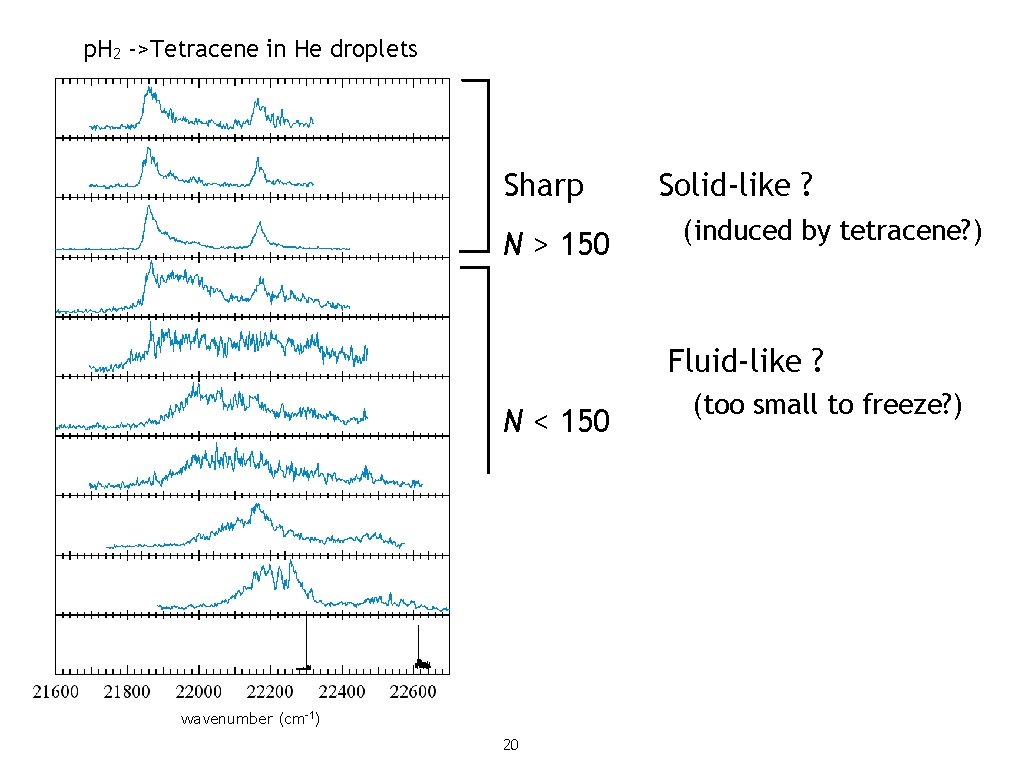
p. H 2 ->Tetracene in He droplets Sharp N > 150 Solid-like ? (induced by tetracene? ) Fluid-like ? N < 150 wavenumber (cm-1) 20 (too small to freeze? )