
Laser Frequency Stabilization Darsa Donelan University of Florida
Laser Frequency Stabilization Darsa Donelan University of Florida October 21 SESAPS 2011 1
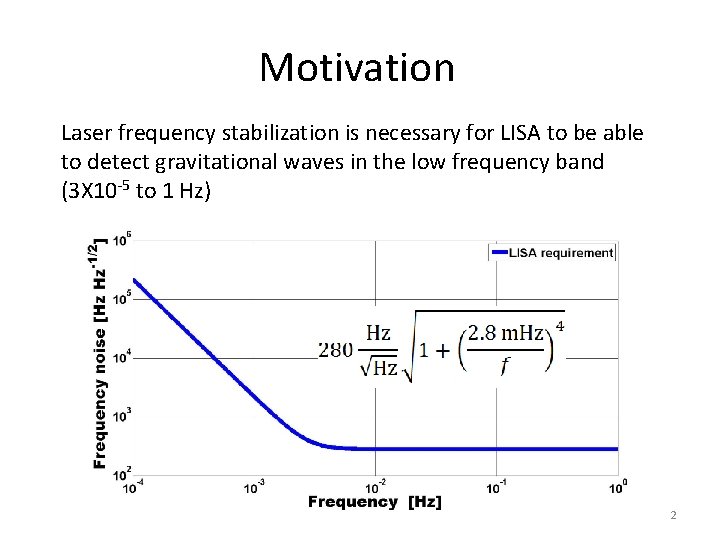
Motivation Laser frequency stabilization is necessary for LISA to be able to detect gravitational waves in the low frequency band (3 X 10 -5 to 1 Hz) 2

Free running laser 104! We want to flatten and lower the spectral noise density 3
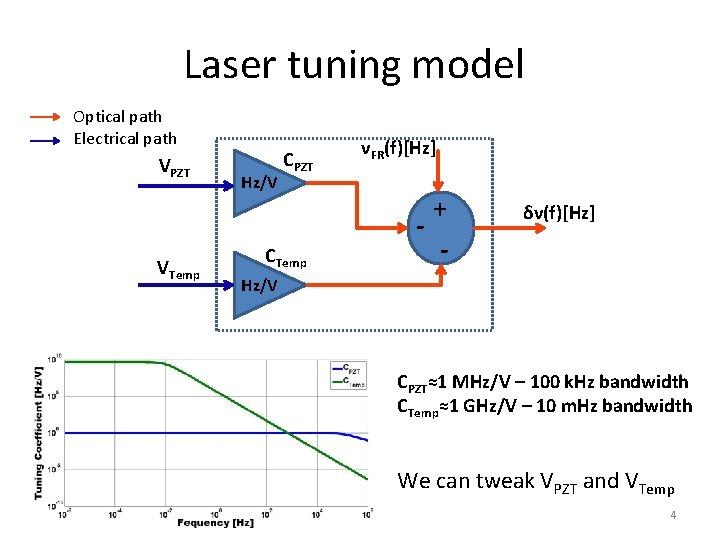
Laser tuning model Optical path Electrical path VPZT VTemp Hz/V CPZT CTemp νFR(f)[Hz] + - δν(f)[Hz] Hz/V CPZT≈1 MHz/V – 100 k. Hz bandwidth CTemp≈1 GHz/V – 10 m. Hz bandwidth We can tweak VPZT and VTemp 4
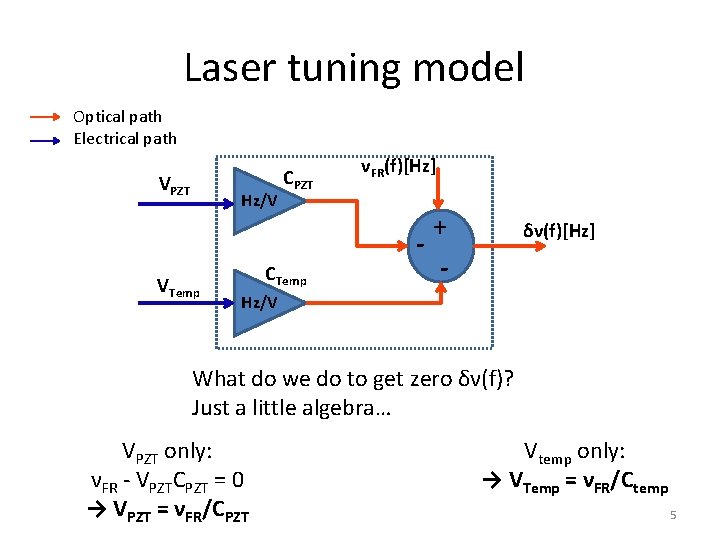
Laser tuning model Optical path Electrical path VPZT Hz/V VTemp CPZT CTemp νFR(f)[Hz] + - δν(f)[Hz] Hz/V What do we do to get zero δν(f)? Just a little algebra… VPZT only: νFR - VPZTCPZT = 0 → VPZT = νFR/CPZT Vtemp only: → VTemp = νFR/Ctemp 5
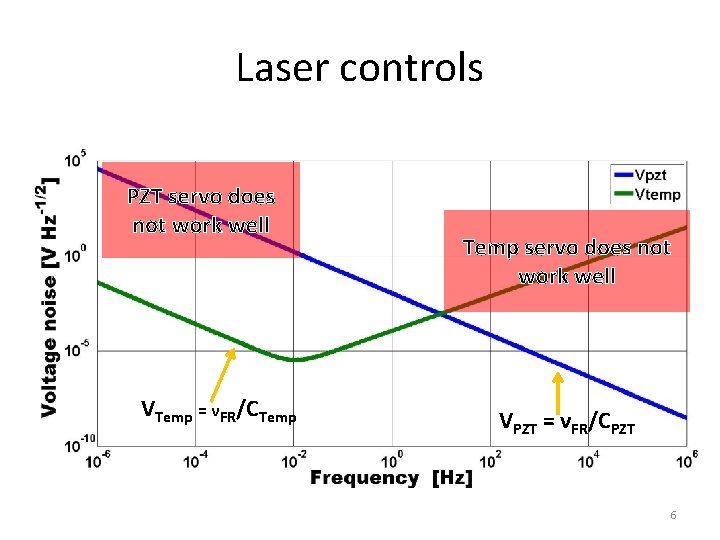
Laser controls PZT servo does not work well VTemp = νFR/CTemp servo does not work well VPZT = νFR/CPZT 6
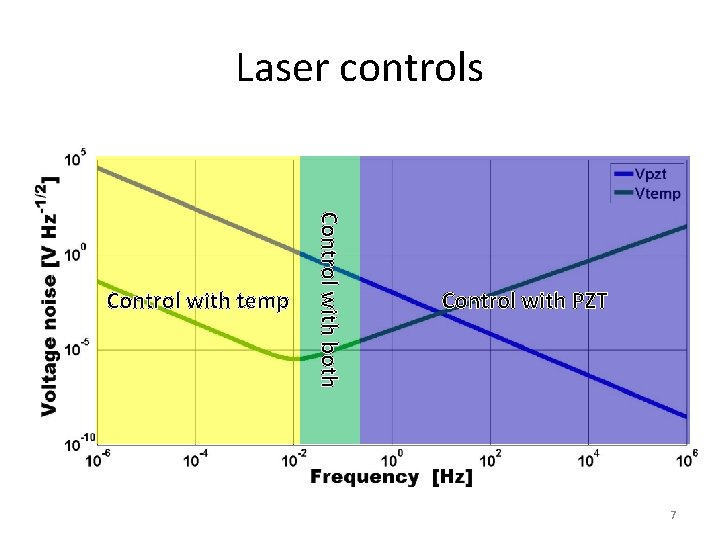
Laser controls Control with both Control with temp Control with PZT 7
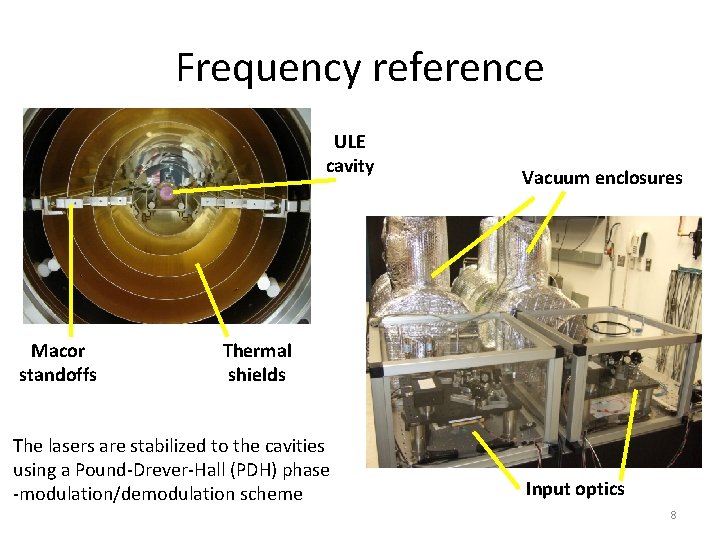
Frequency reference ULE cavity Macor standoffs Vacuum enclosures Thermal shields The lasers are stabilized to the cavities using a Pound-Drever-Hall (PDH) phase -modulation/demodulation scheme Input optics 8
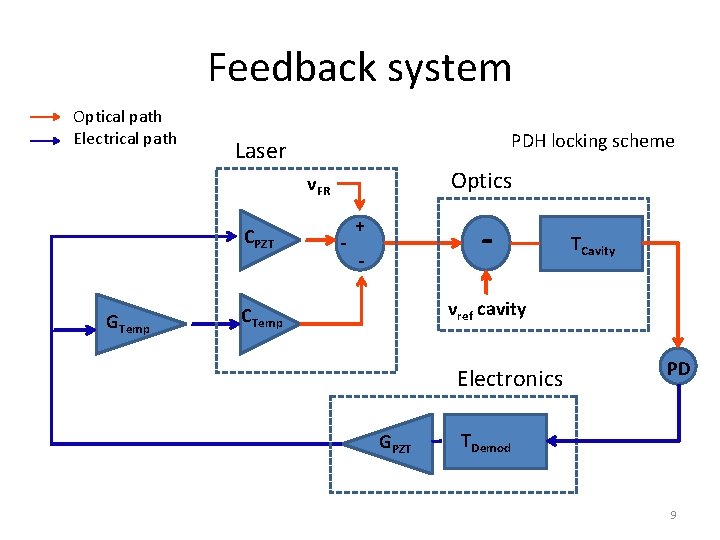
Feedback system Optical path Electrical path PDH locking scheme Laser Optics νFR CPZT GTemp - - + - TCavity νref cavity CTemp Electronics GPZT PD TDemod 9
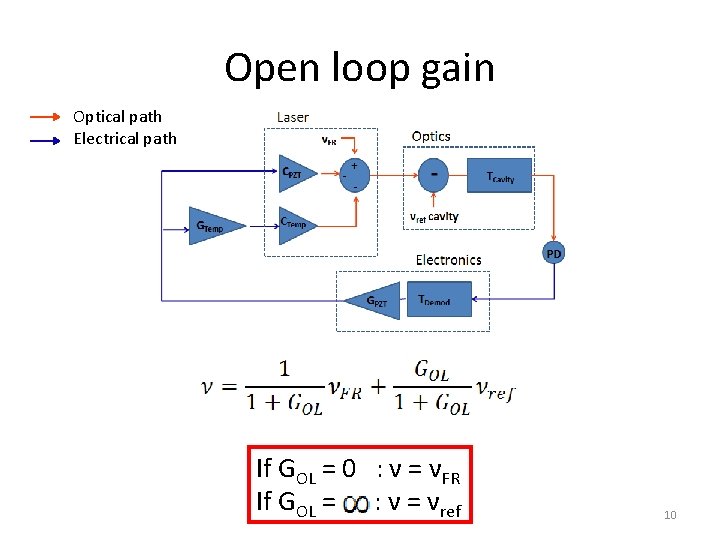
Open loop gain Optical path Electrical path If GOL = 0 : ν = νFR If GOL = : ν = νref 10
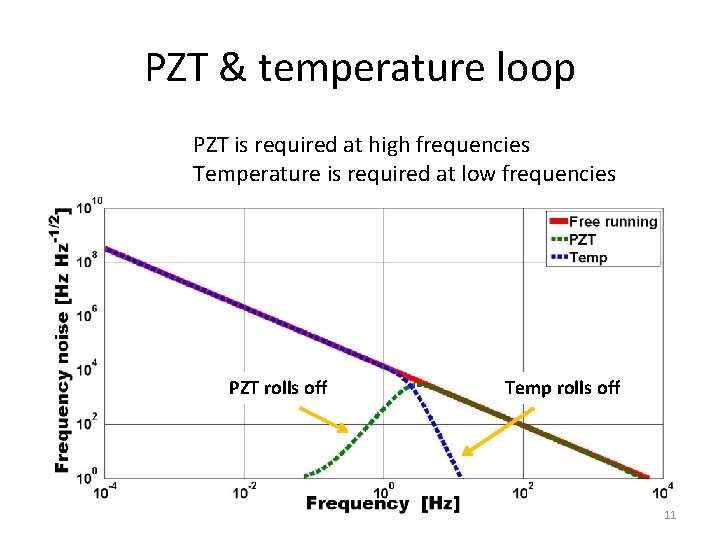
PZT & temperature loop PZT is required at high frequencies Temperature is required at low frequencies PZT rolls off Temp rolls off 11
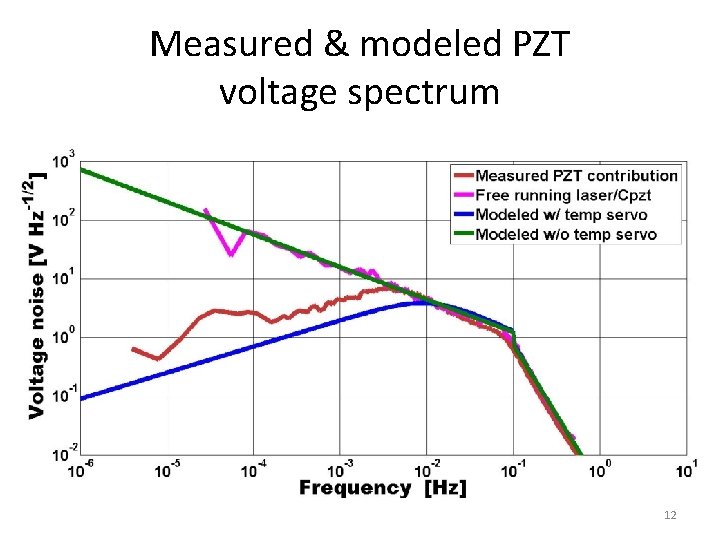
Measured & modeled PZT voltage spectrum 12
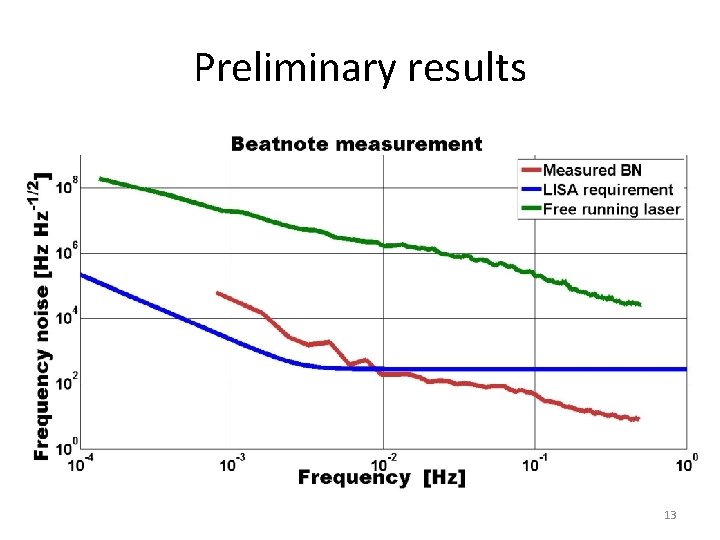
Preliminary results 13
Acknowledgements Guido Mueller (UF) Pep Sanjuan (UF) Ira Thorpe (GSFC) Jeff Livas (GSFC) NASA grant NNX 11 AO 26 G The American tax payers 14
- Slides: 14