
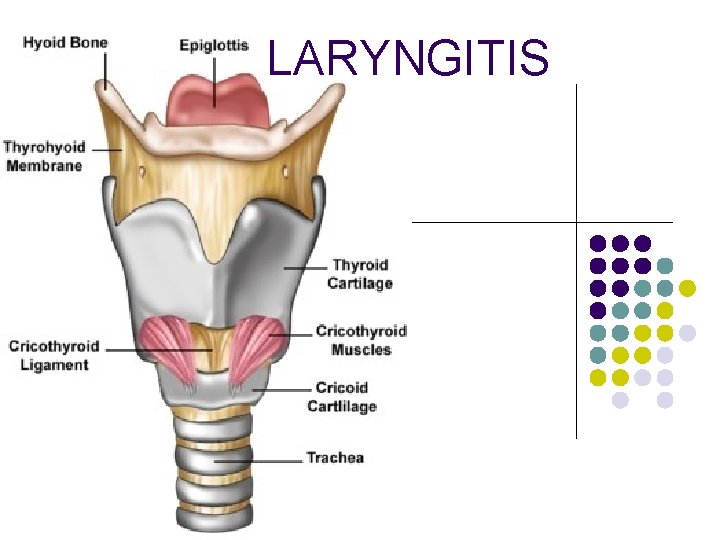
LARYNGITIS DEFINITION It is the inflammation of larynx
- Slides: 11
LARYNGITIS
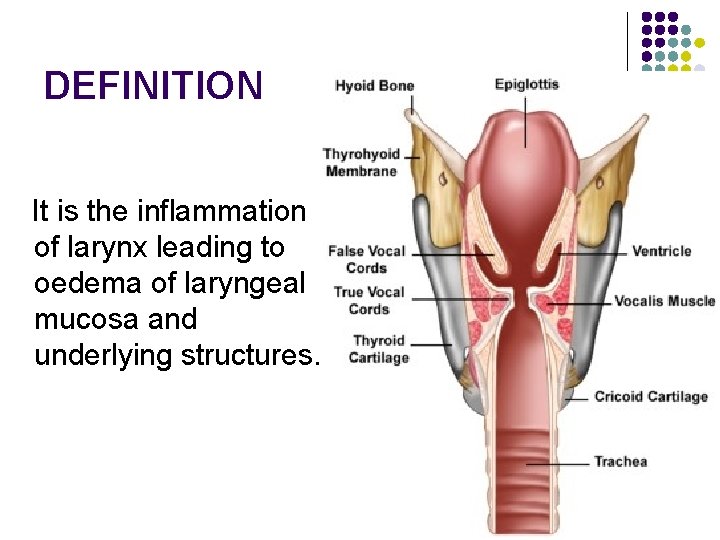
DEFINITION It is the inflammation of larynx leading to oedema of laryngeal mucosa and underlying structures.
ETIOLOGY INFECTIOUS: l Viral laryngitis can be caused by rhinovirus, influenza virus, parainfluenza virus, adenovirus, coronavirus, and RSV. l Bacterial laryngitis can be caused by group A streptococcus, streptococcus pneumoniae, C. diphtheriae, M. catarrhalis, haemophilus influenzae, bordetella pertussis, and M. tuberculosis. l Fungal laryngitis can be caused by Histoplasma, Candida (especially in immunocompromised persons)
NON INFECTIOUS l Inhaled fumes l Acid reflux disease l Allergies l Excessive coughing, smoking, or alcohol consumption. l Inflammation due to overuse of the vocal cords l Prolonged use of inhaled corticosteroids for asthma treatment l Thermal or chemical burns l Laryngeal trauma, including iatrogenic one caused by endotracheal intubation
Predisposing factors l l l Smoking Psychological strain Physical stress Acid reflux Frequent sinus infectionsr Types – acute (less then 3 weeks)and chronic (more than 3 weeks )
Pathophysiology l Due to etiological factors l The mucosa of the larynx becomes congested and may become oedematous. l A fibrinous exudate may occur on the surface. l Signs and symptoms l Sometimes infection involves the perichondrium of laryngeal cartilages producing perichondritiis.
l Husky, high pitched voice. l Body aches, Fever, Malaise. l Dysphonia (hoarseness) or aphonia (inability to speak) l Dysphagia (difficulty in swallowing) l Dyspnea (difficulty in breathing), predominantly in children l Dry, burning throat l Dry irritating paroxysmal cough. l Cold or flu-like symptoms l Swollen lymph nodes in the throat, chest, or face l Hemoptysis (coughing out blood) l Increased production of saliva. CLINICAL FEATURES
l l Signs of acute URTI. Dry thick sticky secretions. Dusky red and swollen vocal cords. congestion of laryngeal mucosa.
TREATMENT SUPPORTIVE l Voice rest. l Steam inhalation. l Cough suppressants. l Avoid smoking and cold climet. l Fluid intake.
TREATMENT DEFINITIVE l If laryngitis due to gastroesophageal reflux, an H 2 inhibitor (ranitidine) or proton-pump inhibitor (omeprazole) is used to reduce gastric acid secretions. l If laryngitis is caused by thermal or chemical burns, steroids are used. l In viral laryngitis, drinking sufficient fluids will be helpful. l If laryngitis is due to a bacterial or fungal infection, appropriate antibiotic or antifungal therapy is given.
To improve vocal hygiene l Drinking lot of fluids - Drink 7 -9 glasses of water per day; herbal tea and chicken soup also provides soothing effect. l maintaining good general health - Exercise regularly. Avoiding smoking - They are bad for the heart, lungs and vocal tract. l Eating a balanced diet - Include vegetables, fruits and l whole grain foods. l Avoid dry, artificial interior climates. l Do not eat late at night - may have problems when stomach acid backs up on the vocal cords. l Use a humidifier to assist with hydration.